5 min read

God Defended Israel to the Angels Before Creation

Before a stone of the world was set, God stood before His angels and argued that creation itself was a sketch drawn for Israel alone.

Curated by Arthur · Told by Maggid ·
Table of Contents
  1. The Days Read as Promises
  2. Clothes That Fit the King
  3. The Letter That Seals the Bond
  4. Why the Angels Still Ask

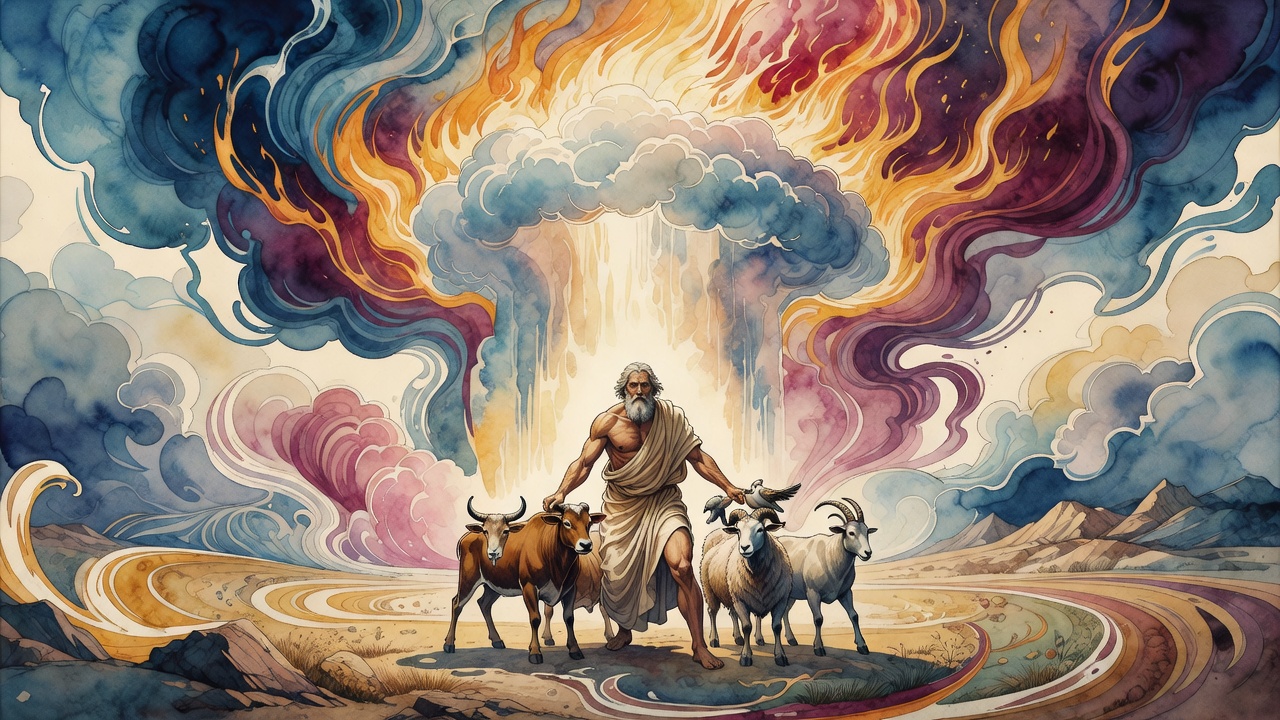
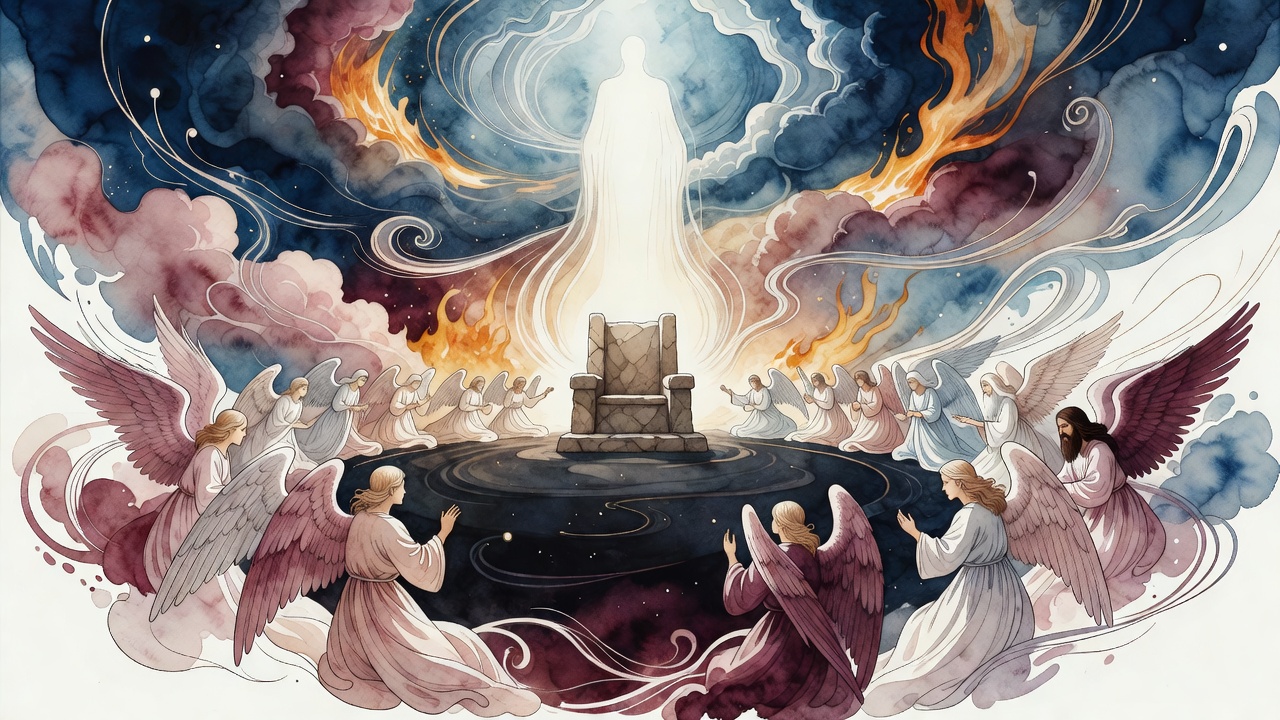
God stood before the court of heaven with no earth under anyone's feet and said He meant to make a world. The angels did not clap. They asked why.
God Defended Israel to the Angels Before Creation Click for full size

"For the sake of one nation," He answered, "called Israel."

The host pressed Him. What had these unborn people done? Why should light and dark, sea and dry land, seed and star, be spoken into being for a people who had not yet drawn breath?

The Days Read as Promises

God did not offer a lecture. He read the future into the days of making. He divided light from darkness, and one night light would fill Jewish houses in Egypt while Egyptian houses sat thick with dark. He split the upper waters from the lower, and the sea would stand as walls when Israel crossed. He grew grass on the third day, and manna would fall like seed on wilderness sand.

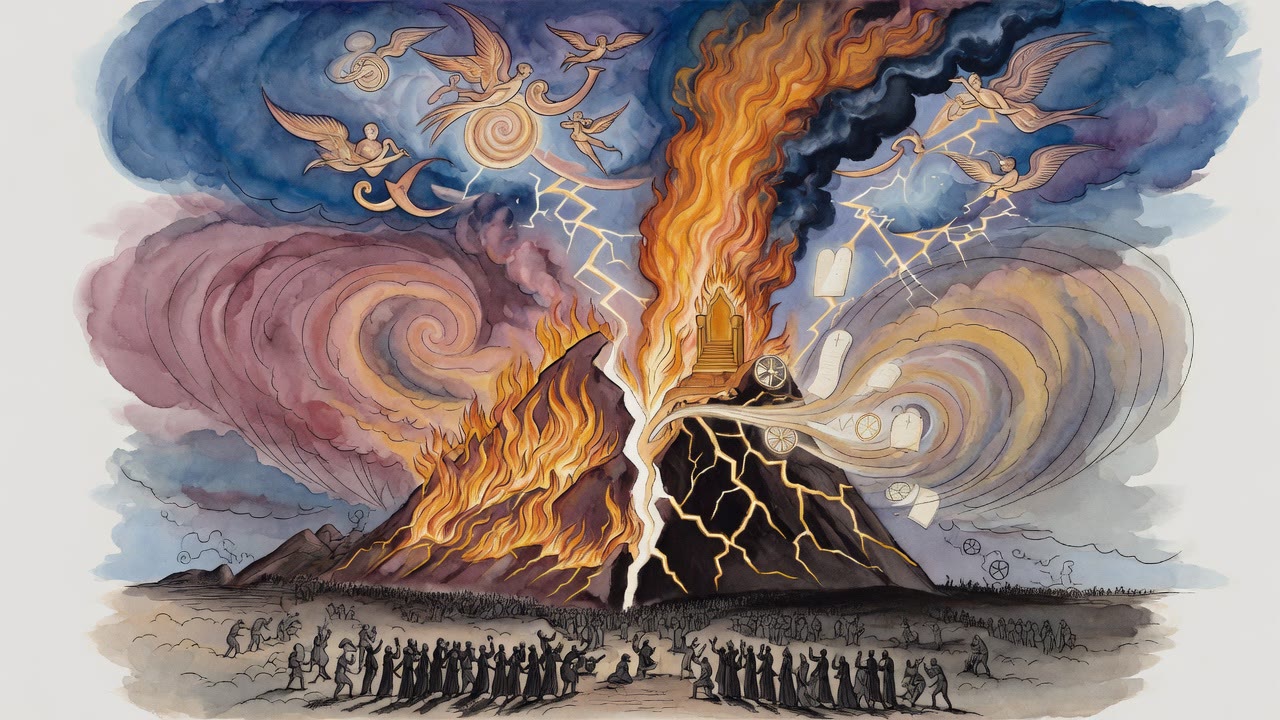
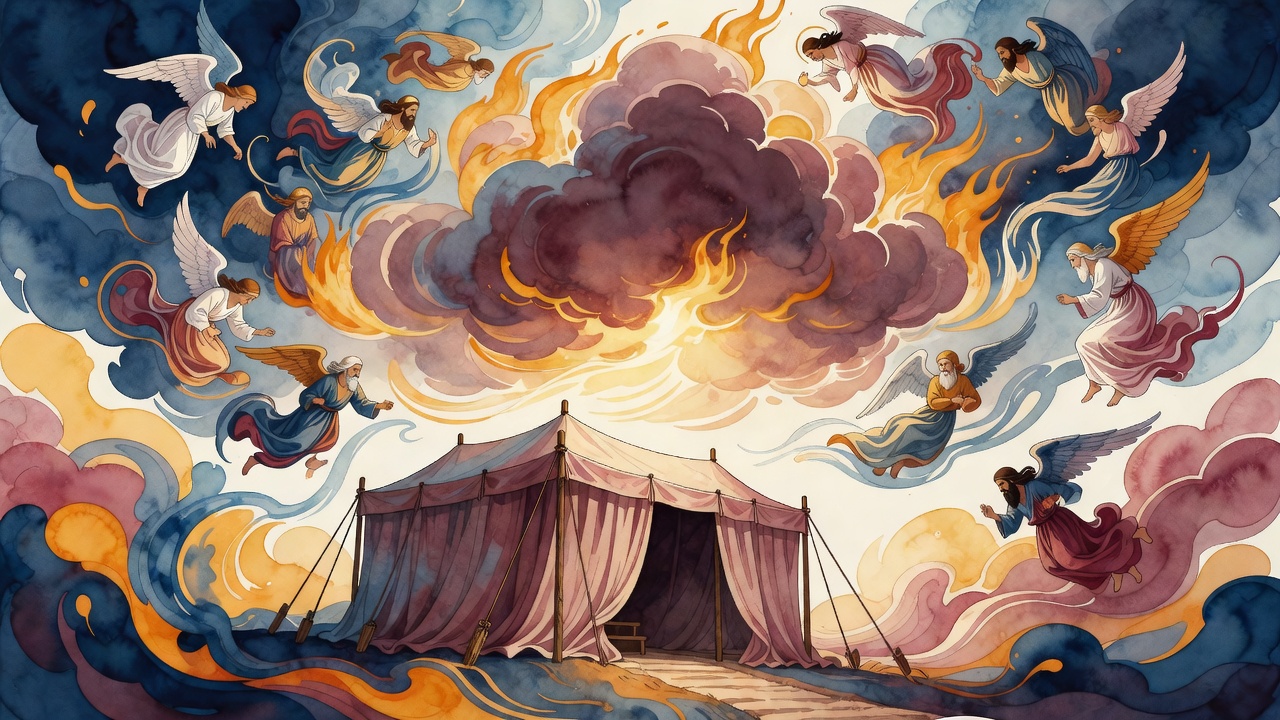
Still the angels wondered what the nation had earned. So God matched each day of creation to the sanctuary Israel would raise. Stretched heavens became the tabernacle where His presence would dwell. The dividing of waters became the curtain. The luminaries became the golden lampstand. The world, He showed them, was drafted as a sketch of the place where Israel would meet Him.

The order of the Torah itself guarded against pride. Creation came first, not the first commandment given in Egypt, so no priest reading from the start of Genesis could boast, "I began the Torah." Humility arrived before instruction.

Clothes That Fit the King

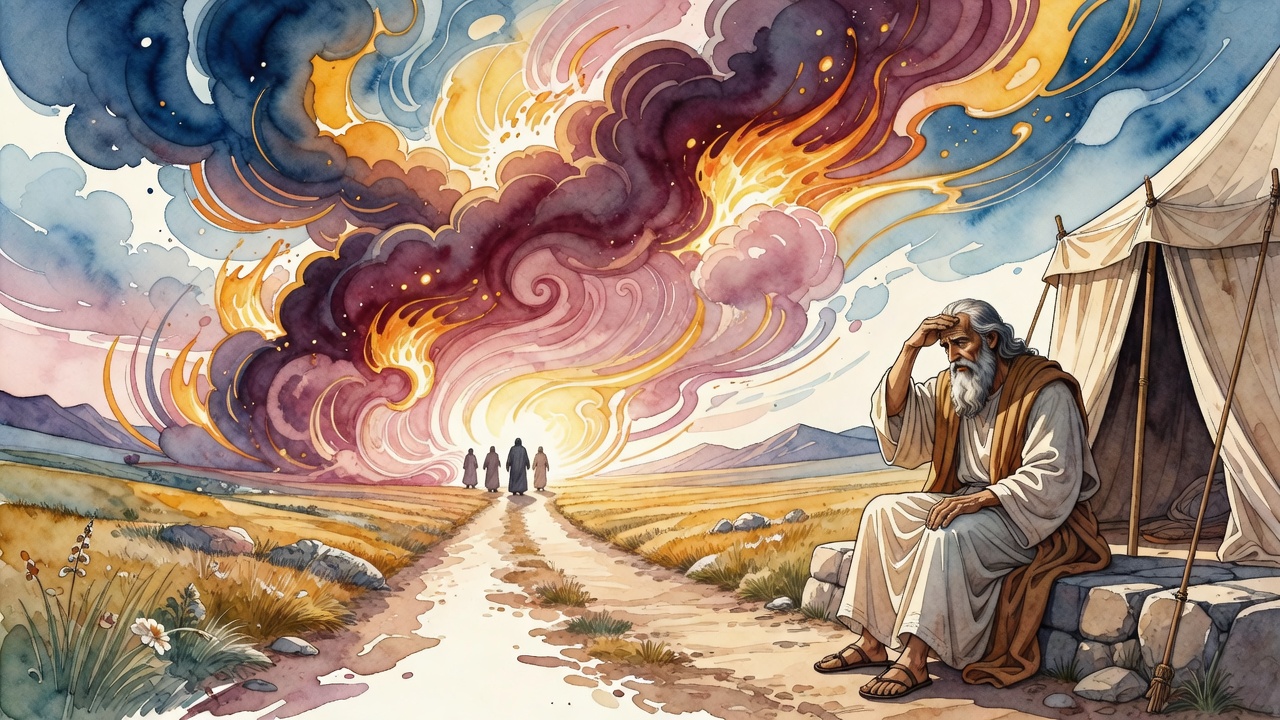
When the world was running and kings of the nations rose and fell, the question of kingship returned. Jeremiah called God King of the nations because he had been appointed a prophet to them. God asked whether He was not also King of Israel. The exchange was not small talk. It was about which garment God wears when He steps into history.

Psalm 93 says the Lord reigns and is clothed with majesty. The sages counted seven garments of power, each tied to a moment when heaven went to war or to rescue. The first garment was for the war with the sea, when the waters stood and Israel walked between walls of water. Another garment was strength. Another was vengeance on those who crushed the poor. The clothes were not fabric. They were the shape of God's public action, and the midrash insists they fit Him: His essence and His deeds lined up.

Rabbi Chanina put it sharply. A person can wear a garment that looks fine and still does not become him. The Holy One has a garment that becomes Him, and He becomes the garment. When He reigns for Israel, the majesty is not costume. It is the same will that argued with the angels before there was dust.

The Letter That Seals the Bond

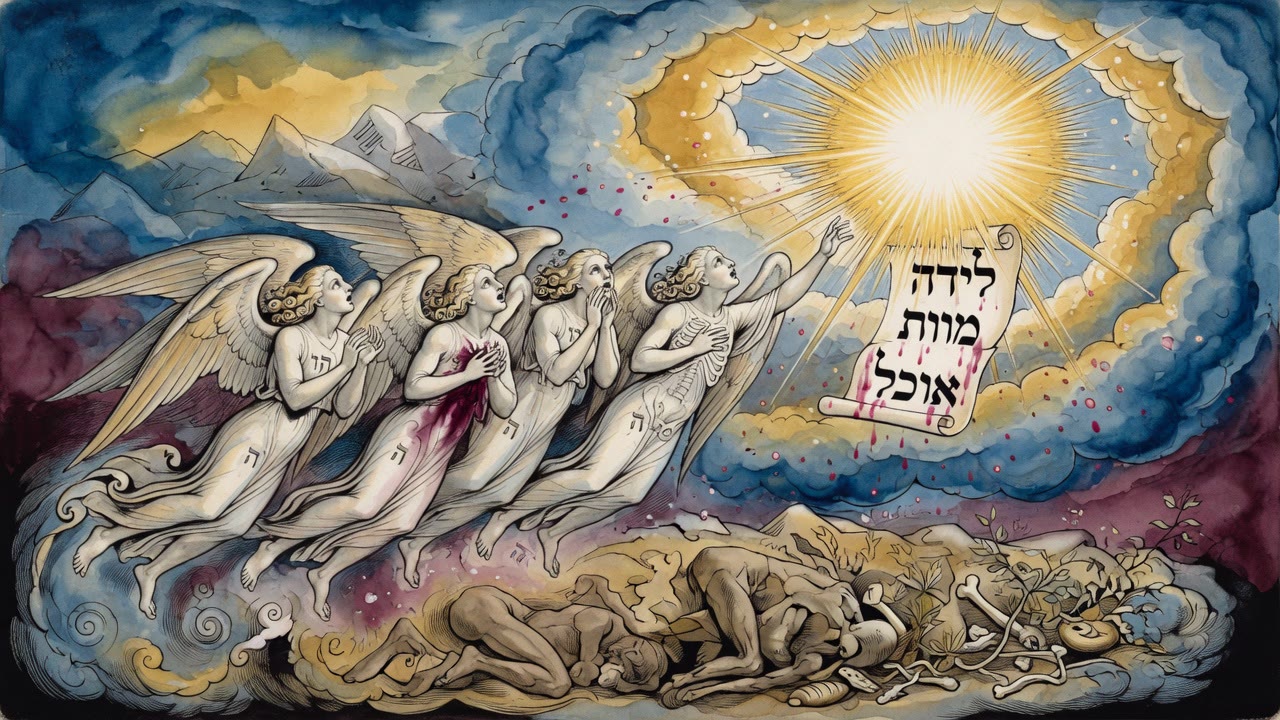
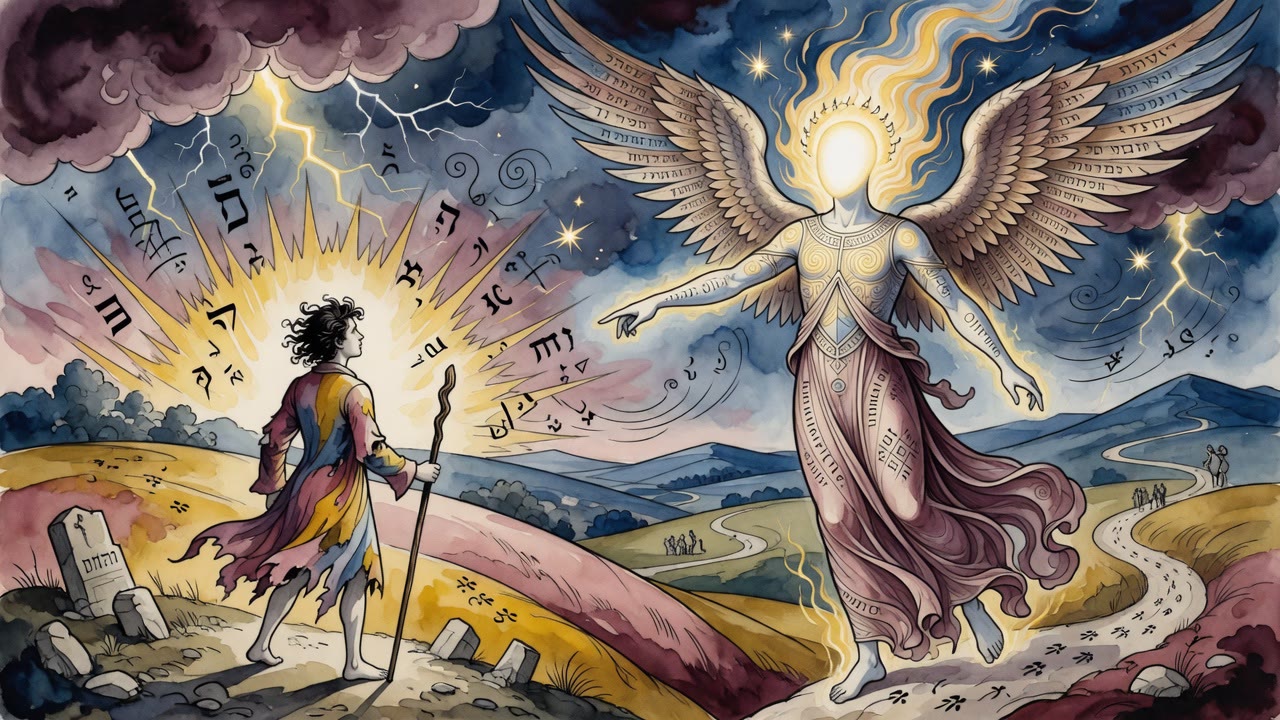
The covenant needed a mark that would outlast any one generation. Of all the letters, the sages and the mystics return to the letter Hei (ה). Exodus calls it a sign forever between God and the children of Israel. In the language of the sefirot (divine emanations), Hei is bound to Malkhut, the kingdom, the receptive place where presence settles in the lower world.

Hei is a letter with an open window. Breath can pass. A sealed letter would choke. An open Hei lets the bond breathe across exile and return. When God told the angels the world was for Israel, He was not flattering a favorite. He was describing a structure: creation as outer court, sanctuary as inner chamber, the Name's letter as the seal on the door.

Israel would fail. Israel would repent. The sketch would still hold because the architect had already defended the plan in a courtroom where no human advocate stood.

Why the Angels Still Ask

Angels see straight lines. They saw a nation not yet born and a God rearranging six days around that nation's future slavery, future sea, future manna, future tent. The strangeness is the point. Before Adam named animals, before Abram left home, the argument had already been won on Israel's behalf.

When later generations read Genesis and feel small under the sky, the midrash answers with a scene, not a slogan. God did not create and then notice Israel. He argued for Israel and then created.

The sea garment, the letter Hei, the lampstand matched to the third day: all of it is one claim. The world is not neutral space that happens to contain a people. It is a house built so that people can meet the One who made it. That claim walks with Israel through every later rescue, when majesty clothes the King again and the old angelic question meets water, dry land, and a people still breathing.


← All myths
From the tradition

Sources

3 sources

The texts behind this telling. Some cards carry a translation of the source; others are our own retelling of it, and each card says which. Every card links out to the original.

Yalkut Shimoni on Torah 17:1Yalkut Shimoni on Torah

Translation of the source text.Torat Emet (Yalkut Shimoni) · CC-BY-NC

"These are the generations of the heaven and the earth" (Genesis 2:4): this is the beginning of the Torah. "This month shall be for you" (Exodus 12:2): the beginning of the Book [of commandments]. "The enemy said, I will pursue" (Exodus 15:9): the beginning of the Song. And why did the Holy One, blessed be He, place earlier and later out of order in the Torah? Because of the arrogant, so that a priest should not read in [the order beginning with] Genesis and say, "I began the Torah."

The Holy One, blessed be He, took counsel with the angels. He said to them: "I wish to create a world." They said to Him: "Why?" He said to them: "For the sake of one nation called Israel." They said to Him: "And what is their character?" He said to them: "Just as I separated between light and darkness, so in Egypt, 'for all the children of Israel there was light in their dwellings' (Exodus 10:23). Just as I separated between the upper waters and the lower, so too I am destined to do for them, as it is said, 'and the waters were a wall to them on their right' (Exodus 14:22). On the third [day] I created seeds and grasses; so too I am destined to do for them, as it is said, 'and the manna was like coriander seed' (Numbers 11:7), and it says, 'in green pastures He makes me lie down' (Psalms 23:2). I created luminaries to divide between day and night; so too I am destined to do for them, as it is said, 'the pillar of cloud did not depart' (Exodus 13:22). I created birds and fish; for them too, 'a wind went forth from the LORD' [bringing quail] (Numbers 11:31). I created the human being, 'and He breathed into his nostrils' (Genesis 2:7); for them too, 'it is a tree of life to those who grasp it' (Proverbs 3:18)."

They said to Him: "Master of the universe, what has this nation done for You that You love it so?" He said to them: "On the first day I created the heavens and stretched them out, as it is said, 'who stretches out the heavens like a curtain' (Isaiah 40:22); among them too I will rest My presence, as it is said, 'they shall make Me a sanctuary' (Exodus 25:8). On the second I separated between water and water; for them too, 'the curtain shall divide for you' (Exodus 26:33). On the third day I created grasses and seeds; they too eat herbs on the night of Passover and bring the showbread. On the fourth I created luminaries; they too, 'you shall make a lampstand of gold' (Exodus 25:31). On the fifth I created birds; they too, 'the cherubim shall spread their wings' (Exodus 25:20). On the sixth I created the human being; they too, 'with this shall Aaron come' to serve before Me (Leviticus 16:3)."

Full source
Midrash Tehillim 93:1Midrash Tehillim

Retold in our words. Read the original at the link below.Rabbi Mike Feuer, Jerusalem Anthology · CC-BY

It’s a question worth pondering. Especially when

The book of Psalms (93:1) declares, “The Lord reigns, He is clothed with majesty; the Lord is clothed, He has girded Himself with strength.” This verse, seemingly simple, opens up a world of interpretation in the Midrash Tehillim, a collection of rabbinic teachings on the Psalms. It’s here we begin to understand that God’s "clothing" isn't about fashion, but about power, justice, and His relationship with the world.

The Midrash (rabbinic interpretive commentary) starts with a fascinating exchange between God and the prophet Jeremiah. The verse from Jeremiah (10:7) asks, "Who would not fear You, O King of the nations?" God asks Jeremiah, “But am I not the King of Israel?” Jeremiah cleverly replies that because God appointed him a prophet to all nations (Jeremiah 1:5), he, Jeremiah, calls God King of the nations. God then instructs Jeremiah to “go and take possession of the kingship,” reiterating “The Lord reigns, He is clothed with majesty.”

Rabbi Chanina adds an intriguing comment: "You have a garment that is becoming to You, but Your garment does not become You." In other words, sometimes we wear clothes that look nice, but don't truly reflect who we are. But, the Midrash continues, "the Holy One, blessed be He, has a garment that is becoming to Him and His garment becomes Him.” God’s essence and His actions are perfectly aligned. His clothing. His attributes, perfectly reflect His being.

So, what are these garments of God? Well, according to the Midrash, there are seven of them, each corresponding to a different historical event or future hope. And each is linked to a specific verse.

The first garment is for the war with the sea. "The Lord reigns, He is clothed with majesty" (Psalm 93:1), refers to the splitting of the Red Sea, as described in Exodus (15:1): "I will sing to the Lord, for He is highly exalted.": God’s power over the chaotic waters, a symbol of primordial forces, is an act of pure majesty.

Then there's the garment for the war of Sinai. "The Lord will give strength to His people" (Psalm 29:11). This refers to the giving of the Torah at Mount Sinai. This garment represents the strength and endurance God bestowed upon the Israelites to receive and uphold His commandments.

A garment for the war of Babylon is described in Isaiah (59:17): "He put on garments of vengeance for clothing." And as it says in Jeremiah (46:10), "For it is the vengeance of the Lord, the vengeance for His Temple." This is a stark reminder of God's justice and His commitment to His people, even when it requires divine retribution.

Next, we have a garment for the war of Media: "He has clothed me with garments of salvation, He has wrapped me in a robe of righteousness" (Isaiah 61:10). This connects to the story of Esther (8:15), "And Mordechai went out from the king's presence." This garment signifies deliverance and the triumph of good over evil.

The fifth garment is for the war of Greece, where Isaiah (59:17) says: "And He put on righteousness like a breastplate." The Midrash connects this to the Hasmoneans, who fought for religious freedom and were "dressed in garments of zeal."

Then comes the garment for the war of Edom, as described in Isaiah (63:1): "Who is this who comes from Edom, with garments of glowing colors?" This alludes to a future conflict and ultimate redemption.

Finally, the seventh garment is for the days of the Messiah, when Daniel (7:9) tells us, "His clothing was white as snow." This symbolizes purity, peace, and the ultimate reign of God's kingdom on Earth.

What does all this mean for us? This Midrash isn't just a fanciful story about God’s wardrobe. It's a profound reflection on the nature of divine power, justice, and redemption throughout history and into the future. It suggests that God’s actions, His “clothing,” are always appropriate for the situation, always reflecting His core attributes. And it invites us to consider what garments we wear – what actions we take – and whether they truly reflect who we aspire to be.

Full source
Tikkunei Zohar 93:18Tikkunei Zohar

Retold in our words. Read the original at the link below.Sefaria-hosted English translation · CC-BY

Of all the letters in the Hebrew alphabet, one stands out as the eternal seal of the covenant between God and the Children of Israel: the letter Hei (ה). As (Exodus 31:17) puts it, "Between Me and between the Children of Israel, 'it is a sign' (ot hi) for ever..." And the Tikkunei Zohar emphasizes this point sharply, the letter Hei specifically.

Why Hei?

In Kabbalah, the sefirot (the divine emanations) are ten attributes or emanations through which God reveals Himself and continuously creates the world. Think of them as divine energies flowing from the infinite. The Tikkunei Zohar connects the letter Hei to the sefirah (a divine emanation) of Malkhut – the "Kingdom," often understood as the Divine Presence, Shekhinah, and also as the receptive aspect of God.

It says that Malkhut is actually called Hei, after the name of Yesod, which precedes it in the sefirot. Yesod is the "Foundation," the channel through which divine energy flows to Malkhut. It's like Yesod is giving its name, its essence, to Malkhut. This idea is hinted at in (Genesis 1:31), ".. the sixth (Ha-shishi) day" – the Hei of ‘the sixth’. The sixth day, the day of creation closest to Shabbat (the Sabbath), hints at the receptive Hei of Malkhut receiving the divine flow.

Are you starting to see the layers here? It's all interconnected.The Tikkunei Zohar goes on to say that the "voices sounds of many waters" in (Psalm 93:4) refer to seven Names. These aren't just any names; they're seven divine names that divide into seven rivers, all originating from the river that flows out of Eden.

These seven Names, the text continues, are alluded to in (Psalm 29:1), "Give (Havu) to Y”Y..." (Y”Y being an abbreviation for God's name). There are seven that go according to seven Names, which are A-V-G-Y-T-Tz etc., and they are 7 sefirot. These cryptic abbreviations represent different permutations of God’s name, each associated with a different sefirah and a different aspect of divine energy.

So what does it all mean?

It suggests that the letter Hei, representing Malkhut, is the culmination of these divine flows. It's the vessel that receives and manifests the divine energy emanating from the higher sefirot. And in receiving, it becomes a sign, a constant reminder of the enduring covenant between God and the Jewish people.

The Kabbalists saw the world as a complex web of symbols, where even the letters of the alphabet held profound significance. By understanding these symbols, they believed we could gain deeper insights into the nature of reality and our place within it.

Next time you see the letter Hei, remember this: it's more than just a letter. It's a sign, a connection, a vessel, and a reminder of the continuous flow of divine energy that sustains us all. Maybe, just maybe, contemplating it can open a tiny window into the infinite.

Full source