God Told the Angels They Could Not Keep a Torah Made for Bodies
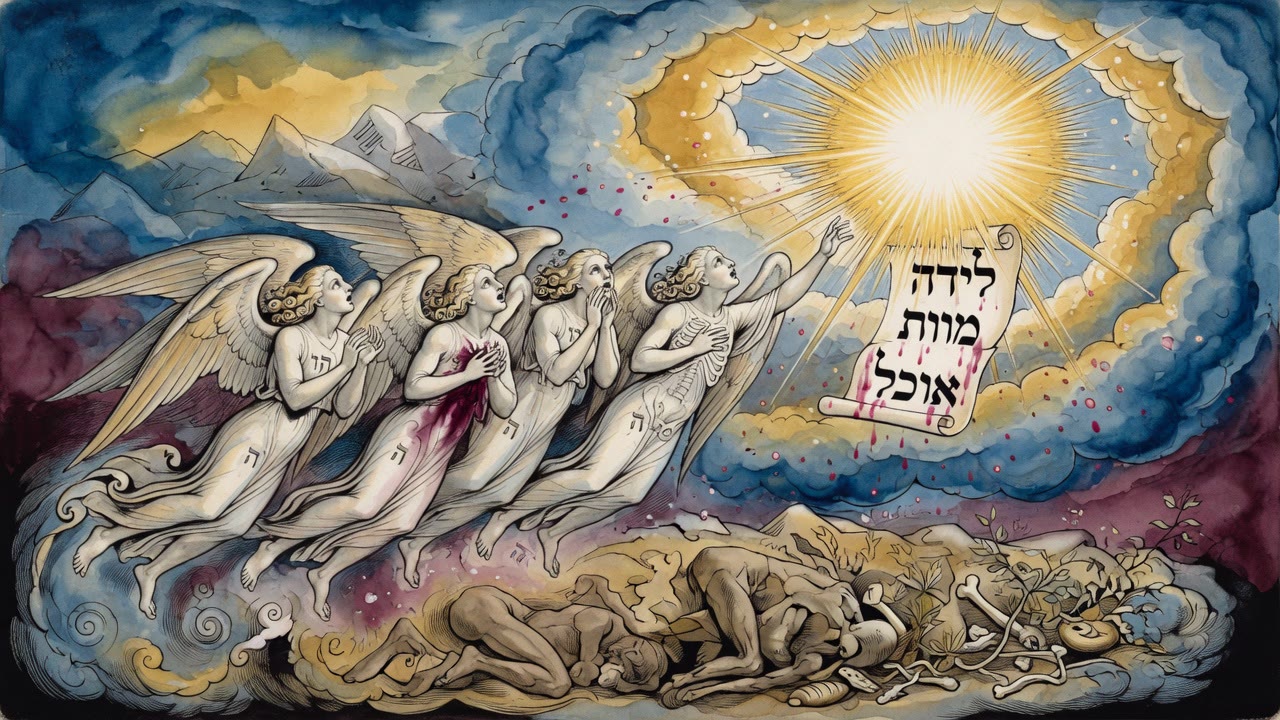
The angels volunteered before Adam had a body. God opened a law about a corpse in a tent and asked which of them had ever died.
Table of Contents
 Click for full size
The Angels Volunteered Before Adam Had a Body
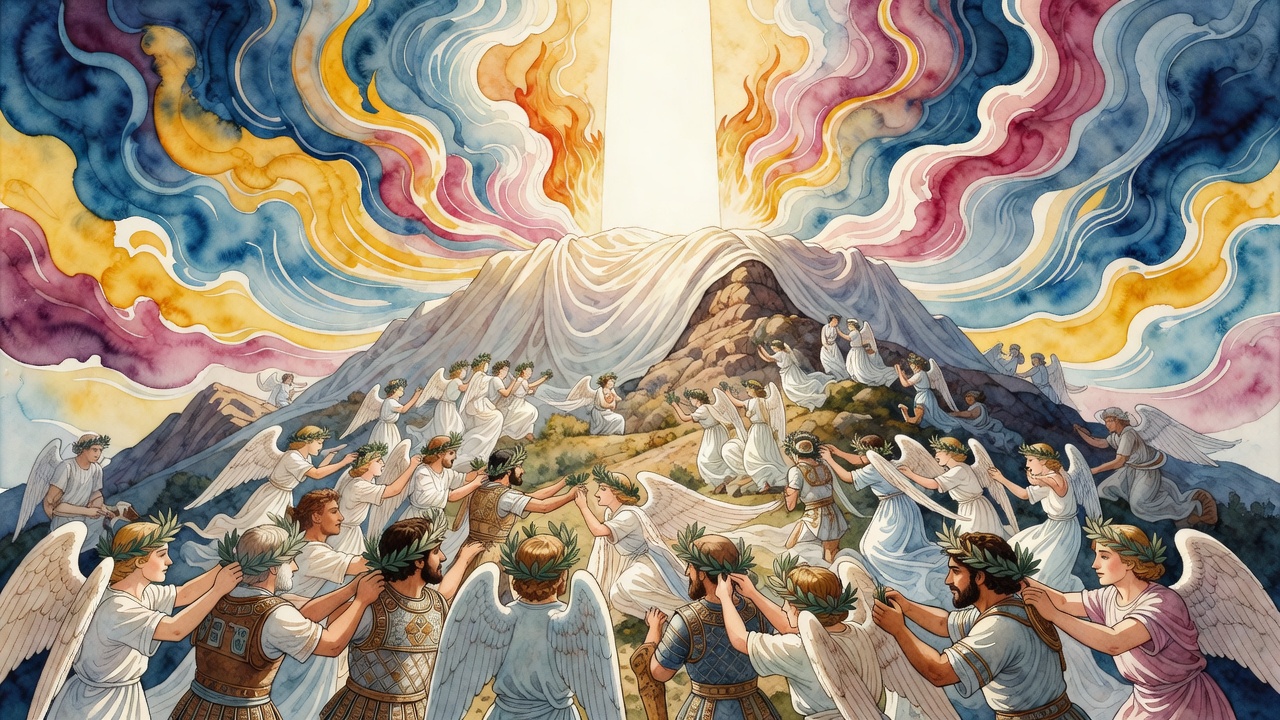
The ministering angels got their objection in before there was anyone to object to. God was about to make the human being. The angels crowded the work and asked what He wanted with a creature like that.
"What is a human, that You are mindful of him?" (Psalms 8:5)
They were not being cruel. They were being accurate. They had already priced the thing out: dirt with breath in it, a mouth that forgets, a frame that comes apart. They served without sleeping. They sang without stopping. Nothing in them wore down. Set that beside a creature who has to be fed twice a day and buried once, and the question asks itself.
God answered with a question of His own. "Who will keep My Torah and My commandments?"
The angels did not hesitate. "We will keep Your Torah."
"You cannot."
Nobody had told them no before. "Why not?"
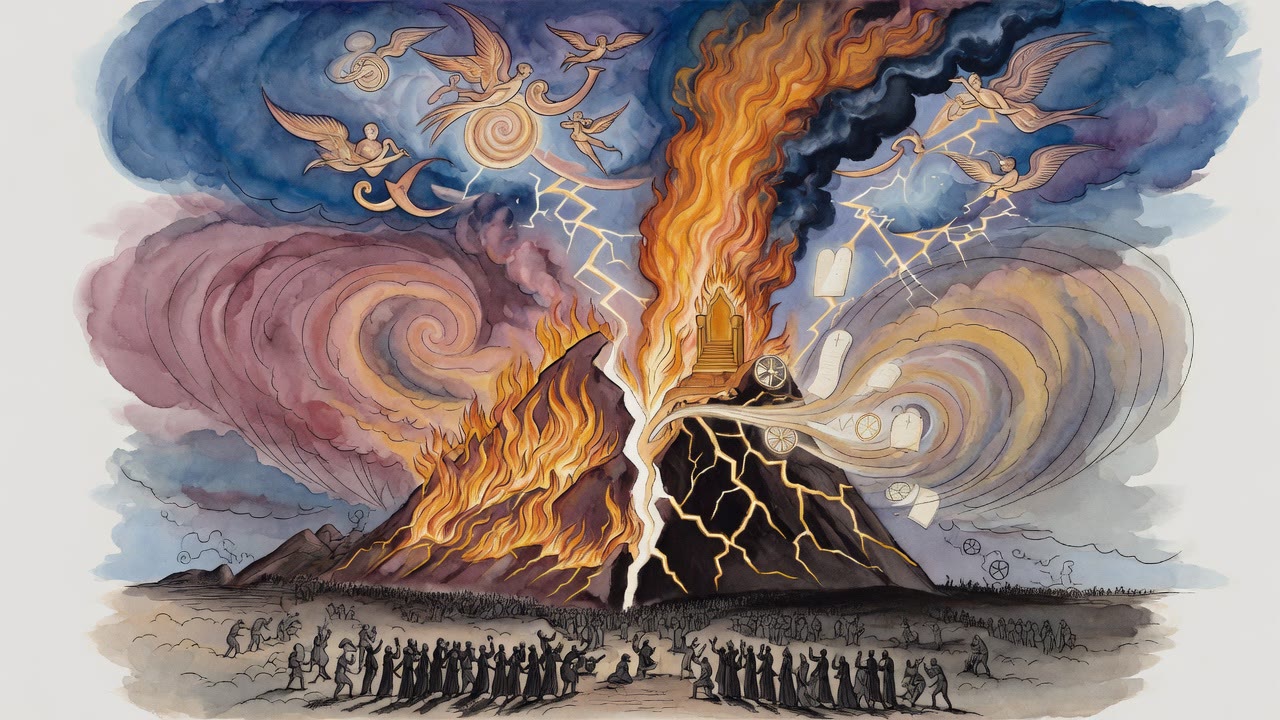
God Read Them a Law About a Corpse
God read them three lines out of the Torah they had just claimed.
A man dies in a tent (Numbers 19:14). That is where the first one begins: a body under goat hair, a household standing outside in the sun working out who may go back in and when, and the long count of days before any of them may touch what is holy again. No angel has ever died. There is no tent, no corpse, no waiting.
A woman conceives and bears a male (Leviticus 12:2). Blood, and the counting after the blood, and a mother held back from the sanctuary for a season while her body finishes what it started. No angel has ever given birth.
These you may eat (Leviticus 11:21). A whole law hung on the mouth. Which creature in the water has fins, which crawling thing has legs above its feet, what must be spat out and what may be swallowed. Angels do not eat.
"So the Torah does not go out to you," God said. Wisdom is not found in the land of the living (Job 28:13), and the ones who cannot die were not living in the sense the Torah means. They had holiness with nothing at stake in it. A law measured in graves and blood and bread cannot be kept by anyone who has none of the three.
They Left Rephidim Already Turning
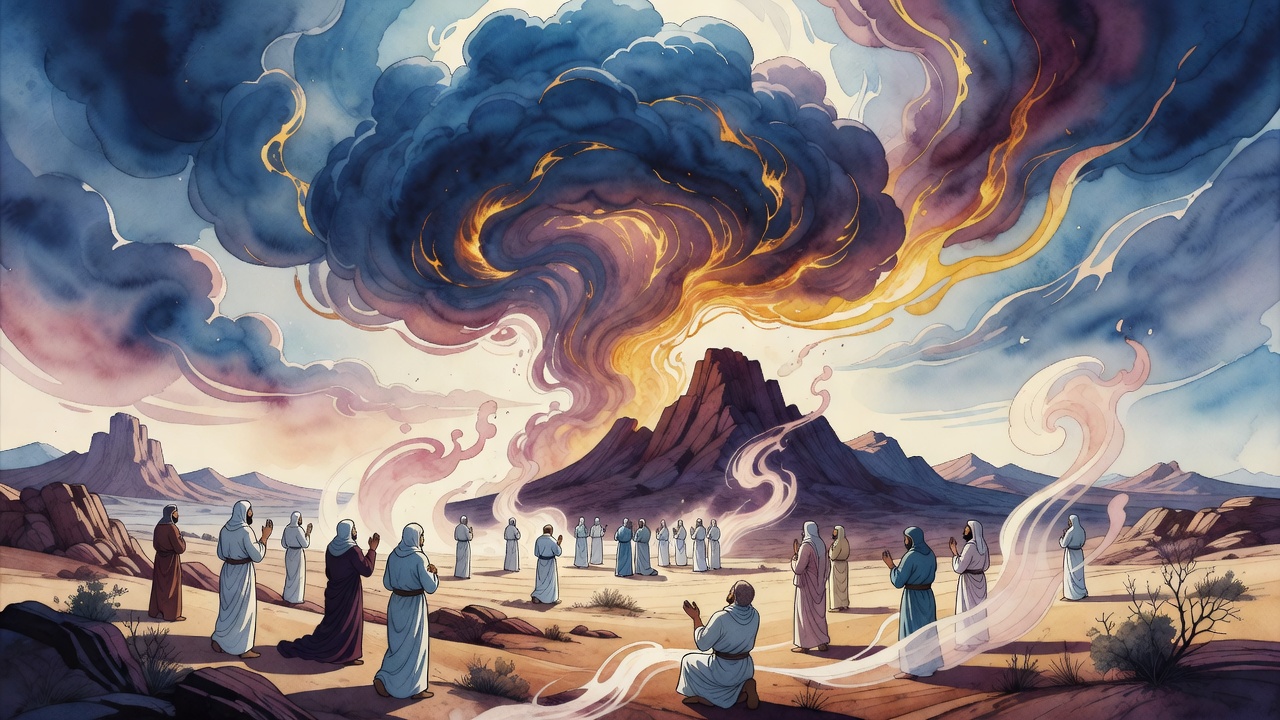
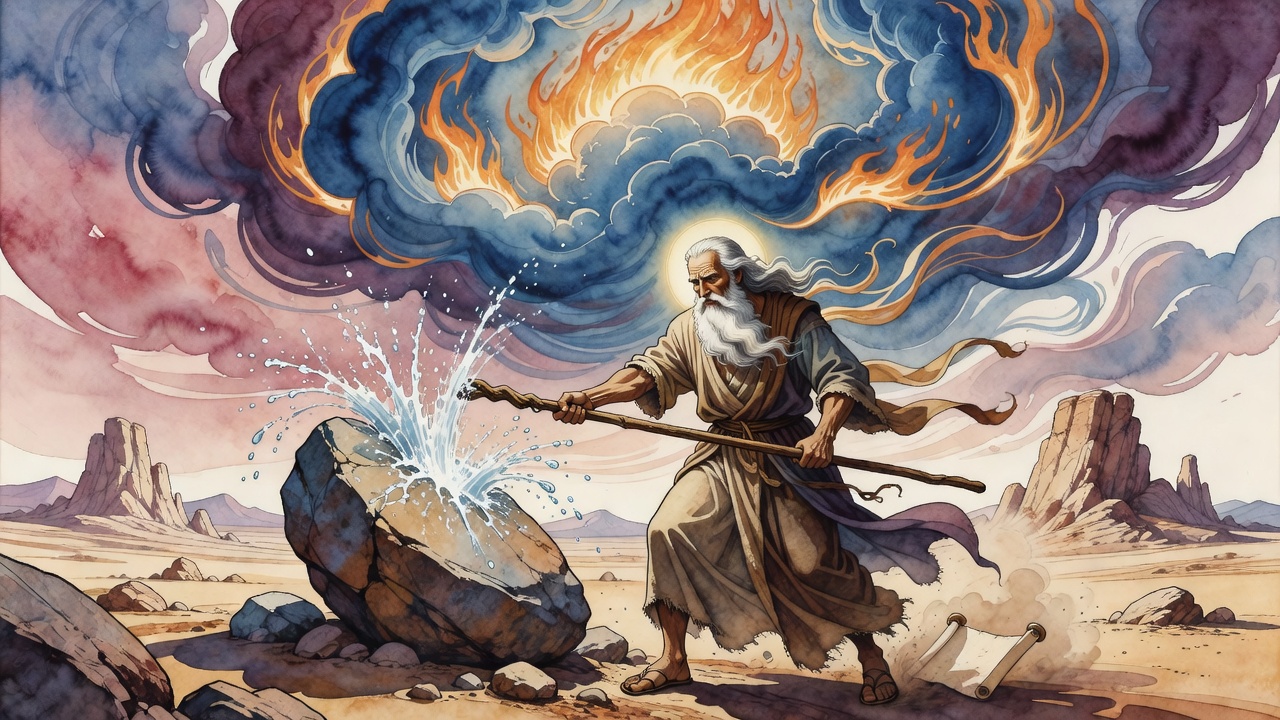
The people who got it instead had just finished disgracing themselves over water. Rephidim was the camp of the quarrel, where they had come at Moses with dry mouths and asked whether God was among them or not. Then they broke camp and walked to the mountain.
They left Rephidim having turned back toward God, and they arrived at Sinai having turned back toward God. What happened in between is not written down. Dust on the ankles. Children asking how much farther. Elders who remembered the water coming out of the rock and remembered, worse, what they had said to get it. The turn happened while they were still walking.
A people that can march and change its mind at the same time is doing something the angels had not offered to do. The angels had offered a Torah with no graves in it. Israel arrived at the mountain already knowing how to be wrong and then turn.
Hands That Sweat Built the Dwelling
God told them to build Him a dwelling, and they built it. They raised the altar of burnt offering. They raised the altar of incense. They brought offerings up onto it, and the smoke went where smoke goes.
Commandment after commandment came down, and every one of them landed on somebody's hands. Someone cut boards. Someone dyed wool and got it under his fingernails. Someone carried a lamb that would not stop struggling. Someone counted out silver for a vow he had made in a bad week and now had to pay in a good one.
The temptations arrived with the work, because that is how a body lives. A trader with sacks to leave overnight could make the easy arrangement in the market: you watch my goods beside your god, and I will watch yours beside mine. He was not allowed to. He could not swear by the thing, could not name it in a bargain, could not rent his ox to a neighbor who would work it straight through the sabbatical year and let the sin belong to somebody else. None of that is a temptation in heaven. Nobody up there owns an ox.
Who Among You Sets My Table
When the work was standing, God turned back to the ones who had asked what a human was worth.
"Who among you arranges for Me the way they arrange for Me?"
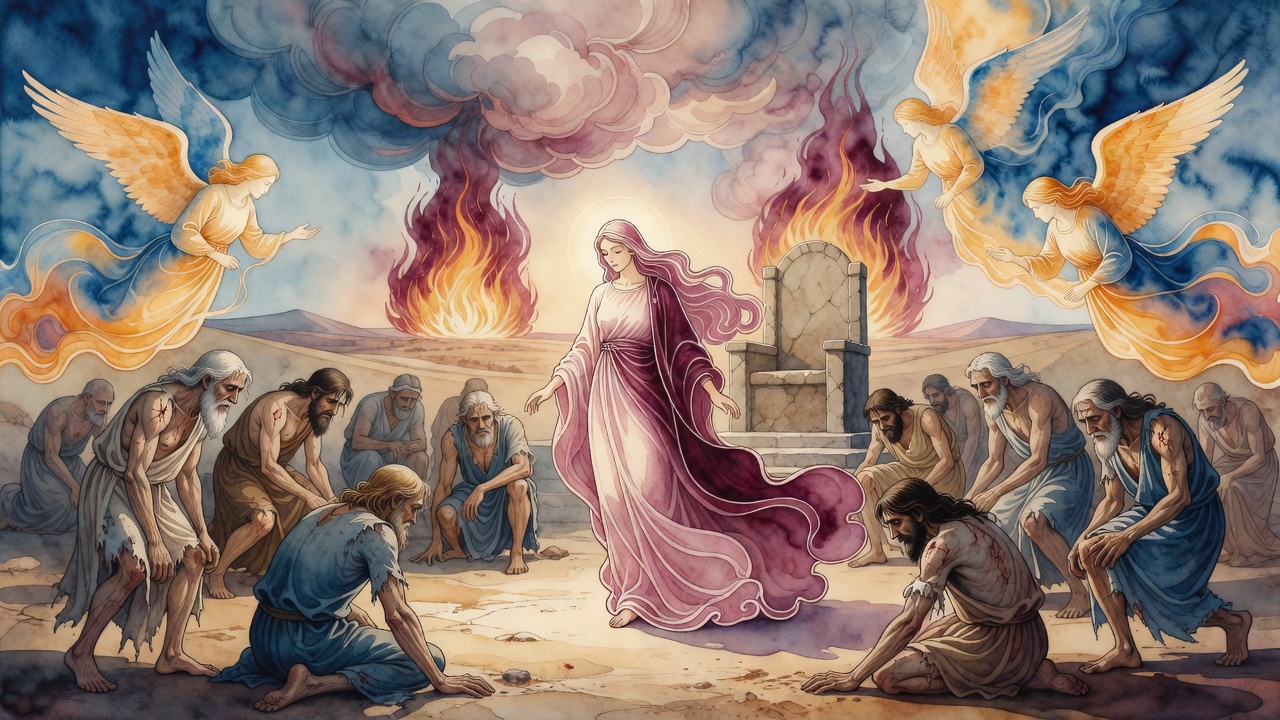
They lay the offering on the fire, piece set beside piece. They set out the bread every Sabbath and carry the old loaves away. And they arrange souls, which is the strangest of it: a man walks in, puts a price on a life, his own or his child's, and pays it, because he stood in a field one day and said he would.
No answer came down from the sky. The angels who had totalled up everything a human being lacks were standing over a camp where people were doing the one thing they could not do, which was to owe something and settle it with their hands.
Below them a priest turned a piece of meat so it would sit right on the coals. He had buried someone that year. He would be hungry by dark. Nothing about him survived the angels' arithmetic, and the fire took his offering anyway.
← All myths