Parshat Shemini5 min read

Nations Refused Torah and the Earth Went Still

God measured the earth before Sinai. Nations refused, Israel accepted, and only the living received laws of food and a call to be holy.

Curated by Arthur · Told by Maggid ·
Table of Contents
  1. Return to the Measurements of the Waters
  2. The Physician and Two Patients
  3. You Shall Be Holy
  4. Plate and Court on One Foundation
  5. The Still Ground

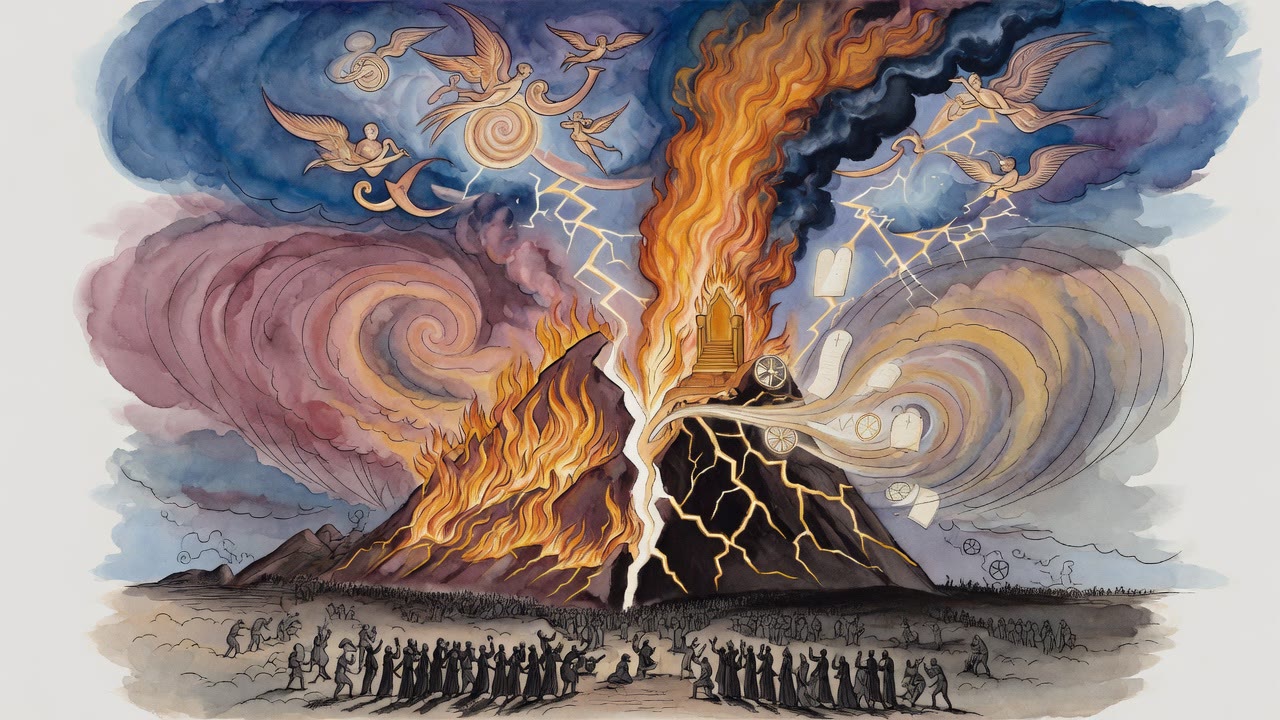
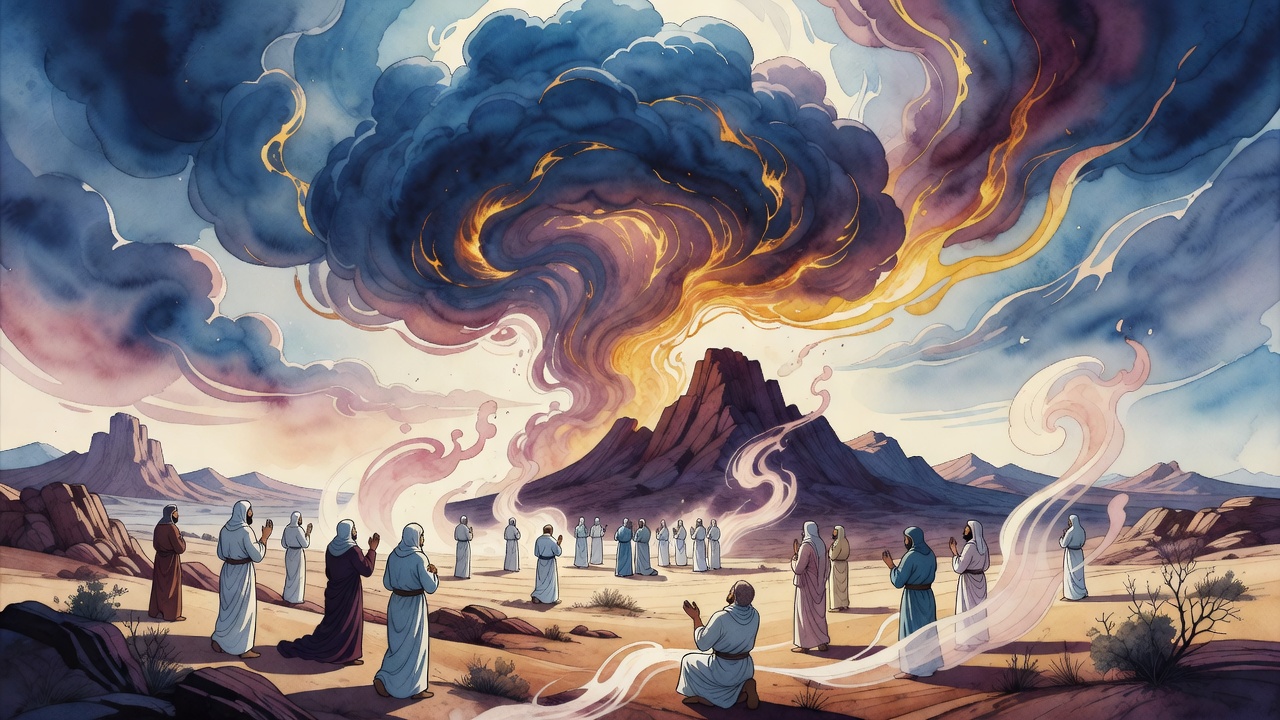
Before a single dietary law was spoken over clean and unclean beasts, God stood and measured the earth. He looked, and nations trembled (Habakkuk 3:6). The measuring was not geography alone for mapmakers. It was an offer of Torah in public, in a desert that belonged to no crown and could not be claimed by any empire's surveyors.
Nations Refused Torah and the Earth Went Still Click for full size

Return to the Measurements of the Waters

When the nations would not take the Torah, the Holy One was ready to return the world to the measurements of His waters, the old flood-scale chaos held in the hollow of His hand like a threat and a memory (Isaiah 40:12). Israel accepted under the mountain. The earth was afraid and was still (Psalms 76:9). Stillness is what acceptance sounds like in the ground when the shaking stops. From that stillness the nations received their judgment for refusal, and Israel received a book that would rule plate, court, and calendar.

Sinai was not only fire and smoke and a voice that split rock. It was a global weighing that ended with one people under the mountain and the rest of the map vibrating with a no that still echoes. The earth did not stay still for the refusers. It stayed still for the yes.

If Israel had also refused, the midrash says without flinching, the world would have gone back to water's old measurements. The book is not a hobby. It is the peg that holds dry land in place.

The Physician and Two Patients

Then came the creatures you may eat, spoken to Moses and Aaron together (Leviticus 11:1-2). R. Tanhum heard permission hidden inside the trembling of the nations. A physician visits two patients in one afternoon. One is dying with no path back. Tell him to eat whatever he wants. The other is recovering with life still possible. This he may eat. That he may not. The household protests the unequal care as cruelty or favoritism. The physician answers without apology. The first is already lost. The second has life in him and must watch himself if he wants to keep it.

So God permitted abhorrent creatures and creeping things to the nations and fenced Israel's plate with care. Be holy, for I am holy (Leviticus 11:44). Do not make yourselves loathsome with what you take into the body (Leviticus 11:43). You who clung to the Lord are all alive today (Deuteronomy 4:4). Food law is not disgust for its own sake or a contest of strange rules. It is a diet for the living, written for patients who still have a future.

The dying eat freely. The living eat under orders. That is the physician's logic at the side of two beds.

You Shall Be Holy

Speak to the whole congregation, not to a few initiates. You shall be holy (Leviticus 19:2). Holiness is not a private glow kept under a cloak. The Lord of hosts is exalted through justice. The holy God is sanctified through holiness (Isaiah 5:16). When does He become exalted in His world before the eyes of the peoples? When He brings judgment among the nations and the scales are seen to work (Isaiah 3:13).

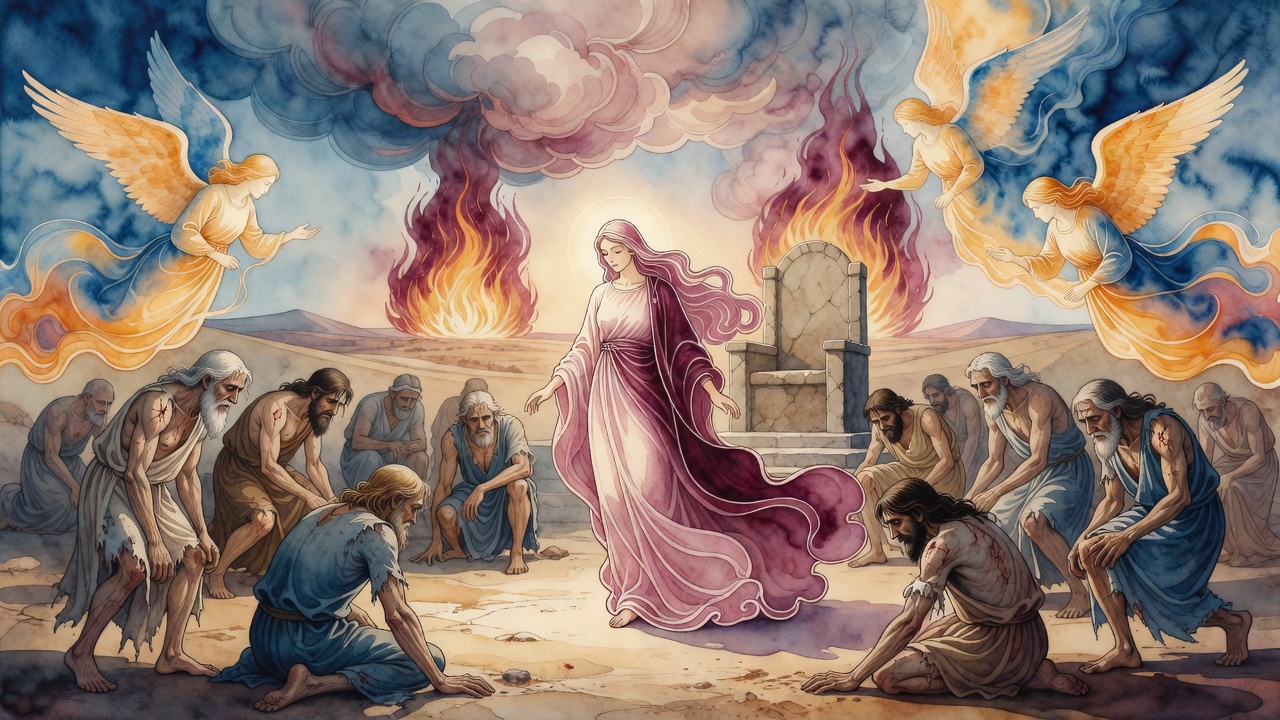
Daniel saw thrones set down, remiw, thrown, in a vision that still confuses the count (Daniel 7:9). One reading heard throne and footstool as a pair. Another heard the thrones of the nations destined to fall when the kingdoms of gentiles are overthrown (Haggai 2:22). The masters said that in the age to come God will sit with the great ones of Israel like a head of court, judging the nations along with the elders, not against them as strangers (Isaiah 3:14). Thrones of the house of David stand for judgment in Jerusalem's memory (Psalms 122:5). Holiness ends in a shared bench, not a lonely halo above a single head.

The hair of the Ancient of Days was like clean wool. When God clears accounts with idolaters, He pays them in this world for the easy commandments they kept, so that no claim remains in the next and justice is thorough even toward opponents. Holiness does not cheat the ledger.

Plate and Court on One Foundation

Israel's plate and Israel's court sit on the same foundation poured at Sinai. Measured earth. Accepted Torah. Living people under rules that fit the living and look cruel only to those who have already chosen the free diet of the dying. The nations eat widely and die in their own time under their own stars. Israel eats narrowly and is addressed as alive today, which is a harder compliment than it sounds.

Moses and Aaron heard the list of creatures together so priesthood and prophecy would share the fence. Behind the list stood the day the ground stopped shaking because one nation said yes when the others said no. Behind the yes stood the call to be holy as God is holy. Behind the call stood thrones waiting for elders who would judge with the Holy One rather than only before Him.

The Still Ground

The difference between the two patients began when the earth went still under an accepted book. Every later argument about what may be eaten, what may be worn, what may be judged, returns to that stillness. The flood's measurements waited in the wings. The book held them off. The plate and the court keep the yes current in the body and in the gate.

God measured the earth. The nations trembled and walked away. Israel stayed. The ground quieted. Then the living received their diet and their call to be holy, which is the same gift in two languages.


← All myths
From the tradition

Sources

2 sources

The texts behind this telling. Some cards carry a translation of the source; others are our own retelling of it, and each card says which. Every card links out to the original.

Midrash Tanchuma, Shmini 6Midrash Tanchuma

Retold in our words. Read the original at the link below.Townsend 1989 translation of Midrash Tanhuma, S. Buber Recension · CC-BY

(Lev. 11:1-2:) “Then the Lord spoke unto Moses and unto Aaron, saying […], ‘Speak unto the Children of Israel, saying, “These are the creatures that you may eat….”’” It is stated (in Hab. 3:6), “He arose and measured the earth; He looked and made nations tremble.” What is the meaning of “He arose and measured the earth?” It is simply that, when the Holy One, blessed be He, wanted to give the Torah to Israel, He arose and measured (mdd) the earth. Then he gave the Torah in public in the desert. Therefore (in Hab. 3:6), “He arose and measured the earth,” because He wanted to return the world to the measurements of His waters, when the nations did not want to accept the Torah. If it had not been for Israel accepting it, the world would have returned to the measurements of His waters. [It is] just as you say (in Is. 40:12), “Who has measured the waters in the hollow of His hand?” But when Israel accepted it, the earth was still, as stated (in Ps. 76:9), “the earth was afraid and was still.” So it is from there (i.e., from Sinai) that the gentiles received their judgement, as stated (Hab. 3:6, cont.), “He looked and made nations tremble (rt. ntr).” R. Tanhum ben Hanila'i said, “He permitted (hittir) what was forbidden, abhorrent creatures and creeping things.” The matter is comparable to a physician who went to visit two patients. He saw that one of them was in danger. He said to the children of his house, “Tell him to eat whatever he wants.” He saw the other, who was recovering. He said to the children of his house, “Such and such food he may eat; such and such food he may not eat.” They said to the physician, “What is [the difference] that you said to the one, ‘Let him eat whatever he wants,’ but said to the other one, ‘Such and such food he may eat; such and such food he may not eat?’” The physician said to them, “When I saw that the one was dying, I said, ‘Give him [any food] because he is going to die’; but let the other one watch himself, because there is life in him.” So also the Holy One, blessed be He, has permitted (hittir) abhorrent creatures and creeping things to the gentiles. But in the case of Israel, because they are [destined] for life, He has said to them (in Lev. 11:44), “and be holy, for I am holy”; (in Lev. 11:43) “You shall not make yourselves loathsome.” This you may eat and this you may not eat. Why? Because they are alive, as stated (in Deut. 4:4), “But you who clung to the Lord your God are all alive today.” Ergo (in Hab. 3:6), “He arose and measured the earth; He looked and permitted (rt. ntr) gentiles,” [that which is forbidden]…. Three things Moshe found difficult [to comprehend], and the Holy One, blessed be He, showed him, etc.

Full source
Midrash Tanchuma, Kedoshim 1Midrash Tanchuma

Retold in our words. Read the original at the link below.Townsend 1989 translation of Midrash Tanhuma, S. Buber Recension · CC-BY

(Lev. 19:2:) “Speak unto the [whole congregation] of the Children of Israel, and say unto them, ‘You shall be holy.’” This text is related (to Is. 5:16), “The Lord of hosts has been exalted through justice, and the holy God has been sanctified through holiness.” When did the Holy One, blessed be He, become exalted in His world? When he brought about judgment and justice among the peoples of the world. It is so stated (in Is. 3:13), “The Lord stands up to plead a cause, and rises to judge peoples.” It also says (in Dan. 7:9), “I looked until thrones were set in place [or thrown down] (remiw).” What is the meaning of “thrones” (in the plural)? Were there a lot of thrones, when [there is] that which is written (in Is. 6:1), “I saw the Lord seated upon a throne (in the singular)?” What is the meaning of “thrones?” R. Jose the Galilean and R. Aqiva differed. One said, “Thrones denotes the throne plus its footstool; and the other said, “These are thrones that belong to the nations of the world, since the Holy One, blessed be He, is going to throw them down, as stated (in Hag. 2:22), ‘Then I will throw down the throne of kingdoms, [and destroy the kingdoms of the gentiles].’” You know [for yourself] that this is so. "Thrones were set up," is not written here (in Dan. 7:9), but “thrones were thrown down.” Thus it is written (in Exod. 15:1 or 21), “the horse and his rider he has thrown (rt. rmh) into the sea.” Our masters say, “What is the meaning of thrones? In the age to come the Holy One, blessed be He, will sit down, and the angels will place thrones for the great ones of Israel for them to sit down, so that the Holy One, blessed be He, will be sitting with them like the president of the court (av bet din (the head of the rabbinic court)). Then they shall judge the peoples of the world, as stated (in Is. 3:14), ‘The Lord will come in judgment along with the elders of His people and their princes.’ ‘Against the elders of His people’ is not written here, but ‘along with the elders [of His people].’ [Scripture] is teaching that the Holy One, blessed be He, will sit along with the elders and princes of Israel to judge the nations of the world.” And which [thrones] are they? These are the thrones of the house of David and the elders of Israel, as stated (in Ps. 122:5), “There stood the thrones of judgment, thrones of the House of David.” R. Pinhas said in the name of R. Hilqiyah the Southerner (i.e., from Judah), [who said] in the name of R. Reuben, “If you say, ‘When thrones stand there for judgment,’ [that] they are thrones of the House of David; then what is [the meaning of (Dan. 7:9), ‘and the Ancient of days (God) took His seat?’ That He sits among them like the president of the court, and with them He judges the nations. It is therefore written (ibid.), ‘until thrones were set in place.’” What is the meaning of (ibid., cont.), “and the hair of his head was like clean wool?” When the Holy One, blessed be He, cleanses Himself from the worshippers of idolatry; He gives them compensation for the easy commandments which they have observed in this world. [He does so] in order to judge them and convict them in the world to come, so that they will have no excuse and have no merit found for them. Thus it is stated (in Is. 14:32), “And what will he answer the angels of a [given] nation? That the Lord has established Zion, and in it there shall the afflicted of His people take refuge.” Then He immediately renders the judgment against them. At that time the Holy One, blessed be He, becomes exalted in his world, as stated (in Is. 5:16), “The Lord of hosts is exalted in judgment.” What is the meaning of (ibid.), “and the holy God is sanctified in justice (tsedekah, which also means charity)?” That He is sanctified in His world in justice, because He advocates for the defense concerning Israel, as stated (in Is. 63:1), “it is I who speaks in justice (tsedekah), mighty to save.” The Holy One, blessed be He, said to Israel, “In the future, I will be sanctified in you, as stated (in Is. 29:23), ‘For when [Jacob] sees his children in his midst, the work of My hands, they shall sanctify My name.’” And so it says (in Is. 49:3), “Israel in whom I will be glorified.” So you are sanctified in Me, and I am sanctified in you, as stated (in Lev. 11:44; cf. 19:2), “so you shall sanctify yourselves and be holy.”

Full source