Parshat Vayakhel6 min read

Bezalel Began With the Ark Before the Walls

The world was water and dark until God wrapped Himself in light. Bezalel learned the order and raised the ark first.

Curated by Arthur · Told by Maggid ·
Table of Contents
  1. A King Lights Candles in the Dark
  2. Moses Speaks and Bezalel Chooses the Center
  3. Oil Beaten Harder Than the Eye Can Bear
  4. Lamps in Alleys and a Horn for David

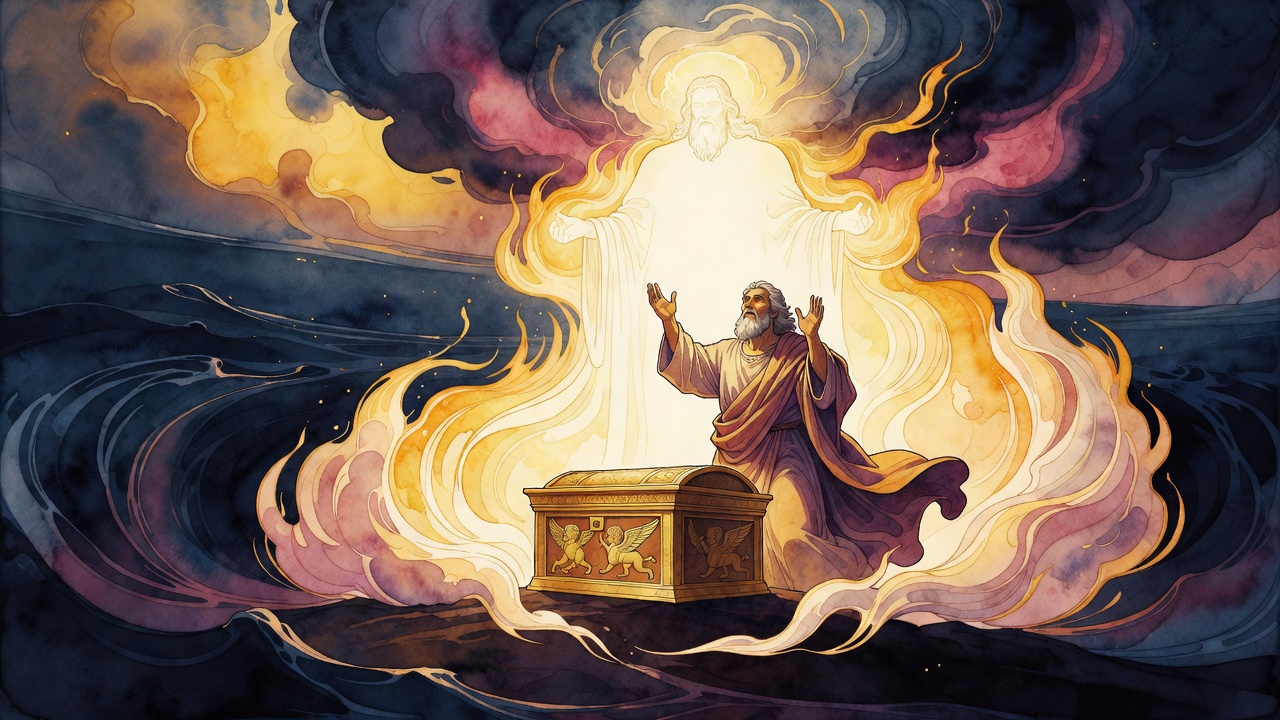
Darkness sat on the deep like a lid. Water under water, no edge, no shore, no lamp hung for anyone to find a handhold. When God chose to build, He did not start with beams. He wrapped Himself in light the way a king lights candles in a black room before he lays a single stone, and only then did He stretch the heavens like a curtain (Genesis 1:2) (Psalm 104:2).
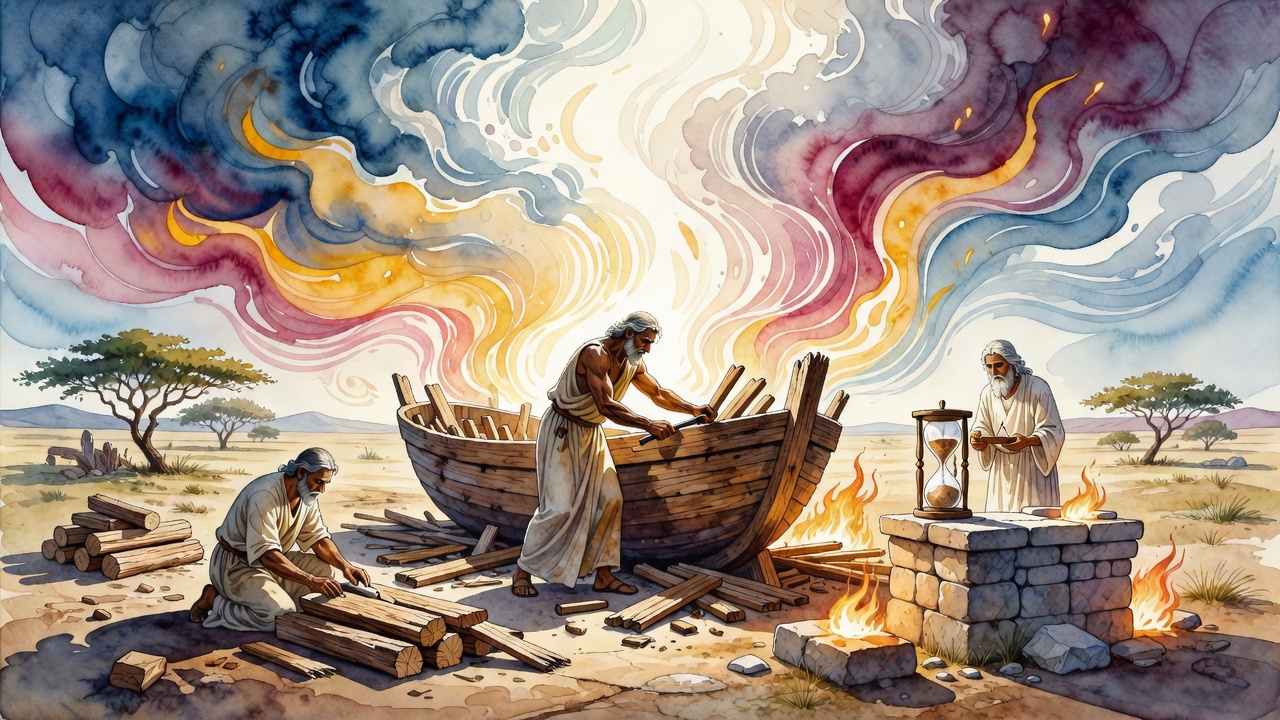
Bezalel Began With the Ark Before the Walls Click for full size

The order mattered. Light first. Then the house.

A King Lights Candles in the Dark

A palace in a lightless valley is a trap if the builder works blind. So the king strikes fire, sets candles along the floor, and only when the dark yields does he raise walls. Heaven worked the same way. The deep waited. The light went on around the Builder. Then the world came into shape under a light that was not yet sun or moon, only the garment He had put on to make room for making.

Men later argued which came first, darkness or world. One said darkness first. One said world first. The answer that held was older than the quarrel. When He decided, He surrounded Himself with light, and the opening of His word gave light to the simple (Psalm 119:130). Formless water would not hold a foundation until light made a path. He walked that path first, then set the beams of the world on it.

Moses Speaks and Bezalel Chooses the Center

Moses came down with the command. Build Me a Sanctuary. He found Bezalel among the workers, hands already stained with acacia and gold, and told him to go raise the Tabernacle. The court could have come first. The curtains. The outer frame that crowds notice. Bezalel did not start there.

He began with the ark.

He cut and joined acacia for the chest that would hold the words, the heart before the skin (Exodus 37:1). Shavings curled at his feet. He planed the boards until they met without a gap, then fitted gold where the command required gold. Moses had said build the house. Bezalel heard the older pattern under the order. Work starts with light. The ark was the place the word would rest. The word was the light. So the craftsman put the center in place while the courtyard still waited for pegs and boards. Anyone walking past saw a chest before a tent. Anyone who knew the deep saw a man copying heaven's first move.

Oil Beaten Harder Than the Eye Can Bear

God still wanted a light men could tend. The sun He had set in its casing left that tent in the heat of summer to ripen fruit, and the world could hardly stand it. The light was too much. Flesh flinched. Fruit swelled. Fields burned toward harvest under a fire no household could hang from a beam.

So Israel went to the olives. They climbed the trees, filled baskets, crushed the best fruit, and watched the first oil run clear into clean vessels. That first pressing they set aside for the lamp. The second went to the meal-offering. Pure olive oil beaten for the light (Exodus 27:20). Not the dregs. Not the easy last squeeze. The oil that cost the hardest strike, because the Sanctuary would not burn a lesser flame while the sun itself was already more than bodies could endure.

God said to Moses: in this world My sons are responsible for the light in the Sanctuary and must kindle it. They stand in the dark of a courtyard and keep a small flame that heaven has chosen over its own intolerable glare. A person in the dark can see into a lit room. A person in the light cannot see into the dark. God sees both (Daniel 2:22). Israel still had to strike the oil and light the wick. The duty did not lift because the sun already burned. The duty existed because that sun was too much, and the Tent needed a flame a man could feed without dying of it.

Lamps in Alleys and a Horn for David

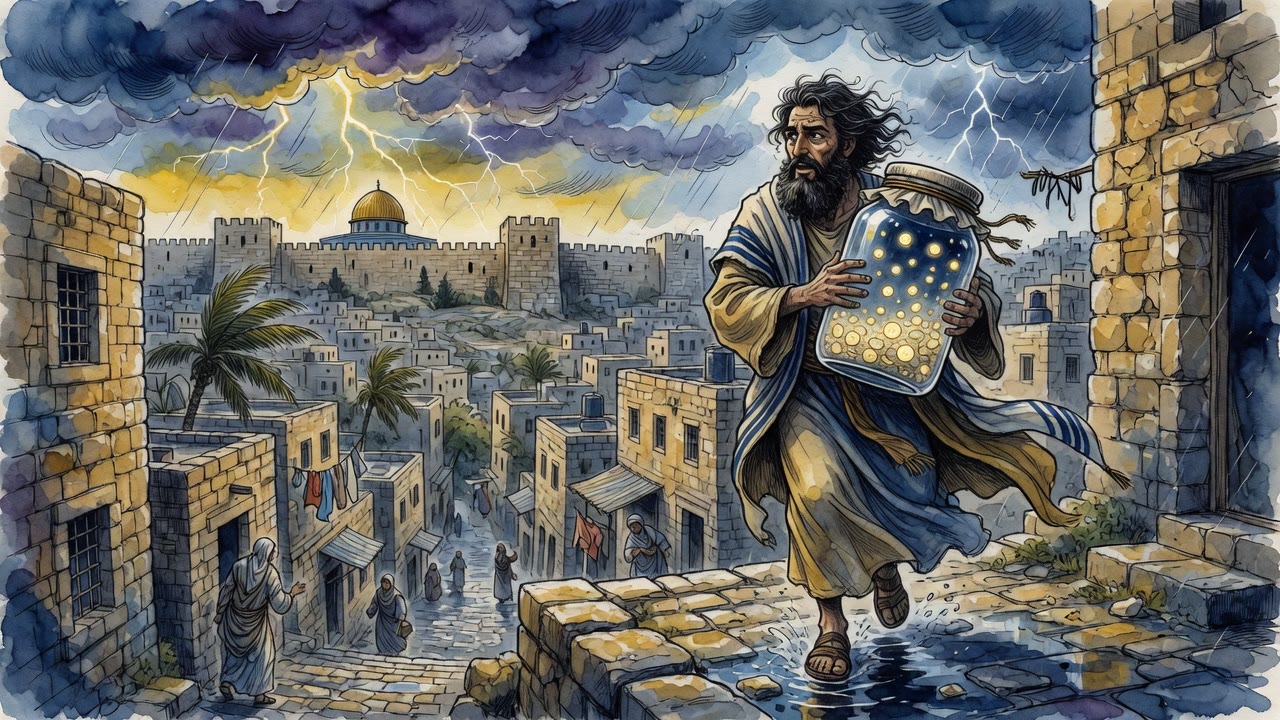
Outside the Sanctuary, men lit lamps in dark alleys so strangers would not fall. One house of Saul's line earned kingship in the memory of a grandfather who hung light for the public where no priest stood. Ner begot Kish. Light begot a throne (I Chronicles 8:33). The same pressure ran through alley and Tent. Someone had to put fire where feet would stumble, and the man who did it without being asked wrote a claim into his children's names.

God promised more. Because of that Sanctuary lamp, He would order a lamp for His anointed, a horn to shoot up for David (Psalm 132:17). The beaten oil was not only for tonight's watch. It was a claim on a future light no olive press could fill alone. Bezalel had already set the ark. The wick waited for pure oil. The world that began under God's own garment of light now held a chest of wood and a duty in human hands.

The dark of the deep was gone. The dark of the alleys remained. Between them stood a craftsman who had refused to raise walls before the place of the word, and a people crushing olives for a flame heaven could not replace with the sun.


← All myths

From the tradition

Sources

2 sources

The texts behind this telling. Some cards carry a translation of the source; others are our own retelling of it, and each card says which. Every card links out to the original.

Midrash Tanchuma, Tetzaveh 8Midrash Tanchuma

Retold in our words. Read the original at the link below.Townsend 1989 translation of Midrash Tanhuma, S. Buber Recension · CC-BY

Pure olive oil beaten for the light (Exod. 27:20). You find that a person standing in the dark can observe what is transpiring in a lighted place. However, anyone standing in a lighted place is unable to observe what is happening in the dark. The Holy One, blessed be He, however, can see in the dark or in the light, as it is said: He knoweth what is in the darkness, etc. (Dan. 2:22).

R. Judah the son of Eleazar said: On that day He set (the sun) within its casing. Whence do we know that? That is what is written: In them hath he set a tent for the sun (Ps. 19:5). At the time of the summer solstice, however, it leaves its casing in order to ripen the fruits. However, the world is hardly able to tolerate the sun. Why? Because its light is so intense. The Holy One, blessed be He, said: Though you are unable to endure the light that I created, I desire a light nevertheless. Why did they prepare the olive oil? They noticed that the trees had produced excellent olives, and so they took them and crushed them. The first oil pressed out was set aside for the lamp, and the second was set aside for the meal-offering in order to fulfill the verse: Pure olive oil beaten for the light.

The Holy One, blessed be He, said to Moses: Tell the Israelites that in this world my sons are responsible for the light in the Sanctuary and must kindle it, but in the Messianic days, because of that lamp, I will bring you a Messiah who is likened unto a lamp, as it is said: There will I make a horn to shoot up unto David, there have I ordered a lamp for Mine anointed (Ps. 132:17).

Whosoever offereth the sacrifice of thanksgiving honoreth Me; and to him that ordereth his way aright will I show the salvation of God (ibid. 50:23). R. Menahem the son of Yosé said: This verse alludes to those who light lamps in dark alleys for the benefit of the public. R. Simeon the son of Lakish declared: Saul was worthy of kingship because his grandfather lit lamps in dark alleys for the sake of the public. One verse tells us: And Ner (“light”) begot Kish (I Chron. 8:33), and another verse says: Kish was the father of Saul, and Ner the father of Abner was the son of Abiel (I Sam. 14:51). In this verse he was called Abiel, but because he lit lamps in dark alleys for the public good he was also called Ner (“light”). The Holy One, blessed be He, declared: In this world you require a light, but in the future, Nations shall walk at thy light, and kings at the brightness of thy horizon (Isa: 60:30).

Full source
Midrash Tanchuma, Vayakhel 6Midrash Tanchuma

Retold in our words. Read the original at the link below.Townsend 1989 translation of Midrash Tanhuma, S. Buber Recension · CC-BY

And Bezalel made the ark of acacia wood (Exod. 37:1). Scripture states elsewhere: The opening of Thy words giveth light; it giveth understanding unto the simple (Ps. 119:130). When the Holy One, blessed be He, created His world, the entire world was composed of water, as it is said: And darkness was upon the face of the deep (Gen. 1:2). R. Judah and R. Nehemiah discussed this verse. R. Judah said: The Holy One, blessed be He, created the darkness first, and then He created the world. R. Nehemiah contended that the Holy One, blessed be He, created the world first and then the darkness. R. Simeon the son of Yehozadak inquired of R. Samuel about this. He said to him: You are an authority on aggadic traditions, so tell me, how did the Holy One, blessed be He, create His world? When He created the world, did He create the light first? R. Samuel the son of Nahman answered: When He decided to create His world, He surrounded Himself with light, and then He created the world, as is said: Who coverest Thyself with light as a garment, and that is followed by: Who stretchest out the heavens like a curtain (Ps. 104:2). Therefore Scripture states: The opening of Thy word giveth light; it giveth understanding to the simple (ibid. 119:130).

R. Judah the son of Ilai said: This may be likened to a king who wished to build a palace in a dark place. First he lit candles, and then he built (the palace). The Holy One, blessed be He, did likewise. The world was dark, as it is said: And darkness was on the face of the deep (Gen. 1:2), and so He wrapped himself with light and created the world. Hence, the opening of Thy words giveth light; it giveth understanding unto the simple (Ps. 119:130). The righteous learn from the Holy One, blessed be He, that they should begin with light. How do we know this? At the time that Moses told Bezalel that the Holy One, blessed be He, had said Build Me a Sanctuary, Moses told him: Go build the Tabernacle. What did he begin with? Bezalel began with the ark.

Scripture states elsewhere: Give to a wise man, and he will be yet wiser; teach a righteous man, and he will increase in learning (Prov. 9:9). Moses told him to begin by building the Tabernacle, but he began instead with the ark. Why? Because the ark is the place where the Torah, which is the light of the world and the world-to-come, is kept.

Teach a righteous man, and he will increase in learning. This verse alludes to Noah. How is that? Of every clean beast thou shall take to thee seven and seven, and of beasts that are unclean two and two (Gen. 7:2), but when the time comes to depart from the ark, it is written: He took of every clean beast, and of every clean fowl, and offered burnt offerings on the altar (ibid. 8:20), even though he had not been commanded to do so. Noah said to himself: The Holy One, blessed be He, told me to take a greater number of clean beasts than of unclean ones. He must have done this so that I might offer them as burnt offerings and sacrifices. Therefore he took of every clean beast, and every clean fowl, and offered burnt offerings on the altar. Hence, Teach a righteous man, and he will increase in learning (Prov. 9:9).

Give to a wise man, and he will yet be wiser refers to Bezalel. At the time the Holy One, blessed be He, told Moses to erect the Sanctuary, Bezalel asked him: “What is the purpose of this Sanctuary?” Moses replied: “So that He might dwell therein and teach the law to Israel.” Then Bezalel said: “But where will the Torah be placed?” Moses answered: “After we have made the Sanctuary we will make the ark.” Bezalel replied: “That is not the way. Let us make the ark first and then we will build the Sanctuary.”

Full source