Why Moses Stood Outside the Tabernacle and Waited
Moses built the Tabernacle and would not enter. He stood at the door until God called, because completing a sacred space does not grant ownership.
Table of Contents
 Click for full size
The Builder at the Door
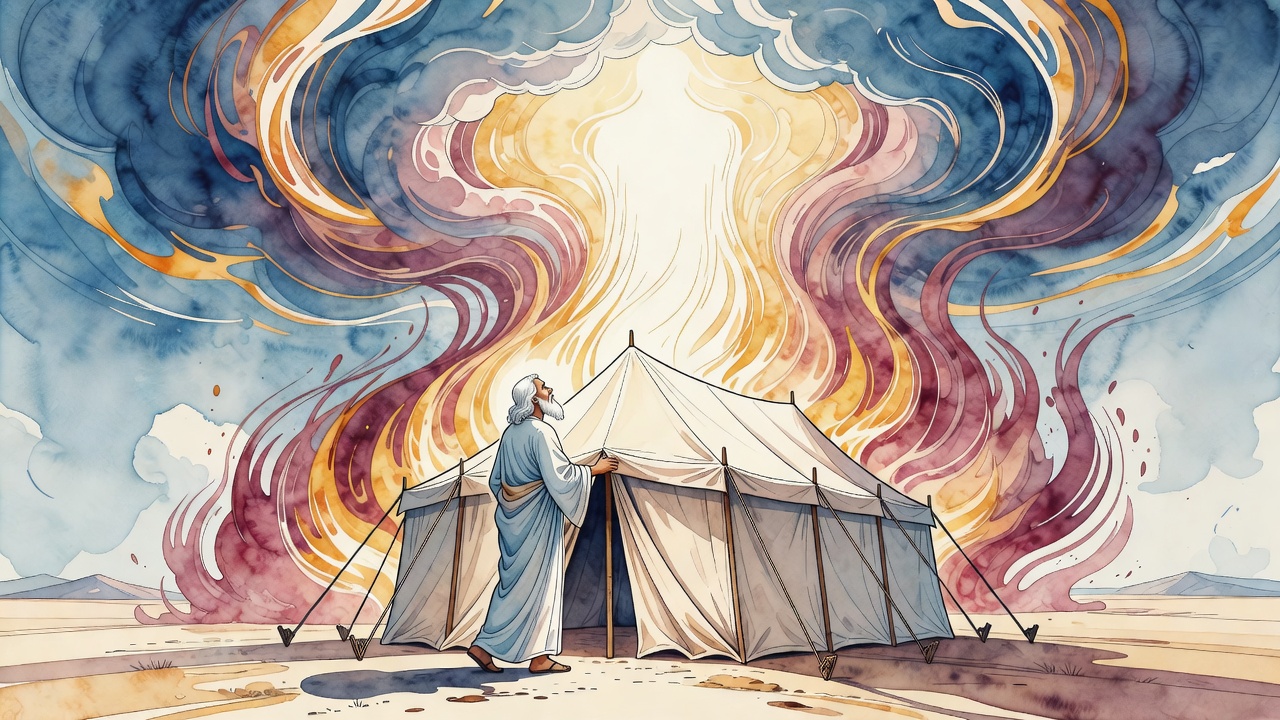
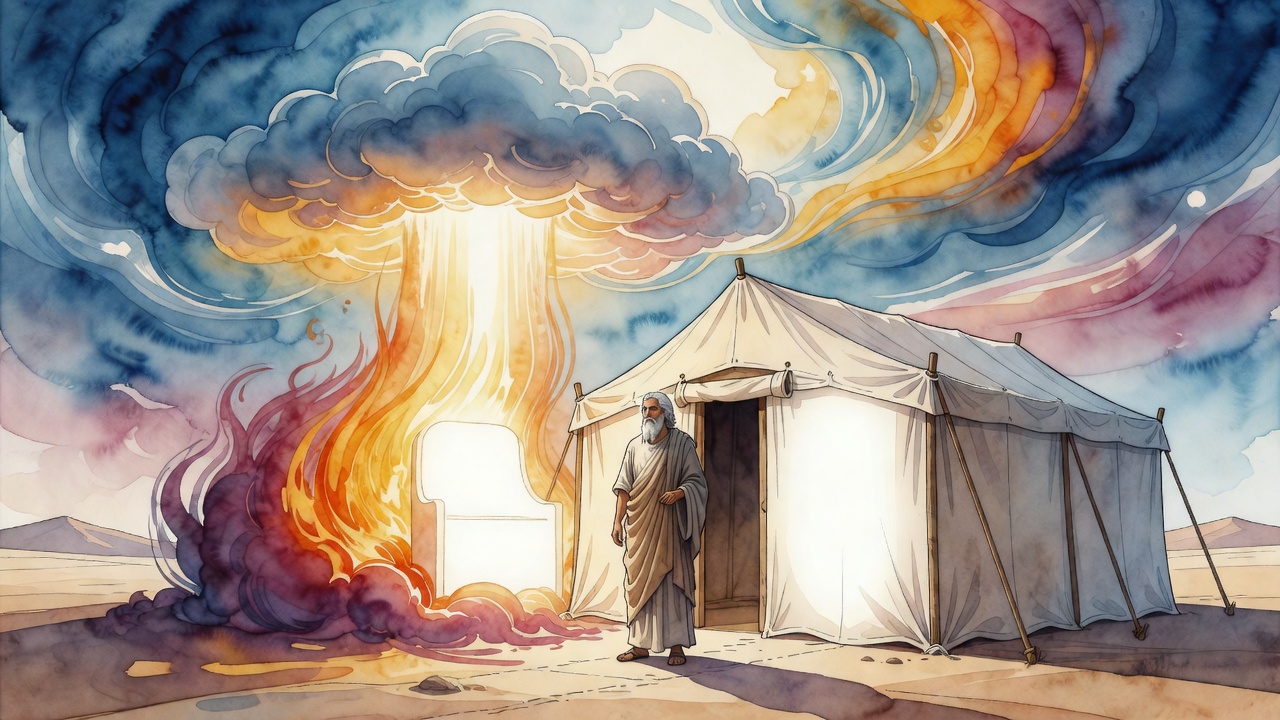
Moses had built the Tabernacle. The last board was set, the last curtain hung, the last socket fitted. The Cloud of the Shekinah rested on the finished structure and the glory of God filled it completely, so completely that Moses could not enter (Exodus 40:35). But then the cloud lifted and the Presence settled inside rather than over. And Moses still did not walk in.
He stood at the door and reasoned in his heart. Targum Jonathan on Leviticus 1, the Aramaic Torah paraphrase shaped in Palestine between the second and seventh centuries CE, reports the argument Moses made to himself at that threshold. Sinai had been holy for three days and even then he had not been permitted to climb until God spoke to him. The Tabernacle's holiness was permanent, everlasting, not a three-day consecration for a specific event. If even temporary holiness required an explicit invitation, how could he enter permanent holiness without one?
The Cloud That Pushed Him Back
Targum Pseudo-Jonathan on Exodus 40:35 uses different language for the same event but arrives at the same place. Moses was not able to enter the Tabernacle of Ordinance because the Cloud of Glory rested upon it and the glory of the Lord's Shekinah filled the Tabernacle. The Aramaic introduces two terms where the Hebrew has one: the Cloud of Glory and the Shekinah. These are two aspects of the same divine presence operating differently. The cloud was visible, occupying physical space. The Shekinah was the indwelling presence, the aspect of God that had agreed to rest in a man-made structure among human beings.
Moses, who had survived the burning bush, Sinai's fire, forty days above the clouds, and the afterglow that made Israel unable to look at his face, could not push past the filling of that tent. The man who had argued with God about destroying Israel stood outside his own construction and waited.
Why God Called to Moses Alone
The opening word of Leviticus in Hebrew is Vayikra: and He called. The Midrash Rabbah on Leviticus, Vayikra Rabbah compiled in Palestine around the fifth to seventh centuries CE, asks why God called only to Moses and not to the other leaders of Israel. The answer is not a simple hierarchy of office. It is a history of approach. Moses had fled from greatness. He had argued that he was not a man of words, that his brother was more eloquent, that the mission should be given to someone else. Everyone who chases authority finds it flees from him. Whoever runs from authority finds it chasing him. Moses spent his life retreating from significance, and significance kept finding him at each new station: the bush, the sea, the mountain, the Tent of Meeting.
The midrash adds that Moses outranked the angels in one specific respect. The angels cover their faces before the divine throne with their wings and do not know where the Shekinah rests. Moses spoke with the Presence face to face, lifted the veil, and yet was still humble enough to stand at the door of the Tabernacle and wait for a call. Knowledge and humility together: the combination the angels have separately but a human being can hold in one person.
Moses Thought His Work Was Done
Ginzberg's Legends of the Jews, the synthesis of rabbinic tradition published 1909-1938, preserves a tradition from the Midrash that captures what Moses was thinking while he stood at the door. He believed his work was finished. He had led Israel out of Egypt, received the Torah, guided them through the desert, and built the sanctuary. Now Israel had a place to connect to God. What else could be needed from him?
God's response to this reasoning, in the midrashic account, is essentially: you are not done. The Tabernacle's completion was not Moses's retirement from service. It was the beginning of the Levitical legislation, the laws of sacrifice and purity and priestly service that fill the rest of Leviticus. The call at the door was not just an invitation. It was the opening of a new phase of obligation. Moses thought he had finished building. What he had actually done was create a space where his teaching would need to begin again.
← All myths