Abimelech Argues an Innocent Nation Out of a Death Sentence
A dream told the king of Gerar he was already a dead man. He had never touched the woman. What he argued for first was the kingdom that had no part in it.
Table of Contents
 Click for full size
A Dead Man in His Own Bed
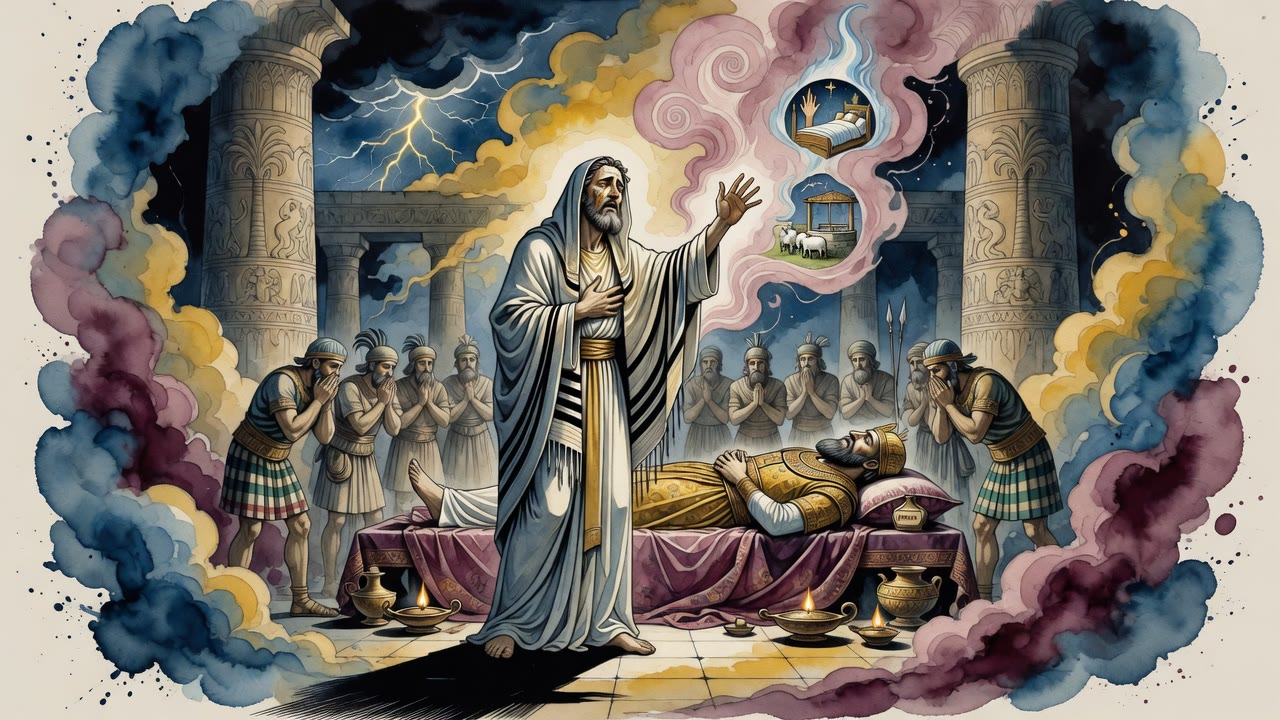
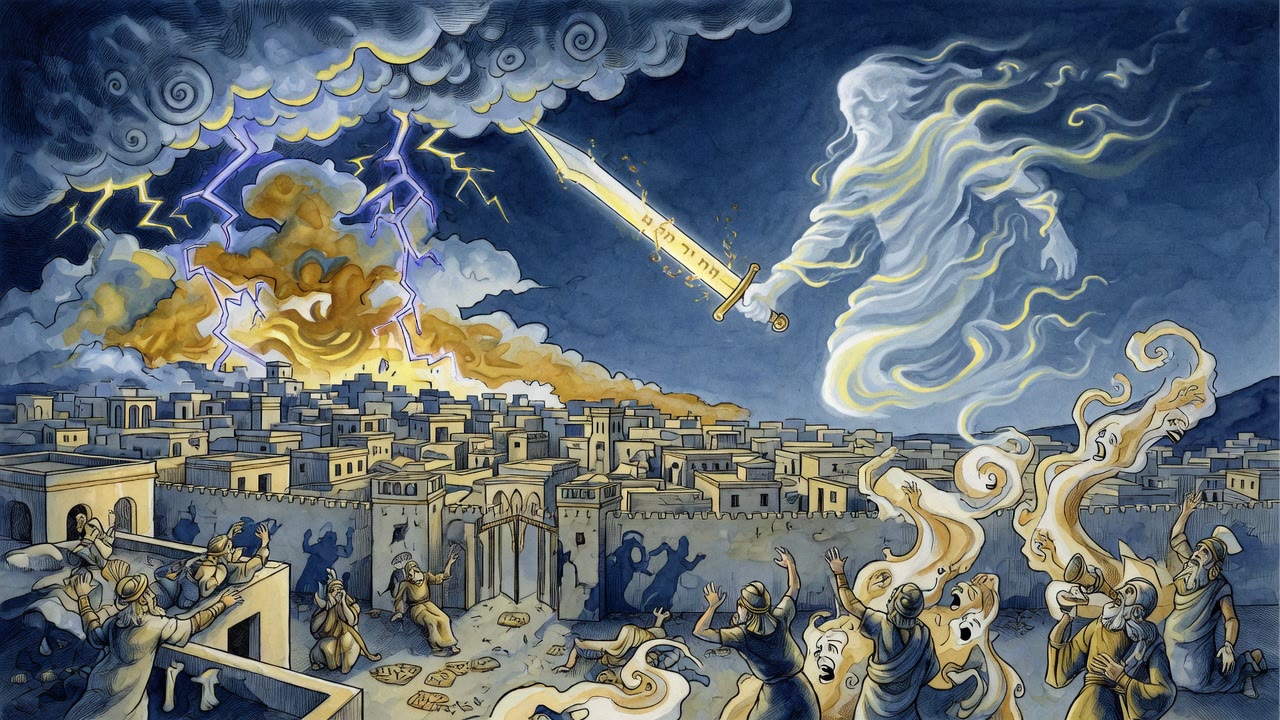
The woman had come into the house that afternoon. By the middle of the night the king of Gerar was being sentenced in his sleep.
You are a dead man, God told him, on account of the woman you have taken. She belongs to a husband.
Abimelech had not gone near her. He had taken her the way a king takes anything offered to him by a traveller who wants safe passage, and the traveller had said sister, and the woman had said brother, and the household had made up a bed. Nothing had happened yet. He was still condemned.
A People That Has Not Sinned
He did not wake up. He argued inside the dream, and the Aramaic keeps the shape of the thing he said, which is the shape of a defence counsel on his feet.
Lord, he said. Shall the son of a people that has not sinned, a people it is right to acquit when the case is heard, be put to death?
He was under sentence of death, and the first name out of his mouth was not his own. An innocent nation, he argues, and the nation is what he sets in front of the Judge before he says a word about himself. Farmers, potters, herdsmen, women at the ovens in the lower town, none of them consulted about a beautiful stranger in the palace, all of them standing in the dock behind him because of one decision made in one afternoon by one man.
Then he made the smaller case, the one about himself. He told me she was his sister. She told me the same. I did this with a whole heart and clean hands.
The answer came back in the same dream. I know you did. That is why I held you back. I did not let you touch her. Now send the woman home, because her husband is a prophet, and he will pray for you, and you will live. Keep her, and you die, and everything you own dies with you.
Morning in Gerar
He was up before the light. He called every servant in the house and told them the entire thing, the sentence, the plea, the verdict, and the men stood in the grey courtyard and were badly frightened, because a king's dream is never only a king's dream when the ruling covers the whole household.
Then he sent for Abraham, and the interrogation went the wrong direction from how these things usually go.
What have you done to us? What did I ever do to you, that you should bring this size of a sin onto me and onto my kingdom? Things are done to me here that are not done. What did you see, when you looked at this place, that made you do it?
And Abraham, who had argued with heaven over Sodom and won concessions, stood in front of a Philistine king and said the small true thing. I thought there was no fear of God in this place. I thought they would kill me to get my wife.
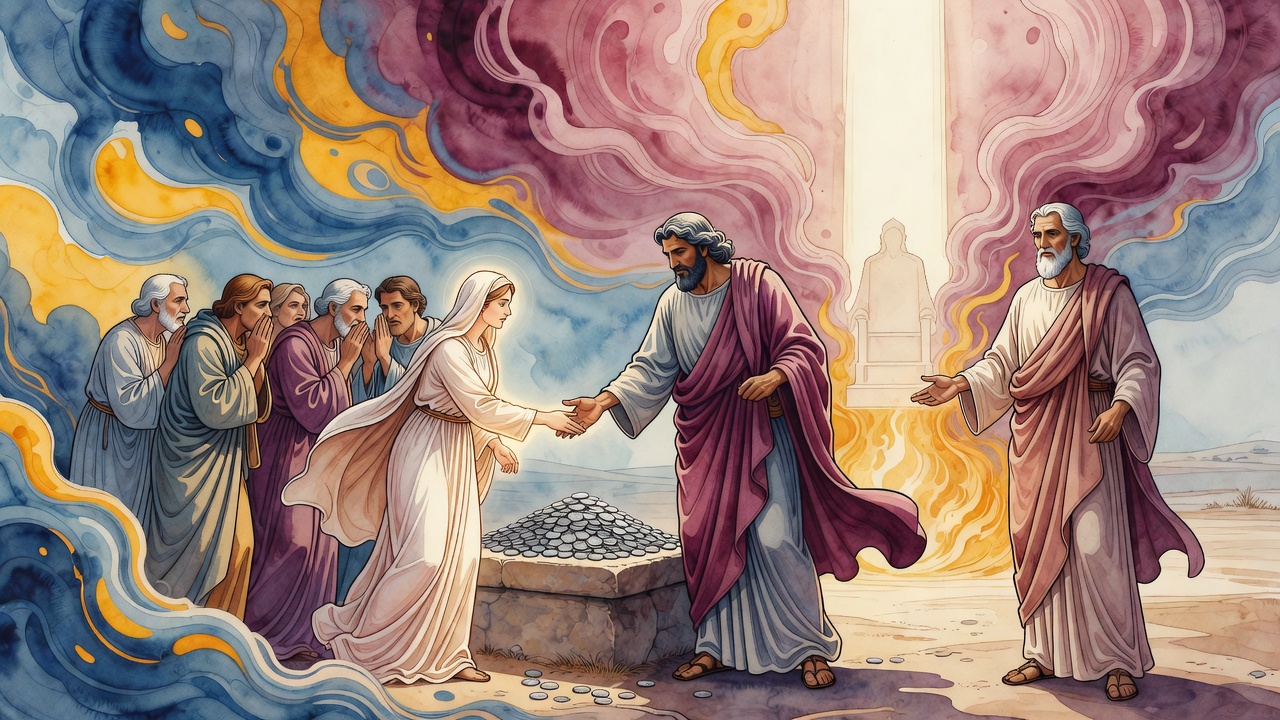
Sheep came out. Oxen. Servants. Sarah was walked back across the courtyard to her own tent. A thousand pieces of silver were counted out to the man Abimelech was pointedly still calling her brother, and the king said what the silver was for, in front of everyone, so that no one in Gerar or anywhere else could ever look sideways at her again.
The Wombs of Gerar Opened
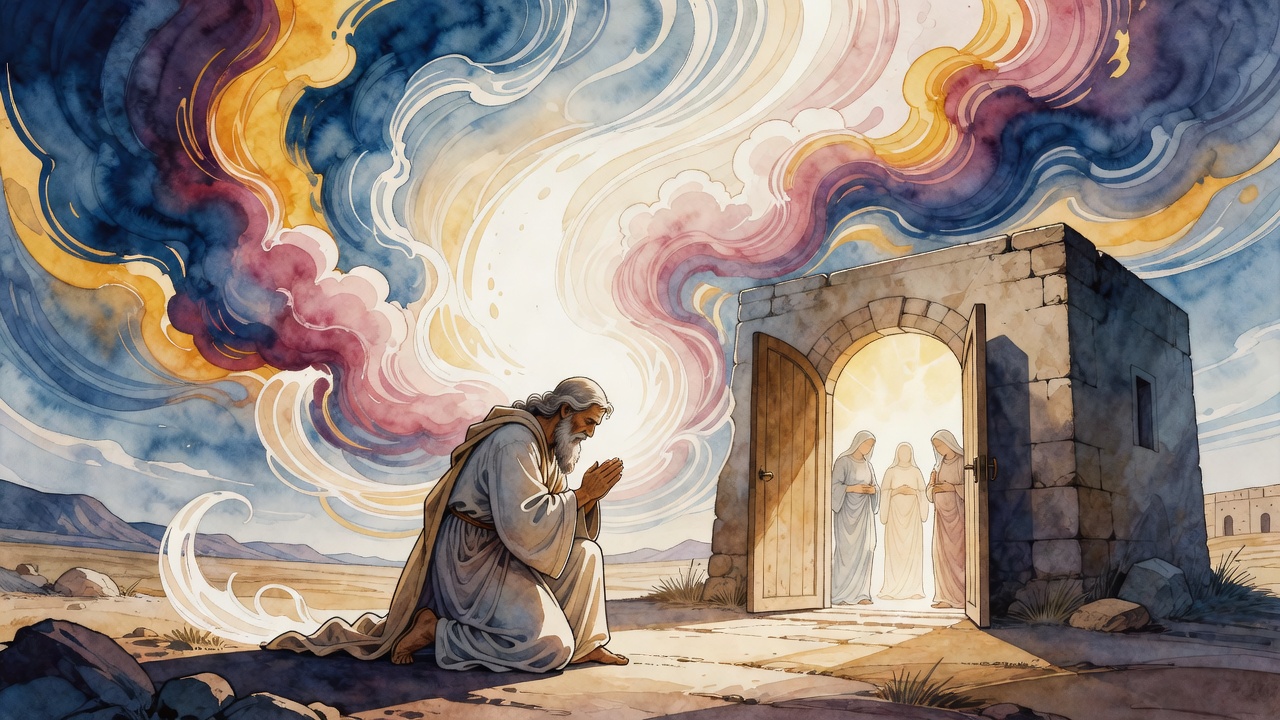
Then the wronged man prayed for the man who had wronged him, and the strangest sentence of the whole business turns out to be the last one.
Heaven had shut every womb in that house. Not the queen alone. Every woman under Abimelech's roof, closed for as long as another man's wife slept in it. Abraham prayed, and they opened, and the house that had gone silent began to fill again with the noise a house makes.
The king had learned exactly what it costs to take something heaven is standing over. Abraham had learned what a half-truth does when it is loose in someone else's kingdom.
Seven Lambs Set Apart
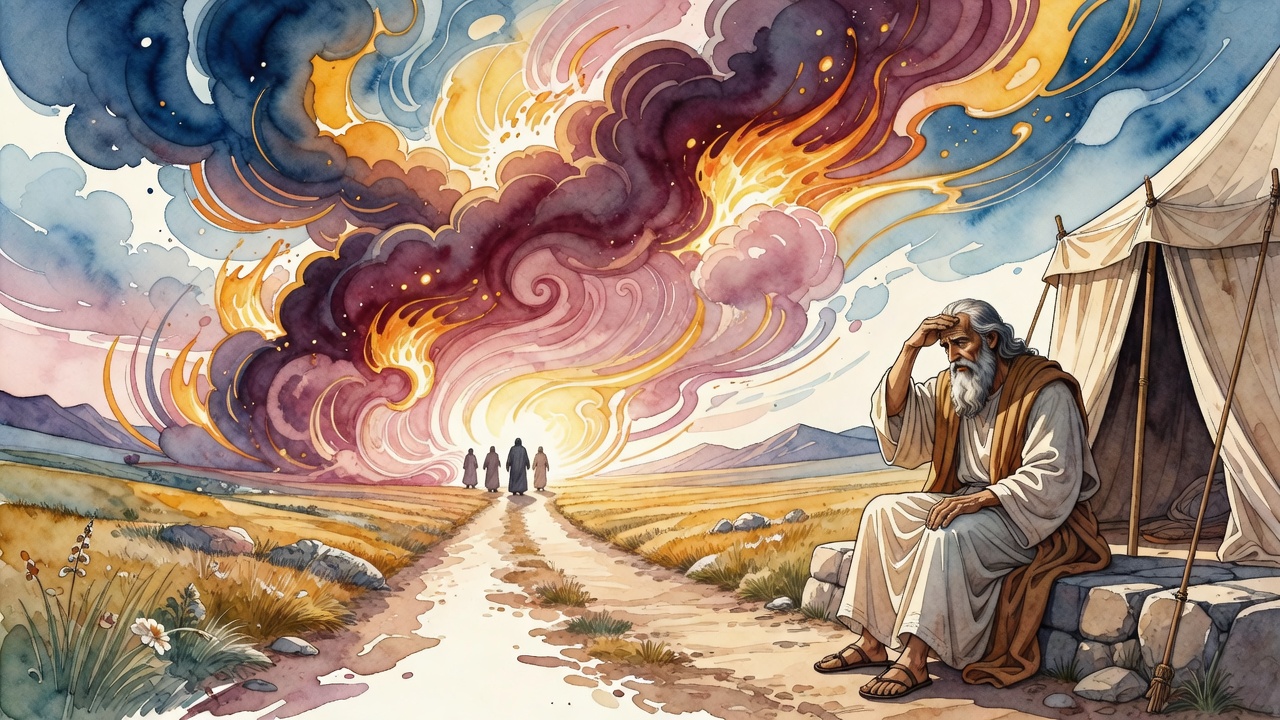
Years later Abimelech came out to find him again, and this time he brought Phicol, the commander of his army, which tells you how the visit was meant to be read.
God is with you in everything you do, he said. Swear to me here. Not to me only. To my son and to my son's son. Deal with me the way I dealt with you.
Abraham said he would swear, and then, before the oath, he laid a complaint of his own on the table. Your men took my well. Seized it and kept it.
I never heard of it, Abimelech said. You never told me. I am hearing it now.
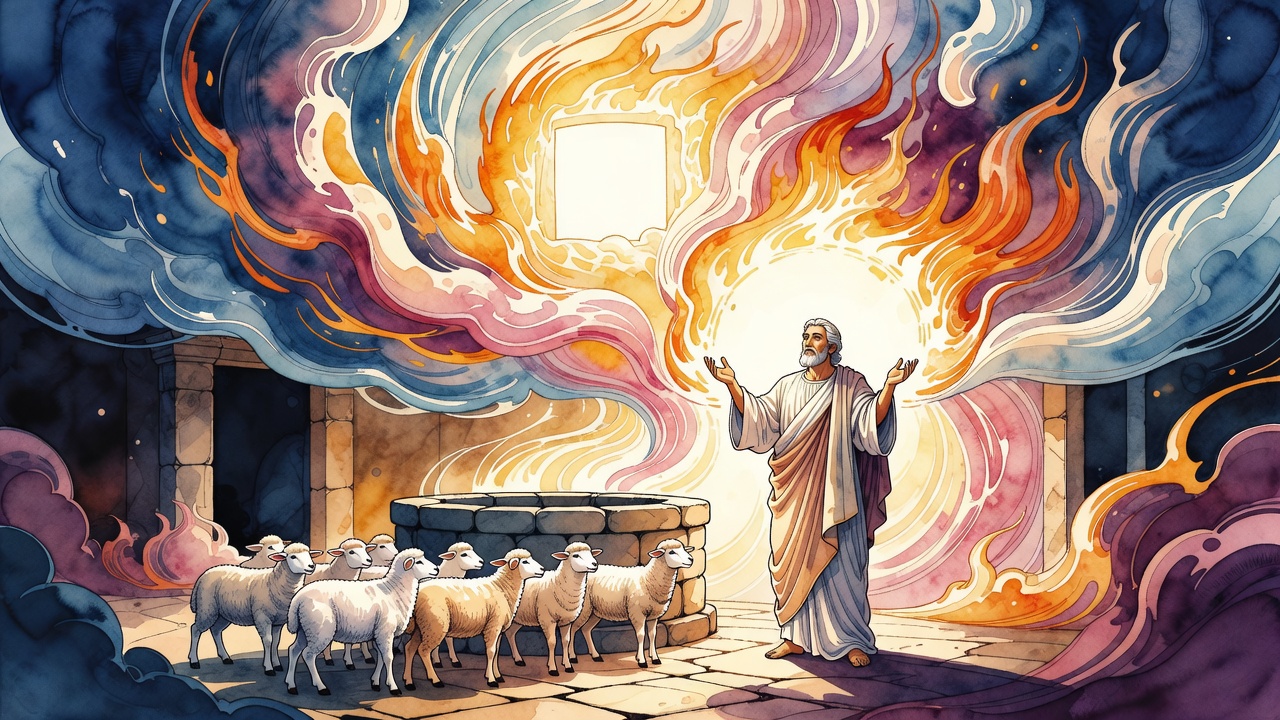
So the sheep and the oxen changed hands again, and then Abraham walked seven ewe lambs out of the flock and stood them apart from everything else, and the king asked what they were for. Take them from my hand, Abraham said, and let them be a witness that this well is mine and I dug it.
Two men swore over the water. The Aramaic keeps the old name of the place, the Well of the Seven Lambs, and the seven stood there in the dust, seven mouths that could not talk and would not have to. Then Abimelech and his general turned and rode back toward the coast, and the well behind them had a name that counted.
← All myths