Abimelech Paid Silver as a Veil Over Eyes
Sarah spent a night in the palace at Gerar. The king had not touched her, and he paid a thousand silver coins in public to stop the talk.
Table of Contents
 Click for full size
Coins on the Table of a King
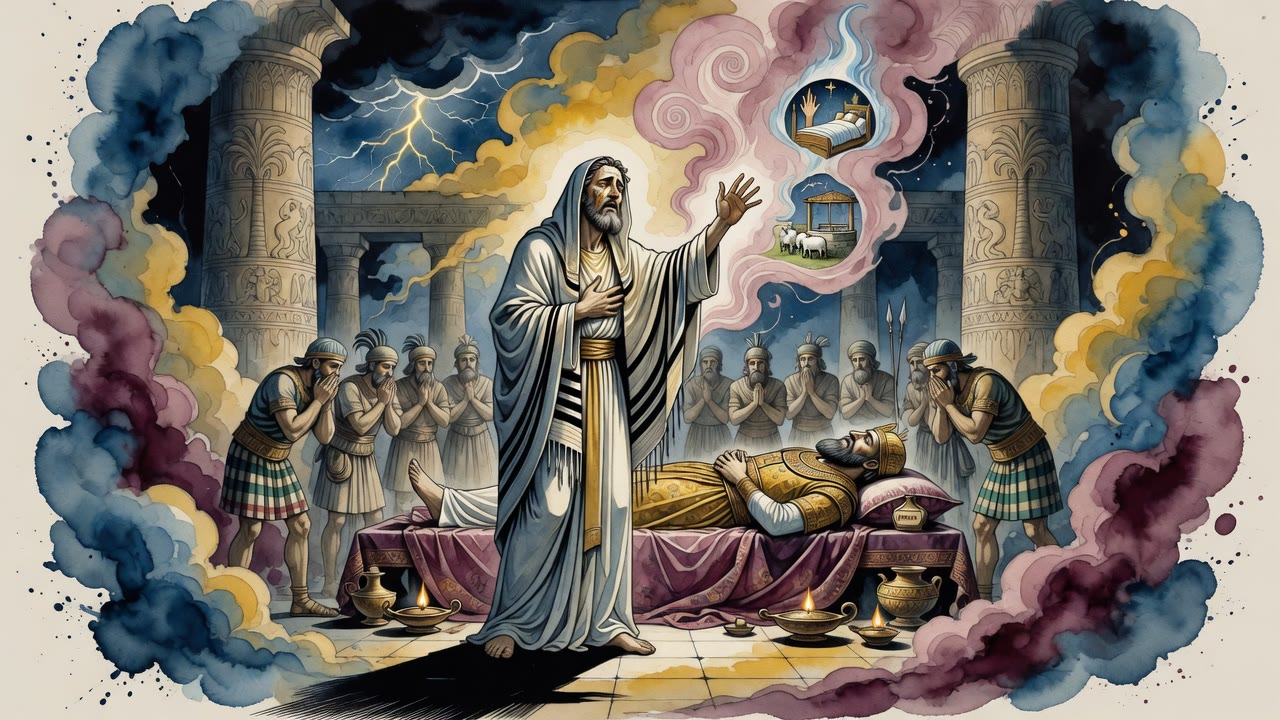
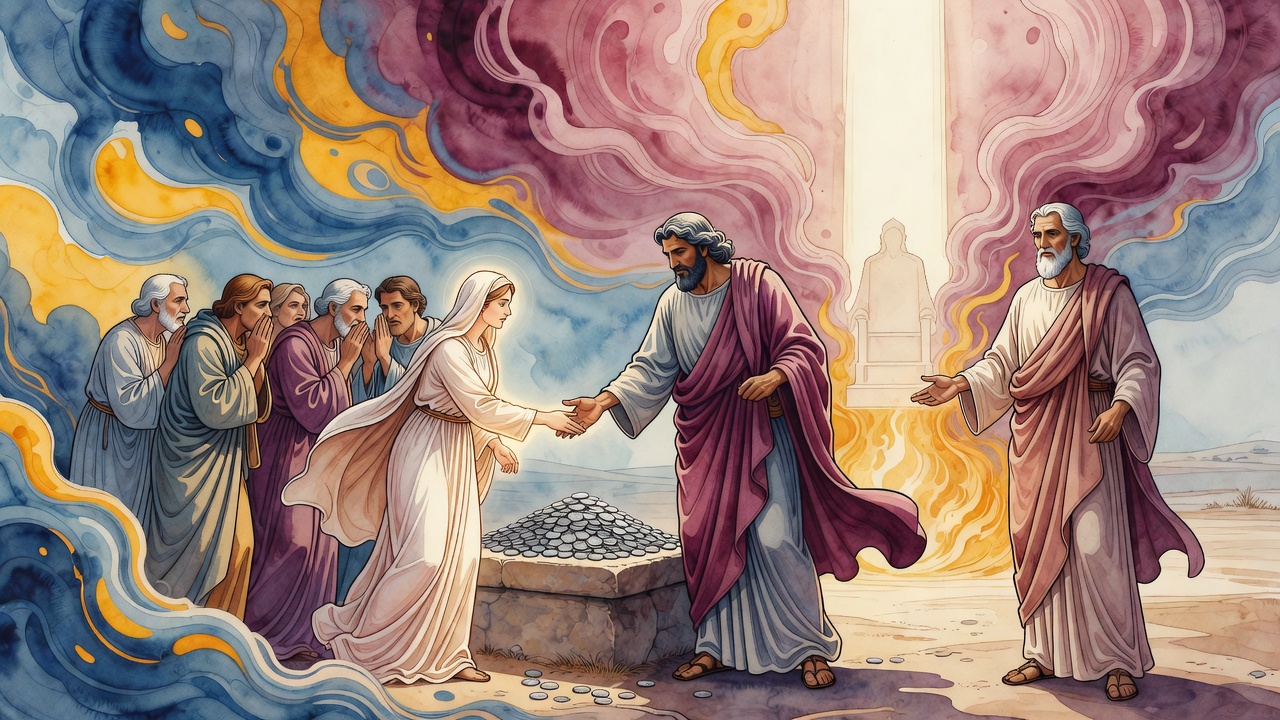
Abimelech set the silver where every courtier could see it. A thousand sileen. He spoke not first to the men of the gate but to Sarah, who had spent a night hidden from her husband under a royal roof while the king's hands stayed away. Behold, I have given a thousand sileen of silver to thy brother; behold, they are to thee a veil of the eyes, inasmuch as thou wast hidden from thine husband one night, and I would have seen thee.
He did not pretend the coins could buy what almost happened. Were I to give all that I have it would not suffice. The silver was a veil, a public cloth over watching eyes, a declaration that the house of Gerar would not treat Sarah as prey and would not let the street invent a story worse than the truth. The words were debated. Then Abraham knew that Abimelech had not come near Sarah his wife.
What a Veil Can and Cannot Cover
A veil does not erase the night. It stops the night from breeding forever in other people's mouths. Sarah had been taken into a palace on the edge of a lie about brotherhood. Heaven had already closed every womb in Abimelech's house until the matter was cleaned. Now the king paid in metal what he could not pay in innocence. Abraham received the knowledge that mattered most: his wife had not been touched.
Still the king did not sleep easily. A man who almost steals a prophet's wife learns to watch how that prophet walks afterward.
The General and the Stranger's Tent
Abimelech took Phikol, chief of his host, and walked out to Abraham's tent as a king walks when he has decided fear is wiser than pride. They spoke a sentence that told what the surrounding world had noticed. The Word of the Lord is in thine aid in all whatsoever thou doest.
Not luck. Not clever wells alone. The Memra, the Word of the Lord, standing as help beside a sojourner who dug and prayed and would not stay small. A Philistine monarch named aloud the power that made Abraham dangerous to wrong and safe to treaty.
Three Generations Under One Oath
Abimelech did not ask for a blessing for next season. He asked for a chain. Swear to me here, by the Word of the Lord, that thou wilt not be false with me, nor with my son, nor with the son of my son. Three lives. His own, the child not yet gray, the grandchild not yet born. According to the kindness which I have done with thee, thou shalt do with me, and with the land in which thou dwellest.
Abraham heard the shape of the request. Kindness answered kindness. Land answered land. The same Word Abimelech had seen as help now became the Name under which an oath could bind future men who were not yet standing in the dust of Gerar.
The Treaty That Outlived Both Speakers
They swore. Wells and flocks and borders would still quarrel in later years, because shepherds quarrel, but the first knot was tied in public fear of Heaven. Abimelech went home with a veil of silver behind him and a three-generation promise ahead of him. Abraham remained a stranger with the Word at his side, richer in silver and poorer in illusions about how kings learn theology. They learn it when a house is closed, a wife is returned, and a general is forced to admit that something larger than armies walks with a tent-dweller.
How a King Learns a Name
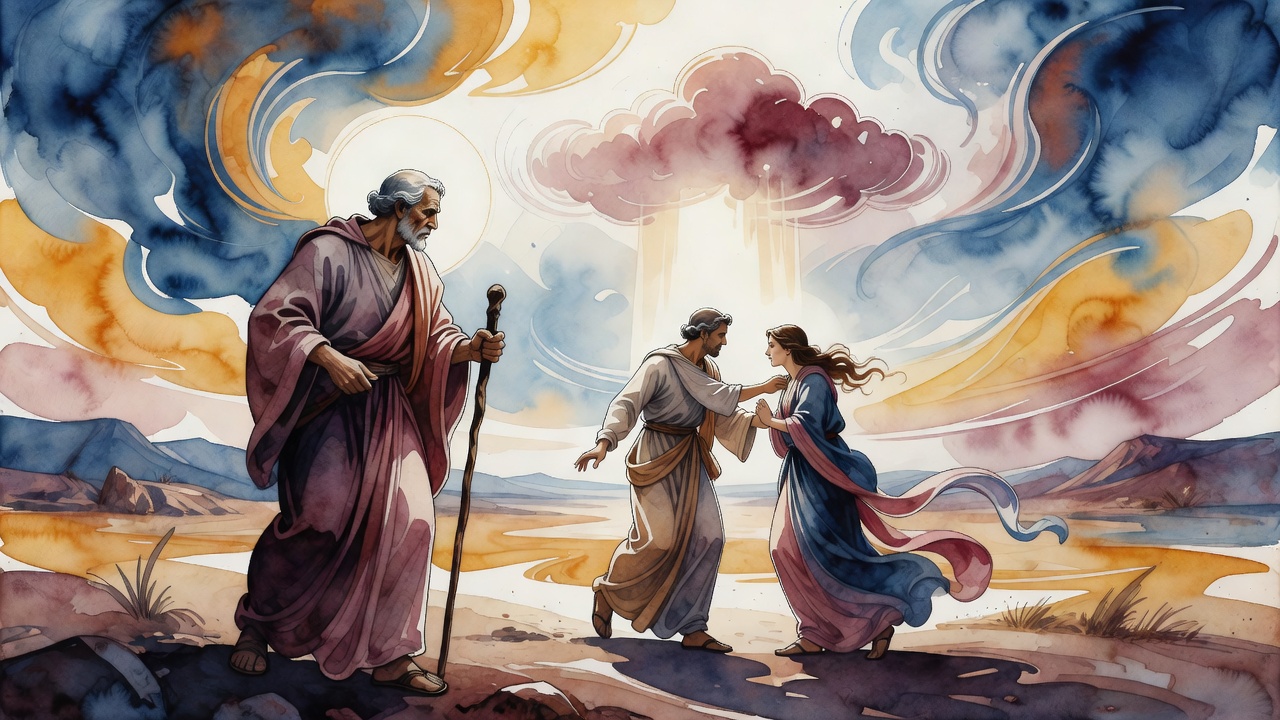
Abimelech had begun as a man who took what courts take. He ended the week as a man who paid what courts pay when Heaven closes wombs and opens them again only after restitution. The thousand shekels were not romance. They were policy. A veil of the eyes teaches a city what it is no longer allowed to stare at. Sarah walked out of the palace with her dignity argued in public metal, and Abraham walked beside her knowing the king's body had not crossed the last line.
When Phikol came along to the tent, the military rank itself became a confession. Generals do not escort treaties with sojourners unless the sojourner has become a strategic fact. The Word of the Lord in Abraham's aid was, to Abimelech, as visible as a second army. He could not field a host against it. He could only name it and bind himself under it.
The three-generation oath stretched past both men's funerals. Son and son's son would inherit a promise made in Gerar dust, the way later generations inherit border stones. Abraham swore by the same Memra the king had just confessed. Kindness answered kindness, land answered land, and the Philistine court learned that theology sometimes arrives as plague, silver, and a treaty spoken outdoors where soldiers can hear.
← All myths