Sarah Nursed Nations While Abimelech Feared Dawn
Scoffers doubted Isaac was hers, so Sarah nursed the nations' infants. Abimelech watched the dark all night after God warned him over the sister-wife.
Table of Contents
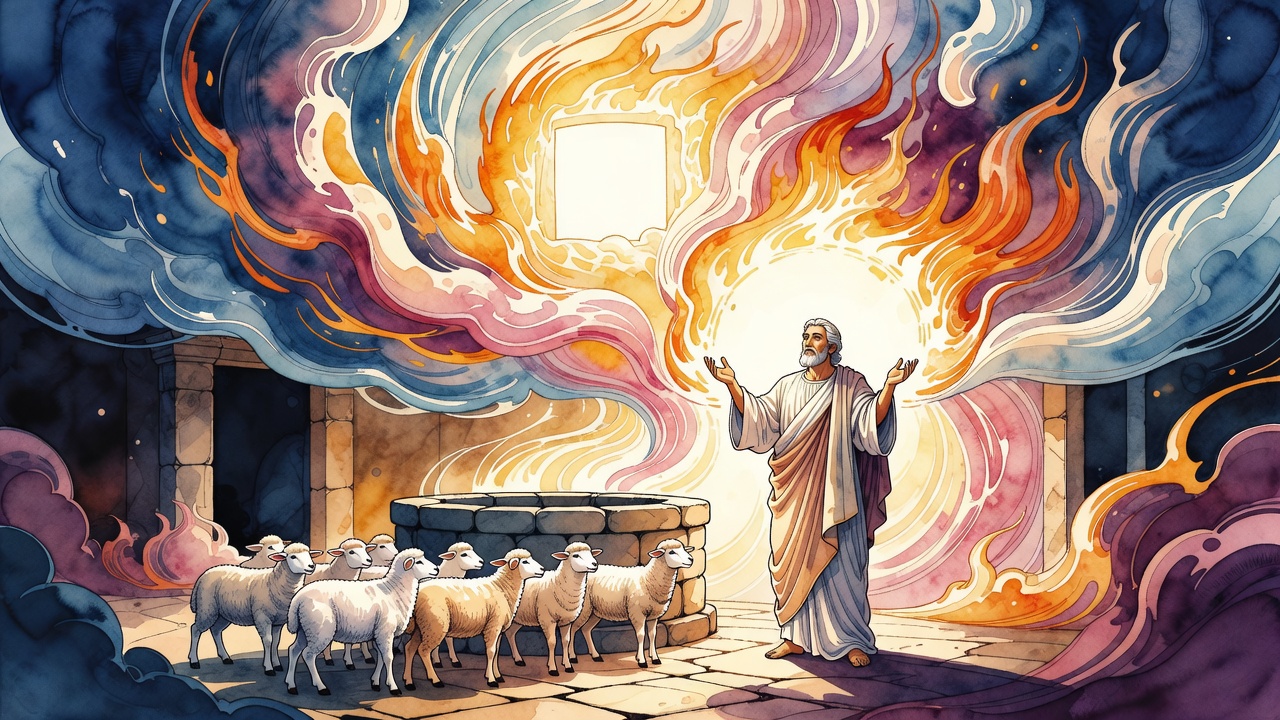
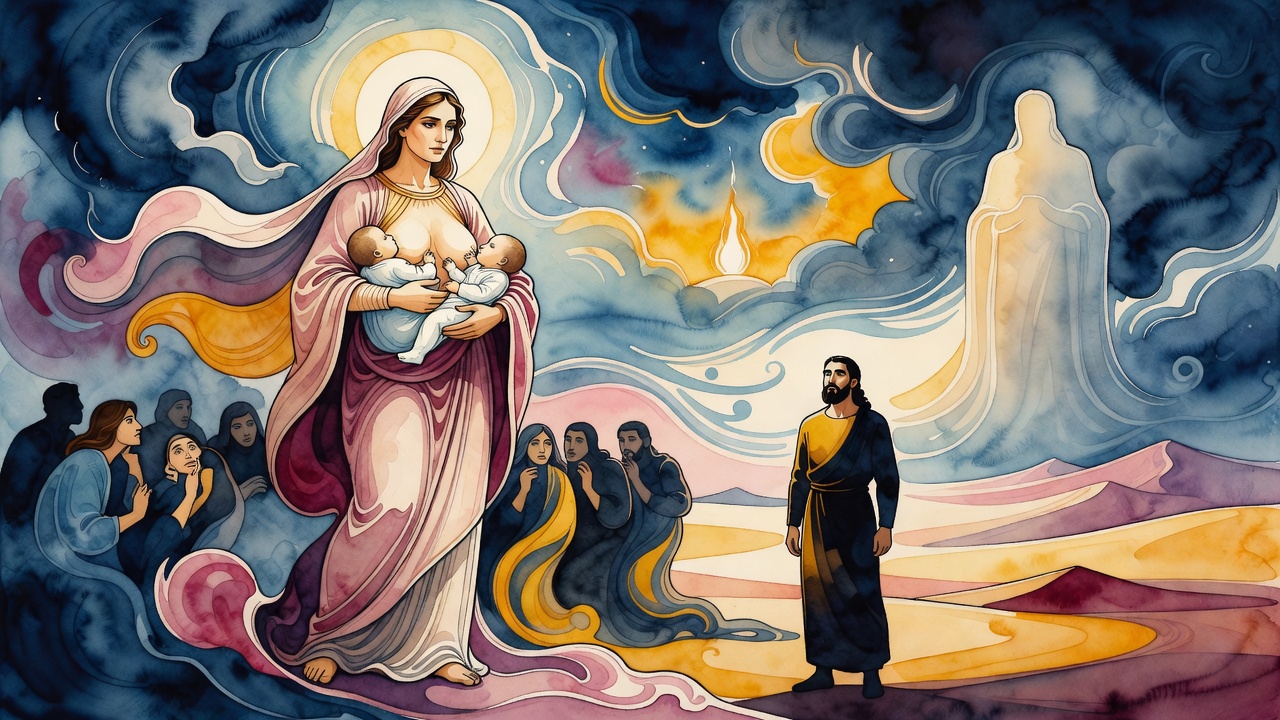
When Sarah opened her arms to nurse, scoffers had whispered that no child was truly hers. Age had been a public joke. The laugh in the tent had traveled farther than the promise. So she nursed openly, and not only Isaac. The proof had to be visible, liquid, and impossible to deny.
 Click for full size
Egyptian women brought their infants. The milk of the righteous mother passed into them. Every one of those children, our rabbis taught, grew to embrace the God of Israel. Do not be astonished. A righteous bosom remakes whatever rests within it. The scoffers came for spectacle. They left with wet-mouthed infants who would one day refuse their fathers' idols.
Milk That Crosses Borders
The line at Sarah's tent was not only Hebrew. Nations brought their hungry. She did not ration holiness by bloodline at the breast. What left her body entered foreign veins and rewrote them toward the Name. Years later, when those children stood among peoples who bowed to wood, some of them would remember a taste that did not belong to Egypt's gods.
Look also at Eliphaz, son of Esau, reared on Isaac's knee. He became righteous, and the Holy Spirit settled upon him. "The fruit of the righteous is a tree of life." Nearness to a righteous house is not a small accident. It is a graft. Isaac's lap did for Eliphaz what Sarah's milk did for the strangers' infants. Contact is contagion, and here the contagion is good.
A house that almost died of barrenness becomes a spring that other nations drink from without asking leave of their own priests.
Abimelech Counts the Hours
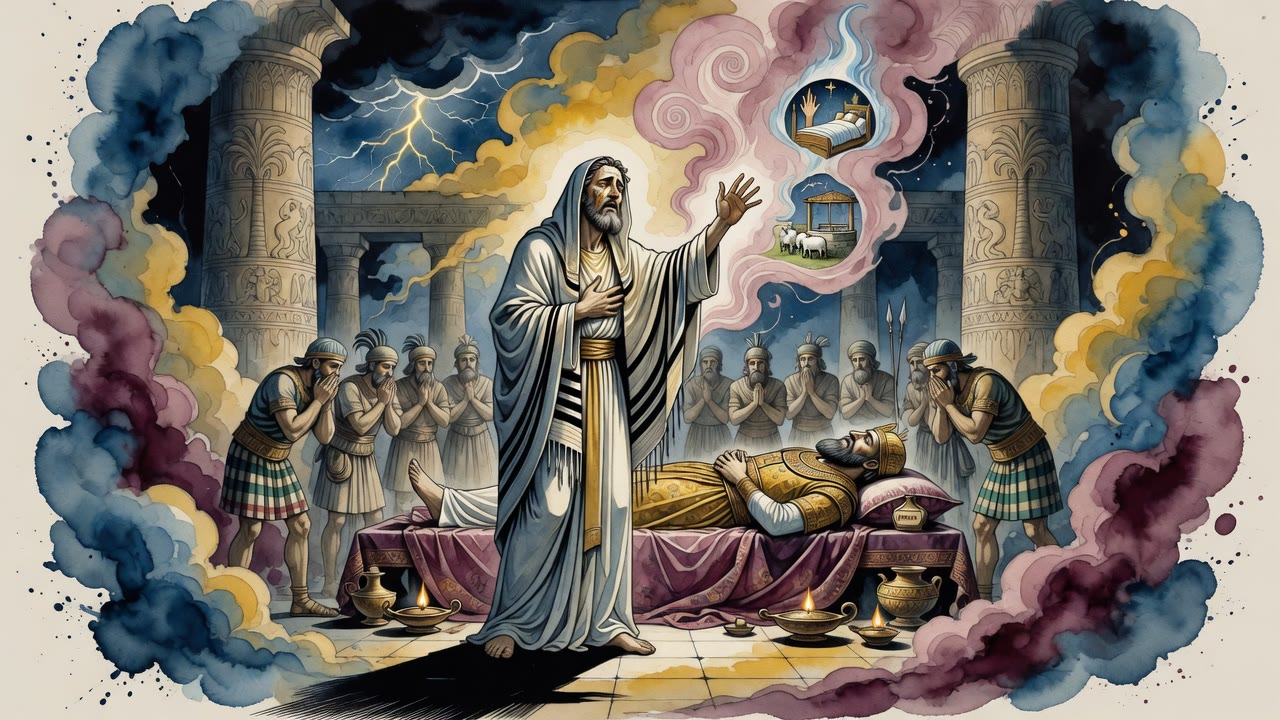
Far from the nursing line, another night refuses to end. When the dream broke, Abimelech could not wait for dawn. He lay watching the dark, counting the hours until he might rise early and be rid of the terror that had spoken to him in the night about the woman he had taken.
The verse says he arose early in the morning because he had been straining toward the morning the whole night through. Sleep was a country he could not reenter. Every time his eyes closed, the warning returned. Restore the woman. Or die. A king who commands cities cannot command his own eyelids.
At first light he summoned all his servants and laid the dream before them. Thus and so the Holy One, blessed be He, had warned him. He wanted company in the fear. He wanted someone else to say the dream was real.
Courtiers Call Dreams Empty
His courtiers waved it away. "Do not fear," they told him. "Dreams speak only emptiness. Would a king tremble at dreams?" They offered the cheap comfort of men who had not heard the voice. For a moment the palace tried to laugh the night back into ordinary sleep.
The moment they comforted him, the dream returned with teeth. The Holy One told him plainly. If you do not restore her, know that you shall surely die. Now the men feared greatly. Comfort without truth is a short blanket. The second warning burned the first laugh off their faces.
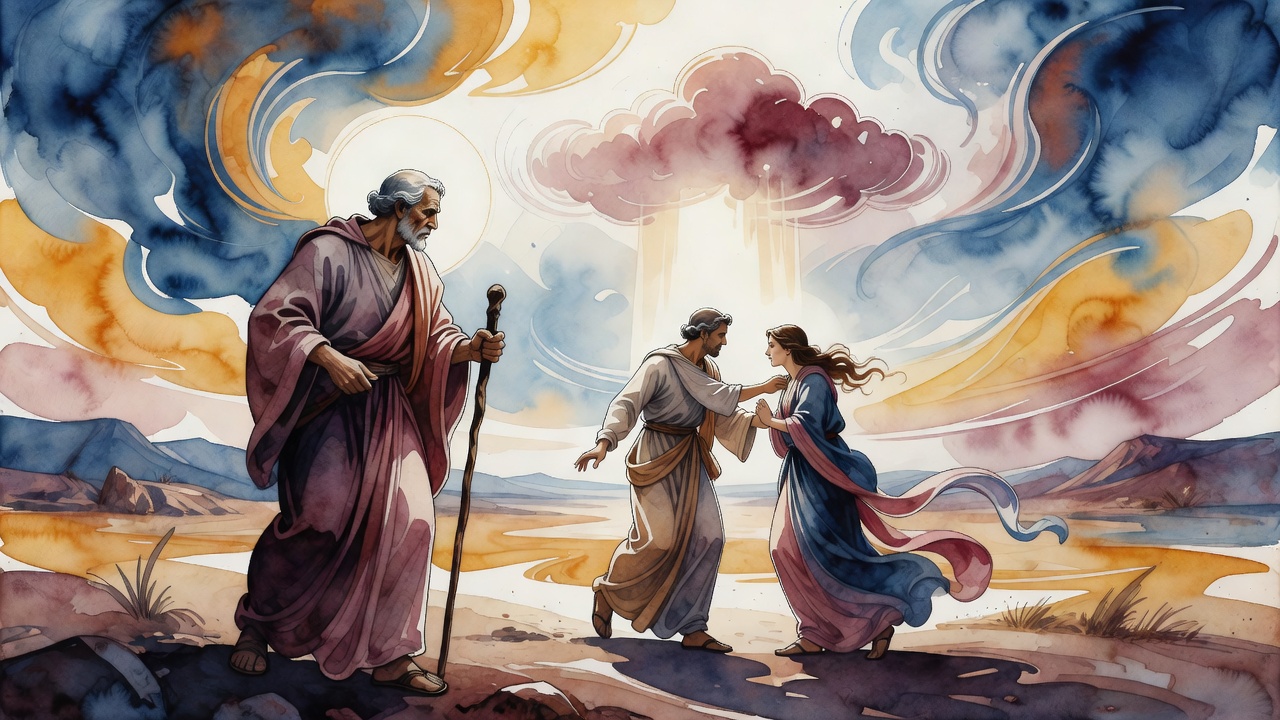
Abimelech called for Abraham. The sister-wife story would have to be spoken in daylight, with servants listening and sweat still cold on the king's neck.
Sister of the Father, Not of the Mother
Abraham answered for himself. He had said, surely there is no fear of God in this place, and he had spoken truly when he called Sarah his sister, my father's daughter, but not my mother's. From his careful words the sages drew a ruling. A gentile who serves the stars has, in the law's reckoning, no father in certain bonds of kinship. The half-truth that saved a household becomes a hinge for later law.
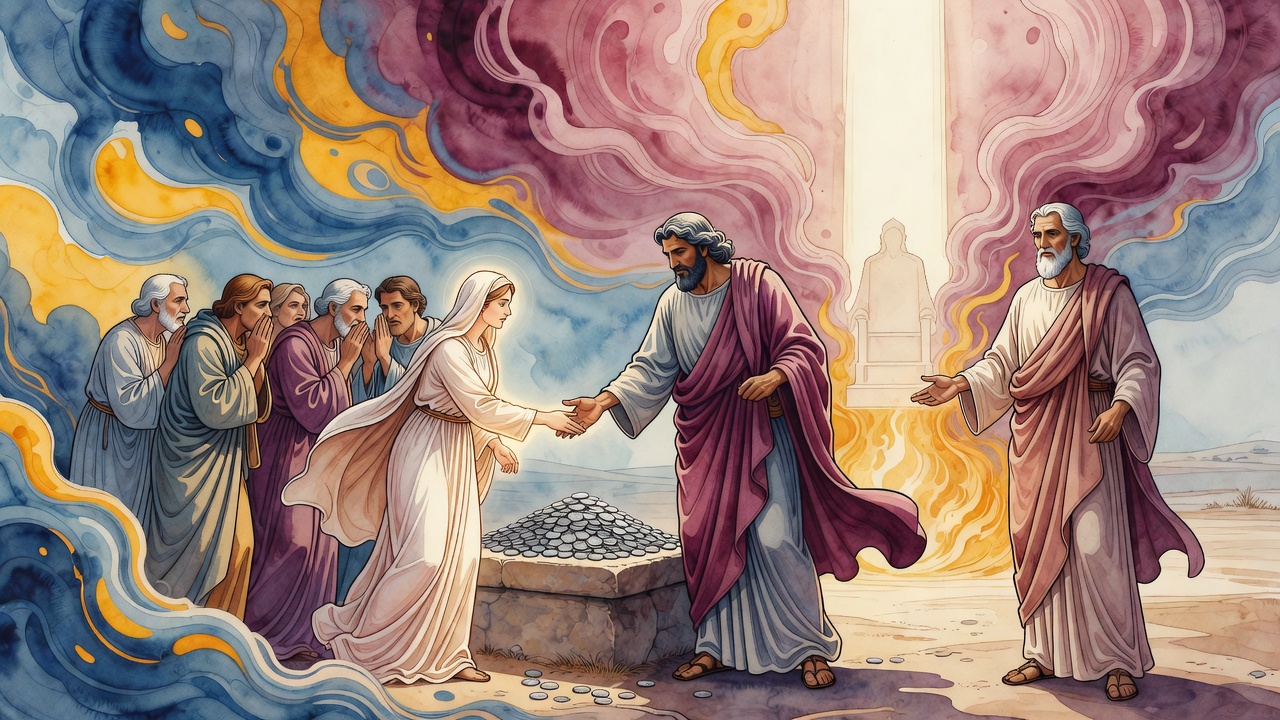
Sarah returns to Abraham's side. Abimelech loads gifts and tries to scrub the night off his reign with silver and cattle. The palace that called dreams empty now moves at the speed of terror. Early rising was not piety. It was the body fleeing a sentence it finally believed.
In one country, milk remakes foreign infants. In another, a dream remakes a king. Both turn on Sarah's body, desired, doubted, defended, and finally restored.
Two Proofs of One House
Set the scenes side by side. Sarah's open nursing silences the scoffers with a line of well-fed strangers' children who will carry her God into other tongues. Abimelech's sleepless night silences the courtiers who thought heaven does not speak to kings about other men's wives.
Isaac grows under a mother whose milk was public evidence. Nations taste what they mocked. A foreign throne learns fear of God the hard way, at dawn, after a night of counting hours. The house of Abraham does not only survive. It leaks holiness outward through the breast and judgment outward through a dream, until even Egypt's infants and Gerar's king have to rearrange their lives around a woman the world had laughed at for being old.
← All myths