5 min read

Sarah Nursed the Nations at Isaac's Weaning

At the weaning feast the nations called Isaac a foundling. Sarah nursed every infant in the room, and the boy's face turned into Abraham's image.

Curated by Arthur · Told by Maggid ·
Table of Contents
  1. A Banquet Turned Courtroom
  2. Two Springs in a Ninety-Year Body
  3. The Face That Silenced the Market
  4. The Withered Tree and the High Tree Brought Low
  5. What the Guests Carried Home
Sarah Nursed the Nations at Isaac's Weaning Click for full size

A Banquet Turned Courtroom

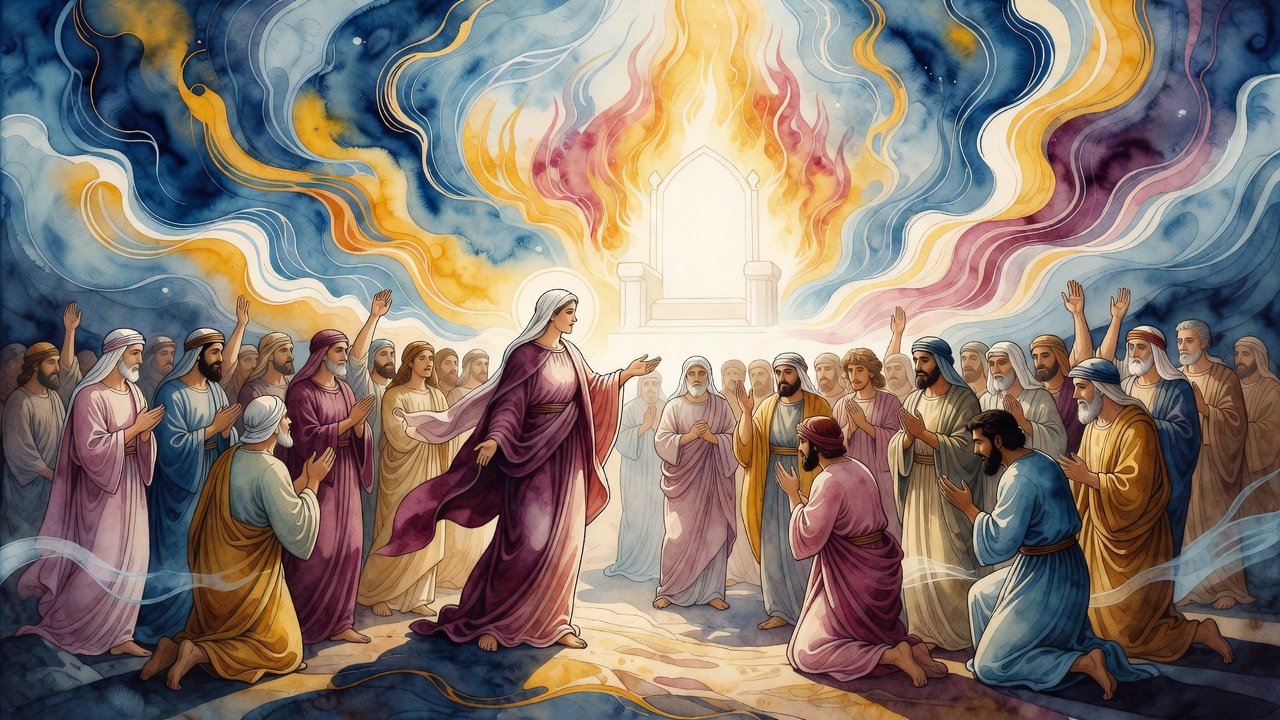
On the day Abraham weaned Isaac, he set a feast large enough to shame a market. Guests came with smiles that did not reach their eyes. Whispers moved faster than wine. The old man and the old woman had staged a show, the nations said. They had lifted a foundling from some alley and were now buying belief with roasted meat.

Abraham did not answer with speeches. He gathered the leading men of the generation. Sarah invited their wives and told them to bring their own infants and leave the wet-nurses at home. The tables waited. The children fretted. The trap of proof was already set among the bread.

Two Springs in a Ninety-Year Body

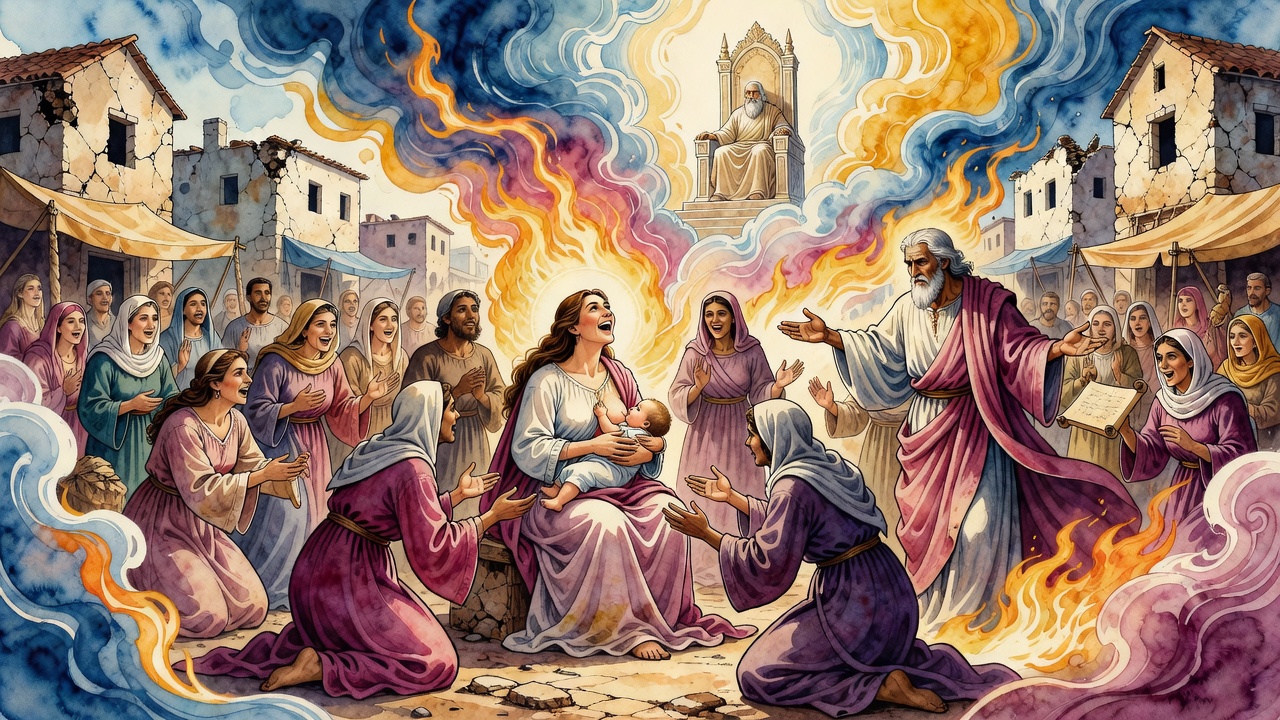
Sarah's breasts opened like two springs. She nursed every child in the room until the last small mouth stopped crying. The slander about a foundling died mid-sentence. Women who had come to sneer wiped milk from cheeks that were not theirs to claim. A body heaven had reopened for Isaac now poured enough life to quiet a generation's gossip in a single afternoon.

The doubters pivoted without apology. Fine, they said, perhaps she can nurse. How does a woman of ninety give birth, and a man of a hundred father a son? Miracle of milk is not miracle of birth, they argued, as if God were limited to one surprise per household.

The Face That Silenced the Market

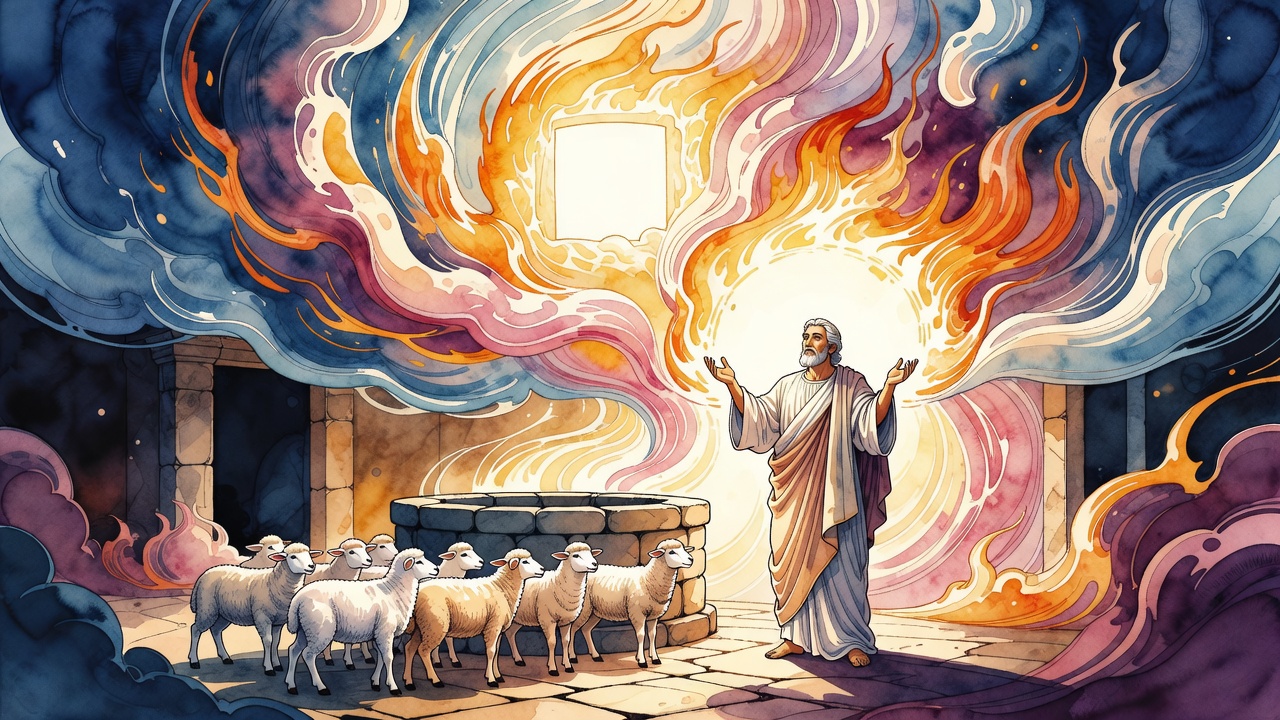
Then Isaac's face changed. Feature by feature it became Abraham's image, radiance answering radiance, until no one in the courtyard could pretend the boy belonged to another blood. The verse that says Abraham fathered Isaac became visible skin. Midday tradition even fixes the birth at the bright center of the appointed hour, nine full months after the promise, so no one could pin conception on Abimelech's sealed house.

The four letters of Yitzchak hold numbers the sages read as destiny, but the feast needed no gematria (the numerical value of Hebrew letters). It needed a face. When the people saw the child looking like the father, the last joke about market babies fell out of their mouths.

The Withered Tree and the High Tree Brought Low

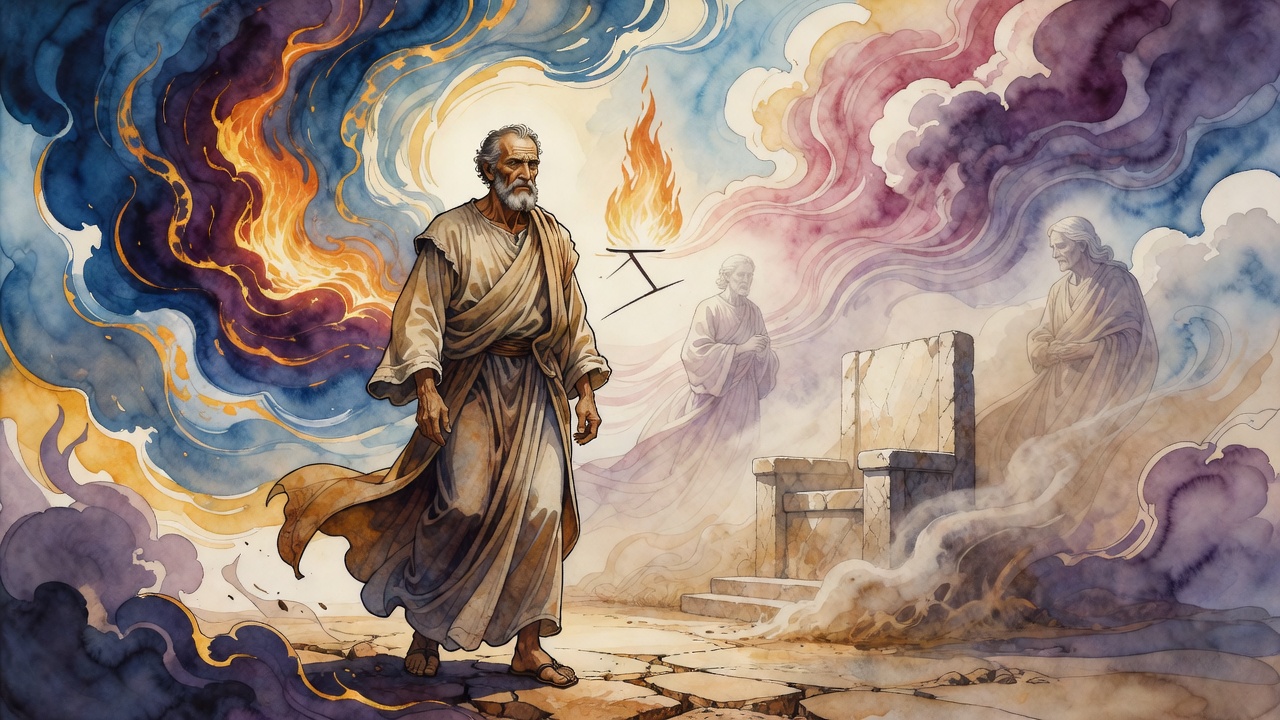
The LORD had remembered Sarah. Prophets' images gather around that remembering like birds to water. The high tree brought low is Abimelech, whose house had been sealed when he took what was not his. The lowly tree raised up is Sarah, lifted from barren years into a nursing feast where enemies' infants drink from her. A withered tree blossoms when the word that was spoken is kept.

If Elisha's word could put a son in the Shunammite's arms, how much more the word of the Holy One who had timed Isaac's arrival and now timed the public proof. Memory is not nostalgia here. It is God keeping an appointment in front of hostile witnesses.

What the Guests Carried Home

They left with milk on their children's lips and a story they could not edit. Some would still hate. None could honestly call Isaac a prop. Abraham had turned a weaning into a trial and won it without raising a sword. Sarah had fed the mouths that came to mock her, which is a stranger victory than any battlefield.

In the quiet after the feast, Isaac slept with his father's face. The covenant no longer looked like a private hope between two old people. It looked like a boy the nations had tried to unwrite, still breathing, still nursing history forward one public miracle at a time.

Before the feast, the years of waiting still clung to Sarah like a second skin. She had laughed in the tent when the visitors promised a son. She had been taken into courts where kings nearly erased her name as wife. She had watched Hagar's boy and felt the house tilt. Now Isaac ate solid food, and the public wanted a scandal more than a miracle. Envy prefers foundlings to fulfilled promises because foundlings keep God small.

Abraham's method was theater with teeth. By emptying the room of professional nurses he forced every mother to stake her child's hunger on Sarah's body. If the springs failed, the feast would become humiliation. If they flowed, gossip would choke. They flowed. Infants who would grow into nations of mockers took life from the matriarch they had come to mock. The image is almost comic until you feel its theological weight. God does not only give Sarah a child. God makes her temporarily mother to the room that doubted her.

The face miracle finishes what milk begins. Resemblance is evidence the ancient world trusted more than documents. When Isaac looked like Abraham, the lawsuit of whispers ended without a scribe. Letters of the name could be expounded later in study houses. On that afternoon the only text required was a child's face catching the light beside his father's. Guests went home carrying both nourishment and defeat, which is a rare double portion.

Long after, when Israel would read of withered trees flowering and high trees cut down, some would remember Abimelech sealed and Sarah opened, a palace frozen and a barren woman pouring milk like a river. The weaning feast is not a sweet domestic anecdote. It is the covenant holding a press conference in the language of the body.


← All myths
From the tradition

Sources

3 sources

The texts behind this telling. Some cards carry a translation of the source; others are our own retelling of it, and each card says which. Every card links out to the original.

Yalkut Shimoni on Torah 93:3Yalkut Shimoni on Torah

Translation of the source text.Torat Emet (Yalkut Shimoni) · CC-BY-NC

"Who would have spoken to Abraham that Sarah would nurse children?" And how many children did she nurse? It was taught: On that very day that Abraham our father weaned his son Isaac, he made a great feast. And the nations of the world were saying: Have you seen this old man and old woman, who brought a foundling from the marketplace and say, He is our son? And not only that, but they have made a great feast in order to uphold their claim.

What did Abraham our father do? He arose and invited all the great ones of the generation, and Sarah our mother too invited their wives. And each and every one brought her child but did not bring her wet-nurse. A miracle occurred, and Sarah's breasts opened like two springs, and she nursed them all. And still they said, Could Sarah, ninety years old, give birth? Could Abraham, one hundred years old, father a child? Immediately the form of Isaac's face was transformed and made to resemble Abraham. At that hour they declared (Genesis 25:19), "Abraham fathered Isaac."

Full source
Yalkut Shimoni on Torah 92:2Yalkut Shimoni on Torah

Translation of the source text.Torat Emet (Yalkut Shimoni) · CC-BY-NC

"A son for his old age" (Genesis 21:7) - it teaches that the radiance of his features resembled his own. "At the appointed time of which God had spoken to him" (Genesis 21:2). Rabbi Yudan said: he was born at nine months, so that they would not say he was swept out of the house of Abimelech. Rabbi Chama said: at seven full months, which are nine partial ones. Rabbi Huna in the name of Rabbi Chizkiyah: he was born at midday. "Appointed time" is said here, and "appointed time" is said elsewhere, "at the going down of the sun, the appointed time of your going out from Egypt" (Deuteronomy 16:6).

"And Abraham called the name of his son who was born to him, whom Sarah bore to him, Isaac" (Genesis 21:3). A decree of freedom went forth to the world. Yitzchak [Isaac]: the yod is ten, corresponding to the Ten Commandments which his children would in the future receive. The tzadi is ninety, "shall Sarah, who is ninety years old, bear a child?" (Genesis 17:17). The kof is one hundred, "shall a child be born to one who is a hundred years old?" (Genesis 17:17). The chet is eight, corresponding to the eight days of circumcision. "And Abraham circumcised his son Isaac at eight days, as God had commanded him" (Genesis 21:4); and where had He spoken? "And he who is eight days old shall be circumcised among you, every male" (Genesis 17:12).

Full source
Yalkut Shimoni on Torah 91:8Yalkut Shimoni on Torah

Translation of the source text.Torat Emet (Yalkut Shimoni) · CC-BY-NC

"And the LORD remembered Sarah" (Genesis 21:1). This is what Scripture says, "And all the trees of the field shall know" (Ezekiel 17:24) - these are the creatures, as you say, "For man is the tree of the field" (Deuteronomy 20:19). "That I the LORD have brought low the high tree" - this is Abimelech, "for the LORD had firmly closed up." "And have exalted the low tree" - this is Sarah. "I the LORD have spoken and have done it" - not like those who speak and do not act. "I have spoken": "At the appointed time I will return to you" (Genesis 18:14); "and done it": "And the LORD did to Sarah as He had spoken." "Can a mortal be more righteous than God?" (Job 4:17) - is it possible for flesh and blood to be more righteous than its Creator? "Can a man be purer than his Maker?" - is it possible to be purer than one's Creator? Just as Elisha said to the Shunammite, "At this appointed time, at this season, you shall embrace a son" (II Kings 4:16), and what is written there, "And she conceived and bore a son at the appointed time of which Elisha had spoken to her" - if the words of flesh and blood are fulfilled, how much more the words of the Holy One, blessed be He: "And the LORD remembered Sarah." "Though the fig tree does not blossom" (Habakkuk 3:17) - this is Abraham, as it is said, "like the first fruit on the fig tree." "And there is no yield on the vines" - this is Sarah, as you say, "your wife like a fruitful vine." "The labor of the olive fails" - were those angels who brought tidings to Sarah liars? "The labor of the olive" means they made her face shine like an olive. "And the fields produce no food" - those breasts produced no milk. "The flock is cut off from the fold" - as you say, "You are My flock, the flock of My pasture, you are man" (Ezekiel 34:31). "And there is no herd in the stalls" - as you say, "Ephraim is a trained heifer." Sarah turned and said: shall I lose my hope in my Maker? Heaven forbid, I will not lose my hope in my Maker, but rather "yet I will rejoice in the LORD" (Habakkuk 3:18). The Holy One, blessed be He, said to her: you did not lose your hope, neither will I lose your hope, but "the LORD remembered Sarah."

"The grass withers, the flower fades" (Isaiah 40:8) - the grass of Abimelech withered, the flower of Abimelech faded, "for the LORD had firmly closed up." "But the word of our God stands forever" - "And the LORD remembered Sarah." "God is not a man that He should lie" (Numbers 23:19). Rabbi Shmuel said: this verse - neither does its beginning fit its end nor its end its beginning. "God is not a man that He should lie," "Has He said and will not do?" Rather, when the Holy One, blessed be He, decrees to bring good into the world, "God is not a man that He should lie"; and when He decrees to bring evil into the world, "Has He said and will not do?" When He said to Abraham, "For in Isaac shall your seed be called," "God is not a man that He should lie"; and when He said to him, "Take now your son" (Genesis 22:2), "Has He said and will not do?" When the Holy One, blessed be He, said to Moses, "I have surely remembered you and what is done to you in Egypt" (Exodus 3:16), "God is not a man that He should lie"; and when He said to him, "Let Me alone that I may destroy them" (Deuteronomy 9:14), "Has He said and will not do?" "He seats the barren woman of the house" (Psalms 113:9) - this is Sarah, "and Sarai was barren" (Genesis 11:30). "A joyful mother of children" - "Sarah nursed children." "And the LORD remembered Sarah as He had said" - what He said to her by speech; "And the LORD did to Sarah as He had spoken" - by an angel. Rabbi Yehudah says: "The LORD remembered Sarah" - to give her a son; "And the LORD did to Sarah as He had spoken" - to bless her with milk. Rabbi Nechemiah said to him: had she already been promised milk? Rather, it teaches that the Holy One, blessed be He, restored her to the days of her youth. Rabbi Abahu in the name of Rabbi Yosi bar Chanina: I place the awe of her upon all the nations of the world, that they should not taunt her and cry out to her, barren one. Rabbi Yehudah in the name of Resh Lakish: she had no chief organ of the womb, and the Holy One, blessed be He, fashioned for her a womb.

Rabbi Acha said: the Holy One, blessed be He, is a keeper of deposits. Amalek deposited with the Holy One, blessed be He, bundles of thorns, and the Holy One, blessed be He, returned to him bundles of thorns, as it is said, "I have remembered what Amalek did to Israel" (I Samuel 15:2). Sarah deposited with Him commandments and good deeds, and the Holy One, blessed be He, returned to her commandments and good deeds: "And the LORD remembered Sarah." Rabbi Yitzchak said: the Holy One, blessed be He, said: it is written, "If the woman was not defiled and is pure, she shall be cleared and shall conceive seed" (Numbers 5:28); and this one, who entered the house of Pharaoh and the house of Abimelech and came out pure, is it not right that she be remembered? Rabbi Yehudah bar Rabbi Simon said: although Rav Huna said there is an angel appointed over desire, Sarah needed none of these things, rather the Holy One, blessed be He, in His glory remembered her, as it is said, "And the LORD remembered Sarah." "And the LORD remembered Sarah" - He and His council. What is written above the matter? "And Abraham prayed" (Genesis 20:17). A parable of a king who had a beloved friend whom he cherished exceedingly, and whatever the friend asked of him he would do. When they knew this, everyone who sought office would come to the friend, and he would ask of the king, and the king would do his desire; yet to that friend himself he had given no office. The members of his court said to him: our lord the king, this friend of yours seeks office for others and for himself he seeks nothing. The king said: it is only right that I give it to him.

Full source