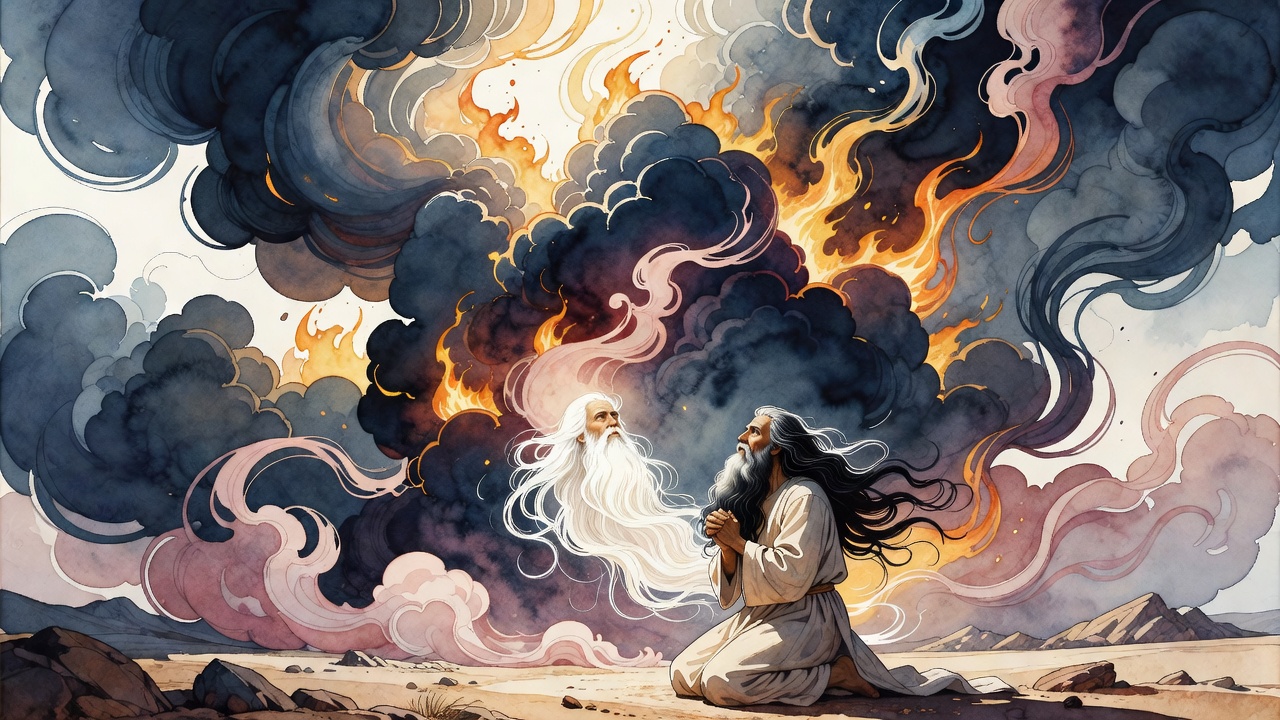
Sarah Sat in the Market and Nursed the Nations
The nations said the old woman was passing off Hagar's baby as her own. God dried up the milk of every noblewoman who had said it.
Table of Contents
 Click for full size
Everyone Who Hears Will Laugh
Sarah was ninety when they put the boy in her arms, and what she said was that everybody who heard about it would laugh along with her.
She was right in a way nobody in that tent could have measured.
On the day she gave birth, women in countries she had never heard of stopped being barren. The deaf started hearing. The blind opened their eyes. People who had never spoken said words. Anyone whose mind had come apart was put back together. It went out from a tent in Hebron across the whole of the world in one morning, and every household it reached had its own reason to laugh.
After that, people began praying that God would remember Sarah a second time, so that they could get carried along on the answer.
What God did for Sarah, He did the way He did it on the fourth day, when He made the two great lights. One more lamp went up over the world, and everything underneath saw by it, asked or not.
They Said the Child Was Hagar's
Then the sneering started.
The word among the nations was that no woman of ninety bears anything, and the obvious explanation was sitting right there in the household. It was Hagar's baby. The old woman had taken the slave's son and was carrying him around as her own, and the whole thing was a performance.
So God dried up the milk of every noblewoman who had said it.
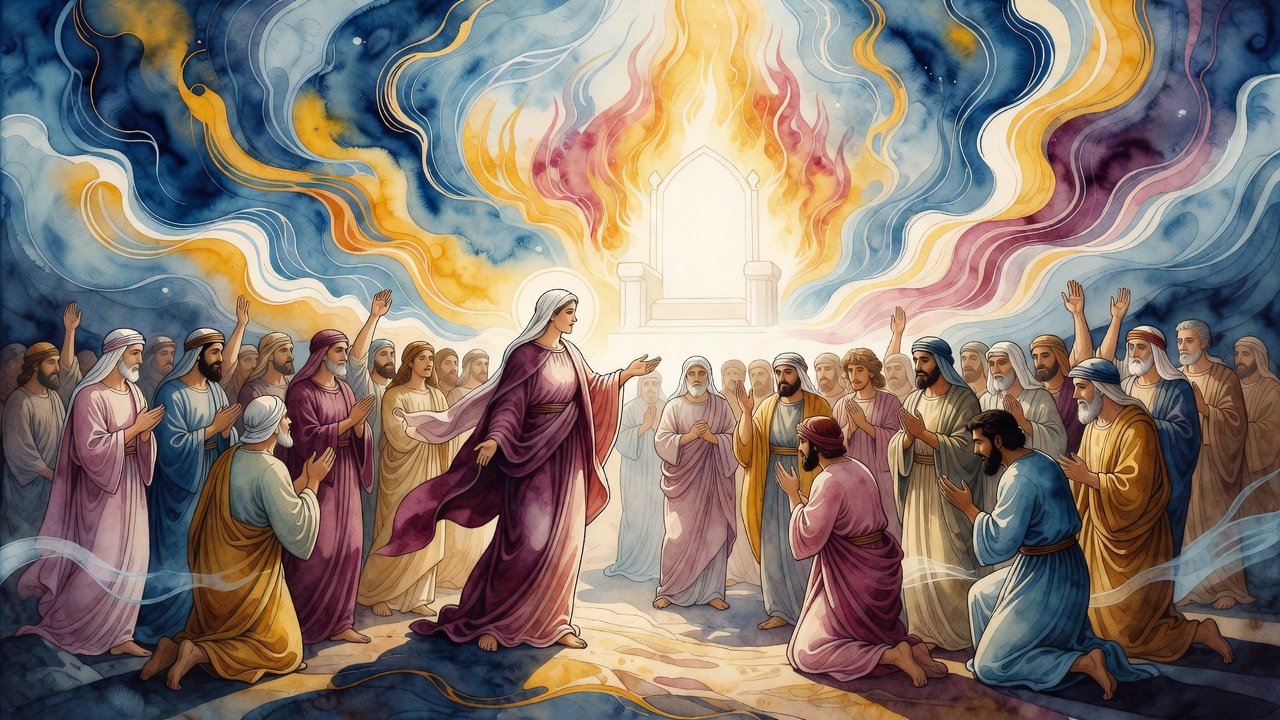
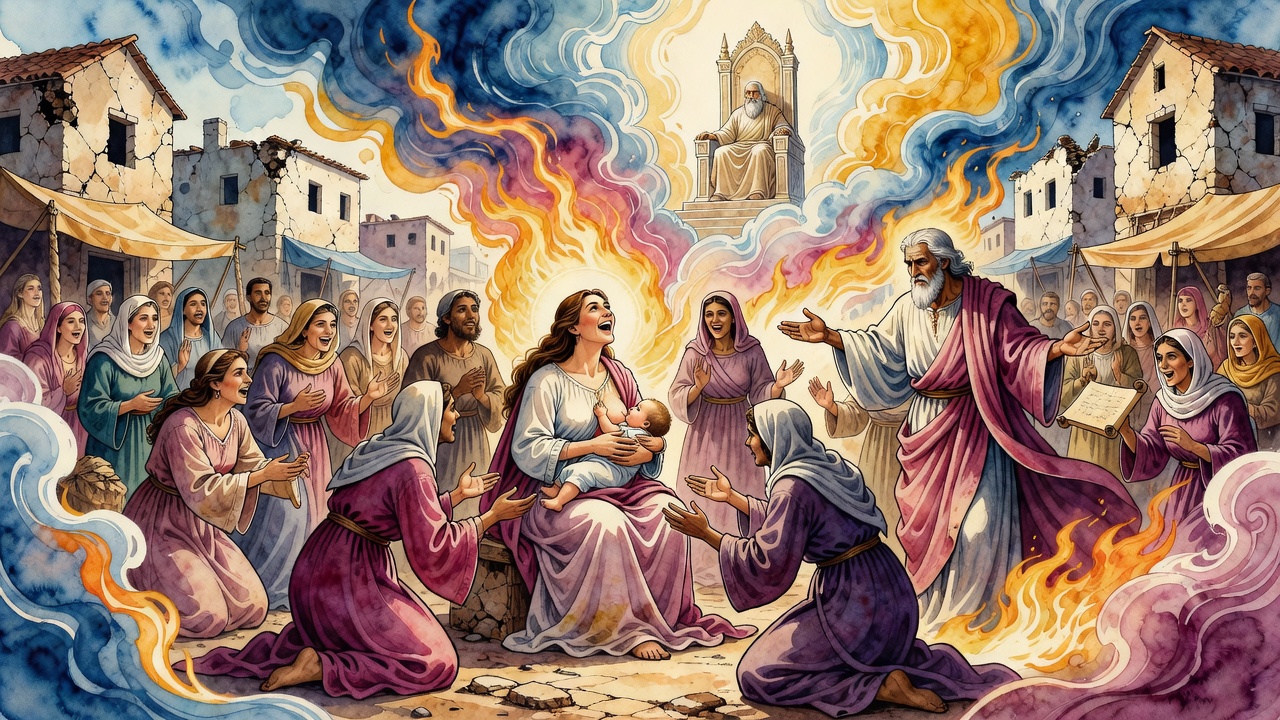
Their infants started screaming and did not stop. Wet nurses came up empty. The women who had been the loudest about the fraud came to Hebron and got down in the dirt in front of a tent and kissed the ground at the feet of the woman they had called a liar, and asked her to feed their children.
Sit Down in the Market
Abraham did not tell her to be gracious about it. He told her where to do it.
This is not the hour for modesty, he said. Go and sit down in the open market, where the traders are, and feed them there, and let the Name be sanctified in the middle of it.
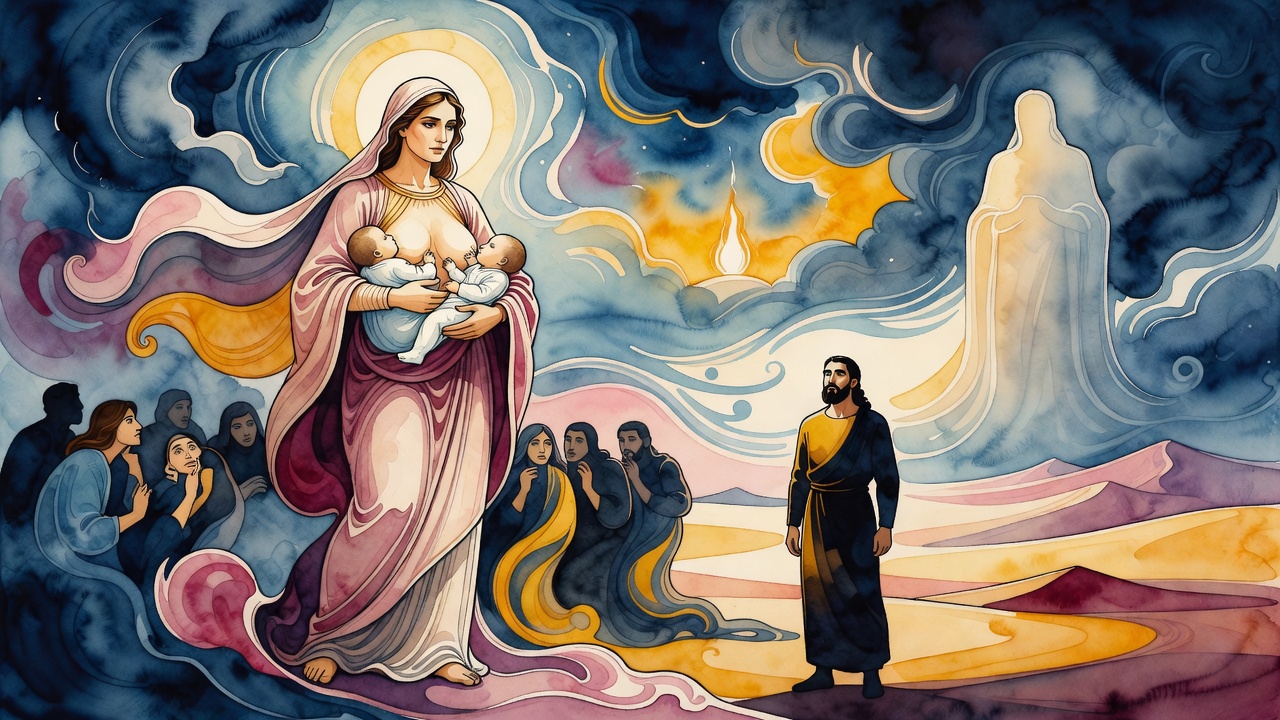
She went out and sat down among the stalls and uncovered herself, and her breasts ran like two spouts of water. Goats went on bleating. Coins went on changing hands. Grain went on being measured out and argued over. And a ninety-year-old woman sat in the noise with the children of the women who had mocked her feeding at her, one after another, all day.
Not all of them had come for milk. Some had brought their babies to see whether there was any milk, and those women got what they came for and went home. The ones who came in earnest did not go home the same. Their children took Sarah's milk and grew up and came under the wings of the Presence, and every convert since, and every God-fearing gentile since, comes down from a mouth that fed in that market.
Rachel's Name Went on the Whole House
Most of the tribes came out of Leah. Rachel waited years and produced two sons, and by any count that should have settled whose name the nation carried.
It did not settle it. When the prophet needs to show the people being marched off into exile, the mother standing on the road crying is not Leah. It is Rachel weeping for her children, refusing to be comforted, and that is the voice Heaven answers first. When God speaks about sparing the survivors He calls them the remnant of Joseph, her son. When He aches out loud, He says, is Ephraim my dear son, and that is her grandson.
Everything hinged on her, so the house took her name.
Rabbi Meir heard something harder in the same prophecy. Sing, barren one, said the prophet, and Rabbi Meir heard the barren one as the uprooted one, the city whose enemies stood over it screaming to strip it down to the foundation, told to sing anyway, from underneath the rubble, with nothing yet to sing about.
Ninety-Nine Cries Against One
A woman on the birthing stool cries out a hundred times. Ninety-nine of those cries are about dying. One of them is about living. Then something comes out of nothing at all, smeared with blood and mucus and slick with it, the least presentable object in the room, and every pair of arms in that room goes toward it to hold it and kiss it.
The mess is not overlooked. It is not what anybody is looking at.
That is what was happening in the market. The proud ladies had their faces in the dust, and the Name was being sanctified over the stalls, and nobody in that street was working out what any of it meant. They were waiting their turn for the milk.
← All myths