Parshat Chayei Sarah6 min read

The Day Abraham Asked God to Invent Old Age

Before Abraham, no man's hair ever turned white and no elder was honored for his years, so he prayed to be marked by age, and heaven answered.

Curated by Arthur · Told by Maggid ·
Table of Contents
  1. A World Where No Man Grew Old
  2. The Prayer for a Mark of Years
  3. The Crown That Had Never Been Seen
  4. Fire That Would Not Feed
  5. The Dry Tree Made to Flower
The Day Abraham Asked God to Invent Old Age Click for full size

A World Where No Man Grew Old

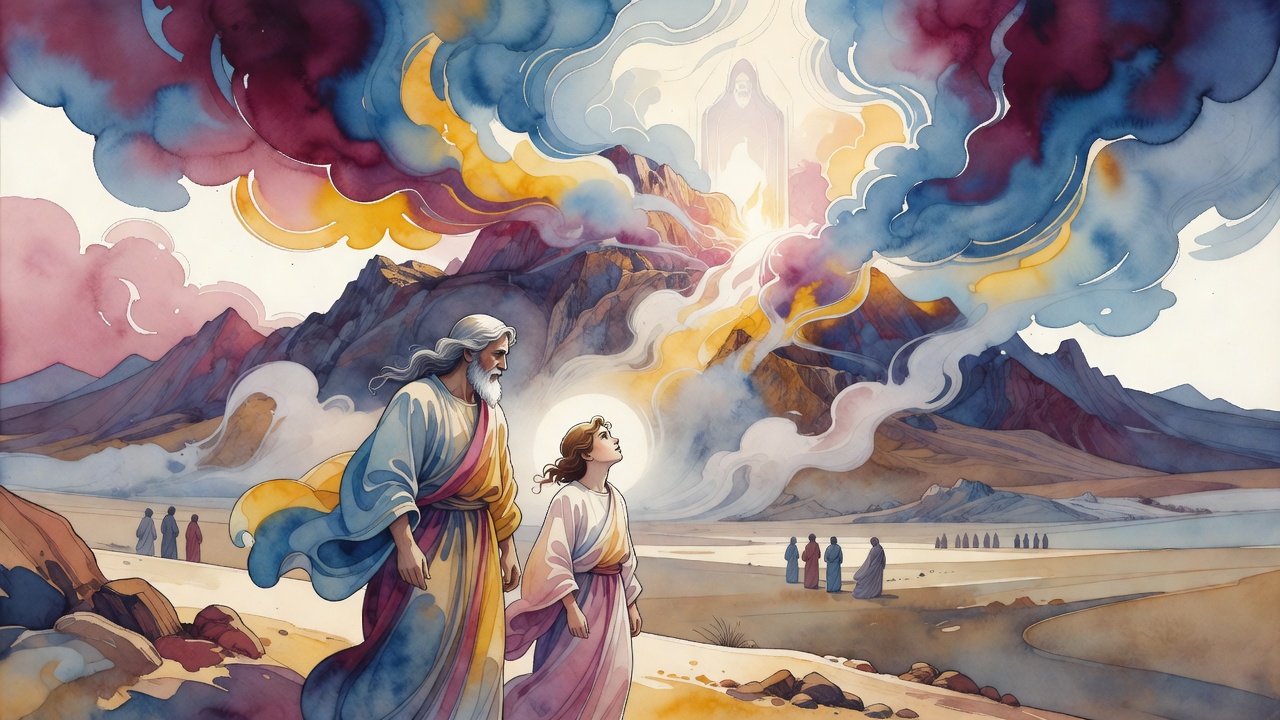
Two men came to the tent, and Abraham could not tell which of them had fathered the other.

Their faces carried the same smoothness. The same dark hair, the same unlined hands, the same easy stride. One had walked the earth for two hundred years and one for twenty, and nothing on their bodies said so. Abraham set bread before them and did not know whom to seat at the head of the table.

This was the world as it had stood since the beginning. No man's hair turned. No man's back bent. A grandfather and his grandson passed for brothers, and a boy of ten and an elder of nine hundred looked out from the same untouched face. When the years left no mark, the years bought no honor. An old man's word weighed no more than a child's, because no eye could see that he was old.

It troubled Abraham. He had crossed rivers, buried the dead, and learned the Name that the makers of idols never learned, and none of it showed on him. A whole life could be spent, and the spending left no trace.

The Prayer for a Mark of Years

So he asked for one.

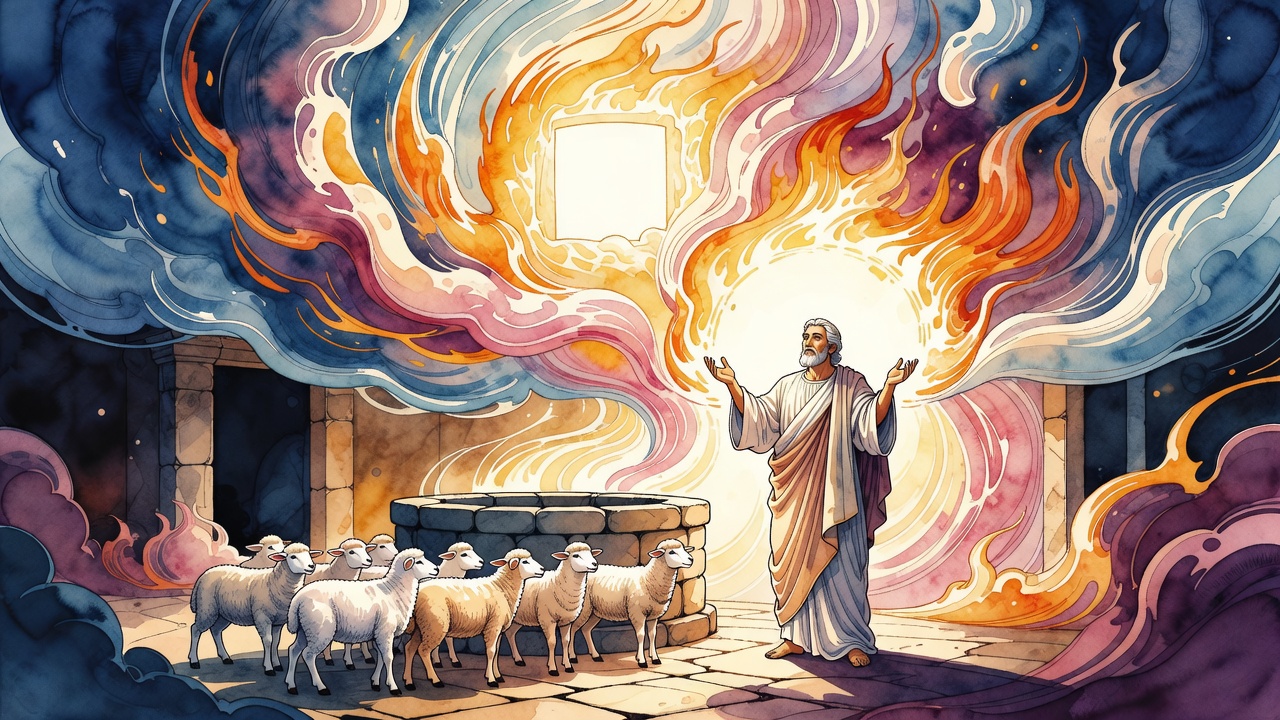
He stood before God and made a request no one had ever made. Not for rescue. Not for a son, not yet, not for rain or victory or the fall of a king. He asked to be made visibly old. "Master of the world," he said, "set a difference between a father and his son, between the young man and the old, so that the old may be honored by the young."

Every other man prayed the opposite prayer. They begged to keep their strength, to hold off the grave, to stay exactly as they were. Abraham asked to be worn down where every eye could read it, to carry his years on his own head like a receipt for a life.

And God answered him.

The Crown That Had Never Been Seen

The change began at the hairline.

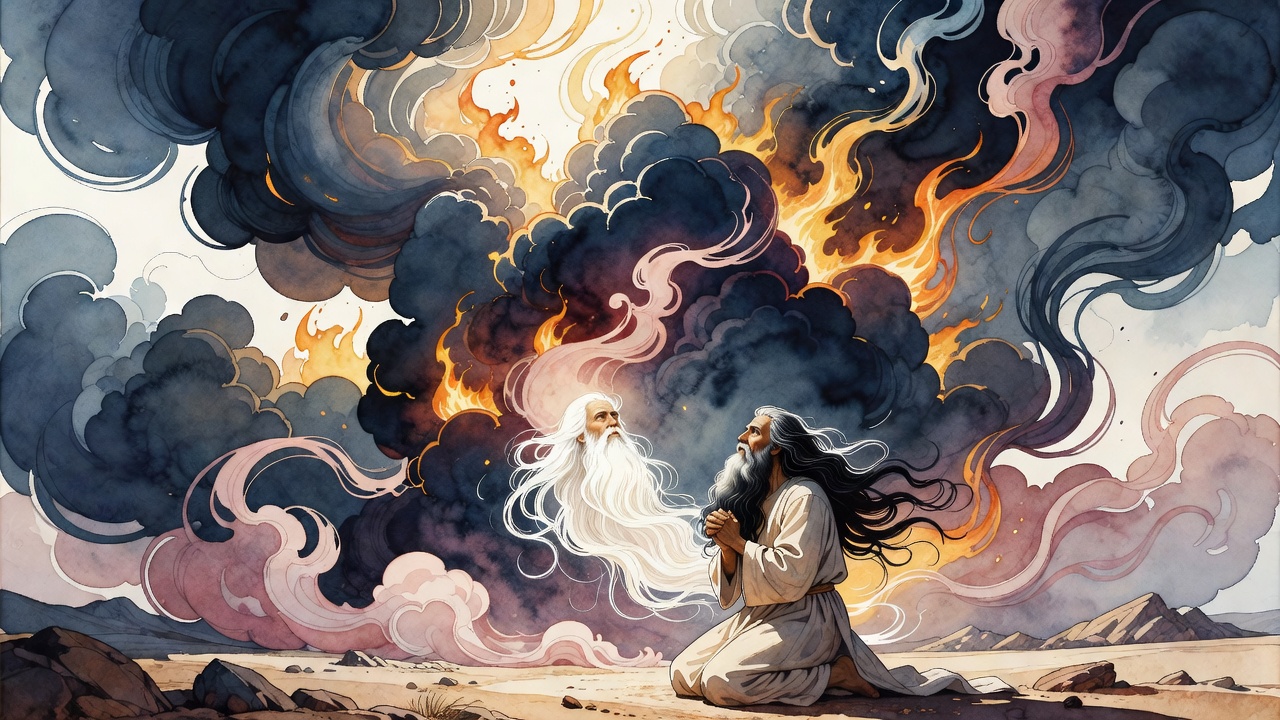
One strand went white. Then another beside it. Where the hair had been dark it turned the color of ash and then the color of clean wool, and the whiteness spread across his head like the first snowfall on a mountain that had never held snow. There was no word yet for what was happening. Nothing in all creation had done this before.

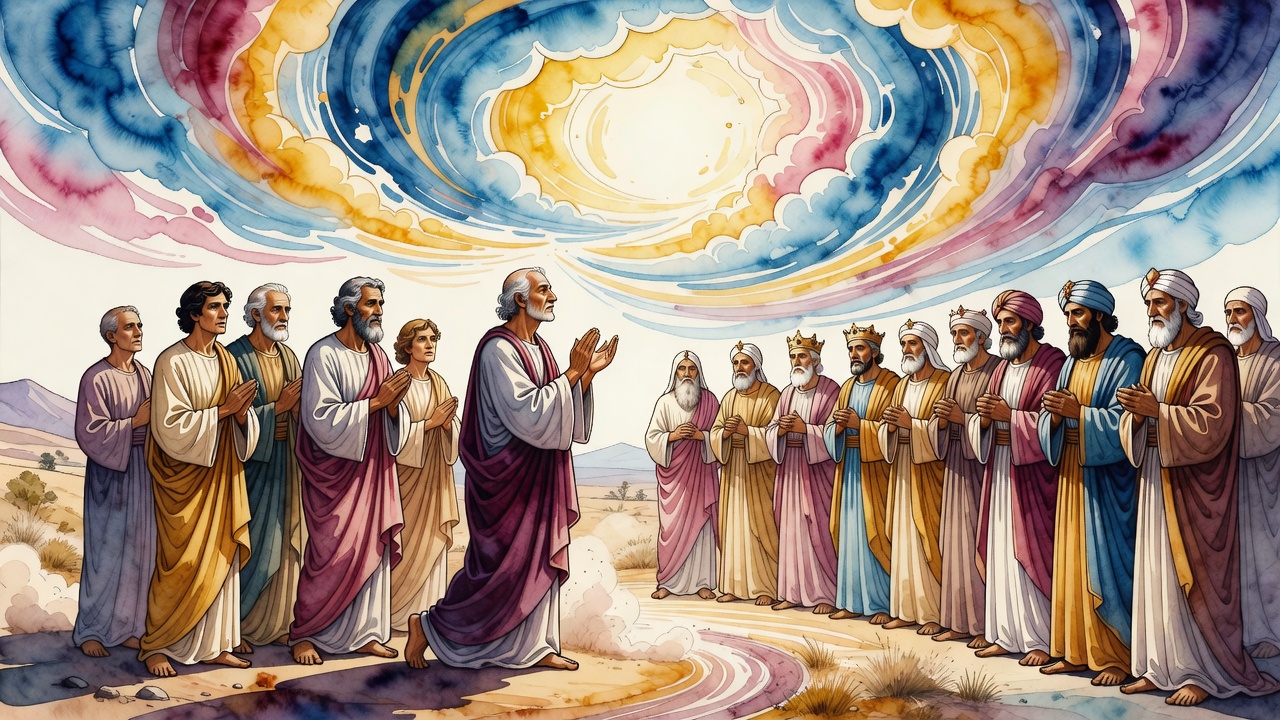
People came from the surrounding country to stare. The kings of the earth heard of it and were astonished, for they had seen nothing like it since the day the heavens and the earth were made. A man was changing, slowly, in plain sight, and he was not dying of it.

And the strange thing was that it was beautiful. Not the ruin they might have feared, not rot climbing up a living body. The white sat on Abraham's head the way a crown sits on a king, a bright band that said, here is a man who has lived, who has weathered, who has earned the right to be heard. The young looked at the old man's hair, and for the first time in the history of the world, they lowered their voices in front of him.

Fire That Would Not Feed

This was not the first rule the heavens had bent for his sake.

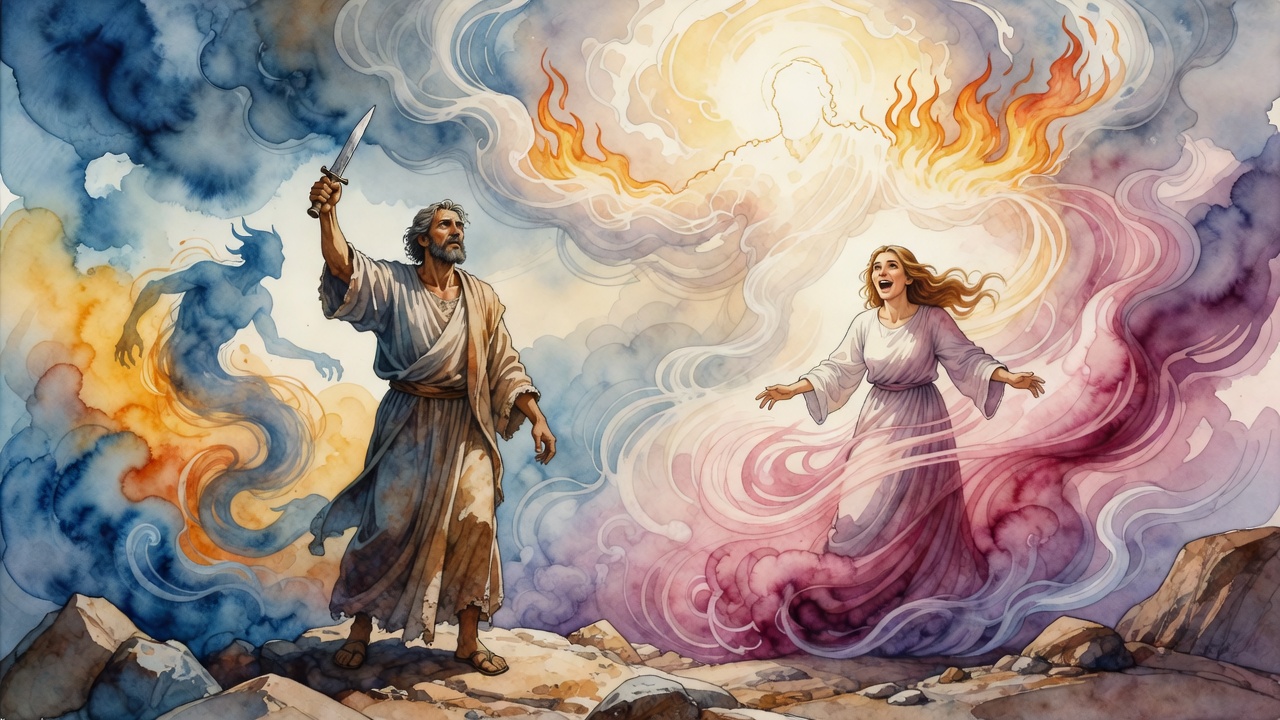
Years before, Nimrod had thrown him into a furnace for refusing the idols, and the fire had refused him back. It curled around his body and would not catch. From the hour the world was made, no living thing had ever been pulled whole out of a fire. Fire consumed. That was its nature and its whole purpose. Still, Abraham walked out of the flames of the Chaldeans with his clothes untouched and the smell of smoke nowhere on him, and again the kings of the earth heard, and again they had no story to set beside it.

A fire that would not feed. A man who aged when no man had aged. The settled order of things kept coming apart wherever this one household stood.

The Dry Tree Made to Flower

And then there was Sarah.

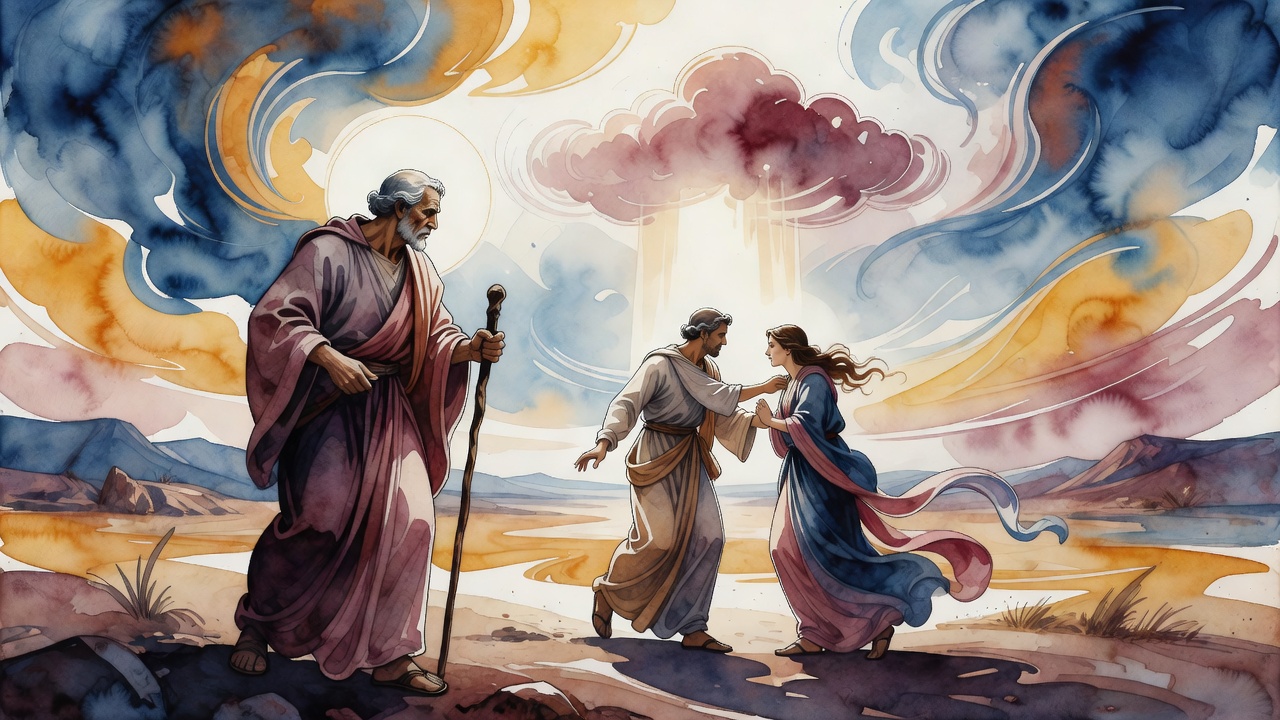
She was ninety years old and had been barren her whole life, and she gave birth to a son. No woman of ninety had ever carried a child to term. When the kings of the earth heard that the old woman was nursing an infant, they laughed at it. They said the baby was a foundling picked up off the road, dressed in fine cloth and passed off as her own. An old man and an old woman playing at parenthood. They would not believe it.

So God dried the milk in the breasts of every one of their wives. The queens' newborns screamed through the night with hunger, and there was not a nurse in any palace who could quiet them. In the end the kings had to carry their infants to the tent of the woman they had mocked and lay them at her feet, and Sarah, at ninety, gave every one of them suck. The dry tree flowered. The green trees withered on the branch. And the kings learned to believe.

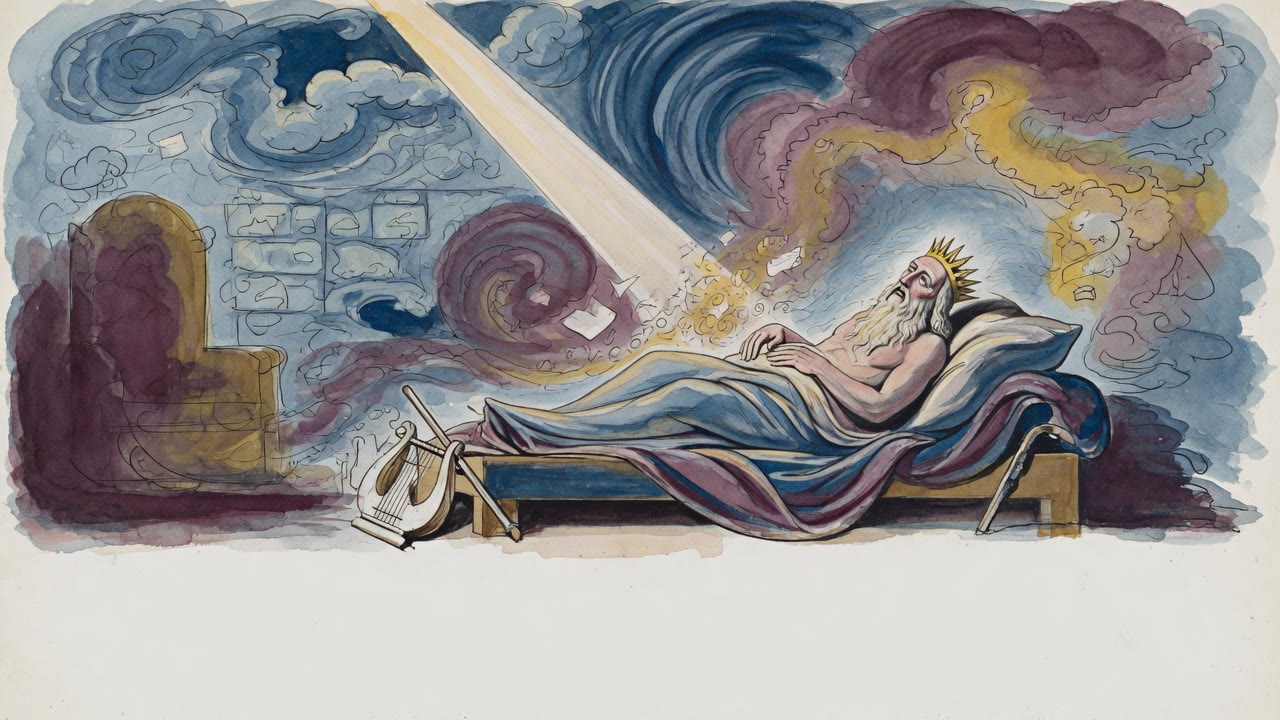
By the end of his days Abraham's head was wholly white, an old man well stricken in years, and no man who came to his tent ever again mistook the father for the son. The mark he had begged for had become a crown, and every white head that has bowed under its own years since then wears some small piece of the one he was the first to receive.


← All myths
From the tradition

Sources

3 sources

The texts behind this telling. Some cards carry a translation of the source; others are our own retelling of it, and each card says which. Every card links out to the original.

Pirkei DeRabbi Eliezer 52:5Pirkei DeRabbi Eliezer

Retold in our words. Read the original at the link below.Pirke de Rabbi Eliezer, trans. Rabbi Gerald Friedlander, London (1916) · CC-BY

It might surprise you to learn that, according to one tradition, it wasn't always this way.

A world where everyone's hair stayed the same color their whole lives. A world where distinguishing young from old was a guessing game. That's the world Pirkei DeRabbi Eliezer, a fascinating collection of stories and interpretations, paints for us before Abraham.

The appearance of gray hair was nothing short of a wonder, a sign! Before Abraham, no one had ever seen it. Everyone was astonished! They hadn't seen anything like it since creation itself.

So, how do we know Abraham was the first to sport the silver fox look? The Torah tells us, "And Abraham was old, well stricken in age" (Genesis 24:1). It was this striking change that marked him as someone of significant age and, perhaps, wisdom. The text implies that "well stricken in age" refers not just to his years, but specifically to his distinguished gray hair.

But why is gray hair considered a good thing? Why not just a sign of decay?

Rabbi Levitas of Jamnia offers a beautiful analogy. He compares gray hair to a diadem, a crown, belonging to the head of a king. It signifies beauty and glory in old age. As (Proverbs 20:29) puts it, "The glory of young men is their strength, and the beauty of old men is the hoary head." Hoary simply means gray or white with age.

So, gray hair isn't just about getting older. It's about earning a crown of wisdom, a visible sign of a life lived, lessons learned, and experiences weathered. It is a reminder that with age comes not just physical change, but also a unique kind of beauty. It’s a beauty born of time, resilience, and, perhaps most importantly, wisdom.

Full source
Pirkei DeRabbi Eliezer 52:1Pirkei DeRabbi Eliezer

Retold in our words. Read the original at the link below.Pirke de Rabbi Eliezer, trans. Rabbi Gerald Friedlander, London (1916) · CC-BY

Pirkei DeRabbi Eliezer, an ancient Jewish text, speaks of seven such wonders. Not the kind you find on a travel brochure, but events that shook the foundations of belief.

What tops this list of all-time stunners? None other than Abraham's miraculous escape from the fiery furnace. Fire. Consuming, all-powerful. An inescapable force. And yet, Abraham walked out unscathed. The Pirkei DeRabbi Eliezer is emphatic: From the moment the heavens and earth were created, nobody had ever been saved from fire. Nobody. Until Abraham.

The impact! All the kings of the earth heard about it and were astonished. They'd never seen anything like it. And how could they? It was utterly unique.

How do we know that Abraham was actually delivered from this fiery ordeal? Well, scripture provides the confirmation. As it says in (Genesis 15:7), "And he said unto him, I am the Lord that brought thee out of the furnace of the Chaldees." And again, in (Nehemiah 9:7), "Thou art the Lord the God, who didst choose Abram, and broughtest him forth out of the furnace of the Chaldees."

These verses aren't just historical footnotes. They're declarations of divine intervention. They're affirmations that even in the face of seemingly insurmountable odds, even when surrounded by flames, salvation is possible.

So, what does Abraham's fiery trial and miraculous escape mean for us today? Perhaps it's a reminder that true wonder isn't about seeing something new, but seeing the familiar in a new light. That even in a world that often feels devoid of miracles, the potential for the extraordinary still exists. Maybe all we need to do is open our eyes. And our hearts, to see it.

Full source
Pirkei DeRabbi Eliezer 52:2Pirkei DeRabbi Eliezer

Retold in our words. Read the original at the link below.Pirke de Rabbi Eliezer, trans. Rabbi Gerald Friedlander, London (1916) · CC-BY

A detail tucked away in Pirkei DeRabbi Eliezer, a fascinating early medieval text filled with stories and interpretations expanding on the Torah. Specifically, the story turns to Chapter 52, which presents a "second wonder" related to the wives of Noah's sons.

Before Sarah, the wife of Abraham, no woman aged ninety had ever given birth. for a second. Ninety! In a time when lifespans were, according to tradition, significantly longer, that was still… remarkable. Sarah giving birth to Isaac at that age was truly a miracle.

The story doesn't end there. Pirkei DeRabbi Eliezer goes on to say that when the kings of the earth heard about this incredible event, they simply didn't believe it. It sounds pretty far-fetched!

So, what did HaShem, the Holy One, blessed be He, do? This is where the story gets even more interesting. the verse says, God dried up the breasts of all the kings' wives. A rather… direct approach, wouldn't you say?

The text then quotes (Ezekiel 17:24) as proof: "And all the trees of the field shall know that I the Lord have brought down the high tree, have exalted the low tree, have dried up the green tree, and have made the dry tree to flourish." Now, on the surface, this verse might seem to be about, well, trees. But within the framework of Pirkei DeRabbi Eliezer, it's interpreted as a divine act displaying God's power and ability to alter the natural order. The "green tree" that's dried up symbolizes the wives, no longer able to bear children, while Sarah, the "dry tree," miraculously flourishes.

A dramatic demonstration.

What's the takeaway? Perhaps it's about faith. About believing in the impossible. Or maybe it's about recognizing the extraordinary within the ordinary. After all, every birth is a miracle, no matter the age. But this little-known story reminds us that sometimes, a little divine intervention is needed to open our eyes to the wonders that surround us. It challenges our assumptions and asks us to consider the boundless potential of the universe, and the power of HaShem.

Full source