Parshat Chayei Sarah6 min read

King David Could Not Get Warm and Remembered Adam's Gift

King David survived lions, bears, and Goliath, but under his own blankets the old king could not get warm, and his inner fire was leaving.

Curated by Arthur · Told by Maggid ·
Table of Contents
  1. The Body That Had Survived Everything
  2. The One War He Could Not Win
  3. The Minute He Was Given
  4. The Cold That Was Always Coming

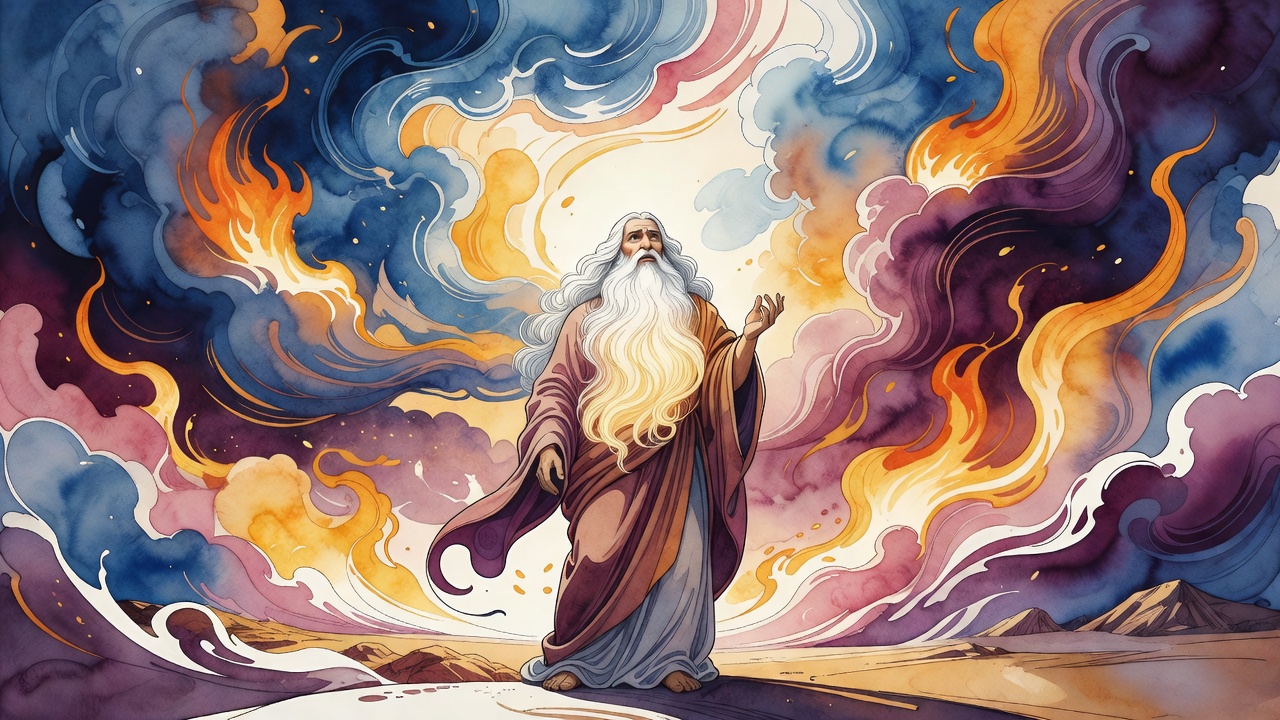
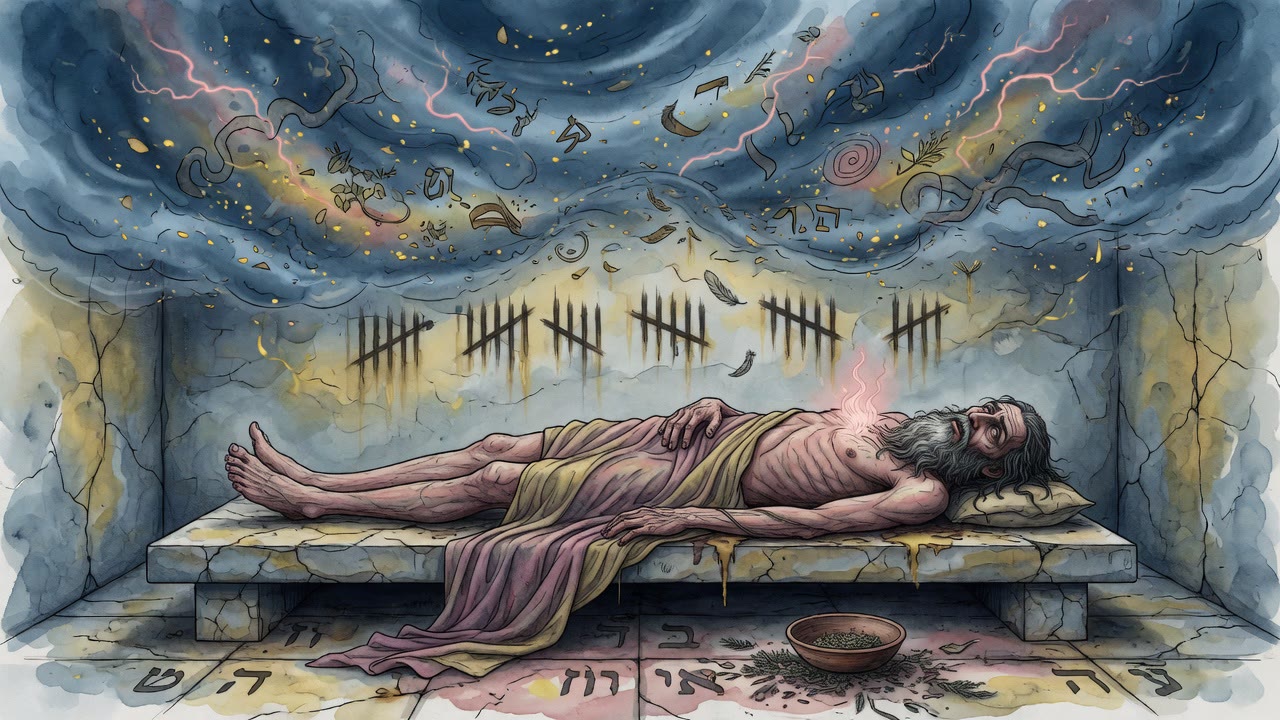
The blankets came up to his chin and still King David shivered. They piled on another, wool over wool, and his teeth went on chattering under the weight of them. The fire on the hearth roared so high the servants standing near it had to step back from the heat, and the king at the center of the room felt nothing. His hands lay on the coverlet like two cold stones. The men who tended him exchanged a look over his head, the look people give when they have run out of remedies and do not want the sick man to read it on their faces.
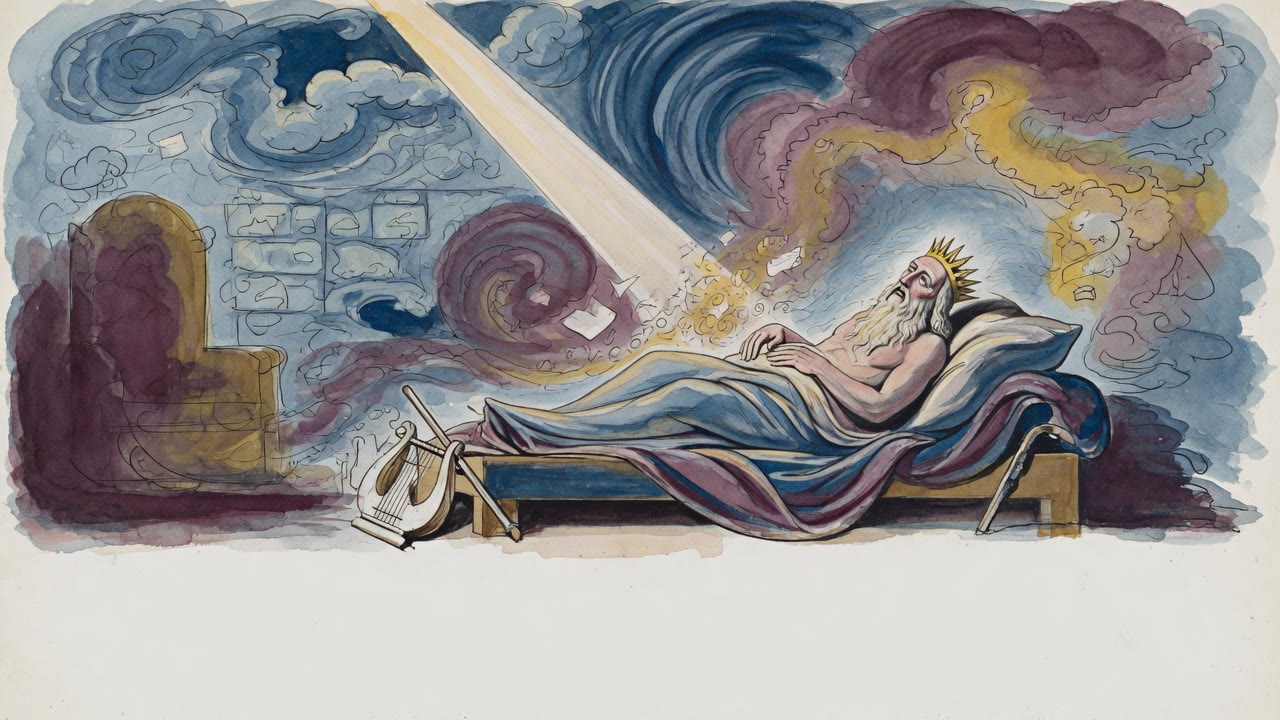
"More," the king said. His voice was thin. "Bring more."

The Body That Had Survived Everything

They brought more. It did not matter. This was the same body that had walked into a valley with a sling and five smooth stones and walked out again while a giant lay face down in the dirt. The same shoulders that had carried a lamb back from the jaws of a lion, the same arms that had pried a bear's mouth open in the wilderness when he was a boy with no name yet. Spears had been thrown at him and missed. Armies had hunted him across the desert and come home empty. He had danced in front of the Ark until his clothes flew and he did not care who watched, sweating and alive and burning with it.

Now the fire was somewhere else. It had moved off him the way warmth leaves a coal that is going gray at the edges, still whole, still shaped like a coal, holding no more heat. He pressed his palm flat against his own chest and felt the slow knock of his heart and thought, with a clarity that frightened him, that the thing keeping him alive was packing to leave and had not asked his permission.

The One War He Could Not Win

He had outlived his enemies. Saul was bones in a field, and the king who had thrown the spears was long buried, and the sons who had risen against their own father were gone too, every one of them, and David had wept for them and gone on living. He had outlived the wars that swallowed lesser kings whole. He had prayed every night of his life the prayer he trusted most, that the one who dwells in the secret place of the Most High shall abide under the shadow of the Almighty (Psalm 91:1), and the shadow had held over him like a roof. Arrows turned aside. Plots came apart in the hands that wove them.

But there was one war with no discharge, no leave granted, no soldier sent home. No man has power over the spirit to retain the spirit, and there is no discharge in that war (Ecclesiastes 8:8). He had read that line a hundred times as a younger man and it had meant nothing, the way deep water means nothing to someone who has never gone under. He understood it now from the inside. When the time comes the spirit blooms outward and goes, the way breath leaves a window it has fogged, and no king's hand is quick enough or strong enough to close the fingers around it and hold it in. He had beaten everyone. He could not beat himself.

The Minute He Was Given

Awake in the long cold hours, the king thought about how little had been allotted to him in the first place. He had heard the story all his life and turned it over the way a man turns a coin he has carried so long the face has worn smooth.

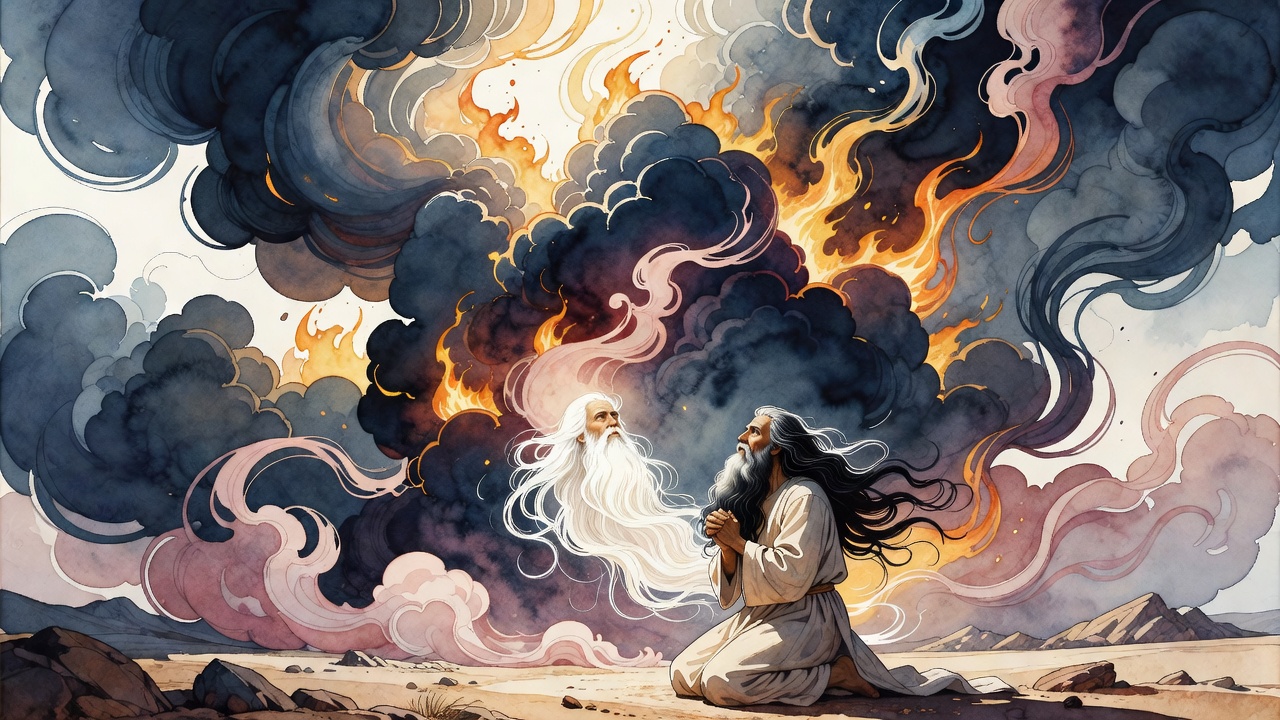
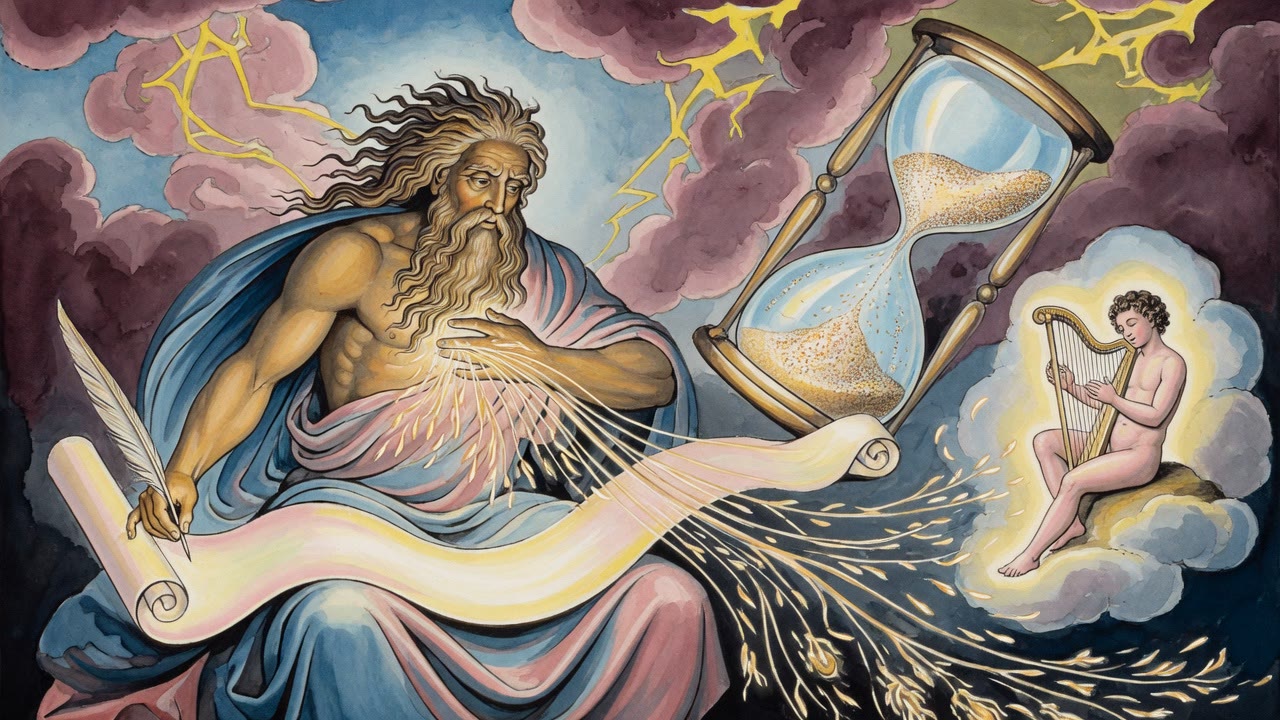
At the very beginning, when the world was new and the first man opened his eyes on a finished garden, Adam had been shown the parade of all the souls that would ever come after him, the whole long line of his children's children unrolling like a scroll into the dark. He saw each one and how long each would live. Then he came to one bright soul that flared and was gone almost before he could fix his eyes on it, given a single minute of life and no more. Adam asked whose soul it was. He was told it was David's, a singer, a king, a man who would matter, and that one minute was the whole of his portion.

Adam, who was meant to live a thousand years, a full day in the counting of the Most High, did a strange and generous thing. He cut seventy years from his own allotment and handed them across the centuries to a man he would never meet, a shepherd boy not yet imagined. He chose to die at nine hundred and thirty so that David could have a life instead of a minute. Every warm year David had ever known, every battle and every psalm and every dance, had been a gift from the first man's own hand.

The Cold That Was Always Coming

So the cold was not a robbery. The king understood that now, lying under his useless mountain of wool. The warmth had always been borrowed. The seventy years were running out the way borrowed years do, and the lender's debt was being called in, and there was a rightness to it that no blanket could have argued with. A blessed old age was not one where the cold never came. It was one where the man had been given the years in the first place, when by his own portion he should have had a single minute and then nothing at all.

He stopped asking for more blankets. The servants noticed and were afraid of the silence, but the king was not afraid. He lay still and let the cold come up over him like a tide that had been promised long ago, and he thought of the line that would not end with him. From this cold body, from this failing king, a branch would grow that no winter could reach, a descendant who would one day make every borrowed thing permanent. The fire was leaving the coal. The coal had only ever been holding it for someone else.


← All myths
From the tradition

Sources

3 sources

The texts this telling draws on, in full. Open a card to read inline, or expand it for a wider, quieter read.

Aggadat Bereshit 34Aggadat Bereshit

King David grew old, and no one could warm him (1 Kings 1:1). The doctors tried blankets. They tried attendants. His body, which had survived lions and bears and Goliath and armies and decades of war, had lost its inner fire. Ecclesiastes had the diagnosis: "No man has power over the spirit to retain the spirit; and there is no discharge in that war" (Ecclesiastes 8:8). When the time comes, the spirit blooms outward and departs. There is no holding it.

The rabbis of Aggadat Bereshit see David's old age as the completion of an arc that began with the angels. David had prayed for protection throughout his life, "He who dwells in the secret place of the Most High shall abide under the shadow of the Almighty" (Psalm 91:1). That protection had been total: he had outlived his enemies, outlived his rebellious children, outlived the wars that consumed lesser kings. But he could not outlive himself.

The Messiah, who descends from David, is introduced here precisely at the moment of David's physical decline. The promise does not end with the body. What David carried, what the covenant carried, passes forward. The rabbis were teaching that the vitality of the covenant is not biological. David grows cold. The fire moves on. It would warm the throne of his descendants for generations, and the rabbis believed it would warm the throne of the Messiah at the end of days. David's cold body is not the end of David's line. It is the sign that the line has gone somewhere else.

Full source
Aggadat Bereshit 35Aggadat Bereshit

"Until the day breathes and the shadows flee" (Song of Songs 2:17). Israel in exile asks: how long? The kingdoms that rule over them are the shadows, empire after empire, each casting its own darkness. And God's answer, through the Song of Songs, is: until dawn breaks. Not "never." Not "you deserve this." Until dawn.

The rabbis trace Israel's question through the Psalms: "How long will I harbor counsel within my soul, agony in my heart all day?" (Psalm 13:3). This is not faithlessness. This is the honest prayer of a people who know they were promised a dawn and are still sitting in darkness. The psalm asks for a time limit. God gives one. But not a date. A condition: the moment of redemption is the moment the shadows lift, and the shadows lift when the light overcomes them.

Song of Songs runs through Aggadat Bereshit like a thread, repeatedly invoked for its image of two lovers separated and awaiting reunion. The rabbis read the Song as Israel's love song to God, exile is the separation, redemption is the beloved's return. "Until the day breathes" is not a passive waiting. It is an orientation, every day turned toward the dawn, every prayer another step toward morning. God promised the dawn. The question is whether Israel will still be facing east when it arrives.

Full source
Legends of the Jews 2:35Legends of the Jews

A whole millennium! That was supposed to be Adam’s lifespan, a "day of the Lord," as it says in some traditions. But did you know he gave some of that time away?

In Legends of the Jews, Adam, in a remarkable act of compassion, saw that the soul of David, destined to be one of the greatest figures in Jewish history, was only allotted a single minute of life. Just one minute! So, Adam, of his own free will, gifted seventy years of his own life to David. He reduced his own time on Earth to 930 years. sacrifice! A evidence of the profound connection even the first human felt to those who would come after.

Adam’s wisdom wasn’t just limited to selfless acts. It shone brilliantly when he named the animals. This story, retold in Ginzberg's Legends of the Jews, highlights a fascinating debate in the heavenly realms. The angels, weren't always on board with the creation of humankind. God, however, insisted that humans would possess greater wisdom. And Adam proved Him right, spectacularly.

Barely an hour old, Adam was presented with the entire animal kingdom, alongside the angels. God challenged the angels to name them, but they were stumped. They couldn't do it! But Adam, without hesitation, declared: "O Lord of the world! The proper name for this animal is ox, for this one horse, for this one lion, for this one camel." One by one, he named them all, perfectly matching each name to the animal's unique characteristics.

Then, God turned to Adam and asked, "What is your name?" And he replied, "Adam, because I was created from Adamah, the dust of the earth." A beautiful connection. Rooted in the very ground from which he came. But it didn't stop there.

God then asked Adam for His own name. And Adam, with divine inspiration, said, "Adonai, Lord, because Thou art Lord over all creatures." This, as we’re told, was the very name God had given Himself, the name by which the angels call Him, and the name that will remain forever unchanged. It’s amazing to think of Adam, just an hour old, knowing this most sacred name.

This wasn't just clever guesswork. Adam possessed the Ruach (spirit) Hakodesh, the holy spirit. He was a true prophet, and his wisdom was a prophetic gift. Without it, he could never have accomplished this incredible feat.

So, what does this all mean for us? These stories about Adam show us the incredible potential within humanity. The capacity for selfless giving, for profound wisdom, and for a deep connection to the divine. Maybe, in our own ways, we too can strive to emulate Adam’s best qualities, using our own gifts to make the world a little brighter, a little wiser, and a little more connected.

Full source