Parshat Vayera5 min read

Abraham Prayed and Abimelech's House Opened

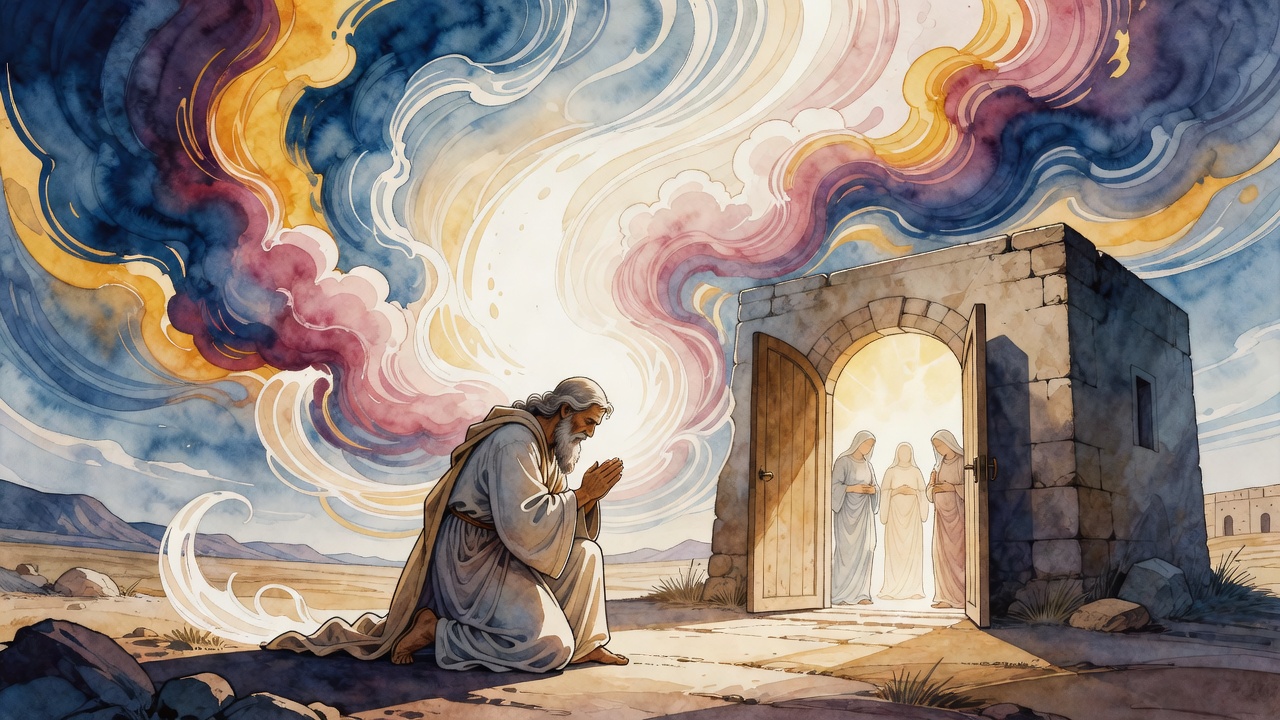
Gerar's king had taken Sarah, and every womb in his house shut. Abraham asked God to let them multiply instead. Abimelech's barren wife bore a child.

Curated by Arthur · Told by Maggid ·
Table of Contents
  1. A King, a Sister Story, and a Closed House
  2. Butter Fit for Angels
  3. Old Age, Inns, and Legacies
  4. Prayer That Unlocked Other People's Future
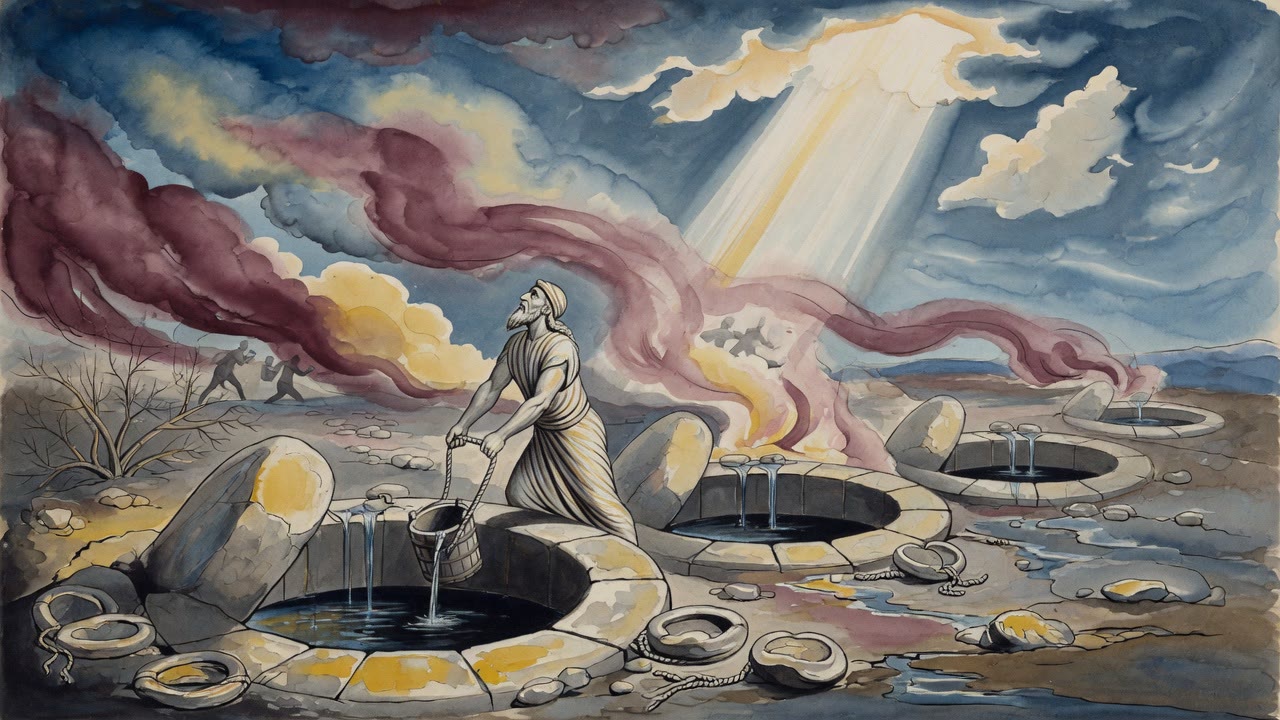
Abraham Prayed and Abimelech's House Opened Click for full size

A King, a Sister Story, and a Closed House

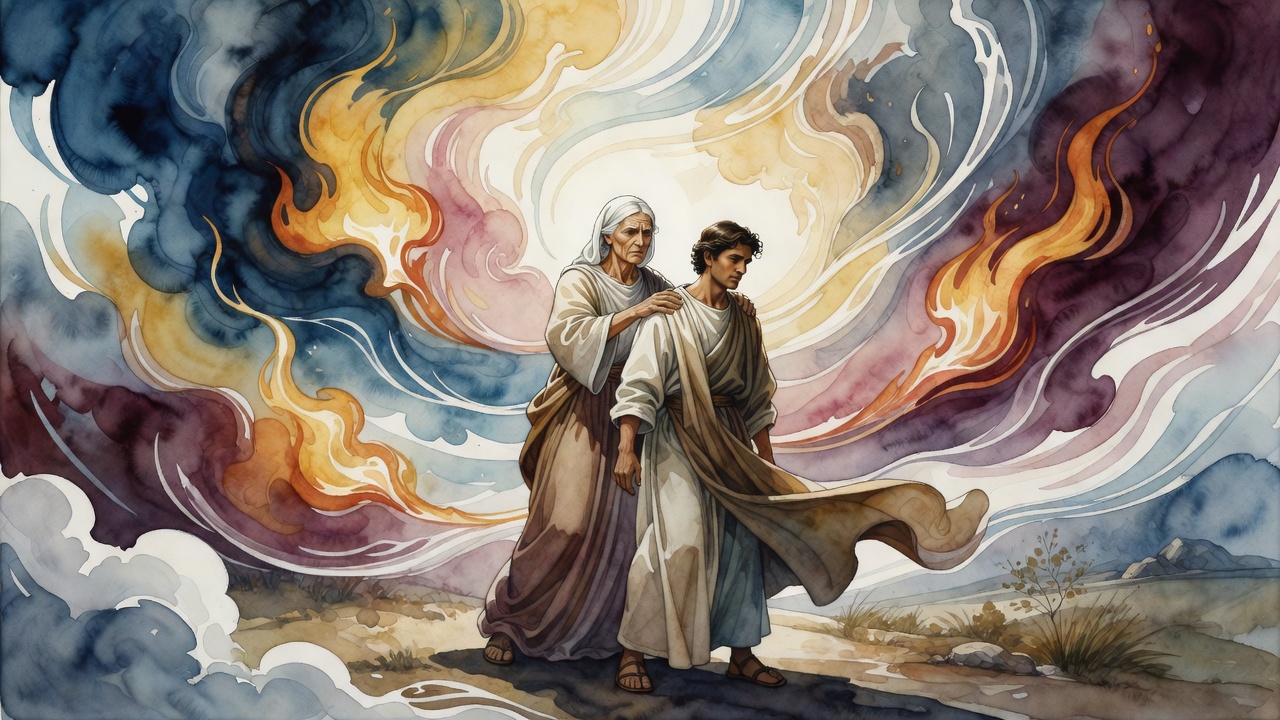
Abimelech of Gerar took Sarah because Abraham had called her sister. God closed the king's house with disease and barrenness until the dream corrected the theft. Abraham then prayed, not for himself first, but for the man who had held his wife.

"O Lord of the world! Thou hast created man that he may increase and propagate his kind. Grant that Abimelech and his house may multiply and increase!" It was, the legend says, the first time God fulfilled one human's prayer for another's benefit. Abimelech's people healed. His wife, barren until then, bore a child.

The patriarch who would father nations practiced fatherhood first as intercession for a Philistine court. Mercy went sideways before it went down his own line in the next scenes of promise.

Butter Fit for Angels

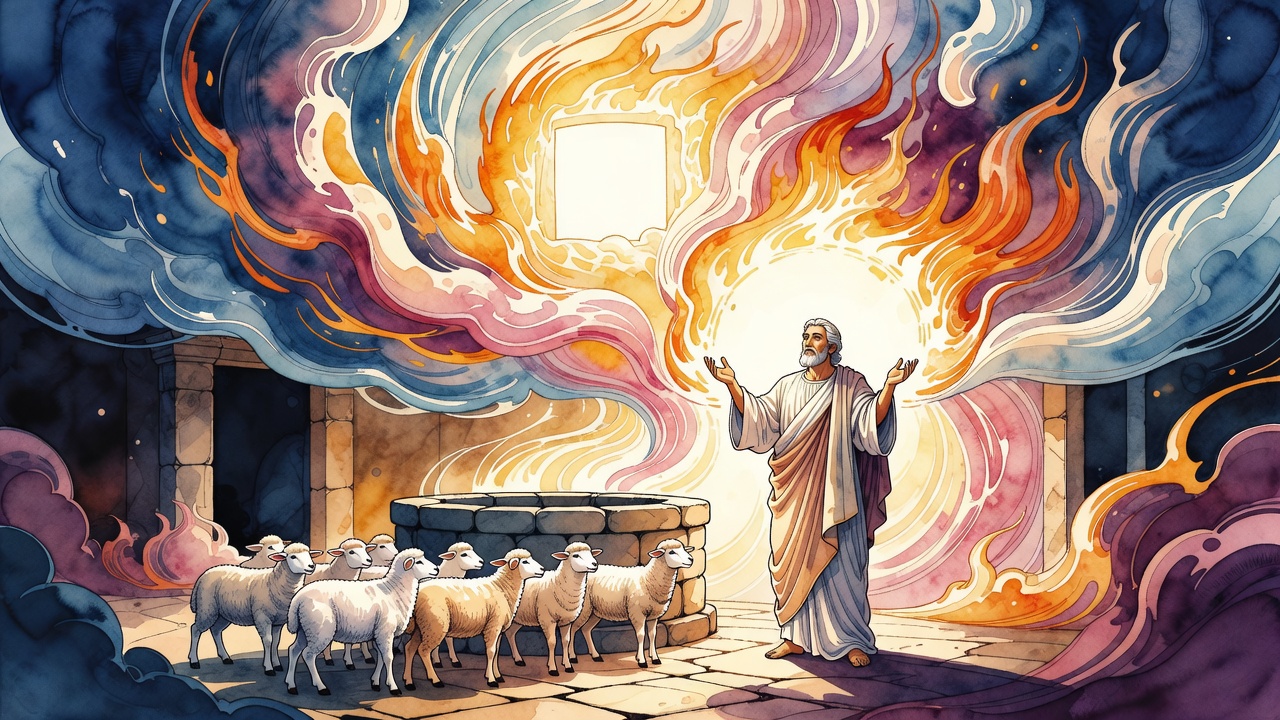
When three guests stood under Abraham's tree, he ran. Butter and milk and a young bull landed before them (Genesis 18:8). The rabbis argue fractions. Highest butter is one-sixtieth of the milk, or one-hundredth, depending on the teacher. Abraham served the fine cut with whole milk still rich beside it.

Where was the bread Sarah began? One view says she became niddah and the dough impure. Another says he served bread too, and the verse simply did not need to repeat it. He stood over them under the tree. Before he fed them, they stood over him in the weight of obligation. After he fed them, awe flipped. Michael trembled. Gabriel trembled.

They appeared to eat. Morsels vanished. On high, Moses would not eat for forty days. Below, guests of fleshless fire mimed the custom of the city. Abraham's table trained heaven to sit like travelers.

Old Age, Inns, and Legacies

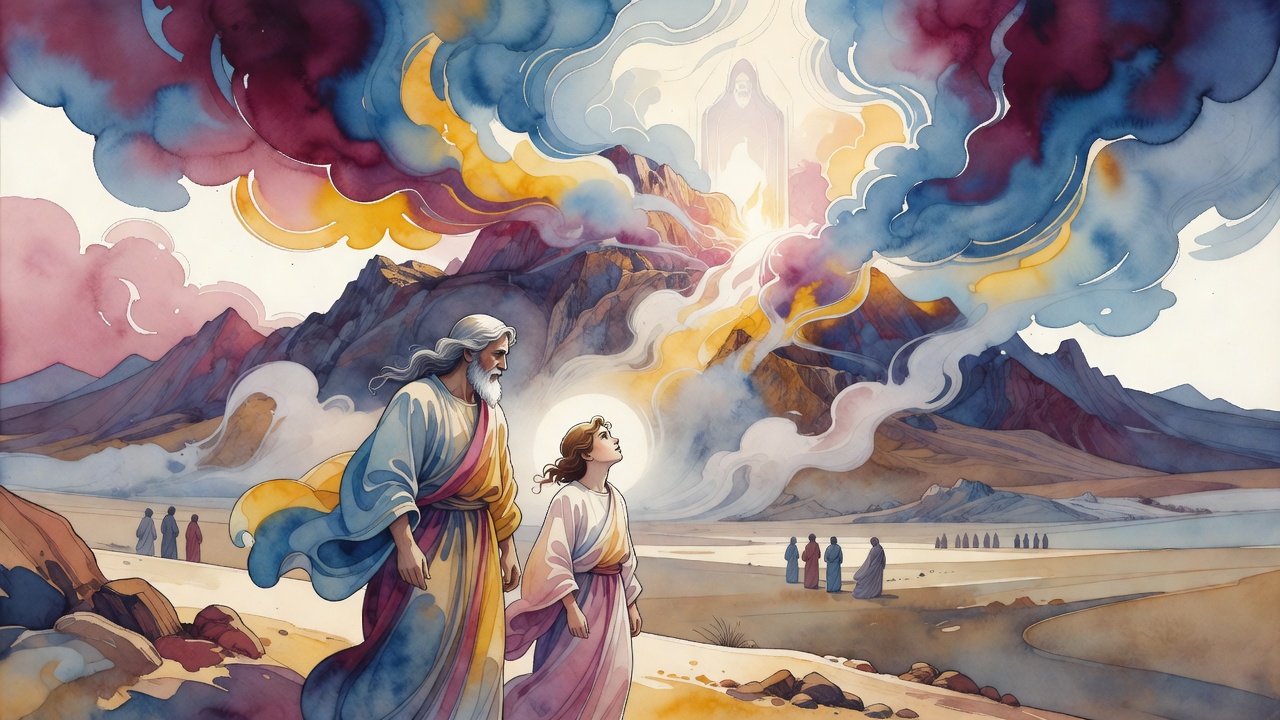
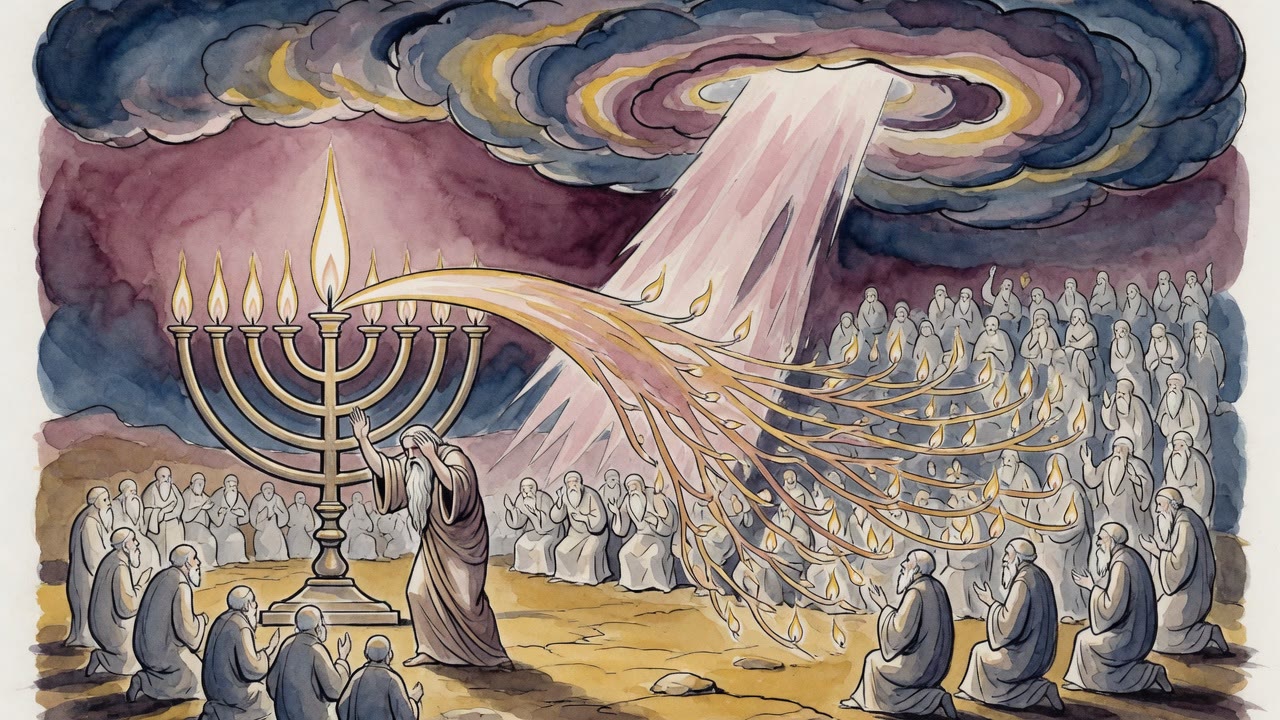
Tanchuma lists what Abraham introduced. Old age, so a city could tell father from son when they looked like peers. He asked the Master of the Universe how to distinguish them. God began with him. "Abraham was old" (Genesis 24:1).

Trials, so the world would learn that security without testing breeds the flood generation's "Depart from us." Hospitality, a tamarisk whose letters play with "ask," an inn at the crossroads, a man who said, "Ask what you desire." Legacies, gifts to the sons of concubines so the house would not choke on a single inheritance line.

Noah had introduced planting, cursing, slavery, and drunkenness. Abraham's four gifts ran the other direction. Balaam, later, would introduce darker crafts. Between flood and sorcery, Abraham taught how to age, how to be tried, how to host, and how to give away.

Prayer That Unlocked Other People's Future

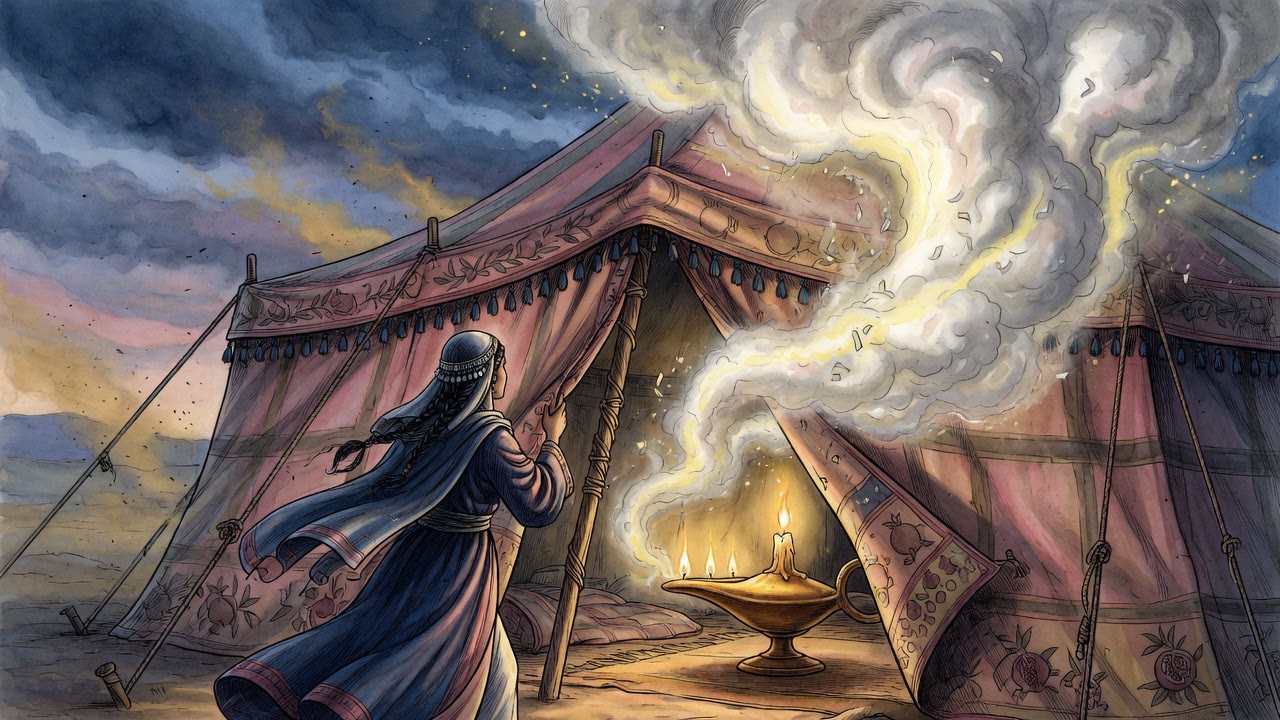
The same mouth that blessed Abimelech's fertility also argued for Sodom and served angels butter. Intercession was not a side hobby. It was the spine of a man who introduced hospitality as public policy.

Sarah would still need her own remembering by God. Isaac would still take years. The first answered prayer for another did not cancel private waiting. It proved heaven will open a foreigner's house when a righteous man asks without spite.

Gerar learned that taking Sarah closed wombs. Abraham learned that asking for Gerar opened them. The butter under the tree and the prayer in the king's aftermath share a posture. Stand ready to give. Speak ready to heal even a man who endangered Sarah.

Night in the tents returned to ordinary sounds. Somewhere in Gerar a child would be born because Abraham refused to let the story end in revenge alone. The first intercession left a template. Later prophets and later fathers would stand in that template without always knowing Abraham walked it first under Philistine roofs and Mamre's shade.

Sarah's time in Gerar left fingerprints on everyone. Abraham's fear had shaped the sister story. Abimelech's power had shaped the seizure. God's plague shaped the correction. Then Abraham's prayer shaped the ending. He could have asked only for safe distance. He asked for the king's house to fill with children.

That request matches the man who served angels the best butter fraction he could manage. Abundance for strangers was his instinct. Even a stranger who had endangered Sarah received a blessing aimed at life, not at payback. The first intercession in human history, per the legend, came from a husband who had reasons to curse and chose multiplication instead.

Under the tree, Michael and Gabriel learned the custom of the lower world by vanishing food. Abraham stood over them as host after standing under them as debtor to the duty of guests. Etiquette flipped with a full table. Heaven trembled at a human who ran toward need faster than angels expected.

Old age as Abraham's innovation sounds comic until a city cannot tell whom to honor. Trials as his request sounds brave until the knife on Moriah answers. Inns at crossroads sound simple until the nights he fed people who would never keep kosher laws not yet given are counted. Legacies to concubines' sons sound technical until a household avoiding a single-heir explosion comes into view.

Noah's four introductions leaned toward curse and stupor. Abraham's four leaned toward structure that lets a family and a road survive. Between them, Abimelech's opened wombs proved that prayer can repair a house Abraham never planned to love. The butter and the intercession are one temperament in two kitchens, Gerar and Mamre.


← All myths
From the tradition

Sources

3 sources

The texts behind this telling. Some cards carry a translation of the source; others are our own retelling of it, and each card says which. Every card links out to the original.

Legends of the Jews 5:188Legends of the Jews

Retold in our words. Read the original at the link below.The Legends of the Jews by Louis Ginzberg (1909) · Public Domain

Jewish tradition, rich as it is with stories of answered prayers, offers some fascinating perspectives.

Take Abraham, for instance. We know him as the patriarch, the father of the Jewish people, a man of immense faith. But did you know he was also, according to tradition, the first person whose prayer was answered on behalf of someone else?

The story goes that Abraham prayed for Abimelech. Now, Abimelech wasn't exactly a close friend. In fact, their relationship was…complicated. Abimelech, king of Gerar (a Philistine city), had taken Sarah, Abraham's wife, into his harem, thinking she was Abraham's sister (Genesis 20). A bit of a mess. But after God intervened and revealed the truth to Abimelech in a dream, things started to shift.

Abraham, ever the compassionate one, prayed for Abimelech. What exactly did he pray? Well, according to Legends of the Jews (Ginzberg), Abraham said, "O Lord of the world! Thou hast created man that he may increase and propagate his kind. Grant that Abimelech and his house may multiply and increase!" for a second. Abraham, after being wronged, prays not for revenge, but for the well-being and prosperity of the one who wronged him.

And here’s the kicker: God answered that prayer! Ginzberg tells us that God fulfilled Abraham's petition, and it was the first time in human history that a prayer was answered for the benefit of another person. Abimelech and his people were healed of all their diseases, and even more remarkably, Abimelech's wife, who had been barren, conceived and bore a child.

So, what does this tell us? Is it just a nice story? Or is there something deeper?

Perhaps it highlights the power of empathy and the importance of praying for others, even those we might consider our adversaries. Maybe it suggests that our prayers have ripple effects, extending beyond ourselves and impacting the world around us in ways we can't fully comprehend.

What if we all took a page from Abraham's book and started praying for the well-being of others, even those who have wronged us? What kind of world might we create then?

Full source
Bereshit Rabbah 48:14Bereshit Rabbah

Retold in our words. Read the original at the link below.The Sefaria Midrash Rabbah, 2022 · CC-BY

The Rabbis of Bereshit Rabbah – that amazing collection of rabbinic interpretations of Genesis – see so much more.

First, that "butter and milk" bit. What kind of butter are we talking about here? Rabbi Ḥanina, in Bereshit Rabbah 48, gets right down to the nitty-gritty. He says the very best butter is made from the creamiest one-sixtieth part of the milk. Not bad, eh? Intermediate quality? One-fortieth. And the lowest? One-twentieth. Rabbi Yona chimes in with slightly different figures – one-hundredth for the best, one-sixtieth for the middle, and one-twentieth for the lowest. The point is, Abraham wasn't serving just any butter. He was going for quality, offering his guests the very best.

Wait a minute… where's the bread? Abraham tells Sarah to prepare three se’a of flour – that's a lot – for bread and cakes. So why doesn't the Torah mention it being served? One explanation, offered by Efrayim Makshaa in the name of Rabbi Meir, is that Sarah, well, she started menstruating right then and there. That would render the dough ritually impure! The Rabbis, however, offer a simpler solution: of course he served the bread! It's just so obvious it doesn't need mentioning. If he served the things that weren't mentioned earlier, all the more so would he serve the thing that was. It's the unspoken assumption of hospitality.

About that phrase, "He was standing over them." It seems straightforward, but compare it to earlier in the chapter, (Genesis 18:2), which says the three men "were standing over him." See the switch? Bereshit Rabbah explains that before Abraham fulfilled his obligation to his guests, they were, in a sense, "standing over him," representing his sense of duty. But after he's provided for them, he's standing over them. They are now in awe of Abraham’s actions. They're humbled by his generosity. The text even says that Mikhael and Gavriel – two of the most powerful angels! – were trembling with awe.

Rabbi Tanḥuma, quoting Rabbi Elazar and Rabbi Avun in the name of Rabbi Meir, brings in a great parable: "When you enter a city, follow its customs." It's the ancient version of "When in Rome, do as the Romans do." On High, in the heavenly realms, there's no eating or drinking. Remember when Moses went up Mount Sinai? (Deuteronomy 9:9) tells us, "I remained on the mountain forty days and forty nights; bread I did not eat and water I did not drink.” But down here on earth, it's different. There's eating and drinking, so Abraham serves his guests a meal.

But here's a final twist: were they really eating? Some interpretations suggest the angels only appeared to eat, the food vanishing as they took it.

So, what does it all mean? This little verse from Genesis, through the lens of Bereshit Rabbah, becomes a meditation on hospitality, generosity, and the way we interact with the divine. It's about offering the best we have, about honoring our guests, and about recognizing the moments when we might be in the presence of something truly extraordinary. Next time you're sharing a meal with someone, think about Abraham, the butter, the bread, and the awe-struck angels. You never know who you might be entertaining.

Full source
Midrash Tanchuma, Noach 14Midrash Tanchuma

Retold in our words. Read the original at the link below.Townsend 1989 translation of Midrash Tanhuma, S. Buber Recension · CC-BY

And he planted a vineyard (Gen. 9:20). Noah was one of four men who introduced four things. Noah introduced planting, as it is written: And he planted a vineyard; cursing when he said: Cursed be Canaan (Gen. 9:25); slavery when he said: He shall be slave unto his brothers (ibid.); and drunkenness when he drank of the wine, and was drunken (ibid., v. 21).

Abraham introduced old age, trials, hospitality, and legacies. He introduced old age, for whenever he and his son entered a city, the inhabitants were unable to determine which of them was the elder of the two (and therefore the one) to be honored. Abraham was disturbed by this, and so he said: Master of the Universe, how shall one distinguish between father and son? The Holy One, blessed be He, replied: Be assured, I will begin with you (to distinguish between father and son), as it is said: Abraham was old (Gen. 24:1).

Trials. Abraham said to the Holy One, blessed be He: Master of the Universe, if You had made the generation of the flood feel secure, they would not have angered You or rebelled against You by saying: Depart from us (Job 21:14). Thereupon, the Holy One, blessed be He, said to him: I shall begin with you (to try men). And He tried him through his son (who was to be offered as a sacrifice), as it is written: And the child grew, and was weaned, etc. (Gen. 21:8).

R. Oshaya and R. Abin differed over the meaning of this verse. One said: He was weaned from his good inclination; while the other insisted: He was weaned from his evil inclination.

Hospitality. For it is said: And he planted a tamarisk tree (ibid., v. 33). R. Nehemiah stated: “Tamarisk tree” (alef-shin-lamed) contains the same letters as the word “ask” (shin-alef-lamed). Whenever a man approached him, Abraham would say: “Ask what you desire, and I will give it to you.” And he built an inn at the crossroads.

Legacies. As it is said: Unto the sons of his concubines Abraham gave gifts (Gen. 25:6).

Moses introduced priestcraft, priesthood, sacrifice, and the law. He introduced priestcraft when he officiated as priest for seven days during the inauguration (of the priesthood); priesthood when He appointed Elazar the son of Aaron to the office of priest in the Temple, as it is said: And the chief over the princes of the Levites was Elazar the son of Aaron the priest (Num. 3:32); sacrifice, for it is said: And Moses made the whole head ram smoke upon the altar; it was a burnt offering (Lev. 8:20); and law, for it is written: And I will give to thee the tablets of stone and the law and the commandments (Exod. 24:12). Balaam instituted gambling, plaiting the hair, sorcery, and unchastity. Hence, Noah was one of four men who introduced four things.

Full source