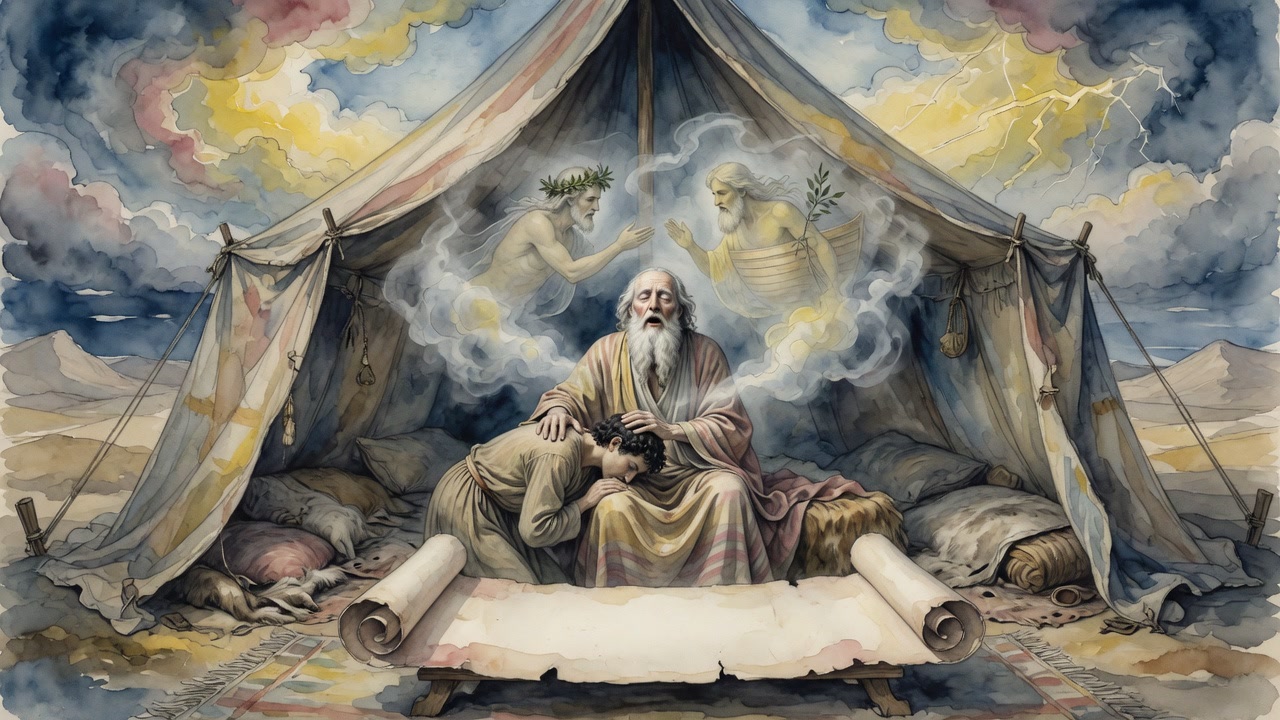
Isaac Reopened Abraham's Wells and Kept Their Names
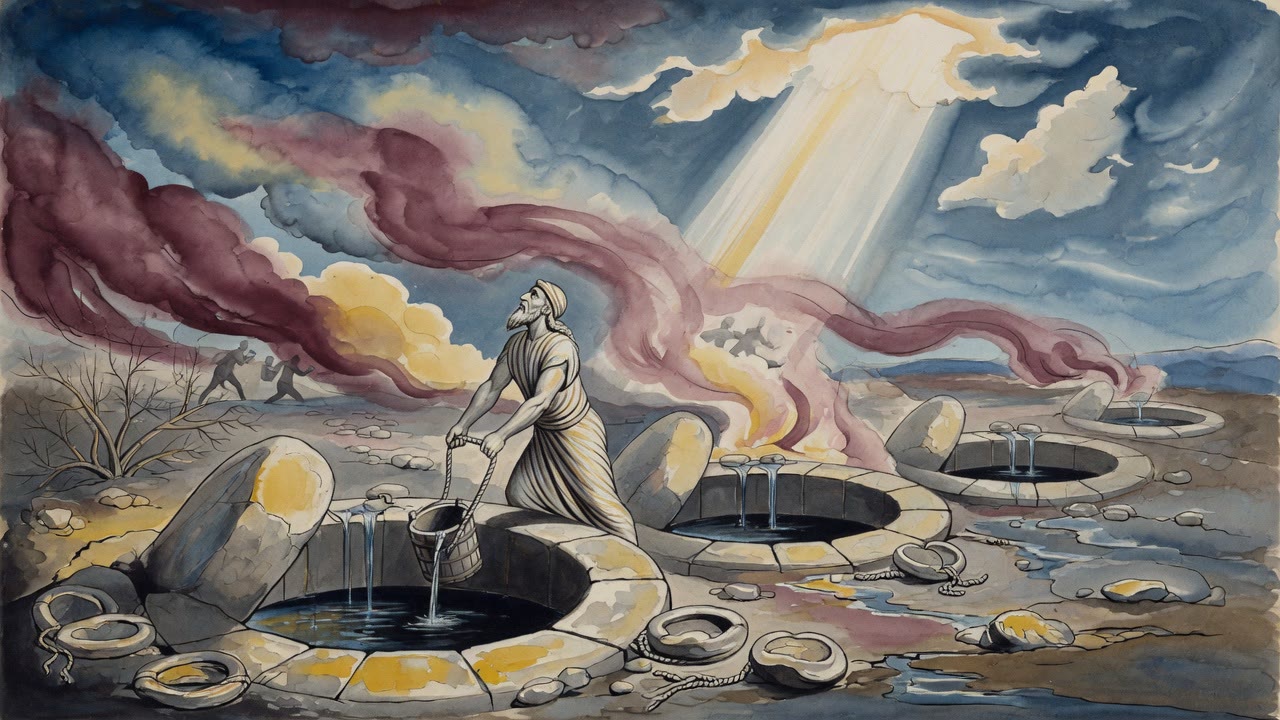
The Philistines poured earth into Abraham's wells until the rims sat useless in the sun. Isaac came back with a spade and sore shoulders.
Table of Contents
The Philistines waited until Abraham was dead before they buried his water.
 Click for full size
Earth in the Mouth of the Wells
Gerar knew those wells. Men had lowered ropes into them. Women had filled jars at their mouths. Herds had crowded near them, snorting dust from their noses while the water rose cold from under the ground. Abraham had dug them and named them, and every name fastened his labor to the land.
Then the old man died. The shovels came out.
The Philistines did not smash a monument. They poured earth into the wells until the mouths closed. Dirt swallowed the openings. The ropes went slack. The stones around the rim sat useless in the sun. In a dry country, stopping a well is not mischief. It is a sentence.
No water here. No Abraham here.
Isaac Put the Old Names Back
Isaac returned to a landscape that had been taught to forget. His servants found the places where his father's wells had been, and the work began again. Spades bit into packed soil. Men scraped, lifted, and dug deeper. Every basket of earth that came up from a mouth loosened the Philistine verdict.
Water was the obvious need. Isaac had flocks, herds, servants, tents, and children. A camp cannot live on memory. It needs drinkable water, and it needs it before the heat climbs too high.
When the wells opened again, he gave them back their old names. Not new names. Not names of his own success. The names Abraham had spoken were placed back on the wells like vessels restored to a table. This was kibbud av (כיבוד אב), honor for a father, done with rope, stone, and mud under the fingernails.
To reward him, God left Isaac's name unchanged. Abraham had taken a new name. Jacob would take a new name. Isaac kept the one he was given, because he had kept his father's words on the water.
Living Water in the Valley
The work did not end with the old wells. Isaac's men dug in the valley, where the earth held its secrets under a skin of dust. They cut down through dry layers until the ground changed. The sound changed first. A dull scrape became a wet pull. Then the water came.
Living water.
The shepherds of Gerar arrived before anyone had drunk in peace. They looked at the water and claimed it. "The water is ours," they said. Isaac's servants had dug. Isaac's camp had found the spring. The men of Gerar reached for it anyway.
Earth in a well had become a hand over a new spring. After four attempts Isaac found the well that had followed the patriarchs. Abraham had obtained it after three diggings. Hence Beer-sheba, the well of seven diggings, the same well that will supply Jerusalem in the time of the Messiah.
He Named the Place Perversity
Isaac did not pretend the quarrel was ordinary. He named the place Perversity, because something straight had been bent there. Work had been twisted into theft. A gift from the ground had been dragged into a fight before anyone had drunk in peace.
They dug a second well, and the shepherds strove for that also. He called its name Enmity.
He rose from there and they dug another. For that they did not strive. He called the name of it Room, and Isaac said, "Now the Lord hath made room for us, and we have increased in the land."
The name Perversity stayed like a scar on the first rim. Room was the later breath. He let the injury keep its proper label, and he let the relief keep its proper name. When the men of Gerar tried to turn memory into dirt and water into dispute, Isaac answered by naming what had happened.
The Water Remembered Abraham
At the reopened wells, Abraham's names rose with the water. At the new wells, Perversity and Enmity and Room stood as a record. Isaac's camp learned both kinds of memory, the memory that honors and the memory that refuses to smooth over wrong.
The Philistines had tried to make Abraham's work disappear by filling it with earth. Isaac made the land speak again. Every bucket lifted from the old wells said that a father's labor could be buried, but not cancelled. Every servant who bent over the stones learned that honor is not only spoken in blessings at a bedside. Sometimes it is done with sore shoulders in a valley, while other men argue over the water.
By evening the wells stood open under the sky. The old names had returned. The living water moved below them, patient and cold, as if it had been waiting for Isaac to call it by the right name.
← All myths