Parshat Chayei Sarah6 min read

Abraham Bought a Grave While Owning the Land

Promised all of Canaan, Abraham still stood in Hebron as a stranger and paid for Sarah's tomb, then refused to bless Isaac lest jealousy crack the house.

Curated by Arthur · Told by Maggid ·
Table of Contents
  1. A Stranger With a Deed From Heaven
  2. Butter for Guests Who Did Not Need to Eat
  3. The Blessing He Would Not Speak
  4. Michael Among the Oxen
  5. The Tomb and the Promise

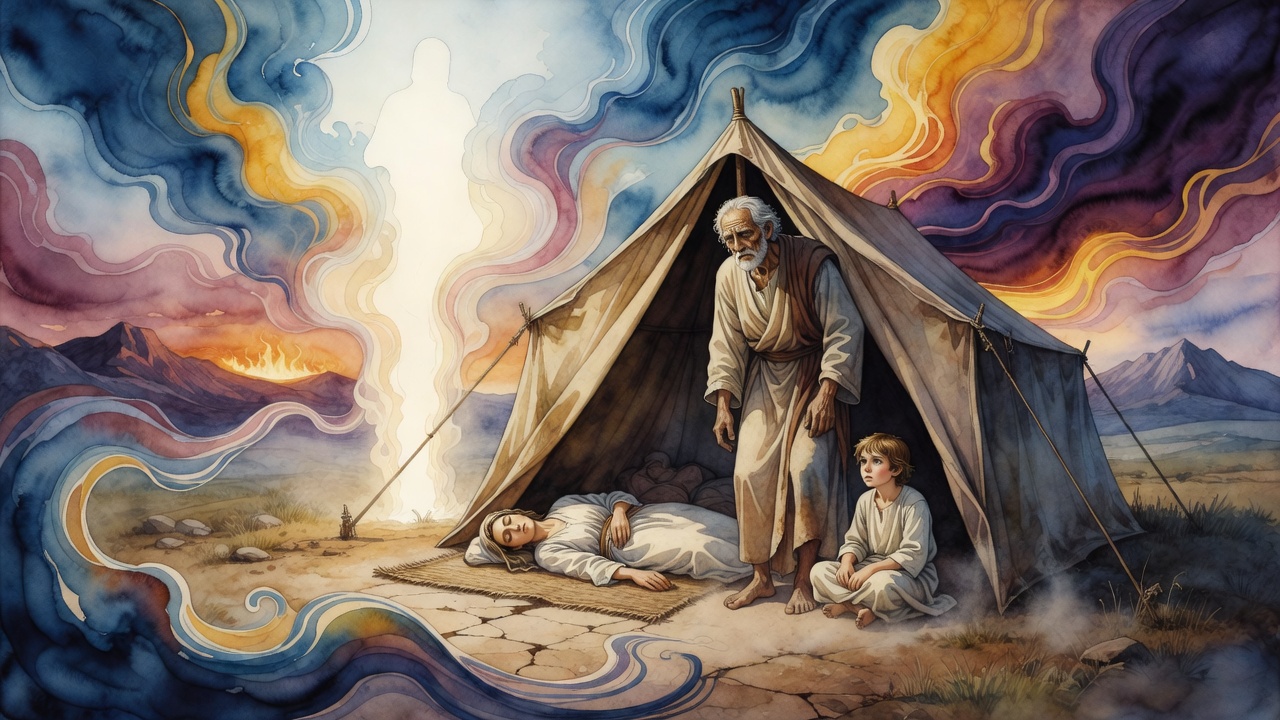
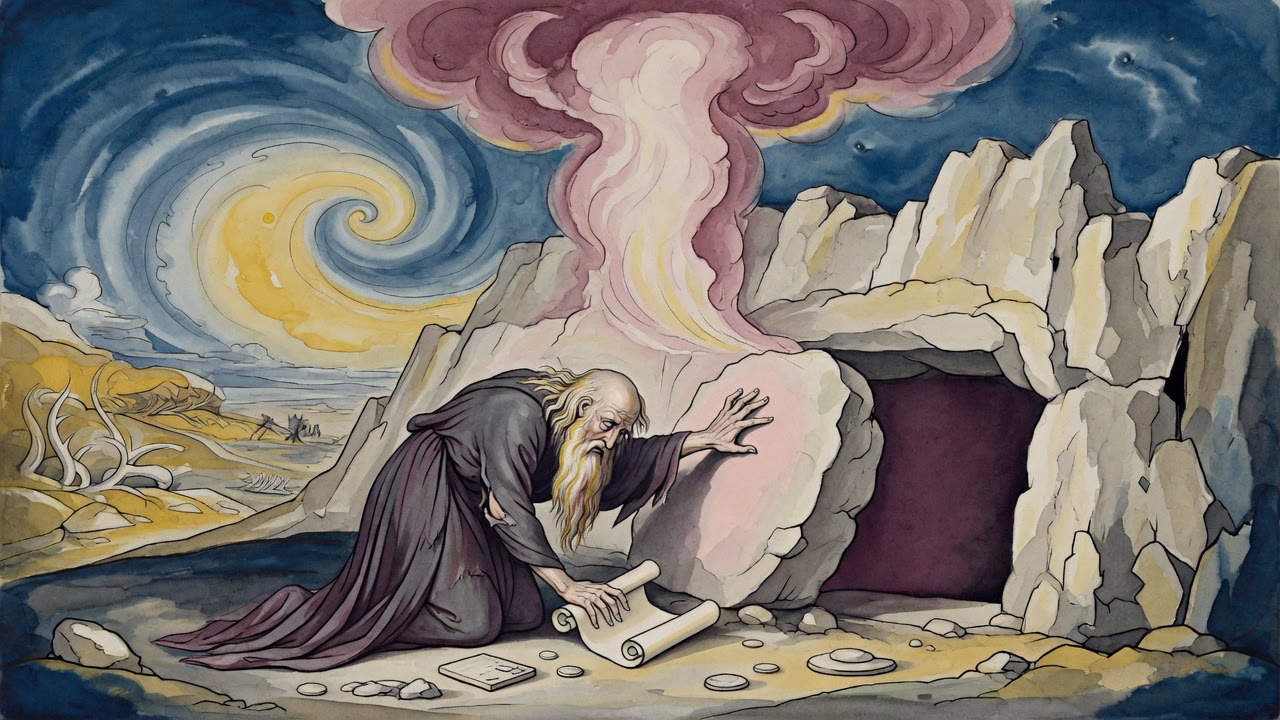
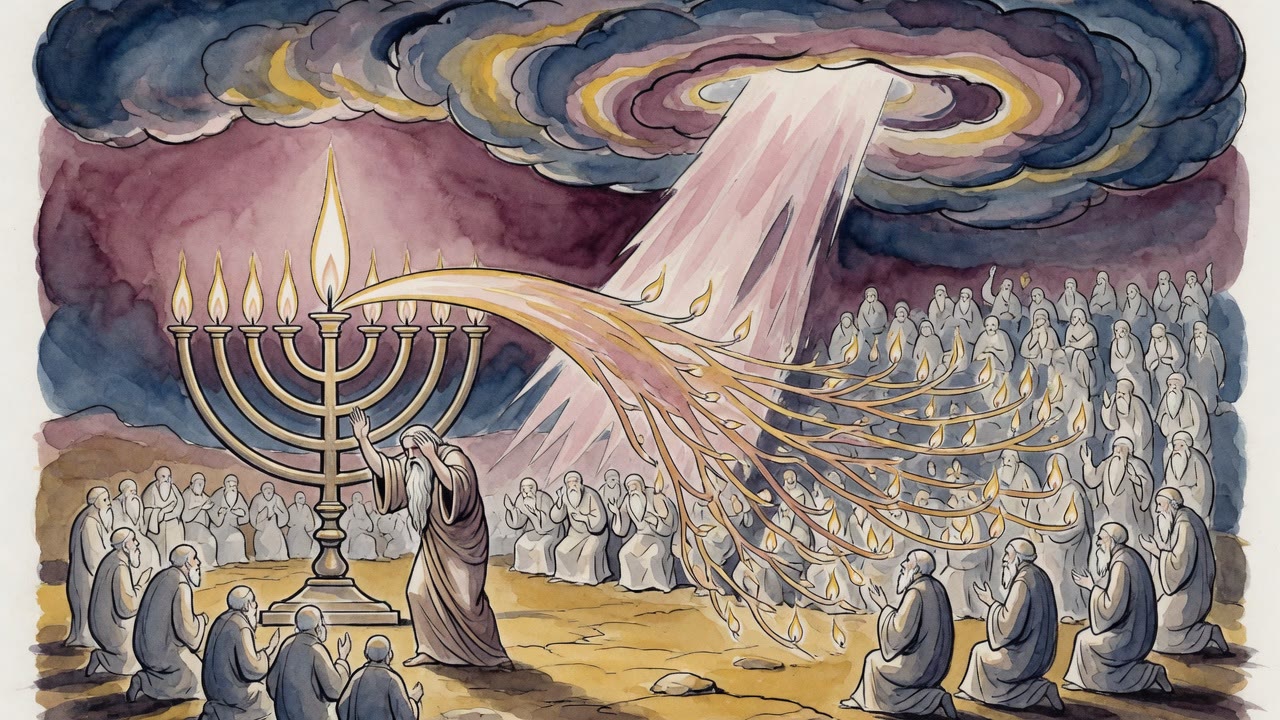
Sarah was dead in Hebron, and Abraham owned no ground to bury her in. The whole land had been spoken over him like a deed from heaven, every cubit of Canaan promised to him and his seed. He stood up from beside his dead and went to the gate of a town where, by any record men could read, he owned nothing at all.
Abraham Bought a Grave While Owning the Land Click for full size

A Stranger With a Deed From Heaven

"I am a stranger and a sojourner with you," he said to the Hittites (Genesis 23:4). A ger and a toshav, temporary and dependent. He did not wave the promise like a sword, did not remind a single man at that gate whose land this was destined to be. Grief can license arrogance, and he refused the license. Heaven took note. "Thou didst bear thyself modestly," God said. "As thou livest, I will appoint thee lord and prince over them." The Hittites answered in the same key from below. "Thou art a prince of God among us. In the choice of our sepulchres bury thy dead." They opened rich plots and poor plots alike to a man who had asked as if he had no claim.

Abraham still paid. Full price, silver weighed out in public at the gate, for the cave of Machpelah with its field and its trees. The first owned piece of the promised land was a grave, bought so that no later mouth could call Sarah's rest a favor that might be revoked. The promise stayed true, and the purchase could be walked to, and between the two lay a receipt.

Butter for Guests Who Did Not Need to Eat

Hebron knew what kind of man was asking. This was the same Abraham who had once run from his tent door toward three strangers in the heat of the day. For them he had brought out the finest butter, and the sages went so far as to grade it: the best butter is churned from the creamiest sixtieth part of the milk, and that is what stood on the table, with milk and a tender calf beside it. He told Sarah to knead three full measures of flour for cakes. His guests were angels, beings who only appear to eat, and he stood over them under the tree like a servant while they ate anyway. The best of the herd and the cream of the milk, for visitors who needed none of it.

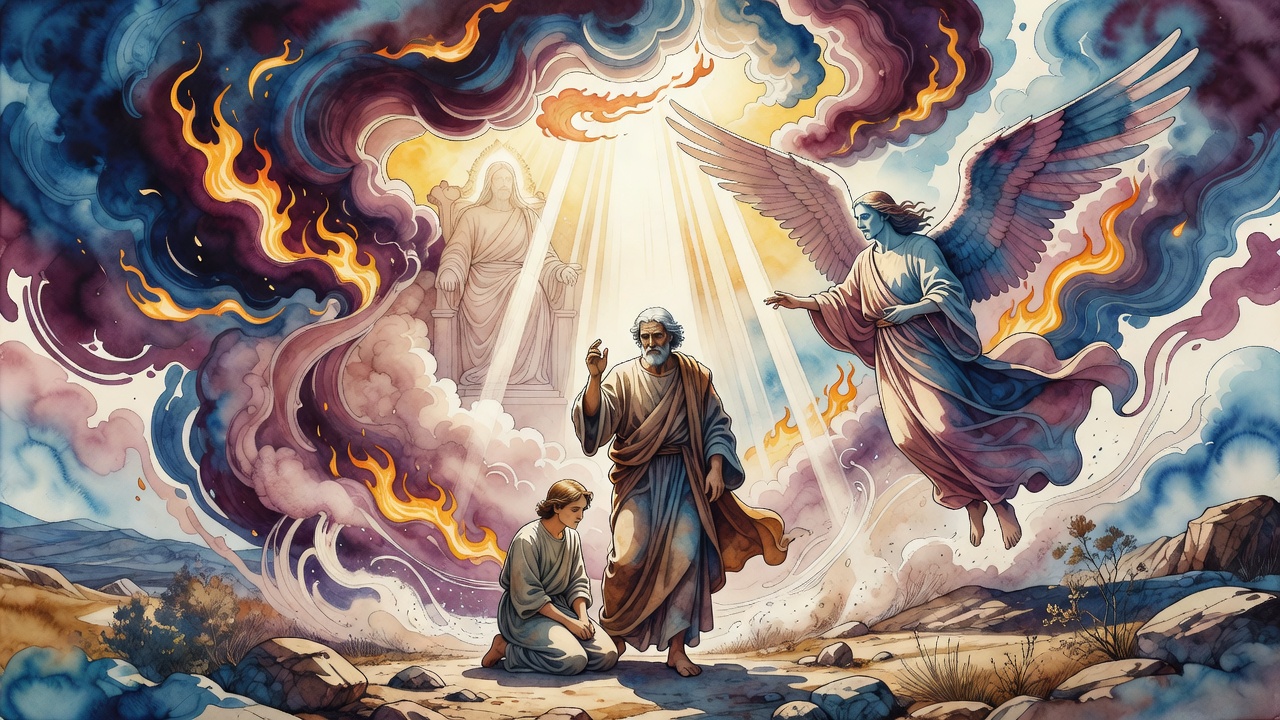
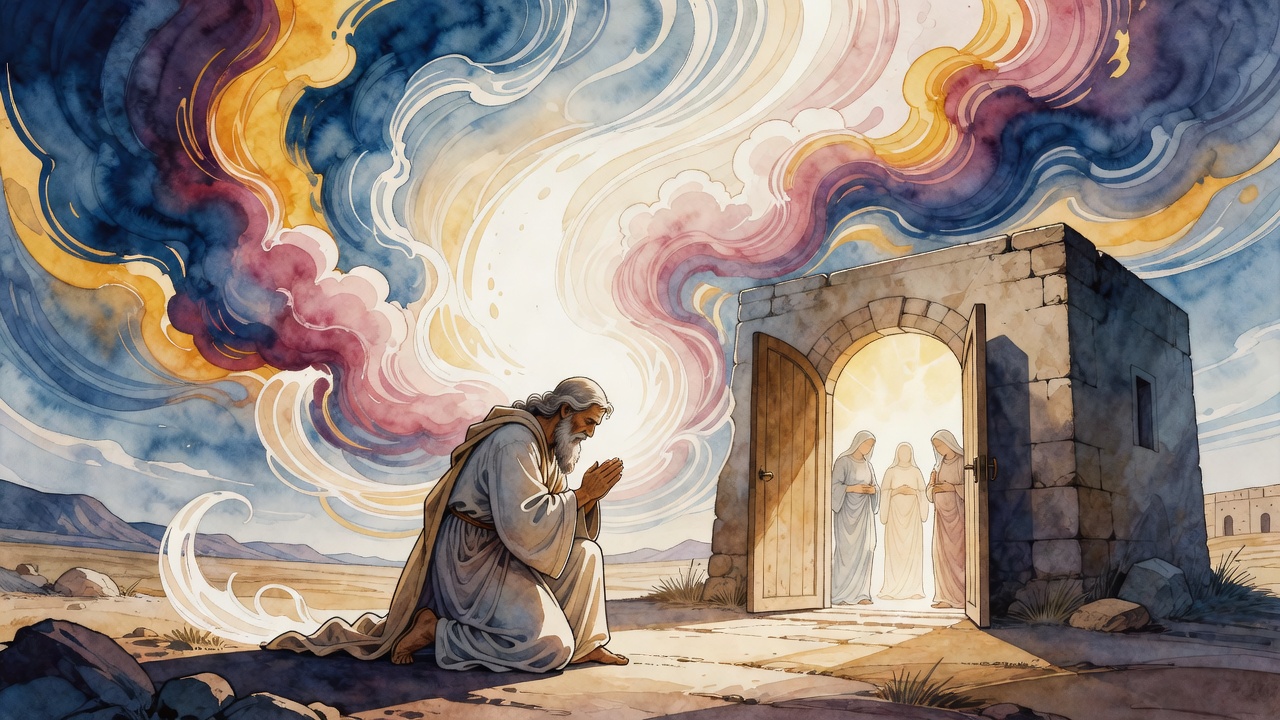
Those angels had arrived while he was in the middle of a conversation with God. Abraham did not simply turn from the greater Presence to the lesser guests. He asked leave first. Wait for me, he told the visitors, until I take my leave of One greater than you. And when the talking was done, God did not simply vanish either. "God ascended from upon Abraham" (Genesis 17:22), the way a guest rises and takes proper leave of his host. Courtesy ran in both directions between heaven and that tent.

The Blessing He Would Not Speak

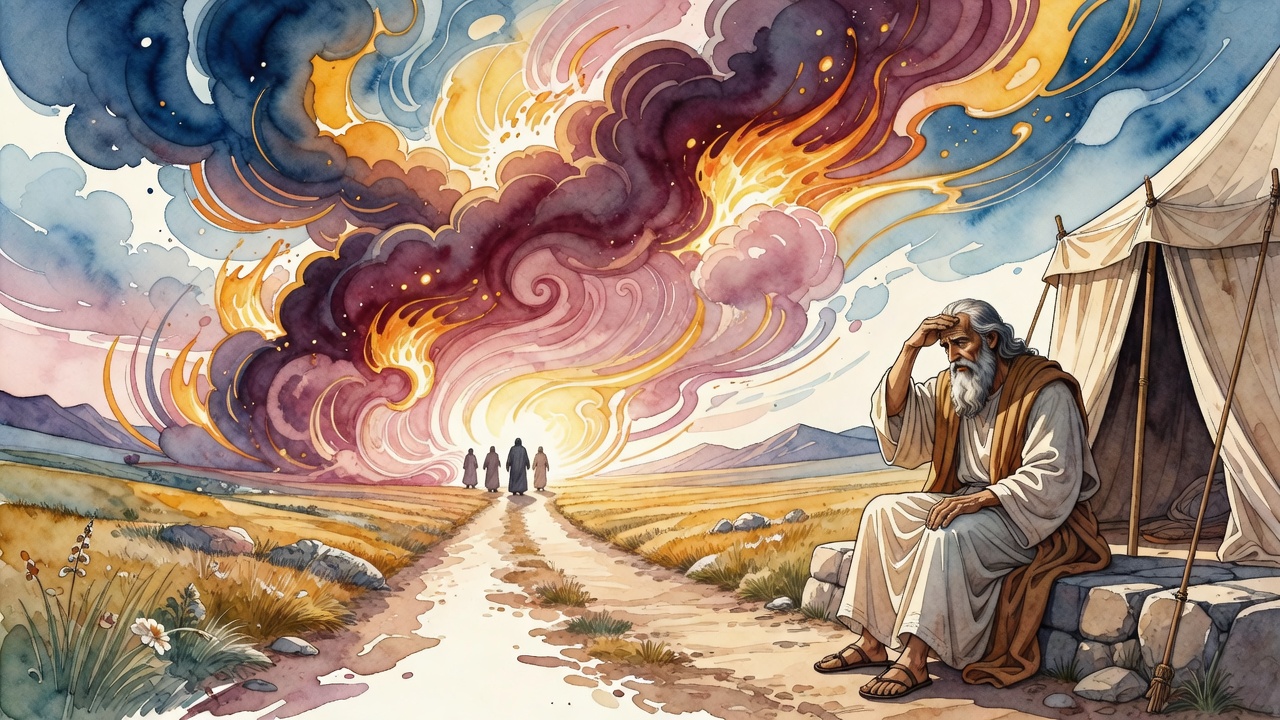
Near his own end Abraham knew that Isaac deserved the father's blessing above any other son, and he held it back. He feared a jealousy among his descendants that would outlive every grave he had bought. "I am but flesh and blood, here today, tomorrow in the grave," he said. "What I was able to do for my children I have done. Henceforth let come what God desires to do in His world." He would not light the fire himself. After Abraham died, God appeared to Isaac and laid the blessing on him directly. The father had left the sentence unfinished on purpose, and Heaven finished it without a single brother's hand raised over a word from Abraham's lips.

Michael Among the Oxen

When the hour of his death drew near, God sent the archangel Michael to tell him plainly: thou shalt depart from life. Michael found him in the field among his oxen, preparing the plow. Abraham did not recognize the messenger of his own ending. He saw a traveler in the heat, so he offered him rest, a mount, and the road back to his house, food before business, hospitality before everything, even before the news that he was going to die. The warning itself was a mercy, time to set the house in order, and the man who received it was busy setting a table first.

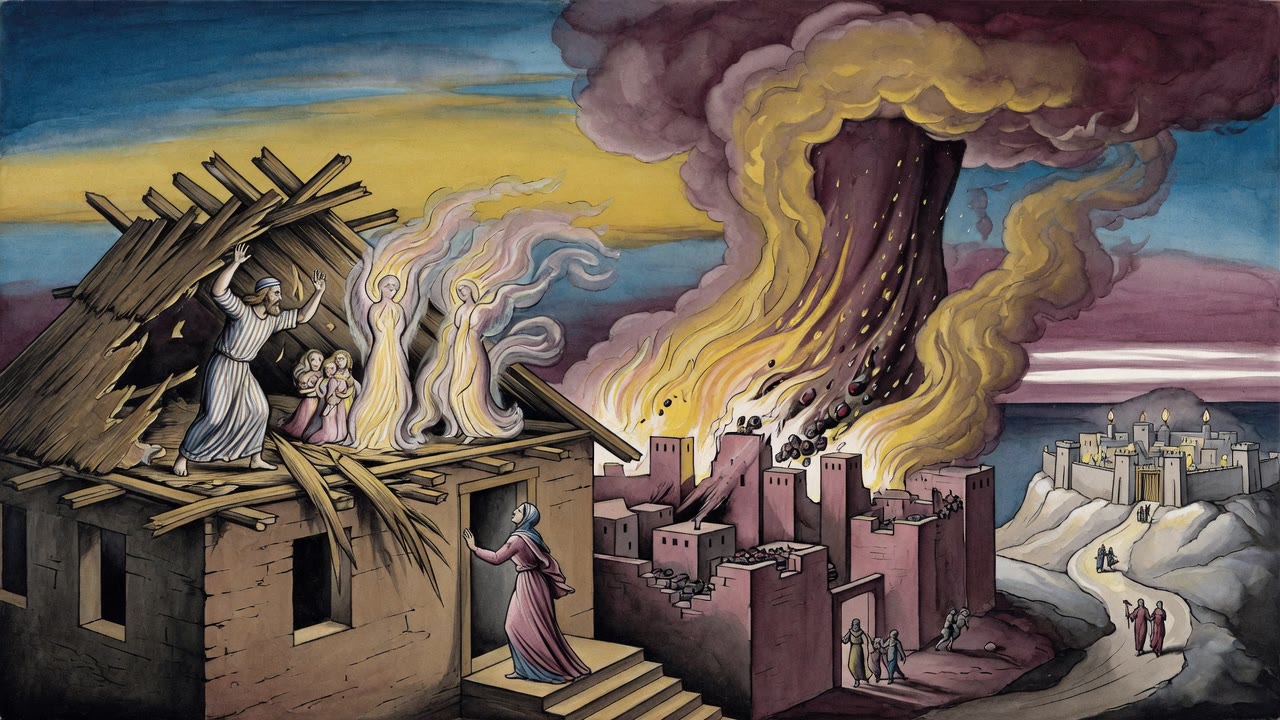
One habit never broke. Even in the years when the Shekhinah (God's indwelling Presence) had withdrawn from him for a season, Abraham kept praying for the sinners of his generation. For fifty-two years God warned that generation directly, and the mountains trembled with the warning, and they would not turn, until their debauchery ended in fire. The prayers failed. He prayed anyway. A man with a mouth heaven heard spent decades spending it on people who never listened.

The Tomb and the Promise

Machpelah took Sarah in, and later it took Abraham, and after him the quarreling, reconciling line he had started. The pattern he cut at the gate of Hebron held to the end. He had more claim than he ever used. He held the promise of the whole land and paid silver for one field. He held the right to bless and shut his mouth to spare his sons a war. He held the standing of a prince of God and bowed to Hittites, set cream before angels, and saddled comfort for the stranger who had come to announce his death. The land stayed promised. The tomb stayed bought. Sarah lay in purchased dark, in the one corner of Canaan her husband never had to take on faith.


← All myths
From the tradition

Sources

5 sources

The texts behind this telling. Some cards carry a translation of the source; others are our own retelling of it, and each card says which. Every card links out to the original.

Legends of the Jews 5:266Legends of the Jews

Retold in our words. Read the original at the link below.The Legends of the Jews by Louis Ginzberg (1909) · Public Domain

That’s kind of what happened to Abraham. God promised him the entire land of Canaan, a massive inheritance for him and his descendants. But when his beloved wife Sarah passed away, where was he supposed to bury her? He didn't own a single plot.

The scene: Abraham, this towering figure of faith, standing before the people of Hebron, not demanding his divinely ordained right, but instead, humbly saying, "I am a stranger and a sojourner with you." (Genesis 23:4). A "ger v'toshav," a stranger and a sojourner. He acknowledges his temporary status, his dependence on their goodwill.

Some might see that as weakness. Shouldn't he have asserted his claim? Reminded them of God's promise? But Abraham’s humility, his anavah, was precisely his strength. As Ginzberg retells it in Legends of the Jews, Abraham's modesty didn't go unnoticed.

God, according to the legend, took note. "Thou didst bear thyself modestly," God says. "As thou livest, I will appoint thee lord and prince over them."

But the story doesn't end there. It's not just about God's recognition. It's about how Abraham was perceived by the people themselves. They saw something special in him. They didn’t see a land-grabbing conqueror. They saw an angel, a leader, someone worthy of respect.

"Thou art a prince of God among us," they responded. "In the choice of our sepulchres bury thy dead, among the rich if thou wilt, or among the poor if thou wilt." (Genesis 23:6). They offered him the best burial sites, regardless of social standing. They recognized his inherent nobility.

So, what does this all mean? Maybe it's a lesson about true leadership. It's not about demanding your rights or flaunting your power. It's about humility, about recognizing your place in the world, about treating others with respect, even when you hold all the cards. Maybe it's about understanding that sometimes, the greatest strength lies in quiet modesty.

And maybe, just maybe, when we act with that kind of humility, we too can be seen as "princes of God" in the eyes of those around us.

Full source
Legends of the Jews 5:300Legends of the Jews

Retold in our words. Read the original at the link below.The Legends of the Jews by Louis Ginzberg (1909) · Public Domain

Even though Abraham knew in his heart that Isaac, his beloved son, was the most deserving of his paternal blessing, he held back. Why? According to Legends of the Jews (Ginzberg), Abraham feared stirring up jealousy and strife amongst his descendants. He was a master strategist, even in matters of the heart and spirit. He understood the potential for conflict and sought to prevent it.

In a moment of profound acceptance, Abraham declared, "I am but flesh and blood, here today, tomorrow in the grave. What I was able to do for my children, I have done. Henceforth, let come what God desires to do in His world. And what happened next? Immediately after Abraham's passing, God Himself appeared to Isaac and bestowed His blessing upon him. A divine affirmation, perhaps?

The story doesn't end there. The narrative surrounding Abraham's death is equally compelling. As the day of his passing approached, God instructed Michael, one of the archangels, to visit Abraham and deliver the news: "Thou shalt depart from life!" Imagine receiving that message! The purpose? To give Abraham time to set his house in order, to prepare for his transition.

Legends of the Jews describes the encounter beautifully. Michael found Abraham in the fields, tending to his oxen, preparing for ploughing. Abraham, ever the gracious host, didn’t recognize Michael. He greeted him warmly, offering him rest and hospitality. "Sit down a little while," Abraham said, "and I will order a beast to be brought, and we will go to my house, that thou mayest rest with me, for it is toward evening, and arise in the morning and go whithersoever thou wilt."

Abraham, ever mindful of his guest's comfort, even offered him a ride. But Michael declined, saying, "I abstain from ever sitting upon any fourfooted beast, let us walk therefore, till we reach the house." This small detail reveals so much about the respect and humility that permeated even a chance meeting. Abraham, nearing the end of his life, is still working, still hospitable, still concerned for the well-being of a stranger. His actions speak volumes about the character of this patriarch. Even facing mortality, he embodies the values of generosity and kindness that defined his life. What a powerful reminder to us, that even in our final moments, we can choose to live with purpose and grace. How will we set our own houses in order?

Full source
Legends of the Jews 5:165Legends of the Jews

Retold in our words. Read the original at the link below.The Legends of the Jews by Louis Ginzberg (1909) · Public Domain

Even after the Shekhinah (the Divine Presence) – that divine presence, the very aura of God – had withdrawn from him, Abraham didn't give up on praying for the sinners of his generation.

Alas, his prayers, his heartfelt intercessions, proved fruitless. The story goes that for fifty-two long years, God Himself warned these people. Not through prophets, not through messengers, but directly! The very mountains trembled and quaked as a sign, a wake-up call. (Ginzberg, Legends of the Jews)

Yet, they wouldn't listen.

They persisted in their sinful ways. What would it take to make someone change course when facing such overwhelming signs?

So, what exactly were these sins? Their well-deserved punishment finally caught up with them. What was it? The text focuses on one particular type of sin: immorality. God, it says, forgives all sins… except for a life of debauchery. That, it seems, was the breaking point.

And because these sinners, all of them, had lived a life of such excess, they were consumed by fire. It's a stark image, a harsh reminder.

Now, this isn’t just a literal fire we’re talking about, necessarily. It's a metaphor for the consuming nature of sin itself. As we find in the Talmud (Nedarim 32a), "All who cause the face of their neighbor to turn pale in public, it is as though they shed blood." Words, actions, choices have consequences.

It's a powerful, sobering tale. It makes you think about the choices we make, the path we're on, and whether we're listening to the warnings, the gentle nudges, or even the earth-shattering tremors that might be trying to guide us back to a better way. It also reminds us that even the greatest among us, like Abraham, can face moments where even their most fervent prayers seem to go unanswered. Maybe the lesson is not just about the consequences of sin, but about the power of perseverance, even in the face of apparent defeat.

Full source
Bereshit Rabbah 48:14Bereshit Rabbah

Retold in our words. Read the original at the link below.The Sefaria Midrash Rabbah, 2022 · CC-BY

The Rabbis of Bereshit Rabbah – that amazing collection of rabbinic interpretations of Genesis – see so much more.

First, that "butter and milk" bit. What kind of butter are we talking about here? Rabbi Ḥanina, in Bereshit Rabbah 48, gets right down to the nitty-gritty. He says the very best butter is made from the creamiest one-sixtieth part of the milk. Not bad, eh? Intermediate quality? One-fortieth. And the lowest? One-twentieth. Rabbi Yona chimes in with slightly different figures – one-hundredth for the best, one-sixtieth for the middle, and one-twentieth for the lowest. The point is, Abraham wasn't serving just any butter. He was going for quality, offering his guests the very best.

Wait a minute… where's the bread? Abraham tells Sarah to prepare three se’a of flour – that's a lot – for bread and cakes. So why doesn't the Torah mention it being served? One explanation, offered by Efrayim Makshaa in the name of Rabbi Meir, is that Sarah, well, she started menstruating right then and there. That would render the dough ritually impure! The Rabbis, however, offer a simpler solution: of course he served the bread! It's just so obvious it doesn't need mentioning. If he served the things that weren't mentioned earlier, all the more so would he serve the thing that was. It's the unspoken assumption of hospitality.

About that phrase, "He was standing over them." It seems straightforward, but compare it to earlier in the chapter, (Genesis 18:2), which says the three men "were standing over him." See the switch? Bereshit Rabbah explains that before Abraham fulfilled his obligation to his guests, they were, in a sense, "standing over him," representing his sense of duty. But after he's provided for them, he's standing over them. They are now in awe of Abraham’s actions. They're humbled by his generosity. The text even says that Mikhael and Gavriel – two of the most powerful angels! – were trembling with awe.

Rabbi Tanḥuma, quoting Rabbi Elazar and Rabbi Avun in the name of Rabbi Meir, brings in a great parable: "When you enter a city, follow its customs." It's the ancient version of "When in Rome, do as the Romans do." On High, in the heavenly realms, there's no eating or drinking. Remember when Moses went up Mount Sinai? (Deuteronomy 9:9) tells us, "I remained on the mountain forty days and forty nights; bread I did not eat and water I did not drink.” But down here on earth, it's different. There's eating and drinking, so Abraham serves his guests a meal.

But here's a final twist: were they really eating? Some interpretations suggest the angels only appeared to eat, the food vanishing as they took it.

So, what does it all mean? This little verse from Genesis, through the lens of Bereshit Rabbah, becomes a meditation on hospitality, generosity, and the way we interact with the divine. It's about offering the best we have, about honoring our guests, and about recognizing the moments when we might be in the presence of something truly extraordinary. Next time you're sharing a meal with someone, think about Abraham, the butter, the bread, and the awe-struck angels. You never know who you might be entertaining.

Full source
Bereshit Rabbah 47:6Bereshit Rabbah

Retold in our words. Read the original at the link below.The Sefaria Midrash Rabbah, 2022 · CC-BY

Our story revolves around a verse from (Genesis 17:22): "He concluded speaking with him, and God ascended from upon Abraham." This simple line, as interpreted by the sages in Bereshit Rabbah, teaches us a profound lesson about etiquette and honoring those around us. It suggests that whether the person you're leaving is of higher or lower standing than you, it's important to take your leave properly.

Where does this idea come from? It all starts with Abraham.

The Midrash (rabbinic interpretive commentary) tells us that Abraham was in the middle of a conversation with the Holy One, blessed be He, when angels arrived, wanting to speak with him (Genesis 18:1-3). Now, picture this: Abraham's got God right there! But he doesn't just turn his back on God to chat with the angels. Instead, he says to the angels, in effect, "Just a moment, let me take my leave from the Divine Presence, who is greater than you, and then I'll be with you."

In Bereshit Rabbah, when Abraham finished speaking with God, he said, "Master of the Universe, I need to speak with the angels." And God responded, "You may leave in peace." It’s from this exchange that we learn the importance of taking leave from someone of greater stature. The verse "He concluded speaking with him, and God ascended from upon Abraham" is interpreted to mean that God Himself bade farewell to Abraham before departing.

But it doesn't stop there. The Midrash extends this idea further, suggesting that we should also take our leave from someone of lesser stature. It’s not just about hierarchy; it's about common courtesy and recognizing the humanity in everyone.: a quick "Goodbye, it was nice talking to you" can make a world of difference.

And here's where it gets even more interesting. Reish Lakish offers a powerful image, stating that the patriarchs themselves are the Divine Chariot! What does that mean? Well, the Merkabah (the Divine Chariot), or Divine Chariot, is a central concept in Jewish mysticism, representing God’s presence and glory. Reish Lakish says that God's presence rests directly upon them, as one rides upon a chariot. He points to verses like "God ascended from upon Abraham" (Genesis 17:22) and "Behold, the Lord stood upon him" (Genesis 28:13) to illustrate this point. These verses suggest that God is, in a sense, "upon" the patriarchs, intimately connected to them. As we find in (Genesis 35:13), "God ascended from upon him."

It's more than just a lesson in etiquette. Whether we're speaking with someone we perceive as "important" or someone we might overlook, acknowledging their presence and taking our leave respectfully is a way of honoring the Divine spark within them. It’s a small act, perhaps, but one that can ripple outwards, creating a more mindful and compassionate world. Next time you're in a conversation, remember Abraham's example. Acknowledge those around you, and leave with grace. You never know what kind of impact it might have.

Full source