Abraham Left Isaac's Blessing Unspoken to Keep the Peace
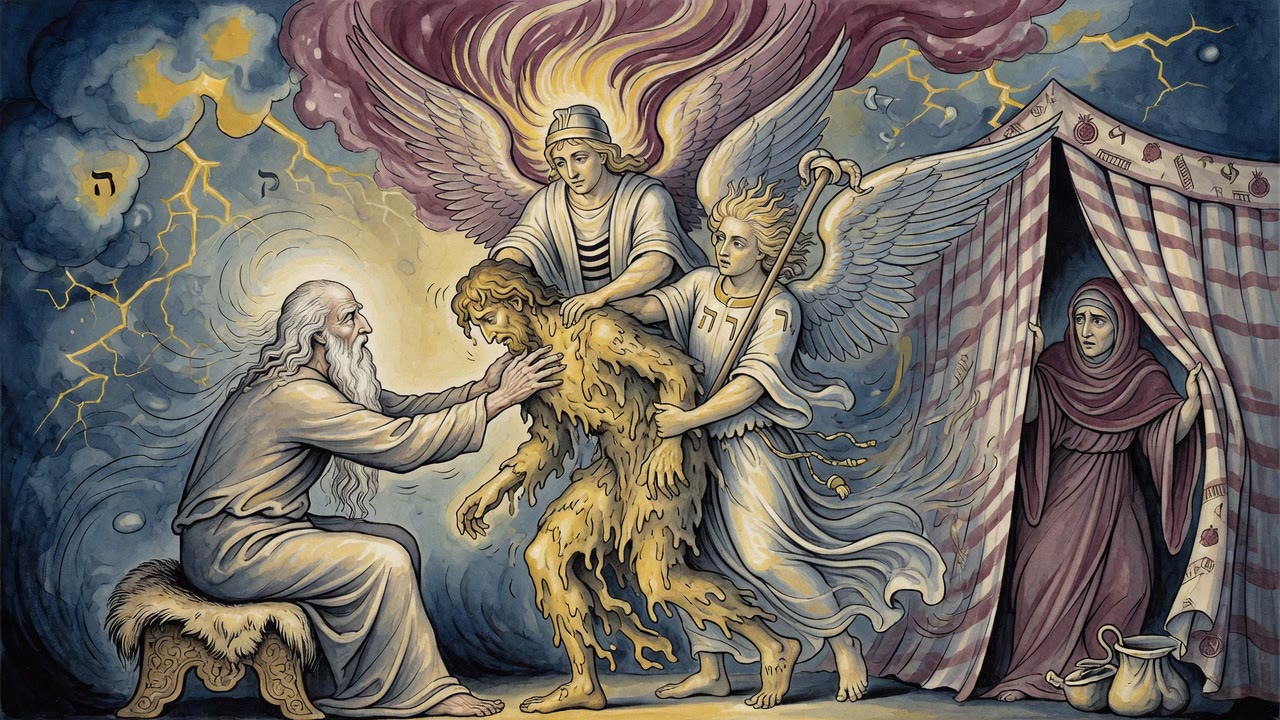
Michael found him among the oxen, still offering a beast for the road. The blessing stayed in his mouth. Heaven spoke it after he died.
Table of Contents
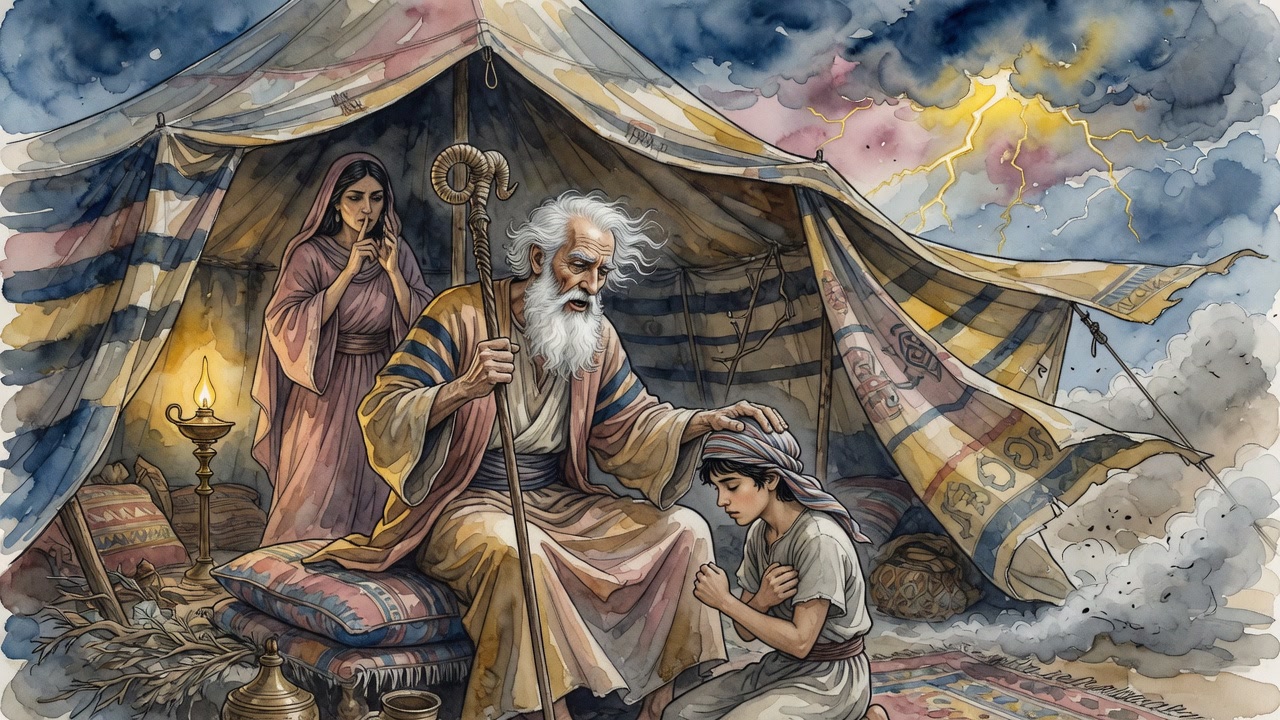
Abraham kept his mouth shut. He knew which son carried the promise. He looked at the other lines that would rise from his body and saw jealousy waiting the way dry grass waits for a spark. He would not throw that spark with his own tongue.
 Click for full size
"I am but flesh and blood, here today, tomorrow in the grave," he said when the matter pressed him. "What I was able to do for my children, I have done. Henceforth, let come what God desires to do in His world."
Isaac deserved the words. Abraham would not buy Isaac's honor at the price of a war among brothers. He left the crown on God's table and went back to the field.
Michael Among the Oxen
When Abraham's day drew near, God sent Michael with news no guest wants to carry. "Thou shalt depart from life." The order was time, not cruelty. A house still needed ordering.
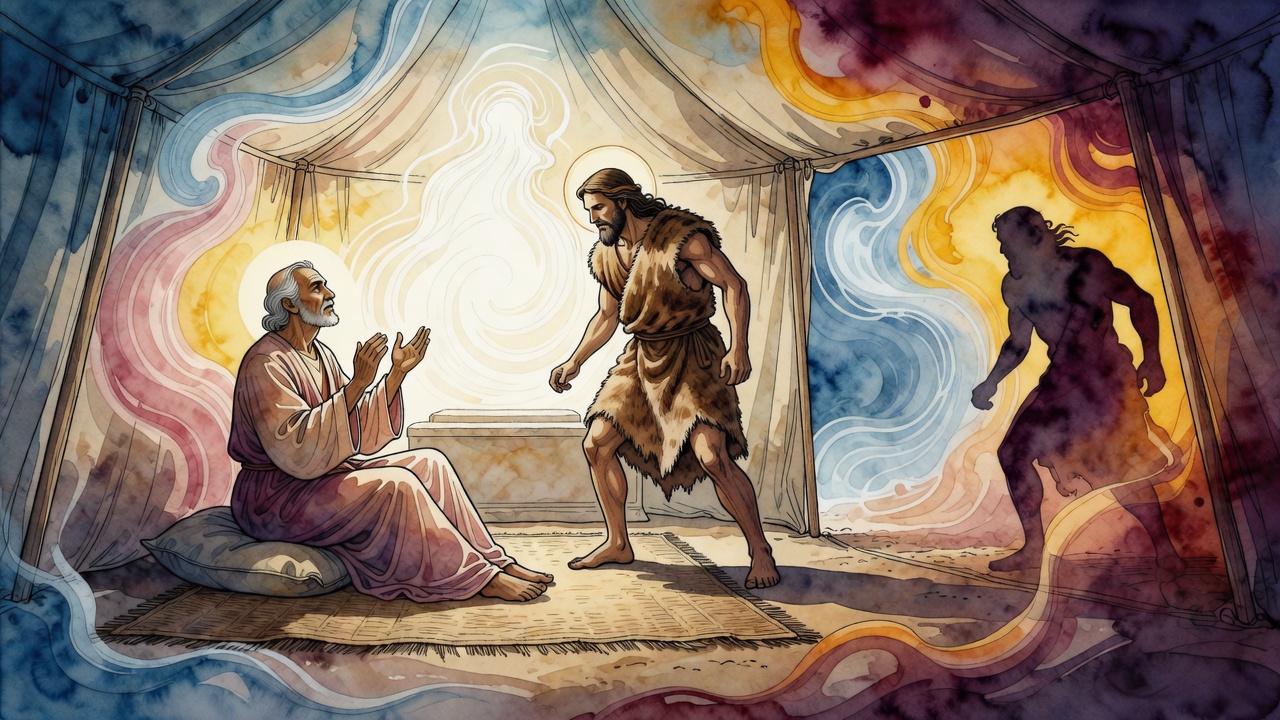
Michael found him among the oxen, preparing for ploughing, hands already dirty. Abraham did not know the visitor's rank. He saw a traveler near evening and did what he always did. He offered rest. He offered a beast for the road. He offered his house for the night.
"Sit down a little while," Abraham said, "and I will order a beast to be brought, and we will go to my house, that thou mayest rest with me, for it is toward evening, and arise in the morning and go whithersoever thou wilt."
Michael refused the animal. "I abstain from ever sitting upon any fourfooted beast. Let us walk."
So the patriarch and the death-messenger walked together toward the tents. One still hosting. One still holding the sentence. Dust rose off the path. The oxen lowed behind them. Abraham talked of the evening meal as if the stranger had come only for bread.
The Blessing He Would Not Speak
Abraham used the warning. He arranged what flesh can arrange: gifts already given, peace already patched, work already assigned. He did not reverse his silence. He did not pull Isaac aside for a last private crowning that would light rivalry in the camp.
Isaac remained the beloved. The blessing stayed unspoken. The old man who had once raised a knife on a mountain now laid down a different blade, the blade of preferential speech that cuts a household into camps.
When the soul left, the house did not hold a contested last word from Abraham's mouth. That absence was the point. No son could stand over the bier and say, He named me last. No grandson could claim a private crown spoken in fever. The tents stayed quiet. The flocks stayed mixed. The field he had been ploughing still needed finishing, and someone else took the handle.
God Spoke After the Grave
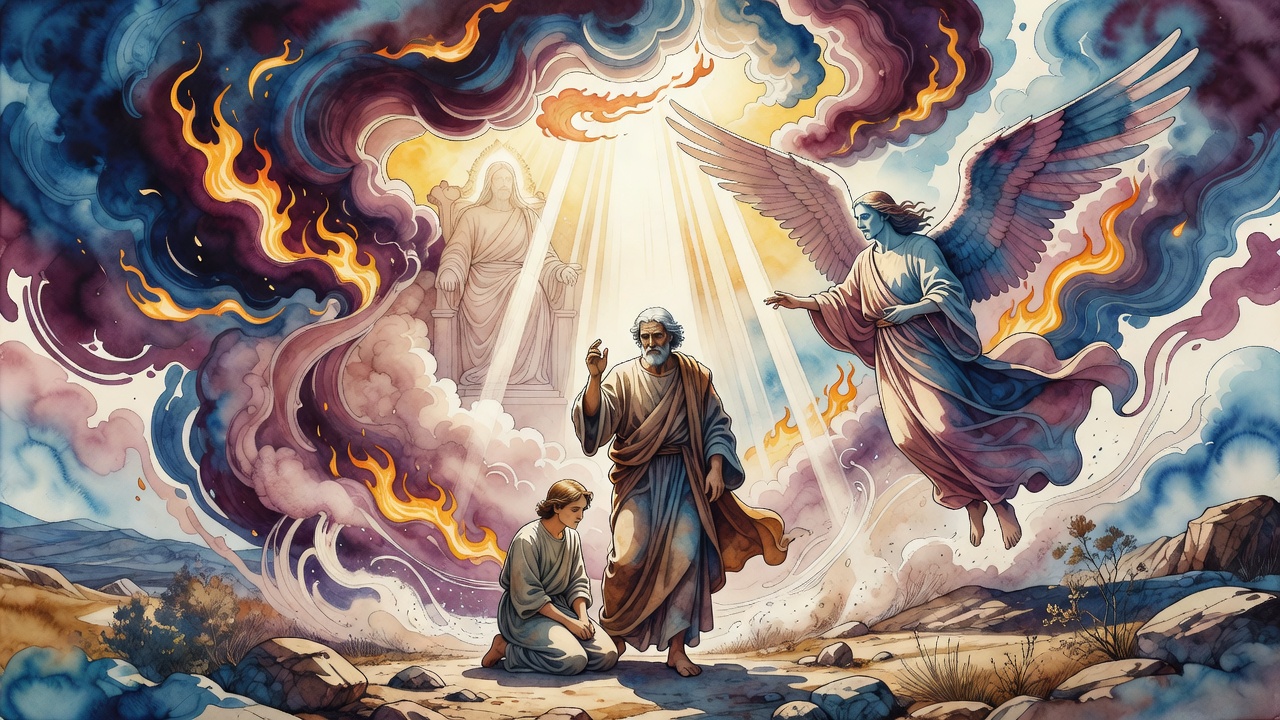
Immediately after Abraham's passing, God appeared to Isaac and gave him the blessing the father had withheld. No brother could say Abraham had stacked the table in a fever of favoritism. Heaven had chosen the hour and the mouth.
Isaac received what he had always been meant to carry. Abraham had trusted God more than his own tongue. God answered that trust without delay. The words Isaac had waited for did not come from a dying man's partial love. They came clean, after the body was gone, with no score to settle in the tent.
The knife on Moriah had stopped. This second refusal stopped a different wound. Abraham had given Isaac his life on the mountain. He would not give him a last partisan speech that would split the camp the way a log splits under a wedge.
The Angel of Esau at the Ford
Generations on, Jacob met the pressure Abraham had tried to spare his house. Now the rivalry wore a body. At the ford he fought all night against the angel of Esau.
The combat was not sparring. Bones ground. Breath tore. Jacob held on when his hip went. By dawn he held the win, and the angel of his twin had been forced down. He asked for a name and got a limp instead, and a new name of his own, Israel, because he had struggled with God and with men and had prevailed (Genesis 32:29).
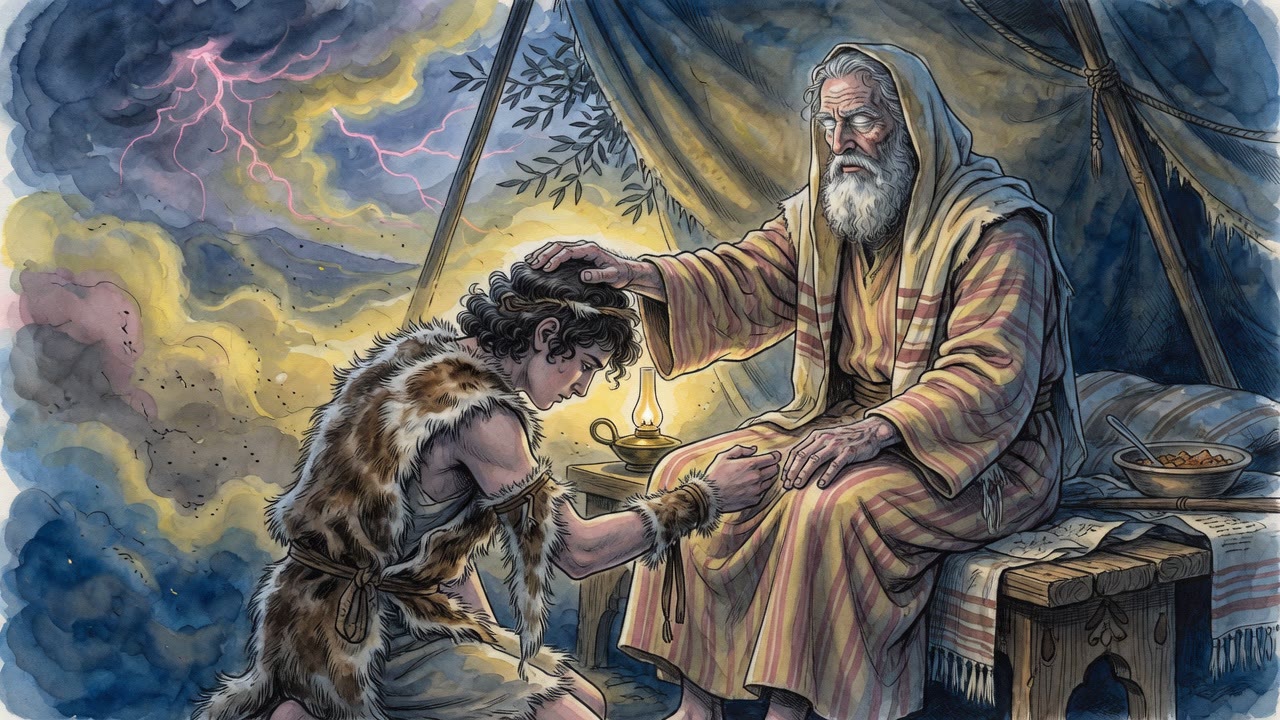
Winning one night did not empty Esau's threat. Jacob knew his brother. He had taken a blessing once by goat skins and a stolen voice. Esau had sworn to kill him for it. An angel beaten in the dark does not unmake a grudge a man has nursed for decades.
Presents Upon Presents
For a full year he sent gift after gift, a steady stream meant to cloud a wicked eye the way a gift can blind even a wise one. "Therefore will I give him presents upon presents, perhaps he will let me alone."
He spent the wealth gathered outside the land without tears. Those goods were not the blessing. The land and the promise were. Drivers went south full and came back empty. Then they went out full again. Jacob watched the road more than the ledgers. Flocks peeled off day after day until the dust of their going was a second river.
Abraham had refused to light jealousy with a spoken crown. Jacob paid for peace after jealousy already had an army and an angel. He had beaten a messenger in the dark. He still would not trust a single victory against a brother who could wait.
Isaac stood blessed by heaven. Jacob limped home under a year of packages. Michael had walked from the plough without sitting on a beast, and Abraham had hosted him anyway. The messenger of the end still had to pass through hospitality before the sentence landed. The house survived both strategies: a closed mouth at the start of the line, and open hands after the hip.
← All myths