Abraham Washed No More Feet After Michael's Tears
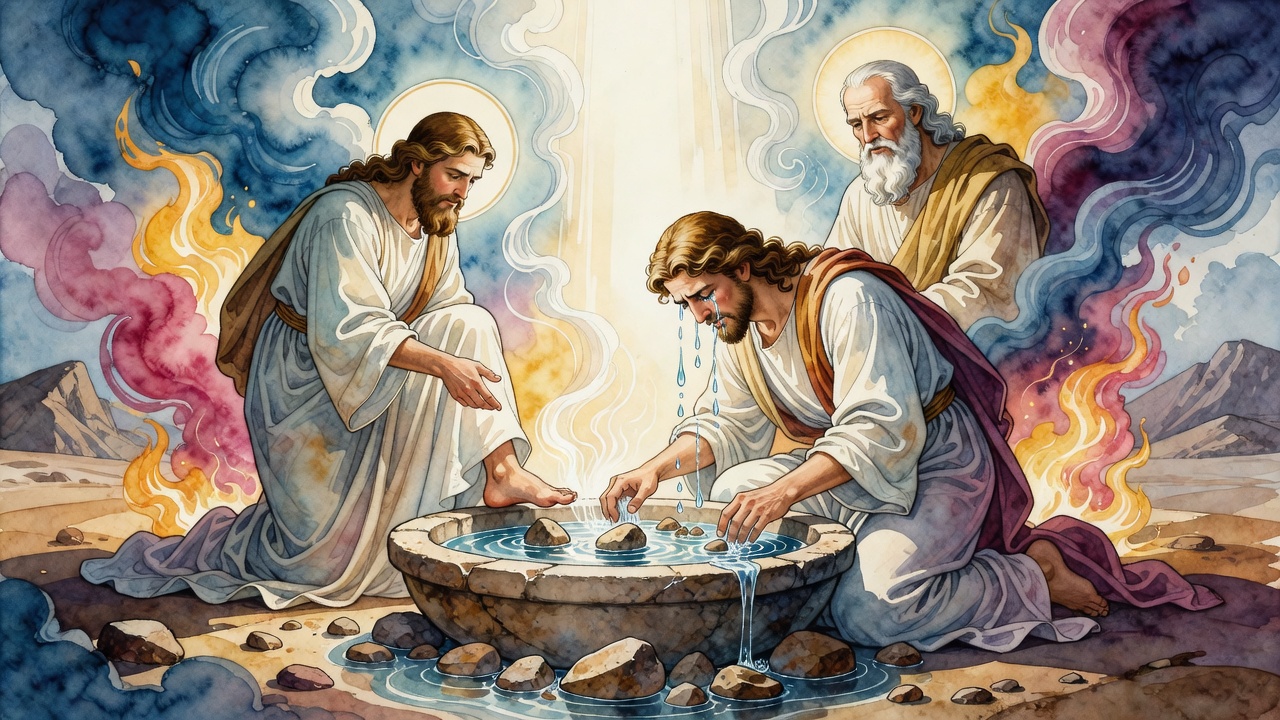
Isaac set the basin down. Abraham looked into the water and said he would never wash a guest's feet again. Michael's tears hit it.
Table of Contents
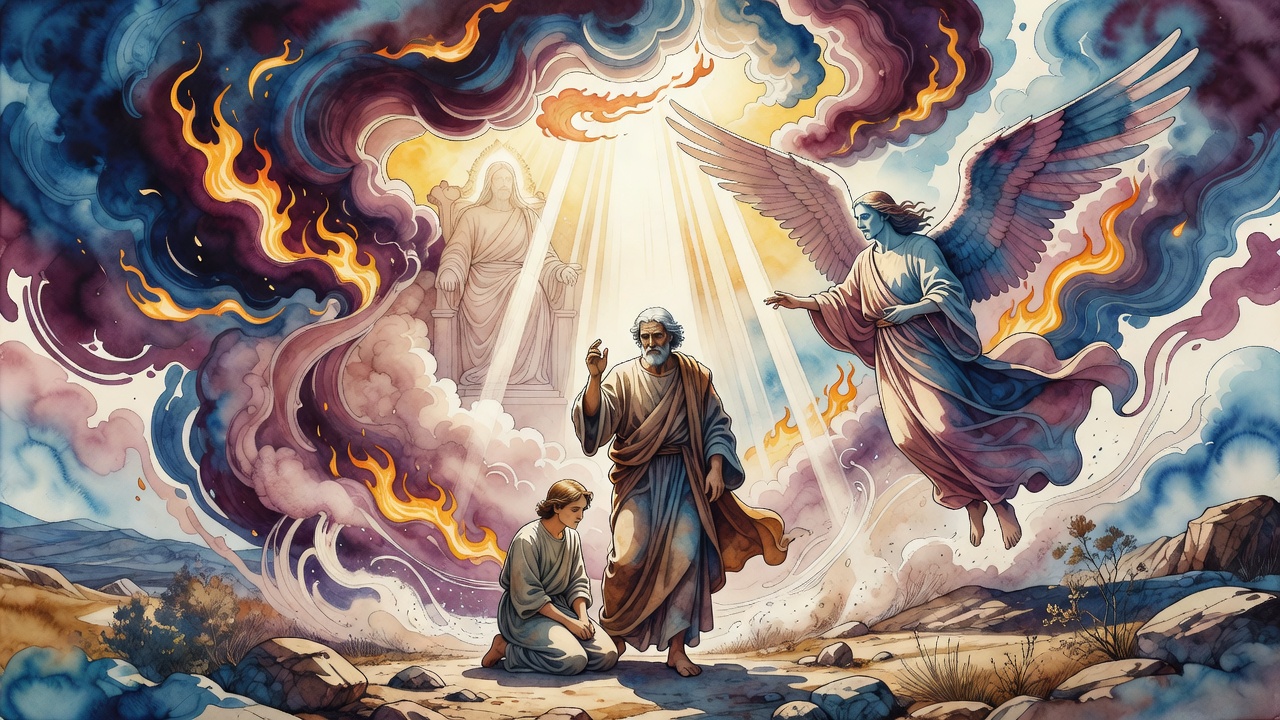
On the road home with a stranger, Abraham heard a tree speak. "Holy art thou, because thou hast kept the purpose for which thou wast sent." He kept the wonder to himself. He assumed the companion had not heard it, the way a man keeps certain miracles private until he knows whether they were meant for more than one set of ears.
 Click for full size
At the tent the old habit rose first. Hospitality before questions. He ordered a meal prepared and asked his son Isaac to bring water to wash the stranger's feet. Isaac obeyed without delay. The basin filled. Dust waited on the stranger's skin.
The Basin That Closed a Life
Abraham looked at the water. The future arrived without permission.
"I perceive that in this basin I shall never again wash the feet of any man coming to us as a guest."
The sentence was small and total. Isaac heard the weight and wept. Abraham saw his son's tears and wept with him. Michael the archangel watched and wept as well. His tears fell into the water and became precious stones.
Grief turned mineral in the middle of a courtesy. The water meant for a traveler's feet held stones that had not been there a breath before.
The Last Shavuot Meal
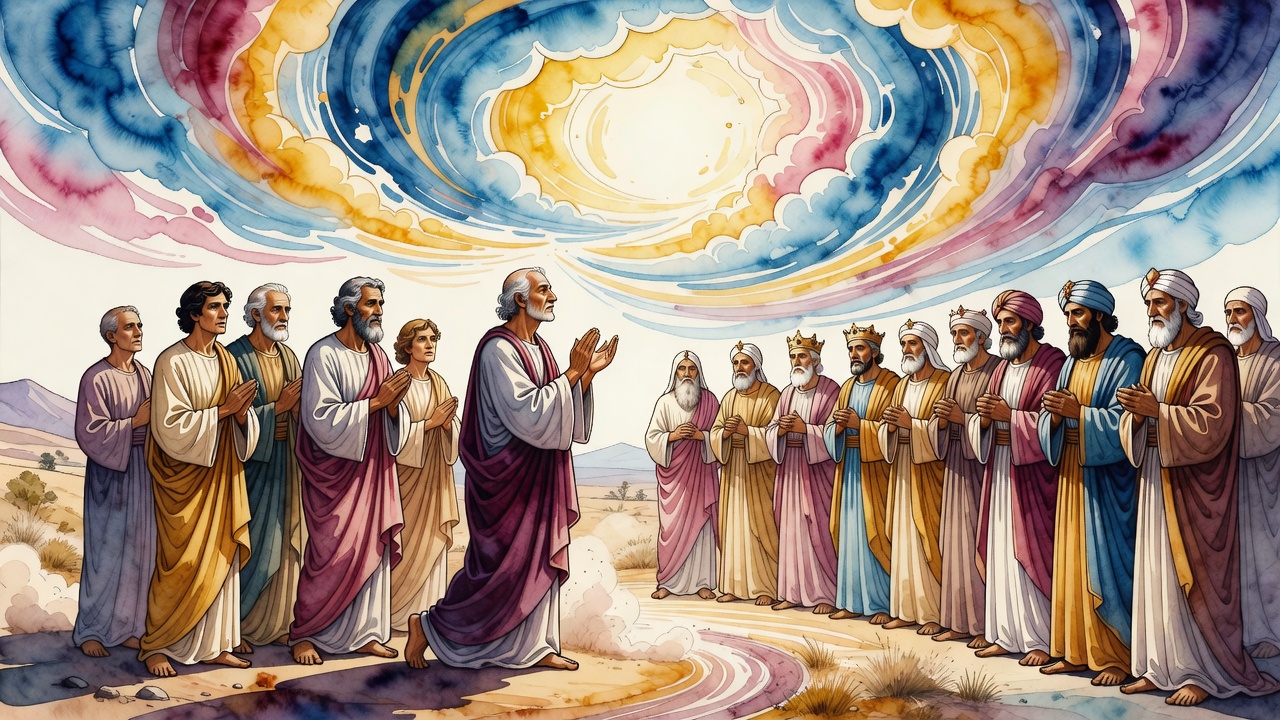
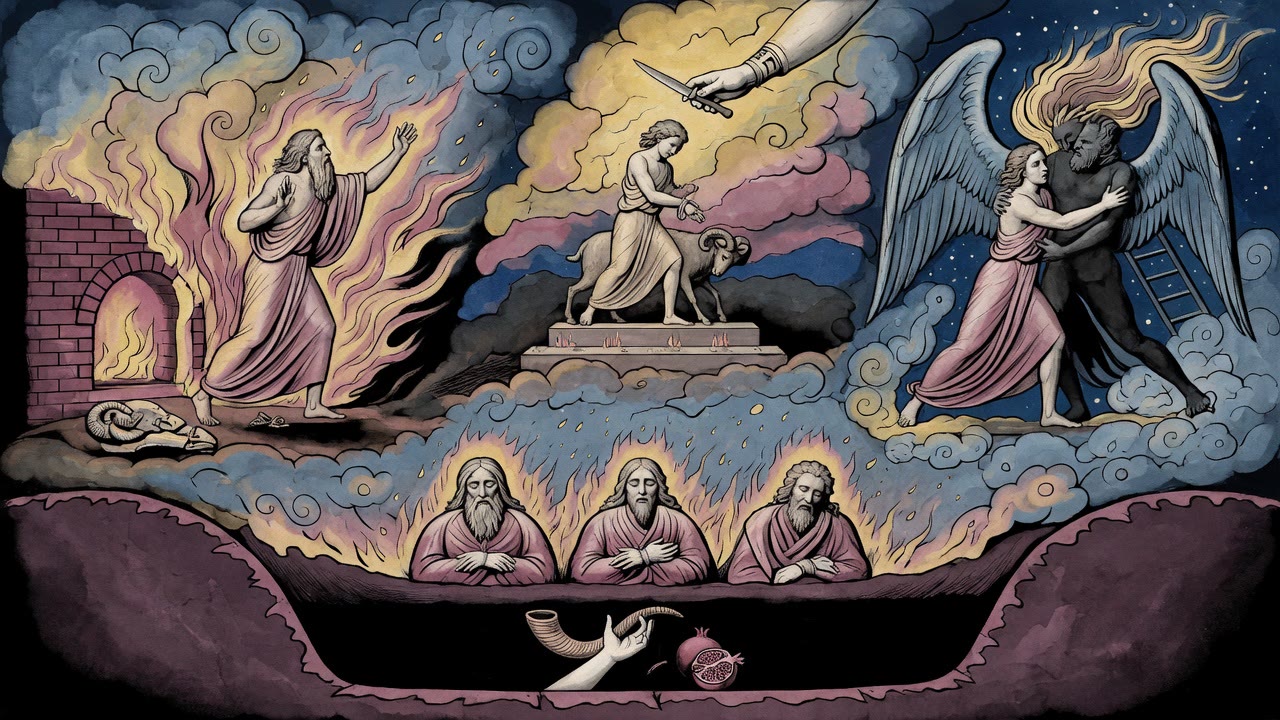
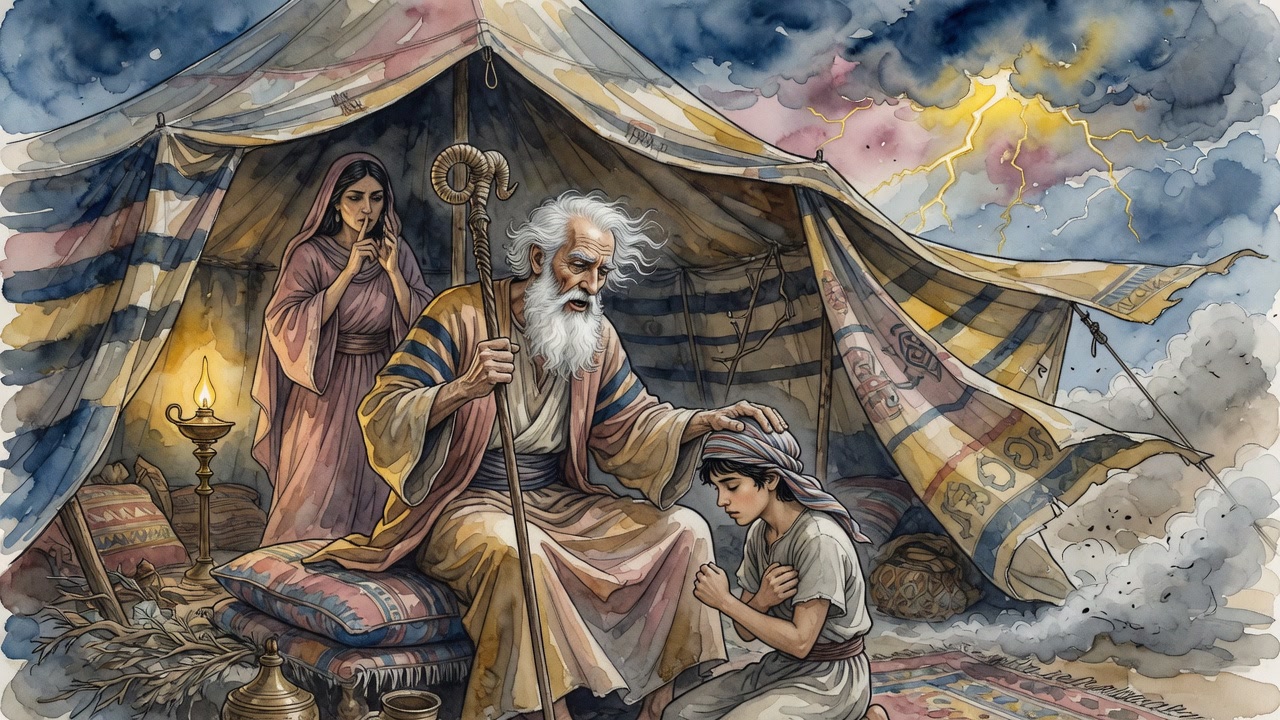
Years later, on the last Feast of Shavuot Abraham would keep, Isaac and Rebekah sent young Jacob with a meal so the patriarch might eat, bless the Creator, and bless the boy before death. They knew Abraham's love for this grandson. Abraham had good reason for that love. It was due to Jacob's merits that he had been rescued from the fiery furnace, long before Jacob's birth.
Abraham thanked the Lord for a long life of gifts. He charged Jacob to walk in the ways of God and not marry a daughter of Canaan. The charge was inheritance as much as advice.
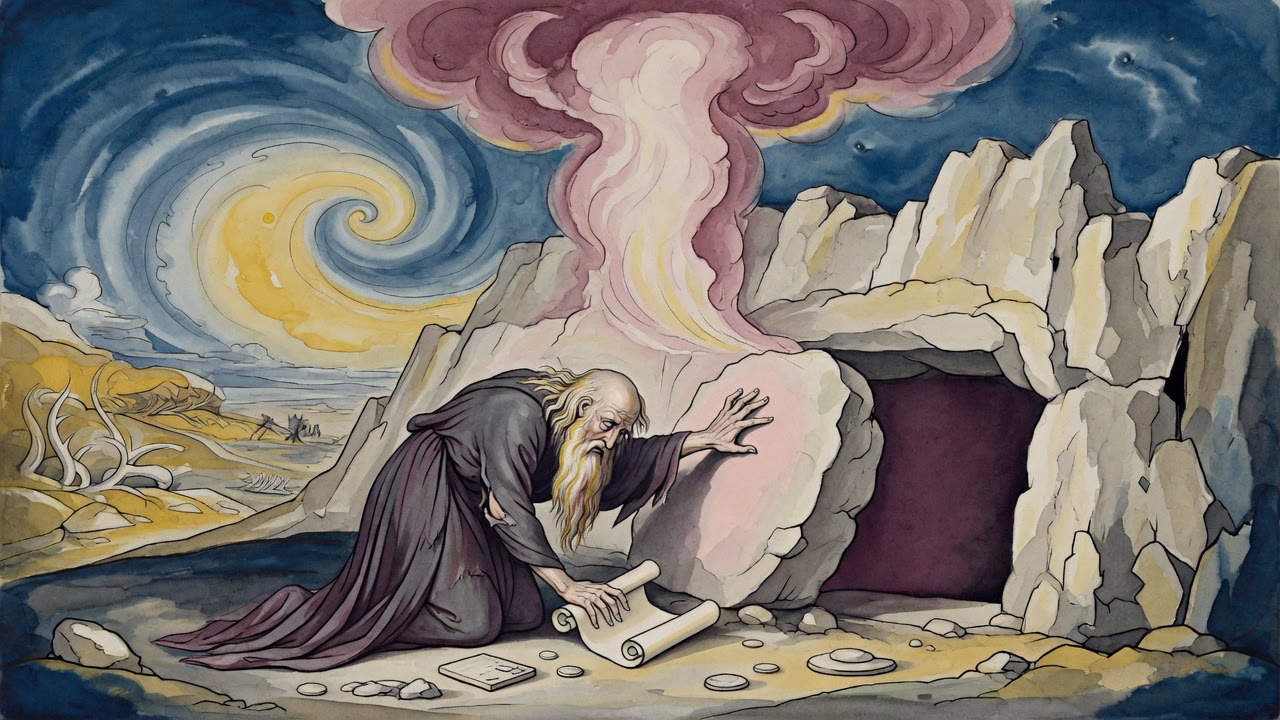
Then he prepared for the end. He placed two of Jacob's fingers upon his own eyes, closed them that way, and fell into eternal sleep while the boy lay beside him on the bed, warm against a body going still.
Father, Father
Morning came with ordinary light. Jacob called, "Father, father," and received no answer. Only then did he understand the night. The man whose future merit some said had reached backward into Nimrod's furnace had closed the patriarch's eyes with a child's hands.
The silence after the second "Father" sat in the tent like a guest who would not leave.
The Stones Stayed in the Water
Abraham's life had been a long sequence of guests. Angels in the heat of day. Kings after war. Wanderers drawn to the grove. The basin was not furniture. It was the tool of a life that began with water on dust.
When he foresaw that this washing would be the last, he was not only predicting death. He was closing a vocation mid-gesture. Isaac learned that hospitality has an ending, and that endings can arrive while the water is still clear. Michael's stones made the hour solid, so the household could not pretend it was only mood.
Years later Jacob's fingers on Abraham's eyes completed the circle. The boy who closed the lids was the same future whose merit had already reached backward into a furnace. Time folded around one bed. The open tent closed.
No more feet would be washed in that basin by Abraham's hand. In the morning the stones still lay in the water. Jacob said Father a third time and the tent did not answer.
← All myths