Parshat Chayei Sarah6 min read

Abraham Came Down and Found Sarah Already Dead

Abraham walked three days from the mountain of worship and reached the tent with a living son. Sarah did not rise to meet him.

Curated by Arthur · Told by Maggid ·
Table of Contents
  1. The Door Without a Greeting
  2. What the Mountain Had Cost
  3. The Petition at the Gate
  4. Silver That Passed Every Table
  5. Every Tree Inside the Boundary
  6. The First Deed of the Promise
Abraham Came Down and Found Sarah Already Dead Click for full size

The Door Without a Greeting

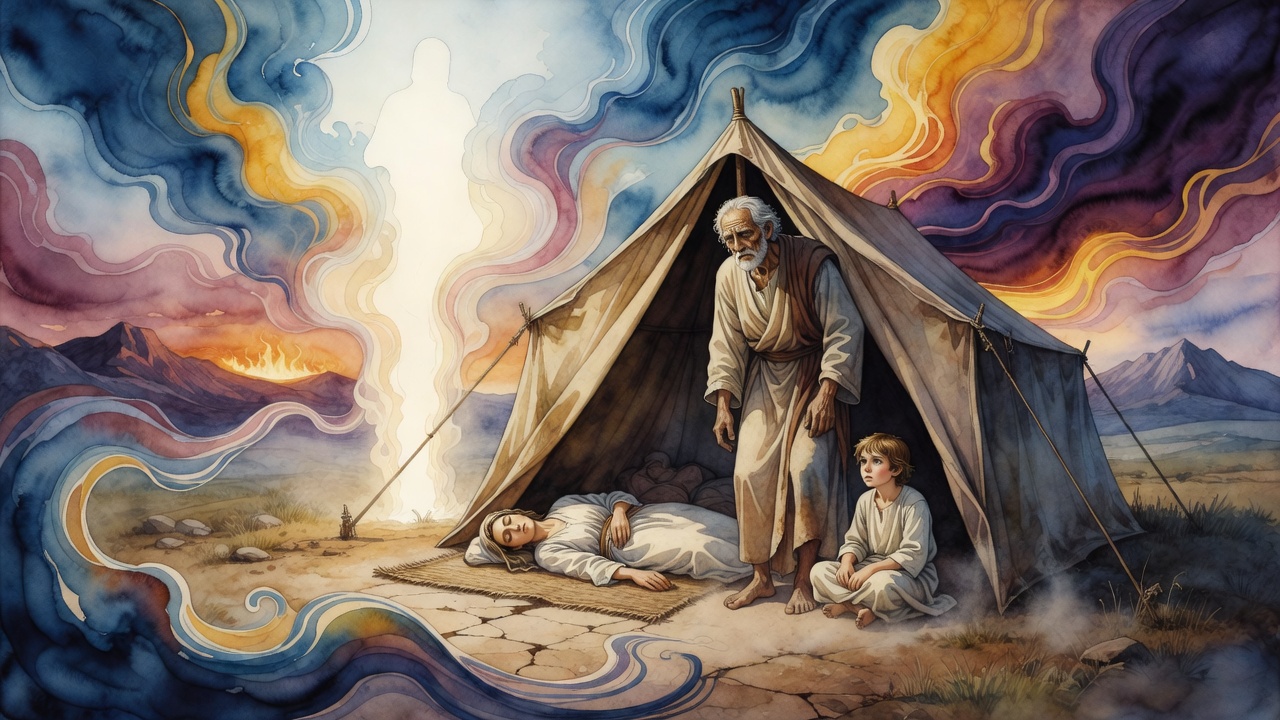
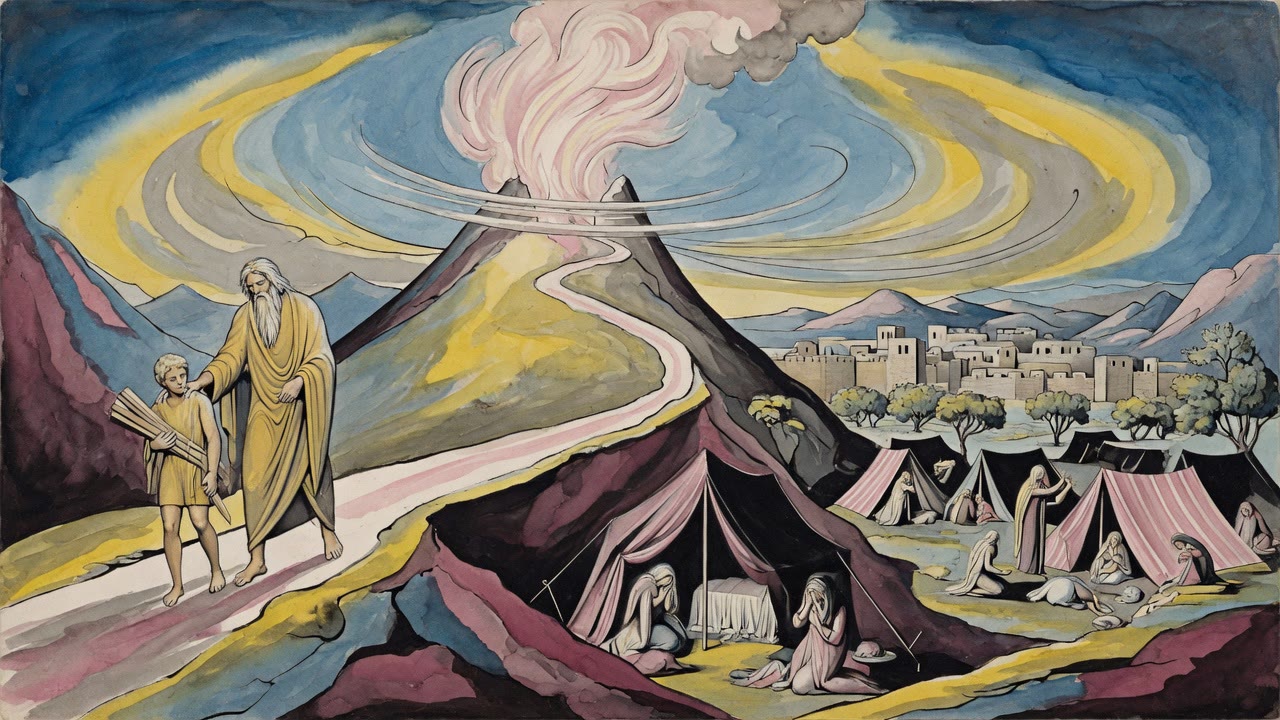
Abraham came down the last slope with dust in his beard and the knife still somewhere behind him on the mountain. Isaac walked at his side, alive, breathing, not bound. The three days from the mountain of worship had burned the fear out of Abraham's legs and left only one hunger: to put his hand on the tent pole and hear Sarah say his name.

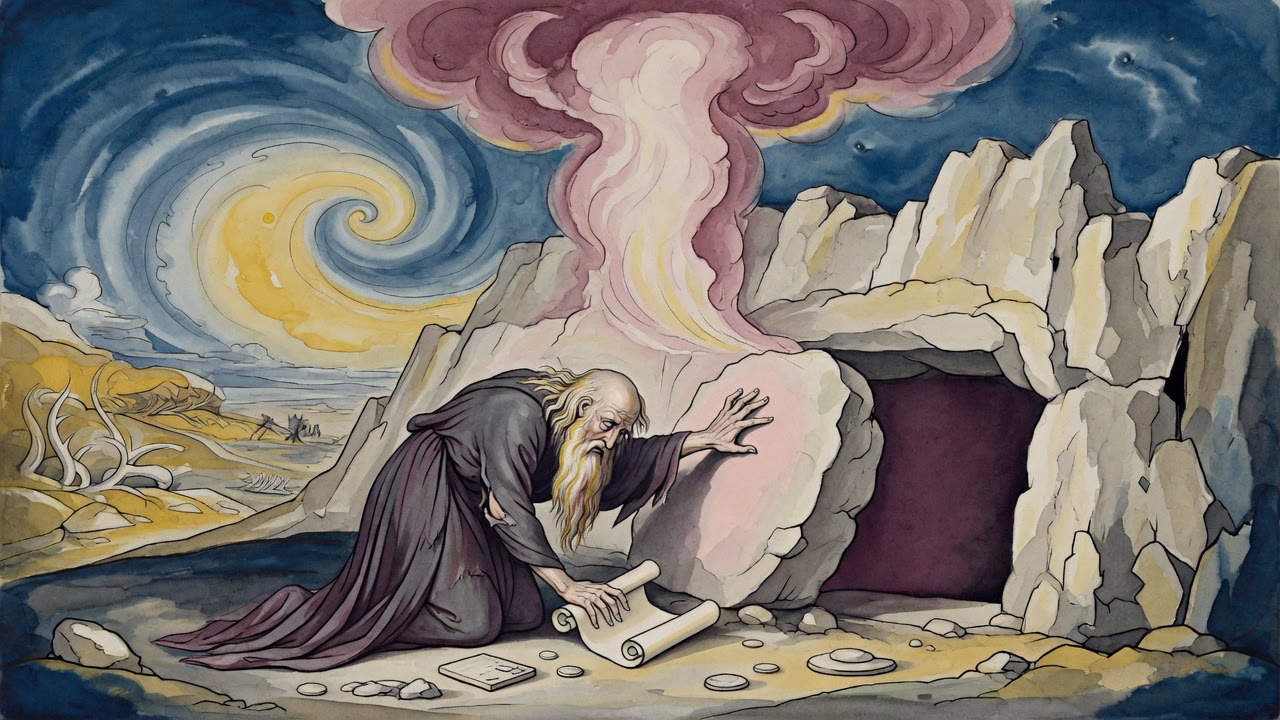
He lifted the flap. The lamp was cold. No one came forward with water for his feet. Sarah lay still in Kiryat Arba, which is Hebron, and the house that had carried the covenant with her laughter now held only the silence of a body that would not rise. Abraham sat to mourn her and to weep for her, not as a man who had expected death, but as a man who had just bought a son's life with a test and discovered the price waiting at home.

What the Mountain Had Cost

He had gone up to worship. He had come down with a living heir and a broken household. The journey that saved Isaac had not paused long enough for a messenger to reach Sarah with a true report. In the space between the binding and the return, the partner of his long years closed her eyes. Abraham did not argue with Heaven in the doorway. He put his face in his hands and let the tears come first, because eulogy without weeping is only speech, and weeping without a place to bury is only raw pain.

When he stood again, he was already counting steps to the city gate. A dead wife needs ground. A sojourner cannot dig in another man's field and call it justice. He would buy what he needed in the open, with witnesses, or he would not bury her at all.

The Petition at the Gate

The Hittite elders sat in the gate as markets and judgments always sit. Abraham did not claim the rank of prince of God as a weapon. He spoke as a petitioner. If it be with the consent of your mind that I bury my dead from before my face, receive of me, and intercede for me before Ephron bar Zochar. He named the father as deeds name fathers. He asked the community to stand between him and the owner of the double cave, so no private bargain could be whispered later as theft.

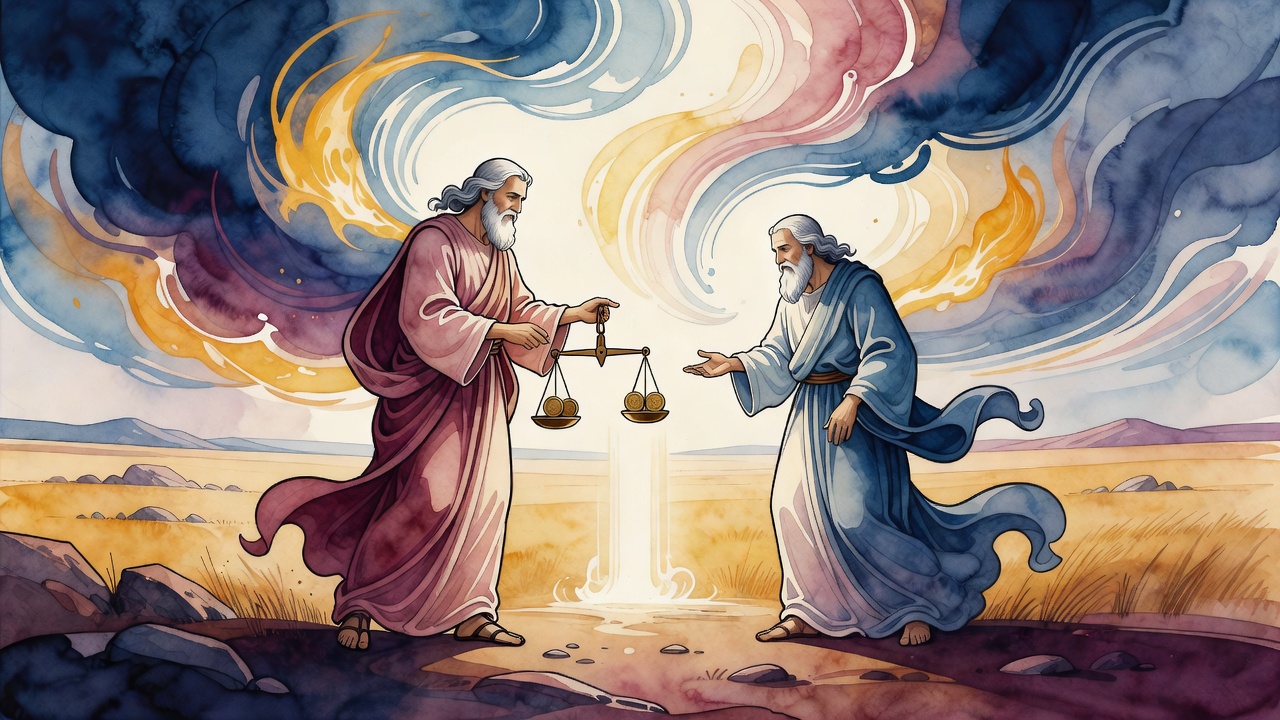
Ephron answered with the court language of free gifts. Abraham refused the theater of free gifts. He wanted silver weighed where every ear could hear the count, because covenant land begins as paid land, not as a favor that can be revoked when politics turn.

Silver That Passed Every Table

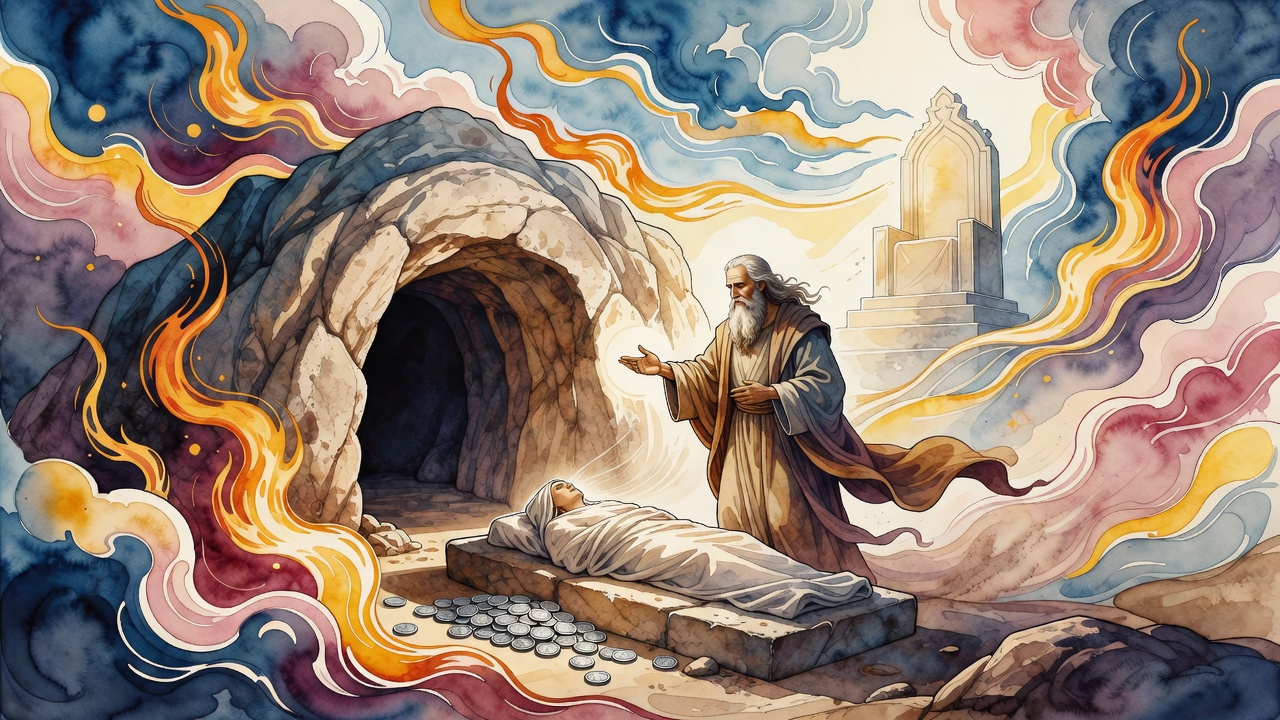
Four hundred shekels. Abraham hearkened to Ephron and weighed the silver named before the sons of Heth: four hundred sileen, good, passing at every table, receivable in all transactions. Not thin coin. Not local scrap that a Damascus merchant would spit on. Full-weight metal that any counter from Hebron to the northern roads would accept without debate.

Hands watched the scales. Tongues counted. When the last piece settled, the field was no longer a Hittite courtesy. It was Abraham's purchase, confirmed in the hearing of the city.

Every Tree Inside the Boundary

The deed closed like a surveyor's list. The field of Ephron in which the double cave sat before Mamre; the field; the cave therein; all the trees in the field, in all the boundaries round about. Every tree. Ancient buyers knew that a field without its trees named is a field half-owned. Abraham bought the soil, the hollow under it, the living wood standing on it, and the line that ran around it all.

He carried Sarah into the cave that would one day hold him too. The mountain of worship stood behind him. The first owned plot of the promise lay under his feet. Between those two places he had learned the full cost of a call that spares a son and does not spare a house from grief.

The First Deed of the Promise

Men at the gate would remember the sound of metal on the scale longer than they remembered Abraham's tears. That was the point. Tears prove love to the household. Silver proves title to the street. Abraham needed both, because Sarah's body could not wait for a later politics of favor, and the covenant needed a fixed point on the map of Canaan that no Hittite grandson could reclassify as a loan.

He walked the boundary once with his eyes, naming trees the way a father names children he intends to keep. Olive and terebinth, shade and fruit, roots that would still be drinking when Isaac was old. Every tree in the field of Machpelah belonged to him now, not as poetry but as property. When he finally sealed the cave mouth after the burial, the mountain of worship and the purchased hollow faced each other across his life like two poles: the place where he almost lost a son, and the place where he fully lost a wife.

Isaac stood nearby, still tasting the rope and the ram of three days earlier. He did not speak much. A son who has seen a knife raised over his own chest learns that some silences are the only honest speech. Abraham put a hand on the boy's shoulder and felt the heat of living blood. Sarah was gone. The promise was not. Between those facts he would live the rest of his years as a man who owned a grave before he owned a city.


← All myths
From the tradition

Sources

4 sources

The texts behind this telling. Some cards carry a translation of the source; others are our own retelling of it, and each card says which. Every card links out to the original.

Targum Pseudo-Jonathan on Genesis 23:2Targum Pseudo-Jonathan on Genesis

Retold in our words. Read the original at the link below.The Targum of Jonathan ben Uzziel, trans. J. W. Etheridge, London, 1862 · Public Domain

A wife does not greet her husband at the door. In Targum Pseudo-Jonathan on (Genesis 23:2), the Aramaic names what Abraham finds when he comes down from the mountain: Abraham came from the mountain of worship, and found that she was dead.

The Hebrew text is more opaque, it simply says Abraham came to eulogize Sarah and to weep for her. The Targum of Pseudo-Jonathan fills in the journey. He came from tur pulchana, the mountain of worship, which is Moriah. He has been walking for three days since the Akeidah. He does not know yet that his wife has died. He arrives. She is already gone.

The rabbinic tradition reads this sequence as the full cost of the binding. Sarah died hearing news of her son's near-sacrifice. Abraham returns triumphant to find his partner in the covenant silent forever. The aliyah to the mountain has taken a price that did not appear on the ram's back.

Then the Torah shows what the righteous do. He sat to mourn for Sarah, and to weep for her. Not one verb but two. First the public eulogy, sifda, then the private tears. The Targum preserves the order: the community first, the grief after.

The Maggidim took this as the origin of Jewish mourning custom. The takeaway: when you lose someone, do both. Speak their eulogy so others can remember them, and weep privately so your own soul can release them.

Full source
Targum Pseudo-Jonathan on Genesis 23:8Targum Pseudo-Jonathan on Genesis

Retold in our words. Read the original at the link below.The Targum of Jonathan ben Uzziel, trans. J. W. Etheridge, London, 1862 · Public Domain

The negotiation for Sarah's burial unfolds with legal care. In Targum Pseudo-Jonathan on (Genesis 23:8), Abraham approaches the gathered Hittite elders not with authority but with a petition: If it be with the consent of your mind that I bury my dead from before my face, receive of me, and intercede for me before Ephron bar Zochar.

The Aramaic preserves the father's name, bar Zochar, which the Targum adds for legal precision. Ancient deeds required full patronymics. The Targum of Pseudo-Jonathan is writing as though the reader will one day examine the document.

Abraham refuses to use his standing as a nesi Elohim, a prince of God, to seize what he needs. He asks the community to serve as his advocates. He will not negotiate privately with Ephron. The entire gate of the city must witness.

This is the pattern of Jewish contract law that will crystallize centuries later in the Mishnah: public witnesses, full names, no hidden arrangements. Abraham is inventing the procedure in real time, because the burial of Sarah must be beyond legal dispute. The land must belong to the covenant line forever.

The Maggidim read this verse as the template for Jewish transparency in commerce. The takeaway: when you transact something permanent, do it publicly. Find your witnesses. Name the father. Leave no room for a descendant to doubt the deed.

Full source
Targum Pseudo-Jonathan on Genesis 23:16Targum Pseudo-Jonathan on Genesis

Retold in our words. Read the original at the link below.The Targum of Jonathan ben Uzziel, trans. J. W. Etheridge, London, 1862 · Public Domain

The deal closes with a detail that tells you this verse was written by someone who knew markets. In Targum Pseudo-Jonathan on (Genesis 23:16), the Aramaic paraphrase describes the silver Abraham weighs out: four hundred sileen of silver, good, passing at every table, and receivable in all transactions.

The Hebrew says the silver was over lasocher, acceptable to the merchant. The Targum of Pseudo-Jonathan expands the phrase into two precise economic terms: tav (good quality) and naphek b'kol shulchan (passing at every exchange counter). This is full-weight, assay-ready silver, usable from Hebron to Damascus without question.

Four hundred shekels was an enormous price. By comparison, in (Jeremiah 32:9), the prophet buys a field in Anathoth for only seventeen shekels of silver. Ephron has charged Abraham roughly twenty-four times what the property would normally command.

Abraham pays without haggling. The price is not the point. The deed is the point. The Targum's economic precision, silver of assayed quality, recognized at every exchange, is the ancient equivalent of a notarized wire transfer.

The Maggidim noticed the quiet heroism in this verse. Abraham, grieving, still walks through the full legal ritual. The takeaway: even in grief, complete the paperwork. Some love letters are written in silver coin, witnessed at the gate.

Full source
Targum Pseudo-Jonathan on Genesis 23:17Targum Pseudo-Jonathan on Genesis

Retold in our words. Read the original at the link below.The Targum of Jonathan ben Uzziel, trans. J. W. Etheridge, London, 1862 · Public Domain

The deed is recorded with the care of a surveyor. In Targum Pseudo-Jonathan on (Genesis 23:17), the Aramaic lists what Abraham now owns: the field, and the cave that is therein, and all the trees that were in the field, in all the boundaries thereof round about.

Every tree. This phrasing reflects ancient Near Eastern property law, where buying a field did not automatically include the trees unless they were specified. The Targum of Pseudo-Jonathan preserves the legal thoroughness: Abraham has bought the field, the cave inside the field, every tree standing in the field, and every inch of the perimeter.

The location is named, before Mamre. This is the same Mamre where Abraham had hosted the three angels (Genesis 18:1) and where he had first received news that Sarah would bear a son. The field where Sarah is now being buried looks out at the place where her impossible pregnancy was first promised.

The Talmud (Bava Batra 100a, edited c. 500 CE) cites this verse as the source text for how a property sale must list every inclusion, because Ephron's field is the Torah's model contract.

The Maggidim read the precision here as an act of love. Abraham does not want one tree missing from the inheritance he is leaving for Isaac and Jacob. The takeaway: when you leave something to the generations after you, leave it whole. Every tree. Every boundary. Nothing carved out by fine print.

Full source