Abraham Asks One Grave and Buys the Doubled Cave
Over Sarah's body Abraham calls himself stranger and resident at once. He buys Machpelah for full silver, and four couples will sleep folded in its stone.
Table of Contents
 Click for full size
A Stranger and a Resident
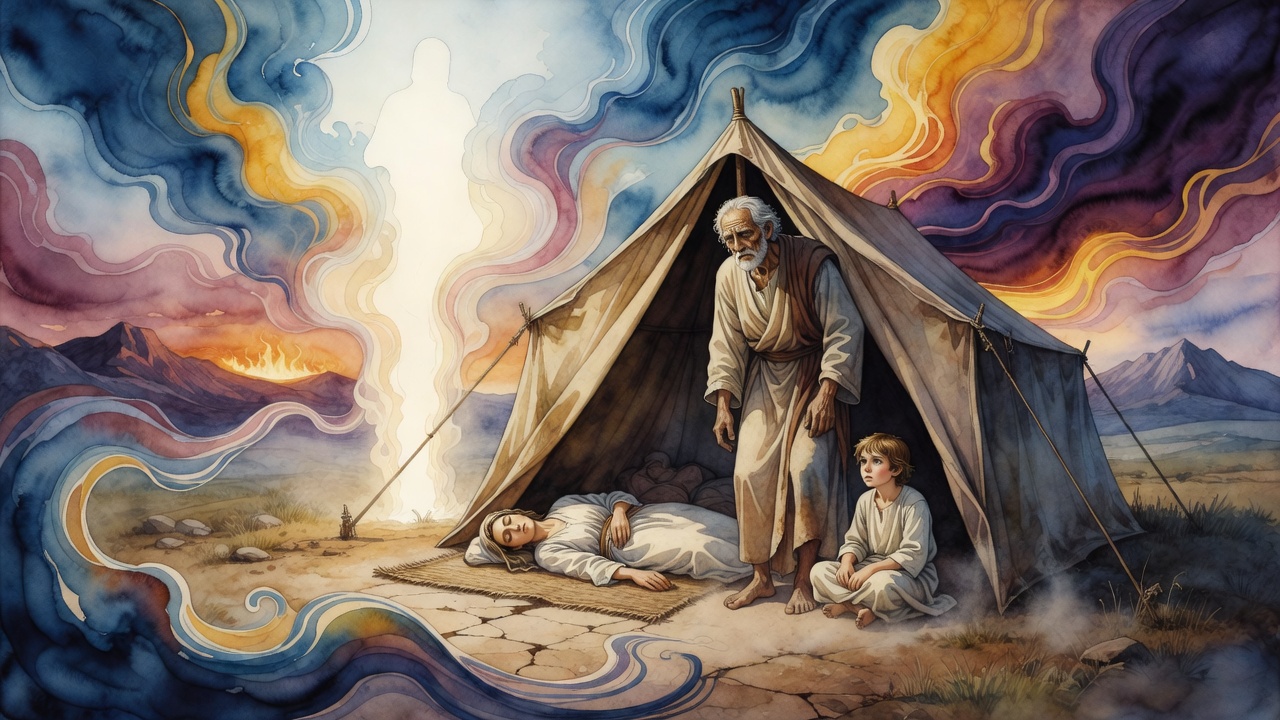
Abraham stood over Sarah and faced the Hittites with a sentence that bowed and threatened in the same breath. "A stranger and a resident am I among you" (Genesis 23:4). A stranger is a guest on another's ground. A resident, in the hard reading, is a householder who already owns.
He offered them the choice without raising his voice. Treat me kindly and sell me what I need, and I will act as a stranger among you. Refuse, and know I am householder here, for the Holy One has already said, To your seed I have given this land. He could have pressed the whole country with a promise older than their city walls. Over one body he asked for a single grave.
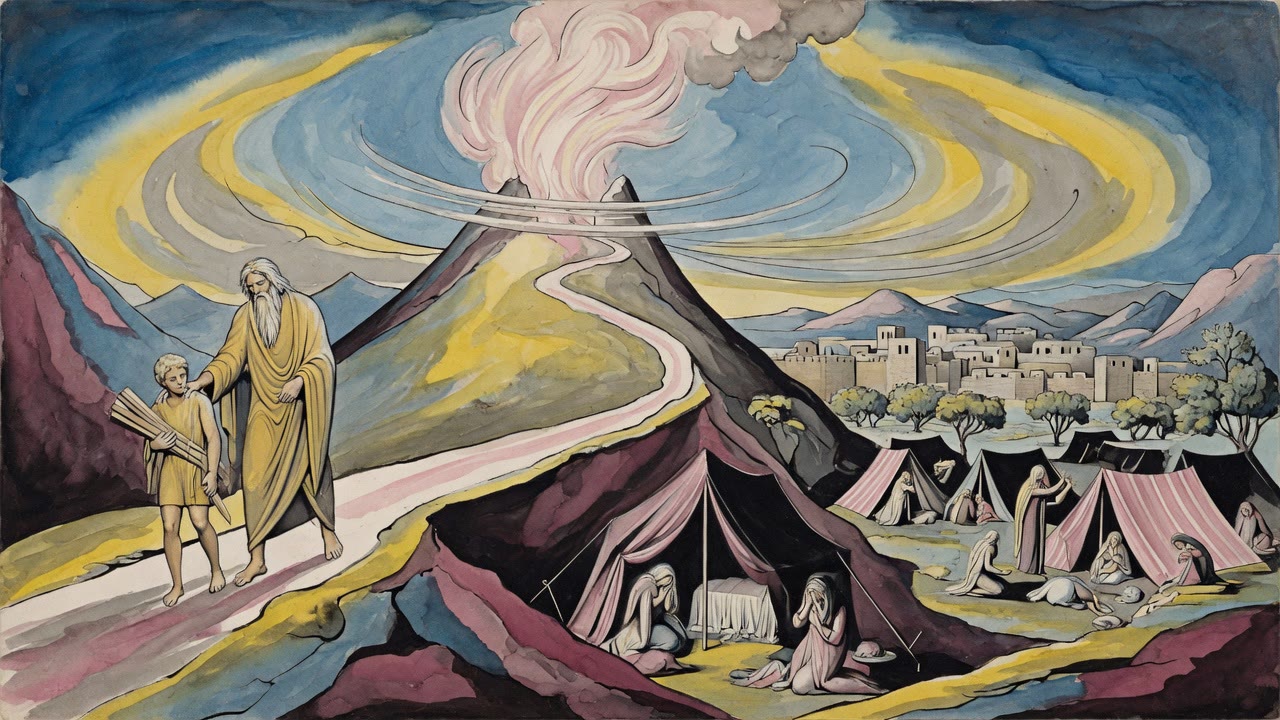
"Give me a possession of a burying place among you, that I may bury my dead from before me." Not an estate. Not a claim staked with spears. Enough earth for the wife he loved, and no more language than grief required. The man who could claim Canaan bowed low and asked for a tomb.
Ten Times the Sons of Heth
The Torah names the sons of Heth again and again until the ink feels deliberate. Ten full mentions in one chapter, when one would have done. Rabbi Elazar pictured quills snapped and ink poured out for the repetition and concluded it was no accident. Whoever settles the rightful purchase of a righteous person earns credit as if he kept the Ten Commandments.
Abraham pursued righteousness in his house and kindness at Sarah's burial. He found long life, and heaven answered with a garment of honor: old age itself, the next verse naming him old and well advanced in days. Deeds of loving-kindness are God's own craft. The man who took up that craft was invited to wear the garment that shows it on the face and in the walk.
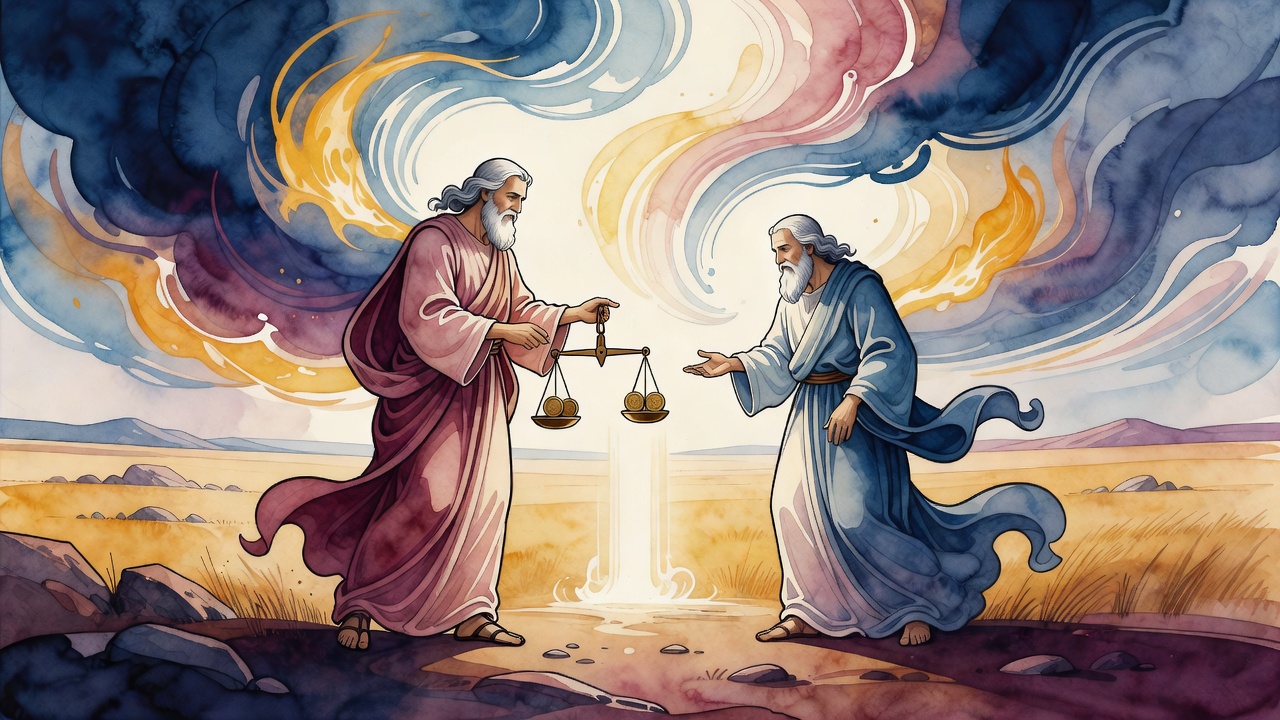
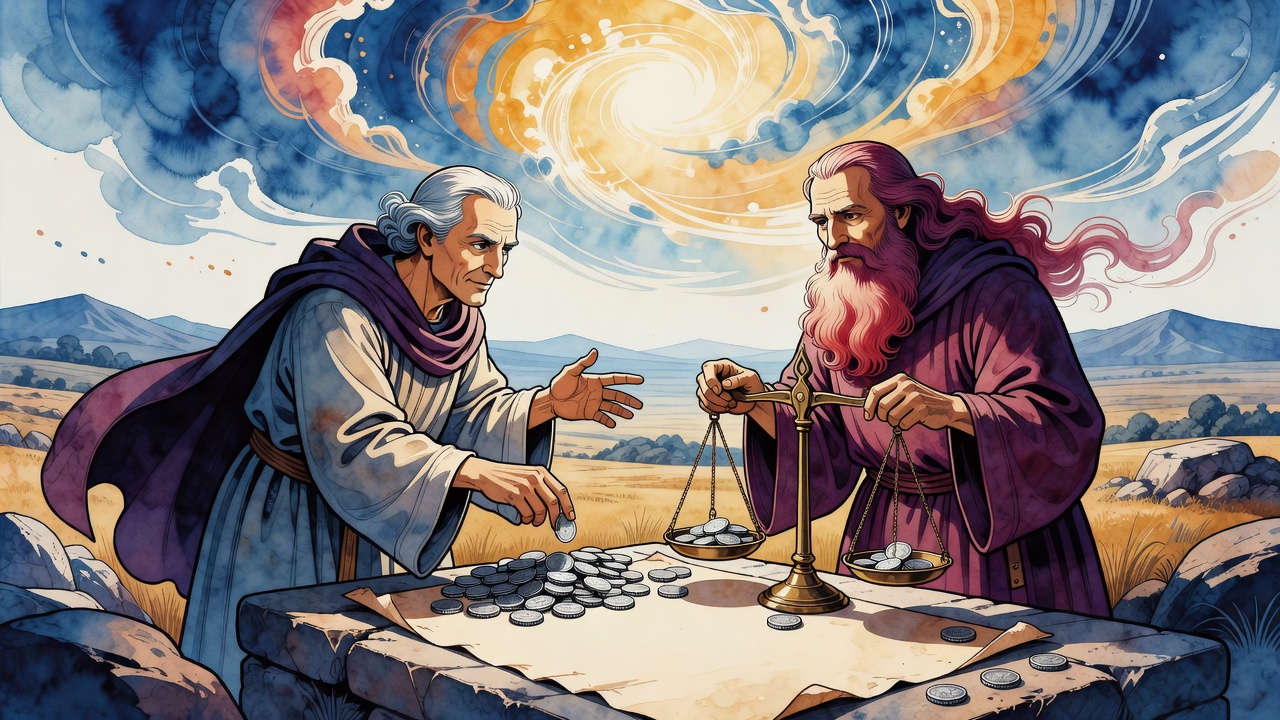
He counted out silver before witnesses. Ephron named a price that could have been bargained down by a lesser mourner. Abraham did not haggle the dead into a discount. The field and the cave in it became his for a full weight of money, public, clean, and final.
What Doubled Means
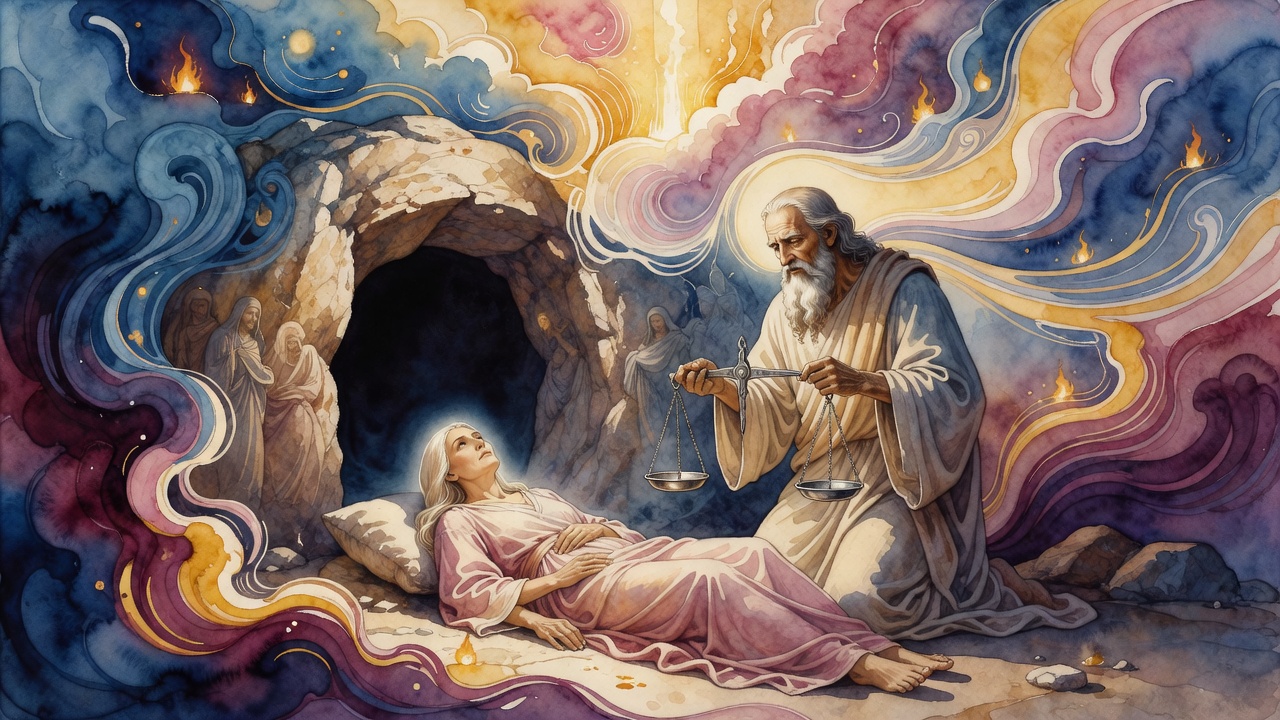
They called the place the cave of Machpelah, and the name would not sit still. One master said two chambers, one set deeper inside the other, a room within a room. Another said a lower chamber with an upper story stacked above it, stone folded over stone like a house that had learned to kneel twice.
A third reading left architecture and counted people. The cave is doubled because pairs rest there: husband and wife laid side by side. Adam and Eve. Abraham and Sarah. Isaac and Rebecca. Jacob and Leah. Whether the stone was folded or the couples were folded into the ground two by two, Machpelah holds as the doubled house of rest for the founders and their wives.
Kiriath-arba, city of four, names the same truth from the other side of the map. Four couples. One family tomb under Hebron's ridge. The purchase of a single grave opened a house that would hold the first human pair and the founding pairs of Israel together in the dark.
Prince of God Among Us
The men of Hebron answered him, You are a prince of God among us (Genesis 23:6). Canaan was no righteous land. Scripture sets its deeds beside Egypt's as a warning not to imitate either. Still that one courtesy would later be counted for them: years of holding the ground, a stretch of rest from war, honor paid forward for honor shown at a burial when they could have sneered at a stranger with a corpse.
Abraham buried Sarah in the cave of the field of Machpelah (Genesis 23:19). The stranger who could have seized stayed a buyer. The resident who already owned still paid. The first grave in the land of promise was not taken in the night. It was purchased under open eyes, with silver that left no lawsuit for the dead and no excuse for the living to call the field stolen.
When the Hittites closed the deal, they thought they had sold a plot. They had sold a door into the doubled cave where history would keep returning with its dead.
Silver That Leaves No Lawsuit
Ephron spoke as if he were giving the field freely, then named a price that rang like a market shout. Abraham did not answer the performance with performance. He weighed the silver that a merchant would recognize, full and public, until no Hittite child could grow up saying the Hebrew stole a cave in the night.
The field of Ephron, which was in Machpelah, which was before Mamre, the field and the cave in it and every tree in the field, in all its borders round about, rose into Abraham's possession before the eyes of the sons of Heth (Genesis 23:17-18). Borders matter when the dead must rest without a future quarrel. Trees matter when a purchase must look like a purchase and not a rumor.
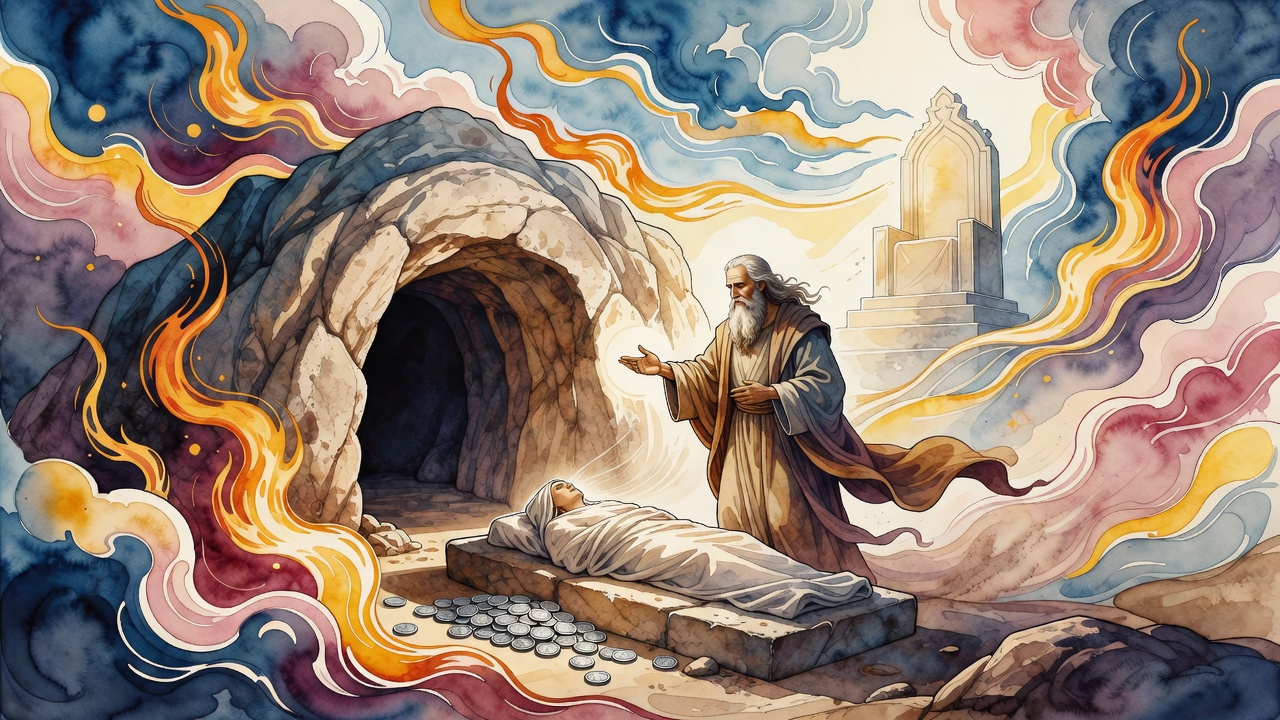
Sarah went into the doubled dark first. The other couples would follow across generations, each pair completing the name the sages argued over. Architecture or marriage, upper story or inner room: the silver had already decided who held the key.
← All myths