Ephron Loses a Letter Over Machpelah's Price
Ephron offers the field as a gift while naming four hundred shekels, skims the silver as Abraham weighs it, and his name drops a letter on the page.
Table of Contents
Abraham rose to bury his dead, and Ephron the Hittite played the generous host with a smile that already knew its number.
 Click for full size
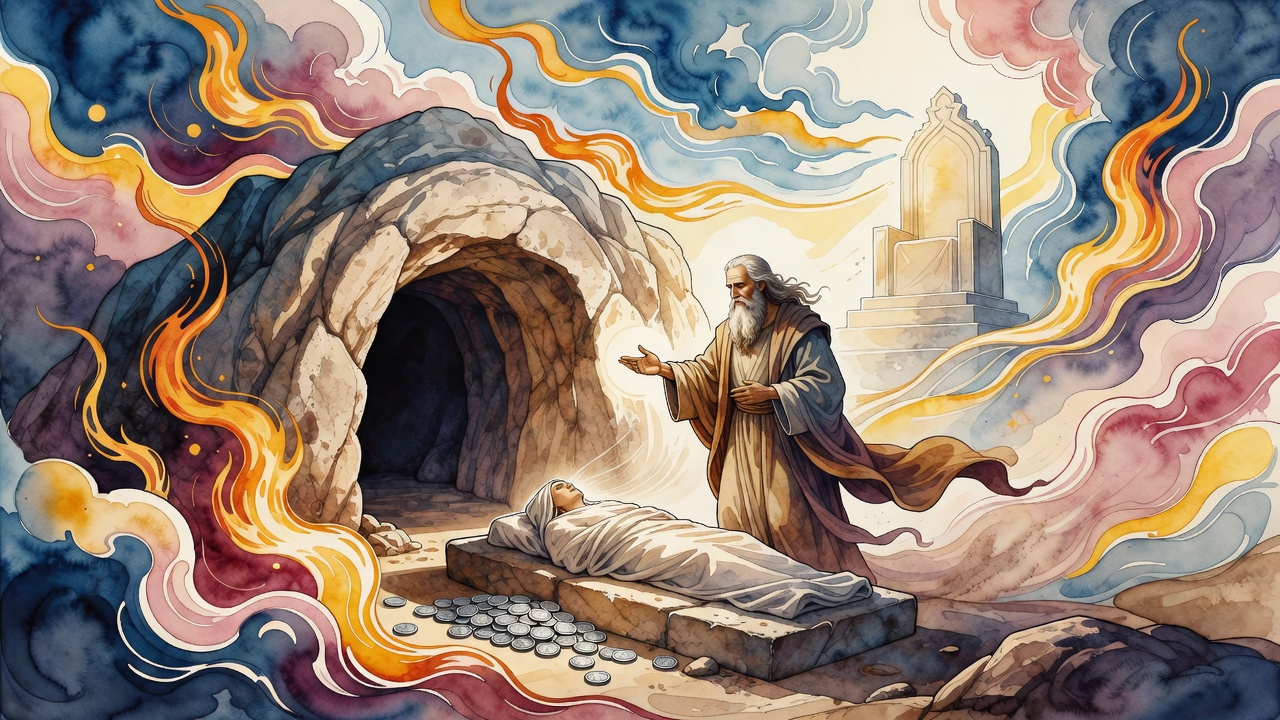
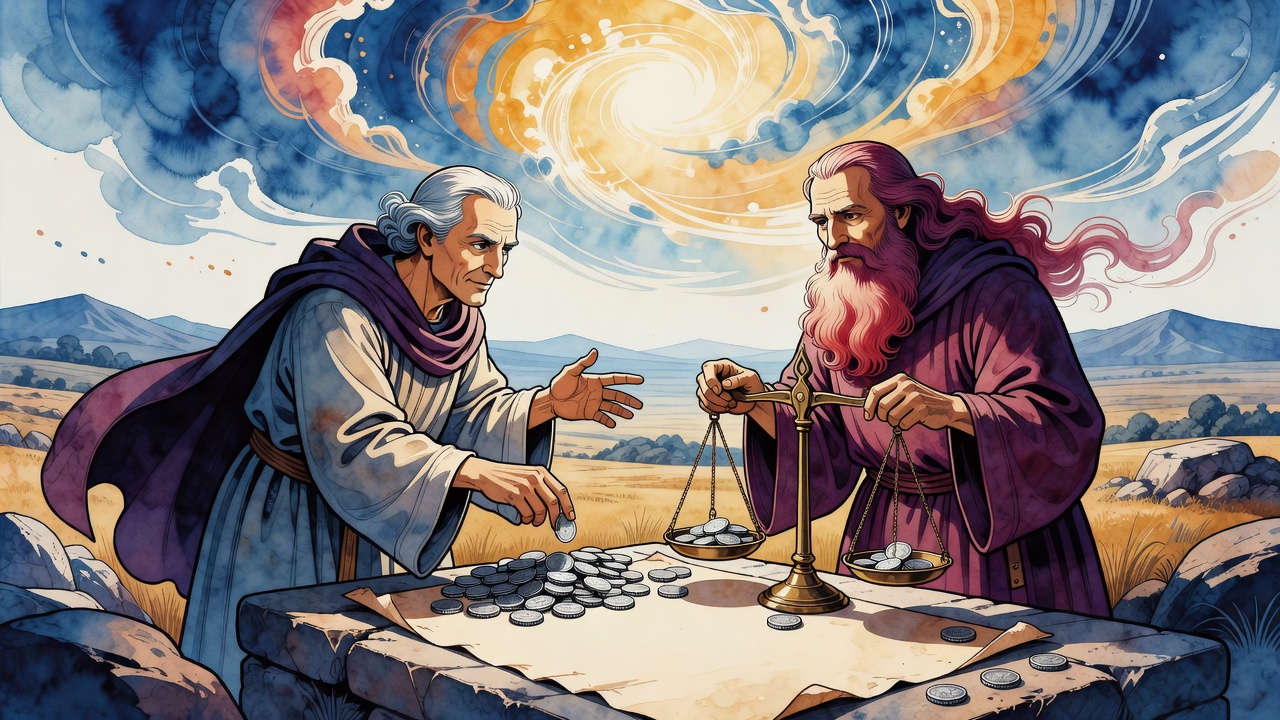
"Four hundred shekels of silver," he murmured, "what is that between you and me? In my eyes such a sum is nothing beside my love for you. Bury your dead." With his mouth he offered a gift. In his heart he had already named his price (Genesis 23:15).
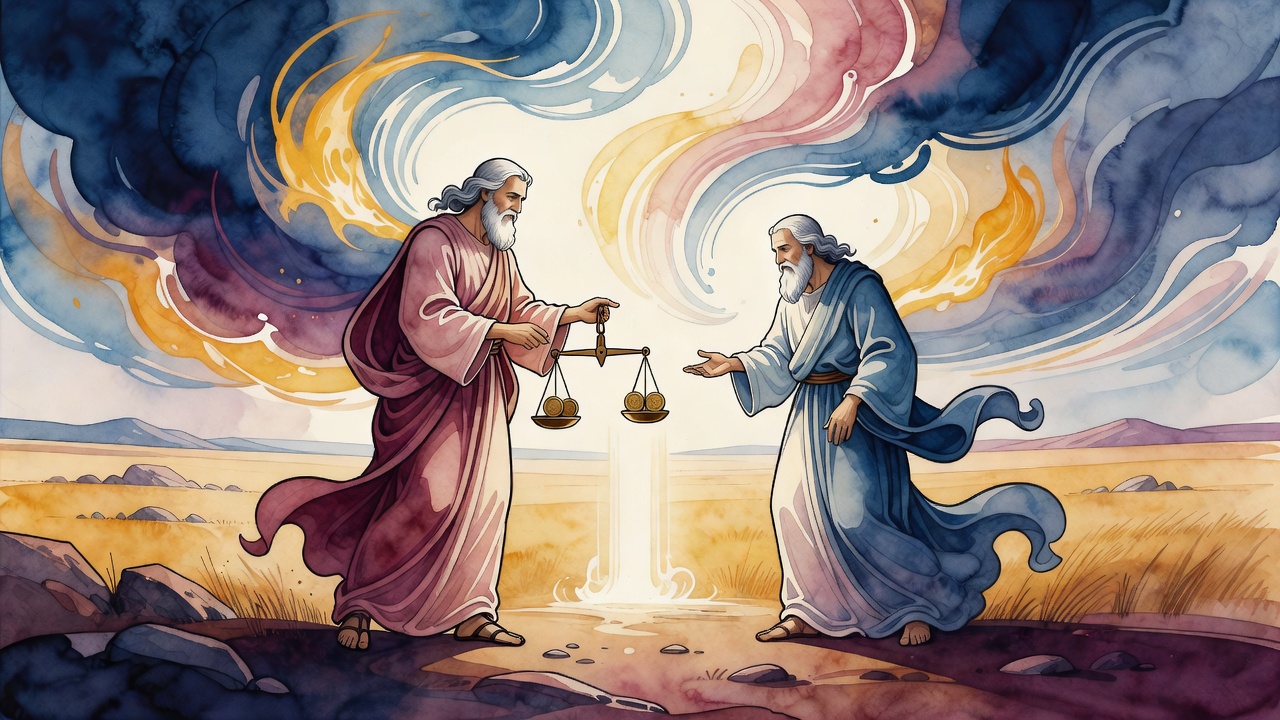
Abraham heard the truth under the courtesy. This was the cost of the field, neither less nor more. He weighed out the full sum and placed it in Ephron's hand before the eyes of the Hittites. The shekels were no ordinary coins. The sages read them as kantarin, heavy talents, a fortune against the ordinary sela of other passages. The Holy One had compassion on Abraham in that hour of grief, and still Abraham paid, because a burial place for Sarah must be bought clean.
The Letter That Dropped
Throughout the passage the name Ephron is written full. At the very moment "Abraham weighed to Ephron," a single vav drops away. Why? Because while Abraham counted out honest silver, Ephron was skimming from the coins. The thief who diminishes his neighbor's payment finds his own name diminished on the page that records the sale.
The silver itself was "current with the merchant," accepted everywhere, lacking not a single perutah of its worth. The buyer paid full. The seller's name went short. Ink itself took the verdict.
The Field That Rose
When Scripture says the field of Ephron "rose up," the sages hear more than a deed of sale. The field climbed in dignity, passing from a commoner's hand into the hand of a king among the righteous. Who is a greater king among the righteous than Abraham? Some say the rising was literal: the cave-field of Machpelah stood half a cubit higher than every field that ringed it, lifted out of the plain so no eye could mistake the burial place of the patriarchs.
Ephron spoke generously and grasped greedily. The verse hangs over him: he that hastens to be rich is a man of an evil eye, and knows not that want shall come upon him. The man who grasped for too much was made to lack, a letter stripped from his name, measure for measure. The ground gained height. The seller lost a stroke of his own spelling.
Another House, Another Hidden Harm
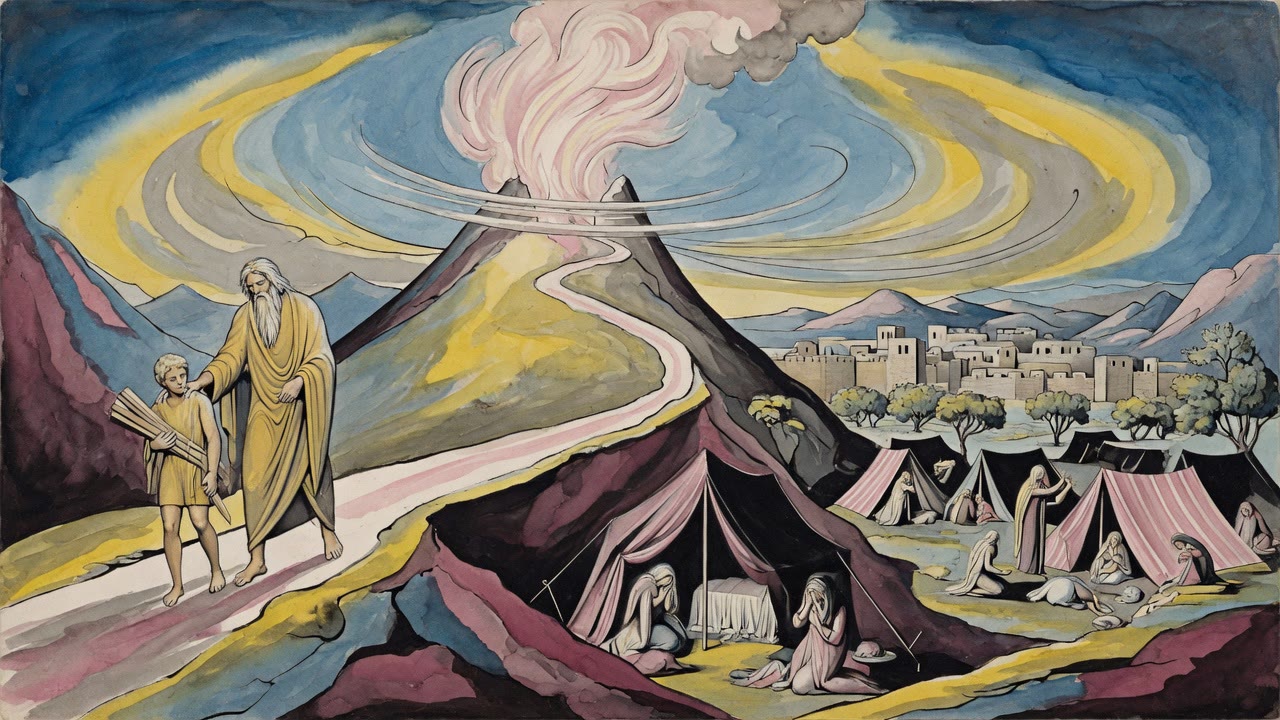
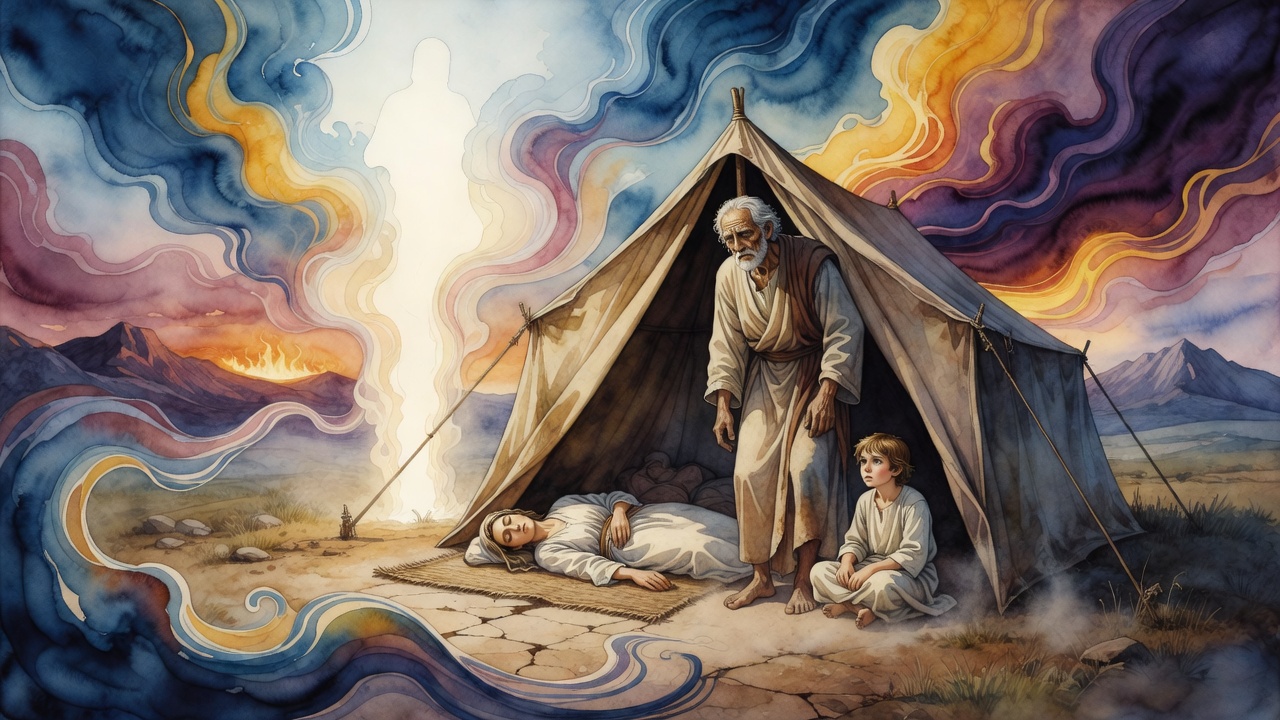
In Abraham's tents another danger had already taught the household to read soft words hard. Sarah saw Ishmael's "mocking" and refused to let the word stay small. One reading hears idolatry: a boy setting up a brick and kissing it as a god, the same sport-word later used at the calf when they rose up to make sport. Another reading is sharper. Ishmael took bow and arrows and loosed them toward Isaac, wishing to kill, then laughed it away as play.
"As a madman who casts firebrands, arrows, and death, so is the man who deceives his neighbor and says, Am I not but making sport?" Sarah's eye named what others called child's play. The demand that Ishmael be sent away was no jealous whim. It was the guarding of the house of Abraham (Genesis 21:9).
Soft language. Hard intent. The pattern was already known when Ephron smiled over four hundred shekels.
Full Silver, Short Name
Ephron's courtesy and Ishmael's sport share a mask. Abraham pays full weight anyway, because a grave for Sarah must not rest on a favor that can be revoked when the Hittites change their minds. The field rises. The name on the bill of sale shrinks. The cave that will hold Sarah, and later Abraham himself, sits half a cubit above the plain, honest ground bought with honest silver from a man whose letters no longer stand complete.
Machpelah keeps its height. Ephron keeps his silver and loses a vav. In the ledgers Heaven keeps, that trade is not a bargain. It is a verdict written into a single missing stroke of ink, while the first mother of Israel is laid to rest on ground that no longer answers to a skimmed name.
The Hittites sat at the gate and watched silver change hands. No one there saw the vav fall from a name. The scribes of Israel saw it later, generation after generation, every time the passage was copied. A missing letter is a small thing until it is the only monument a greedy seller gets. Sarah's grave needed no such monument. It needed clear title, full weight, and a field that had risen half a cubit so that even a stranger's eye would know the ground was set apart. Abraham buried her there and walked away a man who had paid more than the market and kept his dead free of another man's smile.
← All myths