Parshat Chayei Sarah4 min read

Abraham Bought the Cave the Day Ephron Rose

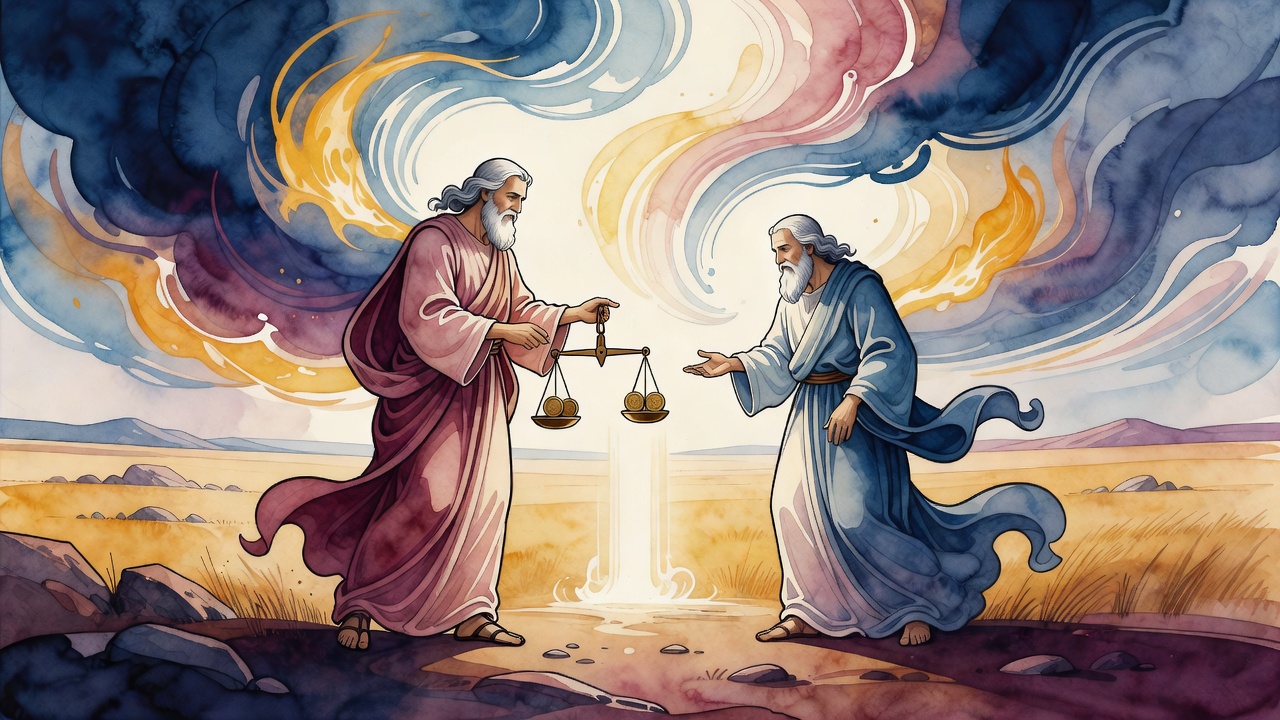
On the day Ephron became chief of Heth, Abraham sealed the Cave of Machpelah with silver, after a covenant that Israel would not seize Jebus by force.

Curated by Arthur · Told by Maggid ·
Table of Contents
  1. After Sarah, Age Arrived Like a Guest
  2. The Children of Heth Knew the Future
  3. Silver That Outlasted Manners
  4. Jacob Would Not Risk the Rolling Journey
Abraham Bought the Cave the Day Ephron Rose Click for full size

After Sarah, Age Arrived Like a Guest

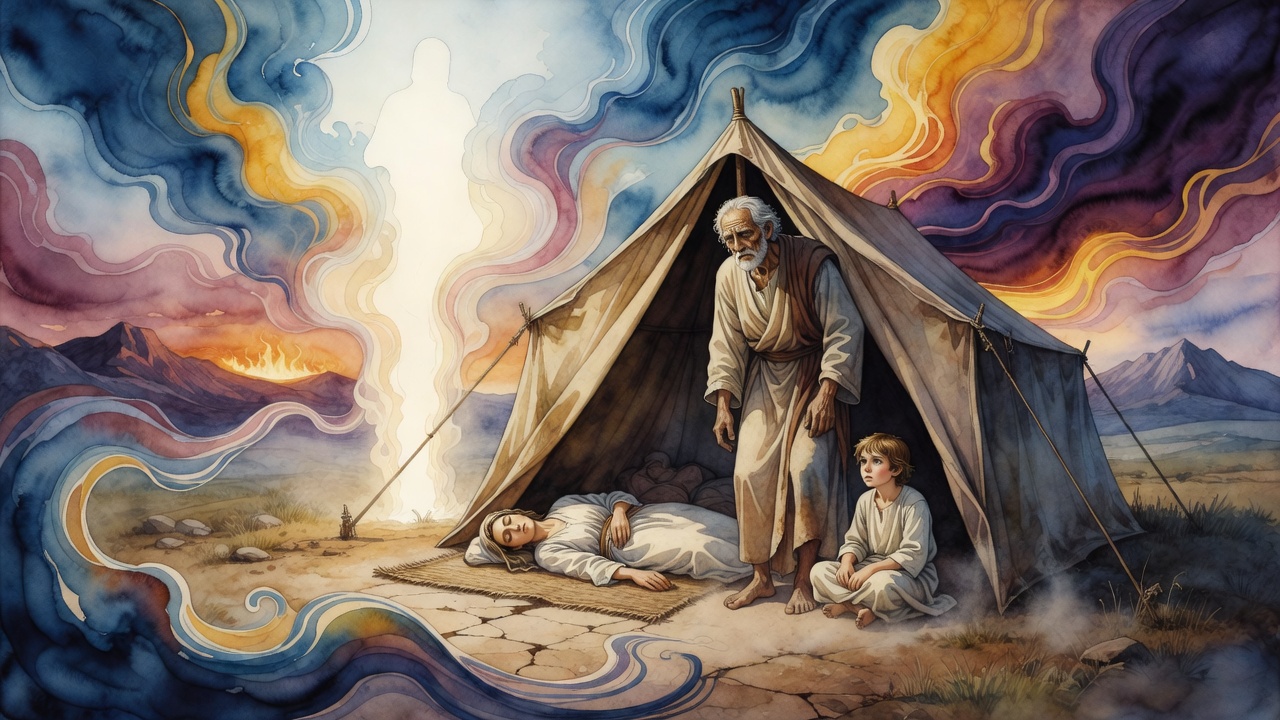
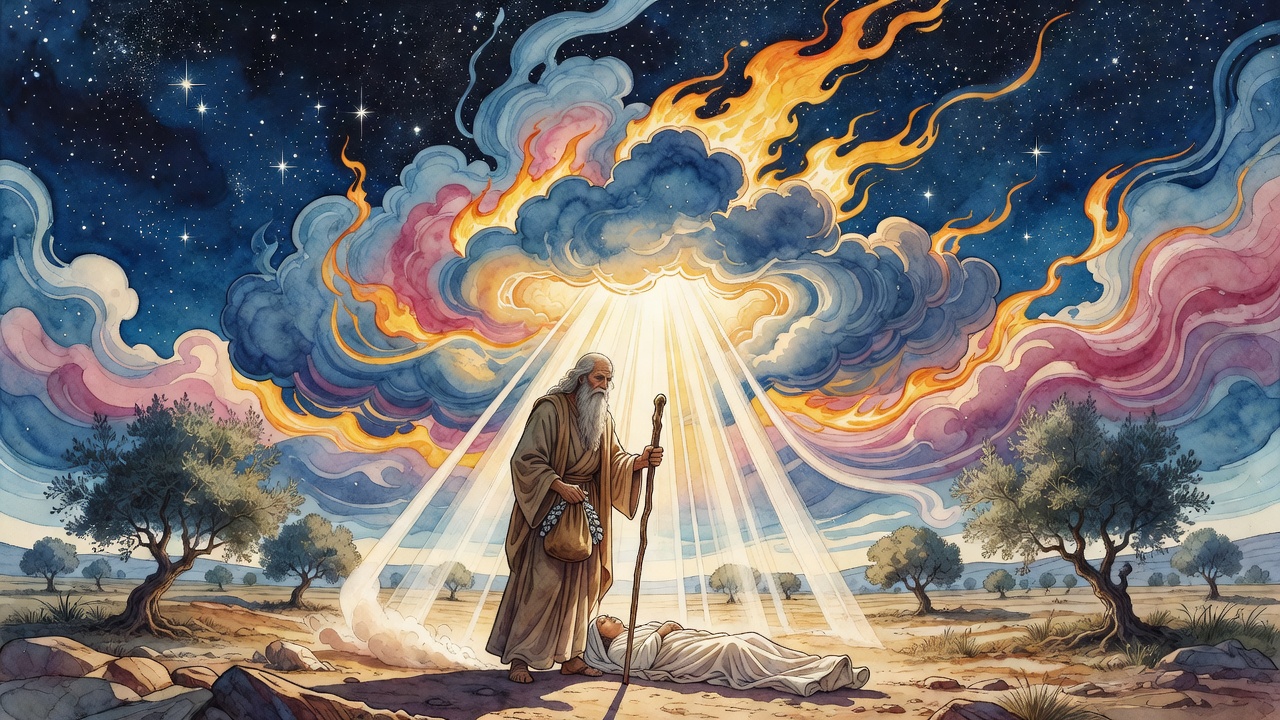
While Sarah lived, Abraham felt young. When she died, old age found him as if it had been waiting outside the tent. Before Abraham's petition, youth and age wore the same face, and Isaac was so like his father that messengers mistook one for the other.

Abraham asked God for marks of age so the world could tell them apart. The petition was granted. Grief and gray hair arrived together. Nahor had already died in Haran at one hundred seventy-two. Loss stacked on loss until even ordinary faces needed new signs.

Visitors paused, uncertain which man to honor, until the marks of age made the difference plain. Abraham needed a grave that was not a favor and not a loan. He needed a deed that would outlast manners and shifting chiefs.

The Children of Heth Knew the Future

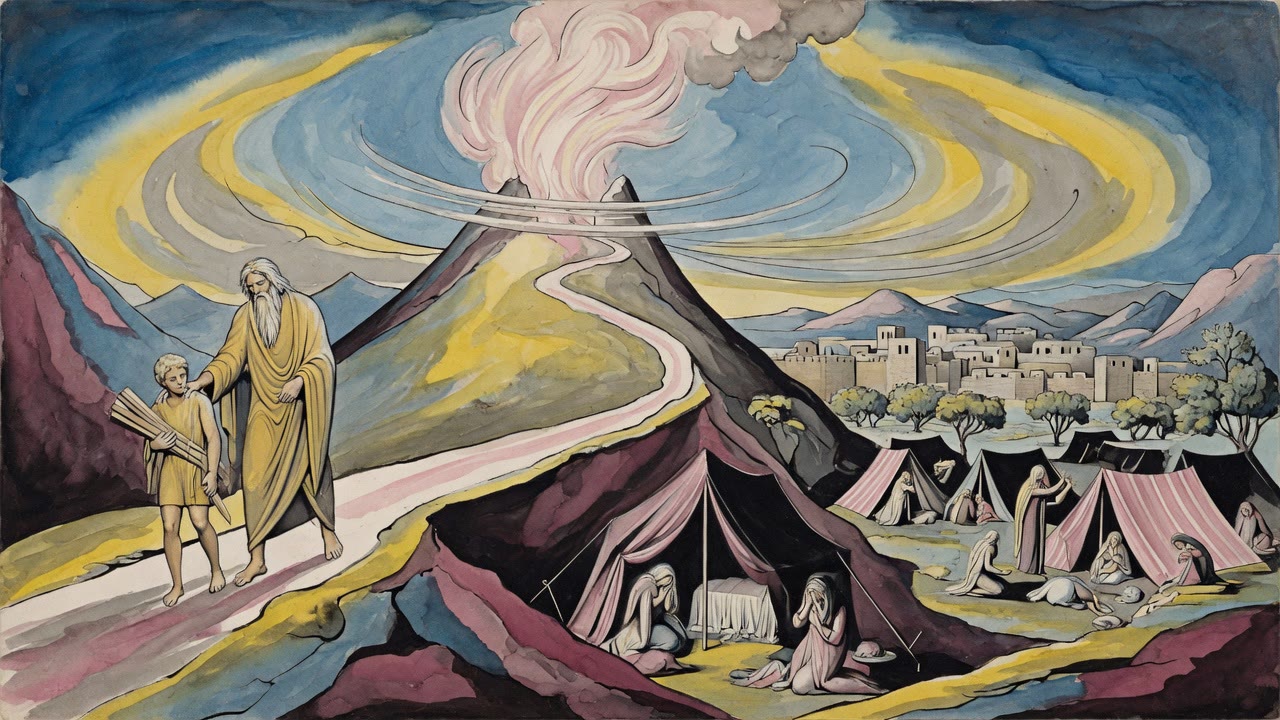
The people of Heth in Jebus spoke with strange confidence. "We know that in time to come God will give these lands unto thy seed." They would sell the Cave of Machpelah only if Abraham swore his descendants would not wrest the city without consent. Abraham agreed.

Ephron first refused to sell. On that same day the children of Heth raised him to chief so Abraham would not negotiate with a man of low rank. When Ephron still stalled, they threatened to depose him from the office they had just invented for him.

Prophecy sat at the bargaining table beside silver. A people who foresaw Israel's inheritance still demanded a covenant against conquest. Abraham paid the price of being father of a promised nation while acting as a private buyer who refuses force.

Silver That Outlasted Manners

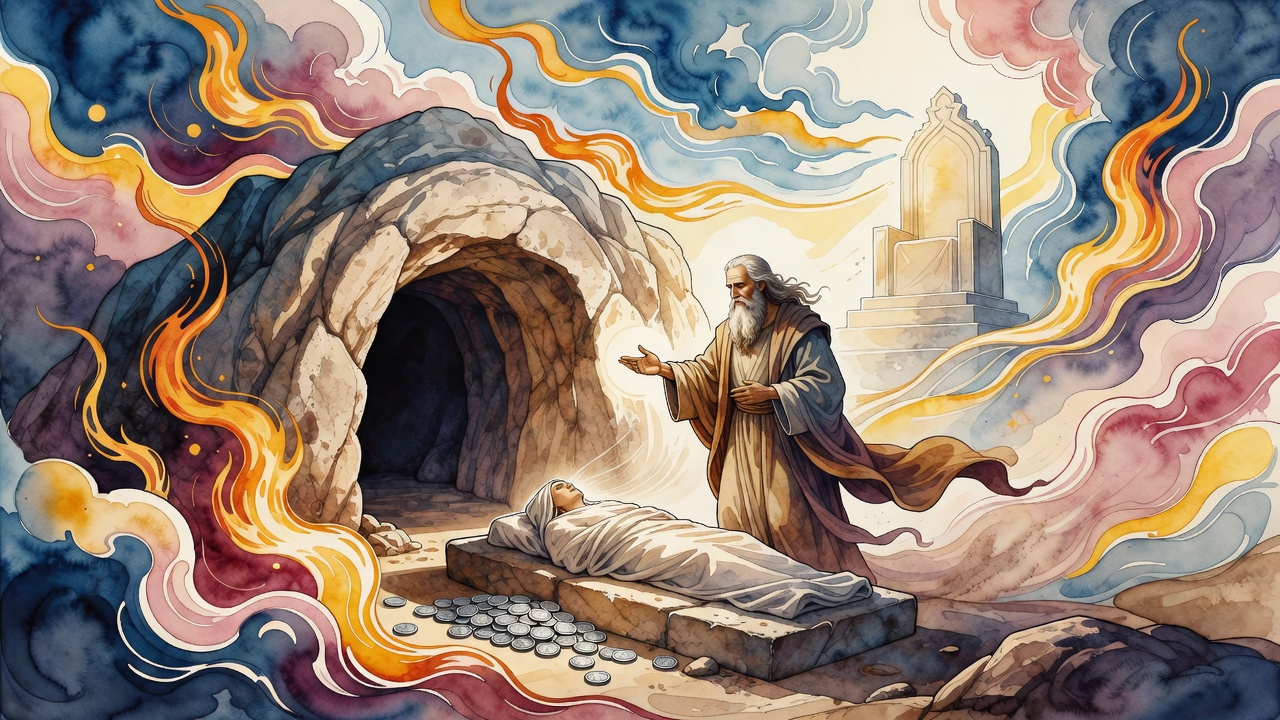
Abraham paid. The purchase was public, weighted, and meant to silence later claims that the patriarchs only borrowed Canaan's soil. A grave bought in full is an argument written in metal. Sarah entered the cave first under a receipt heaven seemed to honor.

Witnesses counted the silver. Witnesses heard the oath about Jebus. Abraham refused rumors for Sarah's rest. He wanted a place later sons could name without begging permission from a new generation of Heth every time bones needed earth.

Generations later the same cave would pull every patriarch's dying breath toward Hebron. Silver spent in one afternoon became title recited on deathbeds under foreign roofs when Egypt felt like home and still was not home enough.

Jacob Would Not Risk the Rolling Journey

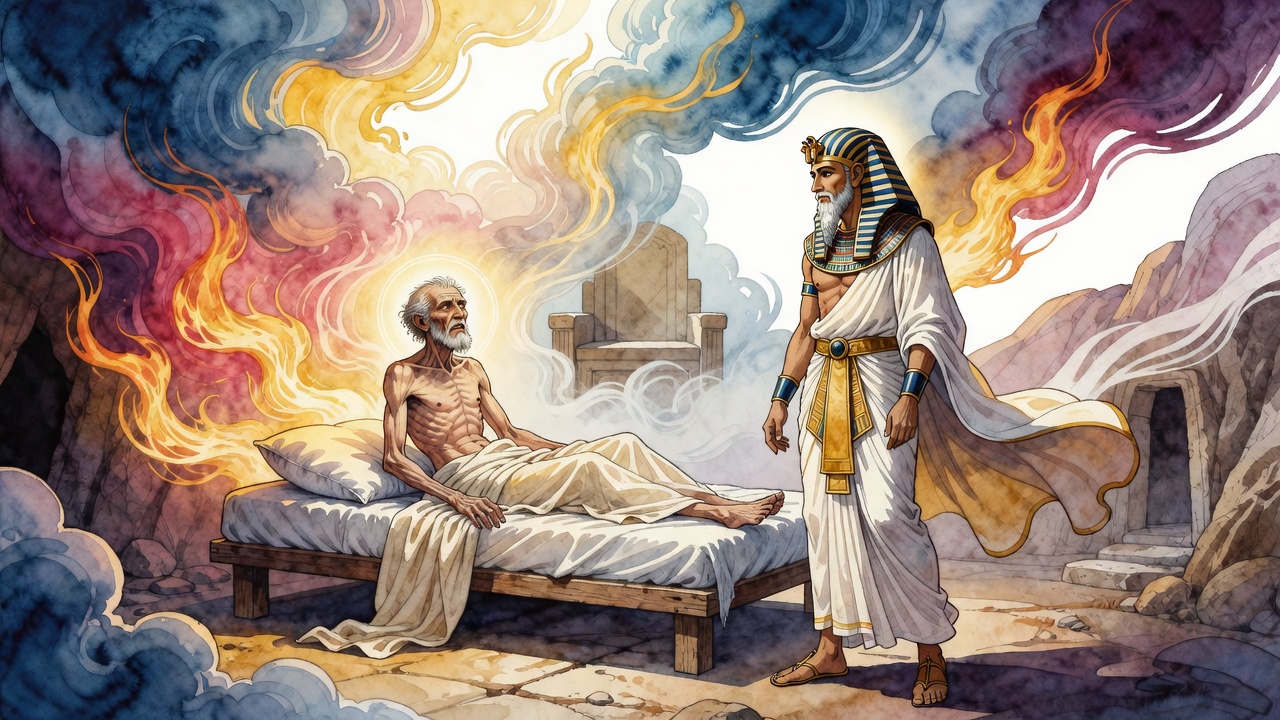
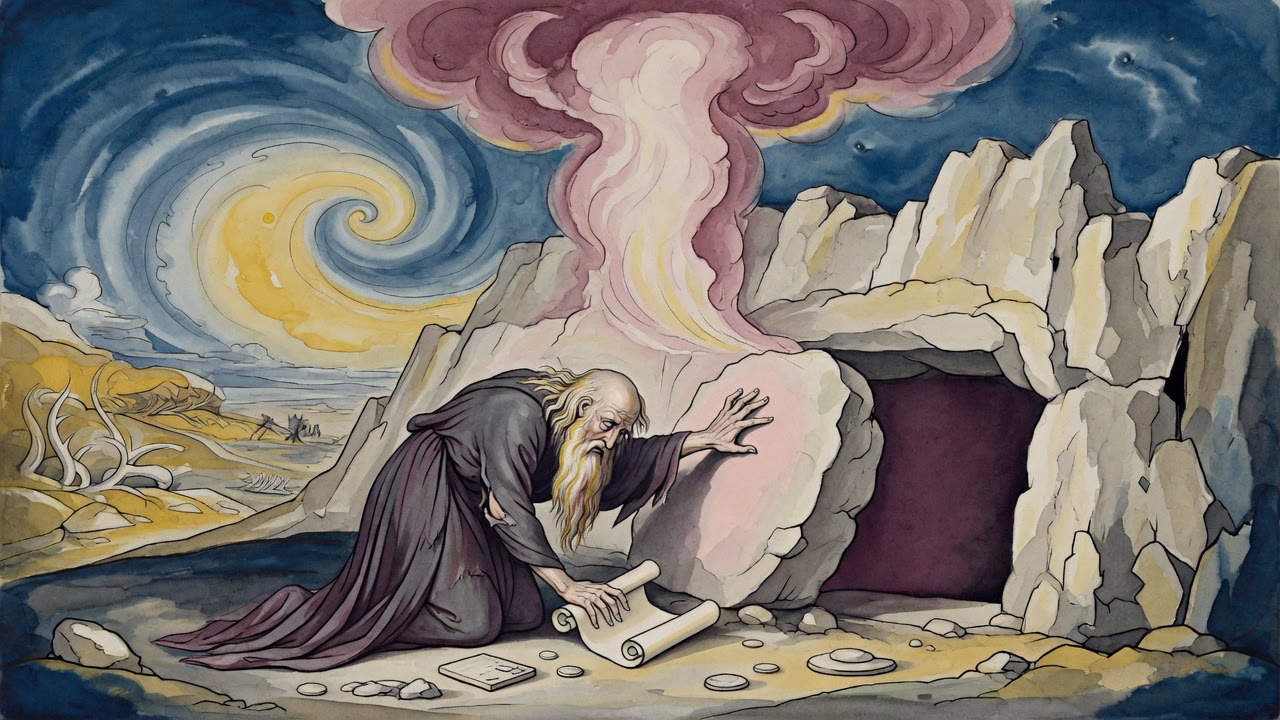
Jacob, dying in Egypt, insisted on Machpelah with precision. Those buried in the land, the legends say, rise first in the end of days. Those buried elsewhere must roll through tunnels in the earth to reach holy ground before resurrection.

Jacob had heard God at Beth-el say the land where he lay would be his. He meant to lie there in death as a second signature on the promise. He asked that some Egyptian earth be sprinkled on him, a strange tenderness toward the land that fed him in famine.

Joseph would swear. The brothers would carry. Kings would mourn along the road. All of it rested on the afternoon Abraham out-negotiated Ephron on the day Ephron became someone worth threatening and still had to sell.


← All myths
From the tradition

Sources

3 sources

The texts behind this telling. Some cards carry a translation of the source; others are our own retelling of it, and each card says which. Every card links out to the original.

Legends of the Jews 5:269Legends of the Jews

Retold in our words. Read the original at the link below.The Legends of the Jews by Louis Ginzberg (1909) · Public Domain

A reader can imagine them simply receiving divine gifts, but the reality, as often told in our tradition, is far more nuanced. Take Abraham, for instance, and his quest to acquire the Cave of Machpelah, a place that would become the burial site for our patriarchs and matriarchs.

The story, as pieced together from various sources, is fascinating. Abraham wasn't just handed this sacred space. No, he had to negotiate with the children of Heth, the inhabitants of Jebus, the city where the cave was located. They knew something, these people. They possessed a kind of prophetic insight, telling Abraham, "We know that in time to come God will give these lands unto thy seed."

They had a condition, a demand before they’d let Abraham have the cave. They wanted a covenant. They wanted Abraham to swear that his descendants, the Israelites, would not wrest the city of Jebus from its inhabitants without their consent. A pretty big ask. Abraham, ever the diplomat, agreed. And so, he acquired the field from Ephron, the man who owned it.

Here's where it gets interesting. According to some accounts, this whole transaction happened on the very day Ephron was made chief of the children of Heth. Why that day? Well, the story goes that Ephron was elevated to this position specifically so that Abraham wouldn't have to deal with someone of "low rank." It was all orchestrated, in a way, to ensure proper respect and standing during the negotiation.

There was a wrinkle, though. Ephron, initially, refused to sell the field! Can you imagine? Here's Abraham, trying to secure a burial place for his family, and the owner is playing hardball. What changed his mind?

Pressure. The children of Heth, it seems, threatened to depose Ephron from his new office if he didn't fulfill Abraham's request.! The community intervened, forcing their new leader to cooperate. Why were they so insistent? Perhaps they truly believed in their prophecy and wanted to ensure the agreement was made.

What does this tell us? It's a reminder that even the most pivotal moments in our history are often the result of complex negotiations, political maneuvering, and a little bit of luck. It highlights the importance of community, the weight of prophecy, and the lengths to which people will go to secure their future.

Full source
Legends of the Jews 1:360Legends of the Jews

Retold in our words. Read the original at the link below.The Legends of the Jews by Louis Ginzberg (1909) · Public Domain

Jacob, as he lay dying, was very particular about where he wanted to be buried. Not just anywhere in the Holy Land, but specifically in the cave of Machpelah in Hebron, alongside Abraham, Sarah, Isaac, Rebecca, and Leah.

Why such insistence? Well, according to tradition, being buried in the Land of Israel held immense significance.

The idea is this: in the Messianic era, the time of ultimate redemption, when the dead will rise, those already resting in the sacred soil of Palestine would have a head start. No delays, no fuss. They'd awaken to new life immediately. But those buried elsewhere? They'd have a bit of a journey – a somewhat bizarre one, if you can picture it! As Ginzberg retells it in Legends of the Jews, they would first have to roll through tunnels created in the earth to get to the Holy Land. Only then could they be resurrected.

Quite the commute. But Jacob’s desire went even deeper. It wasn't just about convenience in the afterlife. It was about claiming ownership. Remember the story of Jacob’s dream at Beth-el? God appeared to him and said, "The land whereon thou liest, to thee will I give it, and to thy seed" (Genesis 28:13). As Ginzberg explains, Jacob wanted to "lie" – to be buried – in the Holy Land to solidify the promise, to ensure that it would indeed belong to him and his descendants. It was a way of saying, "This is ours. Forever."

There's a beautiful, almost poetic, connection between the physical act of resting in the land and the spiritual claim to it.

But here’s a curious twist: Even with all this, Jacob asked Joseph to sprinkle some Egyptian earth over his body after he died. Why? We don’t have a definitive answer. Perhaps it was a nod to his time in Egypt, a recognition of the life he built there, or even a symbolic gesture of redemption for the land.

So, what does Jacob’s story tell us? It’s more than just a burial request. It's evidence of the enduring connection between the Jewish people and the Land of Israel, a connection woven with faith, promise, and a deep sense of belonging. It's a reminder that even in death, our stories, our hopes, and our destinies are intertwined with the land we call home.

Full source
Legends of the Jews 5:277Legends of the Jews

Retold in our words. Read the original at the link below.The Legends of the Jews by Louis Ginzberg (1909) · Public Domain

Abraham, our patriarch, experienced profound loss. First, his brother Nahor passed away in Haran at the ripe old age of 172.

Then, the death of Sarah, Abraham's beloved wife, hit him particularly hard. As long as she lived, Abraham felt young and full of vigor. But after her death, old age suddenly overtook him. The idea that our loved ones can somehow hold back the tide of time for us, and their absence accelerates it.

Abraham, seeing his own aging, apparently made a plea to God. Before Abraham's time, the legend says, there were no outward signs of aging. A young man looked just like an old man! Ginzberg, in his retelling of this story, emphasizes the practical problems. Isaac, being the spitting image of his father, often got mistaken for him. Imagine someone asking for advice from the wrong one!

So, Abraham prayed that old age might have marks to distinguish it from youth. He wanted there to be a clear difference. And God granted his petition! Since Abraham's time, the appearance of people changes as they age.

The Legends of the Jews calls this one of the seven great wonders that have occurred in history. That something so fundamental to our human experience – the visible signs of aging – might have originated with a prayer, a request for clarity in a world where time seemed to flow without leaving its mark.

Full source