Dying Jacob Claims Machpelah for His Bones
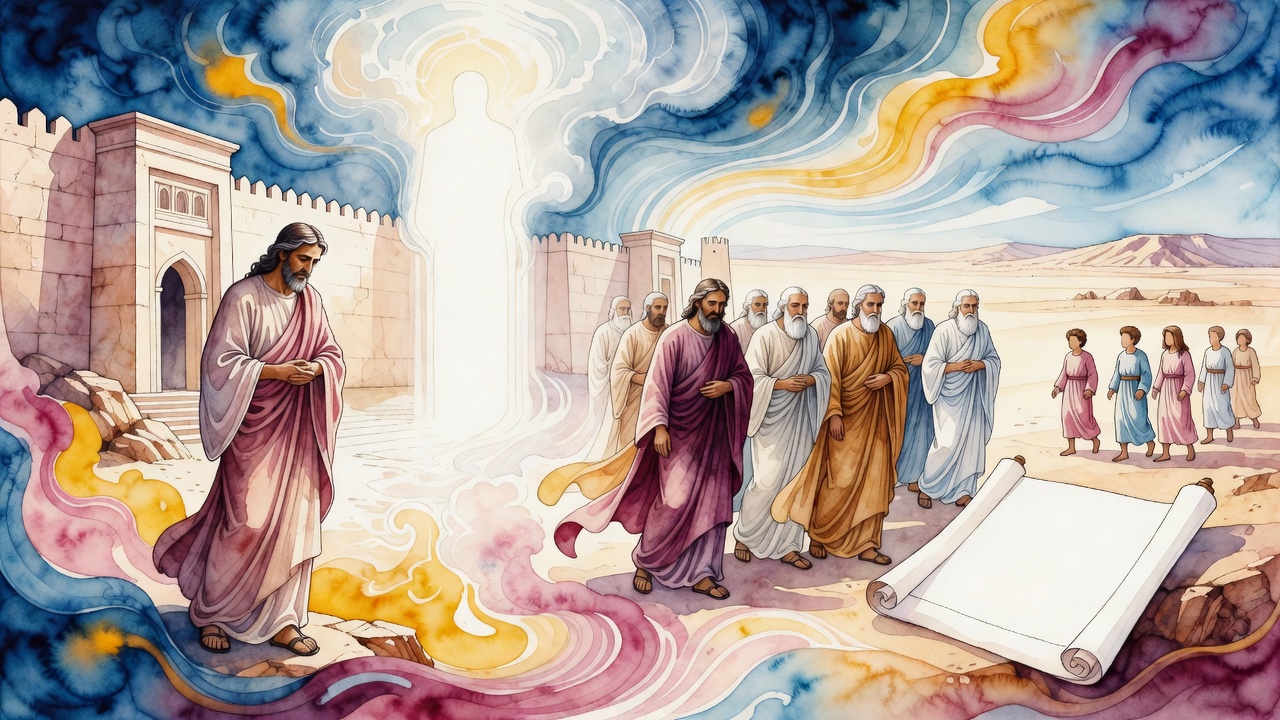
On his deathbed Jacob forced his body upright for Joseph the viceroy, begged the holy spirit for the blessing, and bound his bones to Machpelah.
Table of Contents
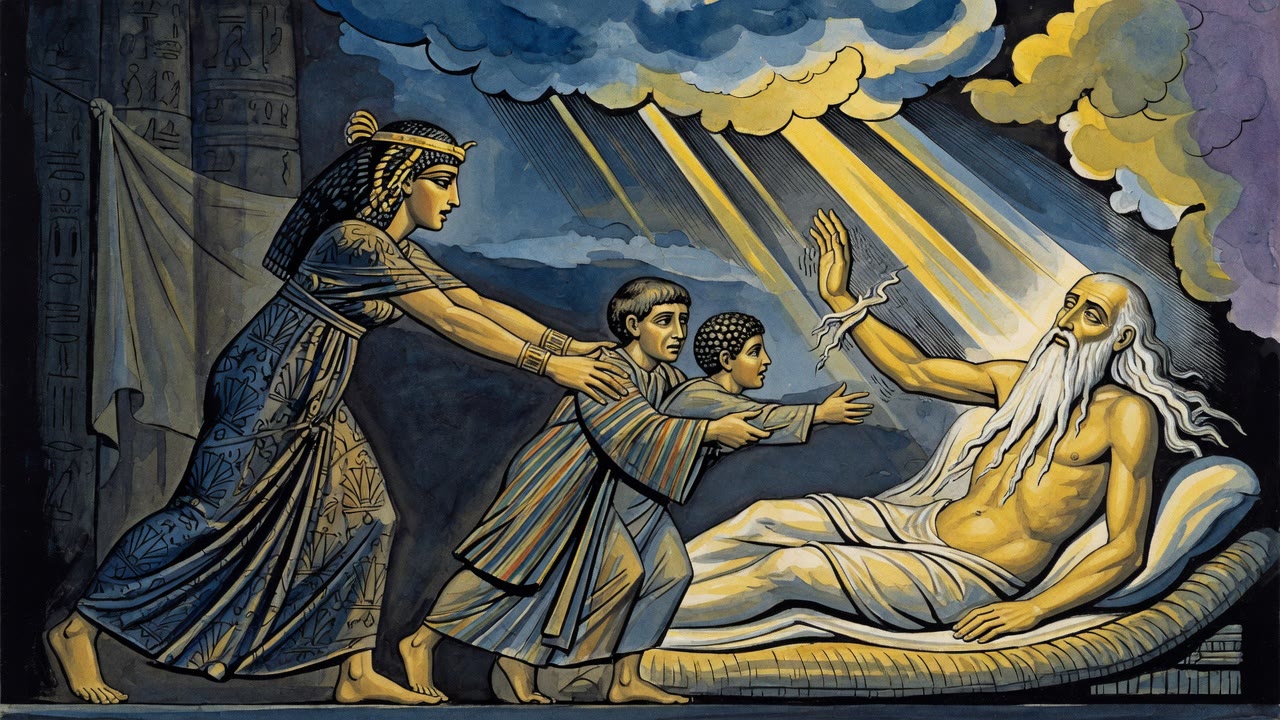
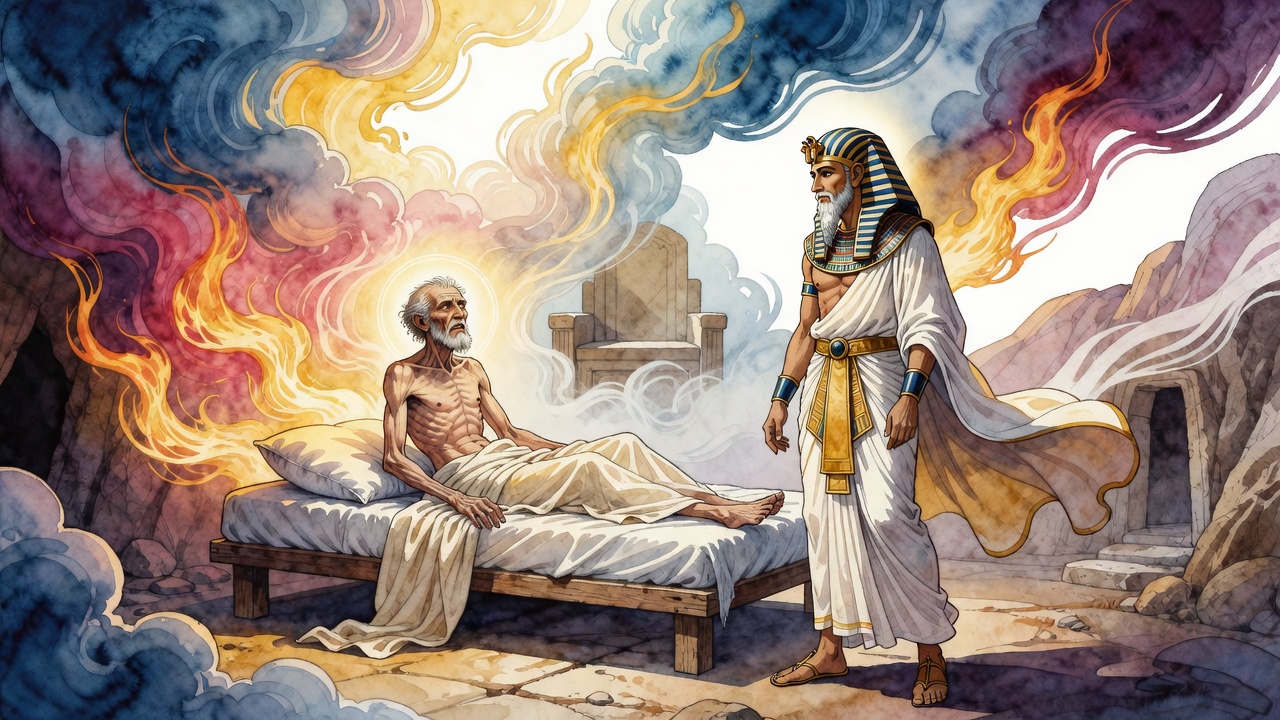
The bed held a body that barely answered. Then word came that Joseph was on the road, and Jacob pushed against the mattress until his spine found a seat. The holy spirit had already told him the viceroy was coming. Weakness was no excuse for greeting Egypt's second throne like a man already half buried.
 Click for full size
Sit Up for the Crown That Is Also a Son
Joseph was not only the boy lost and found. He was the hand under Pharaoh, power in linen and gold, a government walking into a sickroom. Servants would watch how the old man met him. Jacob rose for the office as much as for the love. He would not let the blessing he meant to give look like the mutter of a failing elder.
He prayed while he sat. He asked God to let the Ruach HaKodesh (רוח הקודש), the holy spirit, rest on him for the words ahead. Ephraim and Manasseh would stand under his hands. He needed prophecy, not only affection. A father can love without the spirit. A patriarch cannot seal the next house without it.
The room waited. Breath came thin. Jacob held the upright posture as if the blessing itself needed a spine. Sweat stood on his brow. His hands found the edge of the bed and locked there. He did not lie back while the court of Egypt still filled the doorway.
Not Any Soil in the Land
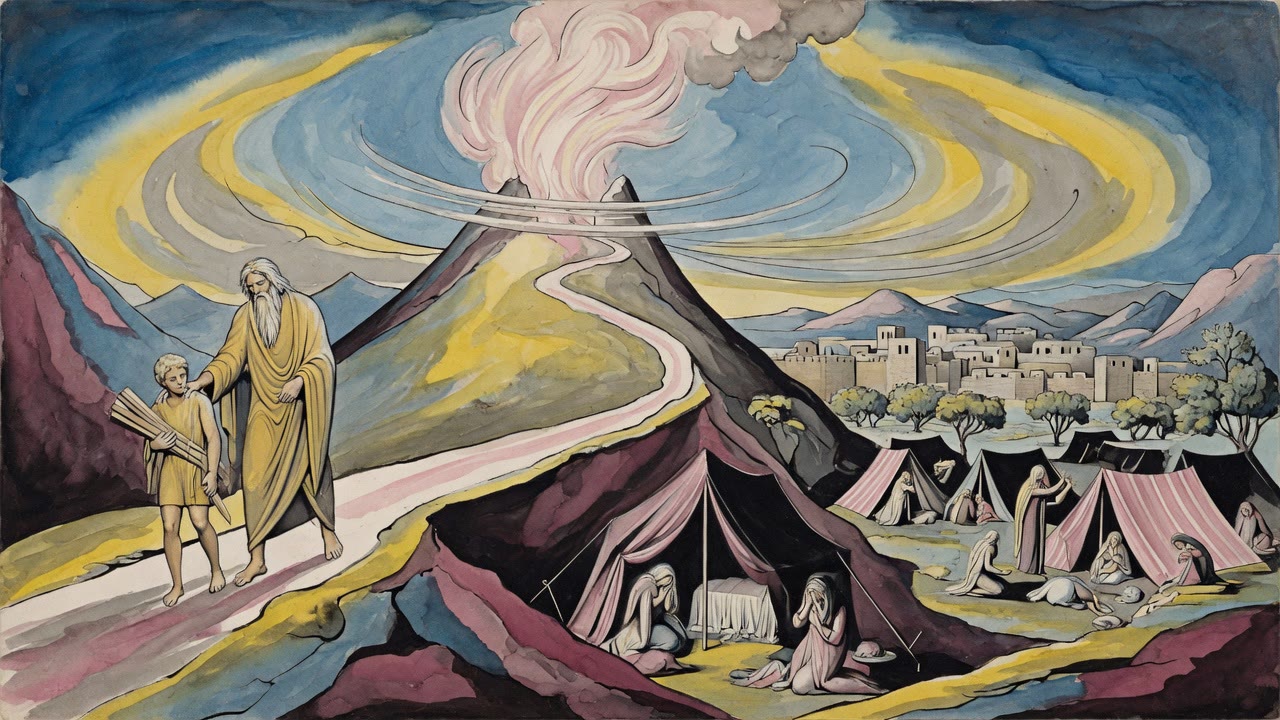
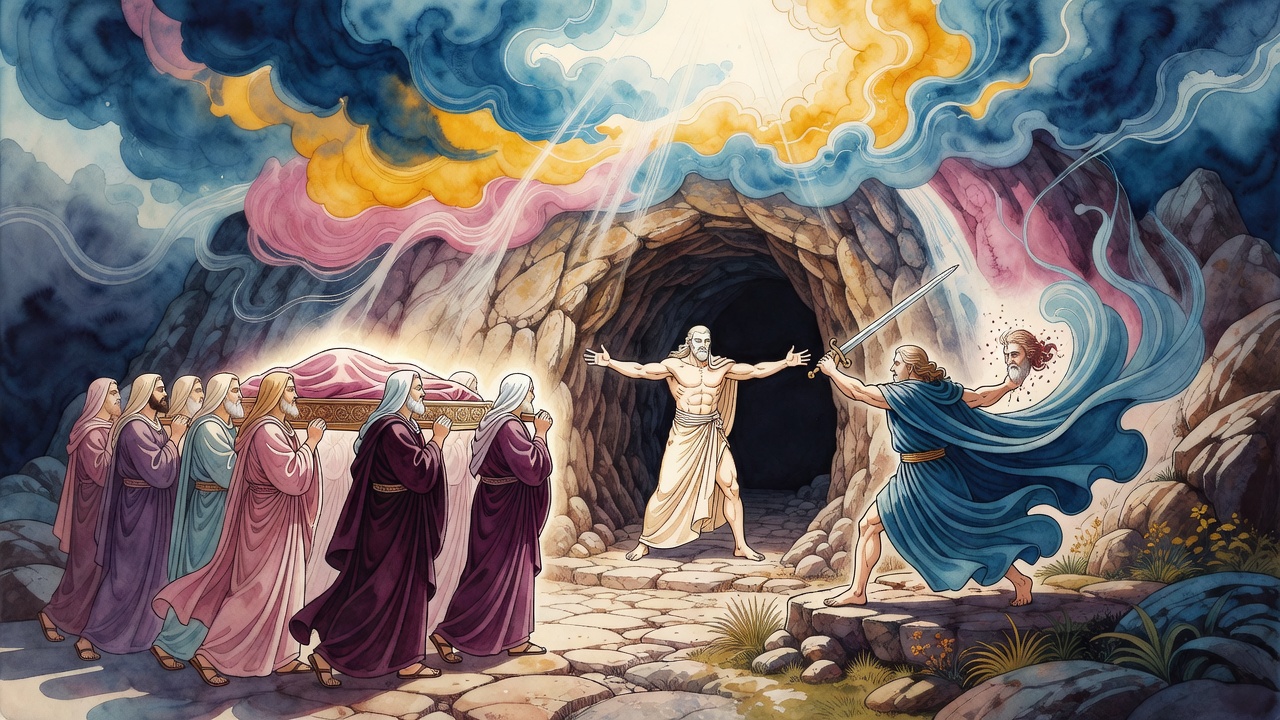
While strength still answered, Jacob fixed another order harder than the first. He would not be buried in Egypt. He would not even take "somewhere in the land" as answer. He wanted the cave of Machpelah in Hebron, beside Abraham, Sarah, Isaac, Rebecca, and Leah.
Those already laid in the soil of the land, the tradition holds, will rise first when the dead wake in the days of redemption. Those buried elsewhere must roll through tunnels cut in the earth until they reach holy ground, and only then stand. Jacob refused that commute for his bones. He wanted the head start of the patriarchs' bed, the same stone chamber where the first promise still slept.
He also wanted the old vow under his back. At Beth-el God had said, "The land whereon thou liest, to thee will I give it, and to thy seed" (Genesis 28:13). To lie in death in that land was to press the vow with his own weight. Burial was claim as much as rest. Egypt could feed the living. It would not keep the founder of the twelve.
Egyptian Dust on a Hebron Body
Even so, he told Joseph to scatter a little Egyptian earth over him after death. The land of sojourn would touch the corpse that refused to stay in it. Egypt had fed him in famine. Egypt had raised his lost son to power. The dust was not a second grave. It was a mark: this body knew two soils, and still chose only one for its long sleep.
Joseph heard both commands: Machpelah for the bones, a sprinkle of Nile country for the skin. The son who ruled a kingdom was ordered to serve as undertaker of a very exact kind. No court title would excuse a missed grain of sand or a wrong cave.
The Spirit and the Hands
When Joseph entered with the boys, Jacob was still upright. The holy spirit he had begged for did not leave the request unanswered. He crossed his hands over Ephraim and Manasseh and spoke the words that would outlive his breath. He wanted no one later to say the blessing was soft because the body was soft. He had sat up for Egypt's court and for heaven's seal in the same hour.
The boys felt the weight of a grandfather who would not die lying flat while destiny needed a witness. Joseph felt the father who still refused to treat a viceroy as only a child, and still refused to treat a child as only a viceroy. Between the two pressures, the old man held the middle of the bed like a throne.
The Cave That Closes the Bargain
After the last words, the body could fail. The orders could not. Joseph would carry Jacob out of Egypt the way a later age would carry Joseph's own bones toward home: a procession of loyalty against a foreign grave. Machpelah would take Jacob among the six who already held the cave. The tunnels of the far-buried would not be his path.
What changed for good was double and single. He sat up when dying so the blessing would stand. He chose the cave so the land would hold him when the dead rise. Between those two acts lay a man who would not let weakness write the last chapter of the house.
In the quiet after, the bed was empty of command and full of absence. Egypt still glittered outside the window. Hebron waited with stone and dust and the long patience of the promise under the ground. Jacob had greeted power on his feet, then claimed the only soil that would answer when graves open.
← All myths