Asenath Sent Joseph's Sons Before Jacob's Body Failed
Asenath washed Jacob's mouth and counted the pauses between words. She would not wait for a public deathbed. The boys had to reach him now.
Table of Contents
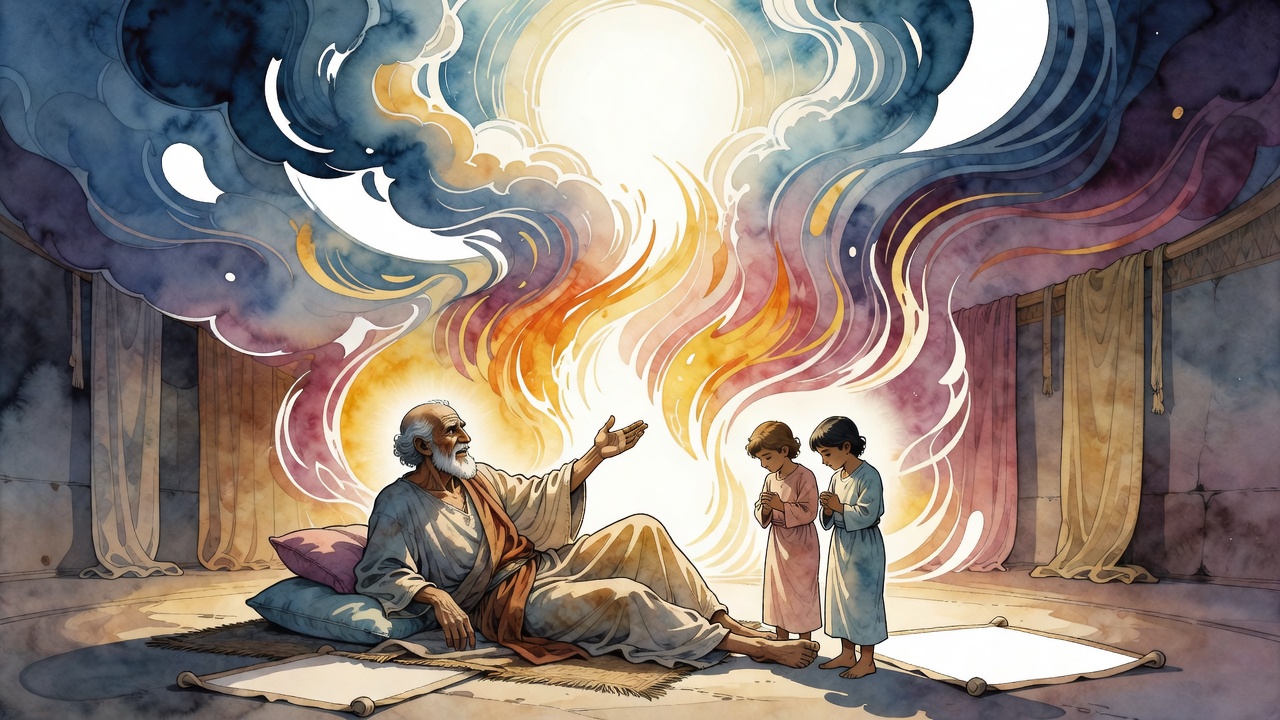
Jacob lay in Egypt with a body that had finally run out of victories. Years under Laban had bent his back. The night-long grip at the ford had wrenched his hip. The long dread before Esau had worn his nerves thin. Now illness pressed the last weight onto him, and the room smelled of linen and cooling broth.
 Click for full size
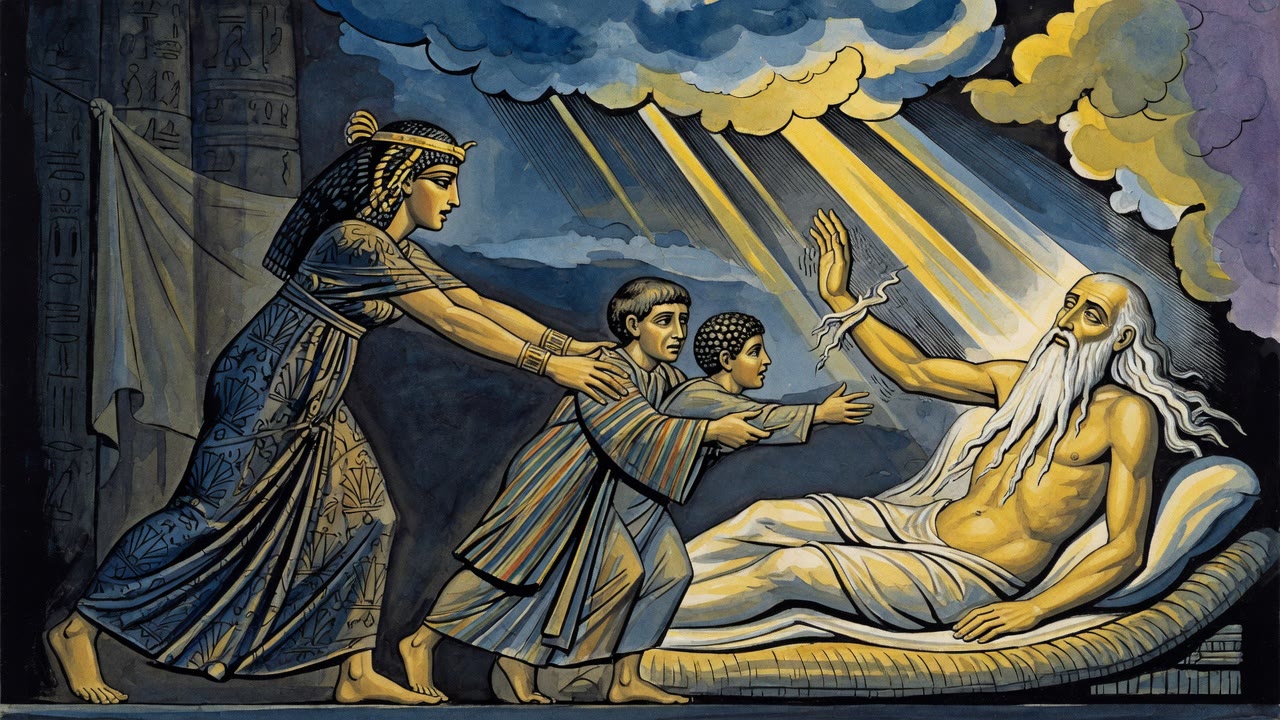
Asenath, wife of Joseph, stayed at the bed. She washed his mouth. She watched his breath shorten. She counted the pauses between one word and the next.
She Would Not Wait for a Public Deathbed
She found Joseph outside the sickroom and spoke without ceremony. She would not wait until the old man failed and the chance closed. "I have heard that one who is blessed by a righteous man is as though he had been blessed by the Shekinah," she said. The Shekinah (שכינה), the nearness of divine presence, was the measure she used. A patriarch's hand was not politeness. It was contact.
"Bring your sons," she told him. "Bring Ephraim and Manasseh now."
Joseph could have delayed. Court work never ended. Grain ledgers never emptied. Asenath blocked delay with the simple fact of Jacob's failing pulse. She had nursed the old man long enough to know the difference between a bad night and a last week.
Joseph brought the boys.
Two Grandsons at a Narrow Bed
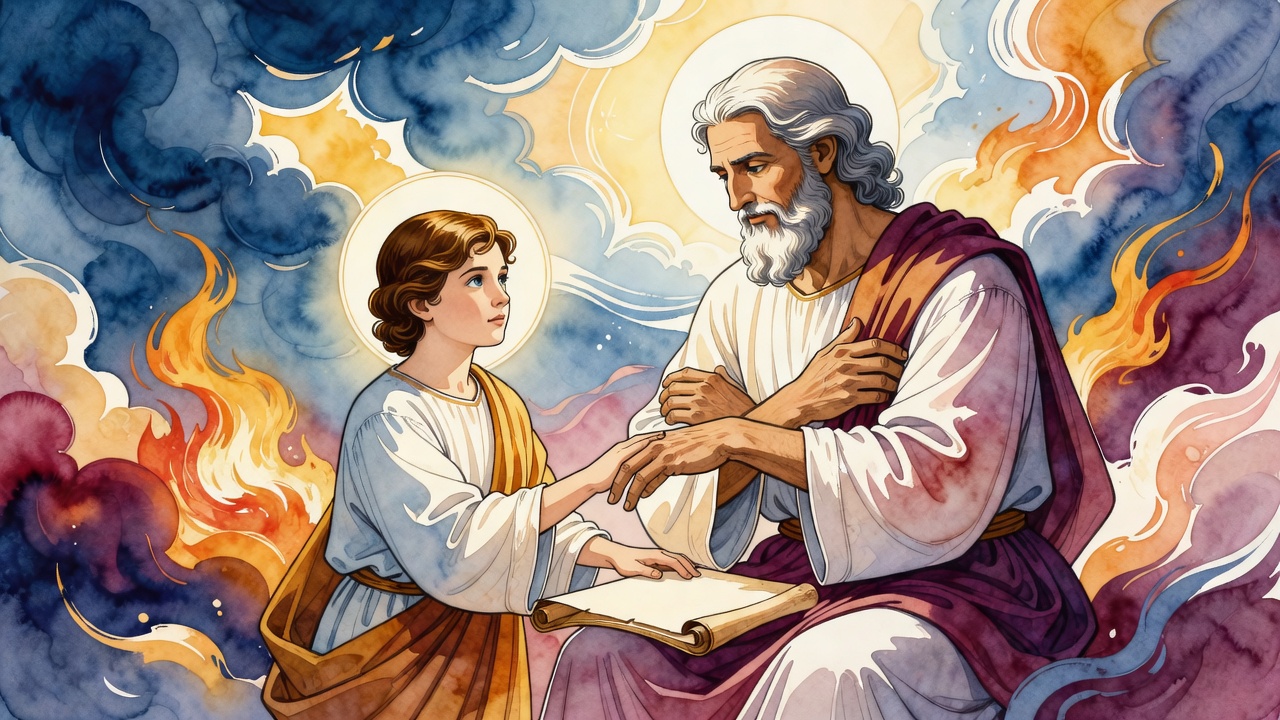
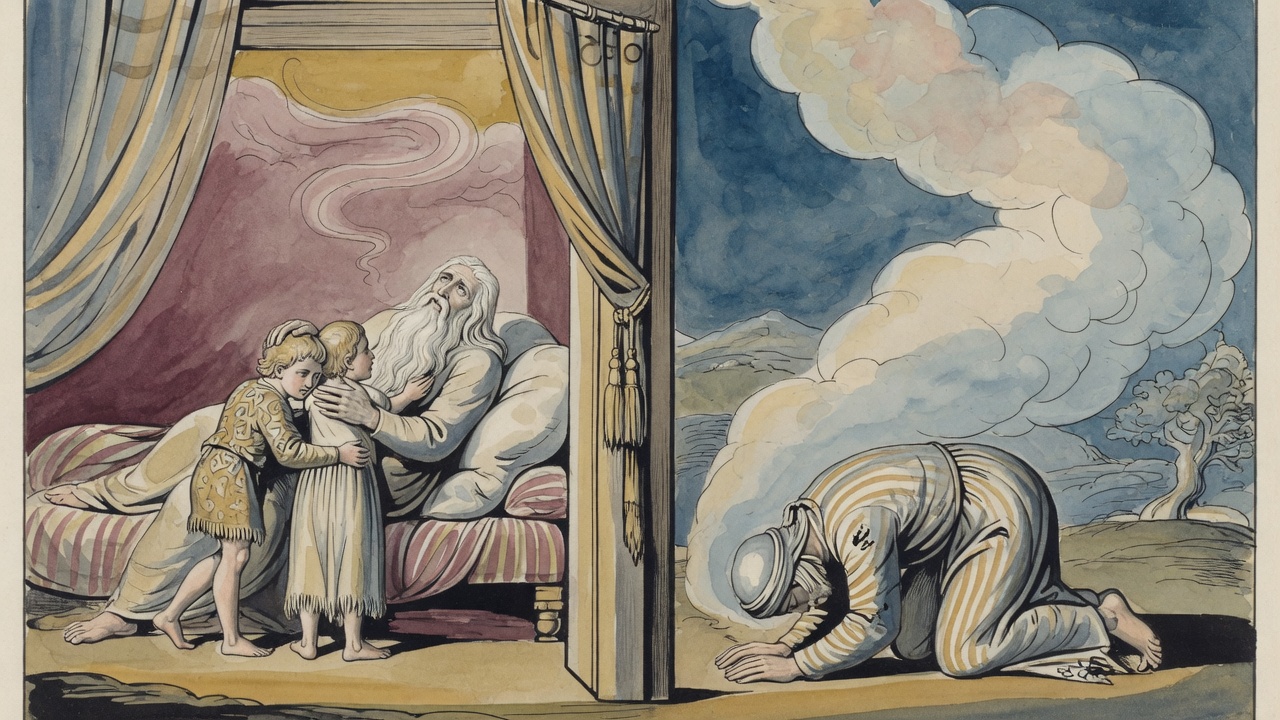
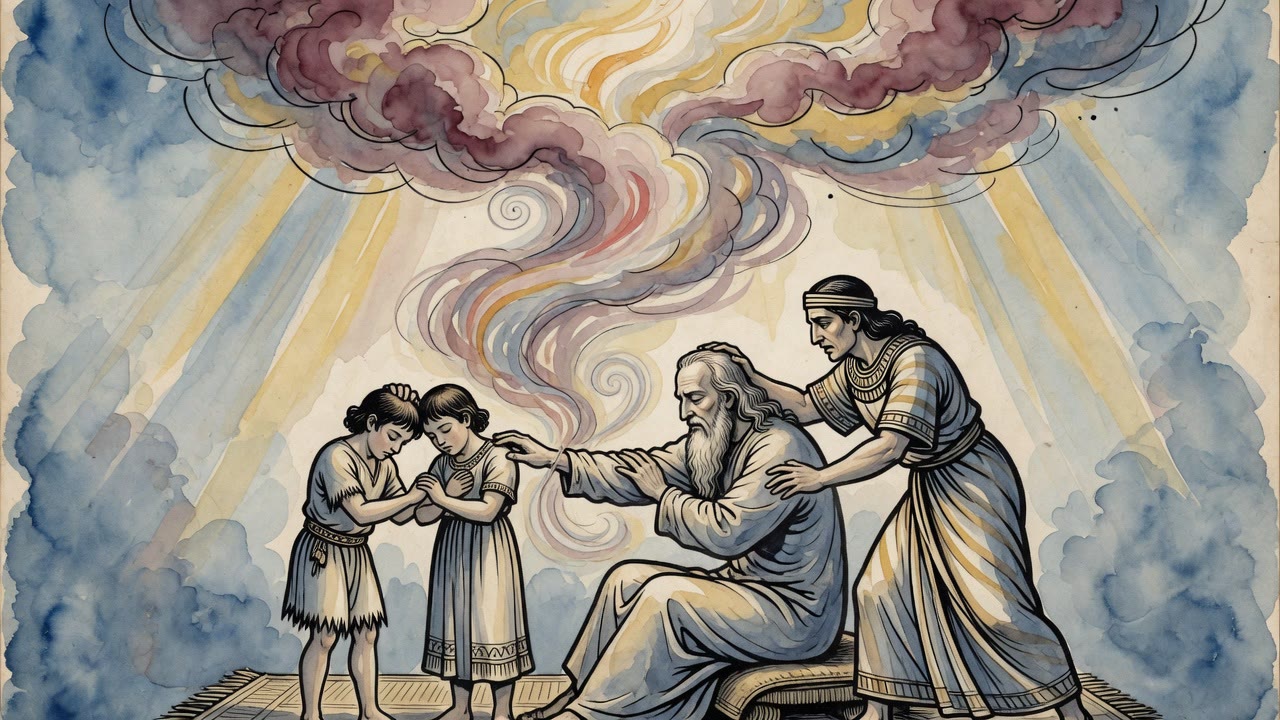
The chamber was small for so much history. Ephraim and Manasseh stood close enough to smell the oil on Jacob's skin. Jacob's eyes opened. He gathered strength the way a man gathers a cloak in wind. His hands found their heads.
He did not toss them a short wish. He built a road and put their feet on it. "O that it be the will of God that ye walk in the ways of the Lord like unto my fathers Abraham and Isaac." The blessing named a walk, not a prize. It demanded the gait of the grandfathers, the stubborn straight line through famine, altar, and exile.
The boys did not answer. Jacob's voice carried enough for the room.
The Angel Named in the Blessing
Then Jacob called on a protector he still felt in his bones. "The angel that hath redeemed me from all evil," he said, and put that angel over the boys as a guard for the road ahead. He was not speaking of a decorative messenger. He was speaking of the force that had dragged him out of Laban's grasp, out of Esau's path, out of nights when the camp could have been wiped clean.
Some later tellers hear Michael in that line. Jacob himself spoke as a man naming a rescuer he had met in the dark. He wanted that same rescue folded over Ephraim and Manasseh, and over the leaders who would one day need it when the people staggered. Names of future deliverers brushed the blessing. The room held more than two children.
"Your names be named on Israel," Jacob went on. He wanted them spoken inside the nation's memory, not lost as Egyptian court orphans with Hebrew blood. Belonging was part of the gift. Without a name on Israel, even a rich blessing could thin into private luck.
Fish Under Water, Boys Under Merit
Last, he gave them increase and a shield. He blessed them to grow into a multitude in the midst of the earth, and he set a picture over them. As fishes are protected by the water, so may you be protected by the merits of Joseph.
Joseph stood there listening while his own righteousness was turned into water around his sons. The man who had fed Egypt became, in his father's mouth, an element. The boys would multiply inside that element. The famine that once broke the brothers would not be the last word over these two.
Jacob's hands stayed a moment longer, then fell. The act was finished. Asenath had forced the timing. Joseph had obeyed the urgency. The boys left the room carrying a walk, an angel, a name, and a sea of protection. Outside, Egypt still ran on grain and power. Inside Jacob's failing body, the next generation had been sealed before the breath stopped.
Asenath returned to the nursing. She had gotten what she came for while blessing still lived in the old man's mouth.
Later that night she checked Jacob's pulse again and found it thinner. She did not wake the boys for a second round. One true blessing spoken under pressure outweighed a stack of soft ones spoken too late. She wiped Jacob's brow and thought of the walk she had asked for them: Abraham's road, Isaac's road, not the easy marble of Egypt's court.
Joseph lingered in the doorway after the children left. He had heard his own name turned into water around his sons. Merit was not a statue in that room. It was cover. He closed the door softly so the old man's breath could labor without an audience, and he carried the sound of the blessing back into a house still full of Egyptian titles and Hebrew fear.
← All myths