Parshat Vayechi5 min read

Jacob Refused to Move His Hand and Told Joseph He Knew Everything

For seventeen years Joseph kept runners on the road so that he would never be alone in a room with his father. His father knew the whole time.

Curated by Arthur · Told by Maggid ·
Table of Contents
  1. The Runners Between the Palace and Goshen
  2. He Set the Boys Where the Hands Should Fall
  3. The Hand That Beat the Angel
  4. I Know What Your Brothers Did to You
  5. Ten Years for a Word He Let Pass
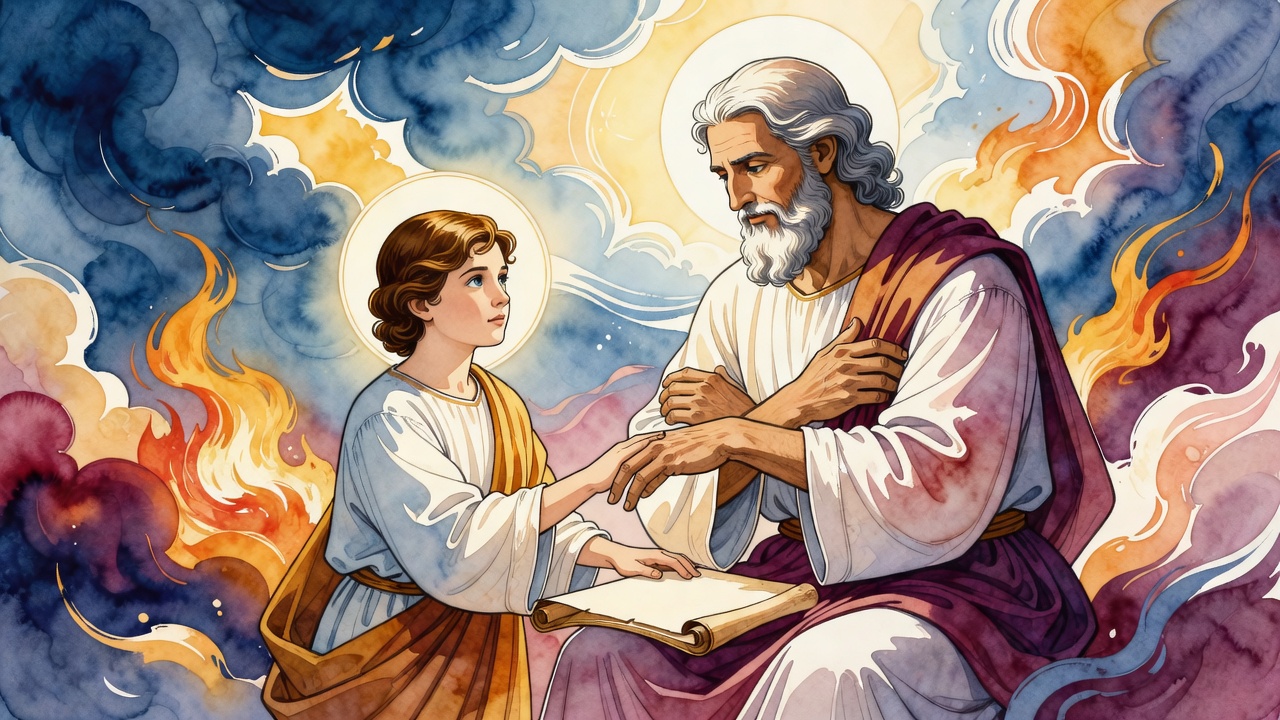
Jacob Refused to Move His Hand and Told Joseph He Knew Everything Click for full size

The Runners Between the Palace and Goshen

Joseph loved his father and arranged his life so that he almost never saw him.

The arithmetic behind it was simple and it kept him awake. If Jacob ever had him alone he would ask the question he had been circling for twenty-two years, which was how his favorite son had ended up in Egypt. Joseph would not lie to him. And if the old man learned what his other sons had done at the pit, he might open his mouth and curse them, and a curse out of that mouth would land.

So Joseph never allowed the room to empty. There was always a steward, always a scribe, always somebody with a reason to be standing there.

And because he still needed to know how his father was, he put men on the road. Runners between the palace and Goshen, going down with news and coming back with news, the whole span of Jacob's last seventeen years managed by courier so that the two of them would not have to sit alone together and let the silence do its work.

He Set the Boys Where the Hands Should Fall

Word came that his father was failing, and Joseph took his sons and went.

He already knew what he was walking into. Jacob had said it out loud months before, in that flat voice old men use for decisions that are already made. Ephraim and Manasseh, even as Reuben and Simeon, shall be mine. Adoption, full standing, two tribes out of one son. And Joseph, who could hear a room, had heard which name his father had put first.

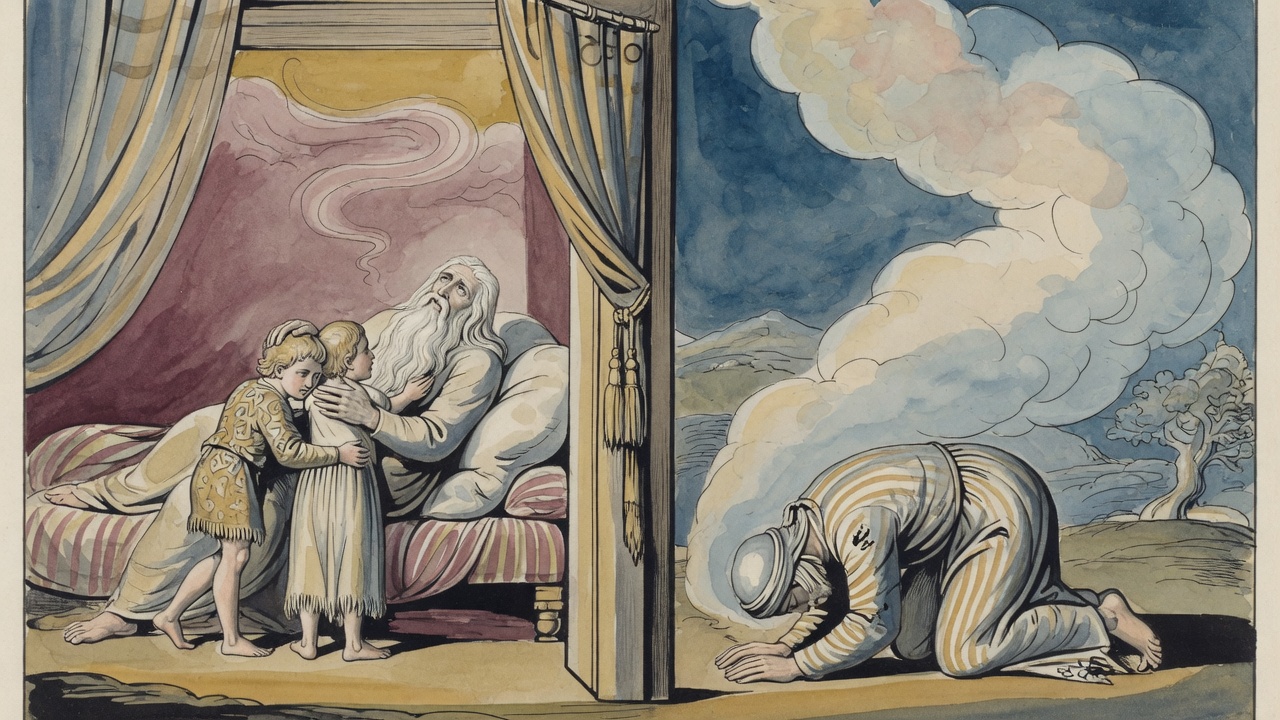
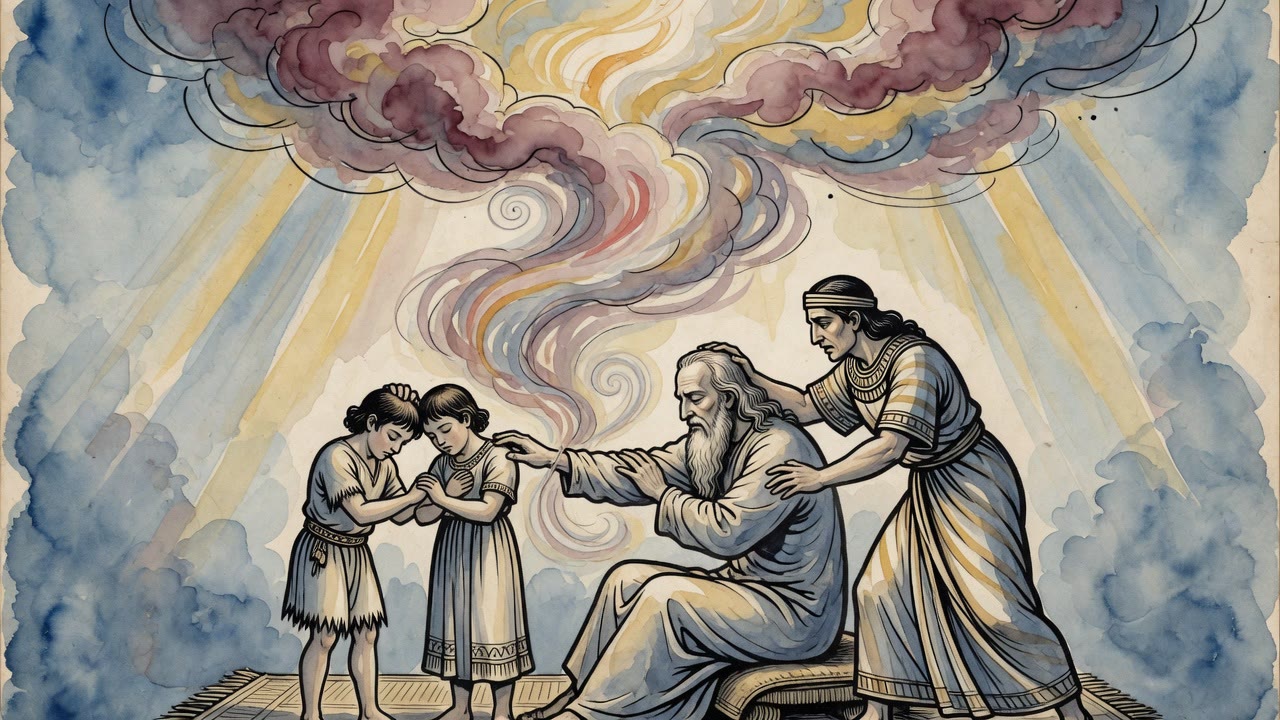
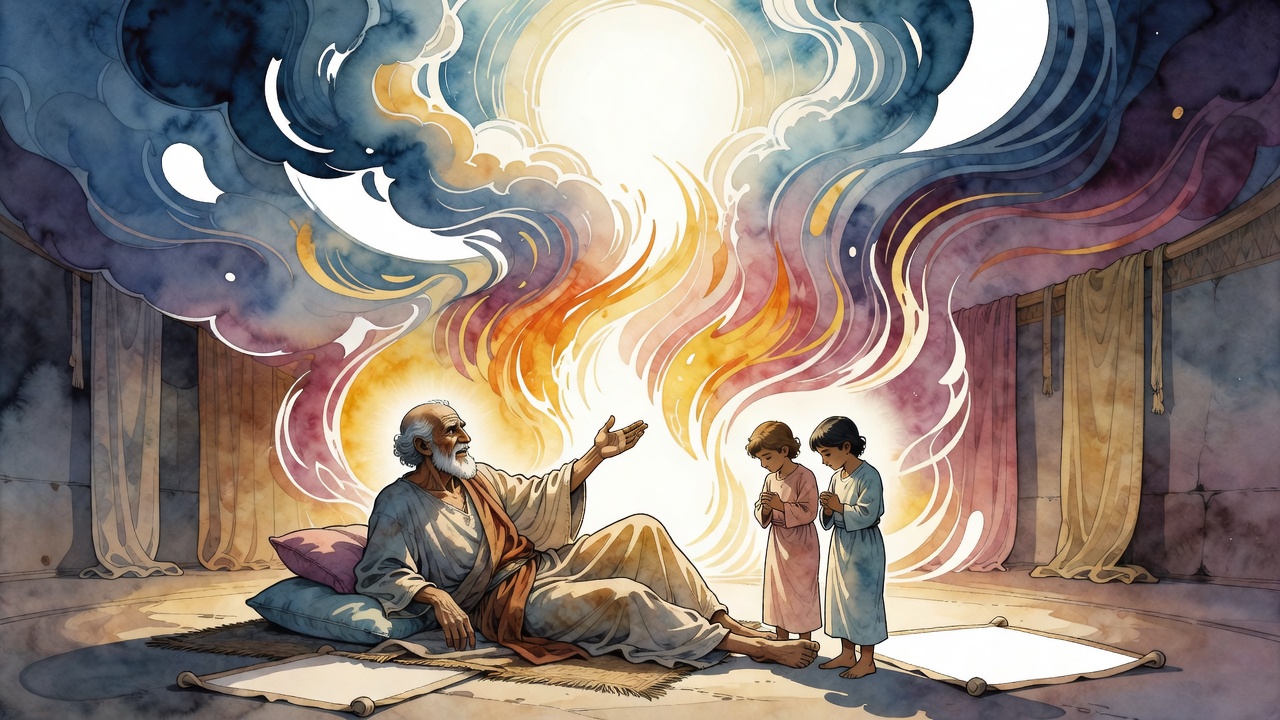
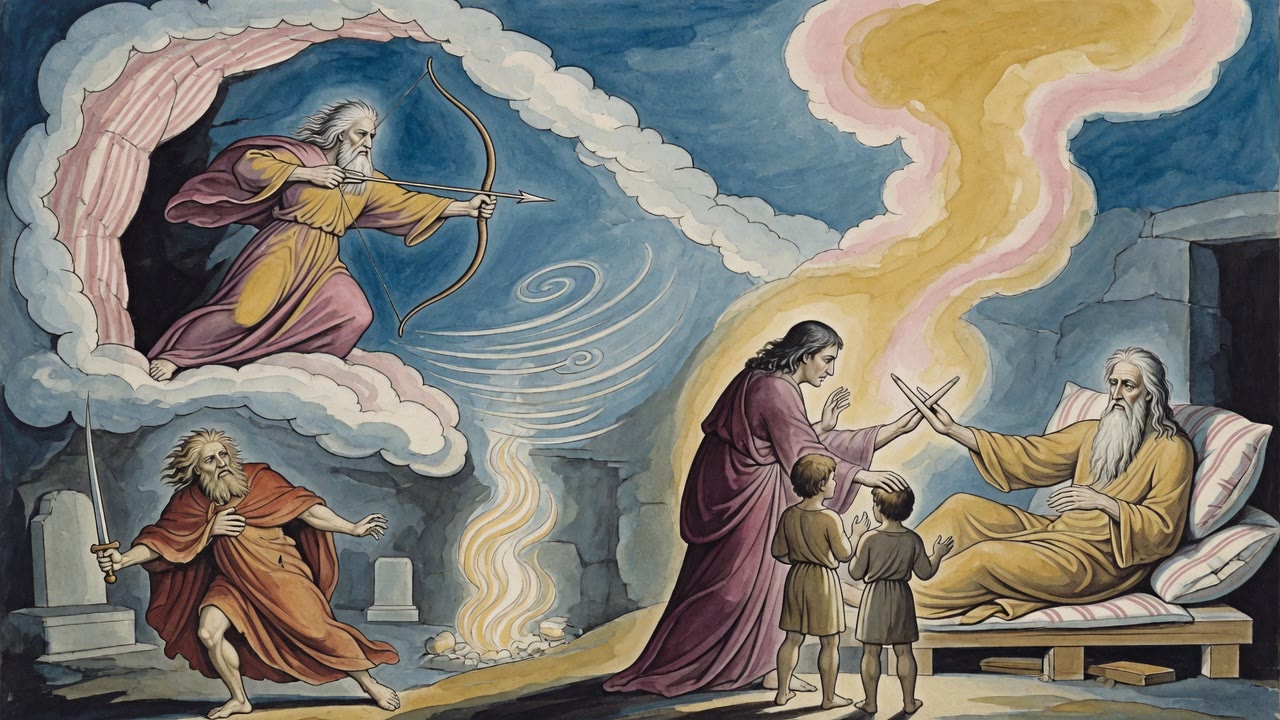
Manasseh was the elder. Joseph brought the boys up to the bed and set them carefully, Manasseh at the level of his father's right hand, Ephraim at the level of his left, because the eyes in that bed were nearly gone and the arrangement of the room would have to do the arguing.

Jacob crossed his arms.

The right hand came down on Ephraim's head, the left on Manasseh's, and the whole careful staging collapsed in one movement from a man who could barely sit up.

The Hand That Beat the Angel

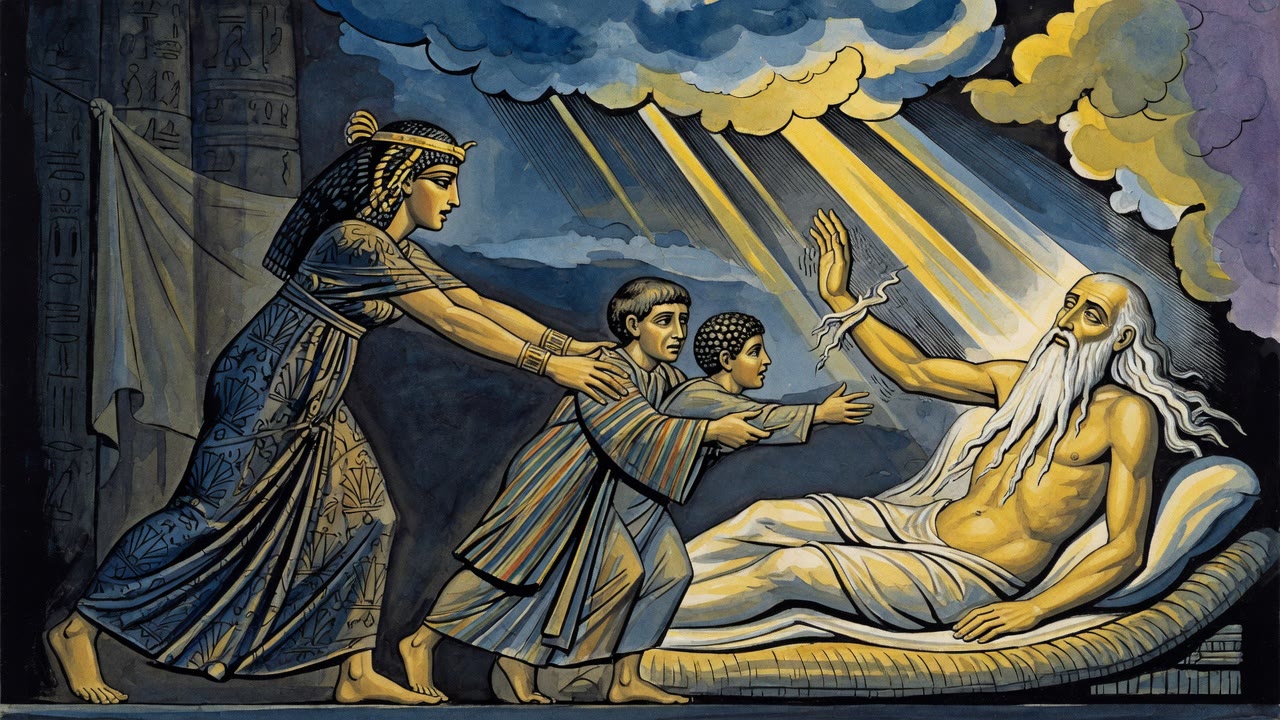
Joseph reached over to lift the hand off and move it where it belonged.

"What, thou wouldst displace my hand against my will, the hand that overcame the prince of the angel hosts, who is as large as one third of the world!"

The room went quiet. That hand had gripped something at the Jabbok that filled a third of the earth, and had not let go until it got what it came for, and the arm it belonged to had been useless for walking ever since. It was not going to be repositioned by a viceroy.

I Know What Your Brothers Did to You

Then Jacob kept going, and this was the part Joseph had spent seventeen years preventing.

"I know things not known to thee. I know what Reuben did to Bilhah, and what Judah did to Tamar."

Two secrets, neither of them ever discussed, both of them named flat out to the son who was not present for either.

"How much more do I know things known to thee! Thinkest thou I know not what thy brethren did to thee, because thou wouldst betray nothing whenever I asked thee?"

Every runner on that road, every crowded room, every polite exit, seventeen years of it, and the old man had known the whole time and had let his son manage him out of kindness.

Jacob was not finished. He had things to say about the two heads under his hands. Manasseh would be great, and Gideon would come out of him. The younger one, the one under the right hand, would be the ancestor of Joshua, who would order the sun and the moon to stand still and be obeyed by both of them, though they run the whole earth from one end to the other. What had earned Ephraim the right hand was nothing anybody in the room could see. He was the modest one.

It held. In the lists of the generations Manasseh comes after Ephraim. In the division of the land, in the order of the camps and the standards, at the dedication of the Tabernacle, the younger goes first, every time, for good.

Ten Years for a Word He Let Pass

Joseph died before any of his brothers, younger at his death than the youngest of them was at his.

The reason given is small enough to miss. His brothers, in front of him, in the years when he was the second man in Egypt and they were nervous around him, referred to their father as his servant. Thy servant, our father. And Joseph, who heard everything in every room, let it go by without a word.

Ten years came off his life for that silence. Dominion buries the man who exercises it.

He had run couriers up and down a road for seventeen years to control what his father would hear, and what cost him was one sentence, spoken in his hearing, that he did not bother to correct.


← All myths
From the tradition

Sources

3 sources

The texts behind this telling. Some cards carry a translation of the source; others are our own retelling of it, and each card says which. Every card links out to the original.

Legends of the Jews 1:382Legends of the Jews

Retold in our words. Read the original at the link below.The Legends of the Jews by Louis Ginzberg (1909) · Public Domain

The eldest is often remembered as holding a special place, but Jewish tradition sometimes flips that script in fascinating ways. the story turns to the tale of Ephraim and Manasseh, the sons of Joseph, and how their grandfather Jacob changed their destinies.

The story goes that Jacob, nearing the end of his life, declared, "Ephraim and Manasseh, even as Reuben and Simon, shall be mine." Joseph, noticing his father's apparent preference for the younger Ephraim, became anxious about the birthright of his older son, Manasseh. So, he carefully positioned his sons before Jacob, intending for Manasseh to be in the place of honor, opposite Jacob's right hand, and Ephraim opposite his left.

Fate, or perhaps something more divine, had other plans.

Ephraim, because of his modesty, was destined for greater things than his older brother. And, as the story is told, God inspired Jacob, moved by the ruach (spirit) hakodesh, the holy spirit, to bestow the birthright upon Ephraim. When Joseph saw his father placing his right hand on Ephraim's head, he tried to correct what he perceived as a mistake, attempting to move Jacob's hand to Manasseh's head.

But Jacob refused. "What," he said, "thou wouldst displace my hand against my will, the hand that overcame the prince of the angel hosts, who is as large as one-third of the world! Jacob, in this moment, isn't just an old man. He's a figure of immense spiritual strength.

He then tells Joseph, "I know things not known to thee, I know what Reuben did to Bilhah, and what Judah did to Tamar. How much more do I know things known to thee! Thinkest thou I know not what thy brethren did to thee, because thou wouldst betray nothing whenever I asked thee?" According to Ginzberg's retelling in Legends of the Jews, Jacob possessed profound insight, knowing things both hidden and revealed.

Jacob continues, "I know it, Manasseh also shall become great, the judge Gideon shall descend from him, but his younger brother will be the ancestor of Joshua, who will bring the sun and the moon to a standstill, though they have dominion over the whole earth from end to end."

And so, Jacob set Ephraim, the younger, above Manasseh, the older, and according to tradition, that decision resonated throughout history. In genealogical lists, Manasseh follows Ephraim. In the allocation of land in the Holy Land, Ephraim took precedence. Even in the arrangement of the camps and standards of the tribes, and in the dedication of the Tabernacle, Ephraim was always mentioned first. We see this mirrored throughout the Torah.

What does this story tell us? Perhaps it's about more than just birth order. Maybe it's about the qualities that elevate us, the potential for greatness that exists in everyone, regardless of age or position. Maybe it is about destiny and faith. Maybe it's about the idea that sometimes, the seemingly less significant among us are destined for extraordinary things.

Full source
Legends of the Jews 1:466Legends of the Jews

Retold in our words. Read the original at the link below.The Legends of the Jews by Louis Ginzberg (1909) · Public Domain

Joseph, the dreamer, the interpreter of dreams, the viceroy of Egypt… he died younger than he should have. The Sefer ha-Yashar attributes his early demise to a seemingly minor infraction. his brothers, still carrying the weight of their past betrayal, referred to their father, Jacob, as Joseph's "servant" in his presence. Joseph, puffed up with his own importance perhaps, didn't object. "Dominion buries him that exercises it," it is said. And for this, according to some accounts, he lost ten years of his life. A chilling reminder that even those in power are accountable.

What of Asenath, Joseph's wife? Where did she come from? The Bible itself is rather quiet on her origins, simply stating she was the daughter of Potiphera, a priest of On (Genesis 41:45). But legend fills in the gaps, painting a vivid portrait.

The Rabbis teach, "God gives every man the wife he deserves." And according to Legends of the Jews by Louis Ginzberg, Asenath was certainly worthy of Joseph. Her father, Potiphar – not the Potiphar who initially imprisoned Joseph, but rather another Egyptian noble – was a man of great wisdom, wealth, and standing. Asenath herself? She was said to be as slender as Sarah, as beautiful as Rebekah, and as radiant as Rachel. Quite the lineage!

When she turned eighteen, princes and noblemen flocked to seek her hand. Even Pharaoh's own son wanted to marry her! But Pharaoh refused, deeming her unsuitable for a future king. He suggested the daughter of the Moabite king instead. But Asenath… she wasn’t interested in any of them. She rejected every proposal, preferring a life of seclusion. With seven maidens born on the very same day as her, she lived in a magnificent palace next to her parents', sheltered from the world.

Imagine that: a woman of unparalleled beauty and privilege, choosing solitude over power and prestige. Perhaps she was destined for something greater, a role that only Joseph, with his own unique destiny, could unlock. The story of Asenath reminds us that sometimes, the most significant destinies are found not in the clamor of the court, but in the quiet of a waiting heart.

Full source
Legends of the Jews 1:370Legends of the Jews

Retold in our words. Read the original at the link below.The Legends of the Jews by Louis Ginzberg (1909) · Public Domain

Legends of the Jews turns to Joseph's Legacy of Jacob.

You’d think after all those years of separation and suffering, their reunion would be a time of unadulterated joy. And it was, in many ways. But a shadow lingered.

Joseph, now a powerful viceroy, harbored a deep-seated fear: that his father would uncover the truth about how he ended up in Egypt in the first place, the betrayal by his brothers. from Jacob’s perspective. He believed his beloved Joseph was dead, devoured by a wild animal. To learn that his own sons, driven by jealousy, had orchestrated Joseph's disappearance… well, Joseph feared the revelation would be too much.

He worried that in his grief and anger, Jacob might pronounce a curse upon the brothers. And as we know from the power of words in our tradition, especially from the mouths of the righteous, such a curse could have devastating consequences.

So, Joseph, ever the strategist, devised a plan. According to Ginzberg's retelling in Legends of the Jews, he made sure he wasn’t constantly at his father's side. Not because he didn't love him, but because he loved him so much that he was willing to sacrifice their constant companionship to protect his brothers from potential paternal wrath.

It's a fascinating, and perhaps unsettling, look at family dynamics. Joseph avoided being alone with Jacob, carefully managing their interactions. He didn't want to give his father an opening to ask probing questions.

But how could he stay connected? How could he ensure his father was well cared for without raising suspicion? He established a courier service, a kind of ancient postal system, to maintain contact and receive updates on Jacob’s health and well-being. It was a clever solution, allowing him to stay informed without risking a potentially catastrophic confrontation.

This little detail, often overlooked in the grand narrative of Joseph in Egypt, speaks volumes. It reveals the complexities of family relationships, the burden of secrets, and the lengths we go to protect those we love, even when they may have wronged us. It also highlights the power that ancient near eastern cultures attributed to curses and blessings.

So, what do we take away from this? Perhaps a reminder that even in moments of great joy and reconciliation, old wounds can linger. And that sometimes, the most loving act is not necessarily the most obvious one. Sometimes, love requires a little… distance.

Full source