Jacob Could Not Bless His Grandsons Until Joseph Prayed Outside the Door
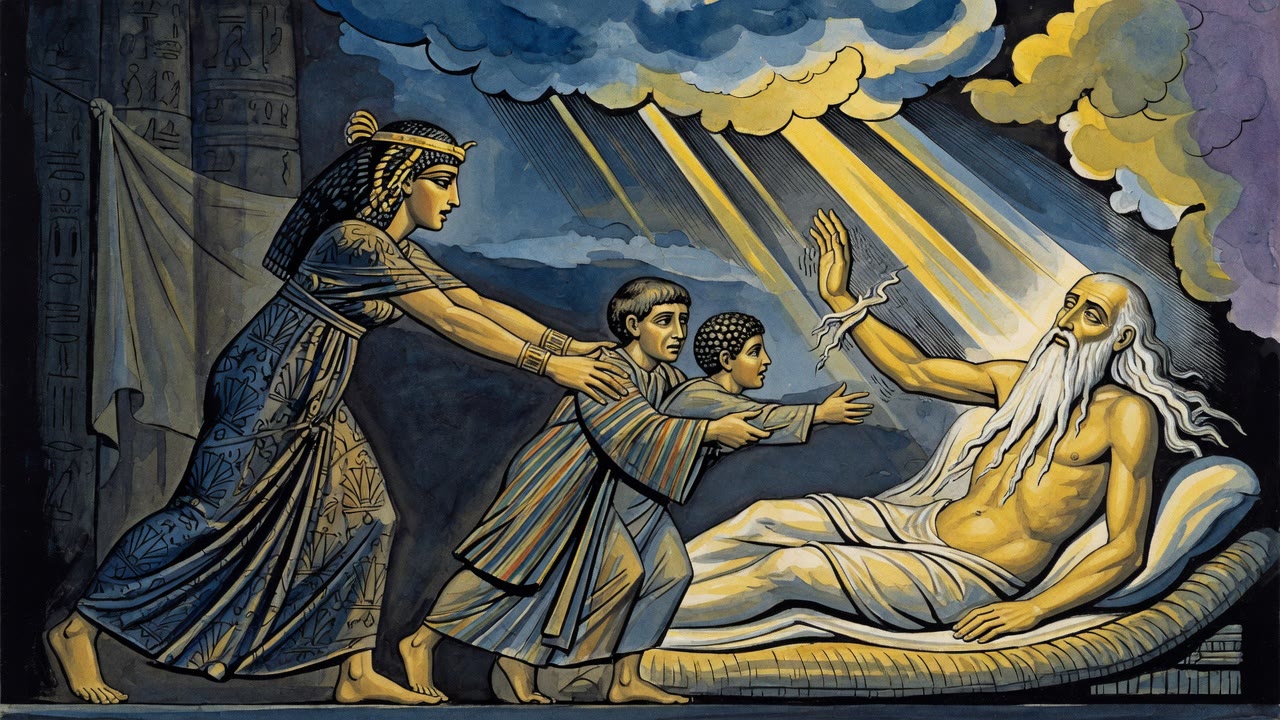
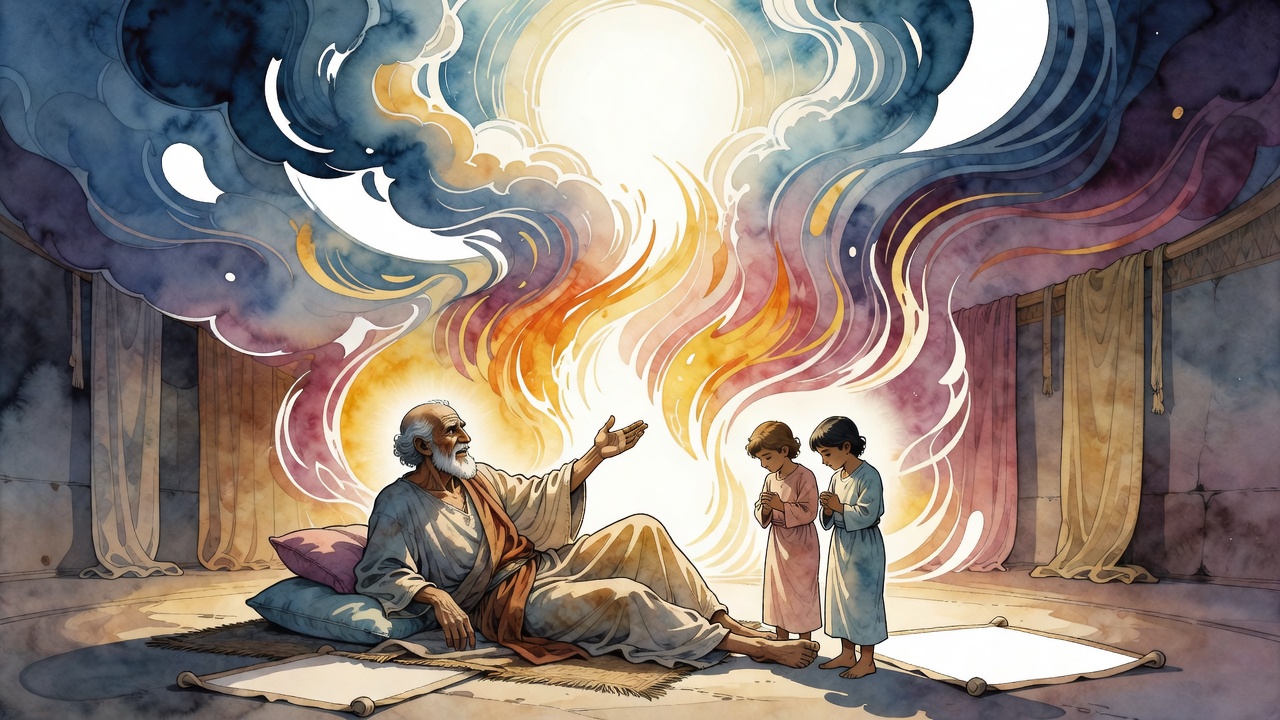
Jacob held both boys against him and waited for the spirit that had never once failed him. Nothing came. Joseph took his sons out of the room.
Table of Contents
 Click for full size
The Promise Jacob Wanted Made Twice
Jacob had seventeen years in Egypt and knew he was at the end of them, and the first thing he did about it was send for Joseph and make him swear.
"If I have found favor with you, do not bury me in Egypt. I only came down here for your sake. I only said I could die now because of you. Do this for me as a real kindness, not because you are frightened of me and not because it would look bad if you refused. Carry me out of the land of idols. Put me where the Name has been made to rest. There are four husbands and four wives to lie in that place, and I am the last of them."
He was counting himself into a burial plot the way a man counts himself into a family. Joseph gave his word.
The Room That Would Not Fill
Then Jacob asked for the boys.
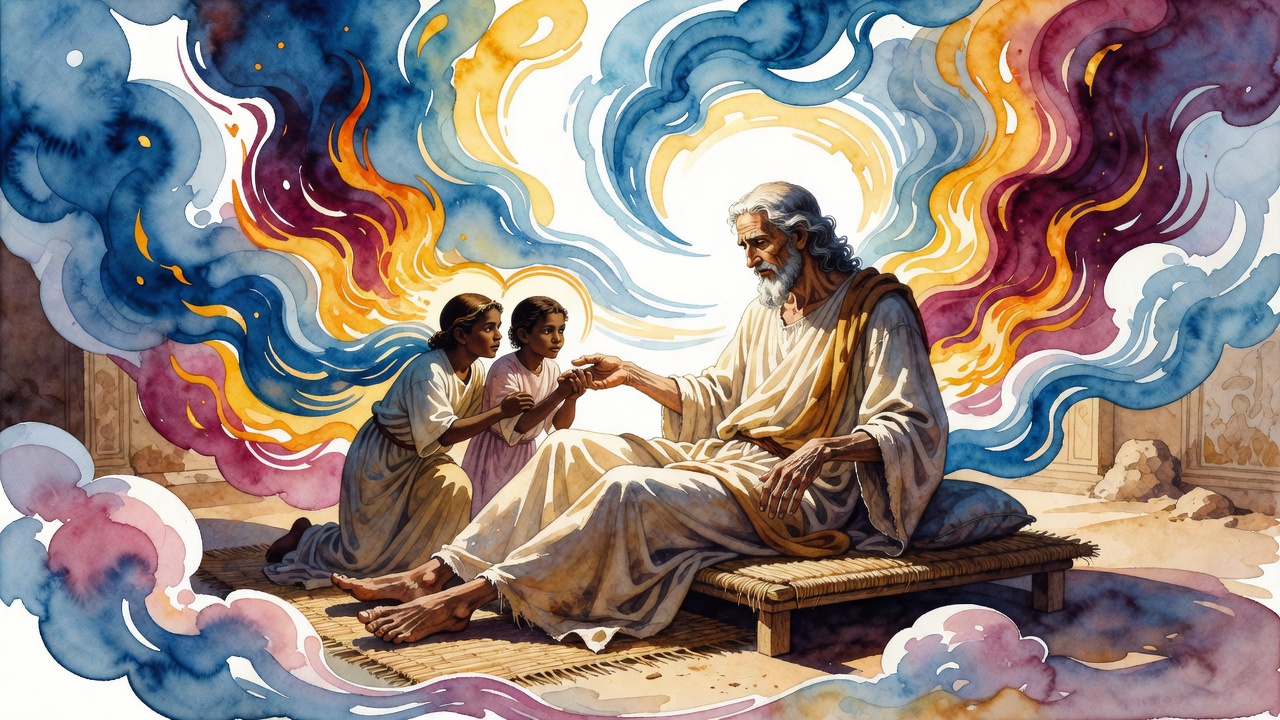
Ephraim and Manasseh were brought to the bed and their grandfather pulled them in against him and kissed them and held on. He was doing it on purpose. He had blessed with prophecy before and knew what it required, and he thought that if he could get enough gladness into himself the spirit would come back down and settle on him the way it always had.
It did not come. He held two grandsons and waited, and the room stayed as it was. This was the man who had watched the ladder standing on the ground with its top in the sky, who had held onto something at the ford all night and would not let go until it blessed him, and now the presence he had wrestled would not come into an ordinary room in Egypt to bless two children.
What Joseph Did Instead of Asking
Joseph was standing there watching it happen and did not ask his father what was wrong.
He worked out that the hour was not right and that the thing to do was leave and come back when it was. Before he went he settled one question, since it was the obvious one to ask about two boys raised in a foreign court: he proved to his father that both of them had been brought into the covenant of Abraham, that the mark was on them, that they were not Egyptian children being smuggled into a Hebrew blessing.
Then he took them out and shut the door behind him.
The Ground Outside the Chamber
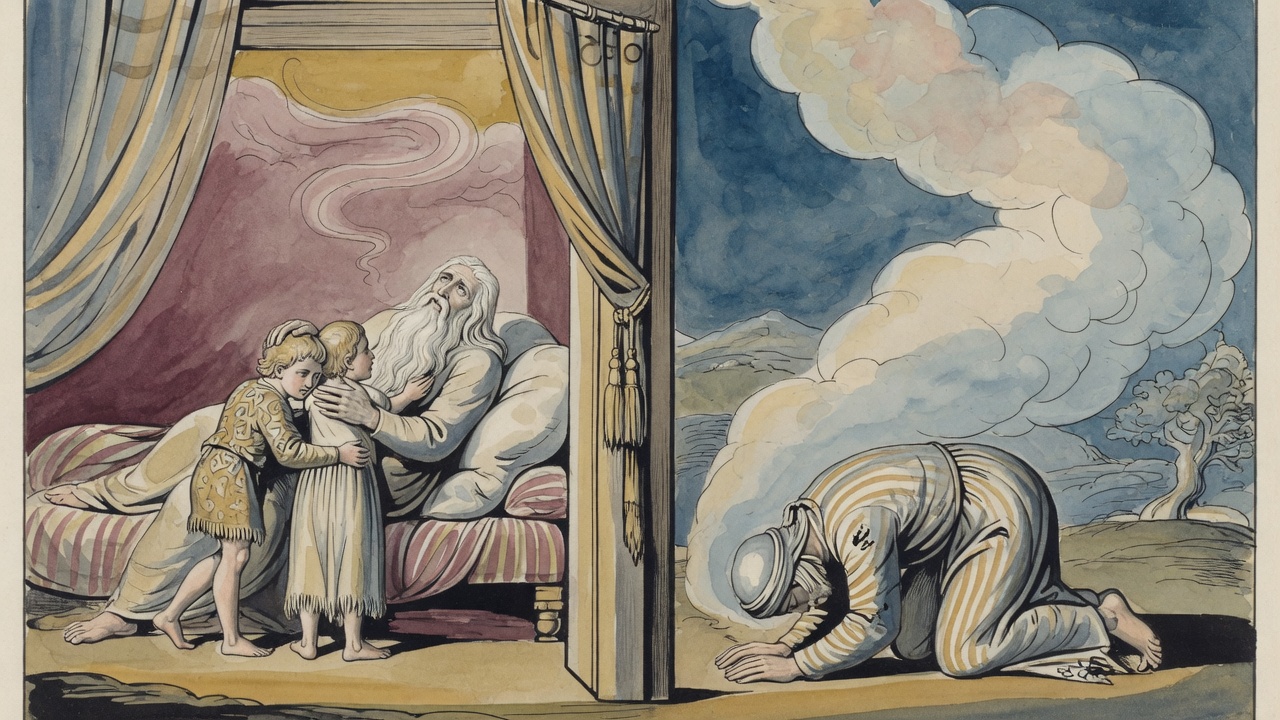
In the corridor Joseph bowed all the way down to the floor and put his face on it and begged God for mercy, and told his sons to do the same. They were the sons of the man who ran Egypt. Neither of them had ever knelt on a floor for anything.
"Do not be satisfied with the position you have," he told them. "The honors of this world are lent out for a while and then taken back. Ask God to have mercy. Ask that the Shekinah (שכינה), the settled presence of God, come down on my father, so that he can bless the two of you."
So the viceroy of Egypt and his two sons lay on the floor of a corridor and asked for something that could not be bought, requisitioned or ordered, while an old man waited on the other side of a door.
How Long Will Joseph Suffer
God spoke to the holy spirit. "How long is Joseph going to suffer out there? Show yourself. Go into Jacob, so that he can give the blessings."
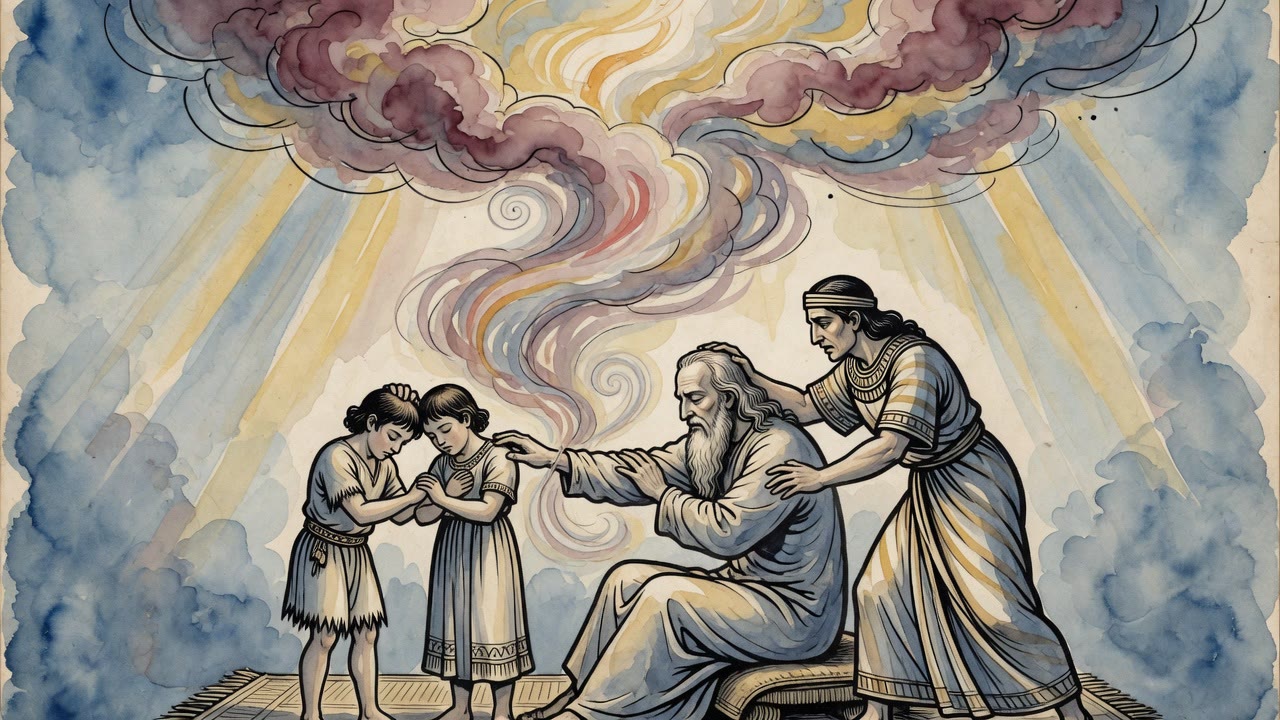
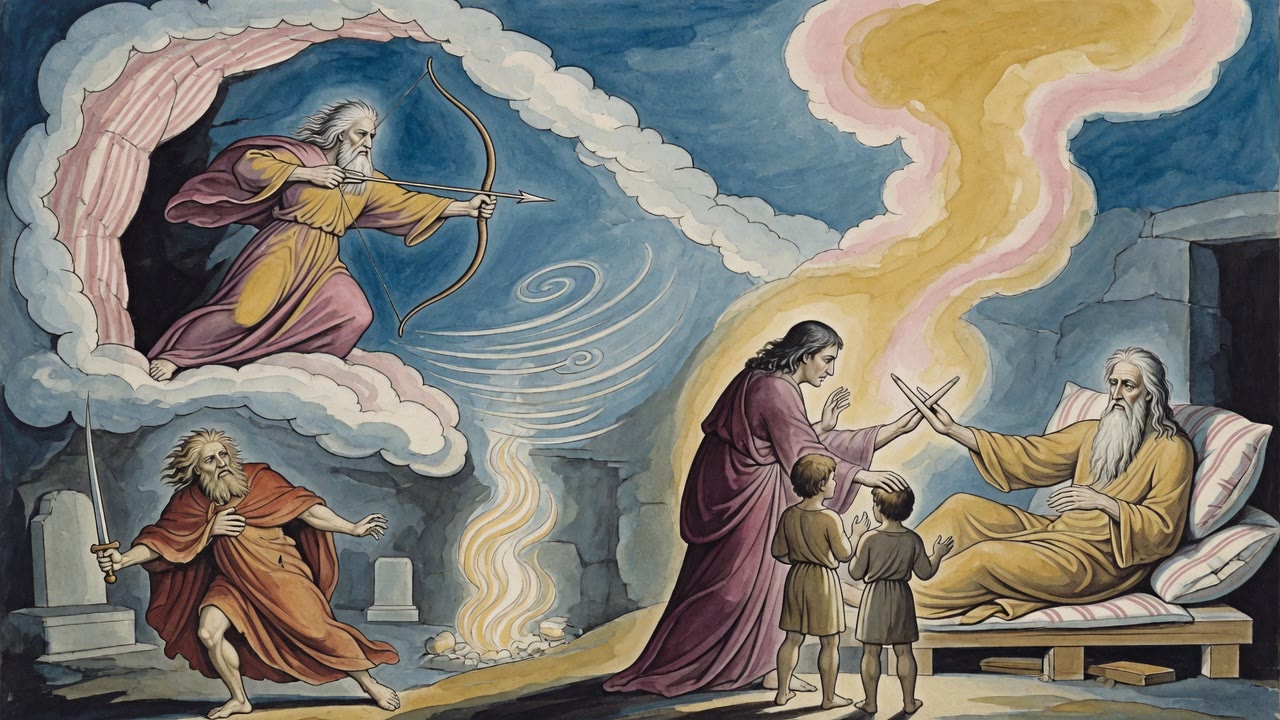
Joseph brought the boys back in. Jacob's hands came up and found their heads, and he crossed his arms as he did it, so that the right hand landed on the younger one, and Joseph reached to correct him and was told to leave it. Then the old man said the words that Jewish parents have been putting on their sons' heads on Friday nights ever since. May God make you like Ephraim and like Manasseh.
The two boys stood at the bedside with the dust of the corridor still on their knees.
← All myths