Parshat Vayechi5 min read

Joseph Blackmailed Pharaoh With a Hebrew Oath

Jacob lay dead and Joseph needed Canaan for the burial. Pharaoh stalled until Joseph reminded him of the throne-secret oath sworn in seventy languages.

Curated by Arthur · Told by Maggid ·
Table of Contents
  1. Seventy Languages and One Missing Tongue
  2. Terror on a Throne of Linen
  3. The Greeting That Emptied the Roofs
  4. The Distance He Kept From Living Questions

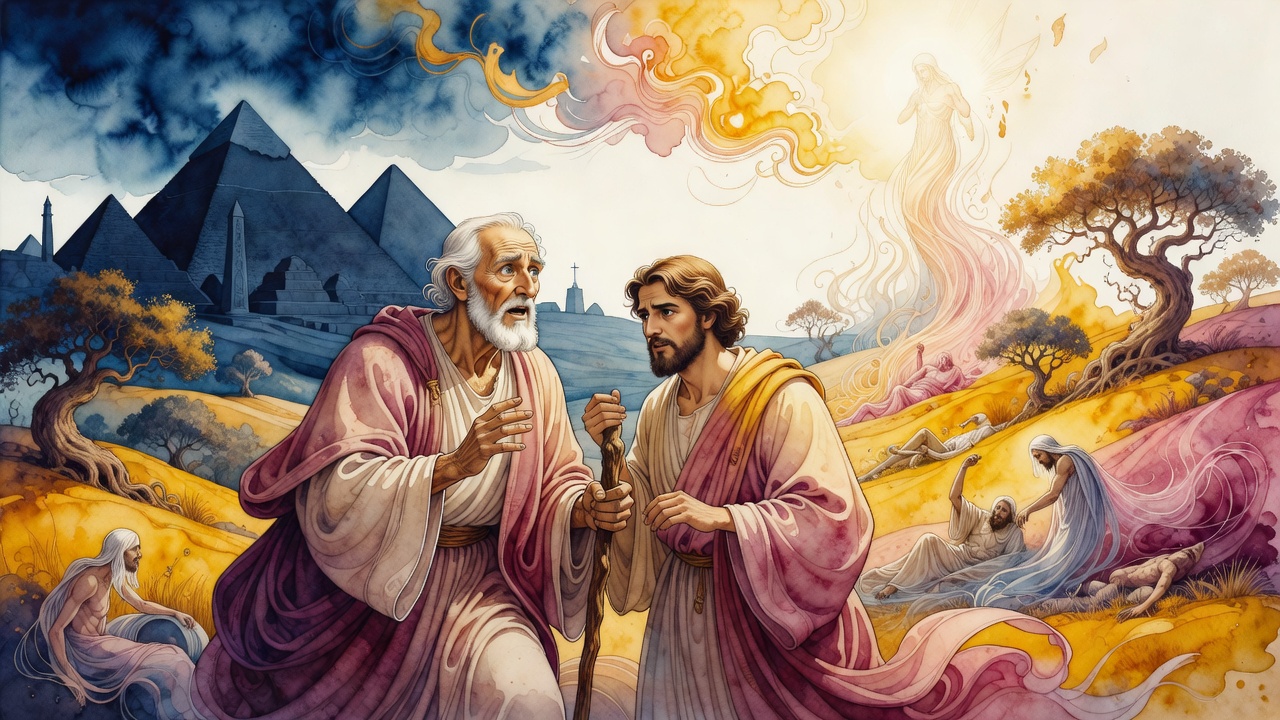
Jacob was dead, and the oath was still warm in Joseph's mouth. Bury me with my fathers, the old man had made him swear, not in an Egyptian tomb cut for a viceroy's vanity, but in the cave bought with silver in Canaan. Joseph went to Pharaoh for leave to keep that word. Pharaoh stalled. Power hates watching its second-in-command leave the river for a foreign grave.

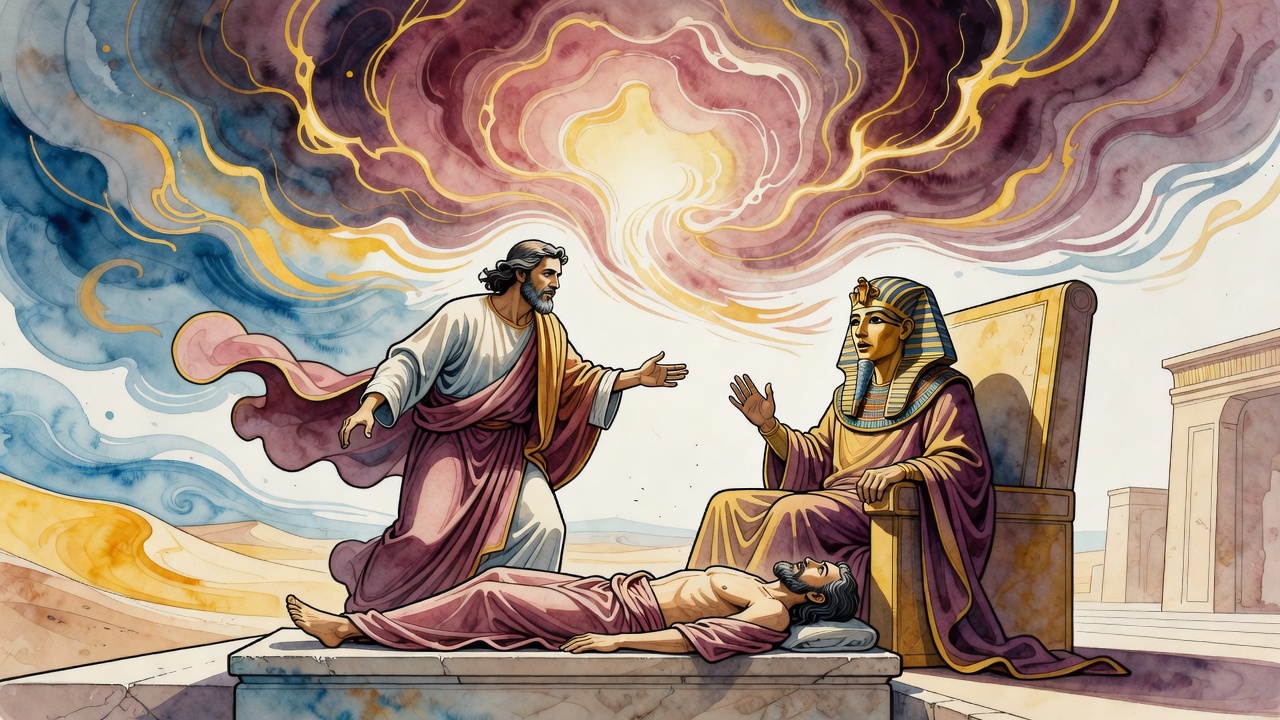
Joseph Blackmailed Pharaoh With a Hebrew Oath Click for full size

"Seek absolution from the oath," Pharaoh suggested, as if a son's vow were a contract a court could dissolve over wine. Joseph did not raise his voice. He raised a second oath, older and sharper, the one that kept a crown on an Egyptian head.

Seventy Languages and One Missing Tongue

Years earlier, when Joseph rose from prison toward the throne of Egypt, the advisors resisted. A Hebrew dreamer should not stand second to Pharaoh. They set a test. A ruler of Egypt must master seventy languages. Joseph answered them all. In the testing, a quieter fact surfaced. Pharaoh himself did not know Hebrew. The gap was not a curiosity. In the logic of that court, it was a crack in the claim to rule.

Pharaoh saw the danger at once. If the secret left the room, the man who spoke Hebrew and the seventy tongues could climb past him. Panic made a bargain. Pharaoh made Joseph swear never to publish the king's linguistic failure. Joseph swore. The oath sat between them like a third person at every later council, silent, heavy, useful.

Now the burial request pulled that third person into the light. "Then," Joseph said, "will I apply also for absolution from the oath I gave thee." One sentence. Two vows tied together like horses on one rope. Break the father's oath, and the king's oath becomes equally breakable. Keep the king's secret, and the road to Canaan opens.

Terror on a Throne of Linen

Pharaoh understood immediately. Oaths, the tradition insists, are binding forces, not decorations for ceremonies. A sworn word is a real weight on the neck that spoke it. Pharaoh felt that weight on his own throat. Exposure would not merely embarrass him. It would invite a succession crisis with Joseph already running the granaries, the army accounts, and the memory of a famine saved by foreign skill.

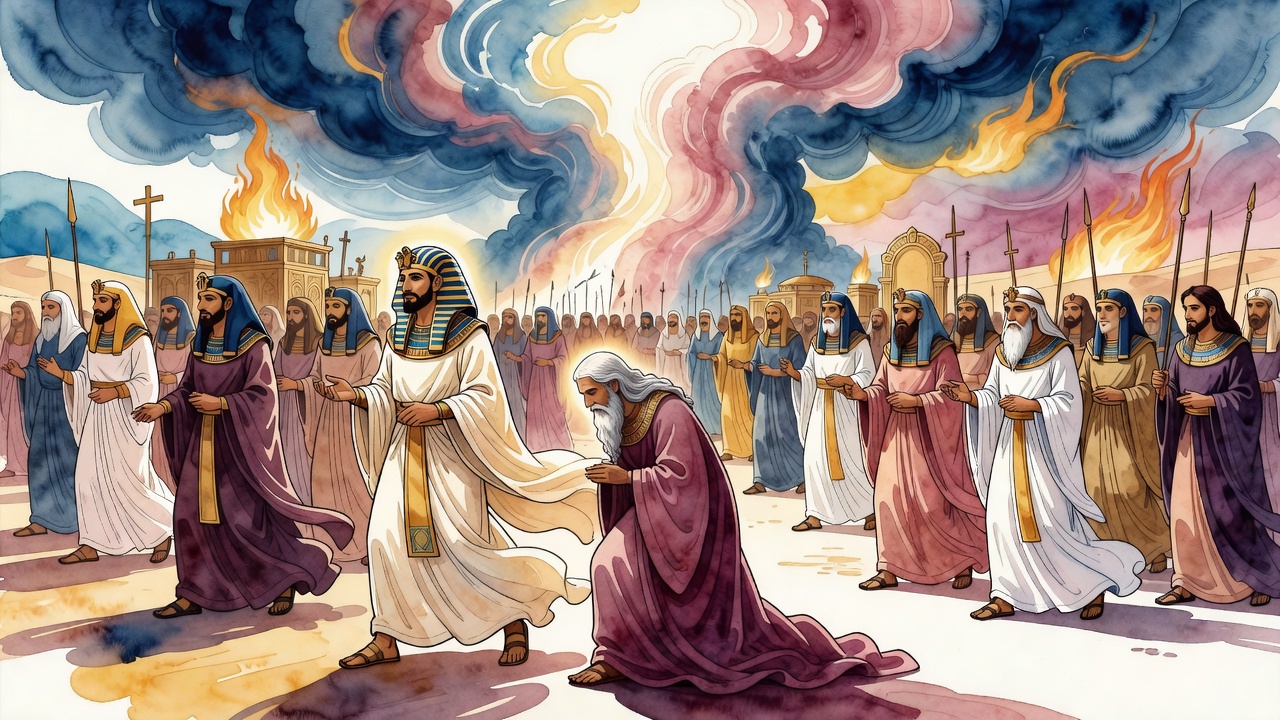
He granted the journey. Not from piety toward Jacob. From fear of a tongue that could unmake him. Joseph left with embalmers, chariots, and the hard satisfaction of a son who had outplayed an empire without drawing a sword. Canaan would receive the bones. Egypt would keep its secret a little longer, locked behind the same lips that had once interpreted dreams for free bread.

The Greeting That Emptied the Roofs

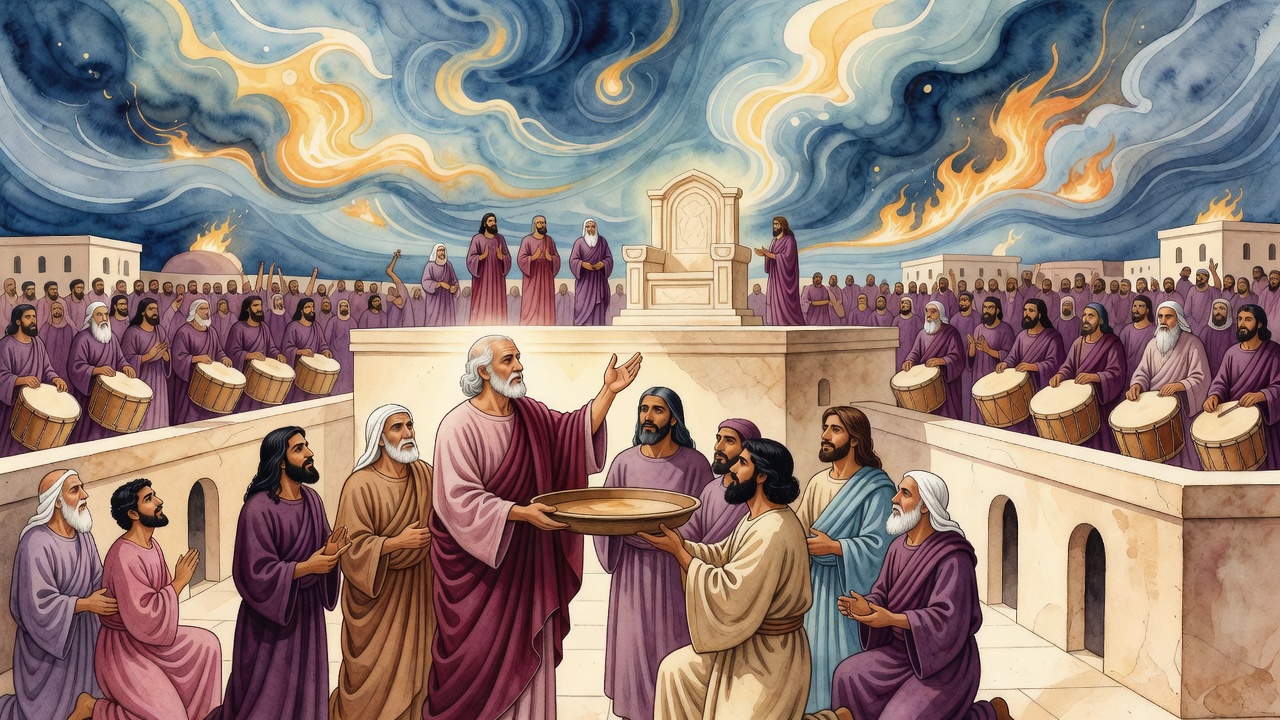
When Jacob still lived and first came down, Joseph had forced a different kind of spectacle. He proclaimed that anyone who failed to go out to greet his father would pay. Egyptian nobles put on byssus and purple. Instruments filled the road. Women climbed roofs and walls with cymbals and timbrels until whole cities became balconies for one old Hebrew shepherd entering Goshen under a son's command.

That parade was love and politics braided tight. A viceroy who can empty roofs for his father can also empty a king's courage with one reminder. The same man who staged a national welcome later staged a private threat. Both moves served Jacob, living and dead. Both showed Egypt that Joseph's Hebrew house was not a hobby he practiced after hours in a quiet wing of the palace.

The Distance He Kept From Living Questions

While Jacob lived in Goshen, Joseph practiced another caution. He feared his father would learn how the brothers had sold him, and that a righteous man's curse might fall and stick. So he avoided long private hours that invited hard questions. Couriers carried news of Jacob's health. Love arrived as logistics. Distance became a shield for the guilty brothers and for the innocent father alike.

The burial oath was the opposite move. Silence for the living scandal. Speech for the dead command. Joseph would not risk Jacob's anger while breath remained. He would risk Pharaoh's throne to keep Jacob's last instruction. Brothers he protected from a curse. A king he pressed with a secret. The moral geometry was not neat. It was family geometry, drawn under foreign ceilings and measured in grain.

When the caravan finally turned toward the cave of Machpelah, Egypt watched its second ride out under banners and grief. Pharaoh stayed behind with a language he still could not speak and an oath he still dared not break. Joseph rode toward the only audience that mattered, a father who could no longer ask how the coat got blood on it, and a piece of ground that had been paid for before any dream of sheaves bowed in a field.


← All myths
From the tradition

Sources

3 sources

The texts behind this telling. Some cards carry a translation of the source; others are our own retelling of it, and each card says which. Every card links out to the original.

Legends of the Jews 1:419Legends of the Jews

Retold in our words. Read the original at the link below.The Legends of the Jews by Louis Ginzberg (1909) · Public Domain

After winning favor with the queen – thanks to a bit of help from her hairdresser, naturally – Joseph finally approached Pharaoh with a request: to honor his solemn oath to his dying father, Jacob, and bury him in Canaan. But Pharaoh, hesitant to let Joseph leave, initially refused. He suggested Joseph seek absolution – release – from the oath. Joseph, in a move that's either incredibly clever or slightly audacious (or maybe both!), countered with a veiled threat. "Then," he said, "will I apply also for absolution from the oath I gave thee."

What oath was that, you might ask? Well, it all goes back to the circumstances surrounding Joseph’s rise to power. According to Ginzberg's retelling in Legends of the Jews, Pharaoh’s advisors weren’t exactly thrilled about the idea of Joseph becoming viceroy. They only relented when Joseph demonstrated his mastery of all seventy languages – a prerequisite for ruling Egypt, apparently!

The conversation revealed something even more significant, and potentially devastating for Pharaoh: he himself didn't know Hebrew! And that, it turned out, disqualified him from being king. Pharaoh feared that if this truth came to light, Joseph, fluent in Hebrew and all those other languages, would usurp his throne.

In his panic, Pharaoh made Joseph swear an oath never to reveal the king's linguistic secret. So now, years later, when Pharaoh suggests Joseph break his oath to his father, Joseph subtly reminds him of the other oath, the one that protects Pharaoh's crown.

The Zohar tells us that oaths are incredibly powerful, binding forces. They aren't to be taken lightly. So Joseph's threat to break his oath to Pharaoh, in addition to the one to his father, threw the Egyptian ruler into a state of utter terror. He realized the precariousness of his position.

Faced with the potential exposure of his secret and the implied threat to his kingship, Pharaoh caved. He granted Joseph permission to journey to Canaan and bury his father. Talk about high-stakes negotiation!

How often are we bound by unseen oaths, unspoken promises, and the weight of secrets? And what lengths would we go to, to protect our position, our reputation, or even just a carefully constructed illusion? The story of Joseph and Pharaoh reminds us that power, promises, and secrets are often intertwined in ways we can barely imagine.

Full source
Legends of the Jews 1:370Legends of the Jews

Retold in our words. Read the original at the link below.The Legends of the Jews by Louis Ginzberg (1909) · Public Domain

Legends of the Jews turns to Joseph's Legacy of Jacob.

You’d think after all those years of separation and suffering, their reunion would be a time of unadulterated joy. And it was, in many ways. But a shadow lingered.

Joseph, now a powerful viceroy, harbored a deep-seated fear: that his father would uncover the truth about how he ended up in Egypt in the first place, the betrayal by his brothers. from Jacob’s perspective. He believed his beloved Joseph was dead, devoured by a wild animal. To learn that his own sons, driven by jealousy, had orchestrated Joseph's disappearance… well, Joseph feared the revelation would be too much.

He worried that in his grief and anger, Jacob might pronounce a curse upon the brothers. And as we know from the power of words in our tradition, especially from the mouths of the righteous, such a curse could have devastating consequences.

So, Joseph, ever the strategist, devised a plan. According to Ginzberg's retelling in Legends of the Jews, he made sure he wasn’t constantly at his father's side. Not because he didn't love him, but because he loved him so much that he was willing to sacrifice their constant companionship to protect his brothers from potential paternal wrath.

It's a fascinating, and perhaps unsettling, look at family dynamics. Joseph avoided being alone with Jacob, carefully managing their interactions. He didn't want to give his father an opening to ask probing questions.

But how could he stay connected? How could he ensure his father was well cared for without raising suspicion? He established a courier service, a kind of ancient postal system, to maintain contact and receive updates on Jacob’s health and well-being. It was a clever solution, allowing him to stay informed without risking a potentially catastrophic confrontation.

This little detail, often overlooked in the grand narrative of Joseph in Egypt, speaks volumes. It reveals the complexities of family relationships, the burden of secrets, and the lengths we go to protect those we love, even when they may have wronged us. It also highlights the power that ancient near eastern cultures attributed to curses and blessings.

So, what do we take away from this? Perhaps a reminder that even in moments of great joy and reconciliation, old wounds can linger. And that sometimes, the most loving act is not necessarily the most obvious one. Sometimes, love requires a little… distance.

Full source
Legends of the Jews 1:334Legends of the Jews

Retold in our words. Read the original at the link below.The Legends of the Jews by Louis Ginzberg (1909) · Public Domain

It wasn't just a quiet family reunion. Oh no, it was a spectacle!

Joseph, now the powerful viceroy of Egypt, is preparing to meet his father. But he's not doing it alone. The Egyptian nobles, seeing their leader's preparations, follow suit. Think of the sheer scale! According to Legends of the Jews, Joseph even issued a proclamation – a rather forceful one, at that! He threatened anyone who didn't go out to greet Jacob with… well, let's just say it wasn't a pleasant consequence.

So, picture this procession. Countless men, decked out in fine byssus (that's a luxurious linen) and vibrant purple, marching in unison. All sorts of instruments playing, creating a truly grand atmosphere. It's not hard to envision, is it?

It wasn't just the men involved. The women of Egypt also played a part. They climbed onto the roofs of houses and the walls of the cities, ready to welcome Jacob with the joyous sounds of cymbals and timbrels. The whole country was involved in welcoming Jacob.

What a scene! A evidence of Joseph's power, yes, but also a reflection of the respect, or perhaps fear, he commanded in Egypt. And, of course, a powerful symbol of the long-awaited reunion between father and son, set against the backdrop of an entire nation celebrating.

Full source