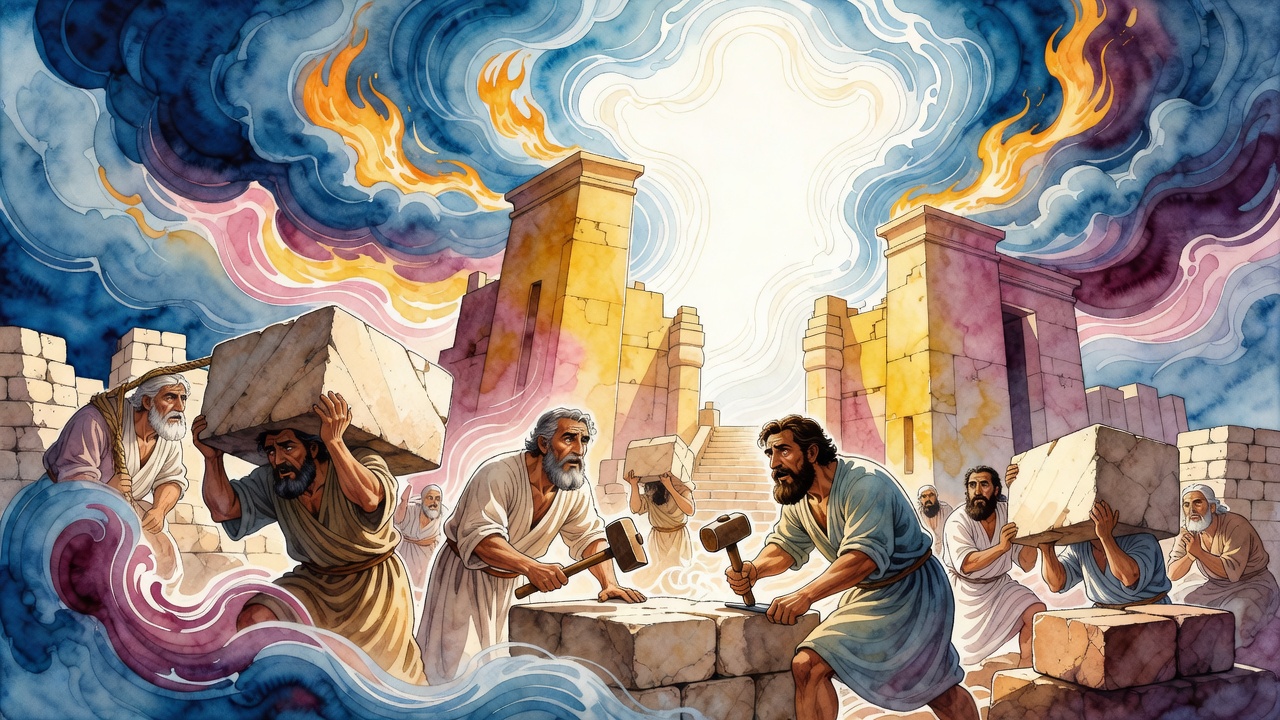
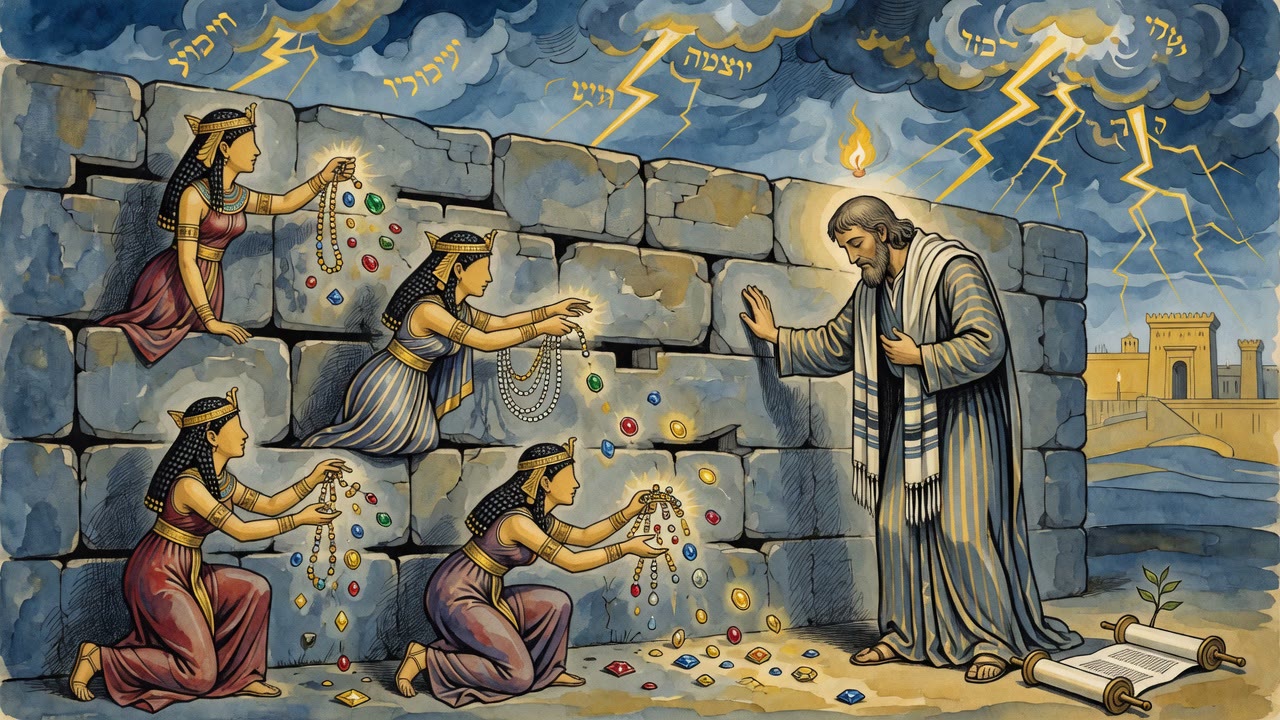
Jacob Entered Egypt and Blessed Pharaoh After the Shema
Joseph fell on his father's neck and wept. Jacob did not kiss him. He was in the middle of the Shema and he would not stop.
Table of Contents
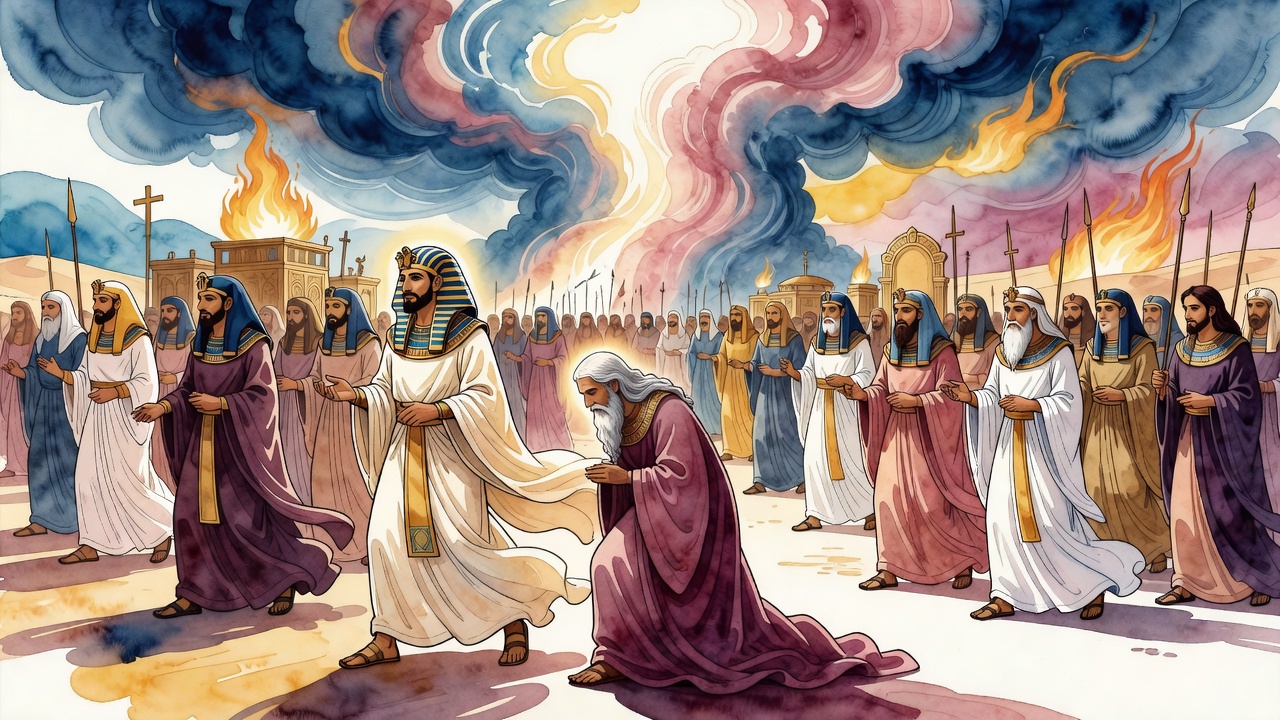
Joseph left the chariot fifty ells out and walked. Pharaoh's crown sat on his head. Behind him every prince of Egypt got down from his horse and walked too.
 Click for full size
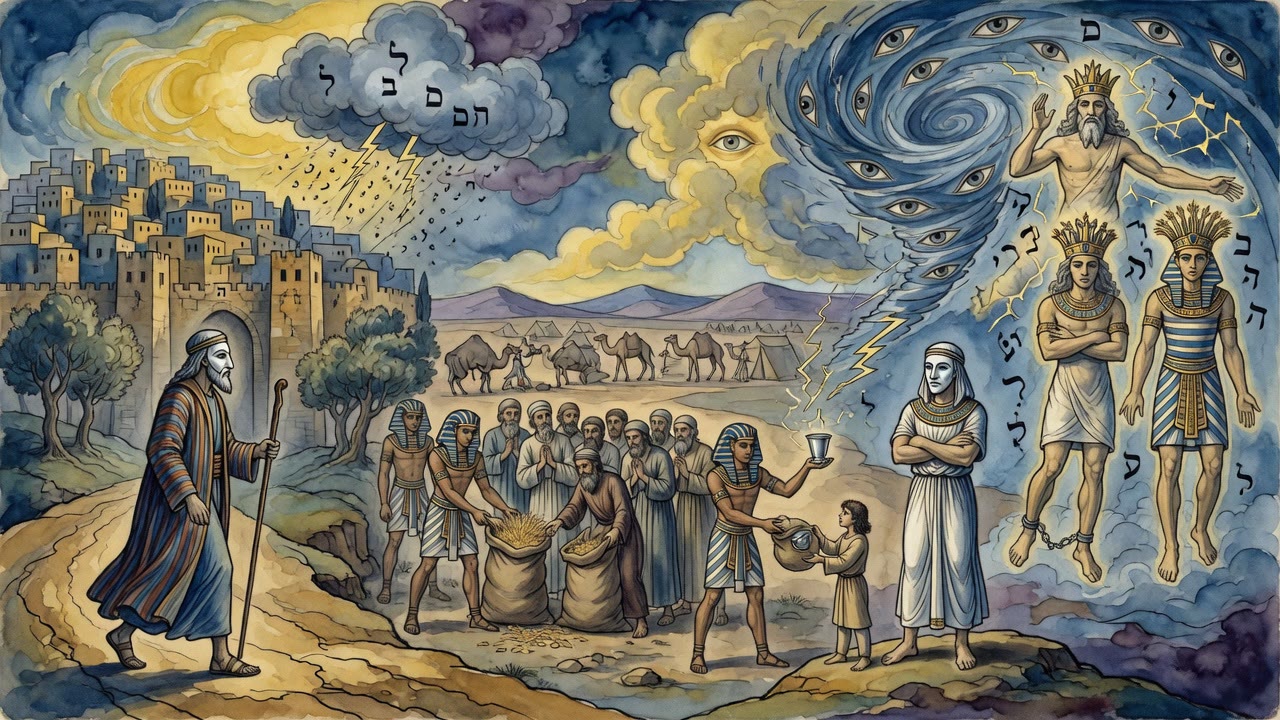
The road from Goshen was full of byssus and purple. Instruments sounded the whole length of it. Women climbed to the roofs with timbrels and cymbals. Joseph had issued a proclamation: anyone who failed to come out and honor his father's arrival would be put to death. The nobles did not test it.
Jacob sat in the caravan and watched the procession come on. He did not yet know who led it. He only knew that something of enormous weight was moving toward him. He bowed.
Fifty Ells on Foot
Joseph had sent his oldest son ahead with five horses, then the next son the same way, so the old man would not be broken by a single shock. Each time a rider came up, Jacob thought he was looking at Joseph. Each time the face was wrong, and he had a moment to set himself for the next.
From where he sat he caught a man in royal robes among the Egyptians, a crown on his head, a purple mantle on his shoulders. He asked Judah who it was. Judah told him it was Joseph. The joy in the caravan was sharp and sudden. By then Joseph was close. He bowed himself to the earth, and the people with him went down too.
He had already let his father bow to him, fifty ells back, before the recognition. That bow would cost him. Years would come off the life assigned to him, and he would die before they were complete. Jacob's own years were put at risk in the same motion, a father bending to a son he had not yet named.
He Bowed Before He Knew the Face
Joseph fell upon his father's neck and wept, bitter, still, because he had not stopped the honor. The neck was there. The arms were there. Jacob did not kiss him.
His mouth was already in the Shema (שמע), Hear O Israel. He had opened the declaration of God's unity, and he would not break it for the son he had mourned twenty-two years. Joseph wept on his shoulder. Jacob finished the prayer first.
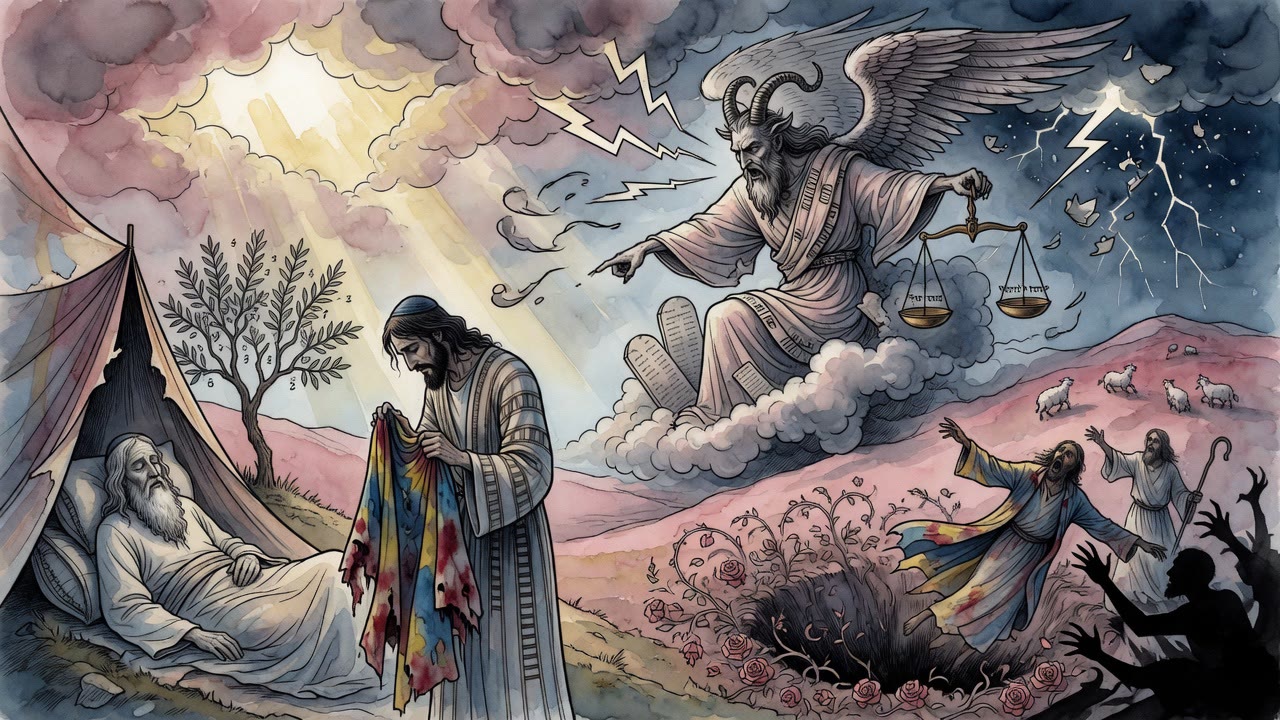
When they had brought him the report of Joseph's death, he had thought he was doomed to a double death, this world and the world to come. The Lord had promised him twelve tribes. A dead son made the promise impossible, and a sinner forfeits the future world. Now the neck under Joseph's face was still warm, and Jacob knew his death would be only for the world here below.
He said he was ready to die. He had seen the face again.
The Shema on His Neck
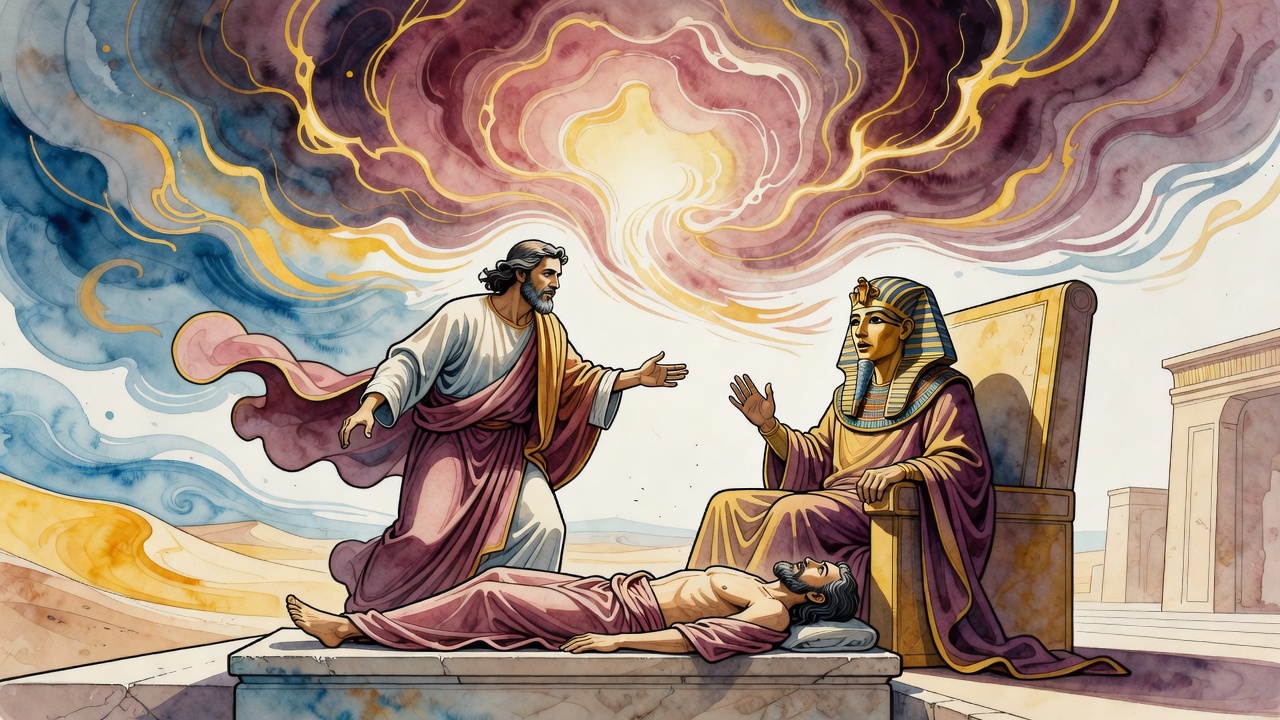
Joseph took him in to Pharaoh. The king of Egypt looked at a bent shepherd and asked how old he was. Jacob did not boast. "The days of the years of my sojourning are a hundred and thirty years. Few and difficult have been the days of my life."
Then he blessed Pharaoh. A wandering man blessing the king of the most powerful nation on the earth. He said, "May it please the Almighty that the waters of the Nile may be replenished, and may the famine pass away from the world in thy days."
The river had not risen to its full measure through the famine years. After the blessing it rose. The drought ended with Jacob's arrival. His words went into the water and changed it.
Jacob Blessed Pharaoh
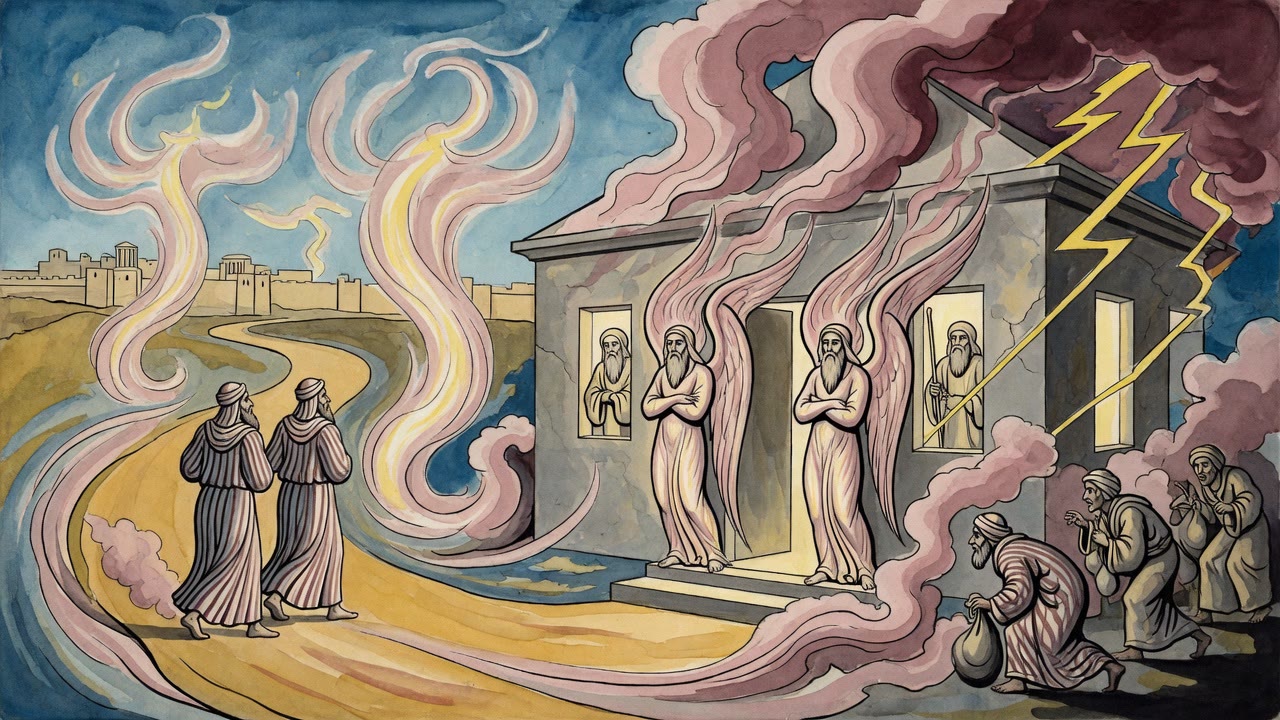
Sixty-nine souls had come down with him. Between the one city wall and the other, a daughter was born to Levi, Jochebed, and the count became seventy. Even the infants in that household had wives chosen for them. The family entered Egypt as a complete camp, not as stragglers.
Joseph settled them in Goshen, the good land, away from the court and close to the pasture. Jacob ate bread there. He watched Joseph live. The years that had been taken from the reunion on the road did not take this stretch from him.
Seventeen Years for Seventeen
He had raised Joseph for seventeen years in Canaan before the coat came home. He was given seventeen years in Egypt with the same son, in peace. When he felt the end come, he called Joseph to the bed, not the other sons, because only Joseph could make Egypt do what he was about to ask.
"Do not bury me in Egypt," he said. "Carry my bones back. Bury me in the cave of Machpelah, where Abraham and Sarah lie, where Isaac and Rebecca lie, where Leah lies." He made Joseph put his hand under his thigh, the oath of the patriarchs, and swear it out loud.
Joseph swore it. Jacob bowed on the head of his bed toward the Shekhinah (שכינה), the divine presence, and gave thanks. He had found his son. He would go home to his fathers. The Nile was still high in Pharaoh's days, and the prayer he had finished on the road before he kissed anyone was still the first thing he had given the reunion.
← All myths