Ha-Satan Ends Jacob's Eight Years of Rest
Joseph still sat at the table when the Accuser stood up in heaven. Eight quiet years, he said, was already more than a pious man should keep.
Table of Contents
Jacob set his staff against the wall of Isaac's house and believed the road had gone still. Laban's years lay behind him. The night of the wrestling lay behind him. He had come home to his father's land with a full camp, and for eight years the mornings were ordinary: bread, flocks, teaching, the sound of a favorite son reading what Shem and Eber had once taught the line.
 Click for full size
Those eight years were the only stretch Jacob ever counted as peace in the land. Outside it, the days had felt joyless. Only the hours spent handing on the Name of God felt like life. With Joseph at the table, even the hard work of a shepherd house seemed light.
Eight Years Beside Isaac
Joseph wore his father's face more clearly than any of the brothers. He walked like Jacob. He sat in the Bet ha-Midrash until seventeen and carried rulings from Jacob's mouth to the sons of the handmaids, who loved him for the teaching. Jacob had endured Laban for this boy's sake. The house full of children, the legends say, was blessed on Joseph's merit.
Father and son shared more than blood. Both mothers had struggled to conceive. Both sons were born circumcised. Both tended sheep. Jacob watched the pattern and called it blessing.
Joseph also painted his eyes and stepped lightly, a vanity that made the older brothers' teeth grind. He brought bad reports: animals mishandled, Canaanite women, the sons of Bilhah and Zilpah called slaves. A rope was already being braided, quiet as a brother at a well.
The eight years felt like arrival. Heaven was already counting them as a loan.
The Accuser Stood Before God
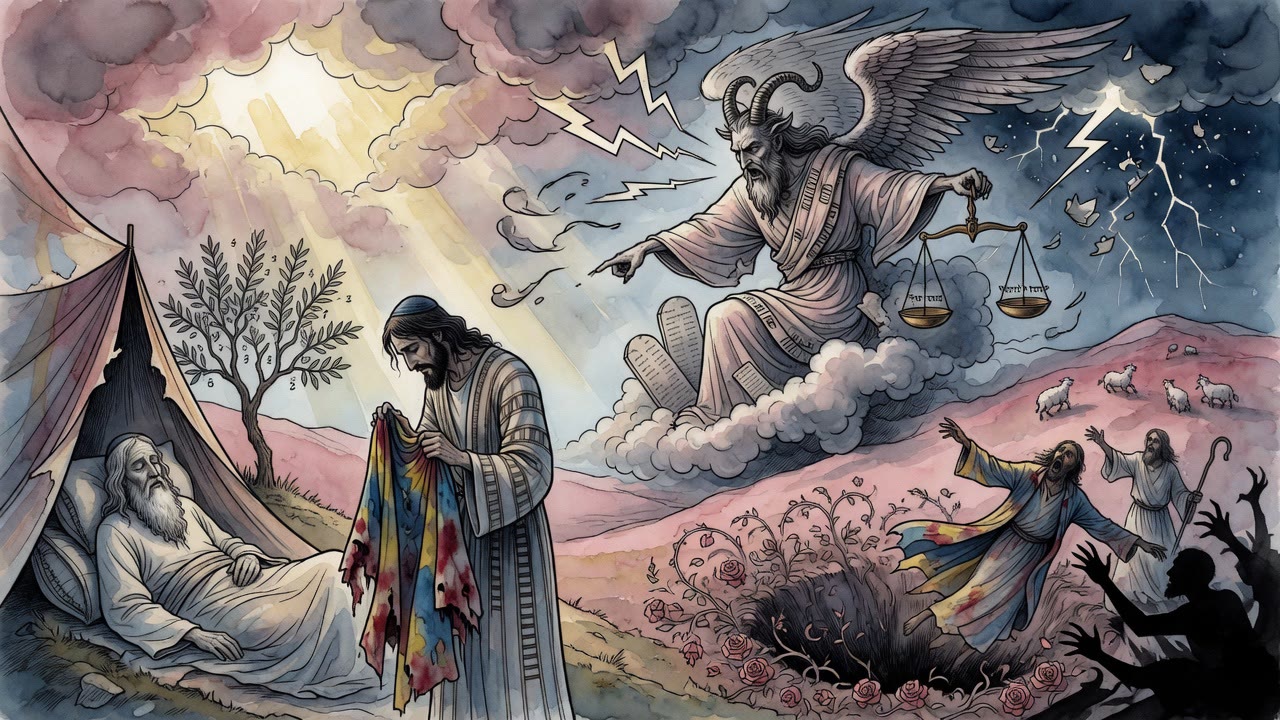
Ha-Satan (הַשָּׂטָן), the Accuser who works the heavenly court for God, rose with a charge sharpened for the pious. He did not deny Jacob's righteousness. He used it.
"Is it not enough that the world to come is set apart for the pious?" he asked. "What right have they to enjoy this world besides?"
The argument landed. If Jacob kept peace here and a portion there, the Accuser's scales looked crooked. God did not strike Jacob with fire. God allowed the one joy Jacob could not spare. The decree that followed was not thunder. It was a road toward Dothan, a coat, and a pit.
Jacob kept teaching. Joseph kept walking in that mincing step. Neither of them heard the charge. The Accuser had spoken inside the law of heaven, and the father who had finally rested was about to lose the son who made rest possible.
The Coat Came Home Empty
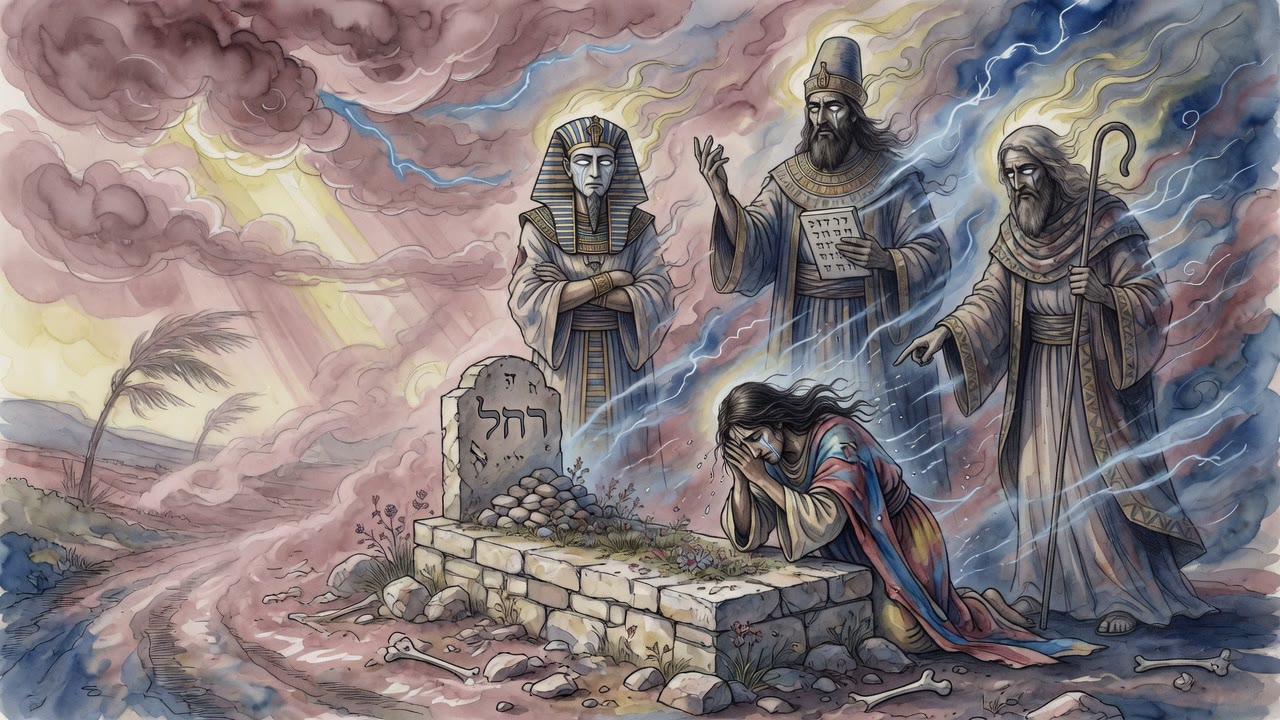
When the brothers sold him, they still slaughtered the goat by the rules and stained the coat with care. Jacob held the bloody cloth and tore his own clothes. The eight years snapped like a dry stick. The favorite chair stayed empty. The study house went on without its sharpest student.
Jacob's life outside the Holy Land had already felt joyless. Now even inside it the light went out. He had endured Laban for Joseph. He would grieve for Joseph as if for the dead. Angels who had walked with him on other roads did not soften this one.
Years later Joseph would feed that same father for seventeen years in Egypt, matching the seventeen years Jacob had once provided for him. The ledgers balance slowly. On the day of the sale they did not balance at all.
The Firstborn Begged Pharaoh
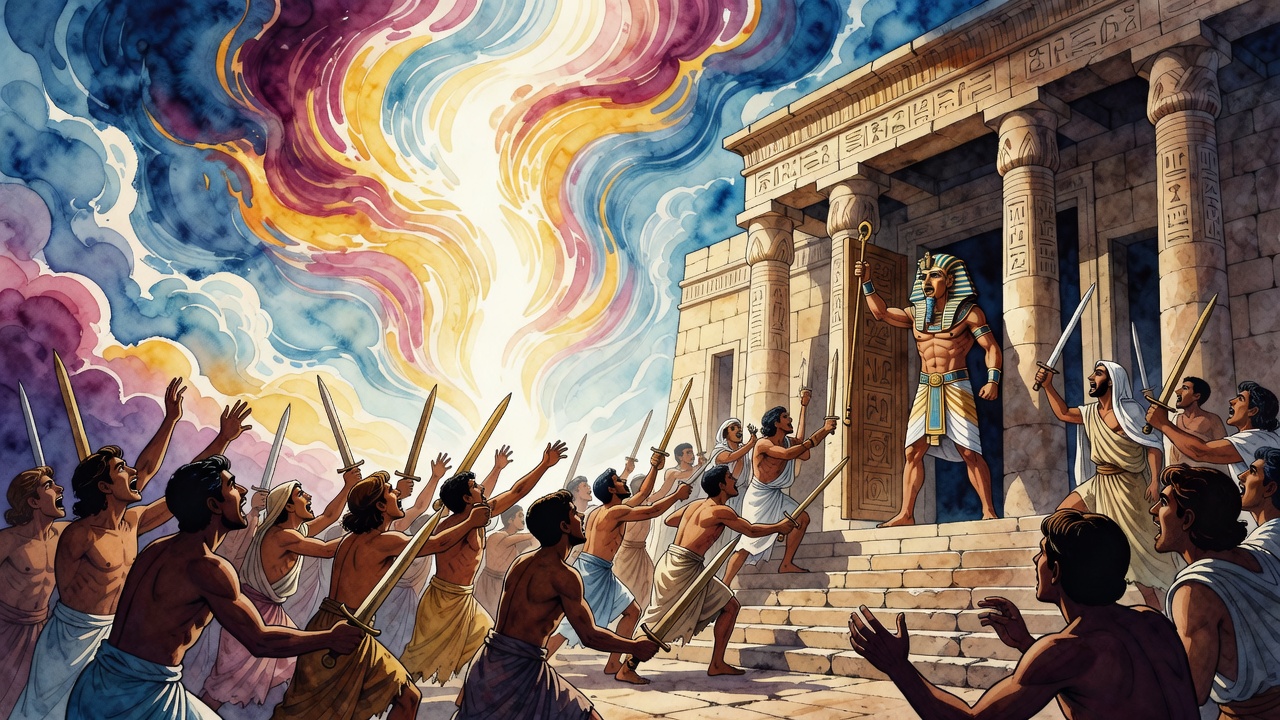
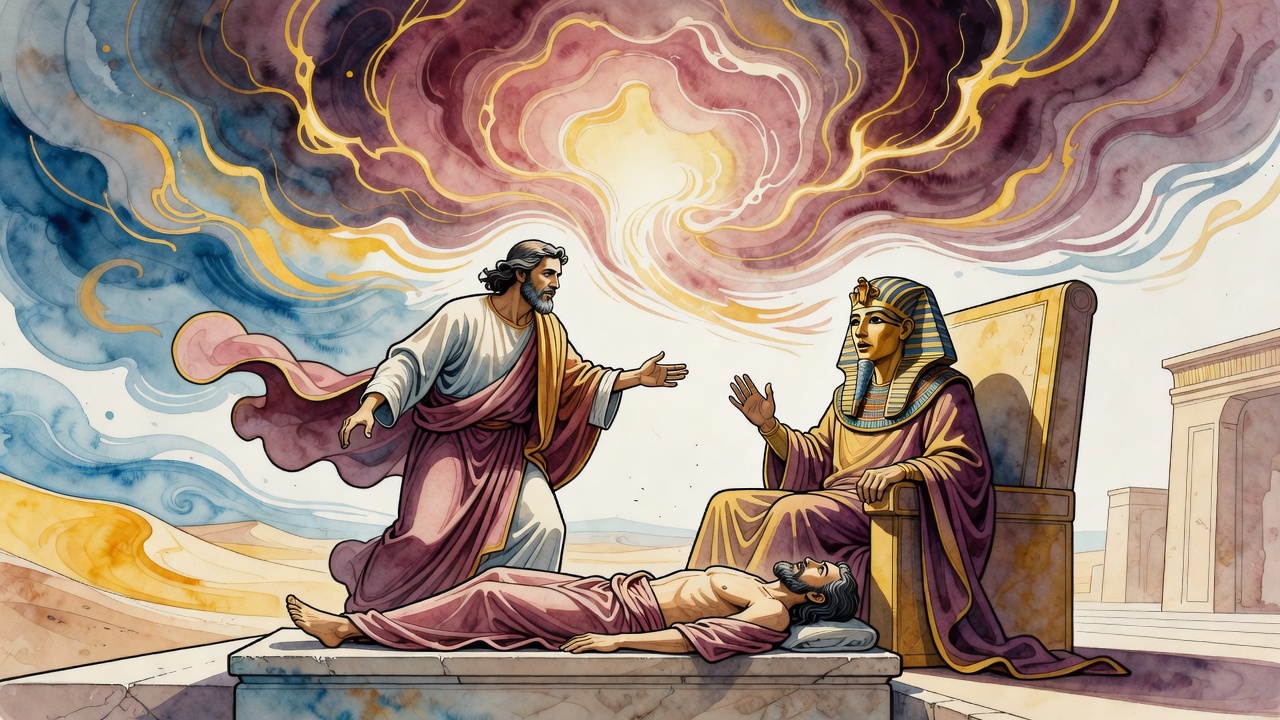
The line that began with a favorite son in Canaan ended, generations later, with a people enslaved under Pharaoh. Moses stood in the court and named the last plague: the firstborn would die.
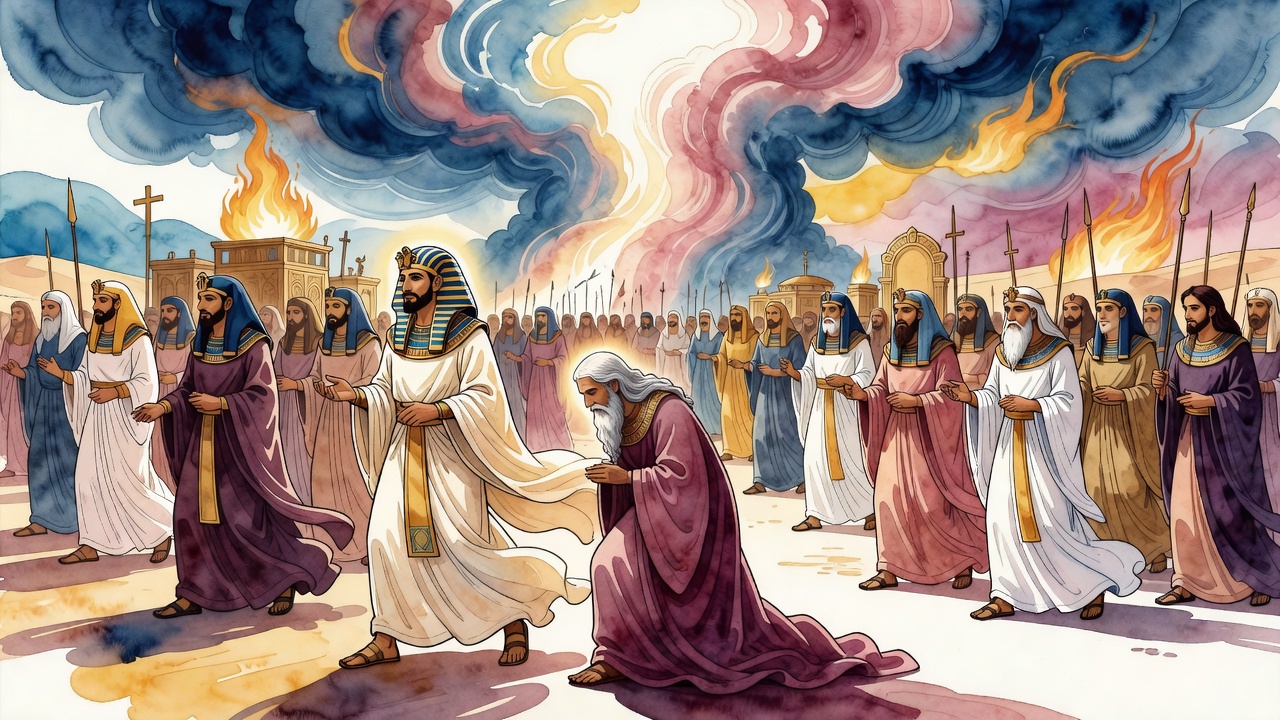
Egypt's designated victims ran to their fathers. "Let the Hebrews go, or we shall all die!" The fathers counted. A small percentage of the population, they thought, was a price worth paying to keep the slaves.
The firstborn turned on Pharaoh himself and demanded release. Pharaoh ordered them beaten for the insult. They tried force. Heaven widened the decree. Firstborn daughters counted. Firstborn from every former union counted. In some houses nearly every child was a firstborn by that measure. Then the decree sharpened again: the oldest living member of each household would fall, whether or not the birth record said first.
God Came Down at Midnight
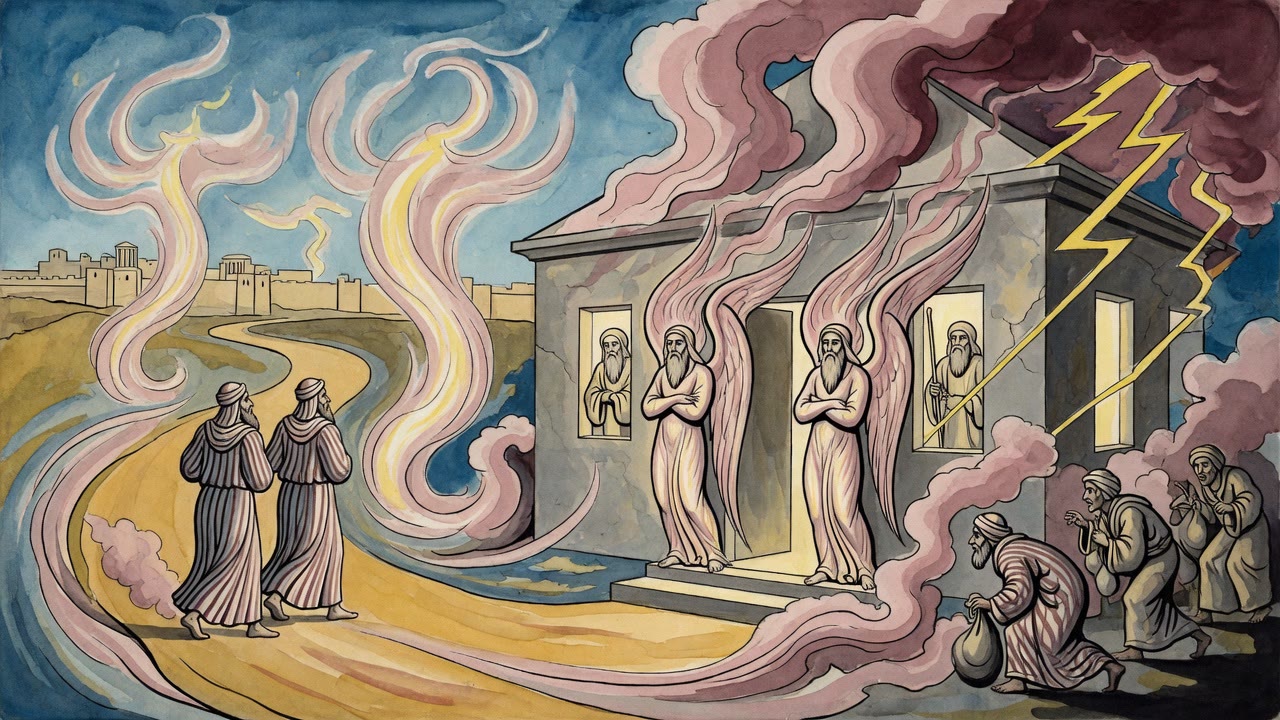
At the exact middle of the night, a timing only God can mark, God Himself came down with angels of destruction shaped of hail and flame. Their gaze alone would have emptied streets. God held the angels back and took the vengeance with His own hand.
Egyptians who had hidden their children in Hebrew houses found the bodies beside Israelite beds in the morning. Dogs dragged long-buried firstborn from home graves. Stone, wood, and metal idols failed in the same dark. Cattle firstborn fell with the rest.
Joseph had been the joy the Accuser would not leave in Jacob's hand. Egypt had held Joseph's children and would not let them go. In Goshen the Israelites woke and found Egyptian boys dead beside their own beds. The dogs were already at the yards. A father's empty chair and a kingdom's ruined houses were both the cost of a joy heaven would not let a pious man keep without paying.
← All myths