Joseph Wept on Rachel's Grave, and Her Voice Answered Him
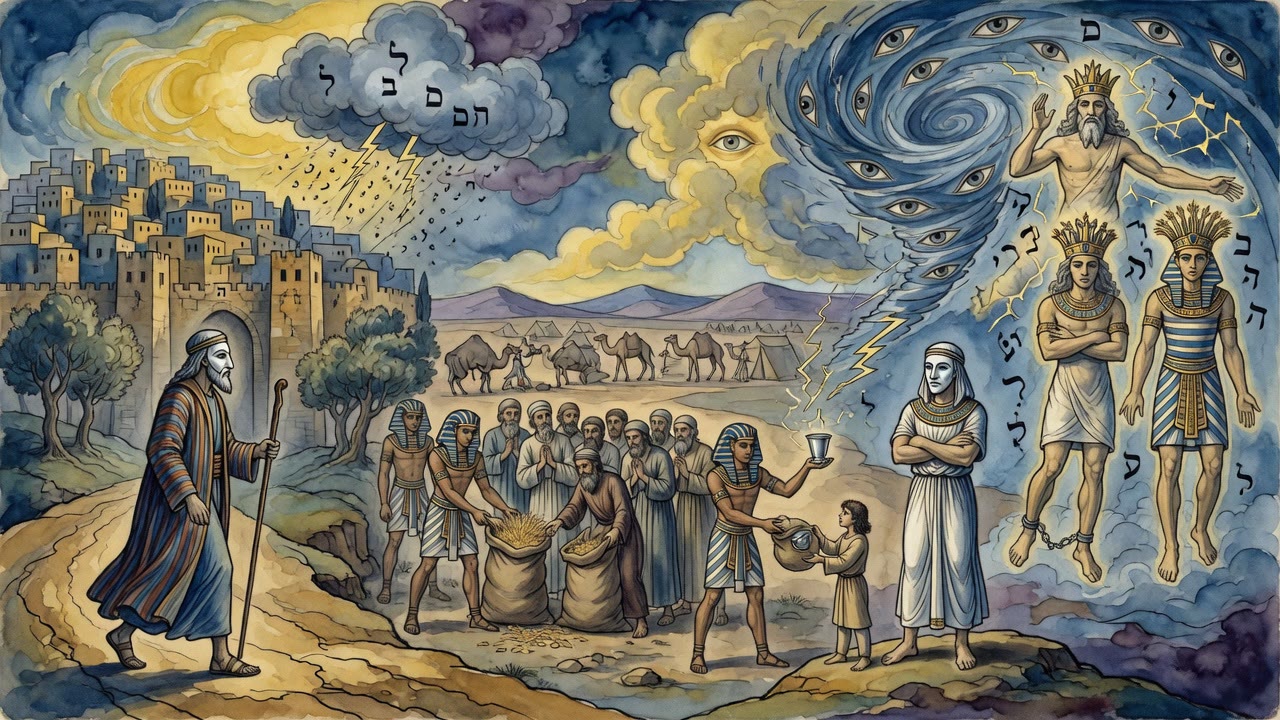
Ishmaelite caravans reeked of pitch and hides. The one carrying Joseph was packed with spices, and a trader beat him for crying father on every breath.
Table of Contents
 Click for full size
The Hands That Would Not Come Down
The arm went up to hit him again and stopped in the air.
The Ishmaelite could not bring it down. Neither could the next man, and while they stood there working their stiffened fingers the light went out of the road, so that a caravan in the middle of the afternoon was suddenly feeling for its own animals in the dark. They asked each other what they had done to deserve this. None of them thought to look at the boy.
Joseph was seventeen and had not stopped crying since he understood which direction they were walking. One of the traders had lifted him off the camel earlier, thinking the saddle was the problem. It was not the saddle. He walked beside the animals and called out for his father, over and over, in a voice that carried, and the men beat him for it because there was nothing else in their trade for stopping a sound.
What He Asked His Mother To Do
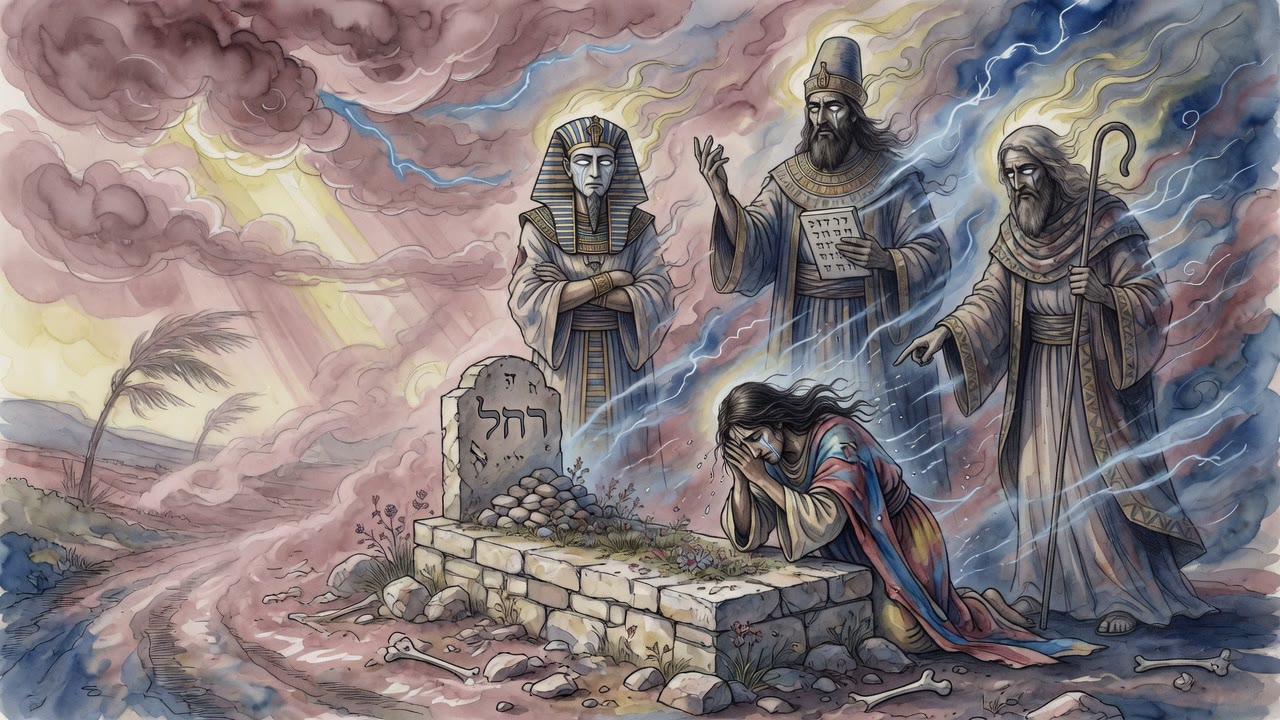
They came to Ephrath, where Rachel was buried, and Joseph went over the ground to the grave before anyone could take hold of him.
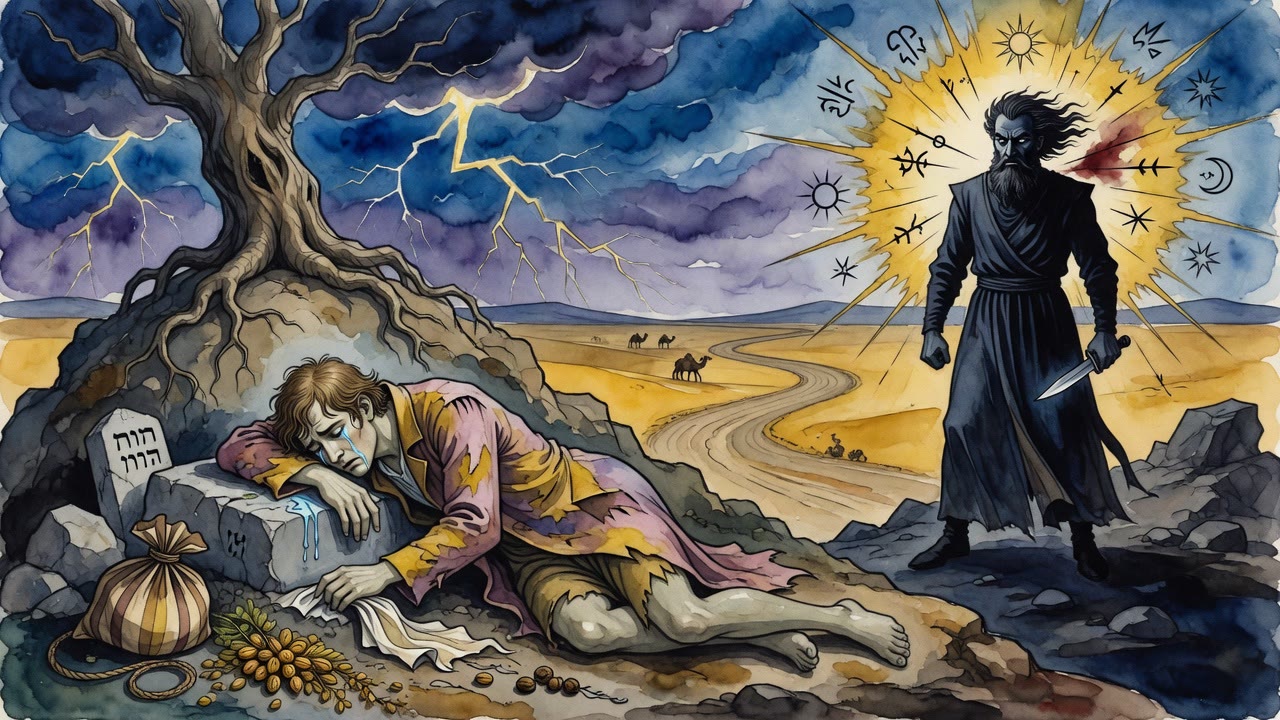
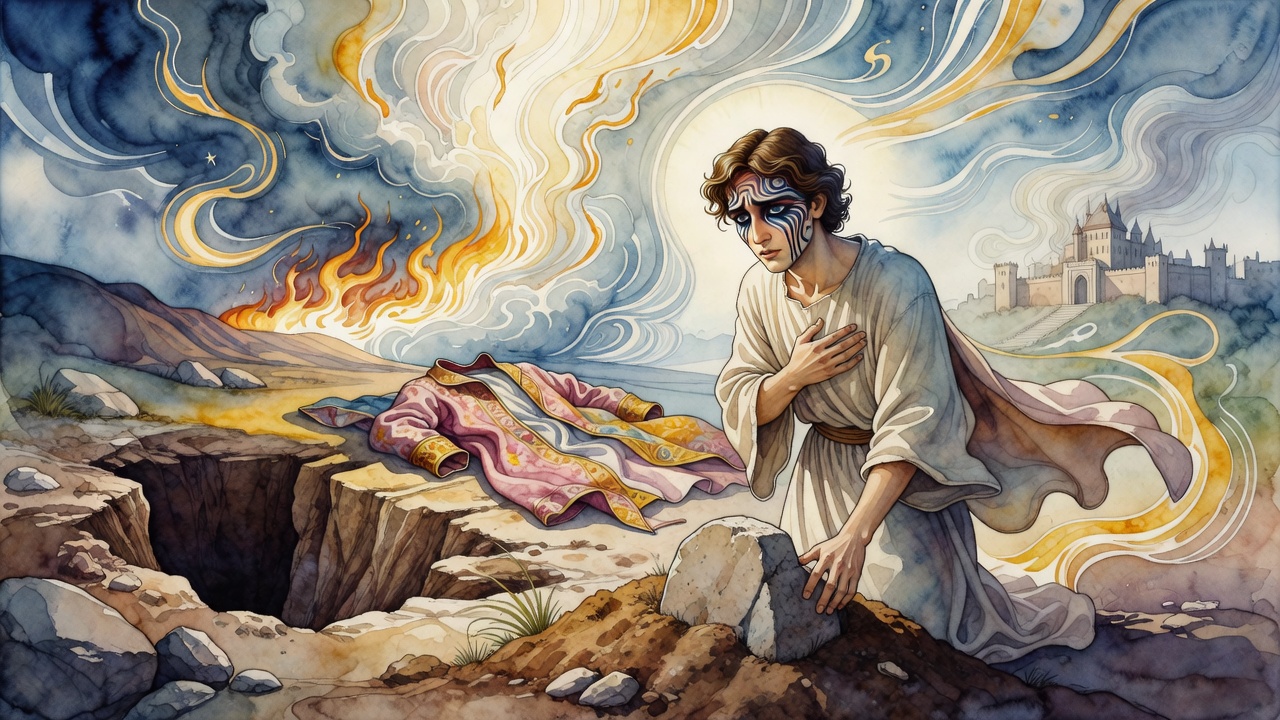
He lay across it. He told her that her son had been sold like an animal with nobody to pity him. He told her his brothers had stripped him of his shirt and handed him to merchants who had handed him to other merchants. Then he asked her for the one thing he still believed was possible, which was not rescue. "Arise, accuse my brethren before God," he said into the stone, "and see whom He will justify in the judgment, and whom He will find guilty."
He wanted a trial. He had been the son his father dressed better than the rest, and what he was asking for now was the case opened in front of heaven with his mother standing up as the witness. He cried on the grave until there was no strength left in his arms and lay on it without moving.
The Voice From Under the Stone
Then something answered him from underneath, and the voice was heavy with crying.
"My son Joseph, my son. I heard thy complaints and thy groans, I saw thy tears, and I knew thy misery, my son."
He waited for the rest of it. He was expecting her to rise, or to summon the court, or at least to name what his brothers had done in words that would count somewhere. What came instead was an instruction. "Go down into Egypt with thy masters, my son. Fear naught, for the Lord is with thee."
She had heard the whole complaint and she was telling him to keep walking. She did not say the brothers would be punished, or that he would be home by winter, only that he should go down with the men who had been hitting him and that he should not be afraid of them. Then the voice stopped, and the ground under his face was just ground, and an Ishmaelite came over and kicked him off his mother's grave with his boot.
The Storm He Was Made To Quiet
He tried once more, out loud, the ordinary way. He begged them to take him back to his father, who would pay them more than they had paid for him.
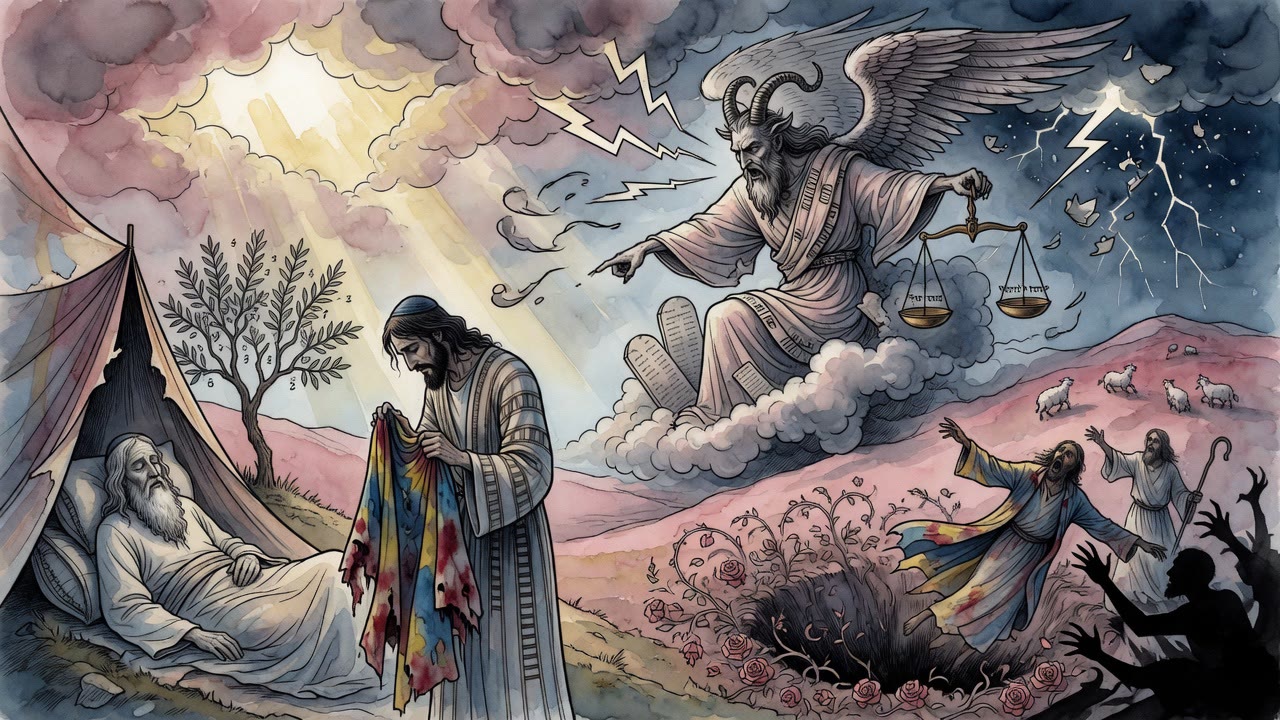
They laughed at that. "Why, thou art a slave," they said. "How canst thou know where thy father is? If thou hadst had a free man as father, thou wouldst not have been sold twice for a petty sum." The word slave was the word he had used about his own brothers, the sons of Bilhah and Zilpah, when he was still carrying reports to Jacob's tent. It came back to him on a road in the mouths of strangers who were using it as a fact.
Then the sky shut down over the caravan a second time. Lightning came in sheets and the ground shook under the packs, the camels dropped where they stood and would not rise for any beating, and the drivers lost the road entirely. One of them finally said out loud what they had all been avoiding, that this had started with the boy. So they went to Joseph and asked him to pray, and he prayed, and the storm went off them and the animals got up.
That was the moment they decided what he was worth. A slave who could call down weather might be taken home to his father for a reward, and one of them argued for exactly that, until the others pointed out how far back it was. They kept walking south. The perfume in the packs, bags of sweet spices instead of the pitch and hides those caravans usually carried, went on scenting the road for a boy who had just prayed for the men selling him.
Five Shekels at the Border
At the border of Egypt they sold him to four men descended from Medan, son of Abraham, for five shekels. Abraham's line buying Abraham's great-grandson at a frontier post, cheap.
The Medanites had heard that Potiphar, captain of Pharaoh's guard, was in the market for a good slave, so they brought Joseph to his house that day. Potiphar was willing to pay four hundred pieces of silver. He also stopped the sale halfway through, because the face in front of him did not match the story attached to it. This one was no slave and no slave's son, he said. This one looked like someone's heir, and he wanted the original sellers produced before he handed over money for stolen goods.
The Ishmaelites were fetched. They stood in the captain's house and swore that the boy had always been a slave, that he had been theirs, and that they had sold him honestly. Potiphar counted out the silver. The two companies of traders walked back out into the street, and the last men who knew where Joseph had come from went away with their money and never mentioned him again.
The smell stayed on him, and it stayed on his bones after he died in Egypt, and it was how Moses picked those bones out of every other grave in that country when the time came to carry them up to the land his father had never stopped waiting in.
← All myths