Parshat Vayechi6 min read

Joseph's Bow Stays Firm in Potiphar's House

Jacob blesses Joseph's firm bow after Potiphar's house, and Egypt stays soft only while Joseph lives, then hardens into slavery.

Curated by Arthur · Told by Maggid ·
Table of Contents
  1. The Bow in a Foreign House
  2. Who Kept Him From the Patriarchs' Rank
  3. While Joseph Lived, Egypt Stayed Soft
  4. Names That Already Smell of Rescue
  5. From Corridor to Coffin
  6. Prison Is Also a Bow Under Tension
Joseph's Bow Stays Firm in Potiphar's House Click for full size

The Bow in a Foreign House

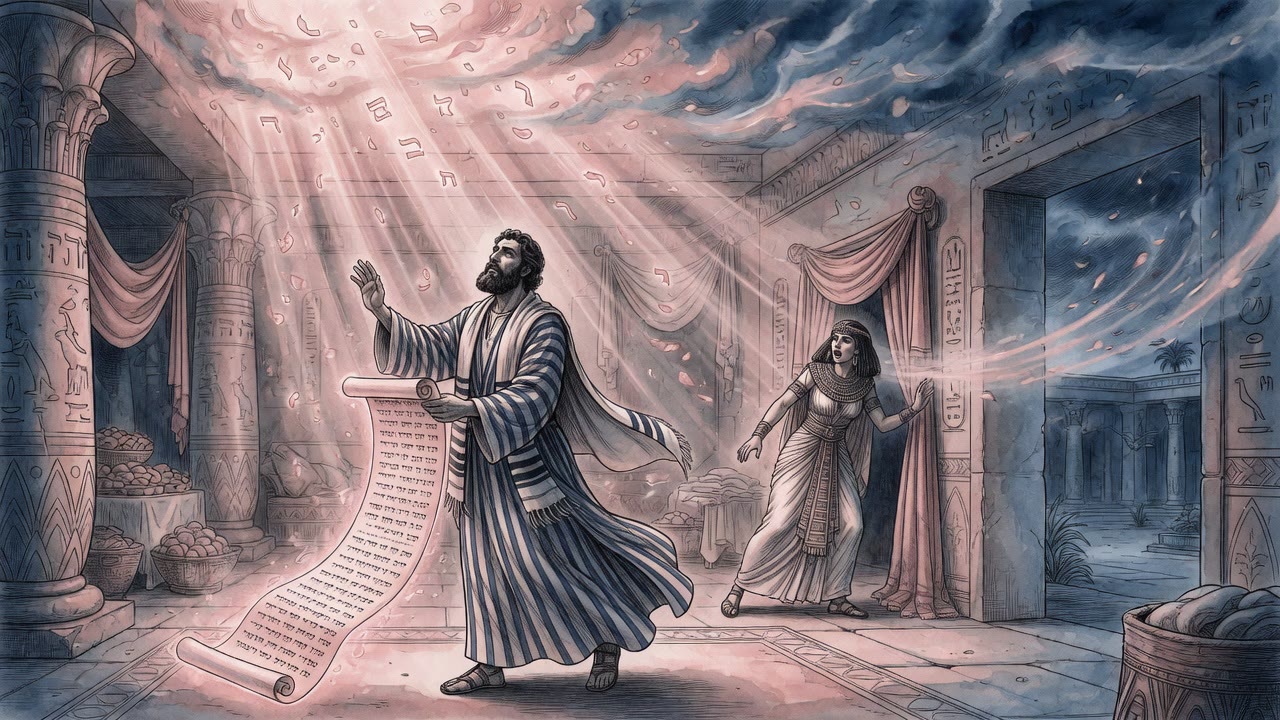
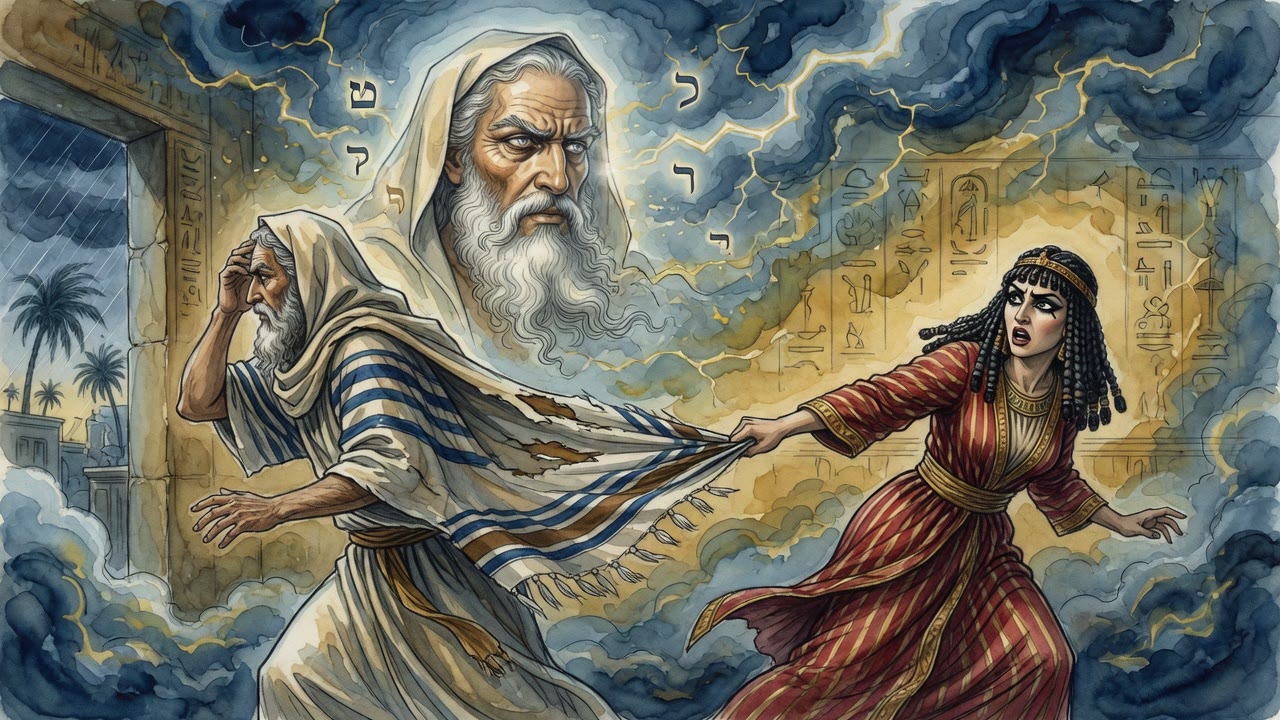
Joseph stood in Potiphar's rooms where Egyptian linen smelled of perfume and power, and the bow of his will bent without snapping. The master's wife spoke. The door closed. The day that could have rewritten his name as a different kind of man arrived with soft hands and hard consequences. He ran. The garment stayed behind like a false witness already rehearsing its story.

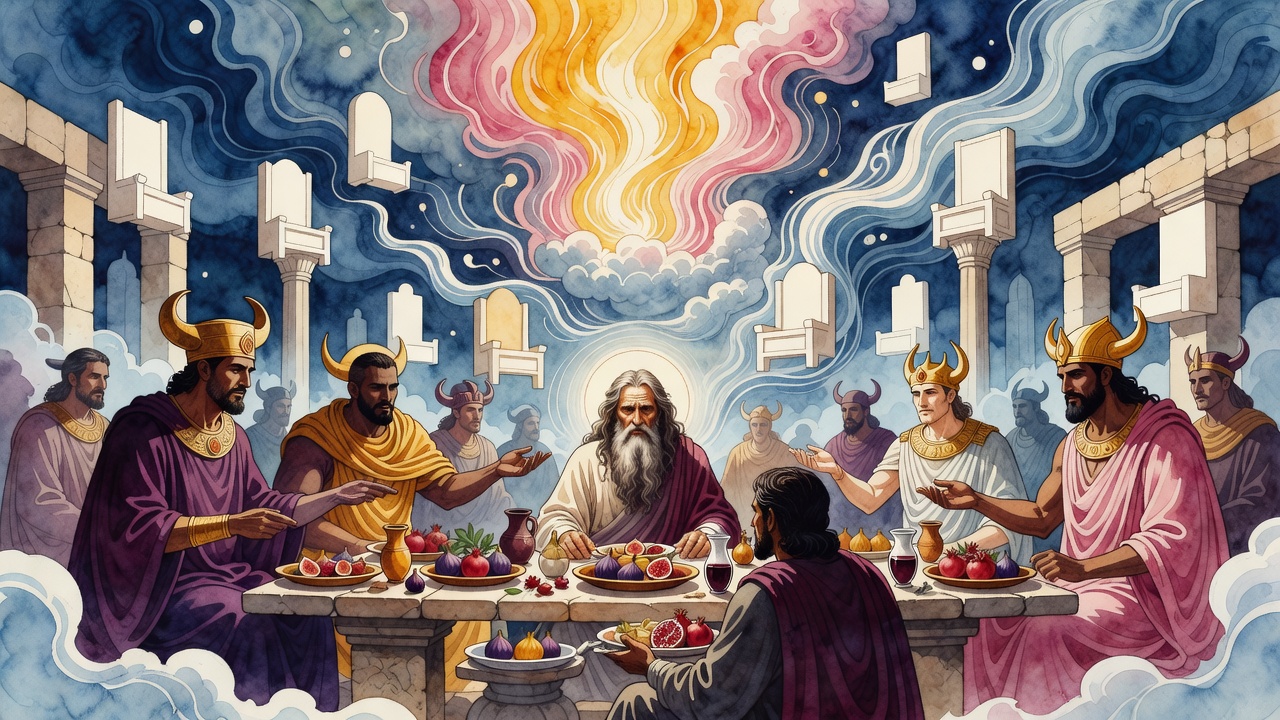
Years later, when Jacob blessed him, the old father reached for a hunter's image. "His bow sat firm," the blessing said, and the arms of his hands were made strong by the Mighty One of Jacob, by the Shepherd, the Rock of Israel (Genesis 49:24). The teachers heard more than archery. They heard the struggle in that house. The bow was desire held under tension. Firm meant he did not loose the arrow into ruin.

Who Kept Him From the Patriarchs' Rank

Rabbi Yochanan pressed the verse until it bled a harder question. Who caused Joseph to be rejected from the mighty ones, from the rank of the patriarchs themselves? The answer the midrash gives is not Egyptian politics or a brother's sale. It is the passion that rose toward his master's wife, the hardness and heat that had to be mastered in a corridor of a foreign house.

He did master it. The story does not pretend the fire was never lit. A bow that never bends is a stick. A bow that holds its shape under pull is a weapon under discipline. Joseph left the house for a prison rather than for a bed. That choice cost him years and bought him a name the blessing could still praise.

The arms of his hands, the midrash says, were made golden by the hands of the Mighty One. Strength did not arrive as flattery. It arrived as help in the exact moment the will was about to fail.

While Joseph Lived, Egypt Stayed Soft

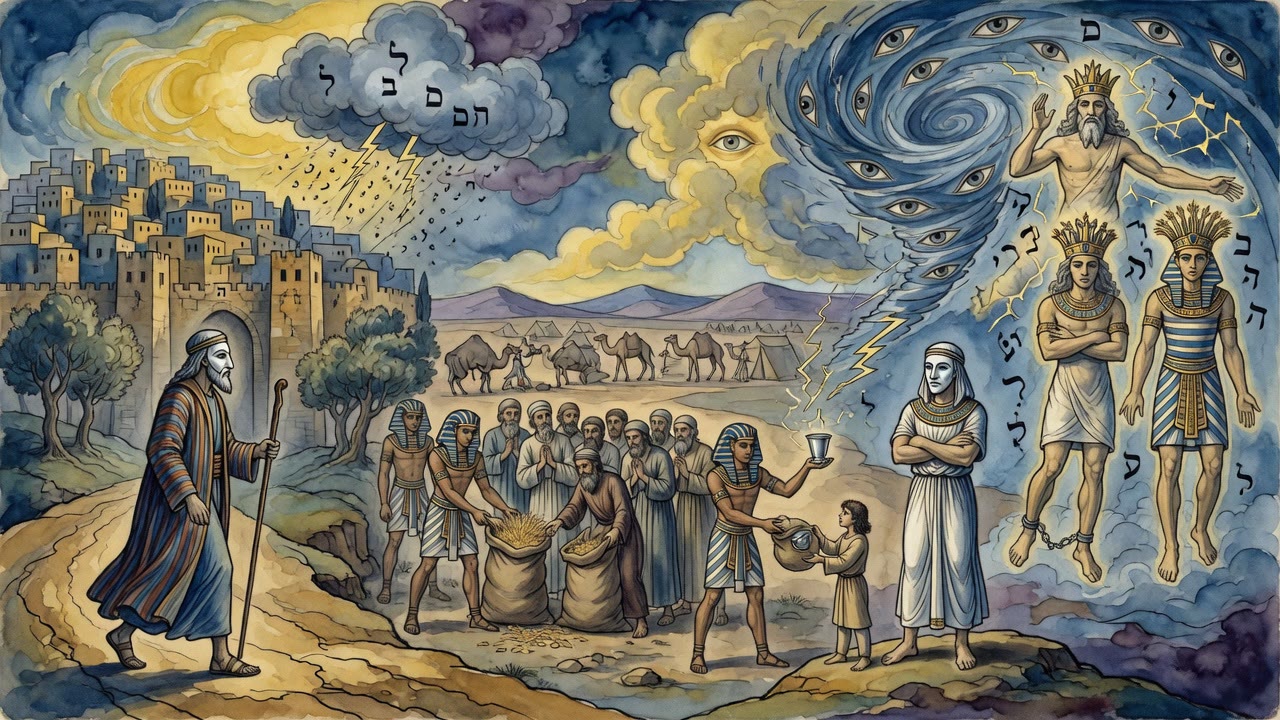
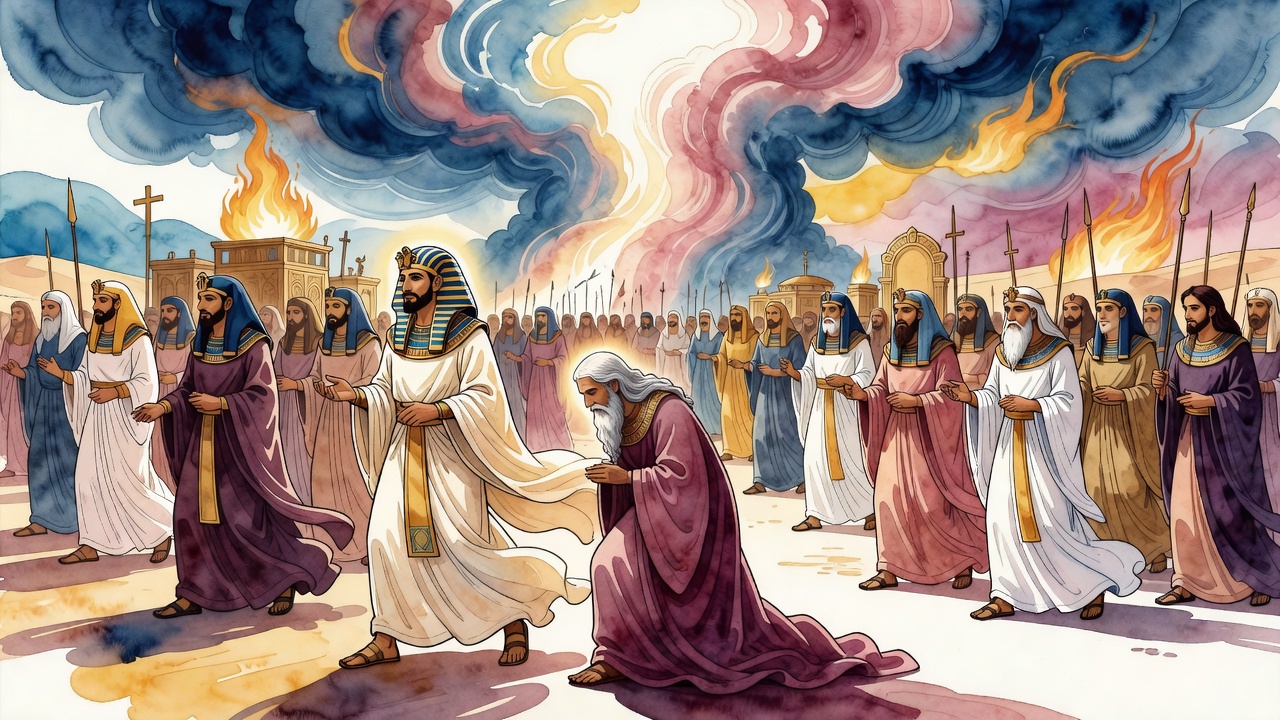
Later the whole family came down. Jacob entered Egypt, and the verse that opens Exodus sounds as if they arrived on the day the book begins. The teachers ask the obvious. Had they not been there for years already? The answer is cruel and precise. As long as Joseph lived, the burdens of Egypt were not laid on them. After he died, the labor began, and the memory of free years collapsed into a single bitter arrival (Exodus 1:1).

Who came with Jacob? Every man with his household. Rabbi Huna taught that they did not go down until Perez and Hezron were old enough, one and two years, and wives had been found for them. The descent was not a scramble of bachelors. It was a people already building the next generation inside the gates of a empire that would forget Joseph's name.

Names That Already Smell of Rescue

Reuben, Simeon, Levi, Judah, and the rest are listed not as museum labels but as future keys. Reuben will answer the line, I have surely seen the affliction of My people (Exodus 3:7). Simeon will answer the hearing of their groaning. Levi will answer nations attaching themselves to the Lord. Judah will answer thanksgiving. The roll call at the border is already a prophecy of the cry that will force heaven's hand.

They came because of Jacob's virtues, the midrash says. The old man's merit was a canopy over sons who had sold a brother and then lived long enough to be saved by him. Joseph's firm bow in Potiphar's house sat upstream of all of it. If he had broken there, the prison would have been different, the dreams unread, the storehouses empty, the family starved in Canaan.

From Corridor to Coffin

Joseph died. Egypt's memory shortened. A new king rose who did not know him. The soft years ended as if they had never been, and the book writes the descent again as if it happened on the first day of pain. That is how oppression edits history. It collapses every free season into one gate and one yoke.

Still the blessing stands over the bones Joseph ordered them to carry home. The bow that held in a corridor held a nation in place long enough for names to become a redemption map. Desire was real. Discipline was real. The Mighty One's hands on his arms were real. Egypt would learn the rest in plagues and sea-walls. Joseph had already fought his sea in a quiet room where no one saw the arrow he refused to loose.

Prison Is Also a Bow Under Tension

The dungeon did not feel like a blessing. Damp stone. Forgotten men. Dreams that arrived for cupbearers and bakers while Joseph waited for a door that did not open on human schedule. Still the same discipline held. He read other men's nights. He refused to invent meanings that would flatter a guard. Truth stayed his craft even when truth bought him nothing visible.

When Pharaoh finally called, the boy from the corridor stood in a court of gold and still spoke as if the Mighty One of Jacob held his arms. Grain policy is not usually holy theater. In Joseph's mouth it became survival for nations, including the brothers who had sold him. The bow that did not snap in Potiphar's house now bent to feed the world that had wronged him.

Years later the blessing would look backward through all of it: house, prison, throne, famine, reconciliation. Jacob's old eyes saw the firmness first. The empire saw only a clever viceroy. The midrash keeps both views and refuses to let the corridor scene disappear under the later glory.


← All myths
From the tradition

Sources

2 sources

The texts behind this telling. Some cards carry a translation of the source; others are our own retelling of it, and each card says which. Every card links out to the original.

Bereshit Rabbah 98:20Bereshit Rabbah

Retold in our words. Read the original at the link below.The Sefaria Midrash Rabbah, 2022 · CC-BY

The familiar story centers on Joseph and Potiphar's wife, but the ancient rabbis saw layers of complexity there, hints of struggle just beneath the surface. to a fascinating passage from Bereshit Rabbah 98, a collection of rabbinic interpretations on the Book of Genesis, and unpack what it reveals.

The passage centers on Jacob's blessing to Joseph in (Genesis 49:24). “His bow [kashto] sat firm [be’eitan], and the arms of his hands were golden, by the hands of the mighty One of Jacob, from there, from the Shepherd of the stone of Israel.” What does it all mean?

The rabbis, never shy about diving deep, begin to dissect the verse. "His bow sat firm" – this, But Rabbi Yoḥanan takes it further, asking, "Who caused you to be rejected from the mighty ones [ha’eitanim]?" In other words, what prevented Joseph from being counted among the patriarchs? The answer, according to this interpretation, is the passion [kashyut] he experienced with his master's wife.

Oof. The text implies that Joseph, at least initially, wanted to be with Potiphar's wife. Rabbi Shmuel bar Naḥman offers a slightly softened take: "The bow was drawn until taut and was then loosened." Joseph experienced arousal, but he subdued his passion and regained control. Bereshit Rabbah suggests the very real internal battle Joseph faced.

And what about the phrase, "And the arms [zero’ei] of his hands were golden [vayafozu]"? Yitzḥak offers a rather graphic interpretation: "His seed [zaro] scattered [nitpazeru] and emerged through his fingernails.” Whoa. Talk about a physical manifestation of repressed desire! It's a powerful, if unsettling, image of the struggle Joseph endured.

The passage then shifts to how Joseph overcame this temptation. "By the hands of the mighty One of Jacob" – Rav Huna, citing Rav Matana, says that Joseph saw the image of his father's face, and "it cooled his blood." Rabbi Menaḥama, in the name of Rabbi Ami, offers an alternative: he saw the image of his mother's face. Another interpretation says he saw the stone of Israel, referring to his mother Rachel, the foundation of Jacob's house. In each case, the sight of his parents, or a symbol of his family, helped him resist temptation. It served as a powerful reminder of his values and his heritage.

Then comes a bit that might feel obscure to us today: "'Above [me’al]' – this is Azkarot that is in Baal. 'Lying beneath' – this is Beit She’an, in Beit HaSherai." What's that about? These are locations in the territory of Joseph, one high up and one low down, both known for their excellent produce. The blessing extends to the land itself.

The rabbis then circle back to Jacob's love for Rachel, even in blessing Joseph: "Blessings of breasts and of womb" – Rabbi Luleyani ben Turin, quoting Rabbi Yitzḥak, says this refers to blessings for the offspring of animals. Rabbi Abba bar Zutera adds that Jacob blessed the breasts that nursed Joseph and the womb that bore him, highlighting Rachel's importance.

Finally, the passage touches on Joseph's unique position among his brothers. "On the head of the elect [nezir] among his brothers" – Rabbi Yitzḥak of Migdal says, "You are the crown of your brothers.” Rabbi Levi even suggests that Joseph was a literal nazirite (someone who abstains from wine), abstaining from wine for the twenty-two years he was separated from his brothers, and they abstained as well until their reunion. "They drank and became intoxicated with him" (Genesis 43:34) – with him they drank; without him they did not drink. His separation, his suffering, ultimately elevated him.

So, what does all this mean for us? It's a reminder that even great figures like Joseph faced immense internal struggles. The rabbis, in their insightful interpretations, show us the very human side of a biblical hero. It's a comforting thought that even when we are battling our inner demons, we, too, can draw strength from our values, our families, and our traditions. And maybe, just maybe, emerge stronger on the other side.

Full source
Midrash Tanchuma, Shemot 3Midrash Tanchuma

Retold in our words. Read the original at the link below.Townsend 1989 translation of Midrash Tanhuma, S. Buber Recension · CC-BY

Who came into Egypt with Jacob (Exod. 1:1). Did they actually enter Egypt on that very day? Had not many days passed by since their arrival? (This informs us that) as long as Joseph lived, the burdens of Egypt were not imposed upon them, but that after his death burdens were imposed upon them. Hence it is written who came, as though they entered Egypt on that very day. With Jacob signifies that they came because of Jacob’s virtues. Every man came with his household. R. Huna said: This teaches us that they did not descend into Egypt until Perez and Hezron were one and two years old, respectively, and he had obtained wives for them. Hence, every man came with his household.

Reuben, Simeon, and all the other tribes were mentioned because of the future redemption of Israel. Reuben: I have surely seen the affliction of my people (Exod. 3:7). Simeon: And God heard their groaning (ibid. 2:24). Levi: Many nations will attach themselves to the Lord (Zech. 2:15). Judah: I will give thanks unto Thee, O Lord, for though Thou wast angry with me, Thine anger is turned away and Thou comfortest me (Isa. 12:1). Issachar: For thy ways shall be rewarded (Jer. 31:16). Zebulun: I have surely built thee a house of habitation (I (Kings 8:1)3). Benjamin: The Lord hath sworn by His right hand (Isa. 62:18). Dan: And also that nation, whom they shall serve, will I judge (Gen. 15:14). Naphtali: Thy lips, O my bride, drop honey (Song 4:11). Gad: Now the manna was like coriander seed (Num. 11:7). Asher: And all the nations shall call you happy (Mal. 3:12). Joseph: The Lord will set His hand again the second time (Isa. 11:1).

R. Joshua of Sikhnin said in the name of R. Levi: The names of the tribes are not mentioned in the same order in every instance. At various times one precedes the other. Why is that so? Lest people say that the children of Jacob’s wives take precedence over those of his handmaidens. This teaches us that one was not greater than another. Another comment on why one precedes another: They are, as it were, like the ceiling of the world; just as one constructs a ceiling by placing the thick side of one beam against the thin side of another, so on different occasions He mentioned one before the other. How do we know that they are the ceiling (tikrah) of the world? Because it is stated: Hearken unto Me, O Jacob and Israel, My called (mekora’) (Isa. 48:12).

Full source