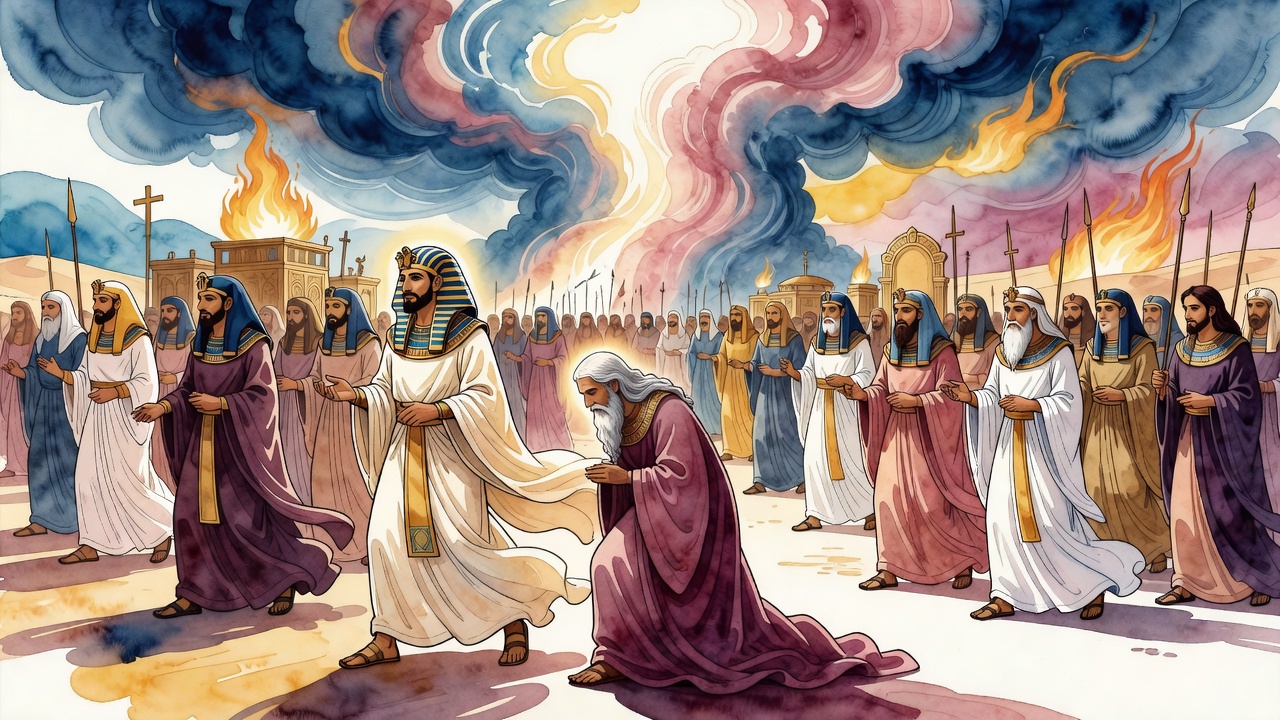
Princesses Threw Jewels at Joseph Through the Wall
Royal daughters press jewels through wall slits to catch Josephs eye. He keeps his gaze down, and a later Torah law becomes his reward.
Table of Contents
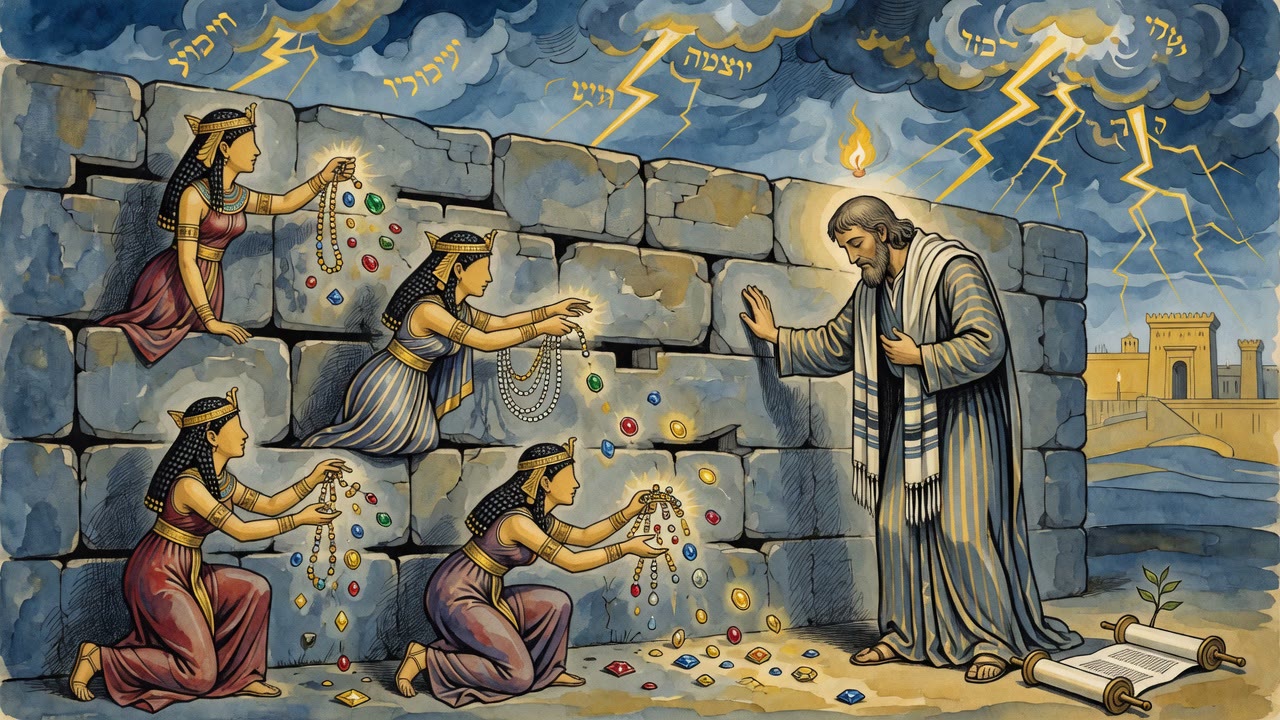 Click for full size
Branches Over the Wall
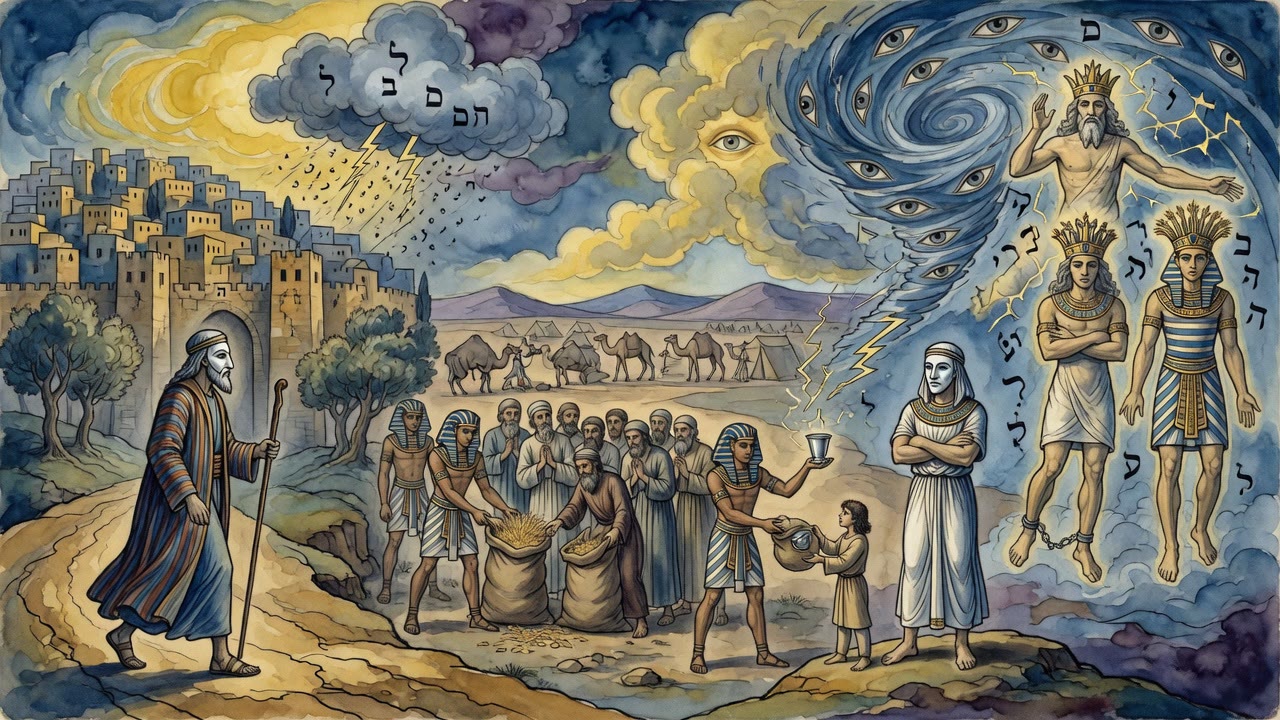
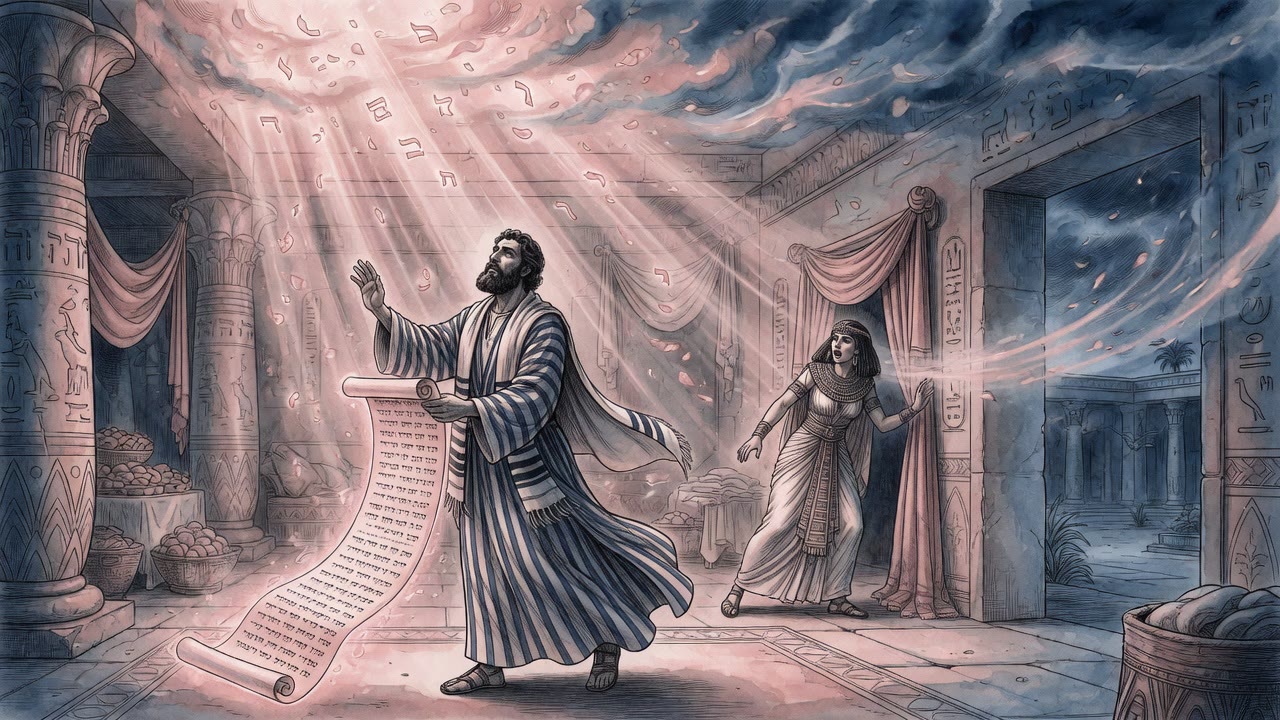
Jacob called Joseph a fruitful tree beside a spring, branches running over the wall (Genesis 49:22). In Egypt the image turned literal and loud. When Joseph rose from prison to the second chariot, the daughters of kings pressed faces to slits in palace walls and threw jewels, hoping the flash would lift his eyes. Gold clicked on stone. A bracelet spun and stopped at his heel. Perfume rode the heat like a second weather.
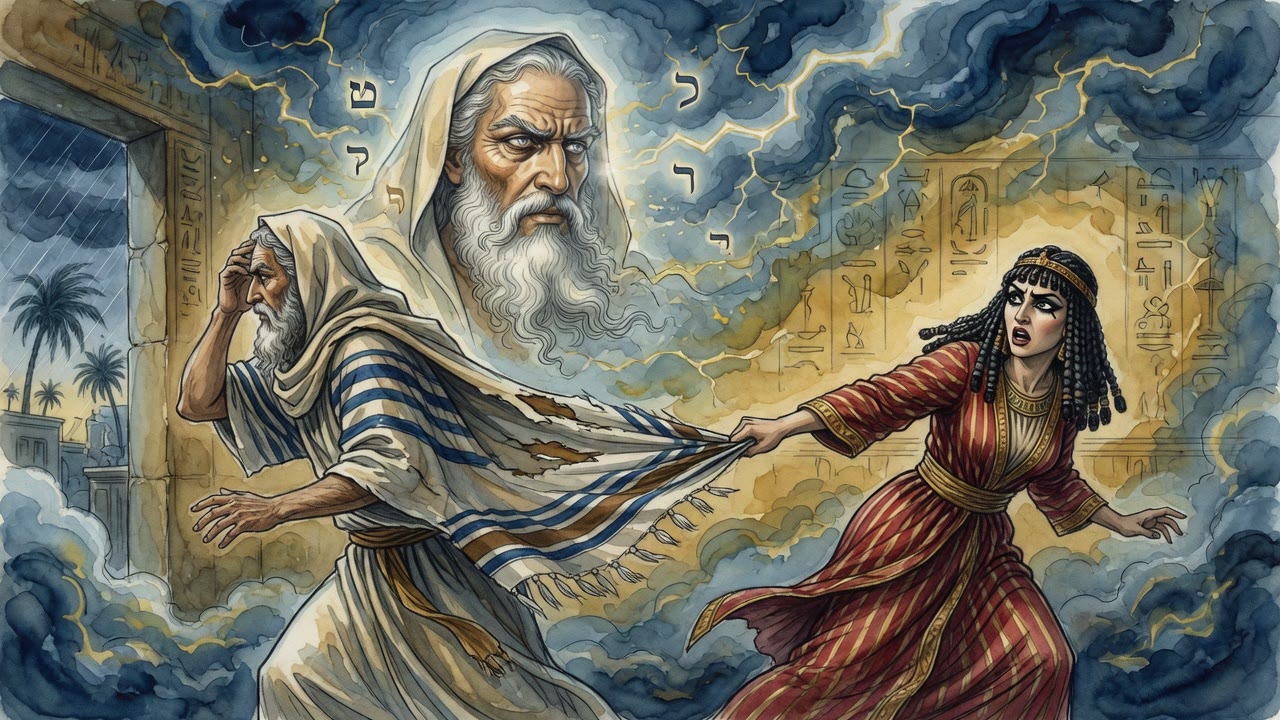
Joseph did not look up. He stepped over the glitter and kept walking toward the work that had pulled him out of the pit. The Hebrew word for fruitful, porat, also tastes of broken faith. Joseph had brought evil reports about his brothers. They sold him. He refused his master's wife. She turned against him. Betrayal stacked on betrayal until the wall itself became a test of whether a man who had been broken could still refuse a crown tossed through a crack.
Courtiers laughed at first. Then they watched. A viceroy who will not lift his eyes for royal daughters is either a fool or a man under a harder king than Pharaoh. Joseph already knew which.
Cows and Storehouses
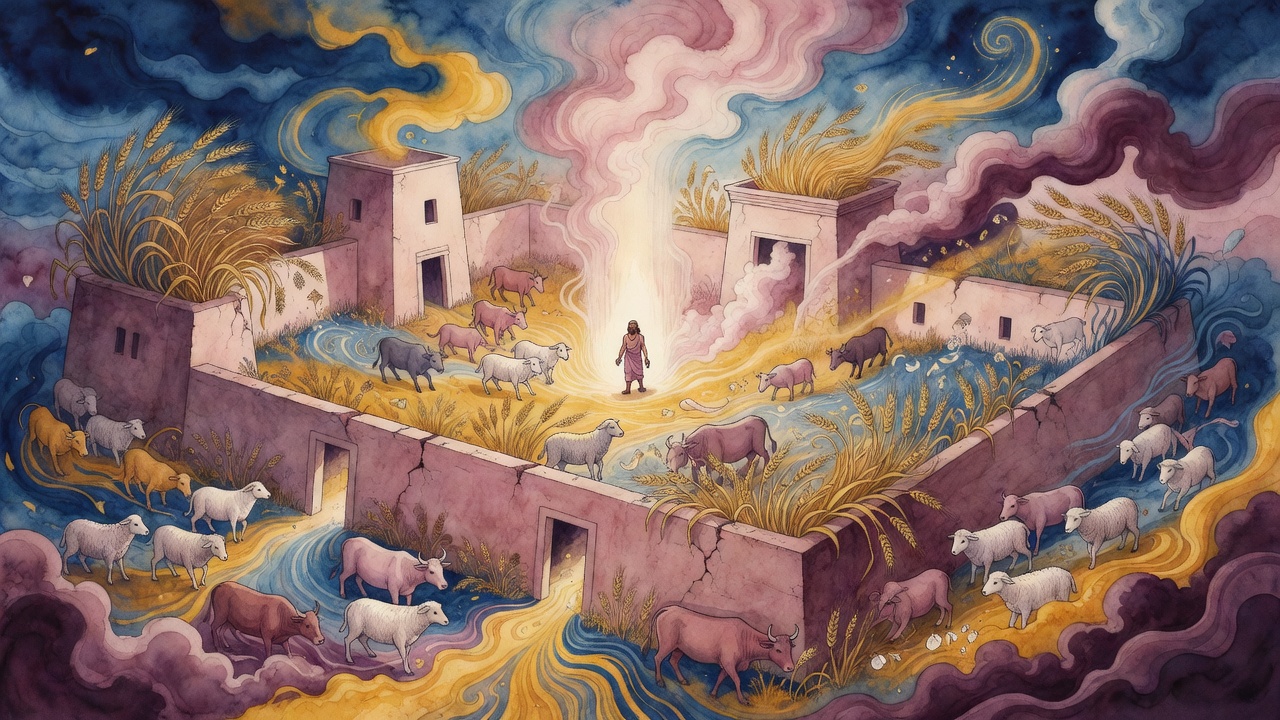
Greatness came through cows and produce, the midrash laughs and means it. Pharaoh's dreams of fat and thin cattle opened the road. Joseph gathered grain until abundance ran from reaping to mill without the usual middle of threshing dust. He stored each city's food near its own fields, the way later storytellers would say Tiberias keeps Tiberias grain and Tzippori keeps its own. Dust and ash mixed into the stores. Blessing increased what walls could hold until ledgers lied upward.
The man who once counted his brothers' hatred now counted Egypt's years. Seven of plenty. Seven of famine. He walked the granaries at night and heard grain settle like rain that had agreed to wait. Branches over the wall were not only desire aimed at him. They were his own reach past the prison, past Potiphar's house, into a kingdom that ate because he had learned to read night visions and turn them into silos.
Foreigners would come for bread. Brothers would come and not know him. The jewels on the floor were a cheaper test than that reunion, and he had already passed the cheap one.
What He Would Not See
The jewels kept falling on feast days when the city watched him ride. Joseph kept his gaze on ledgers, river levels, and the faces of men who needed grain more than they needed his smile. Because he would not lift his eyes to those royal faces, God promised his line a foothold in Torah. The daughters of Tzelofhad, later, would stand before Moses and win inheritance when no son remained, writing a new portion into the law.
The midrash draws a line from a lowered gaze in Egypt to women speaking Torah in the wilderness. Restraint became statute. Jacob, blessing, was also paying a debt. He had once hidden Rachel from Esau's eye with arrangement and fear. Joseph's reward answered old family theater with public integrity under a harder light, where the audience held real power and real stones.
Potiphar's wife had tried to make his body a story he did not choose. The wall-slit princesses tried to make his eyes a market. He refused both scripts. The fruit tree stayed planted beside its spring.
One Hundred and Ten Years
Joseph lived one hundred and ten years in Egypt with his father's household around him at the end. The sages pair that number with other lives that rhyme across generations: Joseph with Joshua, Moses with Hillel, and other matched spans that make time itself look like a student of patterns. Stages of forty years shape Moses, and later Akiva's climb from ignorance to mastery. Joseph's stages are quieter: favored son, slave, prisoner, lord of grain, old man whose bones will wait for a later Exodus.
At the end the fruitful tree is not the jewels on the floor. It is food in the cities, brothers still alive, children learning Hebrew names under Egyptian ceilings, and a Torah foothold not yet born. The wall keeps its slits. Wind still finds them. Joseph keeps walking past them with his eyes on the work that feeds the world he once entered in chains.
When he dies, Egypt will embalm him and set him in a box that waits for a night of two bloods and a road east. The branches that ran over the wall finally run home.
In the granary dark he sometimes remembered the coat of many colors as a younger kind of jewel, one his father had thrown over him in love and his brothers had stripped in hate. The wall-slit gold was only a louder version of the same test: will you let other people's desire write your name? Joseph answered by counting sacks and opening storehouses on time. Egypt ate. He endured. The branches ran over the wall and still rooted in a spring no princess could buy.
← All myths