5 min read

Potiphar's Wife Lurked at Every Corner Asking for Joseph

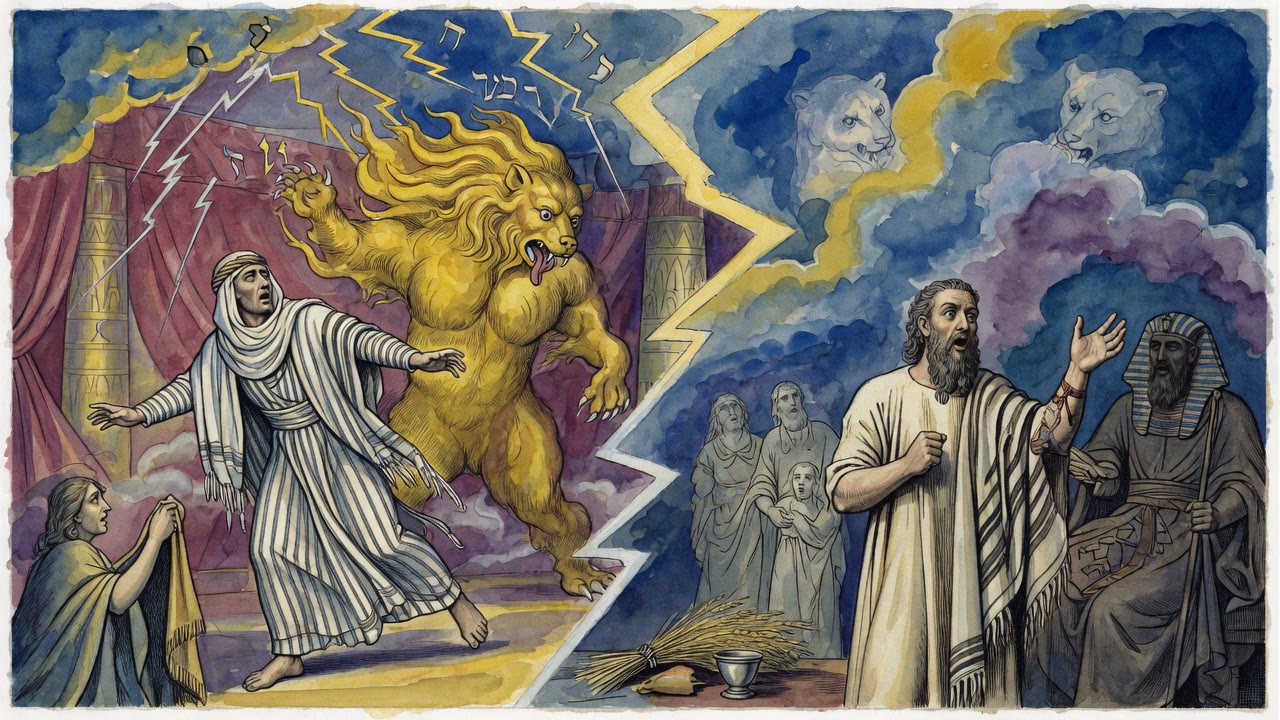
Joseph locked the storeroom, counted his comfort, and thanked God for the relief. Heaven answered that it was about to set a she-bear on him.

Curated by Arthur · Told by Maggid ·
Table of Contents
  1. The Steward Who Thought He Had Arrived
  2. Heaven Promised Him a She-Bear
  3. She Asked Strangers If They Had Seen Him
  4. The Chain Had a First Link
  5. Judah Snared by His Own Mouth
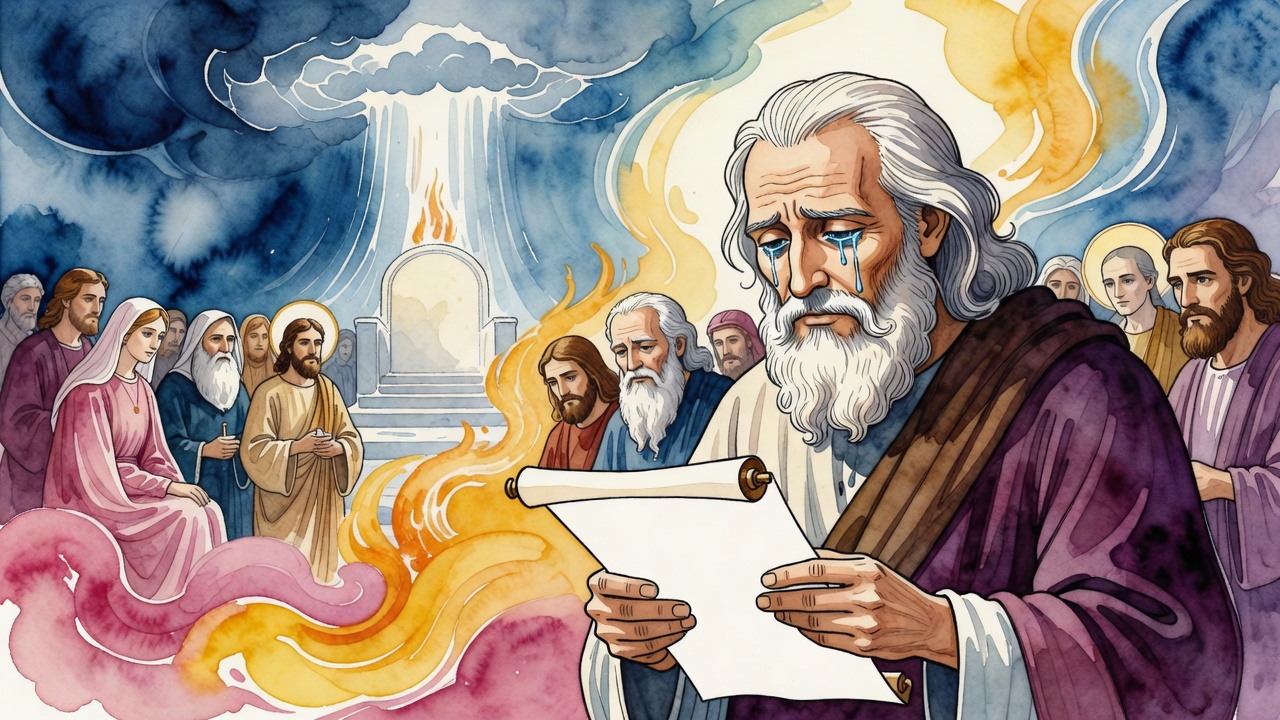
Potiphar's Wife Lurked at Every Corner Asking for Joseph Click for full size

The Steward Who Thought He Had Arrived

Joseph locked the storeroom at the end of a good day and let himself feel it. Back in his father's house, whenever a fine portion came to the table, Jacob looked around for him and gave it to him, and his brothers sat and watched him eat it. Nobody watched him here. He held the keys, the accounts balanced, the master asked no questions.

"Now that I am here," he said, "I am grateful to You that I have relief."

Egyptians who bought slaves took them to an astrologer first, and the astrologer looked up and told the buyer the stars were good. Somebody had read a good portent over this one. Joseph had started to believe it.

Heaven Promised Him a She-Bear

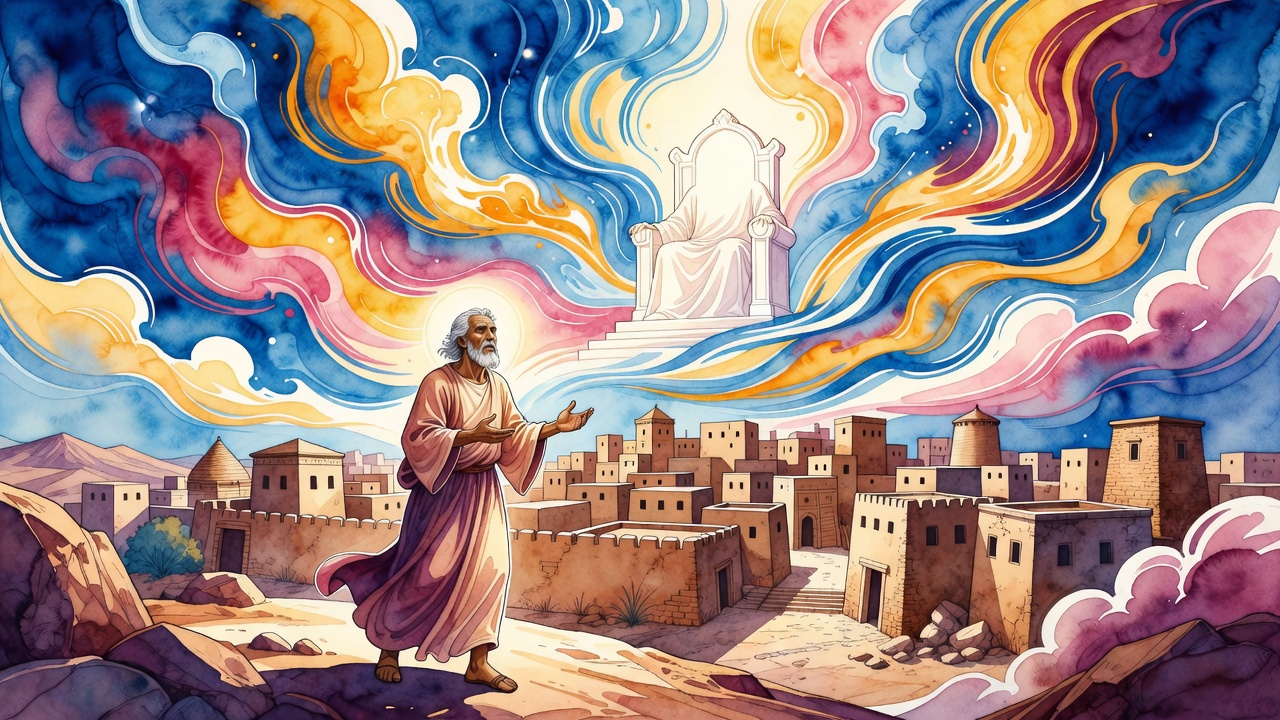
The answer came back on the same breath as the thanks. "Carefree one. As you live, I am going to set the she-bear on you."

He tried a second thought, and it went worse than the first. His grandfather had been put through ordeals. His father had been put through ordeals. Was he really going to be handed a quiet career in a warm house?

"As you live," came the answer, "your ordeals will be greater than theirs."

The bear was already in the building.

She Asked Strangers If They Had Seen Him

In the street the mistress of the house was the modest wife of Pharaoh's officer, correct at the door, careful with her eyes. Inside, she dressed for one man and could not sit still. She muttered. She turned in circles. She went out again.

Her feet would not stay home. She was in the street, then in the squares, then lurking at a corner, stopping people she barely knew and asking them, "Have you seen Joseph?"

When she finally got both hands on him she did not bargain and she did not wrap it. She seized him, she kissed him, and she said four words. "Lie with me." Rabbi Shmuel bar Nachman said the wicked are accursed, and he meant the way it was said: no offer, no covering, nothing left to the man but the answer.

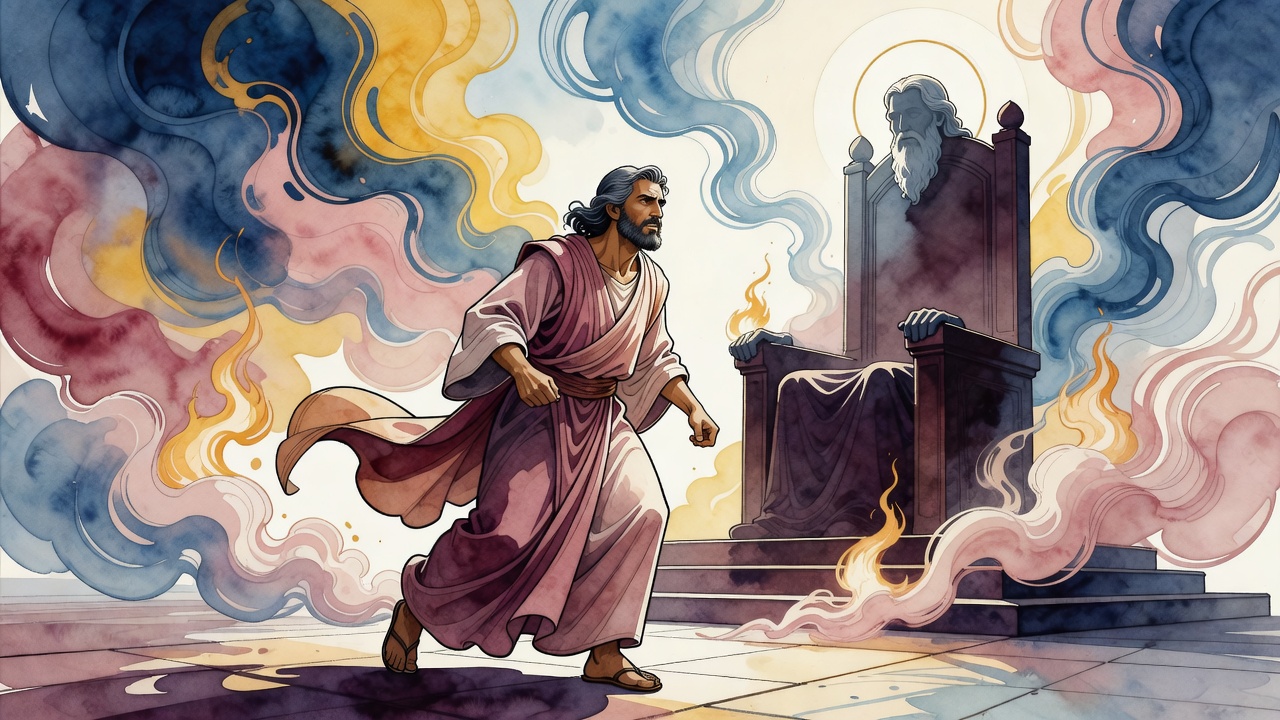
He answered by leaving. He fled the room and left his garment hanging in her fist.

She had the cloak, so the household heard her account before it heard his, and by evening he was in the prison where the king's prisoners were kept.

The chain that put him there had a first link, and it was his own mouth. A boy among the naive. Discerning among the youths, and then the hard word: devoid of understanding. Is there anyone more devoid of understanding than a man who sets his own brothers against him? He had carried reports about them to their father. Out of that talk came the pit, and out of the pit came the caravan, and out of the caravan came a house with a woman in it, and out of the house came the cell.

Nothing in Egypt happened to him at random. It happened in order.

Judah Snared by His Own Mouth

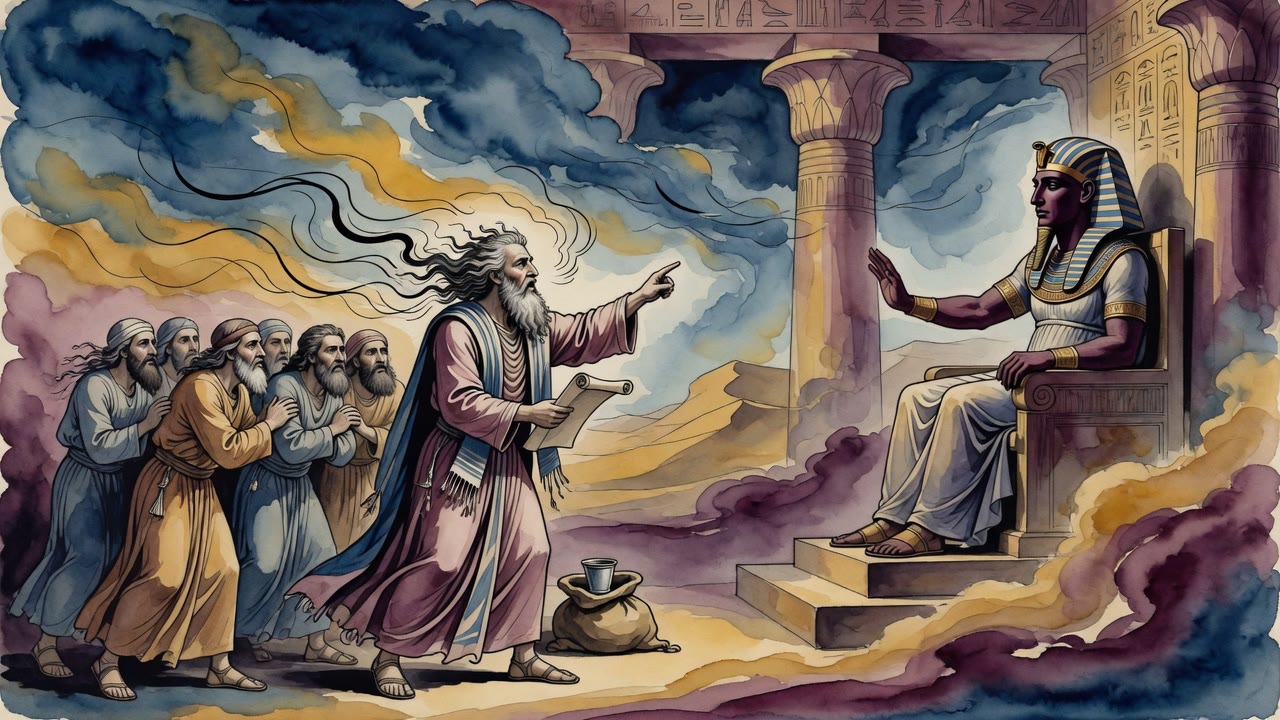
Years later, ten men from Canaan faced the viceroy of Egypt in his own hall and did not know they were looking at their brother. A silver goblet had come out of the youngest one's sack. The viceroy wanted the boy for a slave and the rest of them on the road home.

Judah stepped forward, and he knew exactly where the trap had shut on him. He had stood in front of his father and said the words with his own mouth. "I will guarantee him. From my hand you can demand him. If I do not bring him back to you, I will have sinned against you forever" (Genesis 43:9). Flee three things, Rabbi Hanina used to say, and one of the three is standing surety between one man and another. Judah had run straight at it.

My son, if you have gone surety for your friend, if you have shaken your hand for a stranger, you are snared by the sayings of your own mouth. Do this and be delivered (Proverbs 6:1-3). The doing was one instruction. Go down. Cleave to the dust of the man's feet. Take his kingship and his lordship on yourself and say so out loud.

So Judah approached him. "Please, my lord, let your servant speak a word in my lord's ears, and do not be angry with your servant, for you are like Pharaoh" (Genesis 44:18). He went down to the floor at the feet of the brother he had sold, and offered his own body in the youngest one's place.

The man in the chair had been ruined once by his own mouth and had spent years in a cell thinking about it. He sat above his brother and watched a mouth do it again, and this time the words bought a boy back.


← All myths
From the tradition

Sources

3 sources

The texts behind this telling. Some cards carry a translation of the source; others are our own retelling of it, and each card says which. Every card links out to the original.

Bereshit Rabbah 87:1Bereshit Rabbah

Retold in our words. Read the original at the link below.The Sefaria Midrash Rabbah, 2022 · CC-BY

The story of Joseph and Potiphar's wife is a perfect example, and the Rabbis in Bereshit Rabbah, that rich collection of Genesis interpretations, really dig into the nuances of this pivotal moment.

The Torah tells us, "It was after these matters that his master's wife cast her eyes upon Joseph and she said: Lie with me" (Genesis 39:7). But what does "after these matters" really mean? What led to this intense temptation? The Rabbis, ever keen to uncover hidden layers of meaning, find clues in the Book of Proverbs.

Rabbi Levi makes a fascinating connection to (Proverbs 7:7), "I saw among the naïve [bapetayim]." He explains that in Arabia, children are called patya. He sees the "naïve" ones as representing the tribes of Israel. Then, the verse continues, "Discerned among the youths a lad" – and this, Rabbi Levi suggests, is Joseph. But here's the kicker: the verse concludes with "devoid of understanding."

Ouch.

Why "devoid of understanding"? Because, the Rabbis suggest, Joseph was guilty of speaking slander about his brothers. Is there anyone more devoid of understanding than one who sows discord within his own family? It's a harsh judgment, but it highlights a crucial point: Joseph's past actions, his youthful indiscretions, contributed, in a way, to the situation he now finds himself in. From that, their descent to Egypt developed. The seeds of this entire exile, this entire saga, are sown in youthful missteps.

The Rabbis continue to examine the Proverbs passage, drawing parallels between the "strange woman" in Proverbs and Potiphar's wife. "And behold, there is a woman to meet him" (Proverbs 7:10) – this, they say, is Potiphar’s wife, confronting Joseph. "Dressed like a harlot" (Proverbs 7:10) – specifically, for Joseph. "And wily of heart" (Proverbs 7:10) – but her wiliness, her cunning, is reserved "for Egypt." The Rabbis are suggesting that outwardly, she presented a modest public persona.

But underneath, according to (Proverbs 7:11), "She is turbulent and rebellious" – muttering and confused. The Rabbis see this turbulence as stemming from her intense lust. Her feet "do not abide in her house" (Proverbs 7:11), but rather, "sometimes in the street, [sometimes in the squares, she lurks at every corner]" (Proverbs 7:12). Imagine her, desperately searching, asking, "Have you seen Joseph?"

The intensity escalates. "She seized him and kissed him" (Proverbs 7:13) – which connects to the Torah’s description, "she seized him by his garment" (Genesis 39:12). And finally, "She was brazen and said to him" (Proverbs 7:13) – echoing the stark command in Genesis, "Lie with me" (Genesis 39:12).

The Rabbis, through this intricate weaving of Proverbs and Genesis, paint a vivid picture of temptation, desire, and the consequences of both past actions and present choices. This wasn't just a random event; it was a culmination of factors, a collision of personalities, and a test of Joseph's character. What would he do? How would he respond? And how would his decision shape not only his own destiny, but the destiny of his entire family?

This story reminds us that we are all works in progress. Our past actions can have ripple effects we don't anticipate. And in moments of intense temptation, the choices we make define who we truly are.

Full source
Bereshit Rabbah 87:4Bereshit Rabbah

Retold in our words. Read the original at the link below.The Sefaria Midrash Rabbah, 2022 · CC-BY

Our story comes from Bereshit Rabbah, specifically section 87. Bereshit Rabbah is a midrash, a collection of rabbinic interpretations and expansions on the Book of Genesis. It's where we find not just the literal text, but the deeper layers of meaning, the "between-the-lines" stuff that makes the Torah so endlessly fascinating.

The verse According to this midrash, there was some serious contemplation going on. Who was contemplating? Joseph himself.

He was thinking back to his life with his father, Jacob. "When I was in Father’s house," Joseph mused, "Father would always make sure I got the best portions. My brothers, well, they weren't too happy about it. But now? Now I'm doing alright. I'm grateful for this relief."

Here's where it gets interesting. The midrash suggests that the Kadosh Baruch Hu, the Holy One, blessed be He, wasn't exactly thrilled with Joseph's complacency. God basically says, "Oh, you think you're carefree, huh? Just you wait. I'm going to incite the she-bear against you."

A she-bear? What's that all about? Well, it's a metaphor, of course. A symbol of unexpected, ferocious adversity.

The midrash continues: Joseph thought, "Father went through trials, my grandfather went through trials… surely I won't escape them, will I?" And God’s response? "Oh, you want trials? I'll give you trials. Bigger than theirs."

Ouch.

Rabbi Menachama, citing Rabbi Beivai, brings in an interesting parallel. He says that in those times, idolaters had a custom: when they acquired new slaves, they would consult an astrologer. The astrologer would give them a reading, a "good portent," using a term, "vatisa." The midrash connects "vatisa" to the Hebrew word "tisa" from (Deuteronomy 4:19), which warns against being led astray by heavenly bodies. The implication? Joseph was perhaps a bit too comfortable, a bit too reliant on his good fortune, his "good stars" so to speak.

And then there's the infamous encounter with Potiphar's wife. "Lie with me," she demanded. Rabbi Shmuel bar Nachman points out the stark contrast with the story of Ruth. There, Ruth modestly asks Boaz to "spread your garment over your maidservant" (Ruth 3:9). But Potiphar's wife? According to Rabbi Shmuel bar Nachman, she acted "like an animal."

So, what's the takeaway?

Maybe it's a reminder that complacency can be a dangerous thing. That even when life seems easy, we shouldn't forget the challenges that others have faced, or become too comfortable in our blessings. Or maybe, it's a commentary on free will versus destiny. Was Joseph destined for hardship, or did his attitude somehow invite it? The midrash doesn't give us easy answers, but it certainly gives us plenty to think about.

Full source
Bereshit Rabbah 93:1Bereshit Rabbah

Retold in our words. Read the original at the link below.The Sefaria Midrash Rabbah, 2022 · CC-BY

The ancient rabbis certainly did, and they found wisdom in the story of Judah and Joseph in the book of Genesis to guide us.

Our story begins with a tense encounter. Judah, pleading for his brother Benjamin's release, approaches the powerful Egyptian official, who is secretly his own brother, Joseph. Judah says, "My lord, may your servant please speak a word in my lord's ears, and do not become incensed with your servant, as you are like Pharaoh" (Genesis 44:18). It’s a bold statement, laden with desperation.

Bereshit Rabbah 93, a collection of rabbinic interpretations on the Book of Genesis, dives deep into this moment, connecting it with a seemingly unrelated passage from Proverbs: "My son, if you became a guarantor for your friend… you have been snared by the sayings of your mouth…Do this [and be delivered]…" (Proverbs 6:1–3). What's the connection?

Rabbi Ḥanina offers a profound insight. He advises us to flee from three things and cling to three others. The things to avoid? Deposits, refusals, and serving as a guarantor. Now, "deposits" here refers to taking on the responsibility of safekeeping someone else's object. "Refusals" alludes to a delicate situation where a young, orphaned girl is encouraged to reject a betrothal arranged for her.

But it's the third warning that truly resonates with Judah's predicament: avoid being a guarantor. Then, Rabbi Ḥanina contrasts this with the three things to embrace: ḥalitza (a ritual that releases a widow from levirate marriage), nullification of vows, and introducing peace. Each of these promotes freedom and reconciliation.

Why the aversion to being a guarantor? According to Rabbi Berekhya, quoting Rabbi Shimon bar Abba, a deposit, or pikadon, should be seen as puk don – "take this out!" Don't let it into your house in the first place! It's a burden, a potential source of trouble.

The midrash, a form of ancient Jewish biblical interpretation, connects this directly to Judah. Remember when Judah guaranteed Benjamin's safe return to their father, Jacob? He said, "I will guarantee him" (Genesis 43:9). The verse in Proverbs about shaking hands when becoming a guarantor, "If you have shaken your hands for a stranger" (Proverbs 6:1), is linked to Judah's acceptance of responsibility: "From my hand you can demand him" (Genesis 43:9).

Judah is trapped! “You have been snared by the sayings of your mouth” – because he said, "if I do not bring him to you" (Genesis 43:9). So, what’s the escape? "Do this, then, my son, and be delivered" (Proverbs 6:3) – "go and cleave to the dust of his feet and accept his kingdom and lordship" – hence, "Judah approached him."

The Etz Yosef commentary suggests that Judah approached Joseph to literally kiss his feet and accept his kingship, a complete act of submission. By acknowledging Joseph's authority, Judah might find a way out of the promise that now binds him.

This midrash offers us a powerful message. Sometimes, the only way to escape a self-imposed trap is through humility and surrender. To acknowledge the power of another, to release our own ego, can be the key to unlocking our freedom. It's a complex lesson, and one that resonates deeply with the human experience of promises made, and the weight of responsibility. So, the next time you find yourself trapped by a commitment, remember Judah, and ask yourself: is there a way to find freedom through submission?

Full source