Parshat Vayigash5 min read

Benjamin Swore His Oath on Joseph's Old Sale

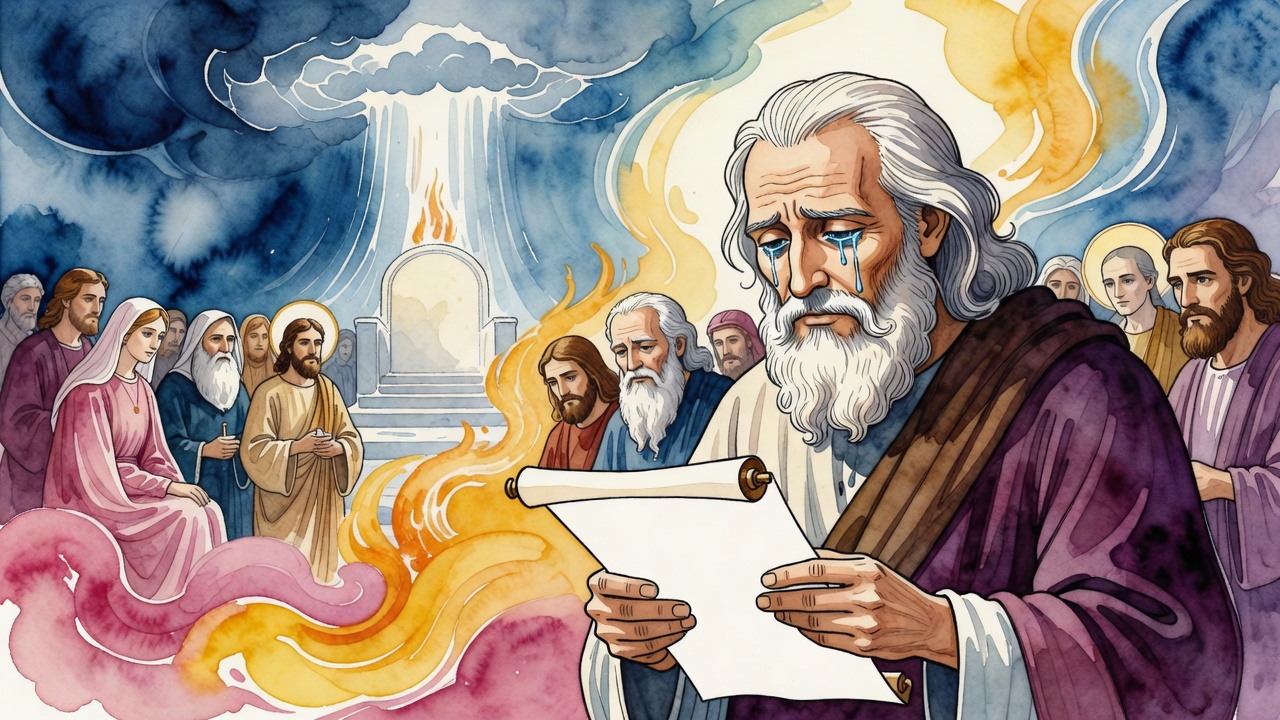
Judah raged over the silver cup until Manasseh's hand cooled him. Benjamin swore innocence by the very crimes that once sold Joseph.

Curated by Arthur · Told by Maggid ·
Table of Contents
  1. Egypt Between Two Masters
  2. Manasseh's Hand on Judah's Shoulder
  3. The Oath That Named the Crime
  4. Forgiveness That Outlived the Pit
  5. What the Cup Forced Open
Benjamin Swore His Oath on Joseph's Old Sale Click for full size

Egypt Between Two Masters

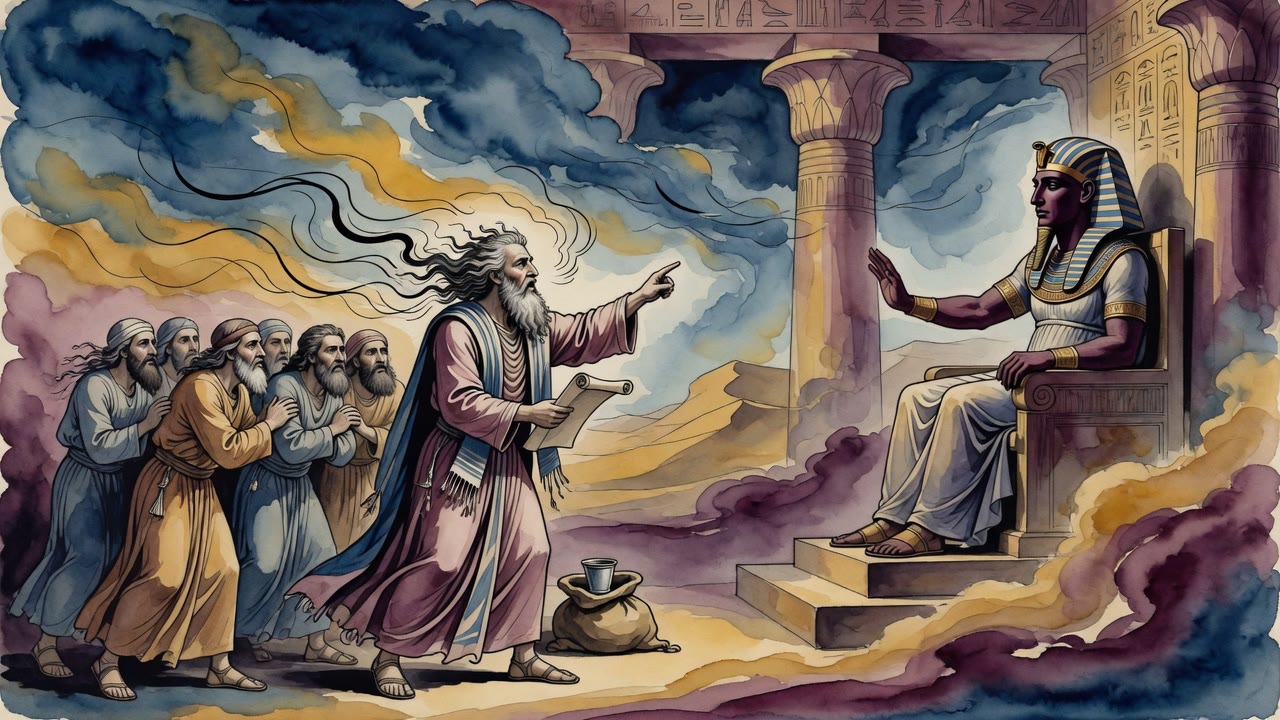
Pharaoh sent a message that cut like a knife between two nations. Egypt reeled under the plagues, and the king named the price to the Hebrew who still wore Egyptian power. Choose between me and the Hebrews. Choose between Egypt and their land. If you will not heed my command, leave me and go with them.
Joseph heard the throne demand a side and felt his own house arrive like a second storm. His brothers had already driven Egypt toward collapse with the weight of heaven behind their cause. He could not keep both crowns forever. He needed one opening that would turn accusation into recognition without breaking the room into blood.

The silver cup still sat in the story like a loaded trap. Judah's fury filled the hall. Joseph needed kinship to speak before steel did.

Manasseh's Hand on Judah's Shoulder

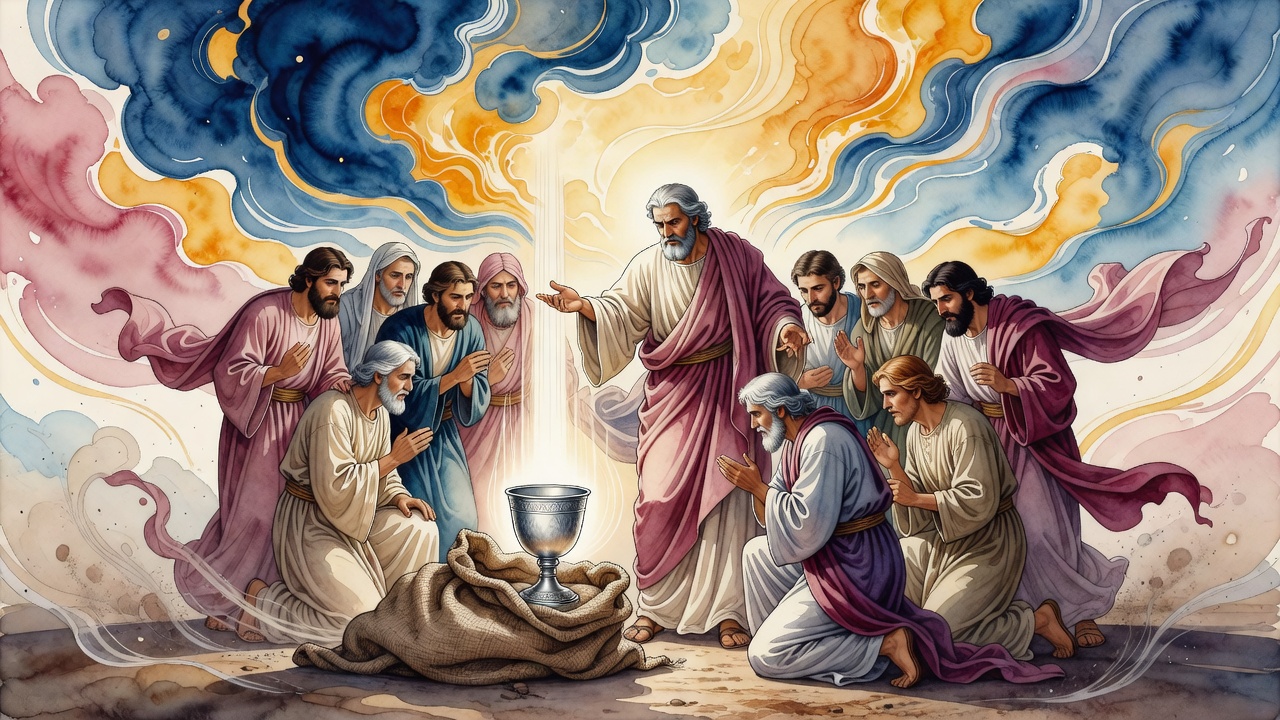
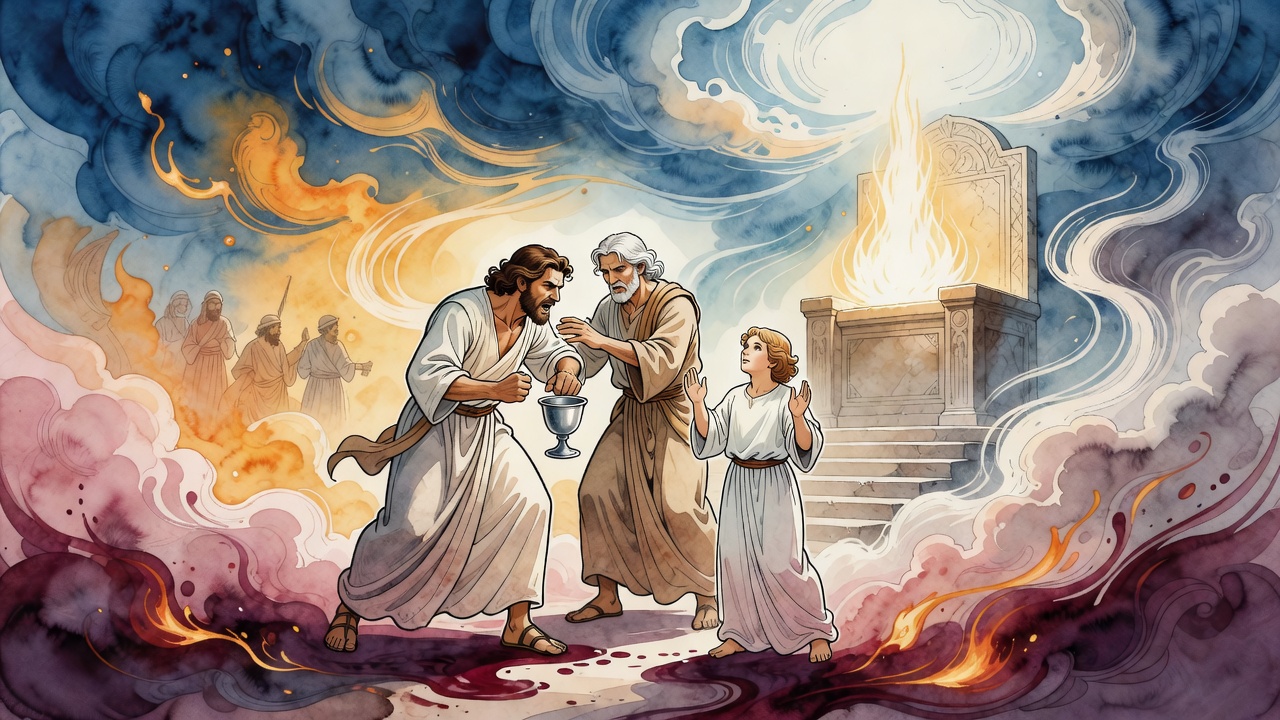
At Joseph's command, his son Manasseh set a hand on Judah's shoulder. The touch of a kinsman ran through the fiercest brother like cold water on iron. Rage that had been building toward war lost its edge. Such strength, the old telling insists, lived in no other family. Blood recognized blood before names were spoken.

Joseph did not crow. He spoke gently, as if the cup were still the only subject in the world. "I should like to know who advised him to steal the cup. Could it have been one of you?" The question was a door. Judah's heat had cooled enough for someone smaller to walk through it.

Benjamin answered first. Neither did they counsel theft, nor did I touch the cup. Joseph pressed harder. Take an oath upon it. The youngest brother stood where the pit once yawned for another Rachel's son, and the air tightened around every word he was about to use.

The Oath That Named the Crime

Benjamin swore with a litany that should have unmasked the man on the throne. "I swear that I did not touch the cup! As true as my brother Joseph is separated from me; as true as I had nothing to do with the darts that my brethren threw at him; as true as I was not one of those to take off his coat; as true as I had no part in the transaction by which he was given over to the Ishmaelites; as true as I did not help the others dip his coat in blood; so true is my oath, that they did not counsel theft, and that I did not commit theft."

Every clause was a scar spoken aloud. Separation. Darts. Coat. Sale. Blood. The brothers heard their own past become the measure of truth. Joseph heard the family name his own vanishing while still wearing Egyptian linen. The staged theft had done its work. It dragged the real theft into the light without needing a sword.

Benjamin thought he was defending a sack. He was rebuilding a brother's face from the pieces of an old crime.

Forgiveness That Outlived the Pit

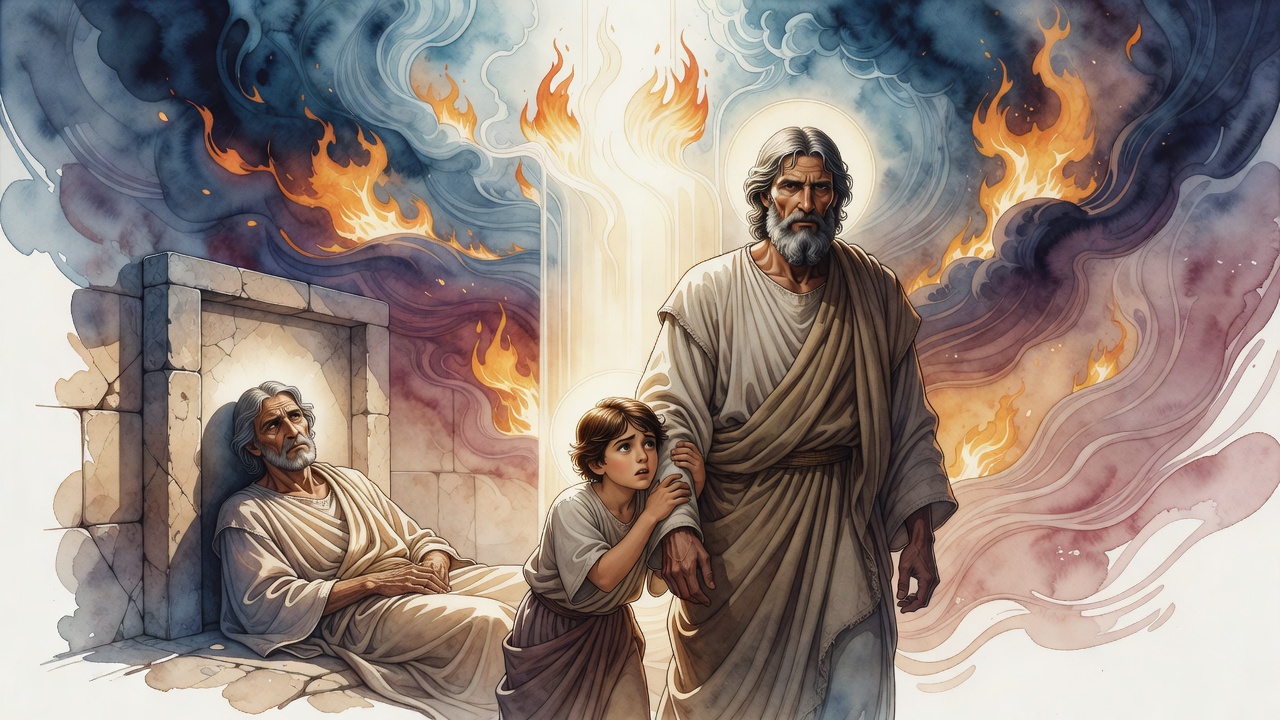
When the truth finally stood open, Joseph did not turn the cup into a gallows. Until the day of his death he would not have divulged what his brothers had done to him. Even when God made the deed plain to Jacob, Joseph denied it still, shielding the men who once sold him. Power sat in his hands. He used it to feed Goshen, to clothe the household, to keep the wound from becoming their only name.

The brothers who had measured his coat in blood now measured grain under his seal. He furnished food and drink and status as if love could rewrite a ledger. The man who could have written their guilt into Egyptian law wrote them into survival instead.

Pharaoh's ultimatum still hung outside the hall. Inside, Joseph had chosen the Hebrews without abandoning mercy for the ones who made him Egyptian first by force.

What the Cup Forced Open

A hand on a shoulder. An oath built from crimes. A ruler who would rather starve revenge than feed it. The silver cup never mattered as metal. It mattered as pressure that made Benjamin speak the sale out loud while Joseph still wore another name.

Judah's calmed shoulder and Benjamin's raw oath left the family nowhere to hide. Joseph answered with silence about the past and open storehouses for the future. The brothers walked out under a brother who remembered everything and chose not to publish it.

Years later the same household would still eat from that choice. Egypt would still demand sides. Joseph had already taken one. He stood with the Name and with the men who once threw him into a pit, and he kept their shame from becoming the only inheritance Jacob's sons carried north again.

The brothers had come for grain and found a courtroom. Egyptian protocol, Hebrew guilt, and a cup that never needed to be real to do real work. Manasseh's hand was a small weight. Benjamin's oath was a large one. Between them the family finally spoke the sale in a language even a viceroy could not pretend not to understand.

Joseph had managed Egypt's hunger with sealed storehouses. Now he managed his own hunger for a home that would not break again. Feeding Goshen was policy. Protecting brothers from Jacob's full knowledge was something closer to love wearing armor. The pit had taught him what exposure costs. He would not bill them the same price twice.


← All myths
From the tradition

Sources

3 sources

The texts behind this telling. Some cards carry a translation of the source; others are our own retelling of it, and each card says which. Every card links out to the original.

Legends of the Jews 1:301Legends of the Jews

Retold in our words. Read the original at the link below.The Legends of the Jews by Louis Ginzberg (1909) · Public Domain

The stakes? Nothing less than the fate of Egypt, and the freedom of his own people.

In Legends of the Jews, the situation had reached a fever pitch. Egypt was reeling from the plagues, and Pharaoh, finally understanding the source of the "mighty uproar," sent a message to Joseph. It was a stark choice: concede to the Hebrews' demands for freedom, or watch Egypt crumble. Pharaoh put it bluntly: "Thou canst take thy choice between me and the Hebrews, between Egypt and the land of the Hebrews. If thou wilt not heed my command, then leave me and go with them into their land." Can you imagine the weight of that decision?

Joseph, seeing that his brothers were about to bring Egypt to its knees, knew he had to act. He needed to reveal his identity, but how? He couldn't just blurt it out. He needed an opening, a moment that felt organic, that would lead naturally to the revelation. This wasn't just about him; it was about his brothers, about their past, and about the future of their family.

What happened next is fascinating. Joseph orchestrated a moment involving his son, Manasseh, and Judah, the fiercest of Joseph's brothers. At Joseph's command, Manasseh placed his hand on Judah's shoulder. And something remarkable happened. The touch, the connection to a kinsman, calmed Judah's rage. It seems kinship, family ties, were a force even Judah couldn’t ignore. This was because such strength existed in no other family.

Then, Joseph, ever the strategist, addressed Judah gently. "I should like to know who advised him to steal the cup," he said, referring to the staged theft that had led to this confrontation. "Could it have been one of you?"

Now, Benjamin, the youngest brother, chimes in. "Neither did they counsel theft, nor did I touch the cup." But Joseph pressed him, "Take an oath upon it."

Benjamin's oath is powerful, dramatic. It's a litany of denials, each one tied to the past betrayal of Joseph himself. "I swear that I did not touch the cup! As true as my brother Joseph is separated from me; as true as I had nothing to do with the darts that my brethren threw at him; as true as I was not one of those to take off his coat; as true as I had no part in the transaction by which he was given over to the Ishmaelites [Arabs]; as true as I did not help the others dip his coat in blood; so true is my oath, that they did not counsel theft, and that I did not commit theft." Benjamin swears his innocence by invoking the very tragedy that had shaped their lives, the disappearance of Joseph. The weight of that oath, the echoes of the past, must have been palpable. Did Joseph finally feel seen? Was this the crack in the facade that would lead to the truth?

What do you think compelled Benjamin to utter such a solemn oath? Was it simply to prove his innocence, or was it something deeper - a subconscious desire to finally acknowledge the unspoken trauma that haunted their family? Sometimes, the most dramatic moments are born not from grand gestures, but from the quiet, desperate plea for truth.

Full source
Legends of the Jews 2:83Legends of the Jews

Retold in our words. Read the original at the link below.The Legends of the Jews by Louis Ginzberg (1909) · Public Domain

His story is more than just a rise from slavery to power in Egypt. It’s a blueprint for how to live a life steeped in compassion.

The text It speaks directly to Joseph's brothers, urging them to emulate his remarkable capacity for forgiveness. Joseph was sold into slavery by his own brothers. They were jealous, resentful, and acted out of a place of deep insecurity. He suffered immensely. Yet, even after rising to a position of power where he could have easily exacted revenge, he chose a different path.

The Legends of the Jews emphasizes that Joseph, "until the day of his death he would not have divulged what his brethren had done to him." Even when God revealed their actions to their father Jacob, Joseph still denied it. He protected his brothers. He shielded them from the full weight of their actions.

Why? What drove him to such incredible lengths?

It wasn’t until Jacob practically begged him, adjuring him to confess the truth, that Joseph finally spoke out. And even then, his concern wasn't for himself. He immediately asked his father to pray for his brothers, "that God account not the evil they had done to him as a sin."

Wow.

Jacob, upon hearing this, was astounded. He exclaimed, "O my good child Joseph, thou hast shown thyself more merciful than I was!"

That's a powerful statement coming from Jacob, a man who wrestled with angels and whose life was, shall we say, complicated. He recognized the exceptional quality of Joseph's character.

Joseph's story isn’t just a feel-good tale. It's a challenge. Can we find the strength to see past the hurt, to understand the motivations of those who have wronged us, and to ultimately choose compassion over vengeance? It's a high bar, no doubt, but one worth striving for. After all, as the legend suggests, it might just make us even more merciful than our ancestors.

Full source
Legends of the Jews 1:346Legends of the Jews

Retold in our words. Read the original at the link below.The Legends of the Jews by Louis Ginzberg (1909) · Public Domain

The story of Joseph in the Book of Genesis, and the elaborations on it in later Jewish tradition, offer a powerful counter-narrative to that feeling. Joseph, sold into slavery by his own brothers, endures years of hardship, rises to power in Egypt, and then.confronts the very men who betrayed him. What does he do? Does he exact revenge? Impose harsh penalties?

Not according to the Legends of the Jews, a monumental work by Rabbi Louis Ginzberg that compiles and retells Jewish folklore and tradition surrounding the biblical narratives. Ginzberg tells us that after Jacob and his family settled in the land of Goshen (the region of Egypt allocated to them), Joseph provided for their every need. It wasn't just about food and drink. He furnished them with clothing too, an important symbol of status and care in the ancient world.

Here's the truly remarkable thing: Joseph, in his "love and kindness," entertained his father and brothers daily at his own table. The brothers, who had cast him into a pit and sold him off, now sharing meals with the very brother they had wronged, the second-most powerful man in Egypt.

Joseph didn’t just passively provide for them. He actively chose to be in community with them. This wasn't a grudging act of familial duty. It was an embrace of reconciliation.

And it went even deeper. Joseph, according to Ginzberg's retelling, banished the wrong his brothers had done to him from his mind. He didn't just forgive; he actively worked to forget. To consciously choose to erase the memory of a deep hurt. And he didn't stop there. He even asked his father, Jacob, to pray to God for his brothers, that they might be forgiven for their "great transgression." Wow.

Touched by this "noble sign of love," Jacob cried out, "O Joseph, my child, thou hast conquered the heart of thy father Jacob." It's a powerful moment, evidence of the transformative power of forgiveness and compassion. Joseph didn’t just conquer Egypt; he conquered his own anger and resentment. He conquered his father's heart.

Joseph's actions serve as a profound example. Can we, like Joseph, strive to banish wrongs from our minds? Can we actively seek reconciliation, even with those who have hurt us deeply? It's a challenging ideal, no doubt. But the story of Joseph reminds us that such profound forgiveness is possible, and that it can, conquer hearts.

Full source