Parshat Vayigash5 min read

Jacob Sent Judah with a Letter to Joseph

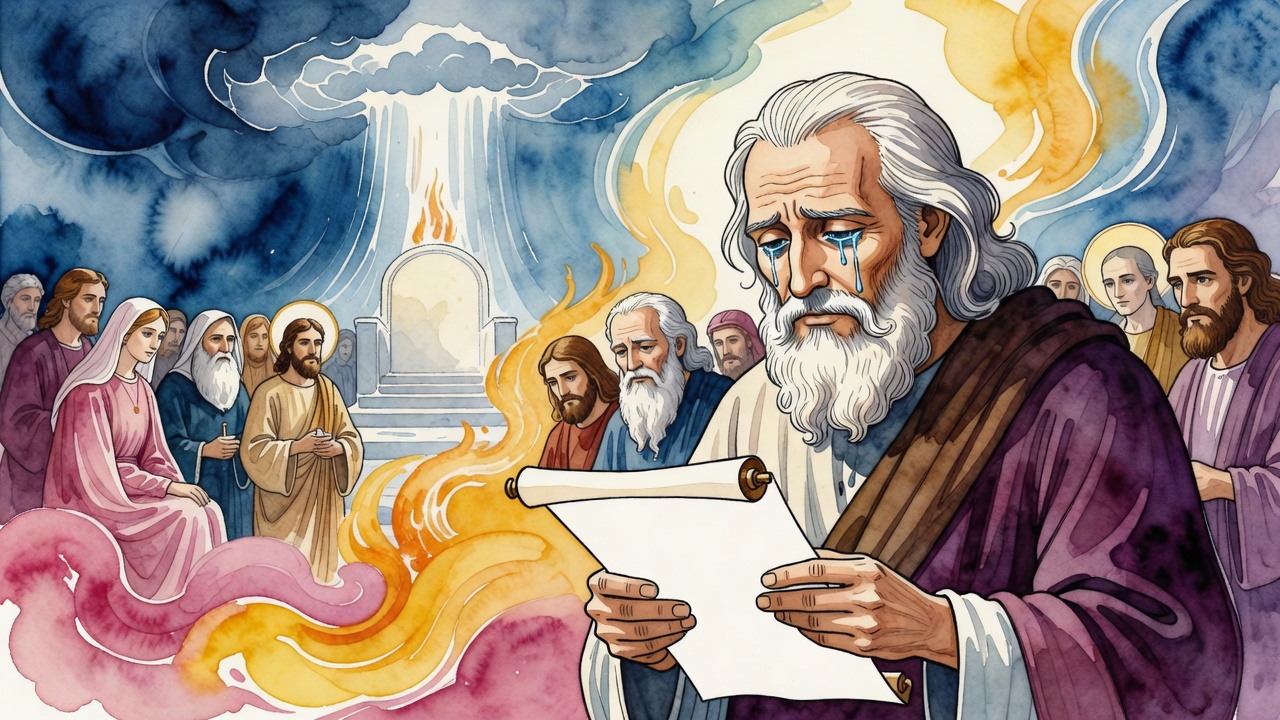
Blind with tears for Joseph, Jacob wrote to Egypt's ruler and prayed for two lost sons, never guessing the viceroy was the first.

Curated by Arthur · Told by Maggid ·
Table of Contents
  1. The Last Words Before the Road
  2. Ink That Bled a Lifetime
  3. Prayer Wider Than One Household
  4. The Last to Hear Joseph Lived
  5. Covenant Language in a Bureaucratic Court
Jacob Sent Judah with a Letter to Joseph Click for full size

The Last Words Before the Road

"I have said all now that is in my heart." Jacob spoke as a man who has emptied the cup and still finds the cup heavy. He placed a letter in Judah's hand for the ruler of Egypt. The ruler's Egyptian name was Zaphenathpaneah. The ruler's true name was Joseph, and Jacob did not know it. Famine had already taken dignity from Canaan's tables. It had not taken the father's need to write as if ink could travel where an old body could not.

He begged the sons to guard Benjamin, the youngest, the one left of Rachel's body in his care. Never let him from your sight on the road or in the foreign gate. The path to Egypt had already cost him too much in silence and in years. Simeon waited in a foreign hold as surety. Joseph waited in a grave Jacob still believed was real, a beast's work, a coat's false blood.

Ink That Bled a Lifetime

The letter opened with lineage and peace, the formal path into a court. Servant Jacob, son of Isaac, grandson of Abraham, prince of God, to the mighty and wise king of Egypt. Then the truth without ornament, because hunger makes rhetoric thin. The famine is sore in Canaan. I sent my sons to buy a little food, that we may live and not die. My children surrounded me and begged for something to eat. I am very old. I cannot see well. My eyes are heavy with years and with tears for my son Joseph, who hath been taken from me.

He warned them not to enter the gate all together, a caution born of fear and of the old wisdom of travelers who know how easily a group can be seized or misread. Every line carried two weights at once: hunger now, and the missing face that had never left the old man's dark even when the other sons filled the tent with noise. The letter was a portrait of a blind spot written by the blind spot himself.

Prayer Wider Than One Household

After the letter, Jacob turned from Judah's hand to the Holy One. "O Lord of heaven and earth! Remember Thy covenant with our father Abraham." He called on the memory of Isaac, on mercy stored in the binding and the ram and the uncut throat. He asked protection for sons walking toward Egyptian power. "Redeem my sons and save them from the hands of the Egyptians, and restore their two brethren unto them." Two brethren: Benjamin at risk on the road, Simeon already held, and under both requests the ghost of Joseph, always the third shadow.

The Legends stretch the prayer past the moment's panic. Jacob asked not only for the boys on this journey. He asked for the Ten Tribes in a future distress, for Judah and Benjamin's deliverance as a pattern heaven might repeat, for a Third Temple that would not fall after the first two had burned. A father's fear became intercession across ages. The man who wrestled at the Jabbok and would not let go until blessed still knew how to take hold of heaven with both hands.

The Last to Hear Joseph Lived

In the fuller tension of the legends, knowledge is unevenly distributed. Egypt knew a Hebrew ruled its grain. The brothers knew what they had done and feared what Egypt might yet do. Jacob mourned in a sealed room of grief while the world moved around his refusal to hope. The letter went to the one person who could end the mourning, carried by sons who still feared the truth more than the famine that pushed them south.

When recognition finally broke, it would not come from the letter alone. It would come from Judah's speech that offered himself in Benjamin's place, from Benjamin's presence as living proof, from Joseph's weeping that Egypt heard through the walls of the house of Pharaoh. The letter remains the sharpest portrait of irony in the patriarchal cycle: a father explaining his tears for Joseph to Joseph, line by careful line.

Covenant Language in a Bureaucratic Court

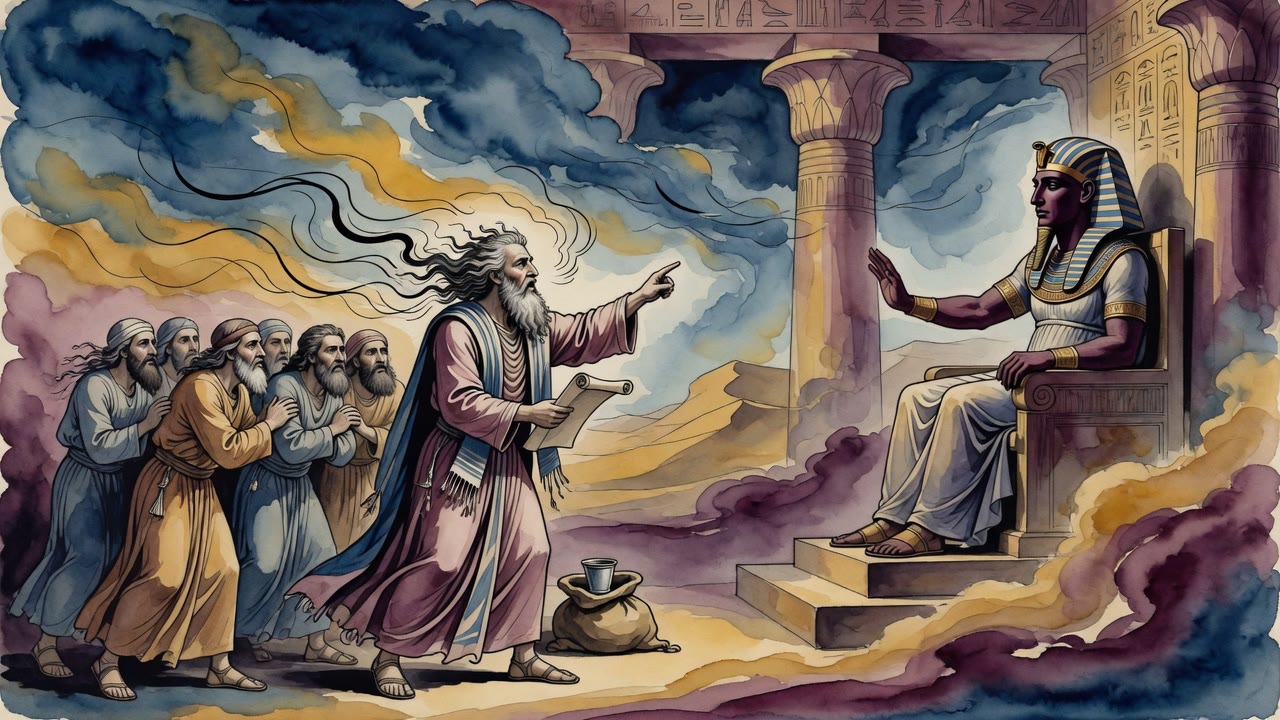
Jacob wrote as prince of God to a king of grain and Nile logistics. He used the only currency that had ever worked for him across a life of tents and stones and night visions: covenant memory and raw plea. No flattery of river gods. No denial of age or of the wetness on his face. The viceroy who read it had learned seventy languages in a night of angels, but the language that undid him was a father's Hebrew grief naming a lost son.

Judah walked toward Egypt with that scroll and with a brother he had sworn, on his own life, to bring home. The road that began with a coat dipped in goat's blood moved toward a room where the coat's owner would say his name aloud. Between those poles hangs the letter: ink, hunger, prayer that refused to stay small, and a seal pressed by hands that did not know they were addressing their own buried joy.


← All myths
From the tradition

Sources

3 sources

The texts behind this telling. Some cards carry a translation of the source; others are our own retelling of it, and each card says which. Every card links out to the original.

Legends of the Jews 1:237Legends of the Jews

Retold in our words. Read the original at the link below.The Legends of the Jews by Louis Ginzberg (1909) · Public Domain

Legends of the Jews turns to Jacob Wrote a Letter to the Ruler of Egypt Not Knowing It Was Joseph.

“I have said all now that is in my heart," he declared. These aren't just words; they're a father's plea, a patriarch's last will. He entrusts a letter to Judah, Yehuda, tasking him with delivering it to the ruler of Egypt. A ruler who, unbeknownst to Jacob, was none other than his long-lost son, Joseph, Yosef.

What were his final words to his sons? A desperate plea to protect Benjamin, Binyamin, the youngest, the one closest to his heart after the presumed loss of Joseph. He begged them to keep him safe, never letting him out of their sight. To have to send your children into a potentially dangerous situation, clinging to the hope of their safe return.

Then, after bidding farewell, Jacob turned to the Almighty. "O Lord of heaven and earth! Remember Thy covenant with our father Abraham," he implored. He reminds God of the covenant, the sacred agreement made generations ago. He calls upon the memory of his father, Isaac, Yitzchak, asking for grace and protection for his sons.

His prayer is raw, unfiltered. He pleads for mercy, for redemption. "O my God, do it for the sake of Thy mercy, redeem my sons and save them from the hands of the Egyptians, and restore their two brethren unto them." Two brethren – Benjamin, yes, but also Simeon, Shimon, held captive in Egypt. This isn't just a request; it's evidence of his unwavering faith, his desperate hope in the face of overwhelming odds. According to Ginzberg's retelling in Legends of the Jews, Jacob's prayers were always powerful, filled with a lifetime of devotion and trust.

It's a moment of profound vulnerability, a reminder that even the strongest figures in our tradition, like Jacob, were still human, still susceptible to fear and grief. And isn't that what makes these stories so compelling? They show us the humanity within the divine narrative, the very real struggles of our ancestors.

Full source
Legends of the Jews 1:232Legends of the Jews

Retold in our words. Read the original at the link below.The Legends of the Jews by Louis Ginzberg (1909) · Public Domain

It wasn't just a plea for his immediate family, according to Legends of the Jews. It was an intercession, a powerful request not only for his sons, but for all of their descendants. It was a prayer that God would deliver the Ten Tribes in the future, just as He delivered Judah and Benjamin. And even more, it was a prayer that after allowing the destruction of the first two Temples, God would grant the third Temple endless continuance. Quite a weighty request, wouldn't you say?

The story doesn't end with prayer. Jacob, ever the strategist, also prepared a letter to be delivered to the viceroy of Egypt – none other than his own son, Joseph, though he didn't know it yet! Ginzberg, in Legends of the Jews, gives us the text:

"From thy servant Jacob, the son of Isaac, the grandson of Abraham, prince of God, to the mighty and wise king Zaphenathpaneah, the ruler of Egypt, peace!" Zaphenathpaneah, by the way, was the Egyptian name given to Joseph. "I make known unto my lord the king that the famine is sore with us in the land of Canaan, and I have therefore sent my sons unto thee, to buy us a little food, that we may live, and not die." You can almost hear the desperation in his voice. The letter continues with a poignant description of Jacob's plight. "My children surrounded me, and begged for something to eat, but, alas, I am very old, and I cannot see with mine eyes, for they are heavy with the weight of years, and also on account of my never-ceasing tears for my son Joseph, who hath been taken from me." Can you feel the weight of his grief, the years of sorrow etched into every word?

Then, a subtle instruction, laced with caution. "I charged my sons not to pass through the gate all together at the same time, when they arrived in the city of Egypt, in consideration of the inhabitants of the land, that they might not take undue notice of them. Also I bade them go up and down in the land of Egypt and seek my son Joseph, mayhap they would find him there." He's sending them on a mission for food, yes, but also a secret, almost impossible quest to find a son he believes is lost forever. A son who is, unbeknownst to him, the most powerful man in the land. The layers of irony and hope are just breathtaking.

So what do we take away from this? It's more than just a story about a father sending his sons on a desperate errand. It's a story of unwavering faith, of prayers that echo through generations, and of the enduring power of hope against all odds. It makes you wonder what prayers we are offering, and what ripples they might create in the lives of those who come after us.

Full source
Legends of the Jews 1:57Legends of the Jews

Retold in our words. Read the original at the link below.The Legends of the Jews by Louis Ginzberg (1909) · Public Domain

Jacob was the last to know that Joseph was alive.

That was Jacob.

Everyone else in his close family knew that Joseph was alive and, incredibly, ruling in Egypt. But not Jacob. He was still deep in mourning, convinced his favorite son was dead, torn apart by wild beasts. Can you imagine the agony?

It wasn't just the personal grief. Jacob saw Joseph's supposed death as something far bigger, a cosmic disruption. He lamented, convinced that the promise God had made to him, the covenant concerning the twelve tribes, was now broken.

"The covenant that God made with me regarding the twelve tribes is null and void now," he cried. "I did strive in vain to establish the twelve tribes, seeing that now the death of Joseph hath destroyed the covenant."

Jacob's words, as recorded in Legends of the Jews by Louis Ginzberg, are more than just a father's lament. They reflect a profound understanding of the interconnectedness of things, a deeply held belief in the significance of the number twelve. Jacob believed that the very structure of the universe was tied to the twelve tribes. He points out that twelve are the signs of the zodiac, twelve the months of the year, twelve the hours of the day and night. And, most poignantly, twelve stones were set in Aaron's breastplate, representing the tribes before God.

As Ginzberg retells it, Jacob saw Joseph's death as unraveling this cosmic order, setting God's carefully constructed works "at naught". The weight of the world, as he understood it, rested on those twelve tribes.

To think that one man, in his grief, could feel the entire universe tilting off its axis.

It's a powerful reminder of the weight of belief, and the profound impact loss can have not just on our personal lives, but on our understanding of the world around us.

Full source