Egypt Emptied Its Roofs to Greet Old Jacob
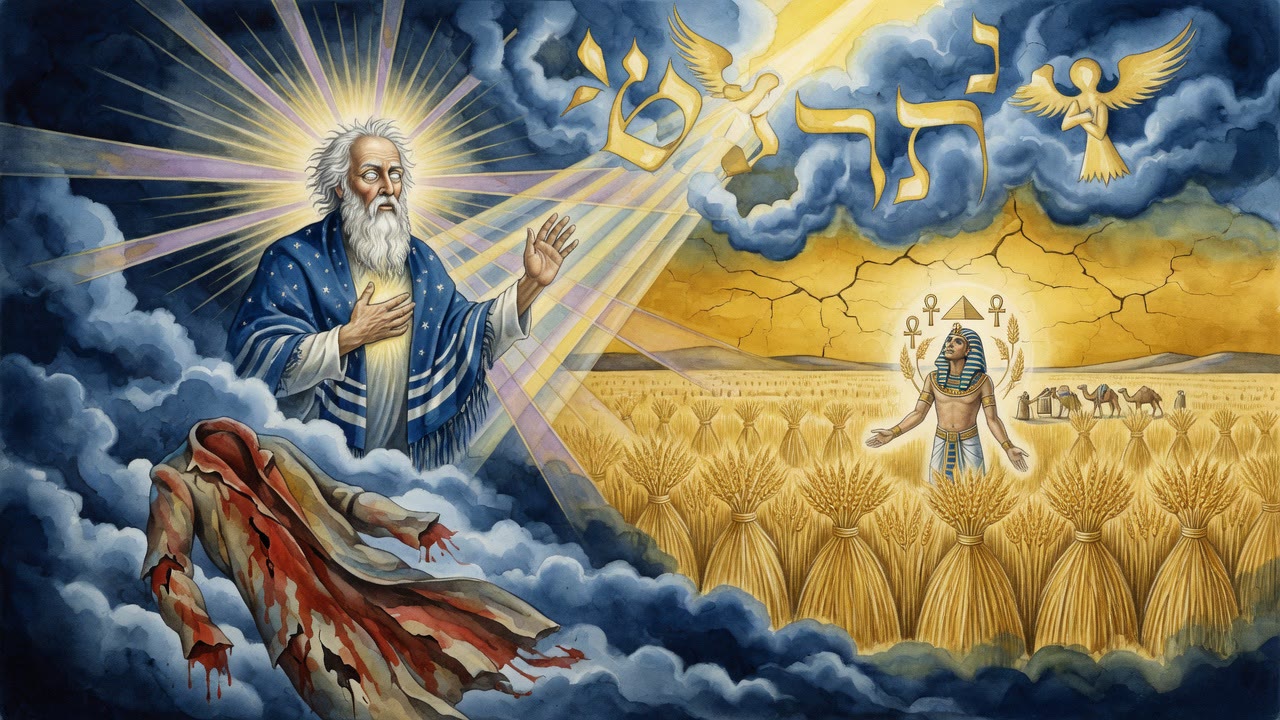
Joseph put a price on empty streets. Nobles pulled on purple. Women climbed the walls with drums while an old shepherd from Canaan came in under the noise.
Table of Contents
 Click for full size
Anyone Who Stayed Home Would Answer
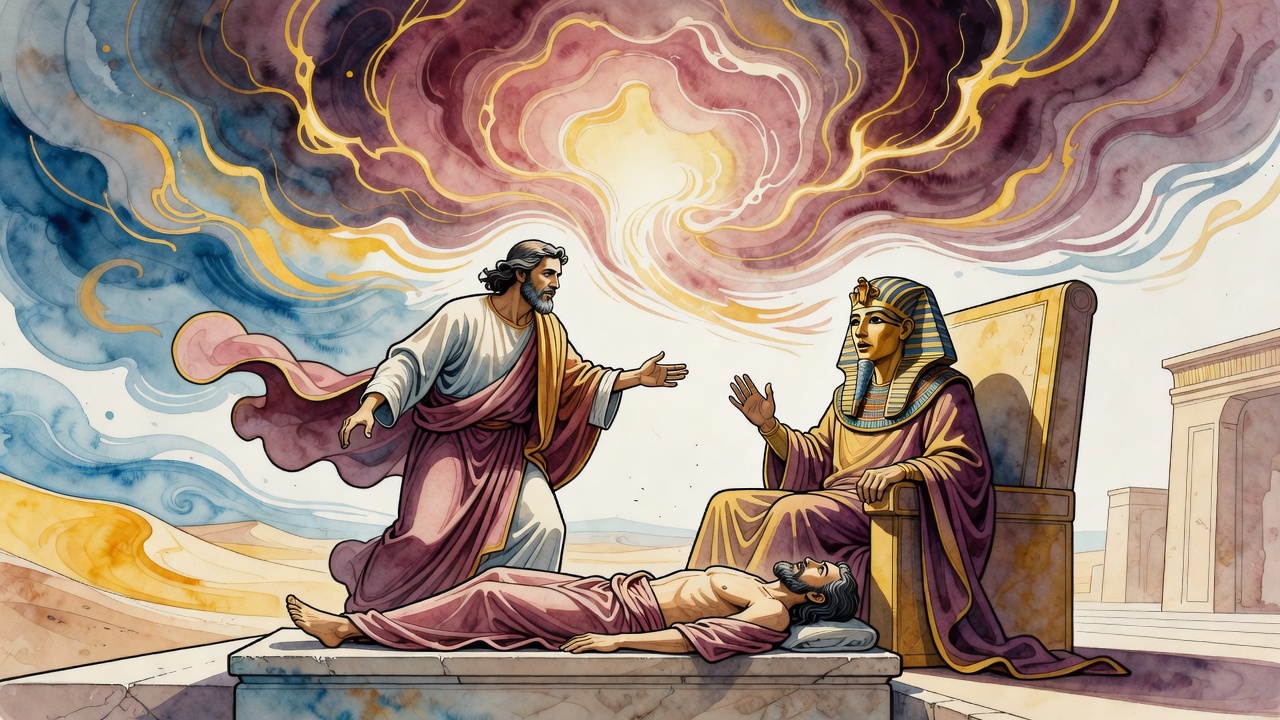
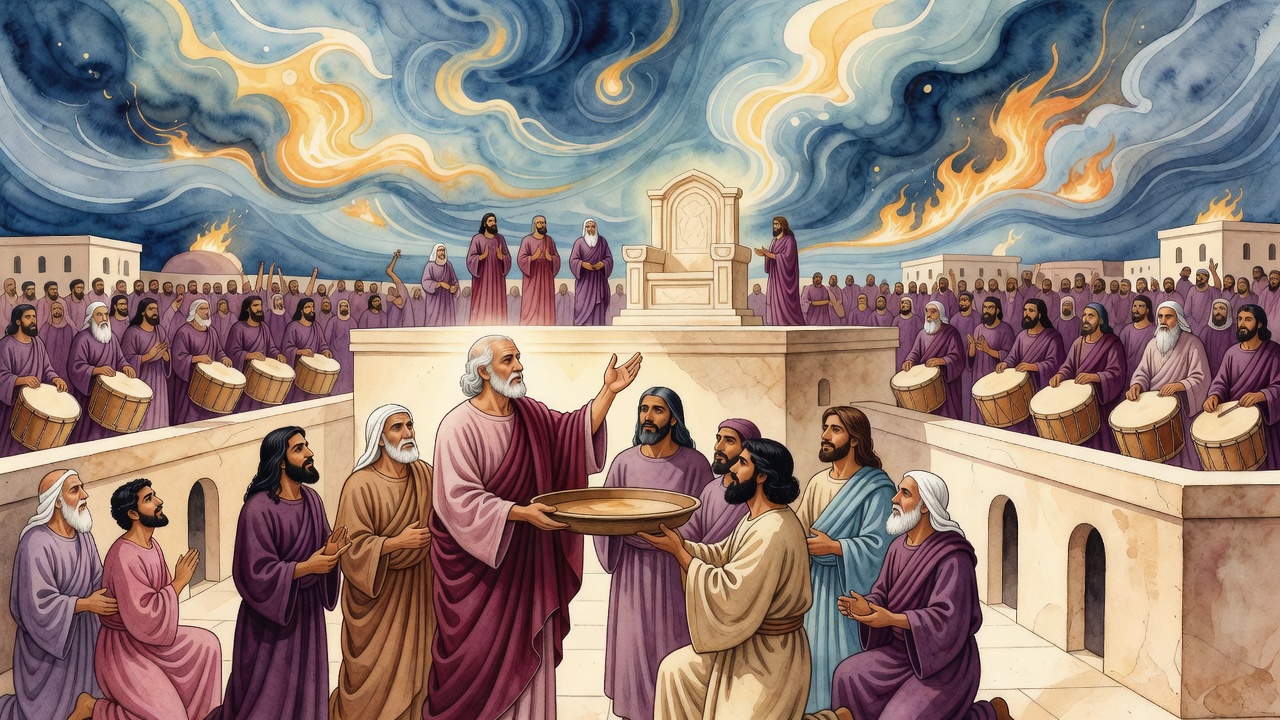
The proclamation went out with a threat in it. Anyone in Egypt who failed to go forth to greet Jacob would answer to Joseph.
Nobles put on byssus and purple. Instruments found their players. The road toward Goshen became a moving court. Women climbed onto roofs and city walls with cymbals and timbrels. An old shepherd from Canaan entered Egypt under a rain of sound his own tents had never made.
Joseph had been dragged into Egypt as property. He now pulled Egypt outdoors to honor his father. Some came because they loved his order. Some came because they feared the threat. Jacob rode through both motives, staff in hand, toward a son he had believed dead.
Meat Cut Where Brothers Could Watch
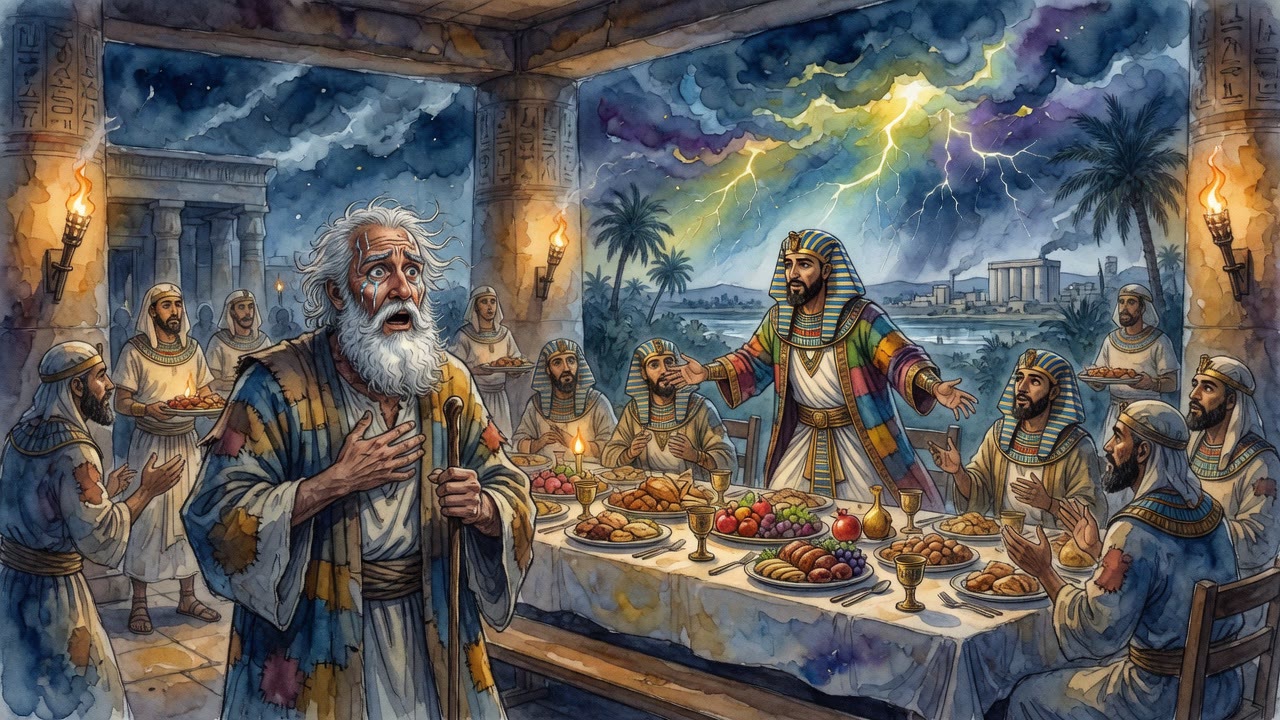
When the brothers first stood before him with Benjamin, joy hit Joseph hard. In Benjamin's face he saw Jacob's features returned. He ordered Manasseh, steward of the house, to bring them in and prepare a meal. Then he added a rule that sounded like kitchen work and was really kinship.
Slaughter the meat in front of them. Let them see the work done properly. Remove the gid hanasheh (גיד הנשה), the sinew of the hip, the mark of Jacob's wrestle (Genesis 32:33). Egyptians did not need to understand the prohibition. The brothers needed to see that Egypt's second still ate like a son of Israel.
Manasseh cut where they could watch. The sinew came away. Years in power had not erased that mark from Joseph's table. Famine policy for the world and this cut for his brothers shared one household. The steward son learned both ledgers.
Bread Enough to Crumble
Joseph earned the title God-fearing one beside names like Abraham, Job, and Obadiah, because of an ayin tovah, a good eye. When he gave to his brothers, he gave enough that children could play with the bread and crumble it as children do. Scarcity did not make him mean.
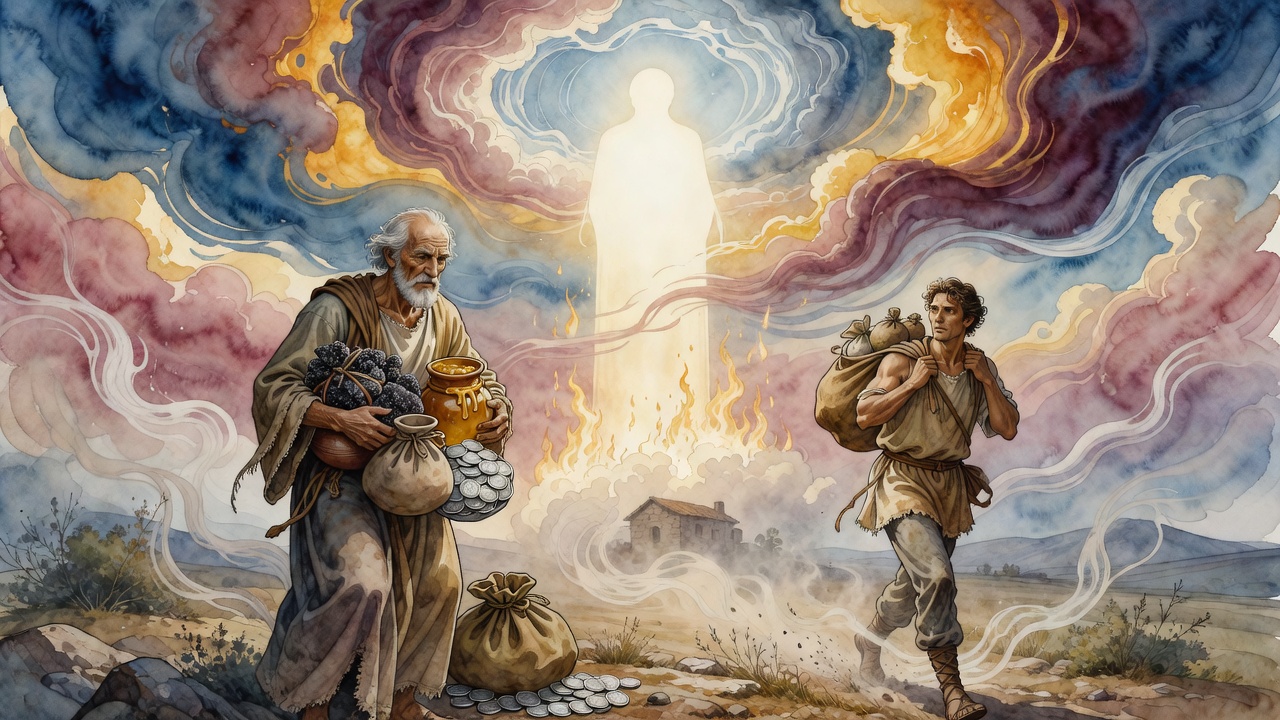
Egyptians had hoarded grain and drawn curses. Joseph sold to all who came. Wealth piled up. He buried treasure in four places: near the Red Sea, by the Euphrates, and in two desert caches toward Persia and Media. Korah would one day find one. Antoninus another. Two remain for the righteous in the days of the Messiah. The rest he funneled to brothers and to Pharaoh's treasury.
The same man who forced a national parade could hide gold for people not yet born.
He Taught Them Out of His Scars
He did not only feast them. He taught. Walk in the ways of the Lord. Keep a modest line, body and conduct. He told his own story without asking them to pity him. Sold. Imprisoned. Hungry. Not forsaken.
"I was sold into slavery," he said, "but the Lord delivered me. I was thrown into prison, but His strong hand helped me. I was tortured by hunger, but the Lord Himself gave me sustenance. I was alone, and God comforted me."
"If men seek to do evil unto you, pray for them, and you will be delivered from all evil by the Lord." Patience, he said, had brought him a wife and a dowry of a hundred talents of gold, and a face that lasted into age until he resembled Jacob himself.
The brothers who had once torn his life open now received those sentences from the mouth of the man they had sold. They ate. They listened. They did not argue.
The Roofs Went Quiet
Jacob rode into Goshen and lived seventeen years under that son's provision. The cymbals stopped. The purple ranks went home. Women climbed down from the walls.
In older bondage, wives and mothers had stood at gates praying while husbands labored under kings. This gate scene was different. A free father was welcomed by Egypt's women on the walls, because one Hebrew son had climbed high enough to empty the roofs.
Benjamin walked near the center of the welcome, proof that the youngest had survived the cup and the road. The brothers who once sold a boy watched that boy's order fill the roofs for their father. Joseph did not cancel guilt. He fed them, taught them, and made Egypt keep time for a Hebrew elder until the walls themselves seemed to hold the beat.
When the instruments rested, Goshen took the family in. Somewhere under desert sand, two treasures waited. The parade was over. The provision was not.
← All myths