Jacob Prays Before Benjamin Steps Toward Egypt
Famine presses Canaan. Jacob will not send Benjamin naked into Egypt. He wraps the boys in prayer first, and warns them to walk small under foreign eyes.
Table of Contents
 Click for full size
Grain Down the Road, Fear in the Tent
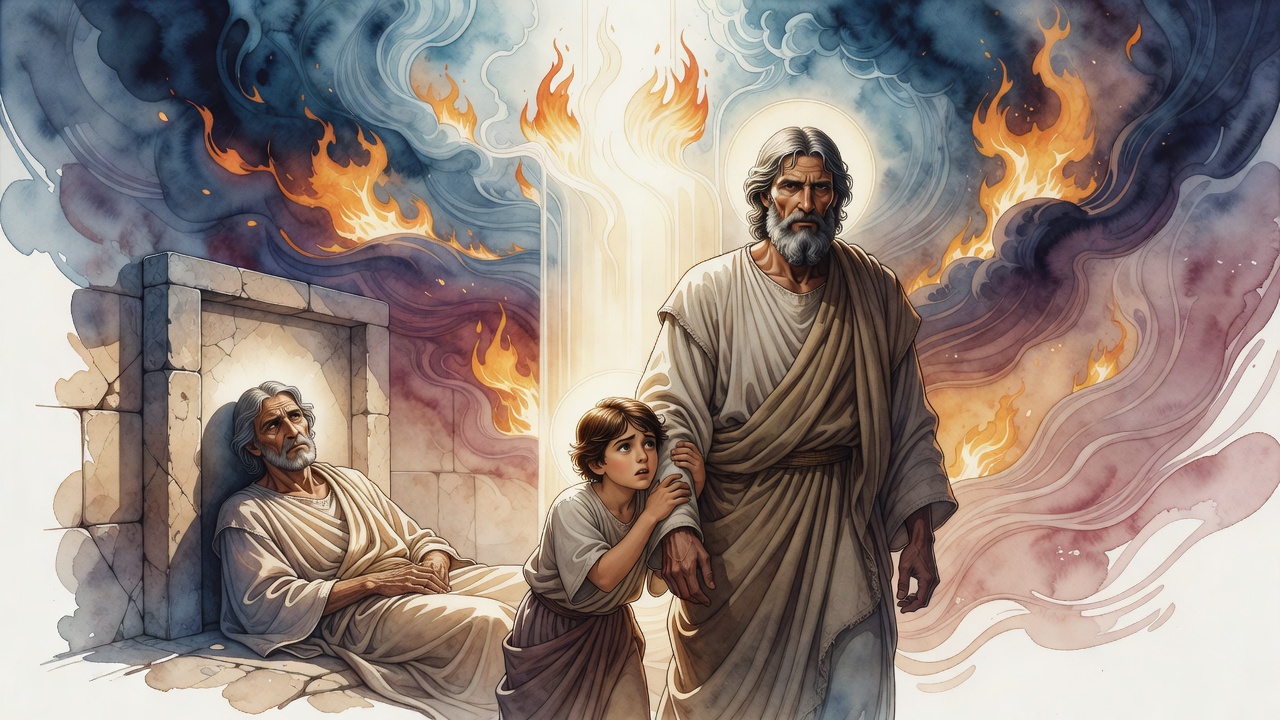
Jacob held the last son of Rachel and felt the old hole in the family open again. Famine had already emptied the land. Egypt held grain. Egypt also held a hard man who had already kept one brother and demanded another. Benjamin stood ready, and Jacob would not send him out on bread alone.
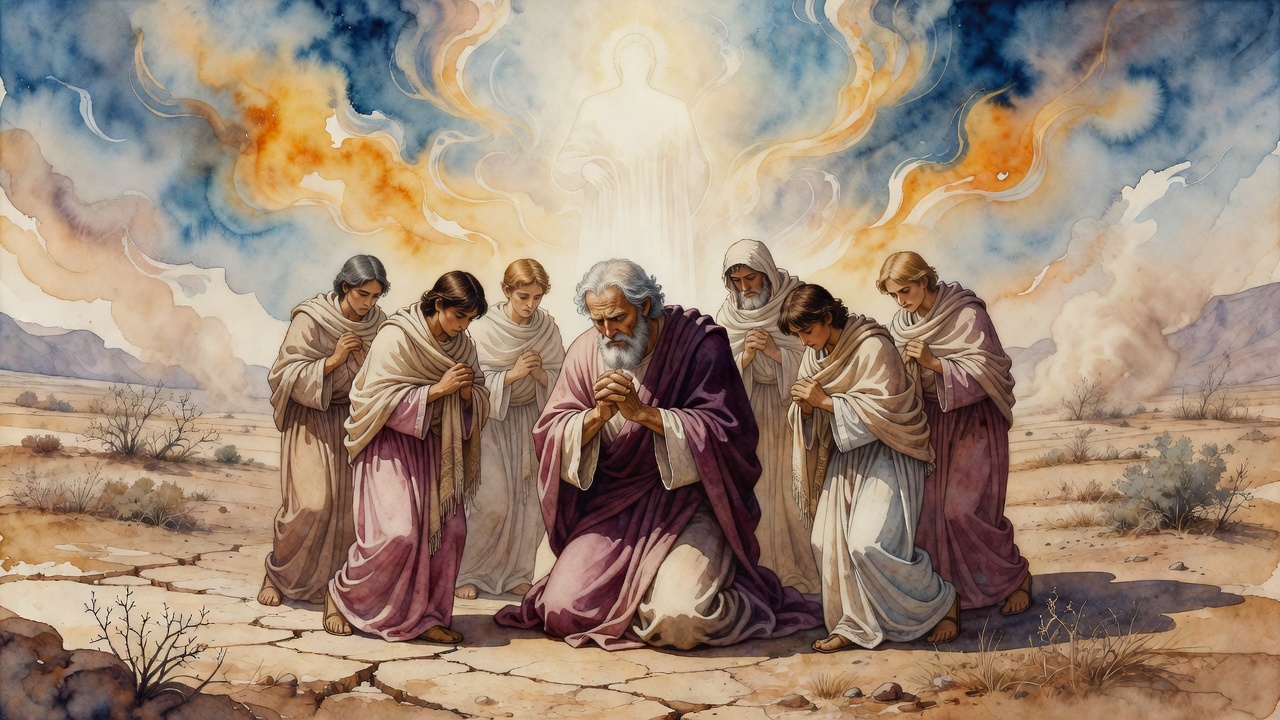
He prayed before the blow could fall. "May God Almighty grant you mercy before the man" (Genesis 43:14). The words left his mouth like a weapon packed for a road he could not walk. Honor the physician before you need him. Cry out before distress owns the house. Jacob had learned that prayer late in a life full of night wrestlings and empty chairs. He would not learn it late again for this boy.
Why Make Yourselves Conspicuous
Before the sons left, Jacob turned on them with a warning that sounded strange in a season of hunger. "Why do you make yourselves conspicuous?" Conceal yourselves. Do not parade strength or fullness before the eyes of the nations. Nothing in the world cuts deeper than the evil eye.
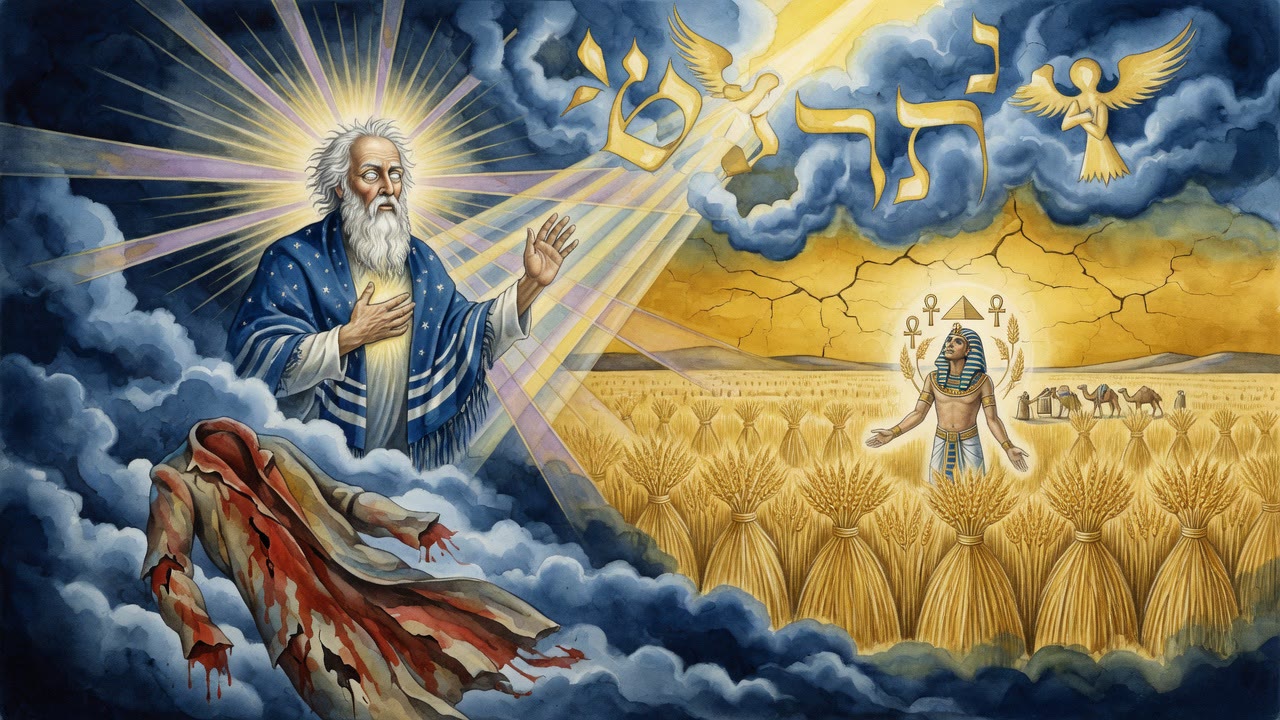
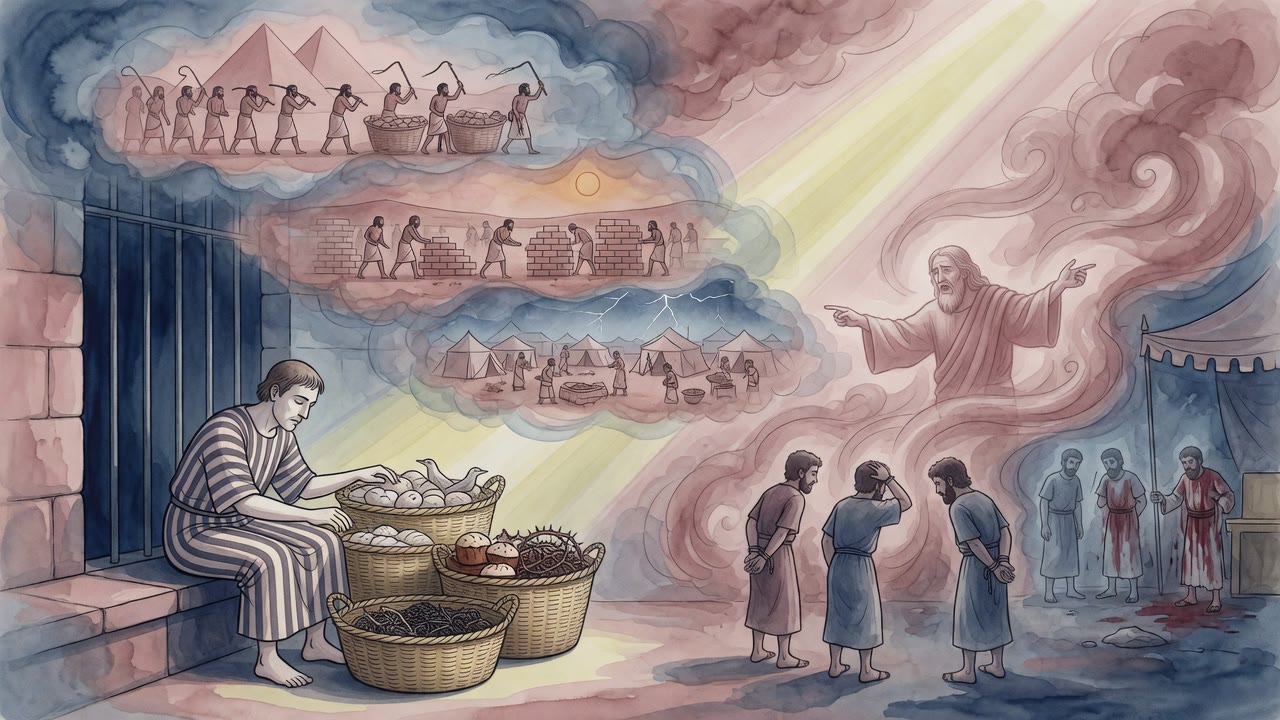
He had proof stacked through Israel's memory. The first tablets came in thunder and open splendor, with a people watching the sounds at Sinai, and those tablets shattered. The second tablets came down in secret, seen by Moses alone, and those endured. Jerusalem, called the perfection of beauty, fell under envious eyes until a mourner could say his own eye had grieved his soul over the daughters of his city. Walk small, Jacob told the hungry men. Do justice. Love mercy. Keep your heads down under foreign roofs.
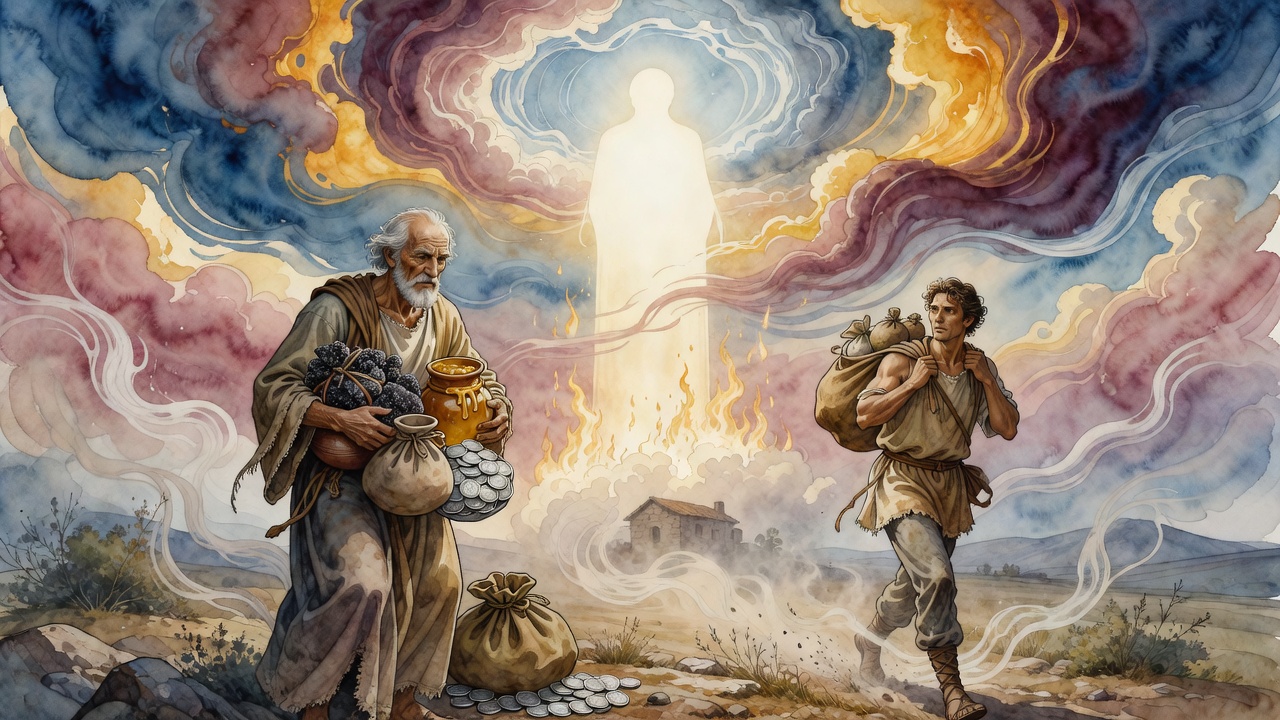
The brothers packed silver twice over and took gifts of balm and honey. They still looked like a troop of strong men descending on a grain market. Jacob's prayer and Jacob's caution both rode with them, one invisible, one a habit of the body.
Acceptable Hours
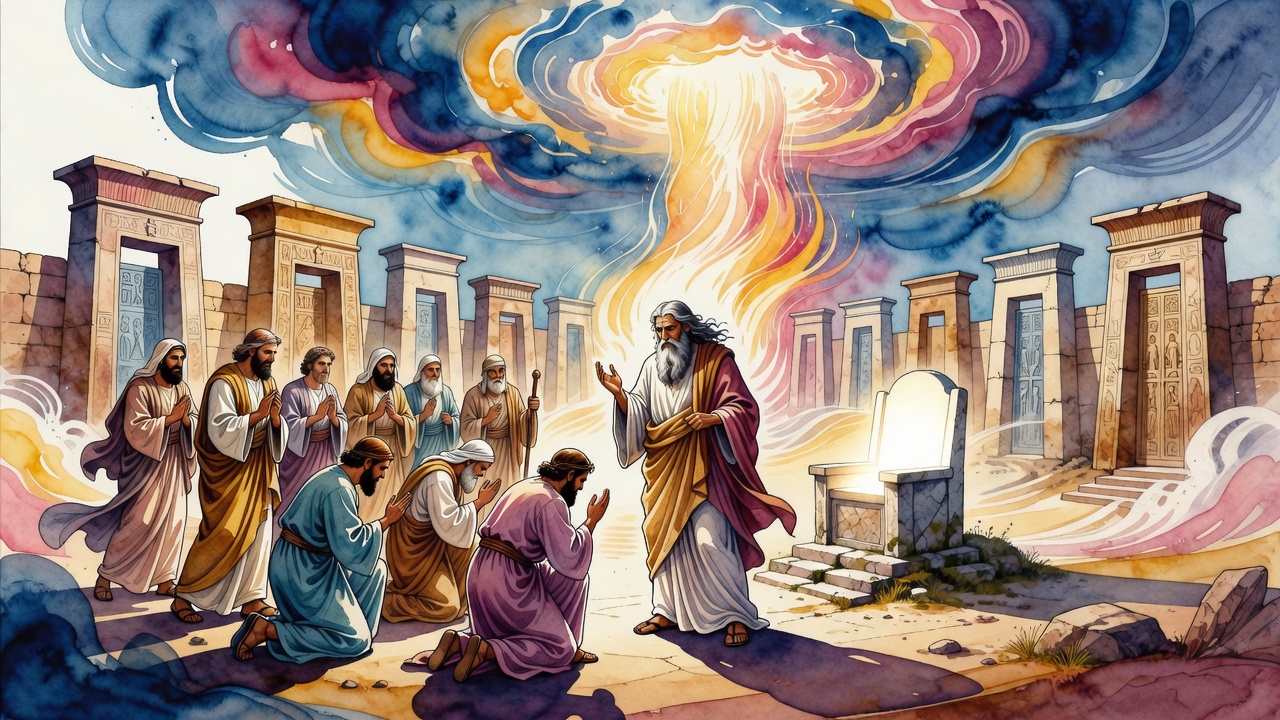
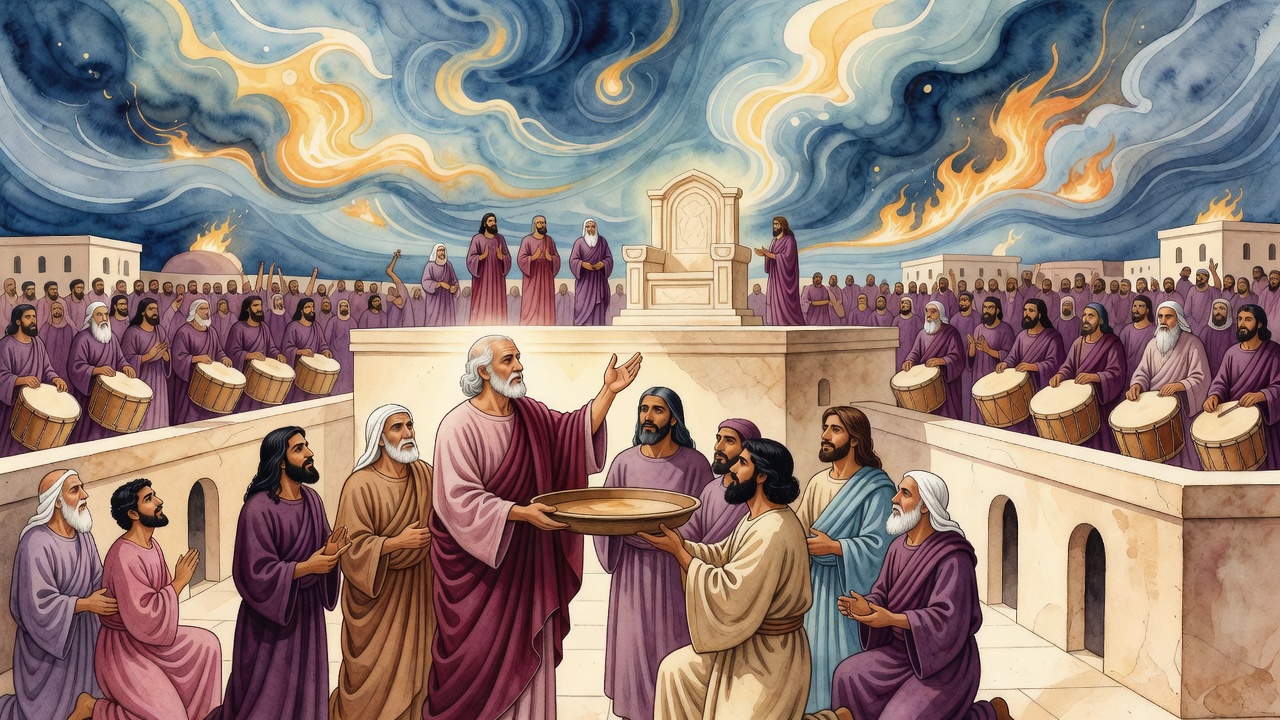
There are hours appointed for prayer. A person should rise early and stand when the community lifts its voice, for nothing is greater than that shared hour. Moses himself faced a sealed decree against entering the land, yet poured out prayer until the Lord at least showed him the whole country from the heights. Hezekiah prayed at the edge of death and tore up the decree written against him.
Jacob could not go to Egypt. Age and fear and a missing son already lived in his bones. So he did what the patriarchs do when the road runs past their reach. He wrapped the travelers in mercy before they met the man who held Benjamin's life. Provisions feed a body. Prayer tries to bend the room the body is about to enter.
The Road Takes the Youngest
Benjamin left. Jacob stayed. The tent felt larger and wrong. Every clink of harness outside was a possible return and a possible emptiness. Down in Egypt the brothers would bow, be accused, sit at a table ordered by birth, and watch a goblet leave a steward's hand for the youngest sack. Jacob could not see any of it. He had already spent his strongest act before the first mile.
When trouble finally crashed into the story, the prayer was already waiting in the air above the brothers. Mercy before the man. Mercy before the trap. Mercy before the old pit could open again under a different name. Jacob had refused to stand fat and easy in a day of relative plenty, sneering at prayer until the knife arrived. He prayed while Benjamin still stood beside him, warm and present and not yet taken.
Silver Is Not the Whole Load
They took double money in their hands, and the gifts, and Benjamin. Jacob watched the line of men shrink into the distance until even the dust stopped answering him. He had done what he could from a tent: prayer ahead of trouble, a warning against bright display, a father's refusal to treat famine as an excuse for swagger. The rest belonged to the road and to the man who waited at the other end with a face Jacob could not picture.
In Egypt the brothers would bow and still not know they bowed to Joseph. They would be seated by birth order and feel the room know them better than they knew themselves. Benjamin would sit nearest the storm. Jacob's early prayer would already be present in that room, an invisible companion that left Canaan before the youngest son did. A patriarch who cannot travel still sends force ahead of the feet that can.
He had seen what conspicuous glory does. Tablets shown in thunder break. Tablets given in secret endure. Cities called perfect draw the eye that ruins them. So he told hungry, strong sons to walk as if they were smaller than they felt. Prayer without that caution would be only half a send-off. Jacob packed both: mercy spoken upward, and modesty pressed into their shoulders as they turned toward the Nile's markets.
← All myths