Jacob Sees Grain and Joseph Alive in Egypt
Ten grown sons hung back from the road to Egypt. Their father hoped past the bloody coat, then sent them off with the name of the God who says Enough.
Table of Contents
 Click for full size
Not the Many Are Wise
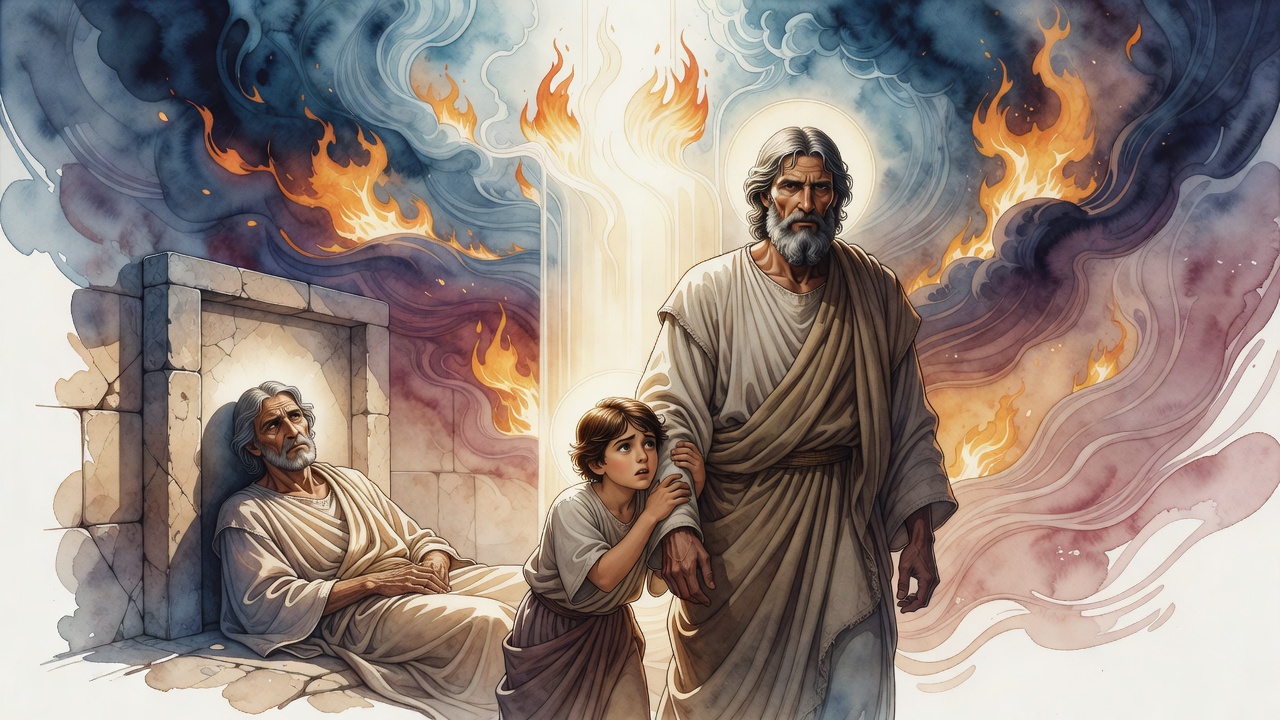
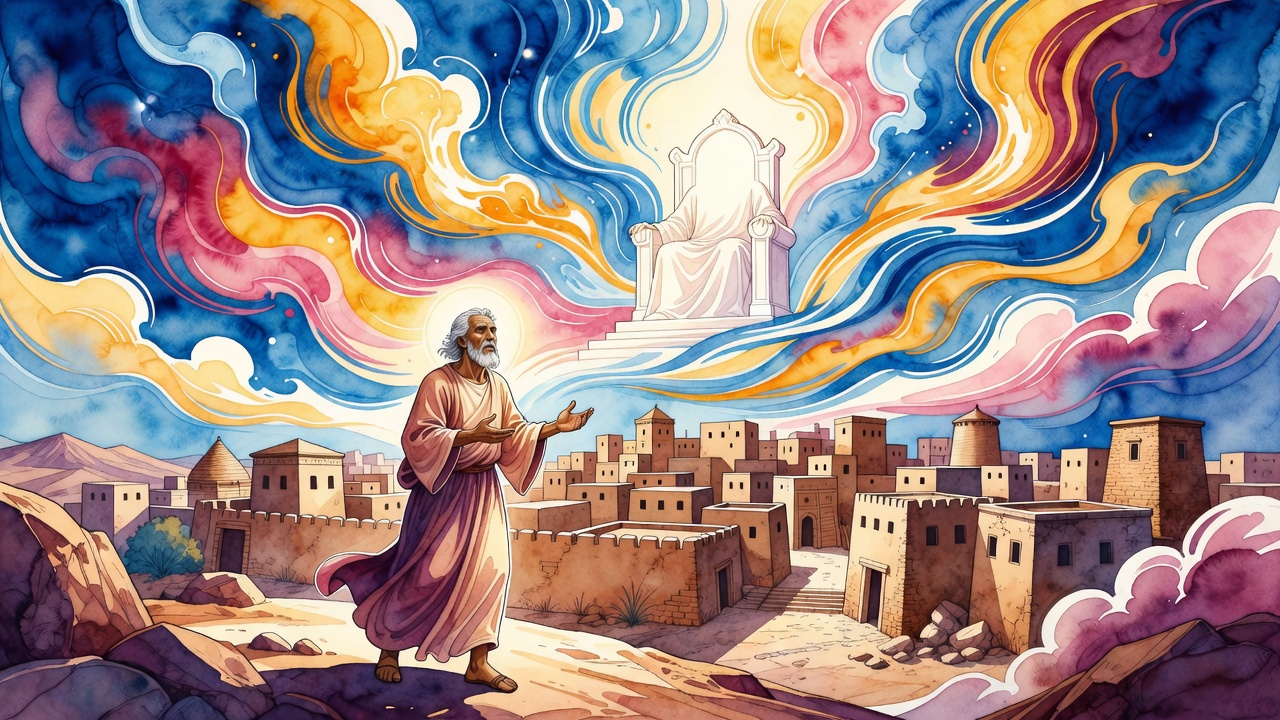
The famine pressed hard, and Jacob turned to his sons. Ten grown men stood before one aged father, and still the old man knew what they did not. "Do not imagine," he told them, "that because you are many your counsel is wiser than mine. You are ten, and I am one alone, yet I see what your many eyes cannot."
For the verse teaches, "Not the many are wise" (Job 32:9). Wisdom is not a head count. Jacob bade them go down to Egypt, and they hung back, unwilling to descend. He had already looked past the dust of the road. By the Holy Spirit he gazed into Egypt and beheld grain stored there, as Elihu said, "Surely it is a spirit in a person" (Job 32:8), a spirit that sees farther than flesh allows.
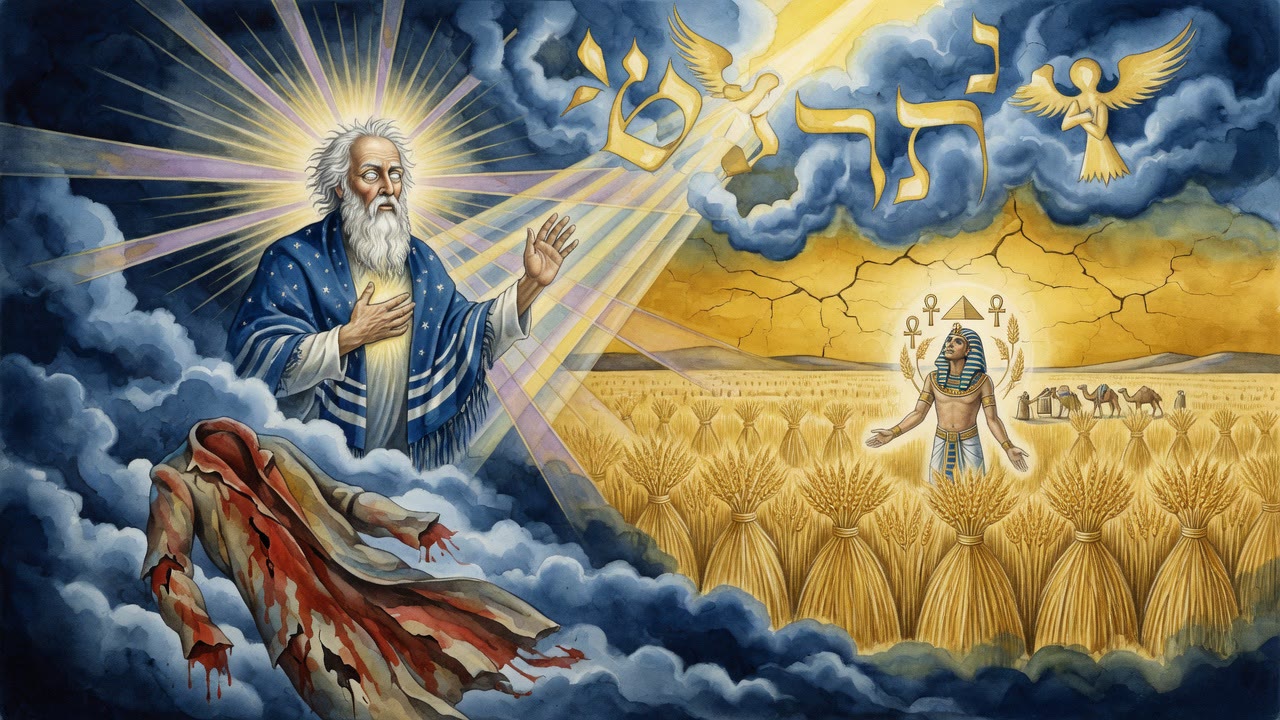
More than grain his spirit perceived. Hidden in that word for provision, shever, lay a deeper sight. Joseph was there, the son he had mourned as dead. So Scripture records, "And Jacob saw that there was grain in Egypt" (Genesis 42:1). He saw, with the eyes of prophecy, the living son waiting for his brothers' descent.
Hope Until the Finding
The verse speaks of a time of finding, and the sages ask who lived its meaning. They answer, Jacob.
Remember the wound. When his sons brought the torn, blood-soaked tunic, Jacob cried out, "Joseph has surely been torn to pieces!" By every appearance the boy was gone, devoured, lost to the wilderness. A lesser hope would have sealed itself in mourning and stayed there.
Jacob did not let go of God. Beneath the grief he went on hoping in the Holy One, blessed be He, waiting for an end he could not yet see. That is the discipline of the righteous, to keep hoping for a thing until one knows how it turns out.
The end came. The Holy One made it known that Joseph lived. More than a fact, He folded the good news into the blessing on Jacob's lips as he sent the sons down. "And may God Almighty grant you mercy." Hidden in those words was the breath of the lost son. Hope held in silence. Silence at last spoke joy.
El Shaddai Says Enough
As Jacob sent them back, dreading the loss of Benjamin, he blessed them with the name El Shaddai. Why that name? Rabbi Aha opened the secret.
The heavens, he taught, were spun from a thin curtain. "Who stretches out the heavens like a curtain." The earth was pressed from snow, for "to the snow He says, Become earth." When the Holy One spoke them into being, they did not simply settle. They kept stretching, expanding, racing outward without end. Had He not cried "Dai!", "Enough!", the heavens and earth would have gone on unfurling until the dead themselves rose under the press of endless space.
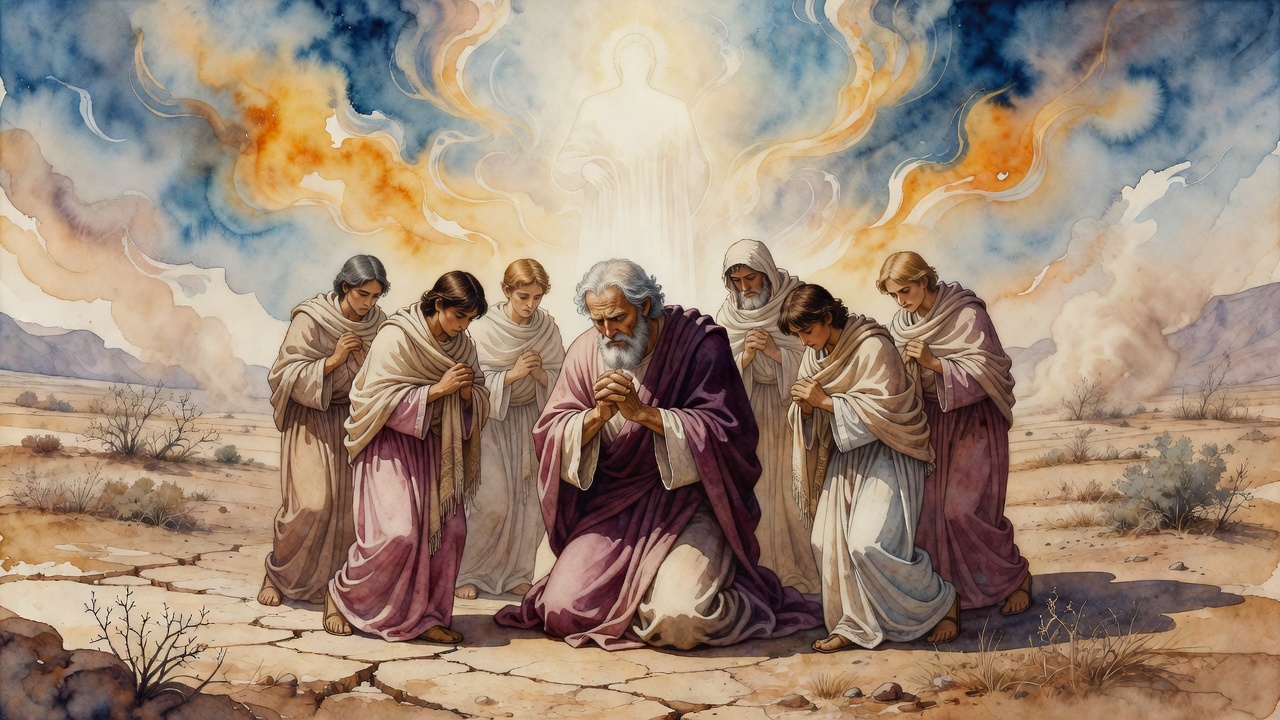
Shaddai is the name of the God who knows how to say Enough. Jacob, bowed under grief, famine, the loss of Joseph, Simeon held hostage, Benjamin demanded, seized that name as a prayer. "The One who said to heaven and earth, Enough for you," he pleaded, "let Him say to my sufferings, Enough for you." In the blessing he hid a cry for a limit to pain.
Ten Brothers on the Road
Joseph would recognize them when they fell into his hand. They would not recognize him who once had fallen into theirs. David sang of it. "Give ear, O Shepherd of Israel, who leads Joseph like a flock."
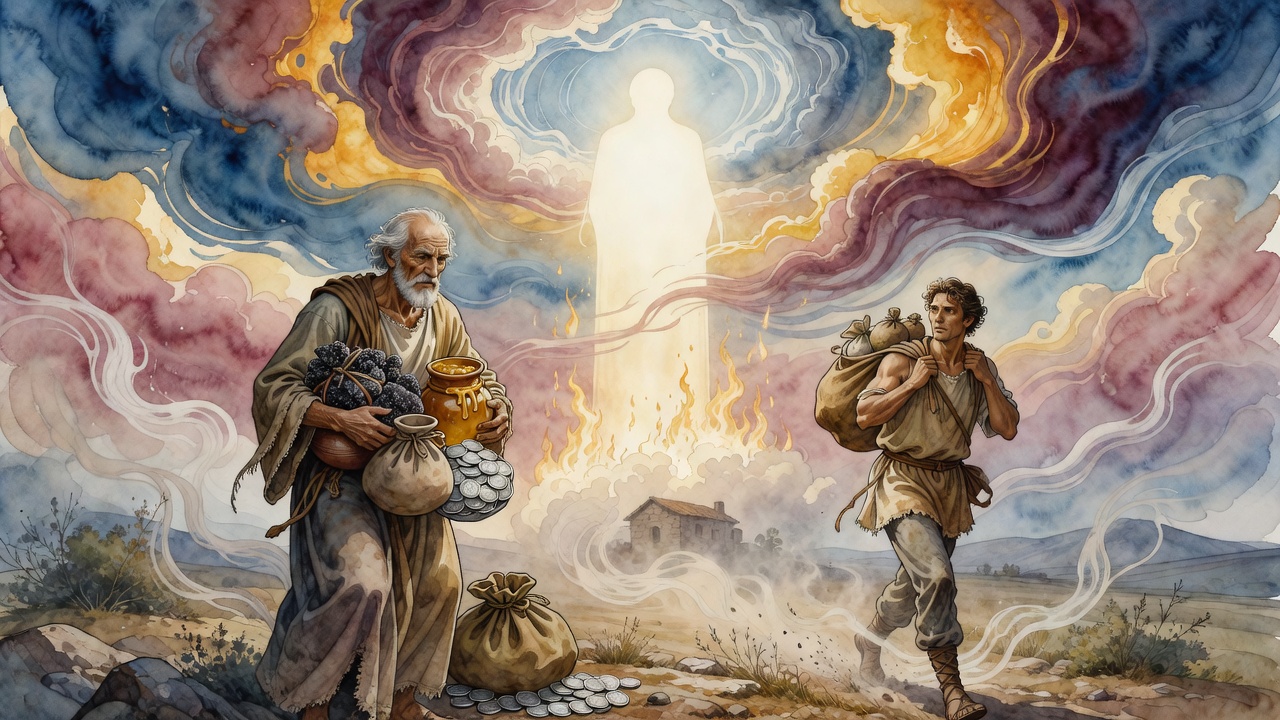
Why does Scripture say "go down" to Egypt? Rabbi Tanchuma taught that Jacob already saw the descent hidden in the word redu, two hundred and ten years of bondage counted in those letters. Whoever must buy bread from the market has come down in the world, for the land no longer feeds him from its own hand.
Mark the wording. Not "the children of Israel" went down, but "Joseph's brothers." Once they had stripped the name of brother from him and sold him away. Now, repentant, they whispered when they would go down and bring Joseph back to their father. When Jacob bade them descend, they went as one heart, hoping to undo the sin.
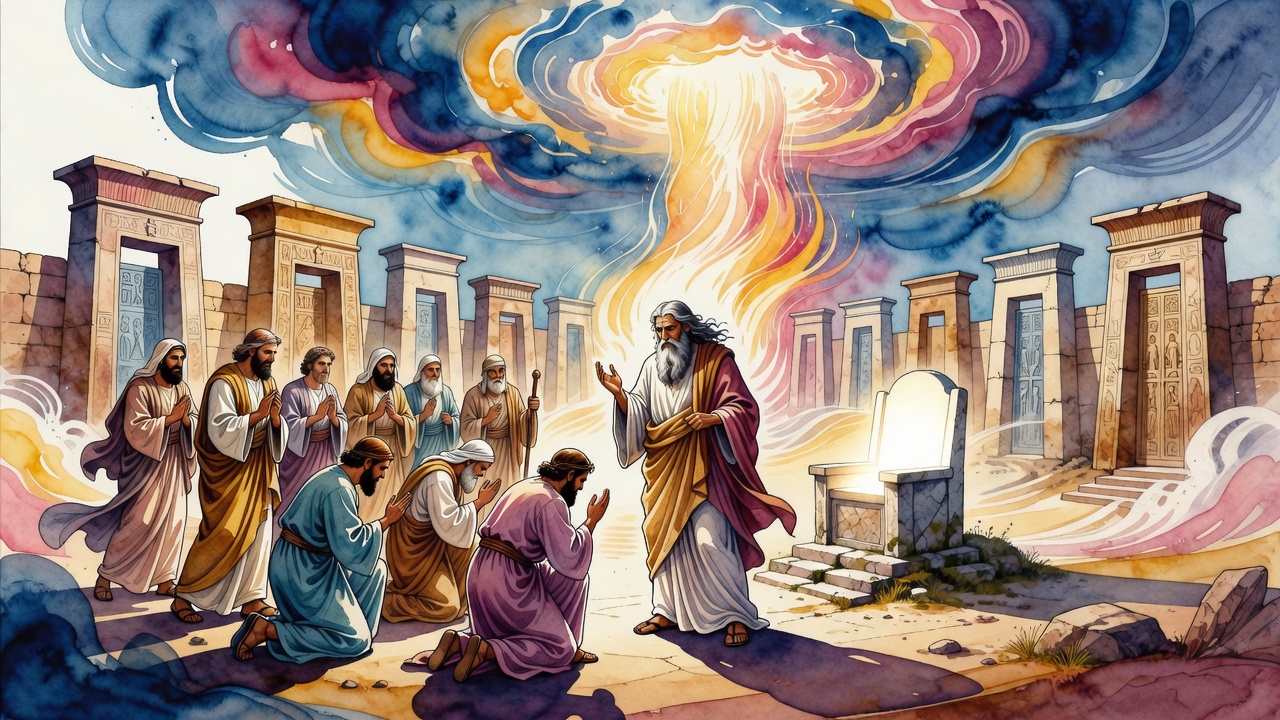
Why ten? Because ten can break a decree. With Sodom, Abraham bargained from fifty down to ten, and finding not even ten, he fell silent. In the generation of the Flood there were but eight, Noah, three sons, and their wives, and lacking ten, they could not be spared. Ten brothers on the road were a minyan (the quorum of ten that makes a congregation) against the old guilt.
The Name and the Sight
Spirit saw grain and a living son. Hope refused the finality of a bloody coat. The name that says Enough rode with Benjamin into danger. Ten men who had once sold a brother walked south as brothers again.
Egypt waited with a throne and a test. Jacob waited with a prayer for limits. Between them the Holy Spirit had already told the truth the market and the coat had hidden.
← All myths