Joseph Sealed Egypt and Judah Offered Himself for Benjamin
No slaves through the border. Nobody entering with two donkeys. Every traveler documenting his lineage. The rules were written to make ten men walk in.
Table of Contents
 Click for full size
The Edicts That Were Really a Net
The famine did the first half of the work. Joseph did the rest, and he did it with paperwork.
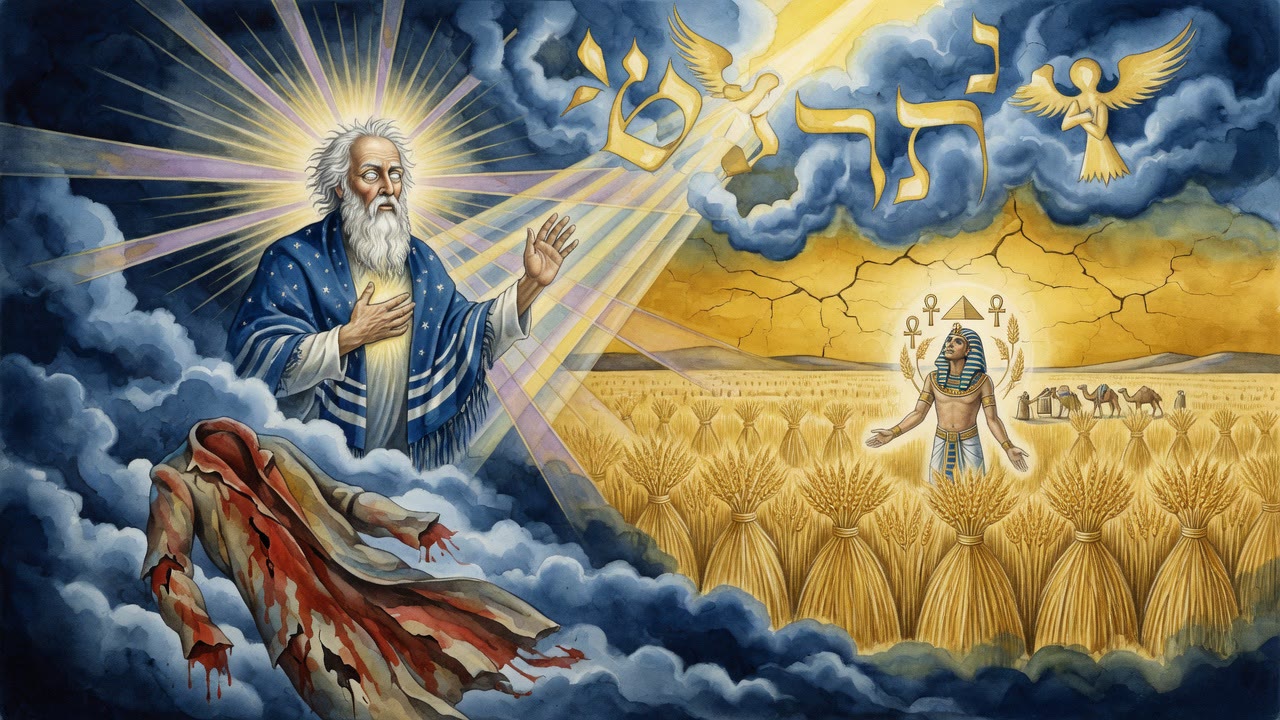
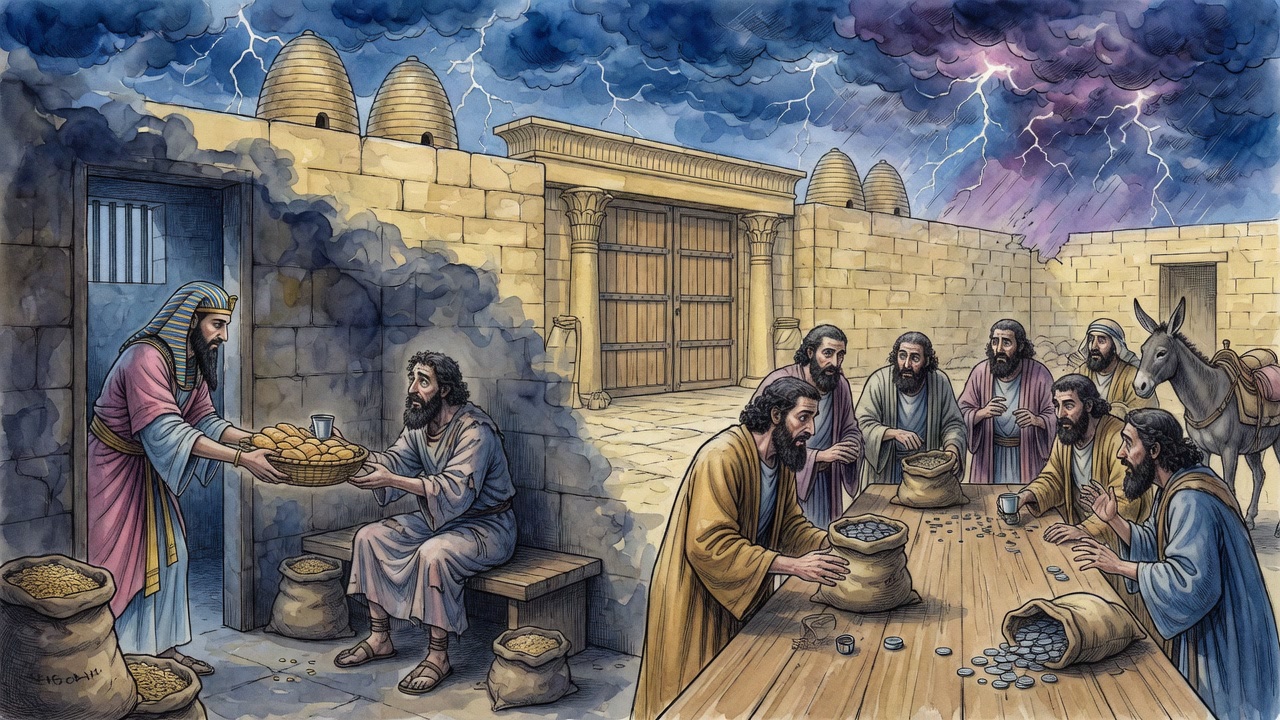
No slave was to be let into Egypt. No man was to enter driving two donkeys. Every traveler at every crossing had to document his lineage before the grain office would sell him anything. Read as policy the decrees look like a viceroy tightening a border in a hard year. Read as a trap they are exact. A wealthy household could not send servants for grain, because servants would be turned back. It could not send two men with a string of animals, because a man with two donkeys would be turned back. It had to send the sons. All of them, by name, with their family written down.
Somewhere in Canaan an old man was going to have to let his boys go to Egypt, and the man who had built the net knew exactly which boy would be missing from the first delegation.
Ten Faces at the Gate
They came, and they bowed, and they did not know whom they were bowing to.
He gave his orders in Egyptian and let the interpreter do the talking, which meant he got to watch their faces while they still thought they were unobserved. Twenty years of missing a person builds a very specific hunger, and it is not a hunger for revenge. He wanted to hear them talk to each other. He wanted to hear what they said when they believed the man on the platform could not understand a word.
Then he sent them home short one brother and told them not to come back without Benjamin.
I Will Be Surety for Him
The argument in Canaan lasted until the grain ran out, and then Judah ended it with a sentence.
"I will be surety for him. From my hand you shall require him."
Jacob had already lost one son to a road going south. Judah stood in front of him and put himself up as the collateral, and Jacob let Benjamin go.
In the hall in Egypt the cup turned up in Benjamin's sack, exactly where it had been planted, and the brothers tore their clothes and had nothing to say. Judah came forward. He asked to be kept in the boy's place. Let your servant stay as a slave, he said, and let the lad go up with his brothers.
Judah was the one who had stood over a pit years earlier and worked out what price a brother would fetch. Now he was in a foreign hall offering to be the merchandise so a different brother could go home. That was the sentence Joseph had built a whole border policy to hear. He cleared the room and broke.
Split Beans and Twenty Donkeys
When word reached the palace that the viceroy's family had turned up, Pharaoh himself gave the order. Load your animals. Go to Canaan. Bring your father and your households and come to me, and I will give you the finest of the land of Egypt, and you shall eat the fat of the land.
What is the finest of the land of Egypt? The sages answer with something almost comically plain. Split beans, which settle an uneasy soul.
Not gold. The best thing Egypt had for that particular family was the food you give someone whose stomach has been in knots for twenty years. Then the rest came out of the storehouses anyway: a change of garments for each man, three hundred pieces of silver and five changes of garments for Benjamin, ten donkeys loaded with the bounty of Egypt and ten more loaded with grain and bread and provisions for the old man's road.
Joseph walked them to the gate and gave them four instructions for the journey, and they were the instructions of a man who knows his brothers. Do not quarrel on the way. Do not take long strides. Do not stop studying. Get inside the city before the sun goes down.
No One Remembered That Poor Man
Nobody thanked Judah.
They rode north rich and rode back south with their father, and in all that noise the man who had put his own body on the table so the youngest could go free went unmentioned. Rescues age badly. The famine eased, the wagons came, and the speech that had cracked a viceroy open in front of his household became a thing that had happened at some point on a bad trip.
Heaven kept a different set of books. You did not remember him, the Holy One said. I remember him.
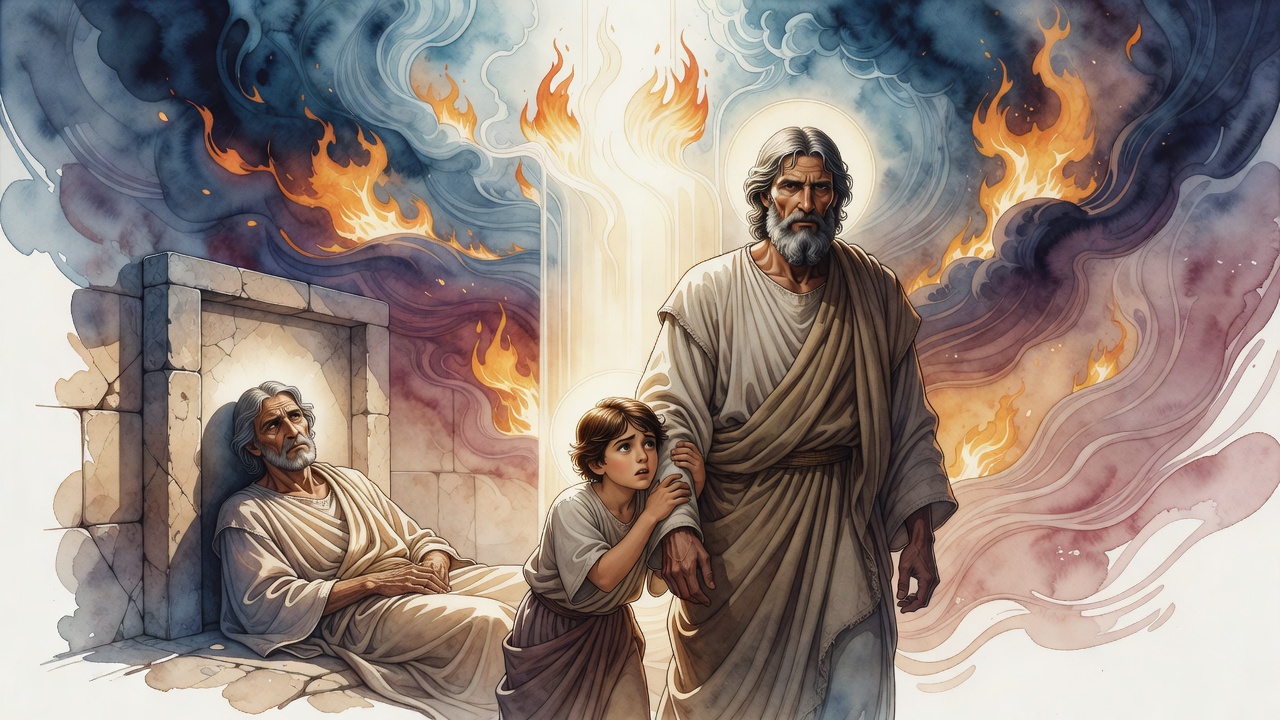
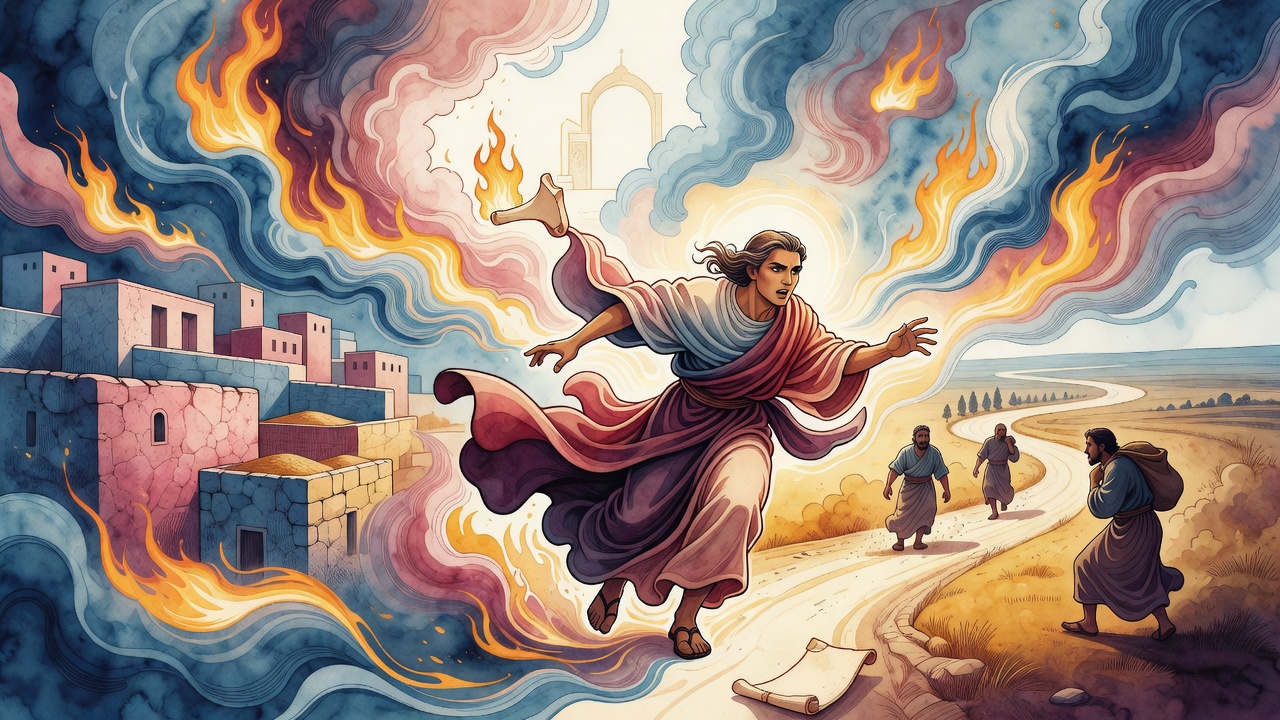
The proof is one clause, and it is easy to read past. When Jacob finally packed up his house and went down to Egypt, he sent Judah ahead of him. Out in front of the whole column, on the road into the country where he had offered to spend his life as a slave, walked the brother nobody had thought to thank.
← All myths