Parshat Miketz5 min read

Judah Faced Joseph and the Torah Refused to Break

Benjamin was trapped, Joseph was hidden, and Judah stepped forward. The brothers had to answer for the sale they buried.

Curated by Arthur · Told by Maggid ·
Table of Contents
  1. The Brothers Had Named Their Own Wound
  2. The Cup Returned the First Crime
  3. Judah Came Near for Three Things
  4. Joseph Hid Until the Change Was Real
  5. Not One Letter Would Be Torn Away

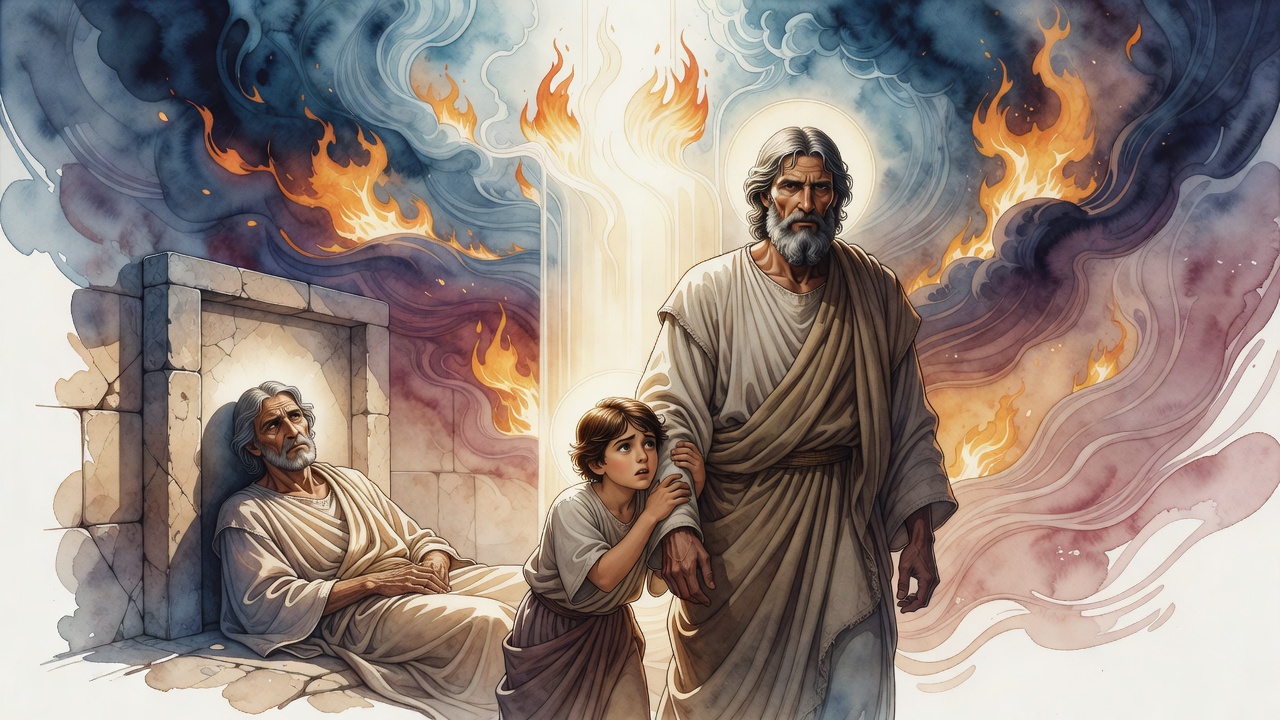
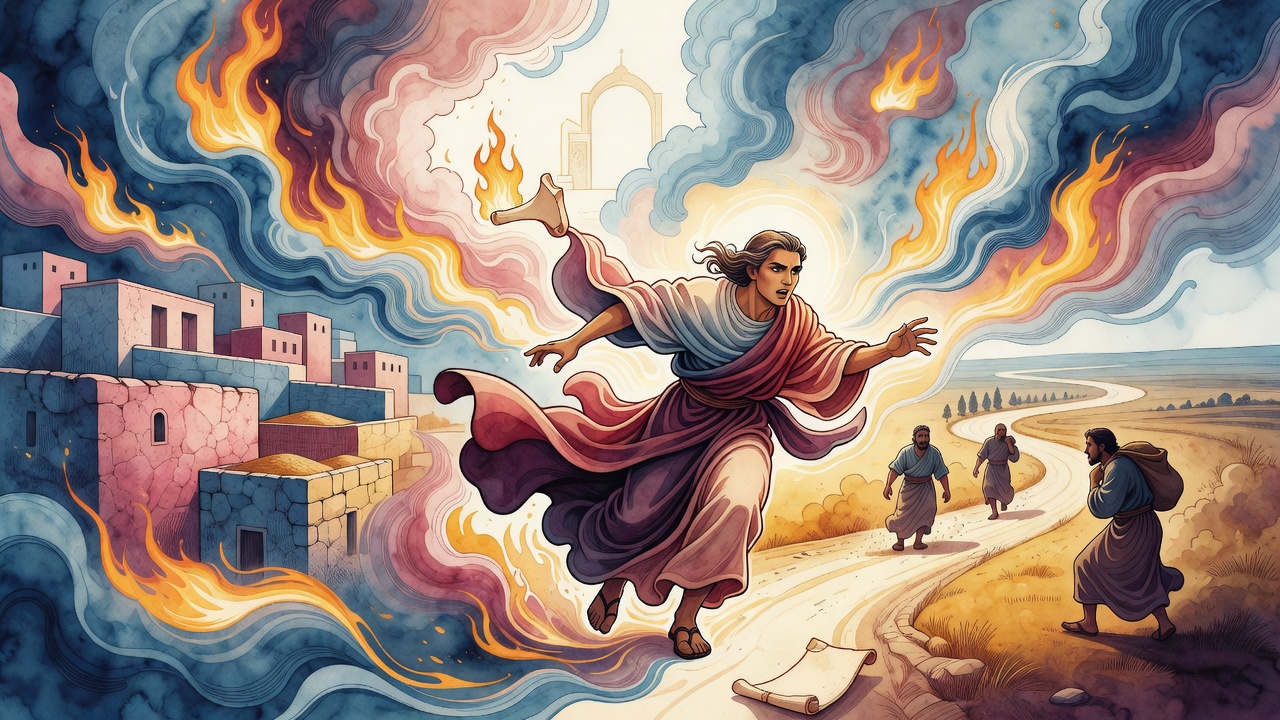
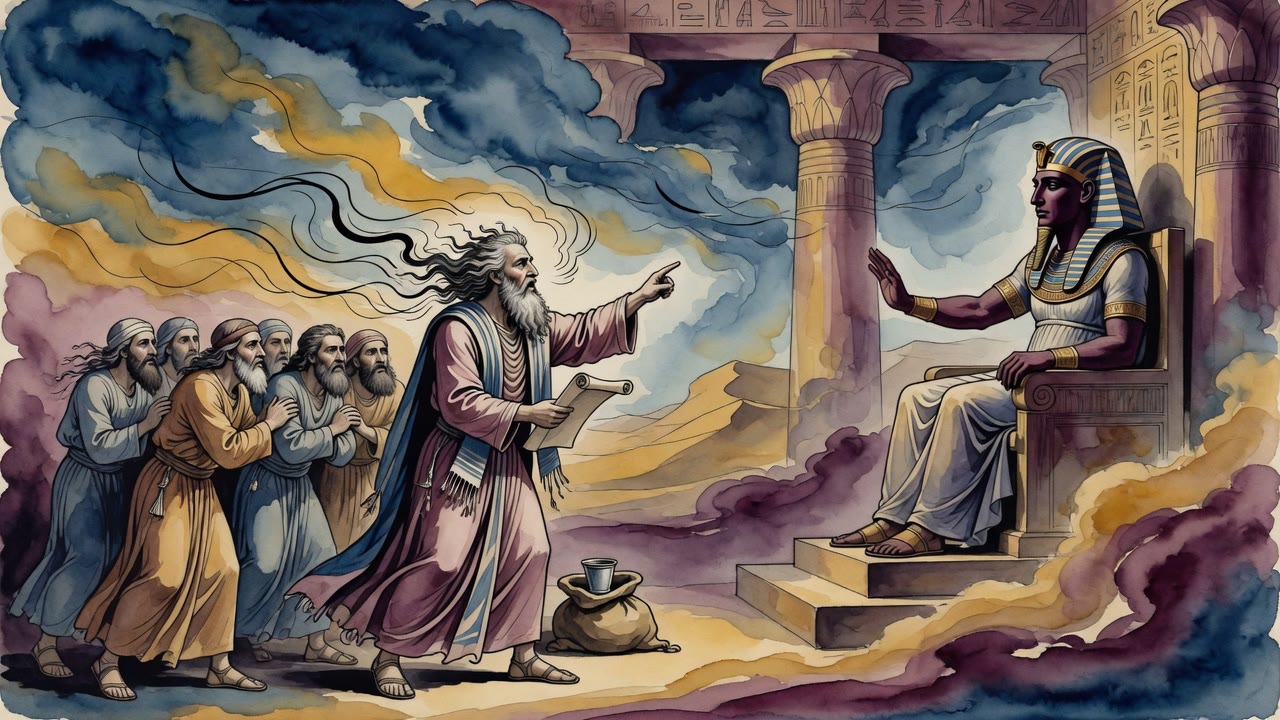
Judah stepped toward the ruler of Egypt with Benjamin already lost.

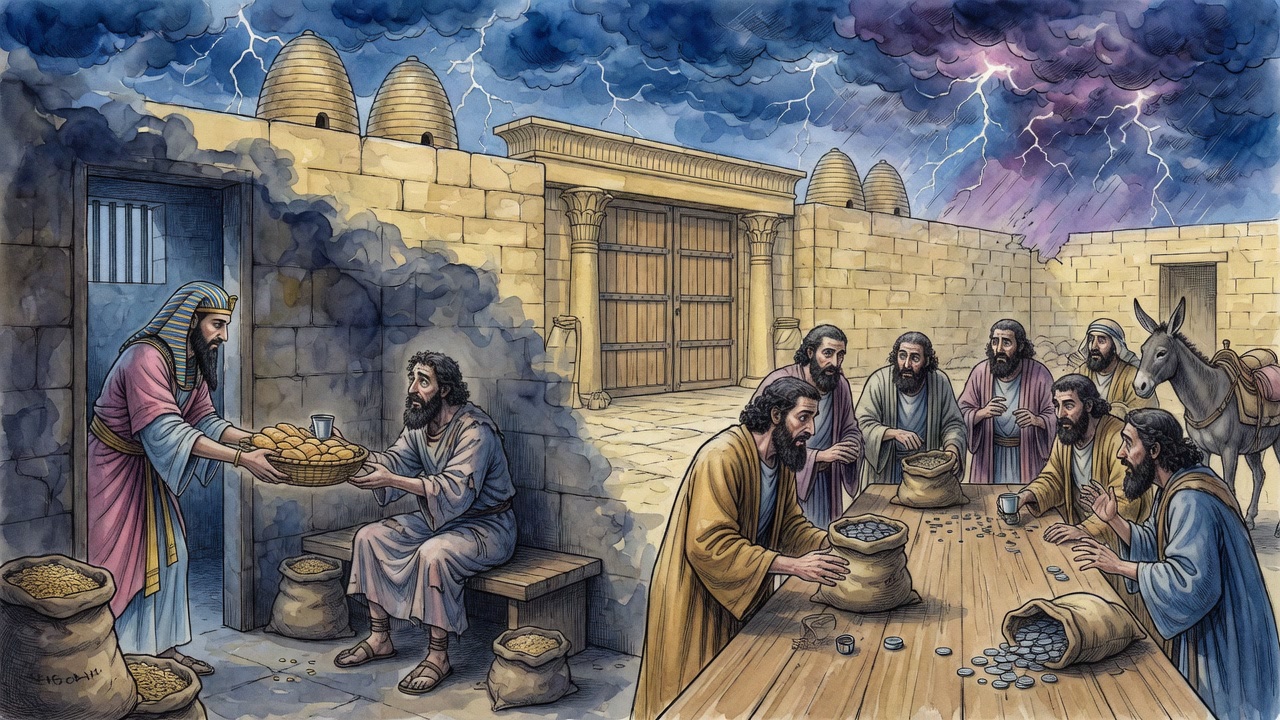
The silver cup had been found in the sack. The youngest brother, the son Jacob could not survive losing, stood accused as a thief. Joseph sat above them with an Egyptian name, Egyptian power, and a face his brothers did not recognize. The trap had closed with ceremonial precision.

Then Judah moved.

The Brothers Had Named Their Own Wound

Before the cup, they had tried to describe themselves.

Twelve brothers, sons of one man in Canaan. One father. One God. That was how they spoke in Egypt, as if the family were still whole because the sentence sounded whole. But one brother had been sold. One father had been deceived. One God had watched the pit open and the bloodied coat travel home.

Their words were true enough to accuse them.

The Cup Returned the First Crime

Benjamin's sack made the old sin visible.

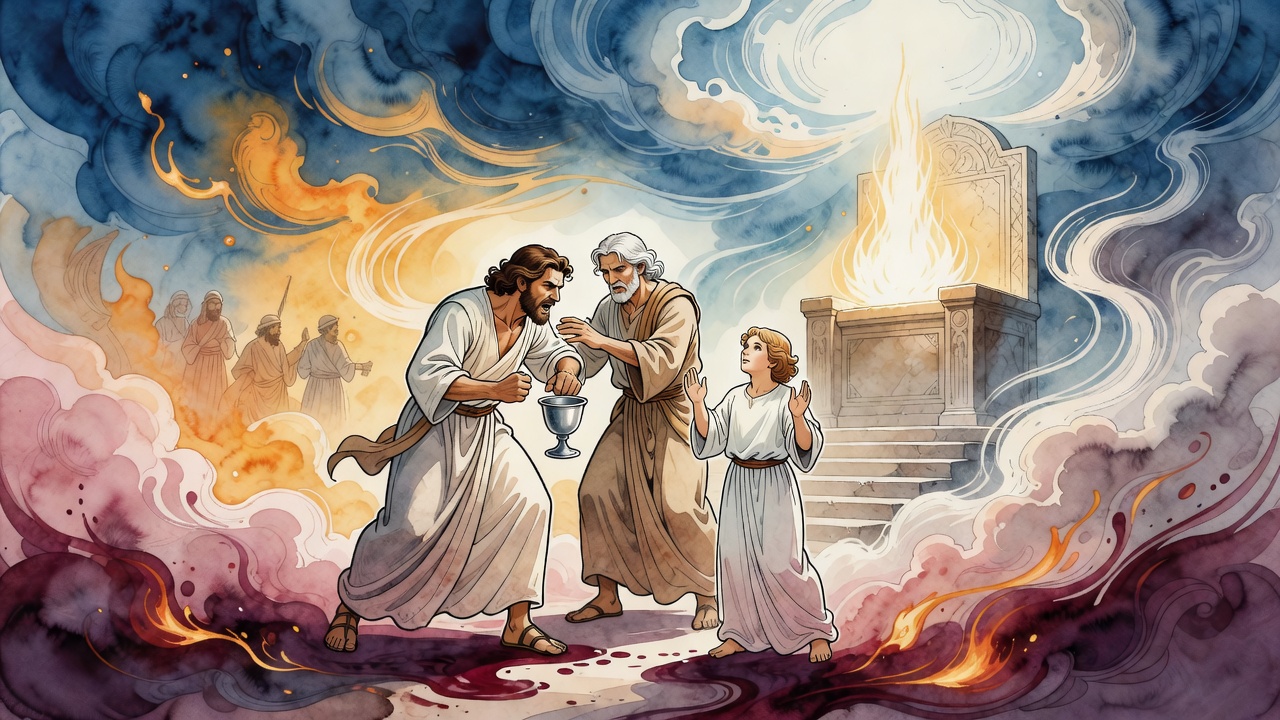
Money had appeared in their sacks before. Now the cup appeared where innocence should have been. The family that once treated a brother like merchandise stood accused through silver, bags, and theft. Judah understood the shape of it. God has found the sin of your servants. He did not mean the cup only. He meant the pit. He meant the sale. He meant the years in which Jacob mourned a living son.

Egypt had become a courtroom where memory gave evidence.

Judah Came Near for Three Things

Judah approached with more than one weapon.

The sages heard war in his step, prayer in his breath, and appeasement in his words. He did not know which would be required. He only knew that Benjamin could not be left behind. The brother who had once helped sell Joseph now offered himself in place of Rachel's other son.

The change was not spoken as apology. It stood in the bargain: take me, let the boy go.

Joseph Hid Until the Change Was Real

Joseph had forced the scene because tears alone would not prove anything.

He could have revealed himself the first day. He could have named the pit, the caravan, the garment, the lies. Instead he watched what his brothers would do when the old pattern returned. Would they abandon the favored son again. Would they walk home with another story for Jacob. Would Judah protect himself.

Judah broke the pattern. That was when Joseph could no longer stay hidden.

Not One Letter Would Be Torn Away

The Torah had been waiting too.

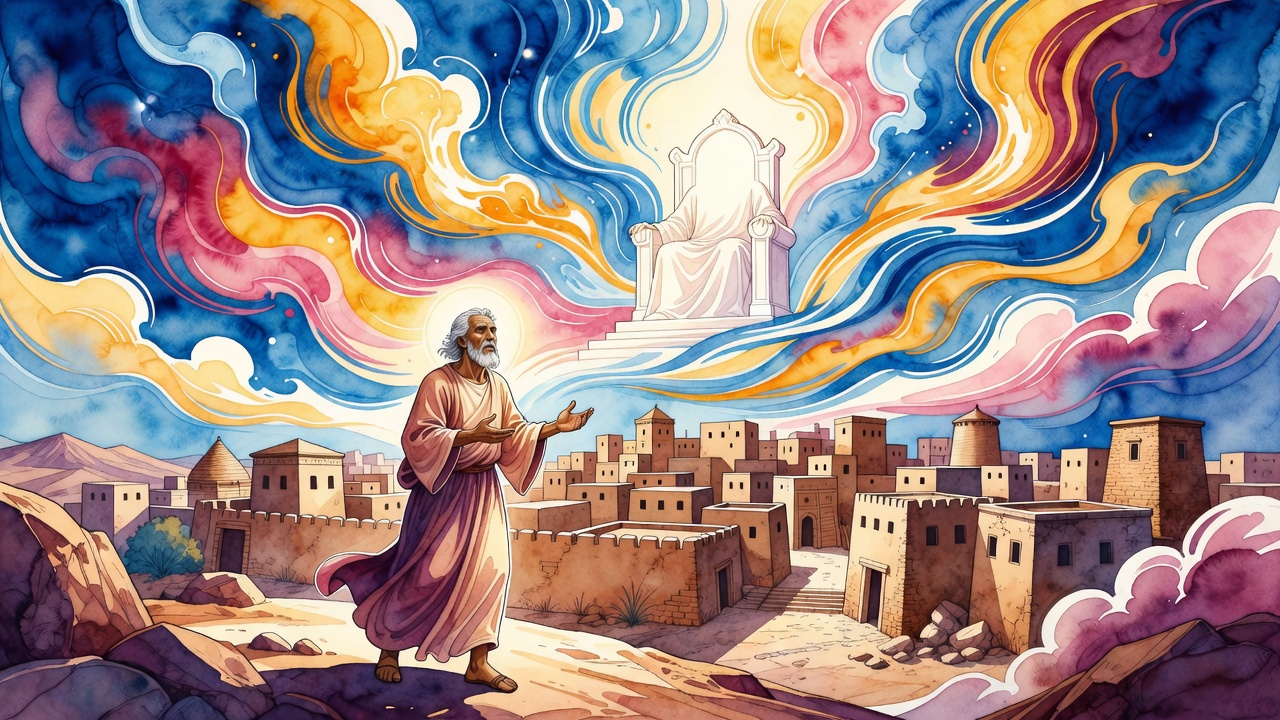
Later, Solomon would look at the royal commandments and think wisdom could loosen one letter. He could multiply horses, wives, silver, and gold without being captured by them. Then heaven answered that Solomon and a hundred like him would fall before one letter of Torah disappeared.

The same force stood in Egypt. A family could bend, lie, sell, and disguise itself, but the covenant would not tear. The smallest letter would outlast the brothers' evasions. Joseph could hide his face. Judah could hide his grief. Jacob could sit in Canaan thinking the dead were dead. The Torah kept its own account until the brothers had to stand inside it.

Judah's speech did not erase the sale. It answered it with a different choice at the exact place where repetition was possible.

Benjamin was the test because Joseph had been the wound.

When Judah chose slavery for himself rather than abandon the boy, the house of Jacob stopped breaking in the old direction. Joseph wept because the hidden brother had finally seen brothers who would not sell the youngest to save themselves.

The Torah had held the family together long enough for repentance to become visible.

Judah faced Joseph without knowing the man before him was Joseph. That ignorance made the act cleaner. He was not bargaining with a brother who might forgive him. He was pleading before power that seemed foreign, absolute, and cold. The old Judah had calculated profit from a sale. This Judah calculated only what his father's grief would cost.

The Torah refused to break because it waited for that difference. It did not need the brothers to become innocent. It needed them to become answerable.


← All myths

From the tradition

Sources

5 sources

The texts this telling draws on, in full. Open a card to read inline, or expand it for a wider, quieter read.

Aggadat Bereshit 75Aggadat Bereshit

"Have we not all one Father? Did not one God create us?" (Malachi 2:10). Judah approaches Joseph, who is not yet revealed as his brother. And identifies his family: "We, your twelve servants, are brothers, the sons of one man in the land of Canaan" (Genesis 42:13). Twelve brothers. One father. One God. The structure of the family mirrors the structure of the covenant, and the covenant mirrors the structure of creation.

The rabbis contrast Jacob's sons with the Egyptians: "not like the tents of the measure of mercy", not like Egypt, where idols crowded every corner. The brothers trusted in one God. Egypt's religious plurality was not diversity but fragmentation, every force in nature deified, every anxiety given a shrine. Jacob's house had a different structure: one source, one covenant, one Father whose name could be invoked in a foreign court.

Joseph and the hand of God in every hardship is the core of the passage. Everything that happened to Joseph, the pit, the slavery, the false accusation, the prison, was the hand of God moving behind events that looked only like cruelty. The brothers in front of the Egyptian viceroy do not know they are in the presence of the brother they sold. They are in the presence of everything they thought they had eliminated. And God, who had been present in the pit, is also present in this moment, arranging the reunion that will save them from the famine and them from themselves.

Full source
Midrash Aggadah, Genesis 44:16Midrash Aggadah

"And Judah said: What shall we say to my lord?", concerning the affair of Tamar. "What shall we speak?", concerning the affair of Bilhah. "How shall we clear ourselves?", concerning Dinah. "God has found out the iniquity of your servants", concerning the selling of Joseph.

Another interpretation: "What shall we say to my lord?", concerning the first money. "What shall we speak?", concerning the second money. "How shall we clear ourselves?", concerning the goblet.

Another interpretation: "What shall we say to my lord?", to our father who is in the land of Canaan. "What shall we speak?", concerning Simeon. "How shall we clear ourselves?", concerning Benjamin.

Another interpretation: "What shall we say?", if we say "we have sinned," the sin is revealed and known before the Name that we have not sinned; and if we say to you that we have not sinned, "God has found out the iniquity of your servants": the creditor has found a way to collect His debt.

Another interpretation: "How shall we clear ourselves (nitztadak)?", by way of notarikon: nun, innocent (neqiyyim); tzadi, righteous (tzaddiqim); tet, pure (tehorim); dalet, crushed/cleansed (dakkim); quf, holy (qedoshim).

Another interpretation: "What shall we say to my lord?", as its plain meaning. "What shall we speak?", to my father, for I pledged myself as surety for him. "How shall we clear ourselves?", before the Shekhinah.

Full source
Yalkut Shimoni on Torah 150:1Yalkut Shimoni on Torah

(Genesis 43:27-28) "And he said, 'Is your aged father well?' etc." Rabbi Chiyya the Great saw a certain Babylonian. He said to him, "What has my father done?" He said to him, "Your mother asks after you." He said to him, "I ask you one thing and you tell me another?" He said to him, "One asks after the living and one does not ask after the dead." So too "Is your father well?", this is Jacob; "the aged one of whom you spoke", this is Isaac. "And they said, 'Your servant our father is well; he is still alive'" (Genesis 43:29-30). "And he said, 'God be gracious to you, my son.'" Because we heard of graciousness with the other tribes, but with Benjamin we did not hear, for he was not yet born; and where did we hear of graciousness concerning him? Here: "And he said, 'God be gracious to you, my son.'" Rabbi Shmuel bar Nachman said: As soon as Joseph saw him, immediately his mind was set at ease and he blessed him at that moment. He said to them, "Bring him near to me," and he kept questioning him until he reached the matter of his brother. He said to him, "My son, do you have a brother?" He said, "I had, but I do not know where he is." "Do you have a wife?" He said to him, "Yes, I have a wife and ten sons." He said to him, "And what are their names?" He said to him, (Genesis 46:21) "Bela and Becher and Ashbel." He said to him, "Why did you call them these names?" He said to him, "On account of my brother's troubles. 'Bela' (swallowed), because he was swallowed up among the nations and I do not know where he is. 'Becher', because he was a firstborn (bechor) to me and to my mother. 'Ashbel', because he was taken captive (nishbah) from his father and went off. 'Gera', because he dwells (gar) in inns and became a sojourner (ger) in another land. 'Naaman', because he was pleasant (na'im). 'Muppim and Chuppim', because his head was covered (chafuy) among the idolaters. 'And Ard', because he went down (yarad) from province to province." Another interpretation: "Bela", because he was swallowed up from me. "Achi va-Rosh" (my brother and head), because he was my brother and head. "Muppim", because he was very beautiful (yafeh). "Chuppim", because he did not see my wedding canopy (chuppah) and I did not see his wedding canopy. "And Ard", because he was like a rose (vered) of lilies. Another interpretation: "Muppim and Chuppim", from the day he was exiled from me I did not wash (chafafti) and I did not comb and I made myself like a mourner. At that moment Joseph's compassion was stirred, as it is said, "And Joseph hurried, for his compassion was stirred toward his brother," etc. (Genesis 43:33) "And they sat before him, the firstborn according to his birthright." He took the goblet and made himself as if he were divining. He said, "Judah, who is king, let him sit at the head; Reuben, who is firstborn, let him sit beside him. Reuben, Simeon, Levi, and Judah, Issachar, and Zebulun, sons of one mother, where are they?" He brought them and seated them one beside the other. "Gad and Asher, sons of one mother, where are they?" He brought them and seated them one beside the other. "Dan and Naphtali, sons of one mother, where are they?" He brought them and seated them one beside the other. "I have no mother, and this one too has no mother, but in her bearing him she died; therefore let his head come to my head." Therefore "and the men marveled." (Genesis 43:34) "And he took portions, etc., five portions." Joseph gave him his own portion and the portion of Asenath and the portion of Manasseh and the portion of Ephraim and a portion with his brothers. This is what is written, "and Benjamin's portion was greater, etc." "And they drank and became drunk with him." With him they drank, but apart from him they did not drink; for from the time Joseph was separated from his brothers they did not drink wine, but all of them abstained from the wine; and even Joseph did not drink wine until that day, as it is said, "and on the crown of the head of him who was set apart (nazir) from his brothers." Rabbi Yose bar Chanina said: They too did not drink, as it is said, "and they drank and became drunk with him", and the other [reading]: it was "with him" that they were not drinking, but drinking in some measure there was. (Genesis 44:3) "And the men were sent off." Rav Yehudah said in the name of Rav: A man should always enter "with good" and go out "with good." There was an incident in a certain place in the south, where there was a certain innkeeper who would rise and put on his garments at night, and he would say to whoever was there, "Go out, I will provide an escort for you," and they would go out, and brigands would come upon them and rob them, and they would divide with him. One time Rabbi Meir was received there, and he rose and put on his garments and said to him, "Rise, I will provide an escort for you." He said to him, "I have a brother, and I sit and wait for him." He said to him, "Where is he?" He said to him, "In the synagogue." He said to him, "And what is his name, and I will go and call him?" He said to him, "Ki Tov." All that night the innkeeper went and cried out at the entrance of the synagogue, "Ki Tov! Ki Tov!" and there was no man who answered him. In the morning Rabbi Meir rose and untied his donkey to go. The innkeeper said to him, "Where is your brother of whom you spoke to me?" He said to him, "Here he comes," as it is written (Genesis 1:4), "And God saw the light, that it was good (ki tov)." (Genesis 44:4-6) "They had gone out of the city, they had not gone far." As you say (Joshua 3:4), "Let there be a distance between you and it of about two thousand cubits." He said, "If they get far from the city even one mil, no creature can bring them back." "Arise, pursue after the men", while the dread of the metropolis is upon them. "And you shall overtake them" (ve-hissagtam) is written with a sin: shake them up (shaggesh) with words, one soft and one harsh. "Why have you repaid evil for good?", this is harsh. "Is this not that from which my lord drinks?", lo, this is soft. And so he did: "and he overtook them and spoke to them", he shook them up with words. (Genesis 44:8) "Behold, the money." Rabbi Shimon said: This is one of ten a fortiori arguments in the Torah. "Behold, the money which we found", a fortiori, "how then should we steal?" (Exodus 6:12) "Behold, the children of Israel have not listened to me", a fortiori, "and how shall Pharaoh listen to me?" "Behold, while I am yet alive with you this day, you have been rebellious against the LORD", "and how much more after my death." (Numbers 12:14) "And the LORD said to Moses, 'If her father had but spat in her face, would she not be shamed seven days?'", a fortiori concerning the Shekhinah. "For you have run with footmen and they have wearied you", a fortiori, "and how will you contend with horses?" (ibid.) "And in a land of peace you are secure", "and how will you do in the thickets of the Jordan?" (1 Samuel 23:3) "Behold, we are afraid here in Judah", a fortiori, "how much more then if we go to Keilah." "Behold, the righteous shall be requited on the earth", a fortiori, "how much more the wicked and the sinner." (Esther 9:12) "In Shushan the capital the Jews have killed and destroyed", a fortiori, "in the rest of the king's provinces." (Genesis 44:10) "And he said, 'Now also let it be according to your words.'" "Ten people who are found in a theft, are they all in the boat? I will not do so; rather, the one with whom it is found shall be my servant." (Genesis 44:12) "And he searched; with the eldest he began and with the youngest he ended." So that they should not say, "He knew where it was placed." "And the goblet was found in Benjamin's sack." As soon as it was found, they said to him, "O thief, son of a thief-woman!" He said to them, "Is there a goat here? Is there a case here of brothers selling their brother?" (Genesis 44:13) "And they rent their garments." Manasseh caused the tribes to rend, etc. (as above). "And each man loaded his donkey." Each one took his load with one hand and loaded it on his donkey, "and they returned to the city." It was a metropolis, and you say "to the city"? This teaches that it was esteemed in their eyes only as a city of ten people. (Genesis 44:14) "And Judah and his brothers came to Joseph's house, and he was still there." He was accustomed to go out every day to the tribunal to judge, but on that day he did not go, so as not to shame his brothers before the Egyptians. "And they fell before him to the ground", to fulfill the dream, (Genesis 37:9) "and eleven stars bowing down to me." (Genesis 44:16) "And Judah said, 'What shall we say to my lord'", concerning the first money; "'what shall we speak'", concerning the second money; "'and how shall we justify ourselves'", concerning the goblet. Another interpretation: "What shall we say", concerning the deed of Tamar; "what shall we speak", concerning Bilhah; "and how shall we justify ourselves", concerning [Benjamin]. "What shall we say", that we have sinned? It is revealed and known that we have not sinned. "God has found out the iniquity of your servants", the holder of the bond has found means to collect his debt. Rabbi Levi said: like one who drains the cask and stands it on its dregs. "How shall we justify ourselves, behold, we are servants to my lord" (it is written in remez 80). (Genesis 44:17-18) "And he said, 'Far be it from me.'" He shook out his purple robe and said, "Far be it from me to do this." Joseph said to them, "God forbid that I should suspect you; rather, this lad is suspected of having stolen it in order to divine for his brother, where did he go?" "The man in whose hand the goblet was found, he shall be my servant." At that moment all the tribes turned their faces away from him. And who stood against him? The guarantor, as it is said, "And Judah drew near to him." He said, "The peace of all drips down," and the Holy Spirit responds (Psalms 119:165), "Great peace have those who love Your Torah," etc.

Full source
Midrash Aggadah, Genesis 44:18Midrash Aggadah

"Then Judah approached him" (Genesis 44:18). This "approaching" we find is used in three senses: for war, for appeasement, and for prayer. For war, as it is written, "And Joab approached, and the people who were with him, to the battle" (II Samuel 10:13). For appeasement, as it is written, "And they approached him and said, We will build sheepfolds here for our cattle" (Numbers 32:16). For prayer, as it is written, "And Elijah the prophet approached" (I Kings 18:36). And so Judah said to Joseph: if it is for war I come, and if it is for prayer I come, and if it is for appeasement I come. "Pray, my lord" (Genesis 44:18), by the life of [God], you pass this over us, for so you said to us, "Bring him down to me," etc. (Genesis 44:21). "Let your servant speak a word in my lord's ears" (Genesis 44:18), let my words enter your ears. The grandmother of this one [Benjamin], because Pharaoh detained her one night, he and all his house were stricken with plagues; beware, lest this man be stricken with leprosy. And they said concerning Judah that at the time he grew hot with anger, the hairs of his heart would pierce his garments and come out, and he would put bars of iron into his mouth and bring them out as dust. "For you are like Pharaoh" (Genesis 44:18), just as Pharaoh decrees and does not fulfill, so too you decree and do not fulfill; just as Pharaoh lusts after males, so too you lust after males.

Full source
Legends of the Jews 5:130Legends of the Jews

Solomon, in all his glory. The king whose wisdom was legendary, whose wealth was unparalleled, whose temple stood as a evidence of divine favor. Yet, even he wasn't immune to the temptations of the world.

The story goes that as Solomon’s riches grew, so did his forgetfulness of God. He started collecting wives – going directly against the instructions laid out for kings in the Torah. And not just wives, but horses too, and mountains of gold. Essentially, he was doing everything Deuteronomy explicitly warned against.

The scene. The Book of Deuteronomy itself – personified, no less! – steps before God. "Look, O Lord," it says, "Solomon is trying to erase a Yod from me!" A Yod, the smallest letter in the Hebrew alphabet, but immense in its significance.

Deuteronomy is referring to the passage, "The king shall not multiply horses unto himself, nor shall he multiply wives to himself, neither shall he greatly multiply to himself silver and gold" (Deuteronomy 17:16-17). According to this tradition, Solomon’s actions were so egregious, so directly opposed to divine law, that it was as if he were trying to literally tear a letter from the very scroll of the Torah itself.

God’s response? It’s "As thou livest," He declares, "Solomon and a hundred of his kind shall be annihilated ere a single one of thy letters shall be obliterated."

Whoa.

It's a powerful reminder that even the most powerful figures are accountable. No amount of wisdom or wealth can excuse disobedience to divine law. The integrity of the Torah, even down to the smallest letter, is paramount. This isn't just about following rules; it's about the very foundation of faith and covenant.

What do we take away from this? Maybe it's a warning to ourselves, regardless of our own status or accomplishments. Are we allowing the allure of the material world to cloud our spiritual vision? Are we, in our own ways, perhaps trying to erase a little Yod here and there? It’s a question worth pondering.

Full source