Parshat Miketz5 min read

Ten Brothers Entered Egypt Through Separate Gates

Jacob asked why his sons feared the road to Egypt. They split across ten gates against the evil eye, then bowed to a bearded stranger who remembered dreams.

Curated by Arthur · Told by Maggid ·
Table of Contents
  1. Ten Doors Against One Eye
  2. The Stranger Who Knew Them
  3. When the Old Dreams Stood Up
  4. What the Separate Gates Could Not Hide

Jacob looked at ten grown sons standing still while Canaan's store jars emptied, and the old man's patience snapped. Grain was moving out of Mizraim. Caravans were coming back heavy. His sons were inventing reasons to stay home and calling the inventions prudence.
Ten Brothers Entered Egypt Through Separate Gates Click for full size

"Why are you afraid to go down to Mizraim?" he asked (Genesis 42:1).

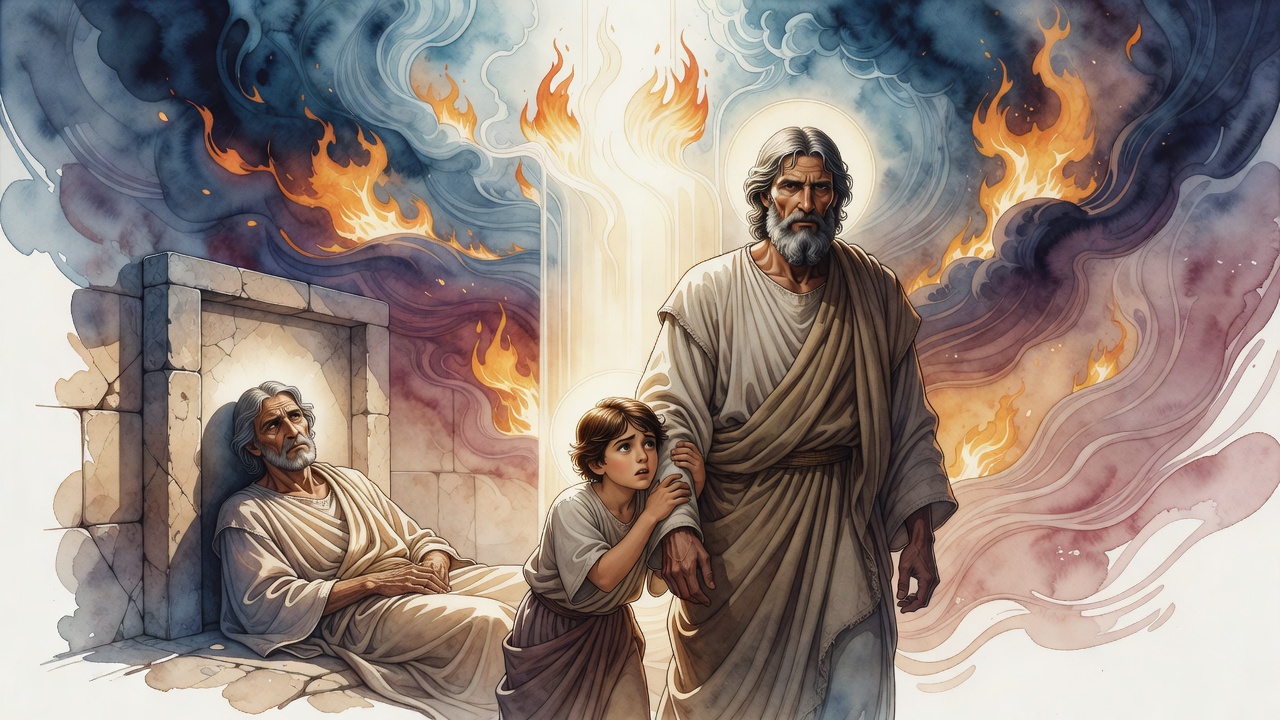
He saw more than hesitation. He saw fear sitting on their faces like dust. They knew markets. They knew roads. They also knew what a band of brothers can do to one of their own when no father is watching, and the memory made every foreign gate look like a courtroom. Jacob did not need their full confession. He needed bread. He shoved them south with a question sharp enough to cut through their stalling.

Ten Doors Against One Eye

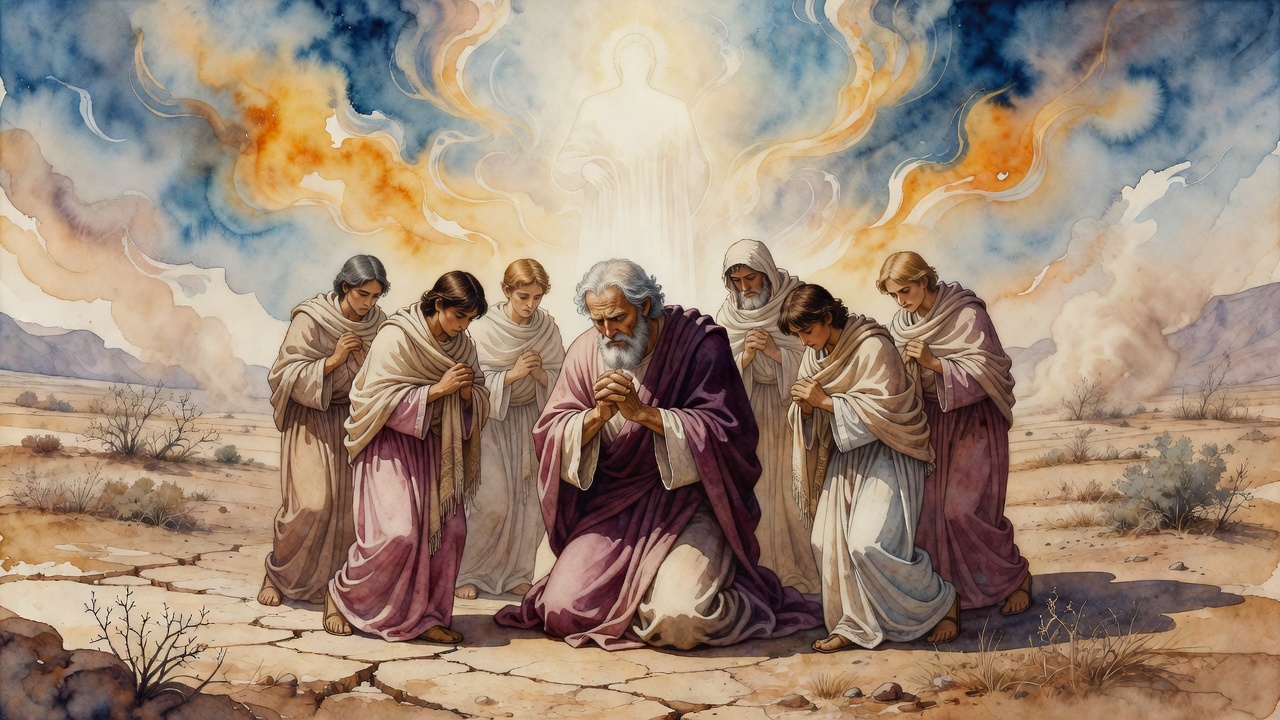
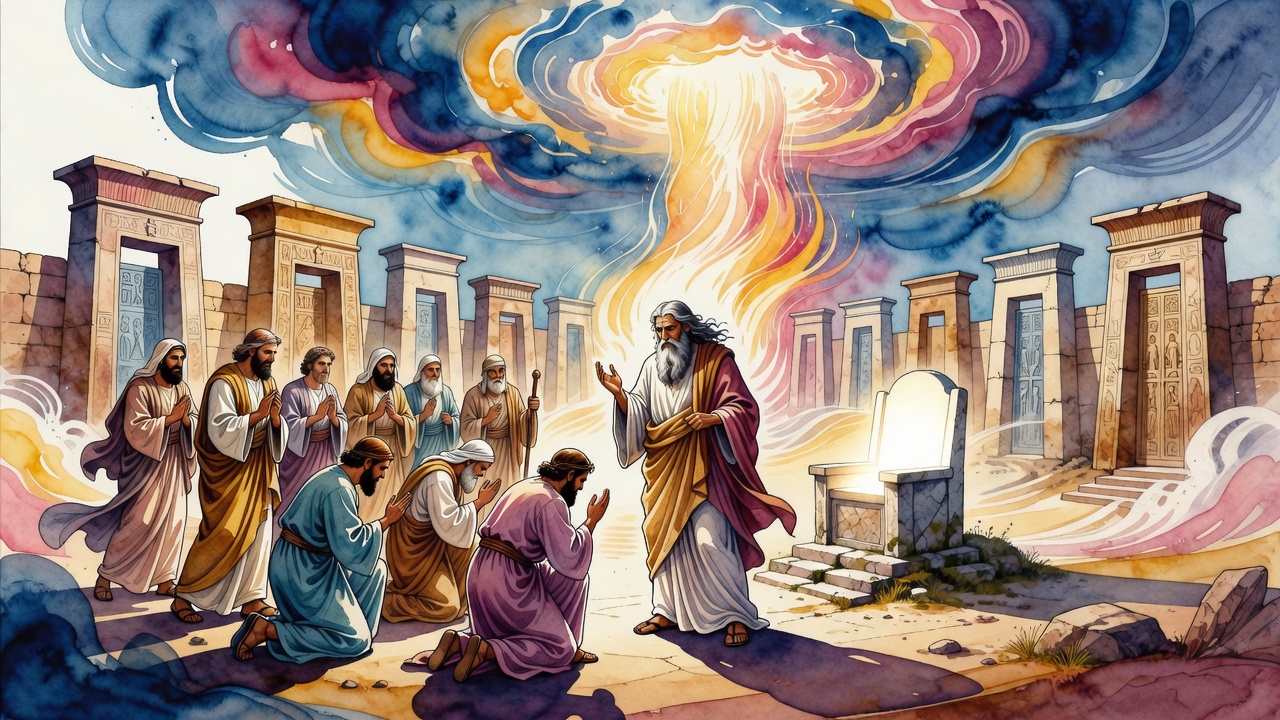
They went. They did not go as a single knot of handsome men easy to envy in a hungry city. The sons of Israel entered every one by one door, lest the evil eye sway over them as they went together to buy among the Canaanites who were also buying, because the famine was in the land of Canaan (Genesis 42:5).

Ten separate thresholds. Ten separate lines. Ten separate nods to gate clerks who would never count them as one luminous clan. The ayin ha-ra (the evil eye) in this telling is not only a superstition. It is the heat of too much attention on a family that already broke once under envy. A striking group of ten brothers moves through a market like a torch. Torches draw eyes. Eyes, in the old fear, can become harm. They had learned, the hard way, what concentrated stares can buy. So they split, and each man carried his own hunger through his own door.

The Stranger Who Knew Them

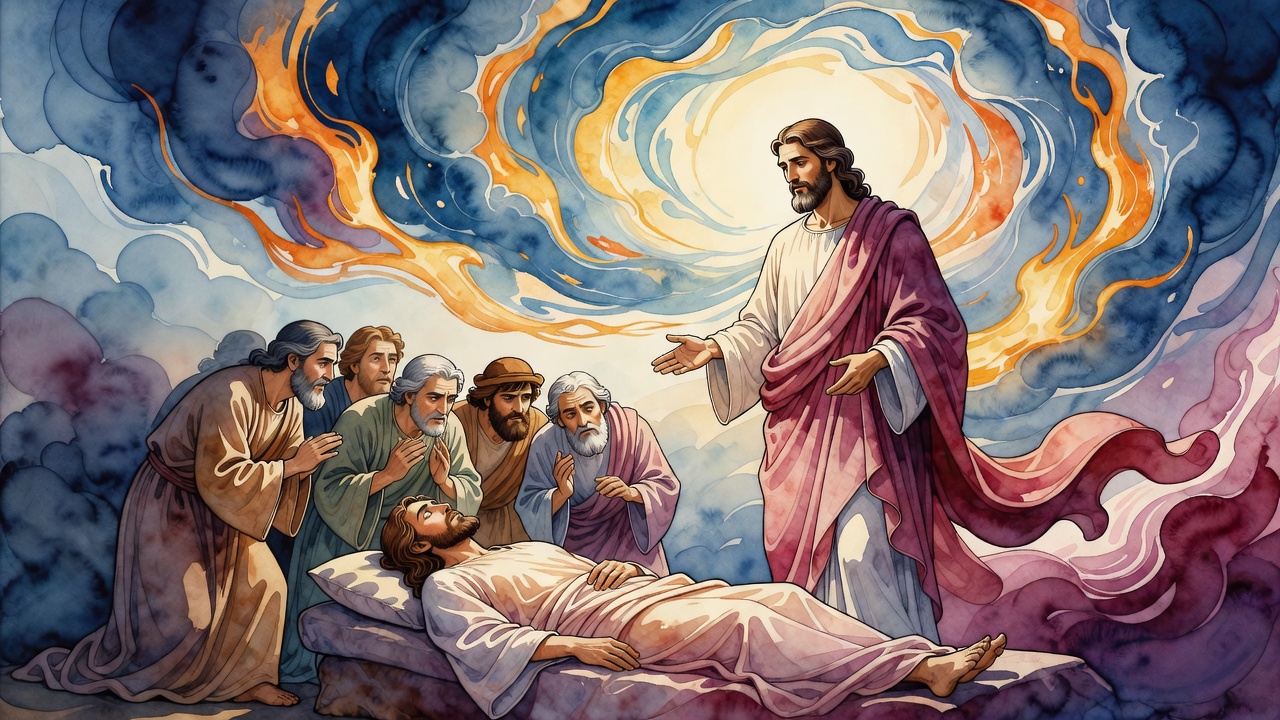
Joseph saw his brothers and recognized them at once. He made himself a stranger in their eyes and spoke hard words. "Whence come you?" They answered from the land of Canaan, to buy corn (Genesis 42:7).

He performed distance. Voice colder. Questions sharper. Posture borrowed from empire. The man who once wore a colored coat now wore the face of a granary official who could starve a caravan with a shrug. They bowed because hungry men bow to the person who can open stores. They did not bow because they loved him. They did not know who he was.

He knew them by the beards they had already worn when they sold him. They did not know him because when they last saw him he had no beard, and now he did (Genesis 42:8). Twenty-two years of face had grown a mask they helped create. Time had done for Joseph what no disguise coach could do. Egypt had finished the costume.

When the Old Dreams Stood Up

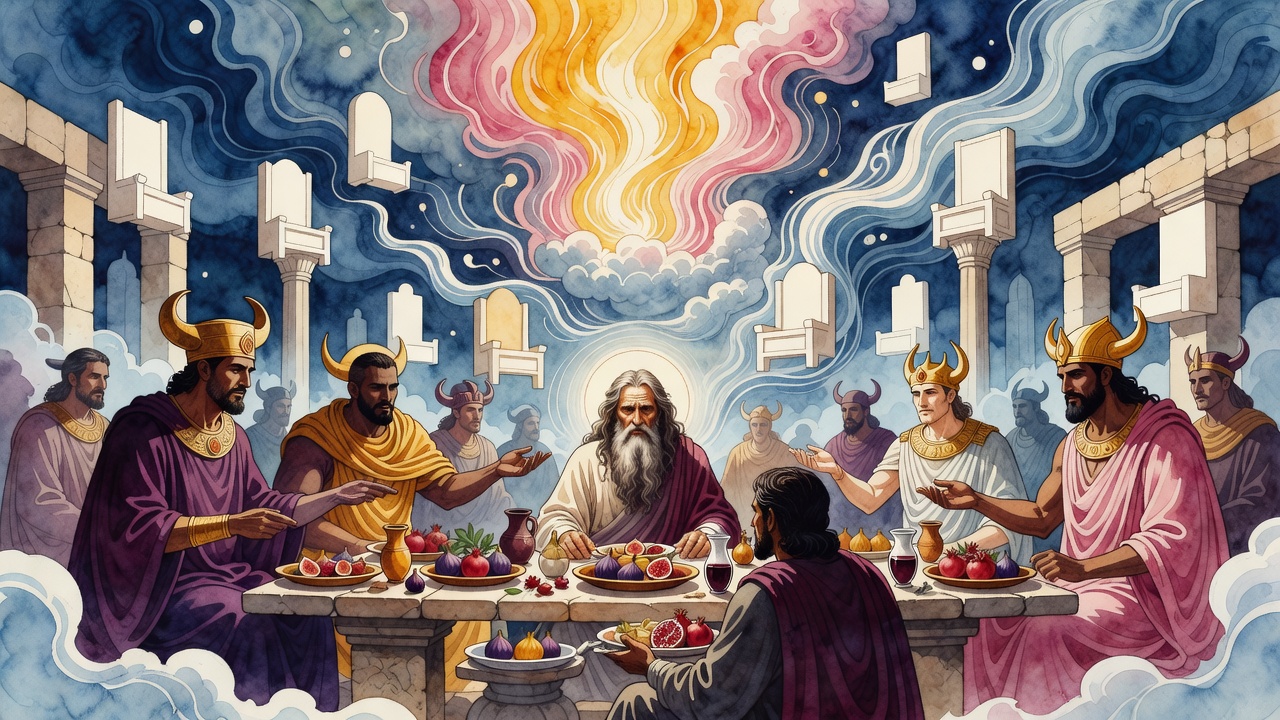
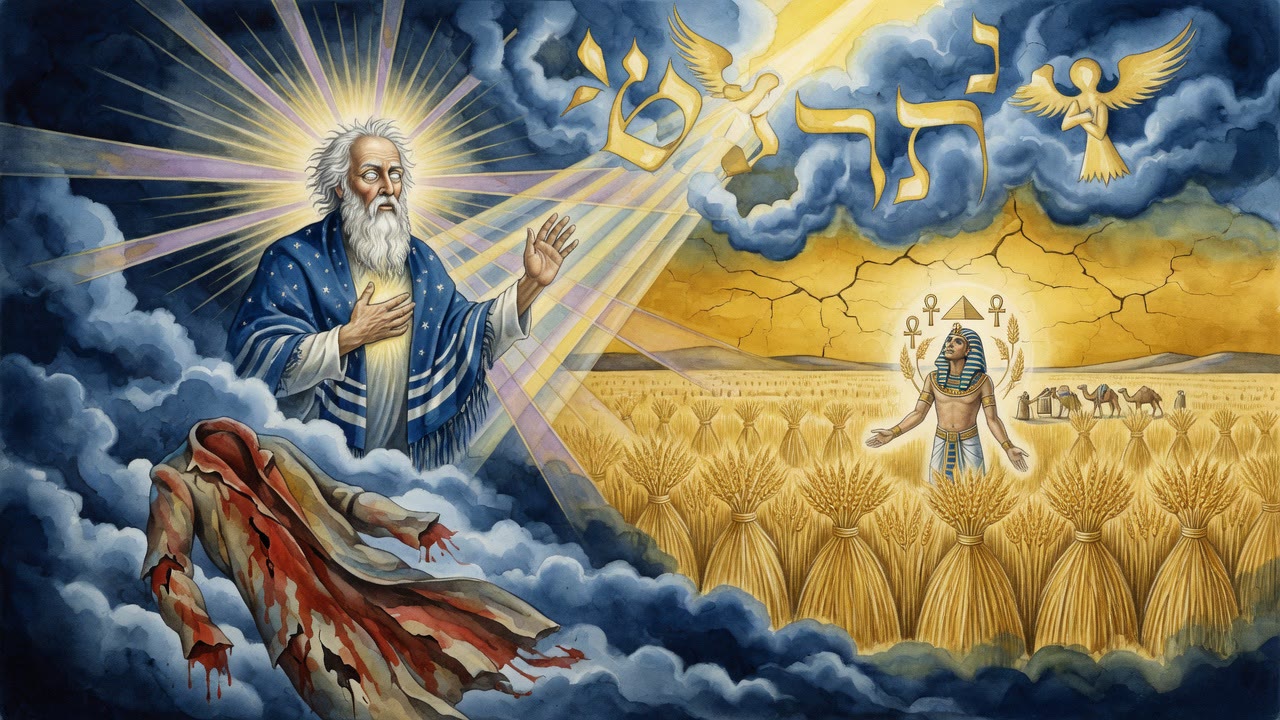
The instant of the bow unlocked a private theater. Joseph remembered the dreams he had dreamed of them (Genesis 42:9). Sheaves in a field bending. Stars in a sky arranging themselves around a boy's arrogant telling. A coat stripped. A pit. Midianite silver. The dreams had not been canceled by the sale. They had been postponed until famine could force the cast back onto the stage.

"You are spies," he said, "to see the nakedness of the shame of the land are you come." The accusation was a tool, not a research paper. He needed them off balance. He needed Benjamin. He needed to know whether the men who once sold a brother still sold brothers when the price was right. They protested innocence with the frantic honesty of men who are guilty of an older crime and terrified of a new one. Joseph listened for the shape of their fear more than for the content of their alibis.

What the Separate Gates Could Not Hide

They had split at the city doors to dodge the evil eye. They could not split the ledger heaven was still keeping. Ten entries, one recognition, one memory of dreams, and a famine that forced the past back into the same room. Jacob's sharp question had shoved them south. Egypt's bearded stranger was about to shove them into a test that would either finish the sale or reverse it. The evil eye they feared in the street was smaller than the eye that had been watching them since the pit.

That night, if they slept at all, they slept as ten separate nerves under one Egyptian roof of power. Reuben counted the years since the pit. Judah tasted the word spies and tried to spit it out. Benjamin was still in Canaan, the one door Jacob had not opened, and Joseph already knew that door was the hinge of the whole house. Separate gates had been a clever defense. The next rooms would demand they stand together under a charge that only a living brother could dismiss.


← All myths
From the tradition

Sources

5 sources

The texts behind this telling. Some cards carry a translation of the source; others are our own retelling of it, and each card says which. Every card links out to the original.

Targum Pseudo-Jonathan on Genesis 42:1Targum Pseudo-Jonathan on Genesis

Retold in our words. Read the original at the link below.The Targum of Jonathan ben Uzziel, trans. J. W. Etheridge, London, 1862 · Public Domain

The famine reached Canaan, and Jacob's sons stood around doing nothing. Targum Pseudo-Jonathan on (Genesis 42:1) preserves the old man's impatience in a single cutting line: "Why are you afraid to go down to Mizraim?"

The father reads his sons' faces

The Aramaic paraphrase, which took its final form in the Land of Israel around the seventh or eighth century CE, catches something the Hebrew understates. The sons are not merely hesitant. They are afraid. Rashi (1040-1105 CE), the great northern French Torah commentator, notes that the Hebrew word the brothers are shown is not simply "looking at each other" but "staring nervously", the body language of guilty men. Why the fear? Because Egypt is where caravans pass, and the last caravan they sold a brother to (Genesis 37:28) was headed there. Egypt is the one country where Joseph might still be alive, and they know it.

A father who sees what the sons won't say

Jacob does not know what happened at the pit near Dothan. But he reads his sons well enough to see they are refusing a journey they should have already begun. His question is not rhetorical. It is paternal exasperation: the grain is in Egypt, we are starving in Canaan, and you are standing around. The Targum sharpens the rebuke.

The takeaway

Sometimes the conscience a person has been dodging speaks in the voice of an irritated parent asking why they won't take the obvious road.

Full source
Targum Pseudo-Jonathan on Genesis 42:5Targum Pseudo-Jonathan on Genesis

Retold in our words. Read the original at the link below.The Targum of Jonathan ben Uzziel, trans. J. W. Etheridge, London, 1862 · Public Domain

Jacob sent ten sons to Egypt, and they entered not as a group but through ten different doors. Targum Pseudo-Jonathan on (Genesis 42:5) preserves the reason: "every one by one door, lest the ayin ha-ra, the evil eye, should have sway over them."

The evil eye and caravan travel

The concern was deeply ancient. The ayin ha-ra in Jewish thought is not a supernatural curse but a concentrated attention from others, envy, jealousy, scrutiny, that can translate into real harm. A striking family of ten handsome, strong brothers walking into a famine-stricken city in matching clothes would draw stares. Stares draw thieves. Stares draw tax collectors. Stares draw memory. The Aramaic paraphrase, which took its final form in the Land of Israel around the seventh or eighth century CE, shares this tradition with the Talmud (Bava Metzia 84a), compiled in Babylonia around 500 CE, which records the same principle: brothers of unusual beauty or strength should not gather together in public.

Humility, not superstition

The rabbinic tradition reads the scattered entrance not as magical protection but as a practice of humility. Do not advertise your numbers. Do not flaunt your cohesion. Walk in separately, do your business, and walk out. It is a disposition that protected Jewish communities under many regimes afterward.

The takeaway

Jacob's sons enter Egypt through ten gates because attention is a liability during famine. Not every strength is meant to be on display.

Full source
Targum Pseudo-Jonathan on Genesis 42:7Targum Pseudo-Jonathan on Genesis

Retold in our words. Read the original at the link below.The Targum of Jonathan ben Uzziel, trans. J. W. Etheridge, London, 1862 · Public Domain

They stood in front of him and did not know him. Targum Pseudo-Jonathan on (Genesis 42:7) records the moment: Joseph saw his brothers, recognized them, and then "made himself as a stranger in their eyes, and spake hard words to them."

The performance of a stranger

The Aramaic phrasing is careful. Joseph does not become a stranger; he performs strangeness. The Hebrew verb vayitnaker carries the same reflexive sense, he disguised himself, he acted unknown. His voice deepens, his questions turn cold, his Egyptian interpreter (Genesis 42:23) stands between him and the brothers so they never hear the Hebrew of their childhood. Joseph is choreographing this meeting down to the accent.

Why speak harshly?

The rabbinic tradition asks the obvious question. If Joseph recognized them, why not embrace them? The answer running through Bereishit Rabbah 91:6, a commentary on Genesis compiled in the Land of Israel around the fifth century CE, is that forgiveness without testing would have been premature. Joseph needed to know what the brothers had become. Were they still the men who sold him? Or had twenty-two years changed them? The hard words were a diagnostic tool. He had to see how they would act under pressure before he could know what to do with them.

The takeaway

Sometimes silence is the wisest first response to reunion. Joseph withholds himself not from cruelty but from the need to see what his family has become before he tells them who he has become.

Full source
Targum Pseudo-Jonathan on Genesis 42:8Targum Pseudo-Jonathan on Genesis

Retold in our words. Read the original at the link below.The Targum of Jonathan ben Uzziel, trans. J. W. Etheridge, London, 1862 · Public Domain

How can someone recognize his brothers if they cannot recognize him? Targum Pseudo-Jonathan on (Genesis 42:8) answers with a very physical explanation: the beard.

The mathematics of a face

When Joseph was taken from his family at seventeen (Genesis 37:2), he had no beard. The Aramaic paraphrase, which took its final form in the Land of Israel around the seventh or eighth century CE, puts it plainly: "when separated from them, they had the token of the beard; but they did not recognise him, because (at that time) he had not the token of the beard, and at this hour he had it." His older brothers were already bearded when they last saw him; he was not. Twenty-two years later, Joseph at thirty-nine wears the full Egyptian beard of a high official. They see a shaven-jawed boy in their memory and a bearded governor before them.

The asymmetry that saves the family

The Targum turns the asymmetry into a theological insight. Joseph could recognize them because their beards had grown longer, grayer, but their faces were substantially the same. They could not recognize him because he had grown from boy to man in the interval. Time erases a child's face and sharpens an adult's. The rabbinic tradition reads this detail as providence: if the brothers had recognized him immediately, the whole reconciliation drama, the testing, the return of Benjamin, the final tears, could not have unfolded.

The takeaway

A beard is a small thing, but it bought the family twenty more verses of testing, repentance, and return. Sometimes the providence hides in the most ordinary detail.

Full source
Targum Pseudo-Jonathan on Genesis 42:9Targum Pseudo-Jonathan on Genesis

Retold in our words. Read the original at the link below.The Targum of Jonathan ben Uzziel, trans. J. W. Etheridge, London, 1862 · Public Domain

The instant they bowed, he remembered. Targum Pseudo-Jonathan on (Genesis 42:9) reports it without fanfare: "Joseph remembered the dreams he had dreamed of them."

The sheaves and the stars

Twenty-two years earlier, Joseph had told his brothers two dreams (Genesis 37:7-9). In the first, eleven sheaves bowed to his sheaf in the field. In the second, the sun, moon, and eleven stars bowed to him. The brothers had hated him for the dreams, and those dreams were a major reason they sold him. Now the first dream is coming true before his eyes. Ten sheaves, ten brothers, bowing face to the ground in his court.

Why the dream remembered matters

The Aramaic paraphrase, whose final redaction belongs to the Land of Israel around the seventh or eighth century CE, adds nothing supernatural to this moment. Joseph simply remembers. But the memory changes what happens next. If the first dream has come true, the second is still outstanding, the second dream had eleven sheaves, eleven stars, and a moon. Where is the eleventh brother, Benjamin? Where is their father Jacob? The harsh test Joseph is about to stage, accusing them of spying and demanding Benjamin, is not random cruelty. It is Joseph trying to complete the dream that is still unfinished.

You are spies

The accusation, to have come to see "the nakedness of the shame of the land", is an Egyptian political charge. Foreigners arriving separately through different gates looked like agents mapping defenses. Joseph uses the charge as leverage.

The takeaway

A dream delayed is not a dream denied. Joseph lived twenty-two years between the dream and its fulfillment, and in the meantime he became the very ruler his sheaf foreshadowed.

Full source