Israel Would Not Die Until He Saw Joseph
Jacob could recite the rescues in his sleep. Esau, Laban, the Canaanites who chased him. He had not kept a line for Joseph.
Table of Contents
The brothers came back from Egypt talking over each other. Joseph was alive. Joseph was governor over the whole land. Jacob's heart went still in him, and he believed none of it.
 Click for full size
Then he went out and looked at the wagons.
Egyptian Wheels in a Canaanite Yard
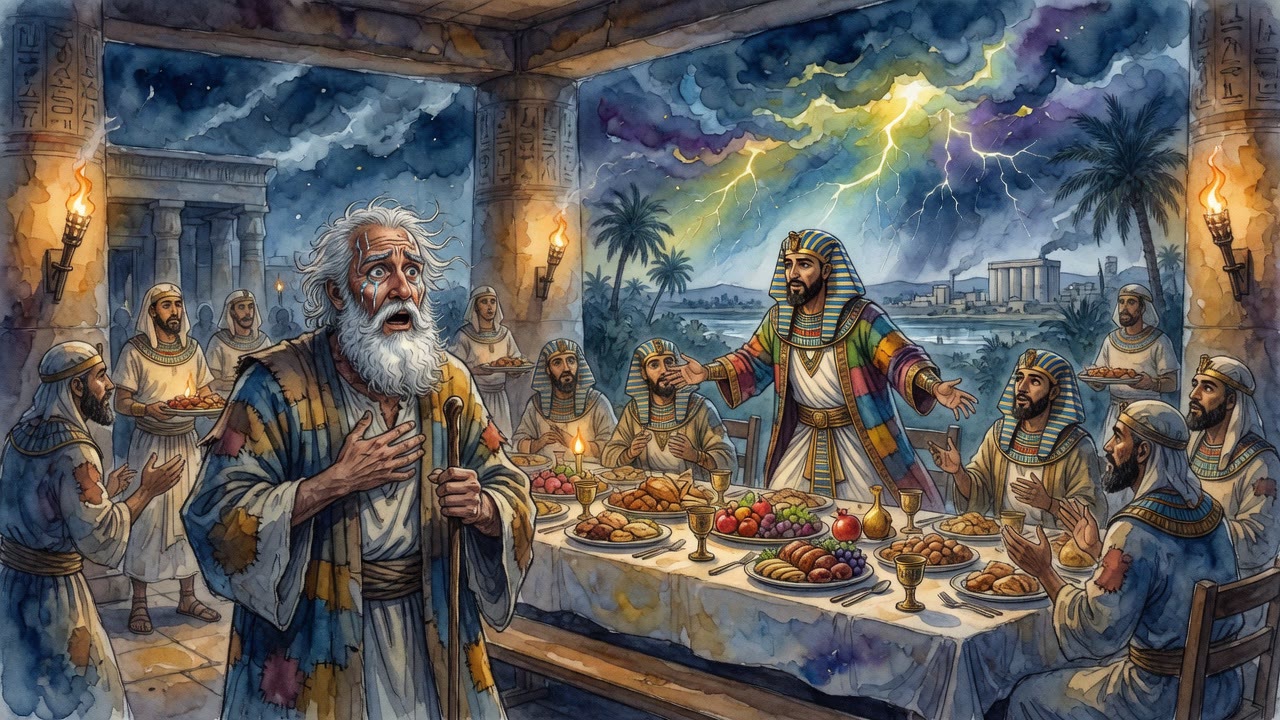
Egyptian carts, sent north under Pharaoh's order, standing in a Canaanite yard with the dust of the delta road still packed in the wheels. Nobody in that country owned carts like those. Someone with authority had sent for him by name.
He put his hand on a wheel. The wood was foreign. The iron was foreign. The yard smelled of his own goats and of a river he had never seen. His breath came back.
For the first time in a long while the old man was called by his other name, and he used it. Israel spoke.
The Ledger He Already Knew
He counted, the way a man counts what he has been carried through.
"Many benefits has the Lord wrought for me. He delivered me from the hand of Esau, and from the hand of Laban, and from the hands of the Canaanites who pursued me."
Three names. Three near deaths. Esau on the road with four hundred men after the stolen blessing. Laban riding out of Haran with his kinsmen and his grievance. The Canaanites who closed in on the household after Shechem, when Jacob told his sons they had made him a stench among the people of the land and he expected to be cut down for it.
"And many consolations have I seen, and have expected to see."
He knew what to expect by now. A man rescued three times keeps a running account of what heaven is willing to do for him, and he stops asking for anything outside it.
The Coat He Had Already Ruled On
"But this I had not expected, that Joseph my son should yet be alive."
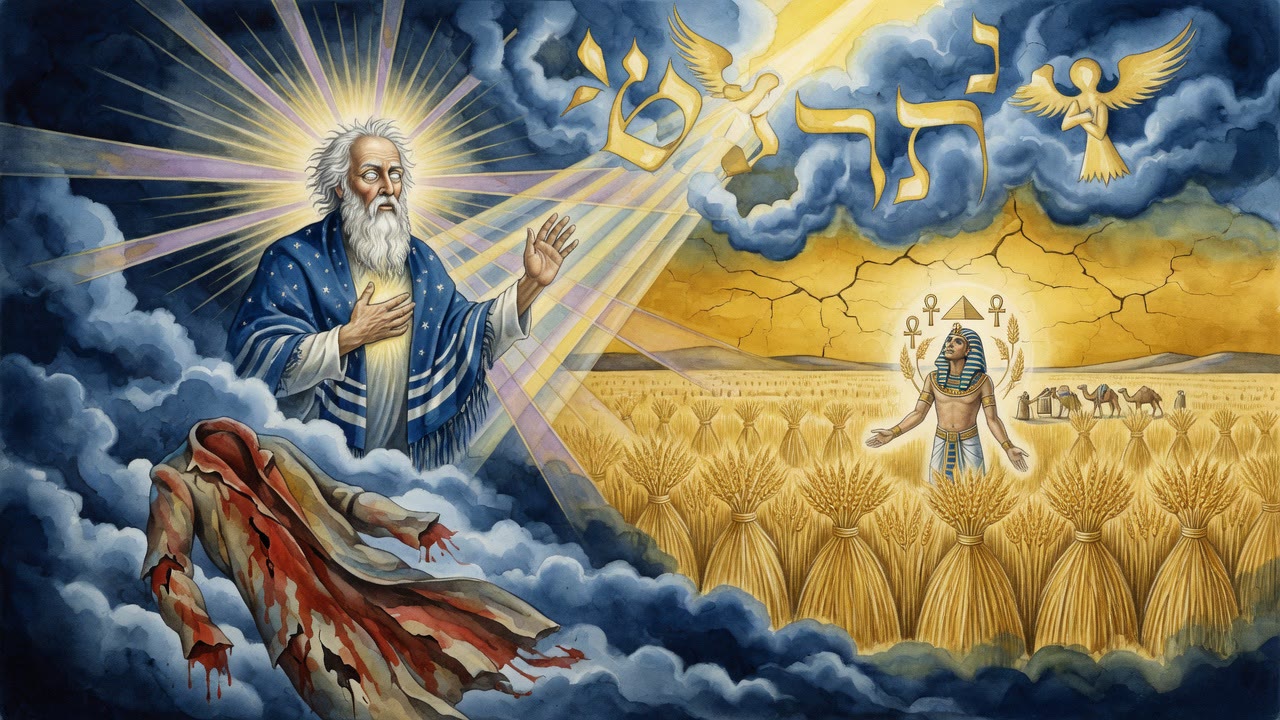
The coat had come back to him soaked through and torn, and he had made his own ruling on it. An animal. He had pushed away every comfort the household offered and said he would go down to the grave mourning, and then he had done exactly that for years, in front of all of them, every day.
The brothers stood in the yard while he said the sentence out loud. Not one of them said anything about the coat. The lie had lived in that yard longer than some of the children. It did not speak now. The wagons spoke instead.
He looked from the foreign wheels to the faces of the sons who had brought him a bloody garment and a story. They had come back with a different story. He did not reopen the old one. He held the new one because the wood under his palm was too specific to argue with.
Before I Die
"I will go now, and behold him before I die."
Not more years. Not the governorship. Not Pharaoh's favor. Not the grain that had brought his sons south twice already. One look, and then he would be free to finish dying.
Servants loaded the carts. The household that had spent years in mourning over a piece of cloth packed itself for Egypt. Jars. Blankets. The last of the famine stores. The old man set his staff for the road toward the one rescue he had never put on the list.
He did not ask how a dead son becomes a governor. He asked for the road.
Two Boys Born Before the Hunger
More than a son waited at the other end of that road. Before the famine years came up over Egypt, while the storehouses were still filling, Joseph had fathered two boys on Asenath, who had been raised in the house of Potiphera, prince of Tanis. Manasseh and Ephraim were born into the plenty. They could walk and talk by the time the wagons rolled north.
Joseph had not brought children into a starving land. He had taken the years of fat harvest and put two sons into them, so that when the lean years arrived the boys were already named, already eating from stores their father had filled. They were Hebrew by him and Egyptian-raised by her, waiting in a house the old man had never entered.
Jacob did not know their names. He was going anyway.
The wagons left the yard. Delta dust, packed in the wheels on the way north, would pack Canaanite dust on the way south. Israel sat among the foreign timber and kept reciting the old list, then adding a line he had not expected to live long enough to say. Joseph is alive. I will behold him. After that, the grave can have the rest.
← All myths