Jacob Named Five Fears and God Answered Each
Joseph sent his oldest son first, then the next, each on a horse. From far off Jacob kept mistaking every rider for the son he had lost.
Table of Contents
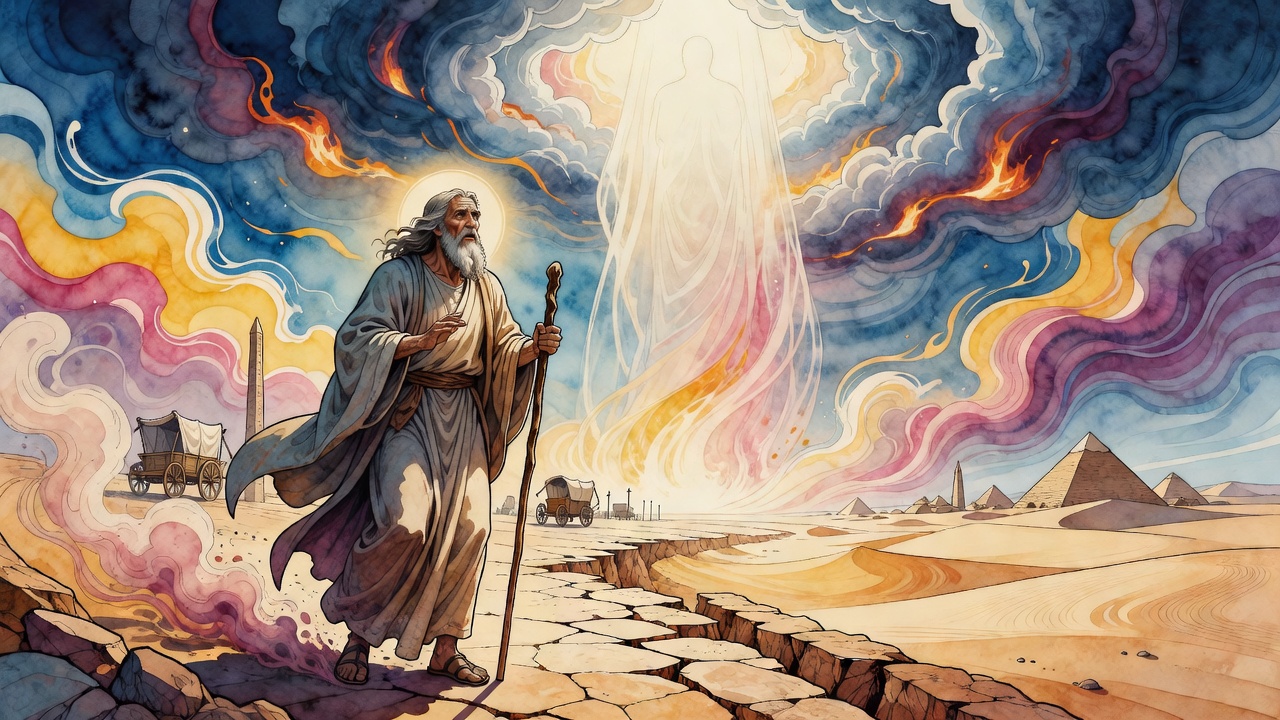
The wagons were already waiting. Grain smell rode the wind out of Egypt. Jacob stood on the Canaan side with a house packed for a road he did not trust.
 Click for full size
Hunger had broken the wells of his fathers. Ropes came up dusty. Joseph was alive, a ruler with a foreign name and an Egyptian ring. The brothers had come back with news that split the old man open and then told him to walk into empire.
Five Fears at the Border
He named them, one after another, the way a man checks the knots on a pack before a long descent.
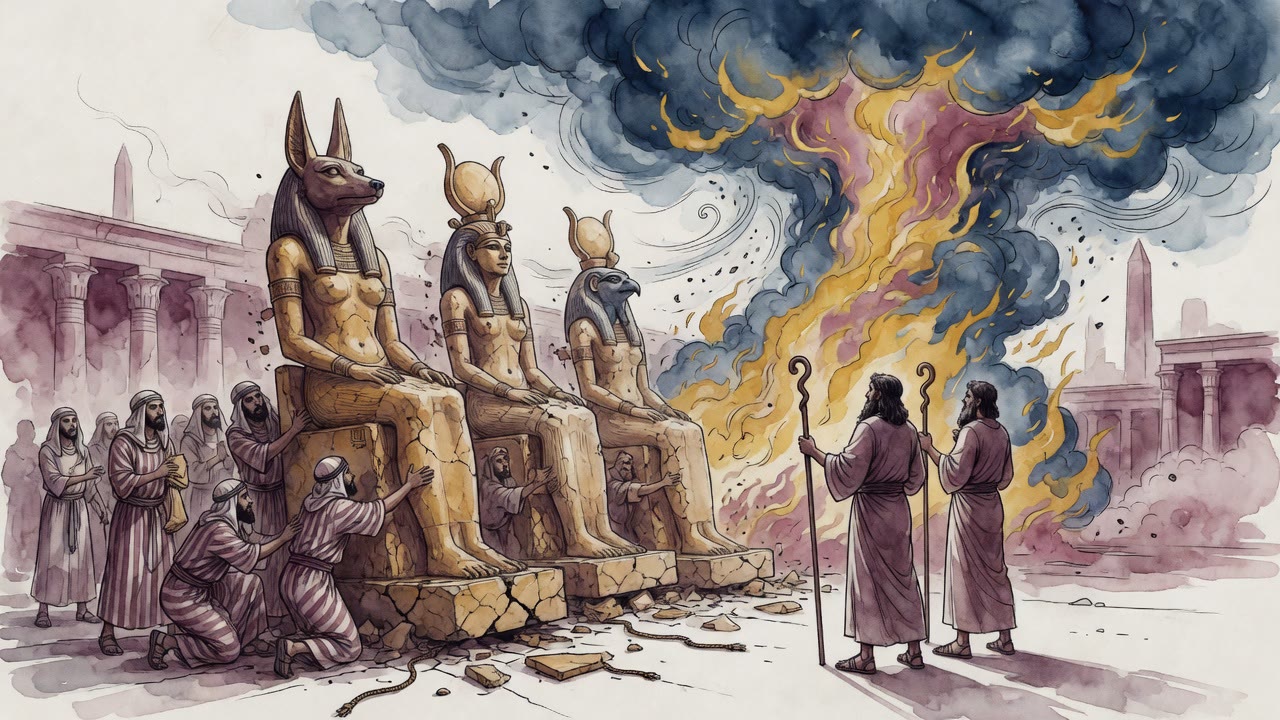
Would his children melt into Egypt among temples of beast-headed gods and lose the covenant's shape? Would he die on foreign soil, far from the cave bought with silver at Machpelah? Would his bones rest among the uncircumcised? Would he see Joseph with his own eyes, or only hear of him through other men's mouths? Would he live to know the faces of Joseph's sons, the next braid in the rope of Israel?
These were not night worries. They were the pillars of a house about to move under pressure. Jacob had already lost a son once to brothers and distance. He would not take the road on a rumor.
I Will Go Down With Thee
God did not scold the fear. Fear in a patriarch was not always faithlessness. Sometimes it was accurate sight.
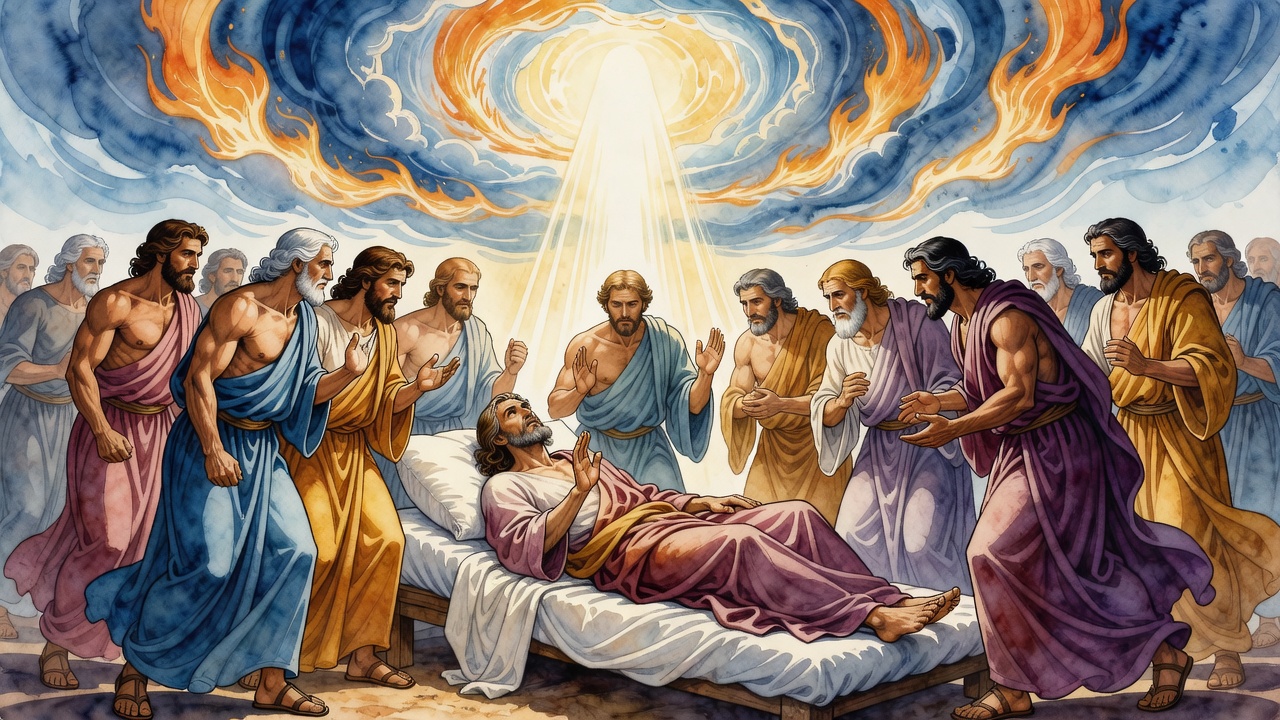
"I will go down with thee into Egypt," He said, "and I will surely bring thee up again after thy death, and thy descendants also, and Joseph shall put his hand upon thine eyes."
Each weight found an answer. God would walk the road, not watch it from Canaan. The bones would rise again to the land. The seed would not dissolve into Nile mud and palace service. Joseph's hand would close the father's eyes in a private mercy after public power.
When the hour of fulfillment neared, the promise returned in plain speech. The time has come. Jacob loaded the house of Israel, counted souls as one counts a treasure under threat, and went down toward the place that would feed them and later bind them.
Five Horses Before the Face
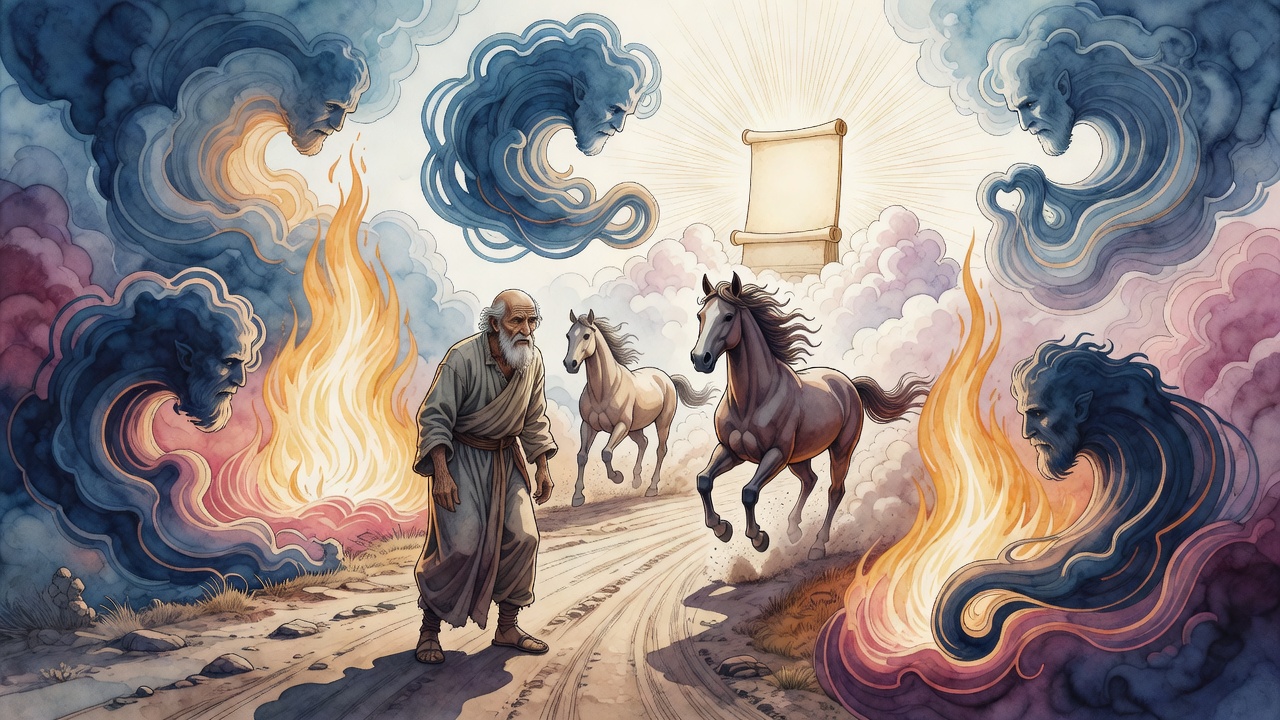
Joseph would not let the shock land in one blow. He knew an old man's body can break under sudden joy as surely as under grief. He sent his eldest son ahead on one of five great horses. Dust rose in a controlled line. Then the second son. Then the next, a procession measured like medicine in sips.
From a distance Jacob's failing sight kept mistaking each rider for Joseph. Hope rose and fell and rose again. Each almost-recognition taught the heart not to shatter.
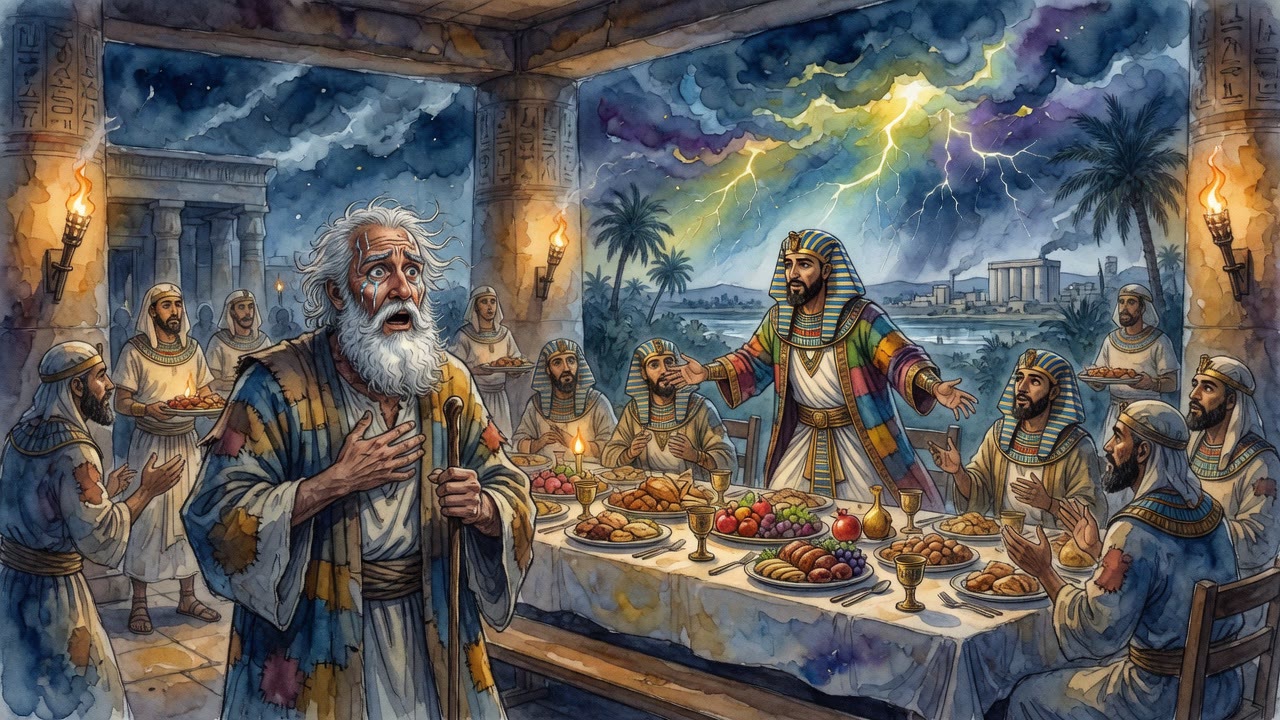
Then, among the Egyptians, Jacob saw a man in royal robes, a crown on his head, a purple mantle on his shoulders, the air around him disciplined by soldiers. He asked Judah who that figure was, because the mind still refused the obvious.
"That is Joseph," Judah said.
The father who had torn his clothes for a bloodied coat looked at a living king who was still his son. The wagons stopped. The years between the pit and the palace compressed into a single breath that hurt going in and healed going out.
Hands on the Boys
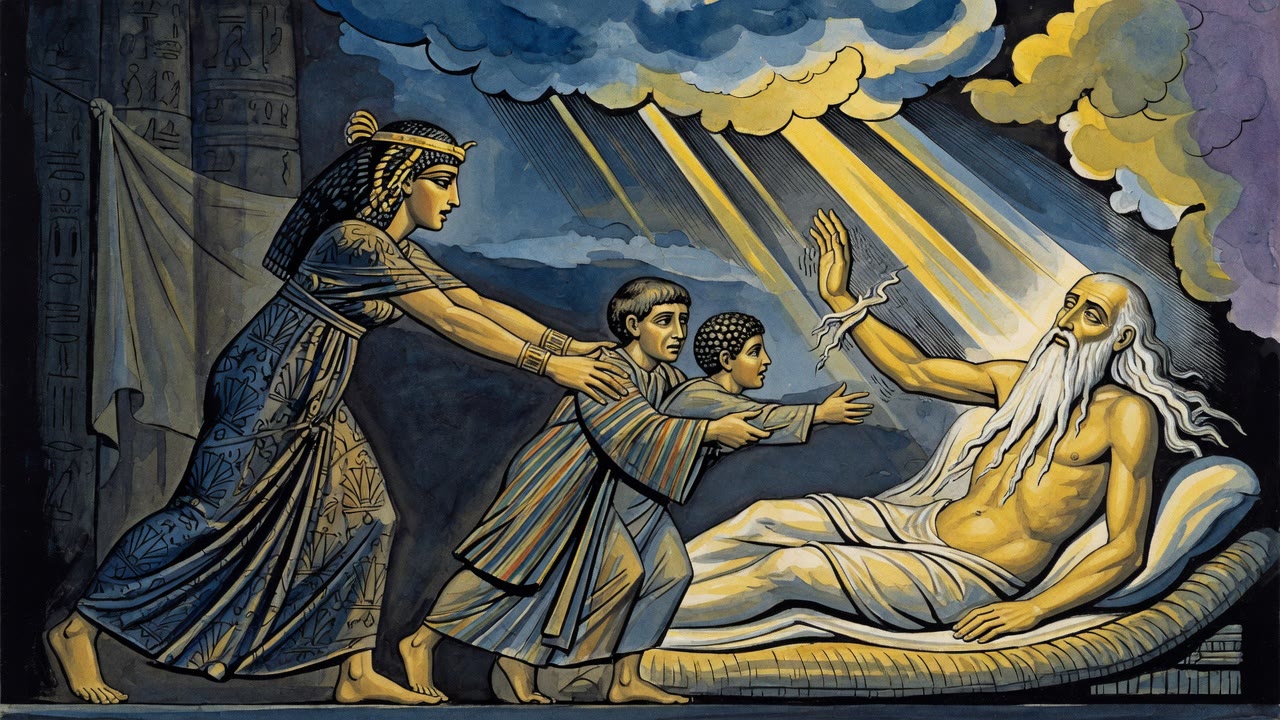
The embrace closed what the fears had opened. One day Joseph's hand would rest on Jacob's eyes in death, as promised, a son's last service after a son's long absence. Before that day, Jacob set his own hands on Ephraim and Manasseh. He crossed them. He refused Egypt's order of birth as the only order that mattered.
"O that it be the will of God that ye walk in the ways of the Lord like unto my fathers Abraham and Isaac," he said. He called on the angel that had redeemed him from all evil, the presence that had met him on roads and in night struggles. He asked that their names be named on Israel, spoken in the mouth of the people as belonging, and that they grow like fish guarded by water, sheltered by the merits of Joseph who had fed nations.
Egypt still waited with a longer night for Jacob's seed. God had not erased brick and cry. He had entered Egypt with Jacob, bound the bones for return, kept the names from vanishing, given the reunion in stages a body could bear, and set the grandsons under a blessing heavy enough to outlast slavery.
When Joseph's hand finally closed those eyes, every fear had already been met. Only the long work of the descendants remained. The wagons had rolled toward Goshen under a promise that would outlive the man who rode in them.
← All myths