Judah Burns the Idol Wagons Pharaoh Sent for Jacob
Pharaoh sent wagons painted with idols to carry old Jacob into Egypt. Judah saw the images first, and reached for fire.
Table of Contents
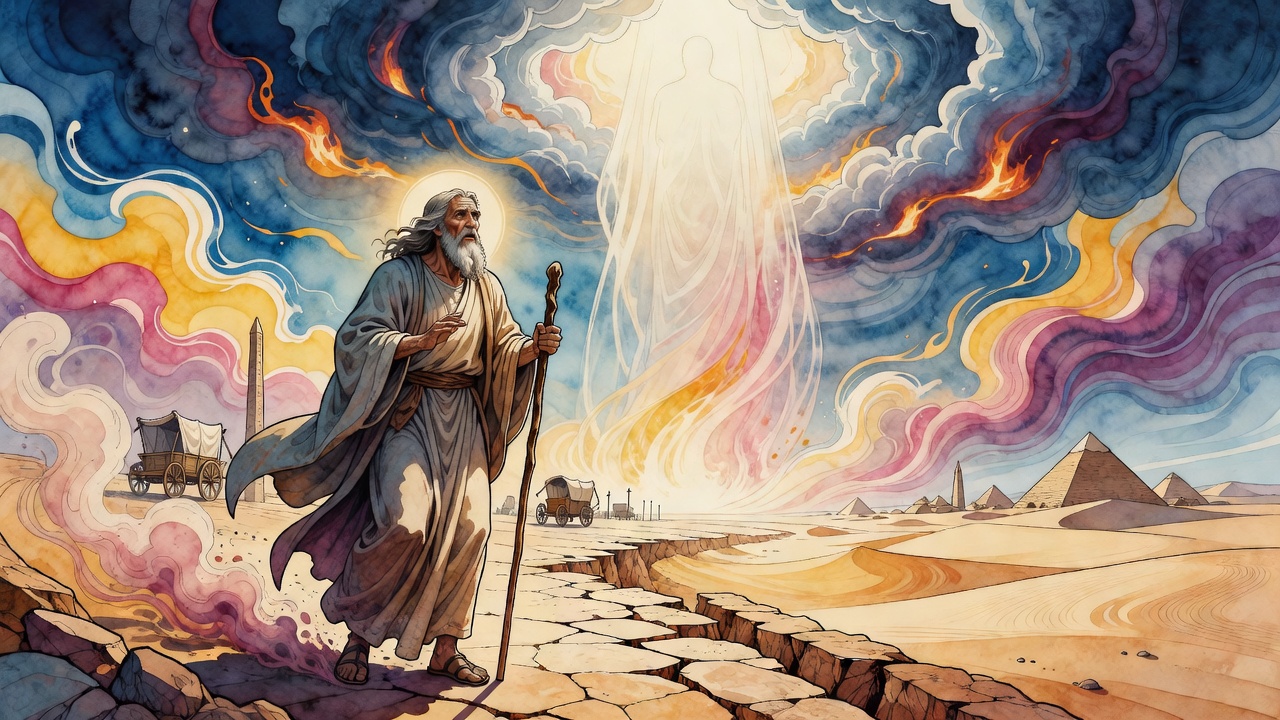
The wagons stood in a row in the palace yard, axles greased, wheels tall as a man's chest, and the morning sun caught something on their sides that made Judah stop walking. He had come out behind his brothers to take possession of Pharaoh's gift. He had expected timber and leather. He had not expected the faces.
 Click for full size
The Gift in the Palace Yard
They had survived the worst of it already. The famine, the accusations, the silver cup planted in Benjamin's sack, the long terrible morning when a stranger who ruled all the grain of the world had pulled the cloth from his own face and said, in their mother tongue, that he was their brother. Joseph, whom they had sold. Joseph, who wept so loudly the whole house heard it. The hard part was finished. What remained was a journey home and a journey back, and an old father to fetch out of Canaan.
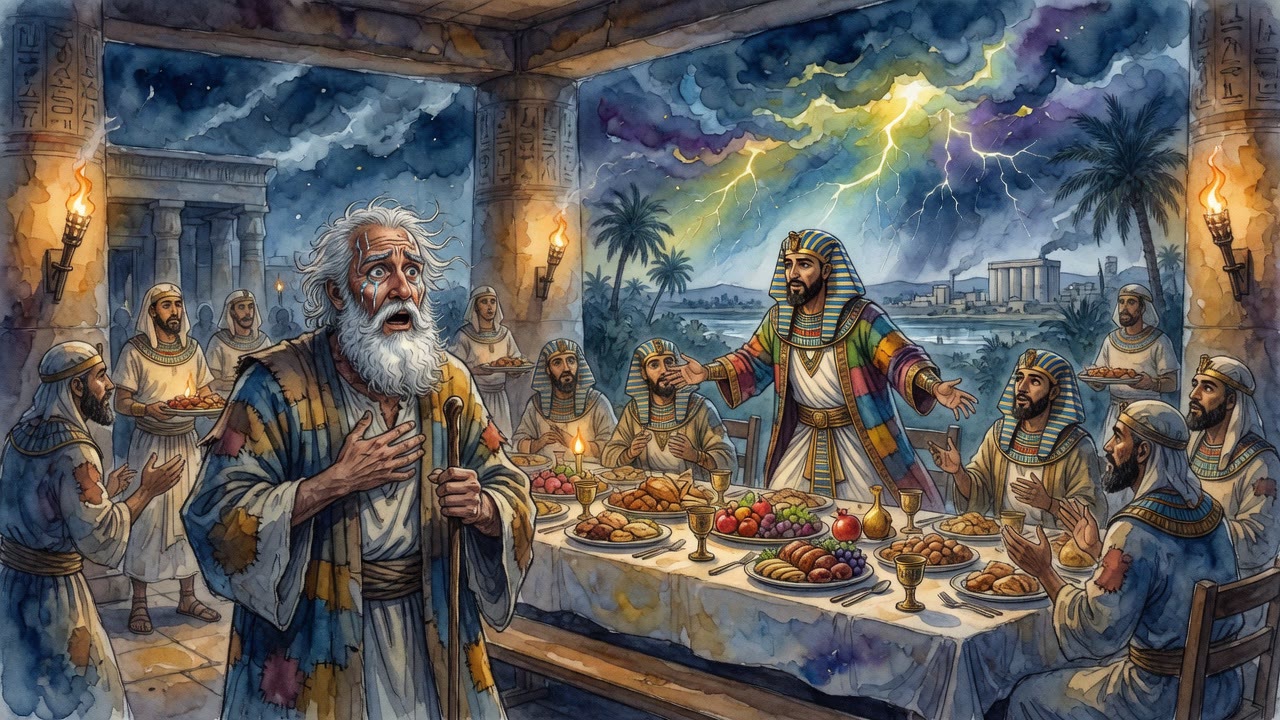
Pharaoh himself had wanted it made easy. He had looked at these eleven men, broad-shouldered, weathered, handsome in the rough way of shepherds who sleep under open sky, and he had been impressed by the sheer size of them. "Bring your father," he said. "Bring the little ones and the women. Take wagons from my own stores so the road does not break the old man's bones" (Genesis 45:19). It was generosity without a flaw in it. A king clearing the road for a patriarch's last journey.
What Judah Saw on the Wheels
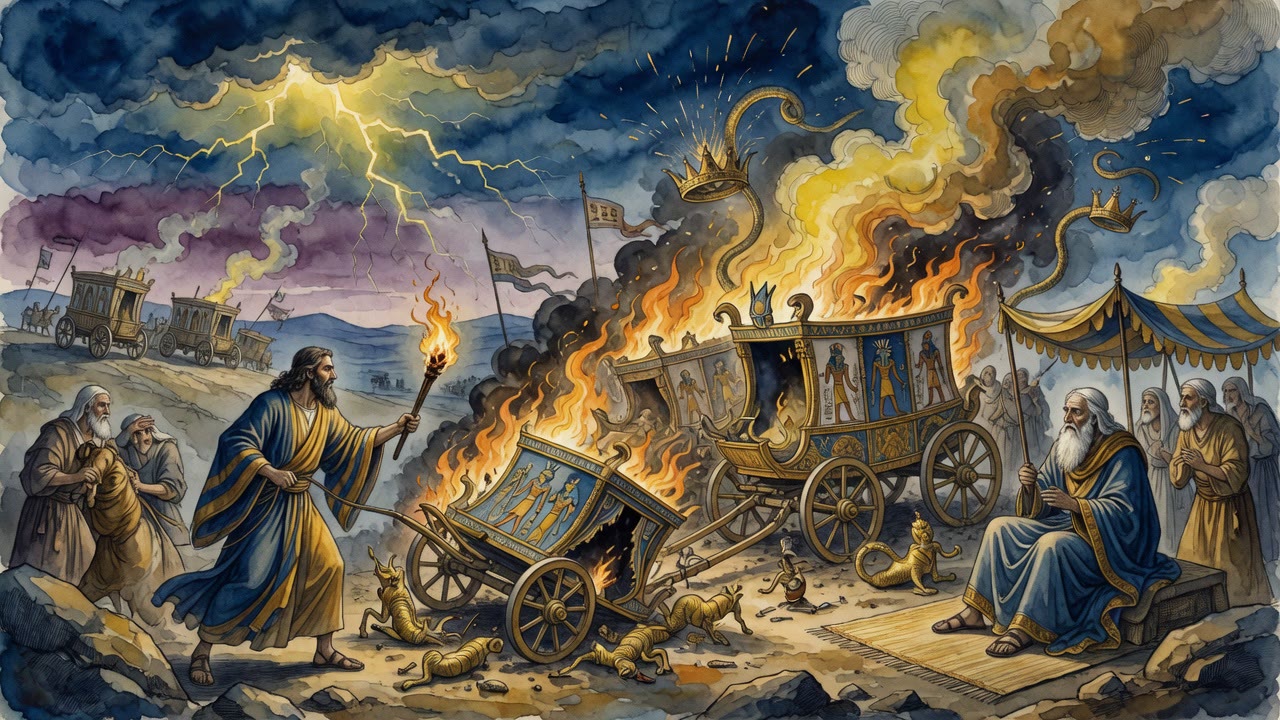
Except that the wagons were Egyptian, and Egypt put its gods on everything. The images were painted along the side-boards and carved into the corner posts, small bright figures with the heads of birds and beasts, the household gods of a kingdom that did not know the God of Abraham. To Pharaoh's craftsmen they were ornament, no more remarkable than a border of flowers. A royal wagon without them would have looked half-finished.
Judah set his hand flat against the painted wood. He thought of his father. He thought of Jacob lowering himself into one of these, an old man's knees, an old man's eyes, riding the long miles into Egypt with a row of foreign gods grinning at his shoulder all the way. Jacob, who had wrestled till dawn and walked away limping with a new name. That man would not arrive in the lap of idols. Not while Judah breathed.
The Brother Who Always Did the Hard Thing
It was Judah, of course. It had always been Judah. He was the one who had stood in the field years ago with his brothers' knives half-drawn and said, "do not kill him, sell him instead, what profit is there in our brother's blood" (Genesis 37:26). He was the one who had stepped forward in this very palace and offered his own body as surety for Benjamin, who had begged to be made a slave so the boy could go free. He did not wait for permission. He did not call a council of brothers to debate the matter. He saw the wrong thing and he moved toward it.
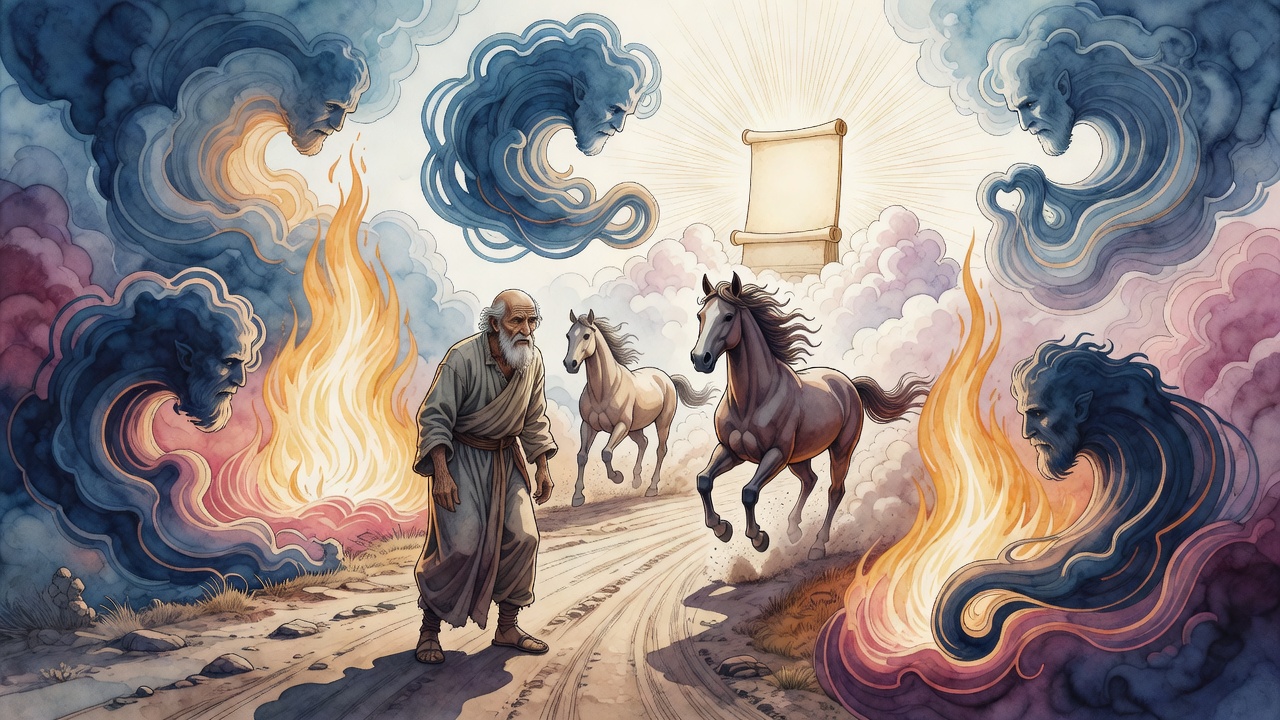
He called for fire. Servants brought a brand from the kitchen hearths. The dry painted wood took quickly, and the small carved gods blistered and curled and went black, their bird-heads and beast-faces folding into ash. Smoke climbed straight up in the still palace air. The brothers stood back from the heat and said nothing. By the time the flames sank, Pharaoh's gift was a heap of charred frames and iron fittings, and not one painted idol remained to ride beside their father.
Joseph Sends Eleven Others
Word reached Joseph, and Joseph understood. He did not scold. He knew his brother, and he knew his father, and he knew the same thing Judah knew, that Jacob could not be carried into Egypt on the backs of strange gods. So Joseph sent eleven wagons of his own to take the place of the ruined ones, clean wood, nothing carved on them but joinery.
And for Jacob he sent his own chariot. The very one he rode through the granary towns of Egypt when he surveyed the land in the years of plenty, the chariot of the viceroy, second only to the throne. That one he gave to his father, so the old man would enter Egypt in the seat of his risen son rather than in a borrowed cart, and would understand before a word was spoken how high the boy had climbed.
Two Changes of Raiment
The care did not stop at wheels. To each of his brothers Joseph gave two changes of clothing, and there was a reason in the doubling. He remembered the morning the cup was found in Benjamin's sack, how they had torn their garments in grief and stood before him in rags of their own making. He would not let them travel home in torn cloth. One set was for the ordinary days of the road. The second set was finer, set aside for Shabbat, the Sabbath, so that even on the journey there would be something kept apart and clean for the holy day. For each of the children there were garments too, so that not one of them would arrive in Egypt looking like a refugee from famine.
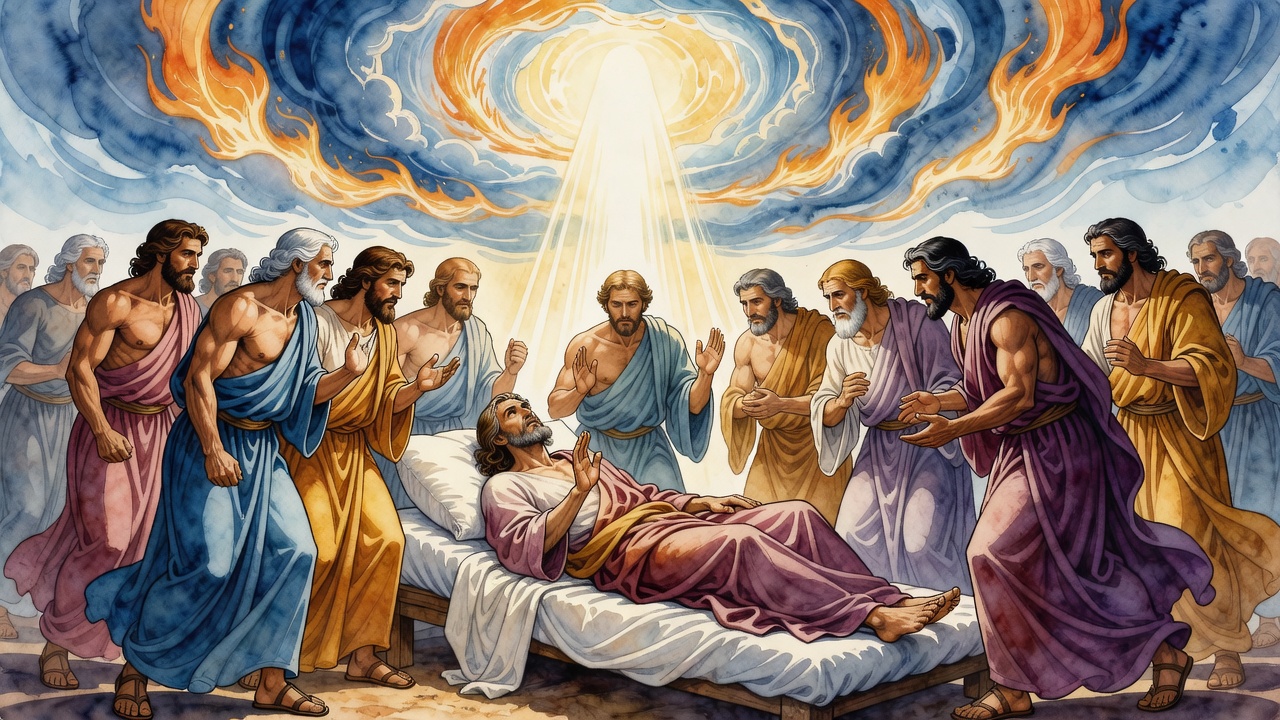
So the caravan that finally rolled north toward Canaan to fetch the old man carried no idols on its boards and no torn cloth on its backs. Judah had seen to the one thing, with fire, and Joseph had seen to the rest, with a brother's memory of how it felt to be shamed. The two of them, the one who had sold and the one who had spared, had between them swept the road clean for their father.
← All myths