Parshat Vayigash5 min read

Jacob Feared Egypt Until God Promised to Go Down

Jacob froze at the border of an unclean land even after hearing Joseph lived; only God's vow to go down with him unlocked the wagons south.

Curated by Arthur · Told by Maggid ·
Table of Contents
  1. The Wagons Came Up From Egypt
  2. What He Was Afraid Of
  3. I Will Go Down With Thee
  4. A Bondage With a Number On It
  5. Up Again
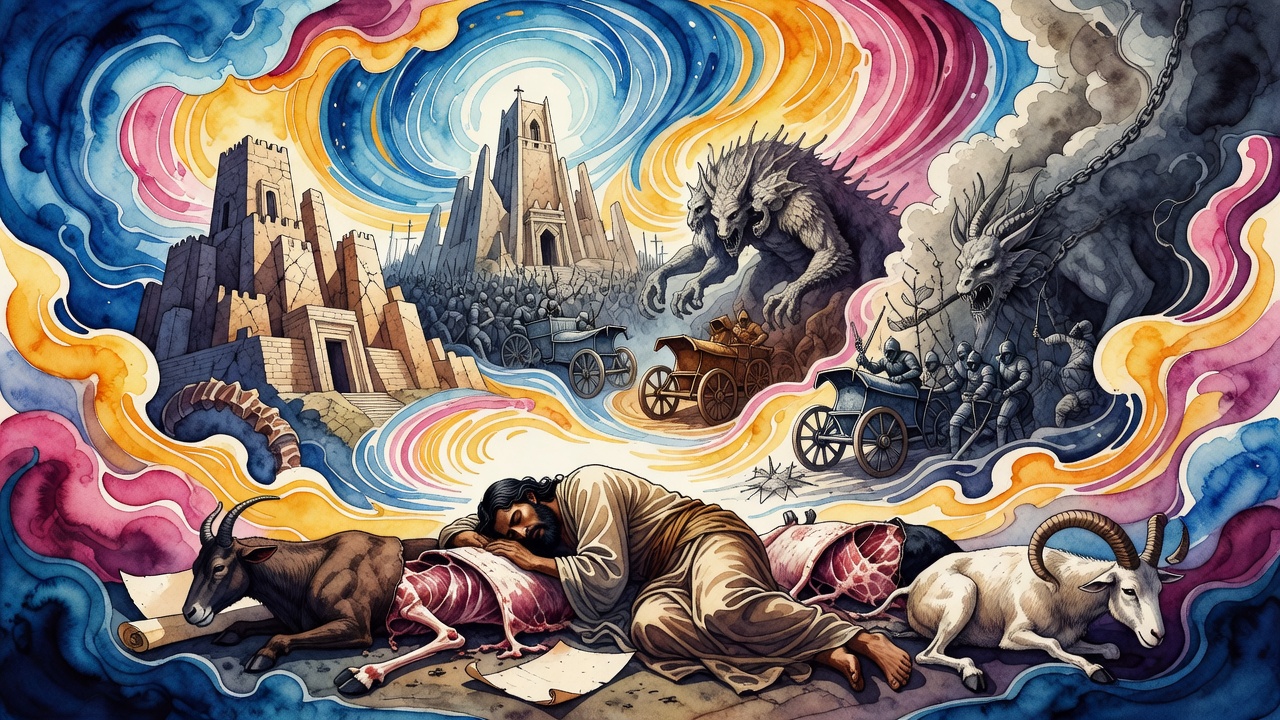
Jacob Feared Egypt Until God Promised to Go Down Click for full size

The Wagons Came Up From Egypt

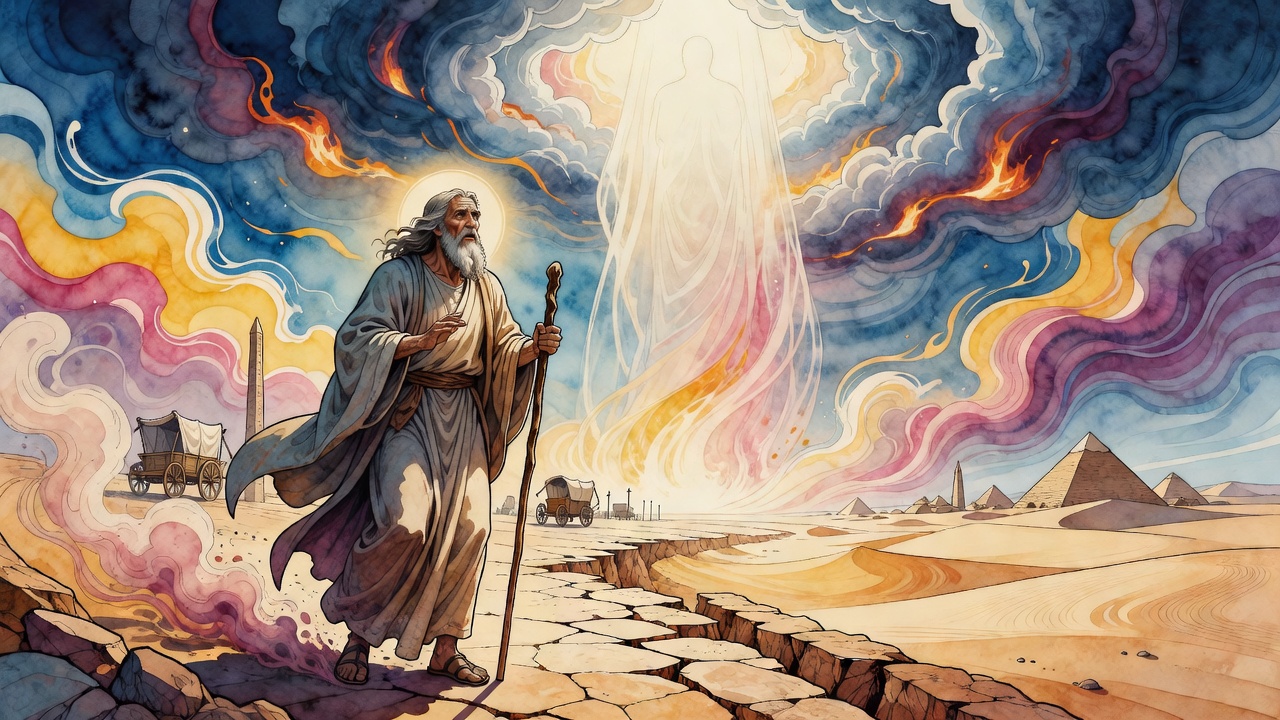
The wagons stood in the yard at Hebron with Egyptian dust still on the wheels, and Jacob would not get in.

His sons had come back with a report he refused to believe until he saw the carts. Joseph was alive. Joseph was governing Egypt, and Joseph wanted his father brought down to him. The old man had spent twenty-two years certain that an animal had eaten that boy in the field, so the news should have put him on the road inside an hour. The grain was real, the road was open, the invitation came from a throne.

He did not move, because what he was being asked to do was leave the land.

What He Was Afraid Of

He feared Egypt itself, an unclean country where the fear of Heaven carried no weight, and he had built his life on ground that answered him. There was a stone at Bethel he had set up with his own hands. There was a cave at Hebron with Abraham and Isaac and Leah in it. The Shekhinah (שכינה), the divine presence, had met him in this land and in no other, and he was old enough to know that if he went south he would not be walking back north on his own feet.

So the choice in that yard was not between his son and his comfort. It was between his son and the only ground where God had ever been findable, and Jacob stood between the two of them and could not pick one.

I Will Go Down With Thee

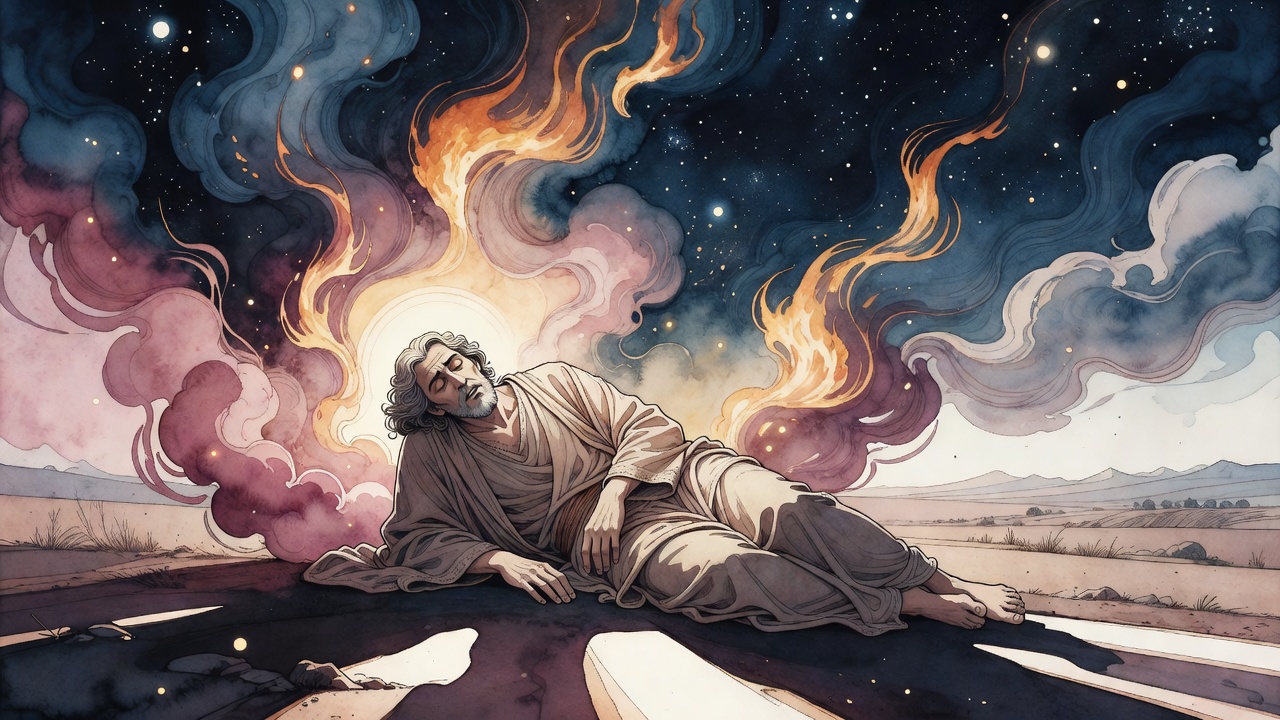
He moved the household as far as Beersheba, on the southern edge of everything he trusted, and there he stopped and offered sacrifices to the God of his father Isaac, which is what a man does when he is asking a question he cannot put into words. The answer came that night in a vision.

"Jacob, do not fear. I will go down with thee into Egypt, and I will also surely bring thee up again" (Genesis 46:4).

Nothing in that argued with his fear. It did not say Egypt was clean, or that his family would be safe there, or that the descent was a small thing. God promised to go down with him, so the one possession Jacob had assumed he would have to leave at the border was coming with the wagons. The second half of the sentence handed him a return road he would not live to walk on.

In the morning he sent Judah ahead to mark the way, and the wheels turned.

A Bondage With a Number On It

What he was starting had a fixed length, though nobody in the caravan was told so. Rabbi Chakhinai taught that the Holy One does not set limits on kingdoms as a rule, since empires rise and fall on their own schedule, but that two of them were given a term in advance, and those two were Egypt and Babylon.

Abraham had been given the Egyptian number to his face: they shall serve them, and they shall afflict them four hundred years (Genesis 15:13). The count that actually ran was two hundred and ten. Mercy took almost half of it off before the first brick was made, and no one riding south that week knew it. Babylon's term arrived later through Jeremiah, seventy years and then a visitation and a road home (Jeremiah 29:10). Both furnaces were built with a clock in the wall.

A father going down to see his son was also a nation walking into a sentence that had already been shortened while he was still deciding whether to go.

Up Again

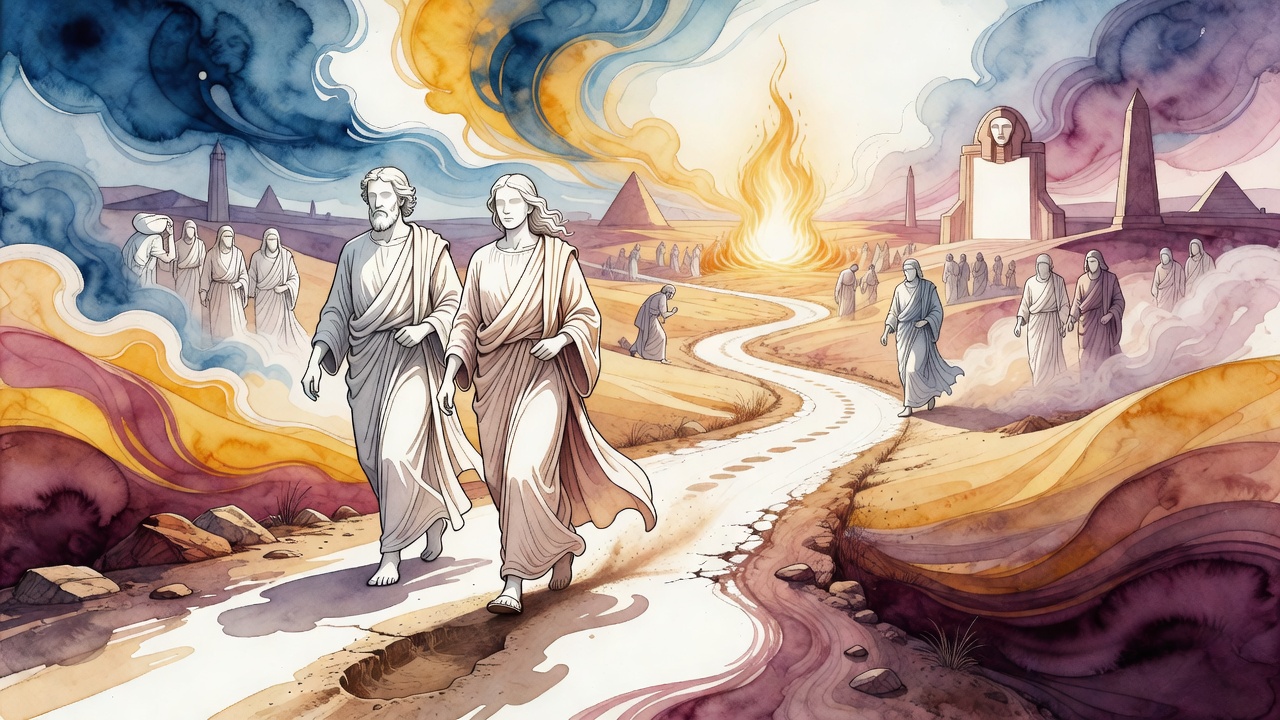
Joseph came out to Goshen in his chariot and fell on his father's neck and wept there a long while, and for seventeen years the old man lived in the best pasture in Egypt with his sons around him, which was not what he had been afraid of. What he had been afraid of came for his great-grandchildren.

Before he died he made Joseph swear not to bury him in that country. They carried him up out of Egypt with the chariots of Pharaoh's household behind the coffin and laid him in the cave at Machpelah beside Leah. He went down on wheels and came up on shoulders, and the second half of the promise was kept on him before it was kept on anyone else.


← All myths
From the tradition

Sources

2 sources

The texts behind this telling. Some cards carry a translation of the source; others are our own retelling of it, and each card says which. Every card links out to the original.

Pirkei DeRabbi Eliezer 39:1Pirkei DeRabbi Eliezer

Retold in our words. Read the original at the link below.Pirke de Rabbi Eliezer, trans. Rabbi Gerald Friedlander, London (1916) · CC-BY

Sometimes, digging into the details reveals surprising connections and enduring echoes. Consider a seemingly obscure passage in Pirkei DeRabbi Eliezer, Chapter 39. It starts with a rather forceful act: a ban.

Apparently, a sternly worded letter, a ḥerem, was dispatched to the Israelites living in Babylon. But this wasn't just any ban. King Cyrus, no less, decreed it to be permanent. The text even quotes (Ezra 6:12) to underline the severity: "And the God that hath caused his name to dwell there overthrow all kings and peoples that shall put forth their hand to alter the same, to destroy this house of God which is at Jerusalem. I, Darius, have made a decree; let it be done with all diligence." What exactly was the ban about? The text doesn't say here, but its very existence emphasizes the weighty decisions and communal authority that shaped Jewish life in exile.

The text pivots. We’re suddenly whisked away to Joseph in Egypt. What does Joseph in Egypt have to do with a ban in Babylon? Bear with me. The Pirkei DeRabbi Eliezer uses Joseph's story as part of a larger narrative about divine descent, a recurring motif in Jewish tradition.

That Jacob, upon hearing that Joseph was alive and well in Egypt, wrestled with a monumental decision. Could he, Jacob, leave the land of his forefathers? Could he abandon the land where the Shekhinah (the Divine Presence) – that radiant, divine presence – resided? He feared venturing into an "unclean land," a place devoid of the fear of Heaven. The pull of family versus the sanctity of the land.

But then, God intervenes. "Jacob, do not fear," He says, "I will go down with thee into Egypt, and I will also surely bring thee up again." This promise, drawn directly from (Genesis 46:4), is central. It’s not just about physical migration; it’s about divine presence accompanying the Israelites, even into exile. God promises not only to go down with Jacob, but also to bring him up again, hinting at a future redemption. According to Ginzberg's retelling in Legends of the Jews, Jacob worried about losing his spiritual connection to the Promised Land, but God reassured him that His presence would be with him always.

So, what’s the connection? Both scenarios highlight moments of significant transition and the delicate balance between maintaining tradition and adapting to new circumstances. The ban in Babylon represents an attempt to preserve religious integrity amidst exile. Jacob's journey to Egypt, sanctioned by God, illustrates that even in the face of displacement, divine presence and the promise of return endure.

But within those challenges, there has always been a thread of continuity, a promise of resilience, and the unwavering presence of the Divine. Perhaps it's a call to find that same balance – to honor our traditions while embracing the future, knowing that we are never truly alone.

Full source
Pirkei DeRabbi Eliezer 49:6Pirkei DeRabbi Eliezer

Retold in our words. Read the original at the link below.Pirke de Rabbi Eliezer, trans. Rabbi Gerald Friedlander, London (1916) · CC-BY

The divine is often remembered as existing outside of time, but Jewish tradition sometimes paints a different picture – one where even divine plans have a schedule, albeit a flexible one. to this a bit, drawing from the ancient text, Pirkei DeRabbi Eliezer, specifically chapter 49. This text offers a unique perspective on the limits, or rather, the lack of limits, set on earthly kingdoms by the Holy One. According to Rabbi Chakhinai, God doesn't set fixed limits on kingdoms… except for two very specific cases: the Egyptian bondage and the Babylonian kingdom.

Why these two? Remember the story of Abraham? God tells him, "And they shall serve them; and they shall afflict them four hundred years" (Genesis 15:13). Four hundred years of suffering! A seemingly fixed deadline. But Rabbi Chakhinai tells us that God, in His infinite mercy, shortened this period by almost half. The Israelites were actually enslaved for 210 years.

So, what about the Babylonian kingdom? The prophet Jeremiah declares, "For thus saith the Lord, After seventy years be accomplished for Babylon, I will visit you, and perform my good word toward you, in causing you to return to this place" (Jeremiah 29:10). Seventy years. A clear limit.

Think about this for a moment. Why these two kingdoms? What's so special about them that God would impose a time limit? Perhaps it's because these periods of subjugation served a specific purpose in the spiritual development of the Jewish people. The suffering in Egypt forged them into a nation. The exile in Babylon tested their faith and ultimately led to a renewed commitment to God and Torah.

It seems Pirkei DeRabbi Eliezer is suggesting that while God generally allows kingdoms to rise and fall according to the natural order, He intervenes when necessary to guide His people towards their destiny. He sets limits when those limits are crucial for spiritual growth. And even then, as in the case of Egypt, that divine plan may be tempered with mercy.

What does this tell us? Maybe that even God's plans aren't set in stone. Maybe there's always room for compassion, for adjustment, for shortening the suffering when possible. That even amidst the grand sweep of history, divine mercy can find a way to bend the arc of time itself.

Full source