5 min read

Abraham's One Question in the Dark Cost His Children Four Hundred Years

He was brought out of the tent and told to count the stars. He got partway and gave up, and the silence was written down as merit.

Curated by Arthur · Told by Maggid ·
Table of Contents
  1. The Night He Stopped Counting
  2. The One Question He Asked Anyway
  3. Birds Over the Divided Meat
  4. The Clock Started Between the Pieces
  5. Morning Over the Ash
Abraham's One Question in the Dark Cost His Children Four Hundred Years Click for full size

The Night He Stopped Counting

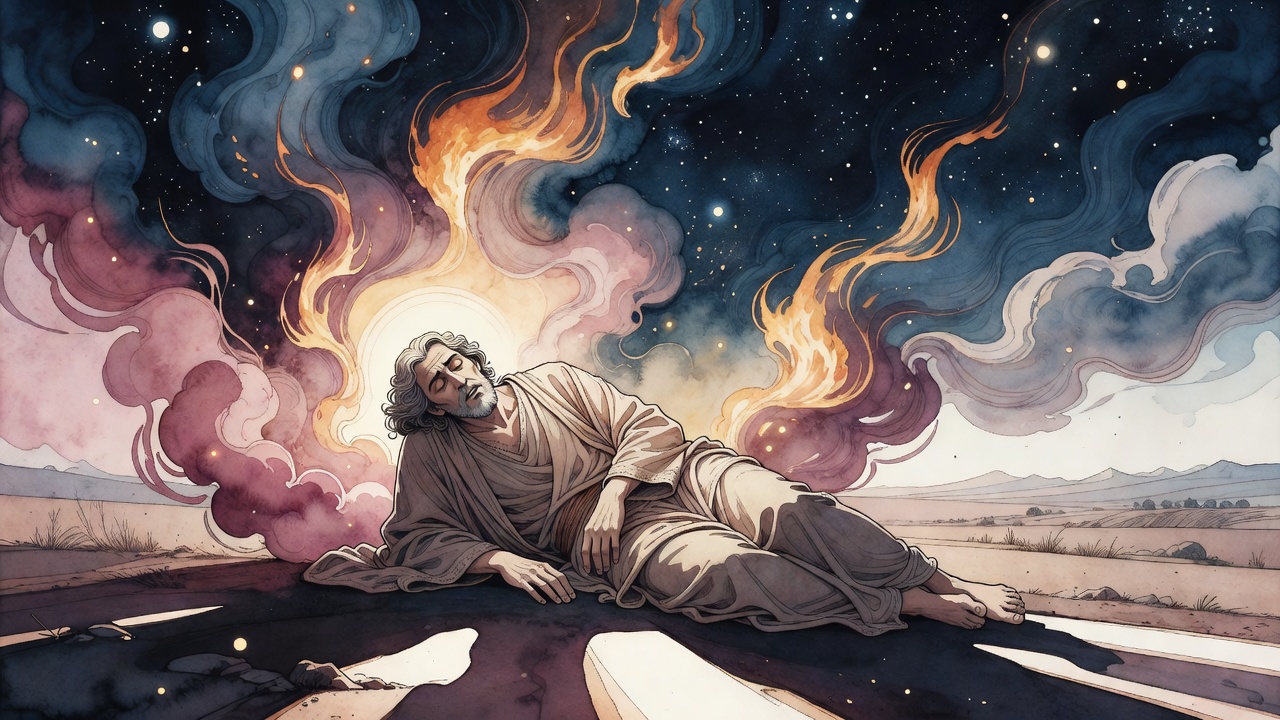
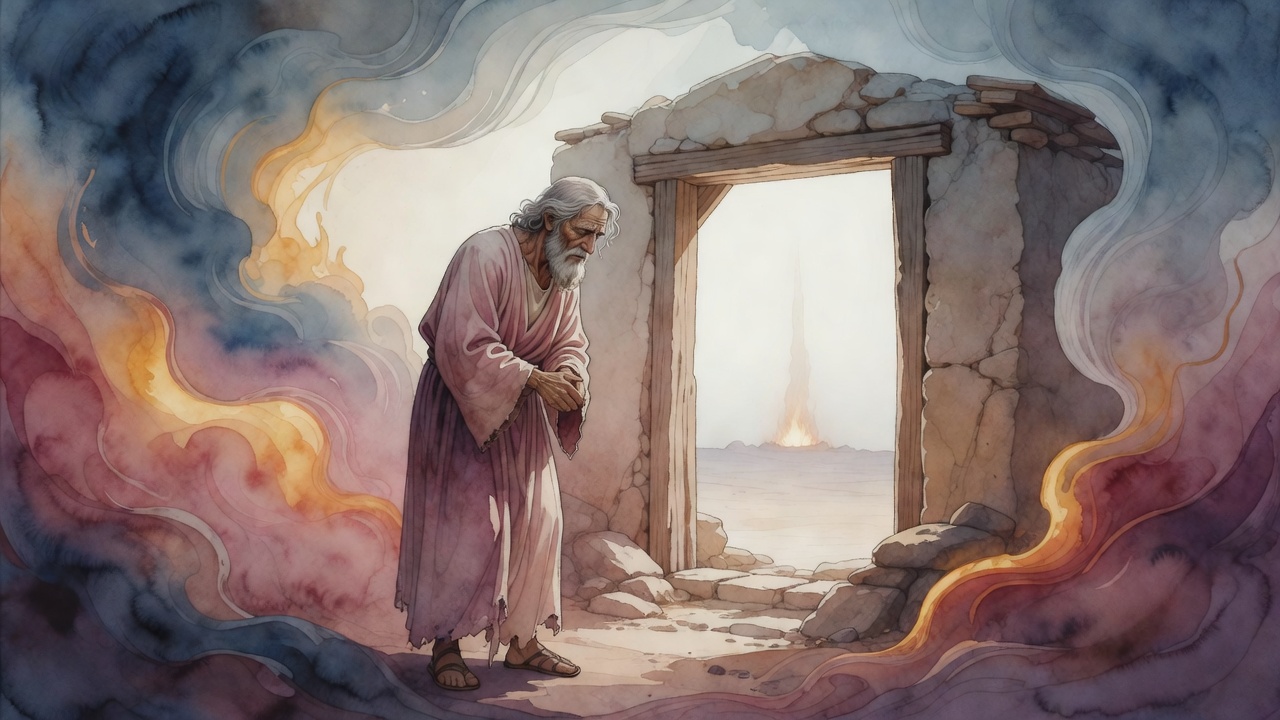
Abraham was brought out of the tent and told to look up. "Count the stars," the voice said, "if you are able to count them." The sky over the Hebron hills was crowded from one edge to the other. He got some way into it and gave up, because there was no bottom to the number, and the giving up was the promise. His children would run past counting the way the stars did.

An hour before he had been full of words. He had named a servant out of Damascus as the heir a childless man inherits by default. He had said the flat thing aloud that a man says when he has stopped expecting anything. I go childless. Now the answer came back as a number nobody could hold, and he said nothing at all.

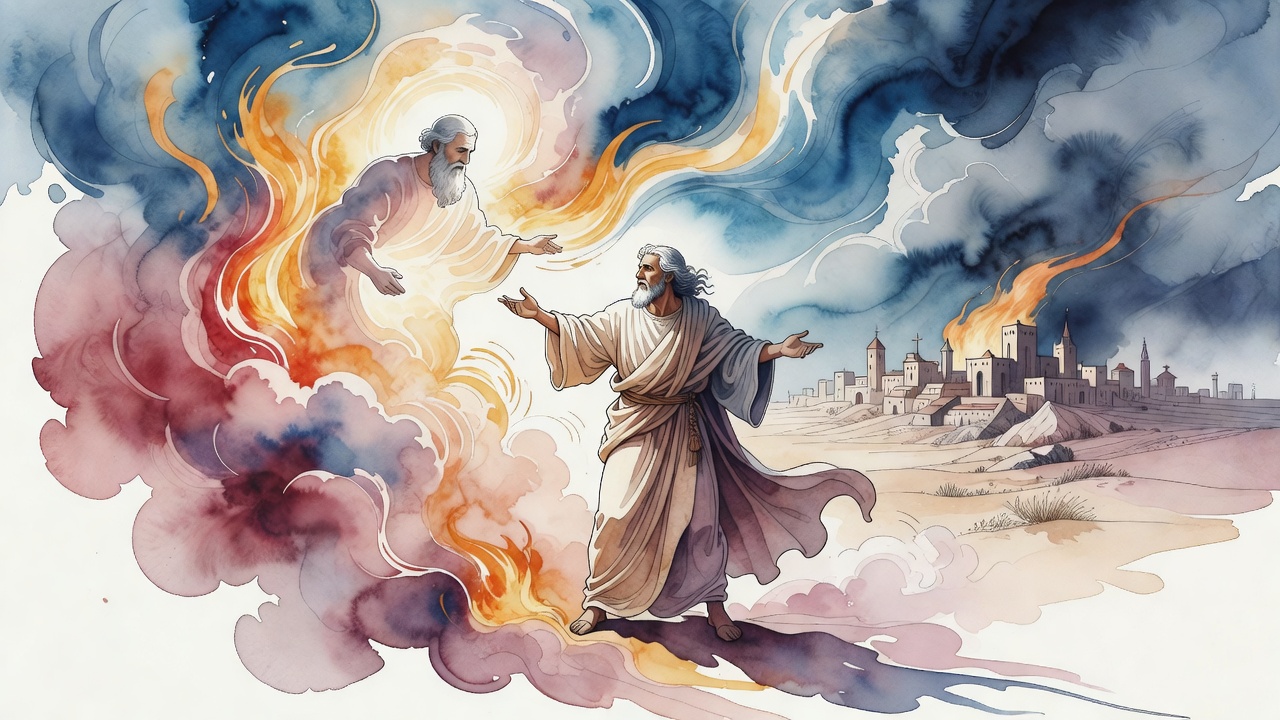
The silence was what got counted. He asked for no figure and no date. He did not ask for a sign in advance, did not press for terms, did not haggle. He trusted the Word, the Memra, the divine speech that stands between God and the world, and the trust went into his account as merit for the single reason that he had not argued.

The One Question He Asked Anyway

Then the voice named the ground under his feet. I am the Lord who brought you out of Ur of the Chaldees, to give you this land to hold.

And Abraham asked. One question, out of a mouth that had just been credited for staying shut. "How shall I know that I will inherit it?"

The question was not unreasonable. He was old, living in a country full of other men's walled cities, with a nephew he had fought a war to drag back out of captivity and no son of his own to leave anything to. Every stake he owned was driven into borrowed dirt. He asked anyway. Asking is a different act from believing, and this one had a price on it he could not see.

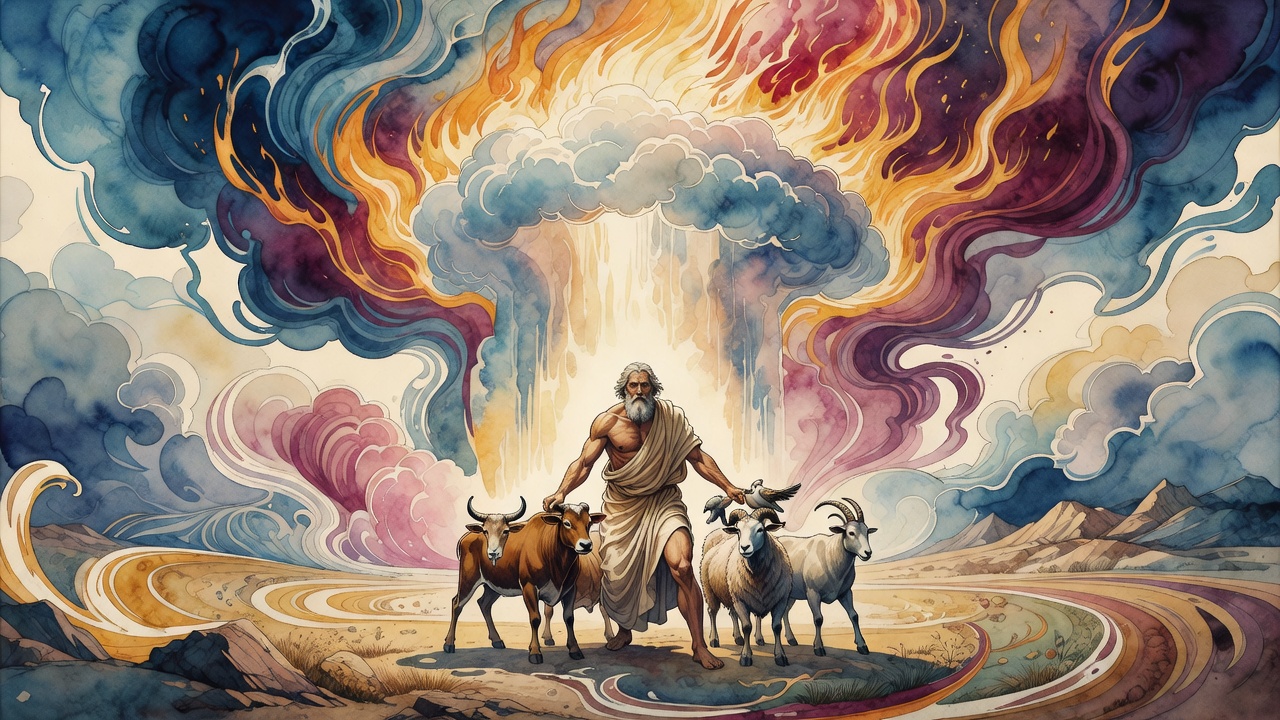
The answer came as an instruction about butchery. A heifer three years old. A she-goat three years old. A ram three years old. A turtledove and a young pigeon.

Birds Over the Divided Meat

He cut the animals down the spine and set each half facing its other half, leaving the two birds whole. Then he spent the afternoon guarding the corridor of meat. Vultures came down at it and he beat them off with his arms, again and again, until the light went long and orange across the pieces.

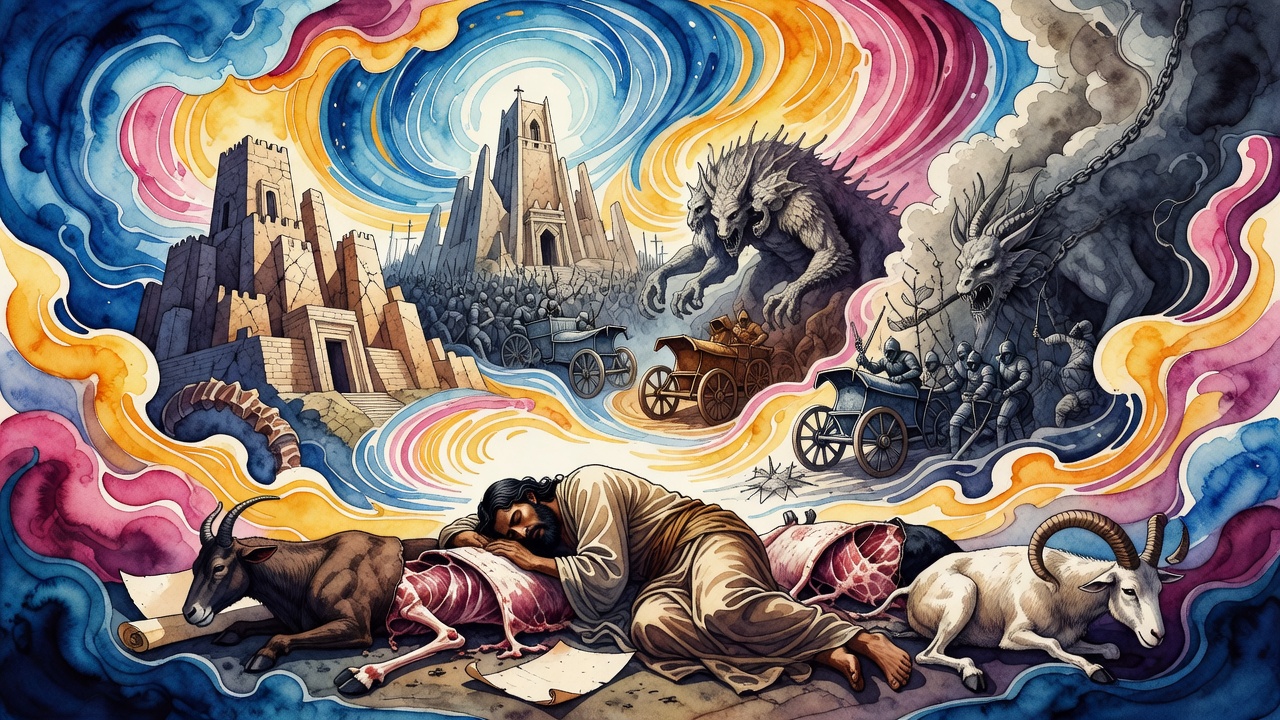
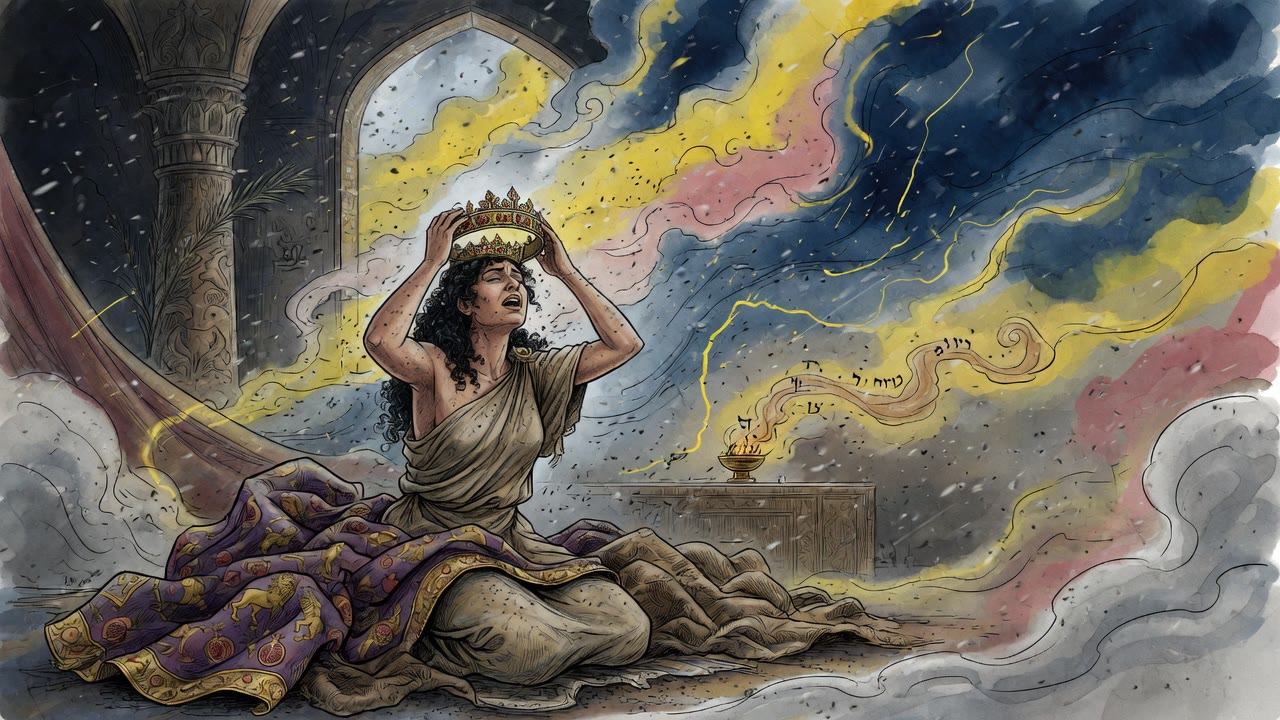
Sleep took him the way a hand takes a man. Dread came with it, and a darkness that had weight to it.

Inside that dark the sentence was spoken. Know for certain that your sons will live in a land that is not theirs, and they will be enslaved there and ground down four hundred years. Then the reason, laid across the sleeping body like a stone. Because you did not believe.

One night carried both verdicts. Merit for the mouth he kept shut under the stars. Four centuries of straw and brick for the one question about the land. He had asked how he would know. He was told, in full, and the knowing was charged to his great-grandchildren's backs.

The Clock Started Between the Pieces

The number never fit the family tree. Kohath went down into Egypt and his grandson came back out of it, and three generations cannot be stretched across four centuries without something tearing. Counted from inside the country, the stay comes to two hundred and ten years, thirty weeks of years, and no more.

So the missing two hundred and twenty had to sit somewhere, and they sit in this field, on this night. The count began the hour God spoke to Abraham between the divided parts, and it ran without stopping until the morning the slaves walked out of Egypt.

The date was the fifteenth of Nisan. The same date, centuries later, that his descendants would eat standing up with their sandals on and go.

The exile did not begin with a hard Pharaoh or a boy sold by his brothers. It began with an old man asleep beside cut meat, on the exact calendar day it would end.

Morning Over the Ash

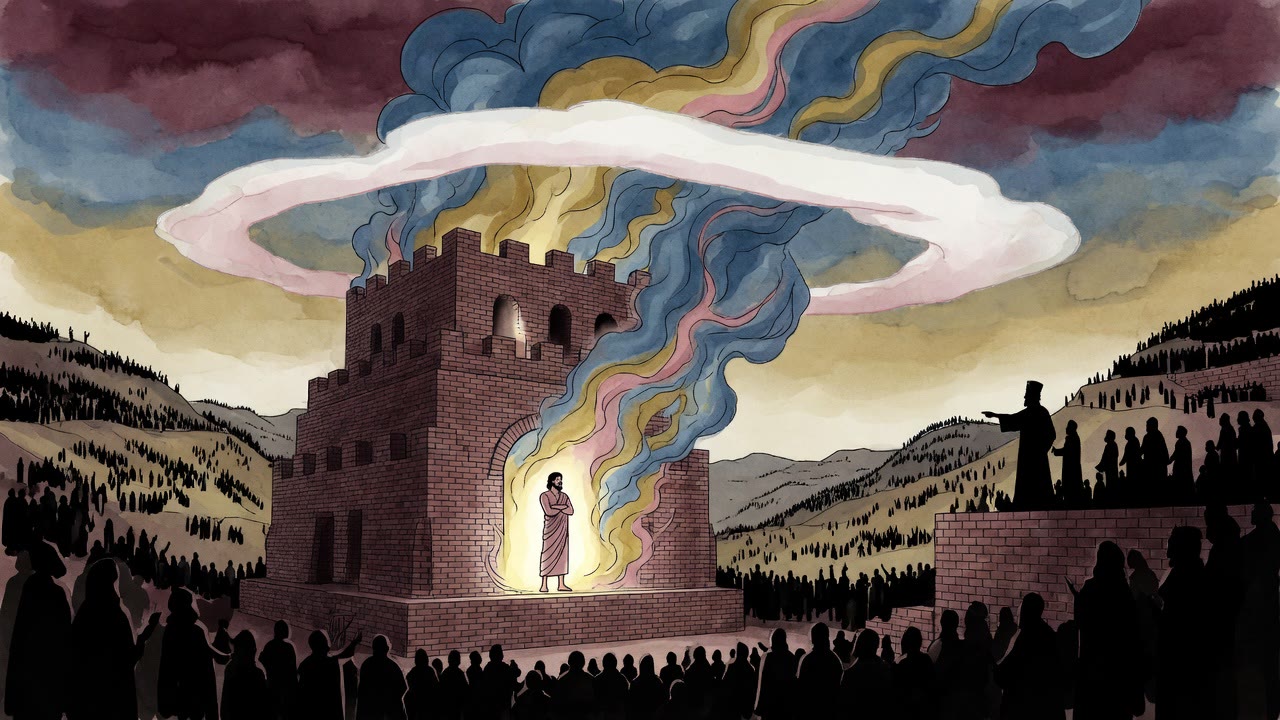
When the sun was fully down, a smoking oven and a torch of fire came along the corridor he had guarded from the birds all afternoon, passing between the halves. No hand carried them.

He woke with a covenant and a bill. The land was promised from the river of Egypt to the great river, and the only piece of it his own body would ever occupy was a burial cave he would later have to buy at full price from strangers. His seed would come out of that other country loaded with goods. They would go into it in chains first.

The pieces stayed where he had laid them, cooling in the dark, split and facing each other, waiting for a nation to walk down the middle.


← All myths
From the tradition

Sources

3 sources

The texts behind this telling. Some cards carry a translation of the source; others are our own retelling of it, and each card says which. Every card links out to the original.

Targum Pseudo-Jonathan on Genesis 15:6Targum Pseudo-Jonathan on Genesis

Retold in our words. Read the original at the link below.The Targum of Jonathan ben Uzziel, trans. J. W. Etheridge, London, 1862 · Public Domain

Two Hebrew words make a whole theology: and he believed. Targum Pseudo-Jonathan on (Genesis 15:6) unpacks them with Aramaic precision, and the unpacking is worth the effort.

He believed in the Lord, and, the Targum adds, had faith in the Memra, the Word, of the Lord. And it was reckoned to him lizeku, for merit, for righteousness. Why? The Targum gives its own reason: because he parleyed not before Him with words.

That is striking. A verse earlier, Abraham had plenty of words, the complaint about Eliezer, the plea about his empty tent (Genesis 15:2). But when the promise of countless stars came, Abraham stopped negotiating. He did not haggle over the number. He did not ask for a sign first. He did not say how or when or are you sure.

The Targum's Memra, the divine Word through which God relates to the world, is not an abstraction to Abraham. It is someone he trusts enough to stop arguing with. And that, says the paraphrast, is what gets credited as righteousness. Not a theological formula. Not a finished creed. The moment a man stops bargaining with God and lets the promise stand.

The Maggid's lesson here is quiet: there is a time to argue with heaven, and there is a time to close your mouth. Abraham knew the difference (Genesis 15:6). Righteousness was not in his asking. It was in his falling silent.

Full source
Targum Pseudo-Jonathan on Genesis 15:13Targum Pseudo-Jonathan on Genesis

Retold in our words. Read the original at the link below.The Targum of Jonathan ben Uzziel, trans. J. W. Etheridge, London, 1862 · Public Domain

The Hebrew of (Genesis 15:13) is severe enough: know with certainty that your seed will be a stranger in a land not theirs, and they will afflict them four hundred years. Targum Pseudo-Jonathan adds a sentence that many readers flinch at, and should.

It reads: thy sons shall dwell in a land not their own, because thou hast not believed.

The Targum is making a bold theological move. The exile, it says, has roots not only in the future but in a moment of Abraham's own hesitation, a flicker of doubt the rabbis located in his earlier question, how will I know that I shall inherit it? (Genesis 15:8). That tiny hesitation, says the paraphrast, echoes forward for four hundred years of slavery.

This is hard, and the Maggid does not soften it. The Targum is not blaming Abraham for Egypt. It is refusing to let even the greatest patriarch off the hook for the long reach of a single doubtful word. Faith matters. Faith's absence matters. And sometimes the bill comes due in the lives of grandchildren (Genesis 15:13).

But there is mercy inside the severity. If the exile has a cause, the exile has an end. Four hundred years is a long sentence, but it is a finite sentence. A door opens at the far side. Abraham sees all of it in one horrified heartbeat, his slip, his children's suffering, and the morning beyond it. The Targum teaches that no exile in Israel's history is random. Every night has a reason, and every reason has a morning.

Full source
Targum Pseudo-Jonathan on Exodus 12:40Targum Pseudo-Jonathan on Exodus

Retold in our words. Read the original at the link below.The Targum of Jonathan ben Uzziel, trans. J. W. Etheridge, London, 1862 · Public Domain

One of the great numerical puzzles of the Torah is solved openly by Targum Pseudo-Jonathan on (Exodus 12:40). The Hebrew says Israel lived in Mizraim for four hundred thirty years. But the genealogies do not add up to that number. Kehath, Levi's son, went down to Egypt, and his grandson Moses came back out. That is three generations, not the twelve or fifteen you would expect across four centuries.

The Targum resolves the tension with precision. The actual sojourn in Egypt was "thirty weeks of years", thirty times seven, which is two hundred ten years. The full four hundred thirty years began earlier, from the hour the Lord spoke with Abraham on the fifteenth of Nisan, between the divided parts of the covenantal sacrifice (Genesis 15:17). The clock of exile started at the brit bein habetarim, the Covenant Between the Pieces, not at the descent to Egypt.

This reading preserves both the Torah's number and the genealogical arithmetic. Israel spent 210 years physically in Egypt. But the exile began the moment Abraham was told his descendants would be strangers in a land not their own. The rabbis saw this as a deep statement about how time is measured. God counts not from the arrival of the first slave but from the promise that once foretold him.

The Targum also notes that the Covenant Between the Pieces fell on the fifteenth of Nisan, the very date on which Israel would later leave Egypt. Abraham had stood with the torches moving between the animal halves on the same night that his descendants would later walk out under cover of the clouds of glory.

Takeaway: Israel was in Mizraim for 210 years. The exile itself lasted 430, dating from Abraham's vision. God had been counting for centuries before the bricks were even made.

Full source