Nimrod Built a Furnace and Nine Hundred Thousand People Watched
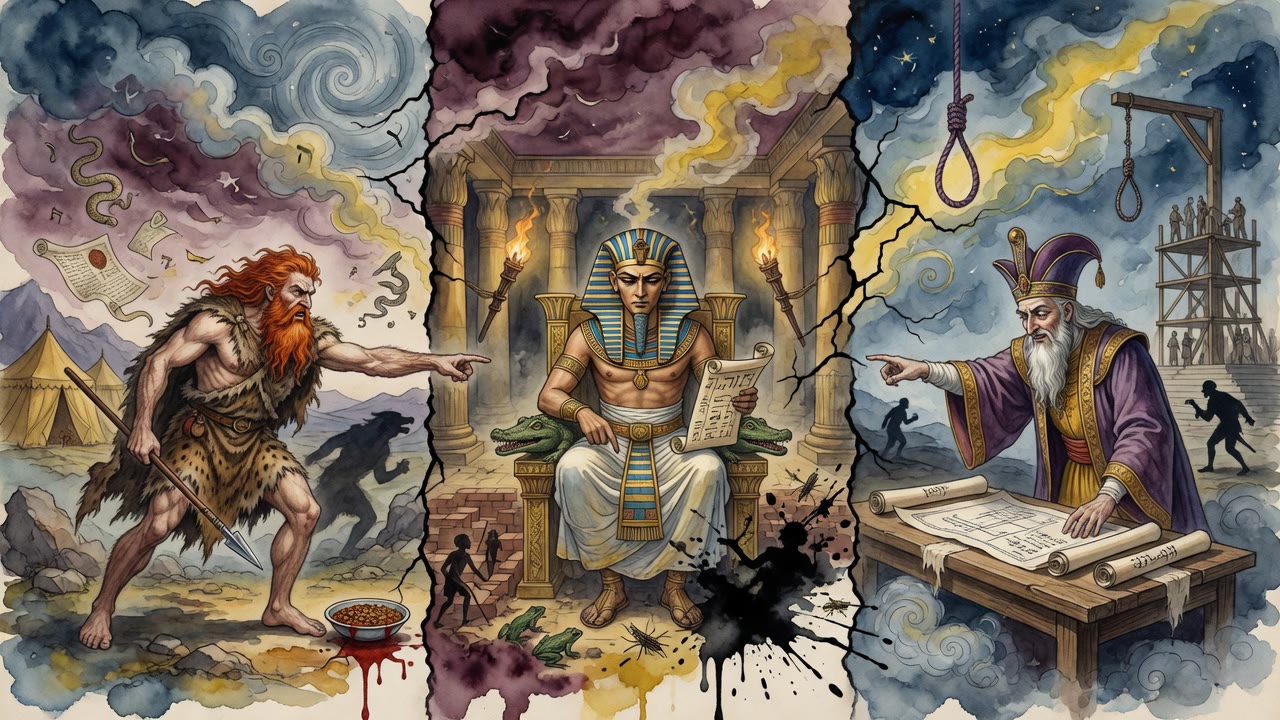
Terah told the king it was Haran who had advised the swap. It was a lie to save himself, and it put his own son in front of the fire.
Table of Contents
 Click for full size
A Year in the Dark
Nimrod put Abram in a cell and told the warden to bring him nothing. No bread. No water. Let the arithmetic do the work.
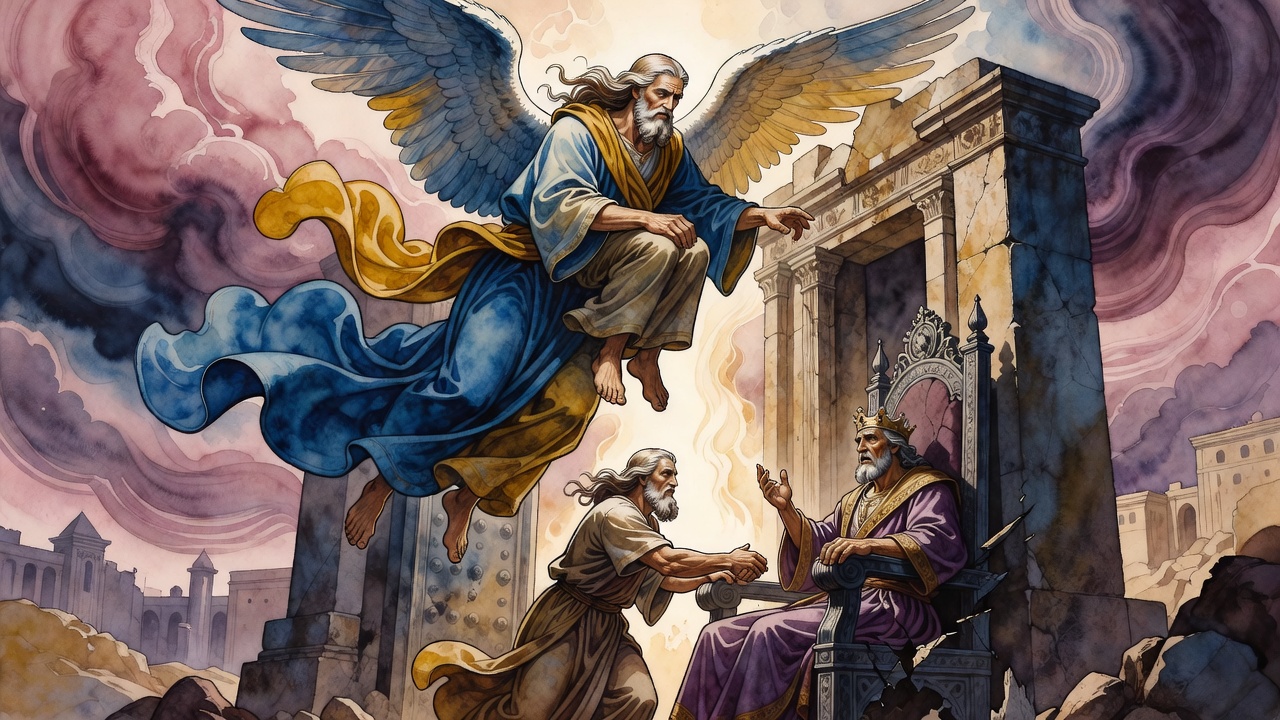
The angel Gabriel came down into that cell and stayed a year. Food of every kind arrived there, and a spring came up through the floor and ran clean, and the prisoner drank from it while the guards outside kept a tally of days a man cannot survive.
At the end of the year the great men of the kingdom went to the king with a better idea. Burn him publicly, they said, and the people will believe in Nimrod forever.
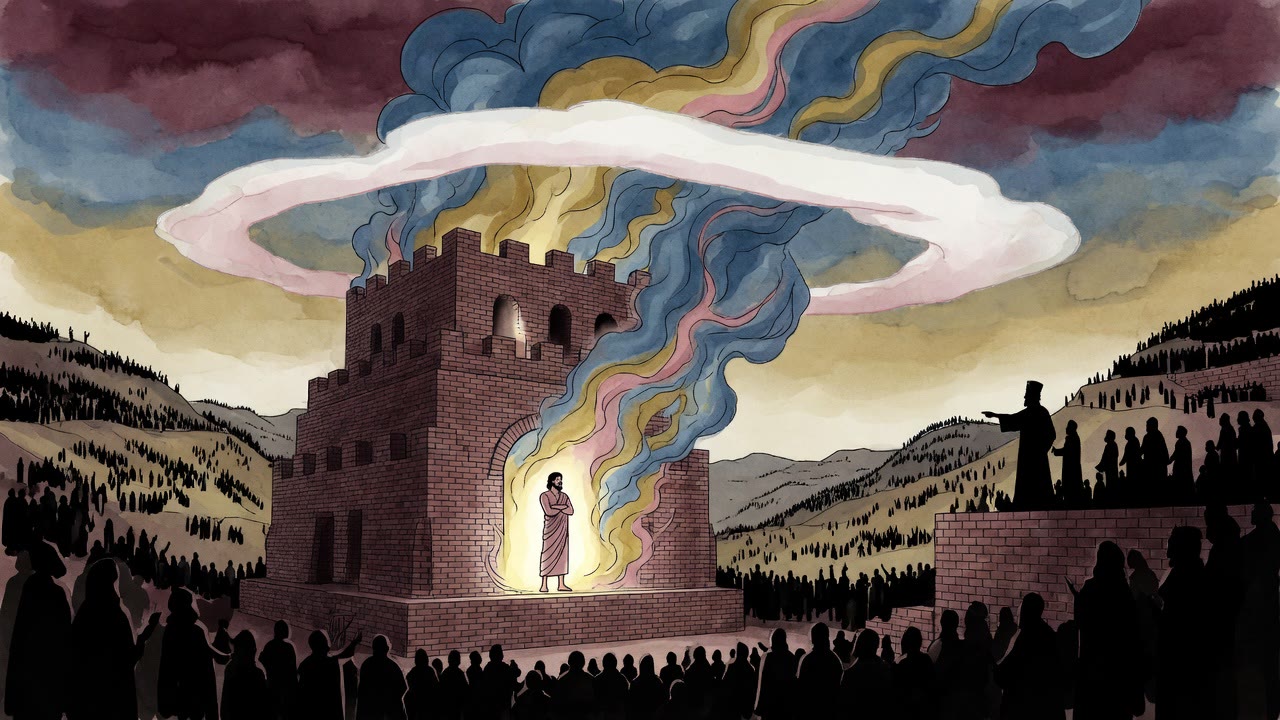
So the decree went out to every province. Every subject, men and women, old and young, was to carry wood for forty days. They stacked it into a furnace at Casdim and lit it, and the flame stood up so high that the crowd bringing fuel began to be afraid of what they had built.
Then Nimrod sent for the prisoner. The warden pointed out that a man shut up for a year without food or water was a corpse by now. Go stand at the door and say his name, the king told him. If he answers, drag him to the pyre. If he does not, bury what is left and see that nobody says his name again.
The warden went and said the name. The name was answered.
The Sword That Would Not Cut
What the warden had seen in that cell finished him for his old life.
He said so out loud, in public, to people who reported it. Nimrod told him to take it back or die, and he would not take it back, and they brought him to the block and set the edge against his throat.
"The Eternal is God," the warden said. "God of the whole world, and God of Nimrod the blasphemer too."
The blade would not go in. The harder the executioner leaned on it, the more it came apart in his hands, until there was nothing left of the sword but pieces.
Nine Hundred Thousand Came to Watch
The furnace had been burning three days and three nights when they brought Abram out.
Nine hundred thousand people stood in front of it. Every officer, every judge, every governor, and the whole population of the land. Women and children were up on the roofs and towers for a better angle. There was nobody left in a house that day.
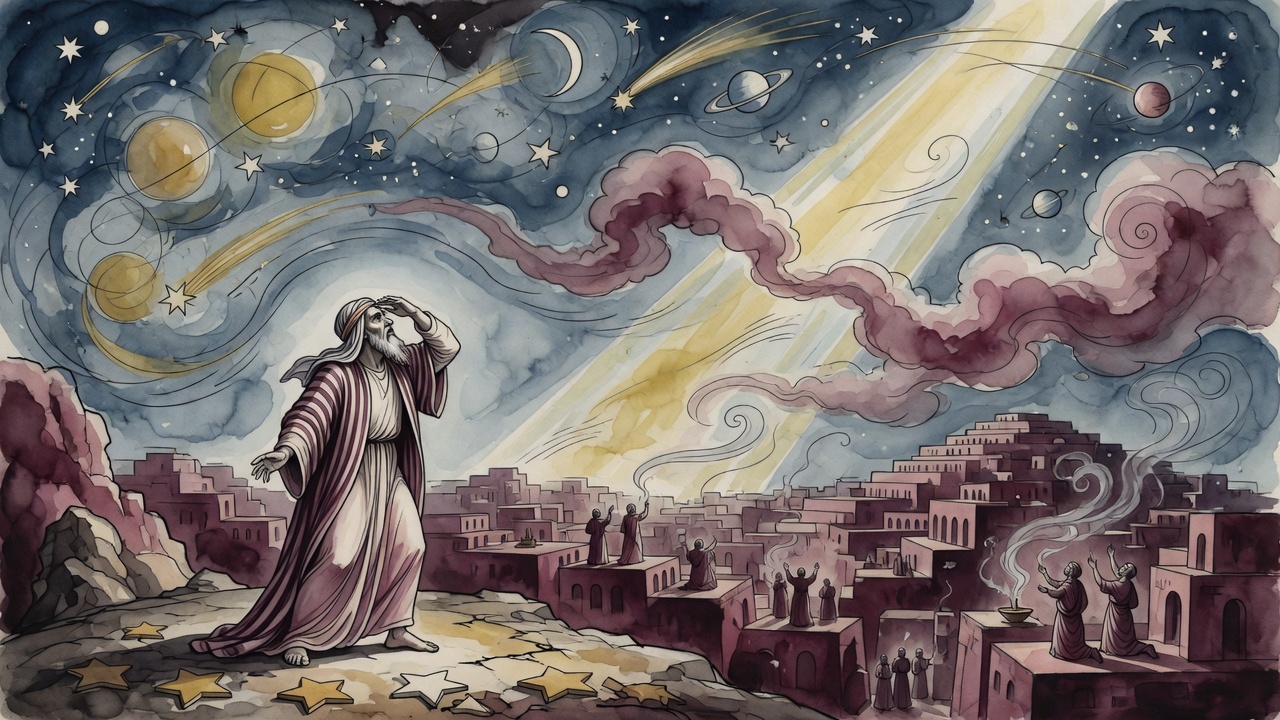
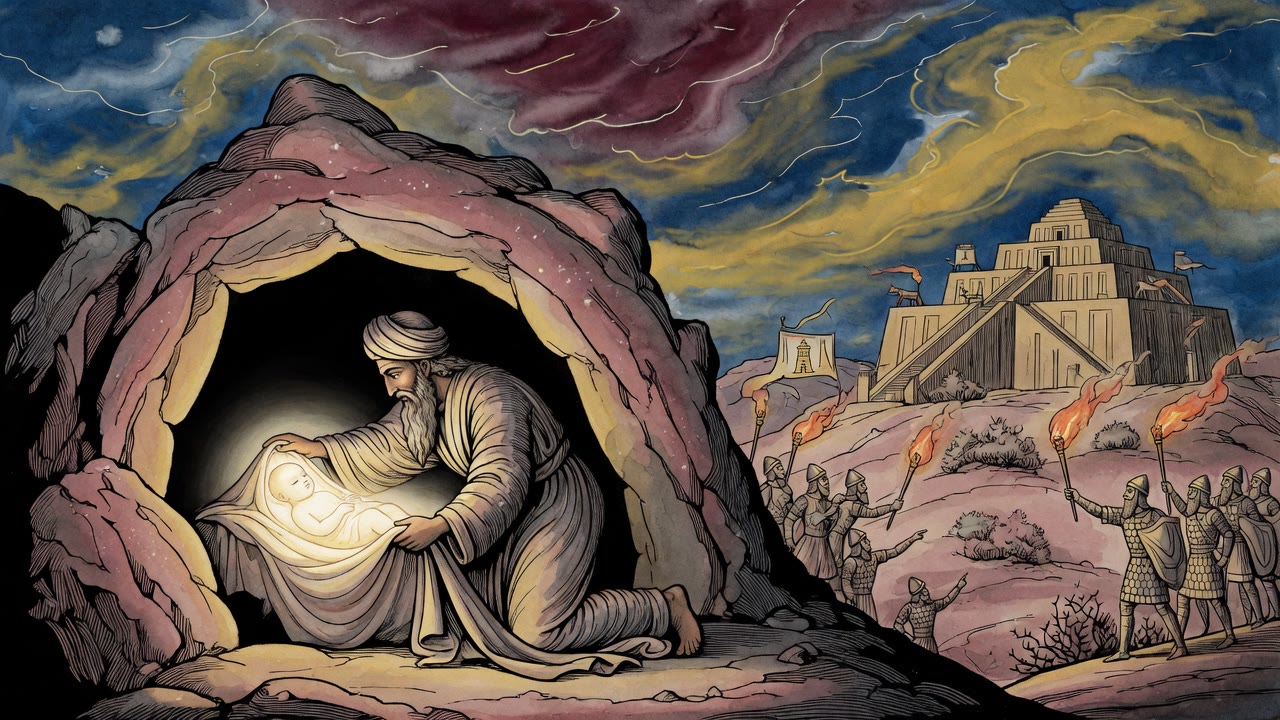
The king's astrologers took one look at the prisoner and started shouting. This was the child, they said. The one they had warned the king about fifty years ago, when a star came up and swallowed four stars, and the king had ordered the infant killed.
Nimrod had Terah brought out in front of the furnace.
Terah told the truth quickly. He had kept his son and handed over a servant's baby instead and taken the payment for it. The king asked who had advised him to do that, and promised he would live if he answered.
"It was Haran," Terah said. "My eldest."
Haran had advised him nothing. Terah said it because he was standing in front of a furnace and wanted to be standing somewhere else. Nimrod sent for Haran at once and had him held with his brother.
Haran Did the Arithmetic
Haran had been leaning toward his brother's God for a while and had never said so where it could be heard.
Now, held at the edge of a crowd of nine hundred thousand, he worked out his position. Abram is older, so Abram goes in first. If Abram comes out of that, I am Abram's man. If the king wins, I have always been the king's.
Years before, Terah had read his sons in the stars and seen something he could not make sense of. Haran's star was going into fire. Haran's star was going to fill the whole world.
The Cords Burned and Nothing Else
They stripped Abram down to his undergarment and tied his hands and feet with linen cord and threw him in.
No angel went down with him. Not one of the fiery ones, not Gabriel, who had sat with him all year in the cell. The Holy One went down Himself.
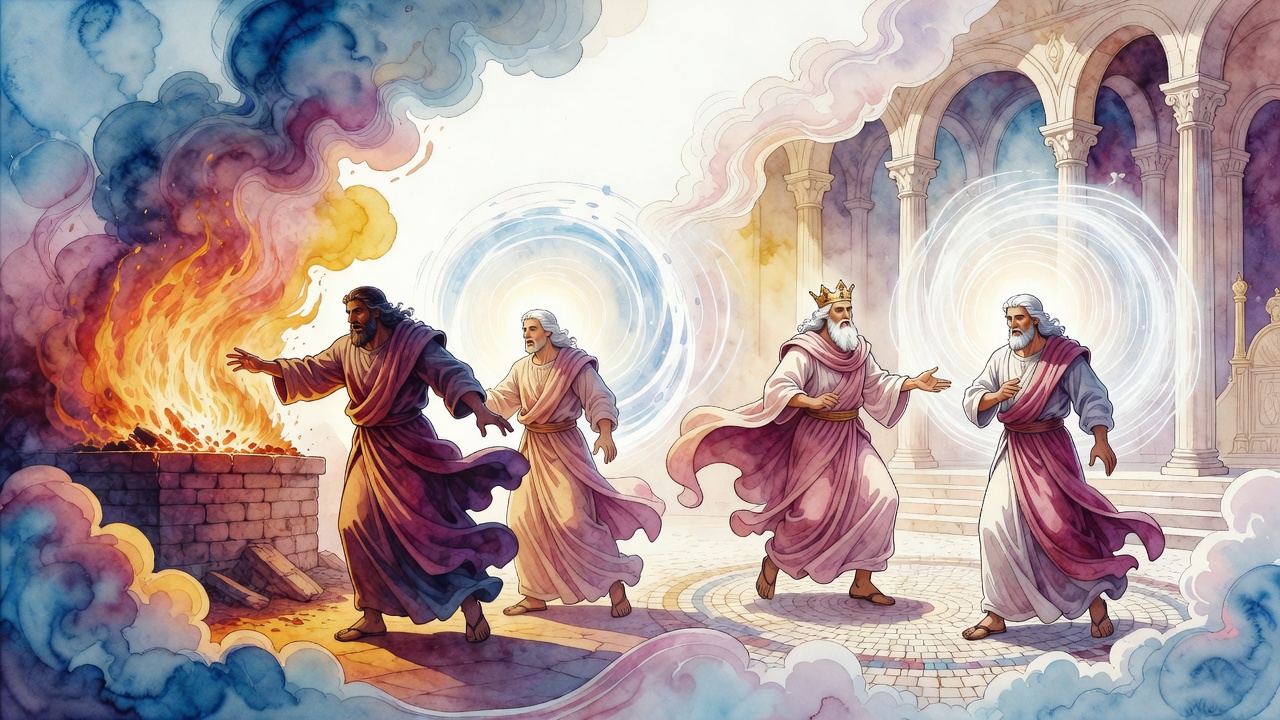
The cords burned off. Nothing else did. Abram got up and walked around inside the furnace for three days and three nights while the flames went over him like weather, and the men who had thrown him in were caught by the fire coming out of the mouth of the furnace, and twelve of them died where they stood.
The servants ran and told the king. The king refused to believe them and sent men he trusted. They came back saying the same thing, so he walked out to the furnace and looked in and saw a man strolling in the middle of it.
He ordered Abram brought out. His servants went at the fire and it came at their faces, and eight of them died trying. Nobody else would go near it.
So the king of the world stood in front of his own furnace and called into it.
"Servant of the God who is in heaven, come out and stand before me."
Abram walked out. The cord was gone. The cloth on him was not even scorched.
"How is it you did not burn?"
"The God of heaven and earth, whom I trust, and who holds everything," Abram said. "He took me out of the fire you put me in."
The First Son to Die Before His Father
When the crowd saw that the fire had no power over Abram, they went looking for an explanation that was not God, and they found one. Haran, they said. His own brother, the one full of charms and divinations. He has said something over that fire so it would not touch Abram.
Haran chose his side then. He said he was his brother's.
Fire came down out of the sky and took him where he stood. He never reached the furnace. They gathered up what was left of him and put it down in front of Terah, who had given the king his name that morning, and Terah stood in the ash of his eldest son in front of nine hundred thousand people and understood what he had read in the stars.
Haran's star had gone into the fire. Haran's daughter was Sarai, and the world would fill from her.
The king came and bowed to Abram, and the princes bowed, and the whole ground of that place went down.
"Not to me," Abram said. "Bow to the God of the world, who made you."
Nimrod gave him gifts and two servants out of his own house, and three hundred men left the crowd and followed him home. Behind him the furnace was still burning, and beside it lay the first son since the making of the world to die while his father was still alive.
← All myths