After the Furnace, Abraham Refused the Prostrations
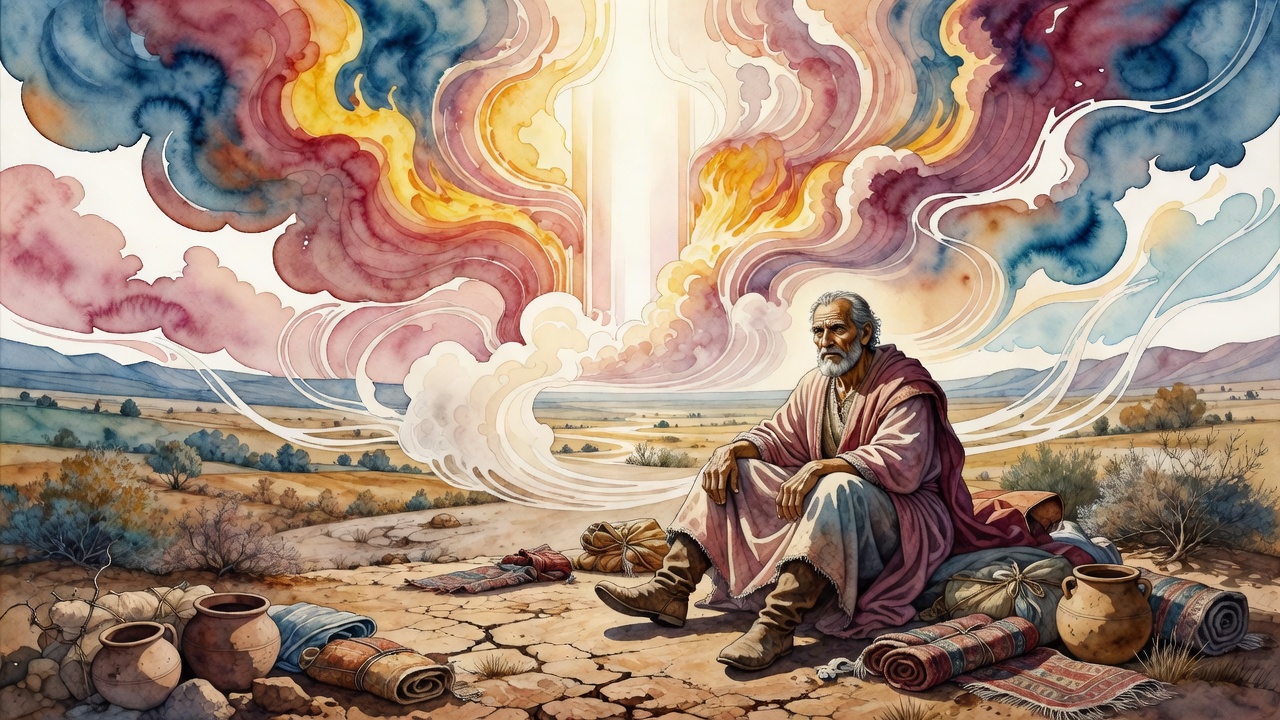
Terah had reported his own son to the king. Three days later Abraham walked out of the fire, cords burned off, the governors flat on the ground.
Table of Contents
 Click for full size
Three Days in the Fire
Nine hundred thousand people watched him walk out of the fire.
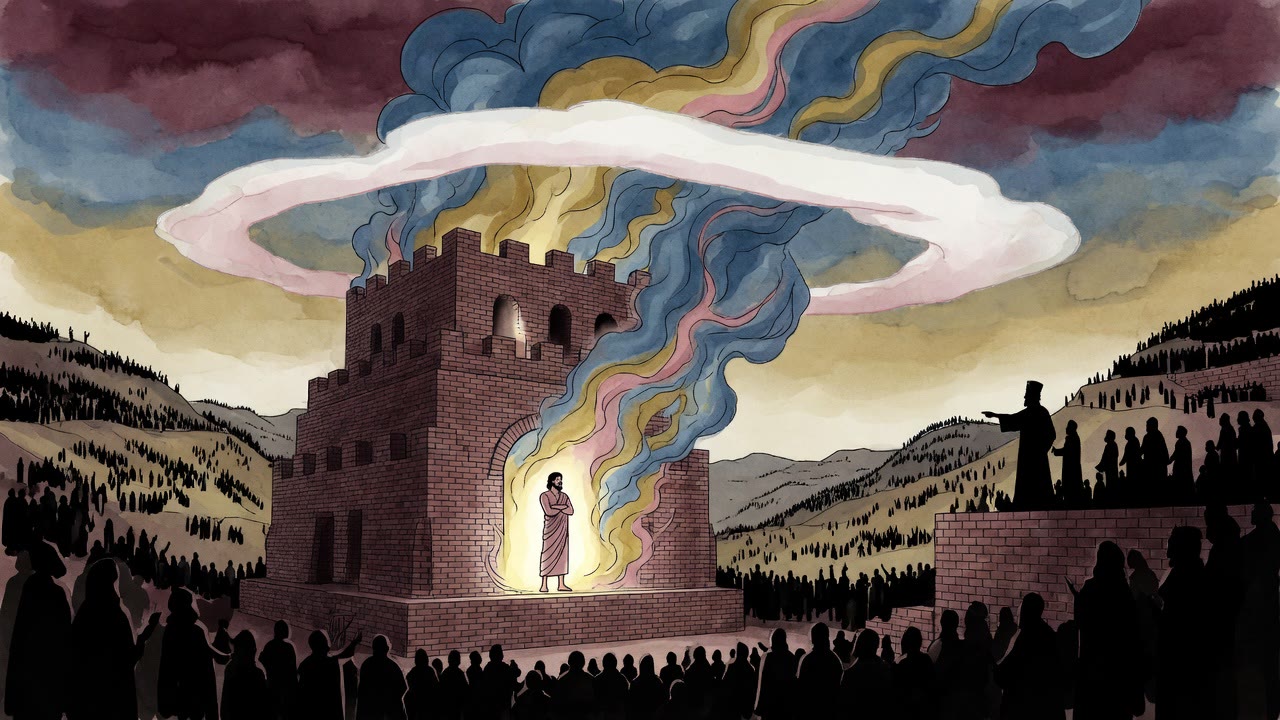
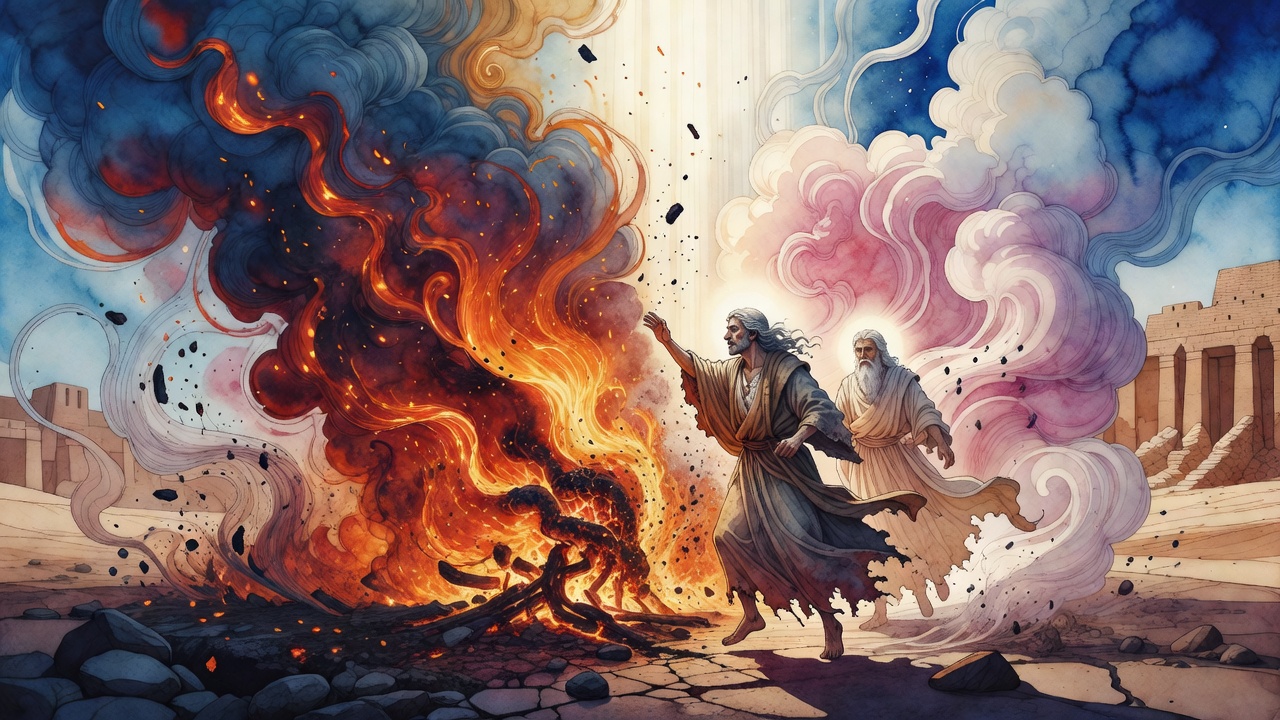
The furnace had burned for three days and three nights. Terah, Abraham's own father, had reported his son to Nimrod. The king's sages and conjurors had identified Abraham as the child whose birth the stars had foretold fifty years earlier, the one who would overthrow the empire. The court had condemned him to burn. He was stripped of his outer garments, bound with linen cords, and thrown in.
The linen cords burned. Abraham walked.
The King Stood at the Edge of the Fire
After three days, the king's servants reported that a man was moving through the fire. Nimrod came to see for himself. He stood at the edge, because the flames were too intense for anyone to approach, and called out to Abraham. Abraham came forward and stood before him, unburned, still wearing his lower garments, the cords that had bound him gone.
The kings and princes and governors who had assembled to watch the execution fell to the ground in front of Abraham. Nine hundred thousand people, the tradition says, and the number is not symbolic precision but a way of saying: everyone who saw it had the same response. The man who had survived three days in Nimrod's fire was standing in front of them, and the reflex of the ancient world was to prostrate yourself before what could not be destroyed.
What Abraham Said Instead
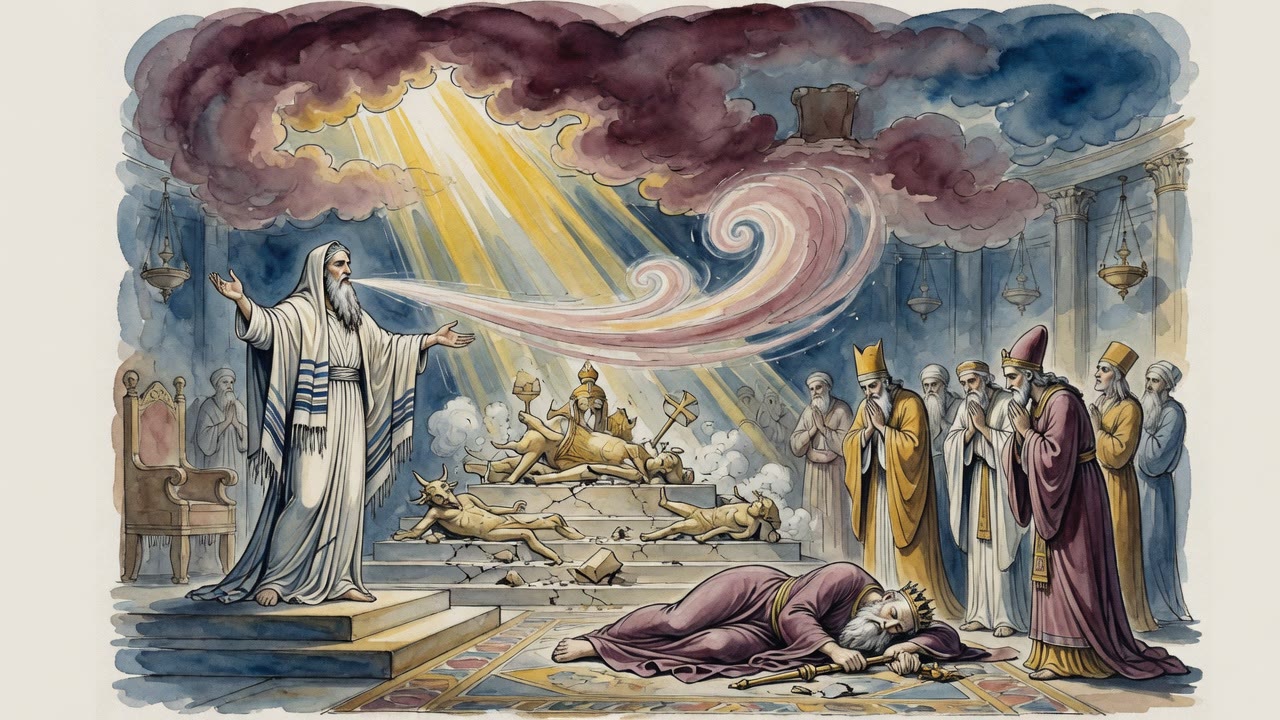
Abraham told them to stop. He would not accept prostrations. He turned them immediately and completely toward God: do not bow to me, bow to the One who made me, who delivered me, who created you, who rules all things. He is God and there is none beside Him.
This refusal is the moment the tradition treats as definitive. Abraham had just walked out of a furnace in front of nine hundred thousand witnesses. He had the most powerful possible human argument for his own divinity, or at least his extraordinary status, and he refused it. He stood in the smoke and the light of the furnace that had failed to kill him and redirected every prostration toward the source that had kept him alive.
The tradition contrasts this explicitly with the logic of Nimrod's empire. Nimrod had taken the garments of Adam's dominion, the power that belonged to someone else, and used them to make himself king and then god. Abraham walked out of the furnace wearing only what he had entered with and gave away every claim the fire had given him.
Nimrod's Offer
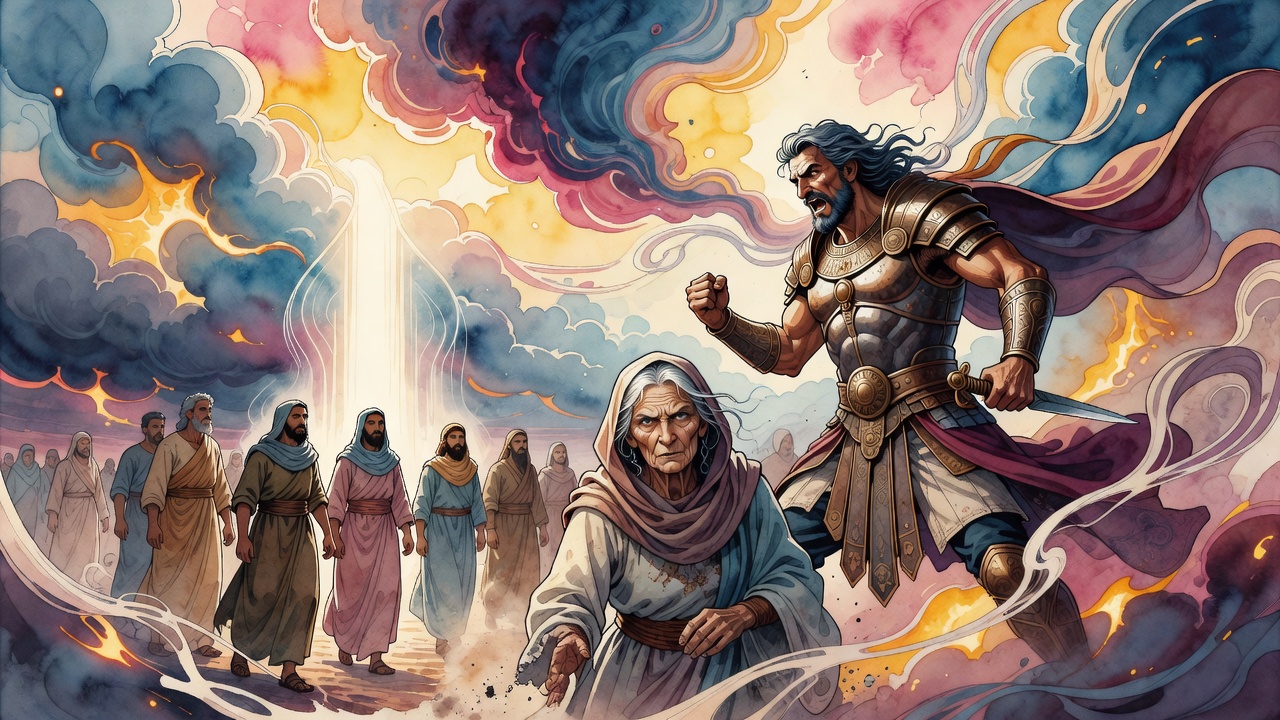
Nimrod made one more attempt. He told Abraham: follow my religion and I will give you half my kingdom. He offered a share of the empire that had just tried to burn him, as if what the fire had demonstrated could be converted into a political alliance. As if the man who had survived three days in the furnace might be interested in the half of the world that the furnace builder controlled.
Abraham answered without hesitation. If you gave me the whole world it would be nothing against the dust under the feet of my God. He was not being rhetorical. He had just spent three days in a fire that should have killed him and had spent that time with whatever was in the fire with him, and the experience had not produced a man who wanted a kingdom.
What Came Next
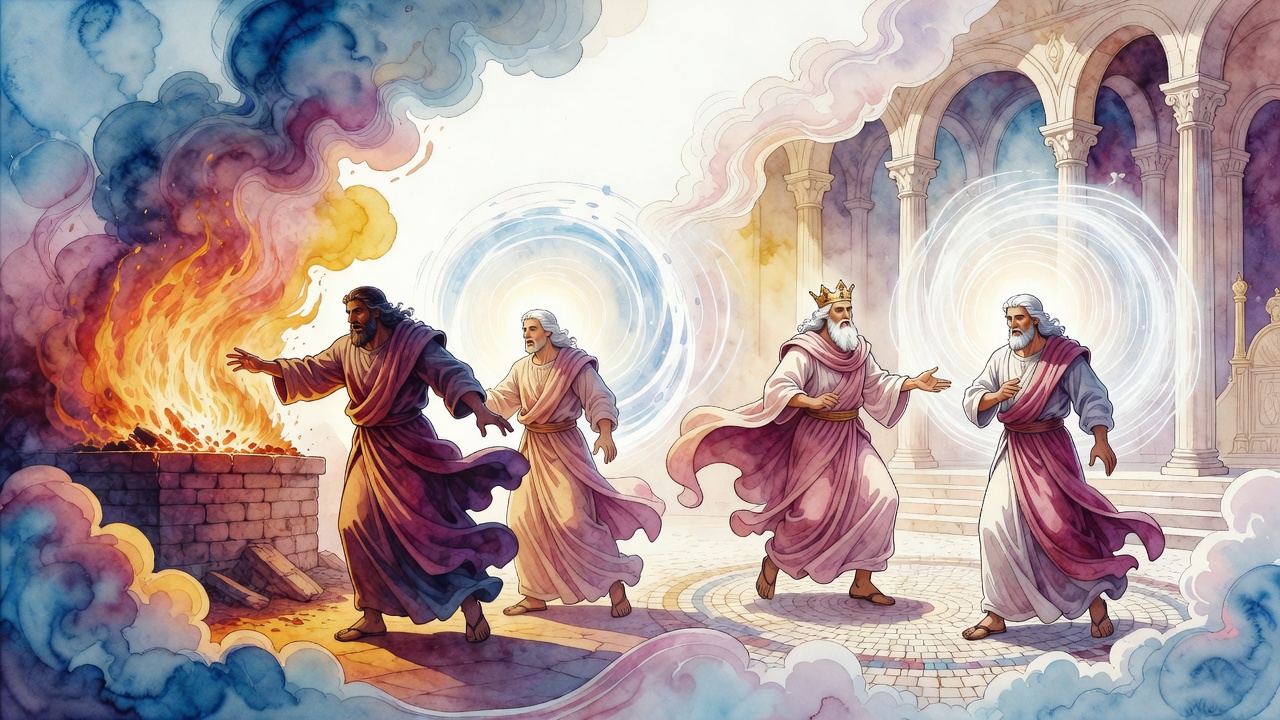
The tradition records that Abraham left Nimrod's territory and went to Canaan, carrying nothing the empire had given him. The people who had prostrated themselves outside the furnace followed him for a time, some of them, and the teachings spread. Nimrod remained king of Shinar and Babylon for a long time after, maintaining the throne and the empire, until Esau killed him and took back the garments of Eden that had started the whole chain of events.
The furnace was the last thing Nimrod tried against Abraham directly. He had read the stars, ordered the infanticide, thrown the child into the fire, and the child had walked out. Each attempt had made Abraham more visible, more known, more surrounded by witnesses. Nimrod's violence against Abraham had been the best possible advertisement for Abraham's God.
← All myths