The Morning Abraham Made Nimrod Collapse
Abraham proclaimed the living God and the idols fell. So did Nimrod, lying senseless for two and a half hours while his court stood around him in silence.
Table of Contents
 Click for full size
The Idols Fell First
The idols fell first. Then the king.
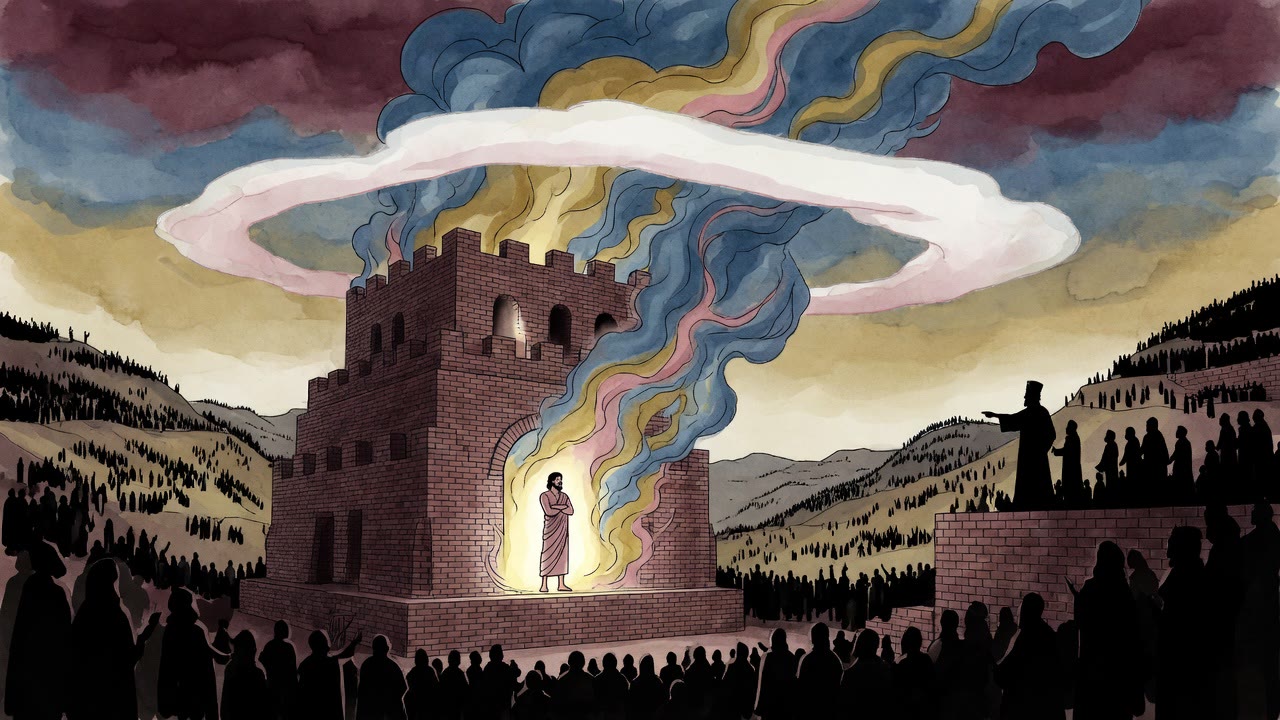
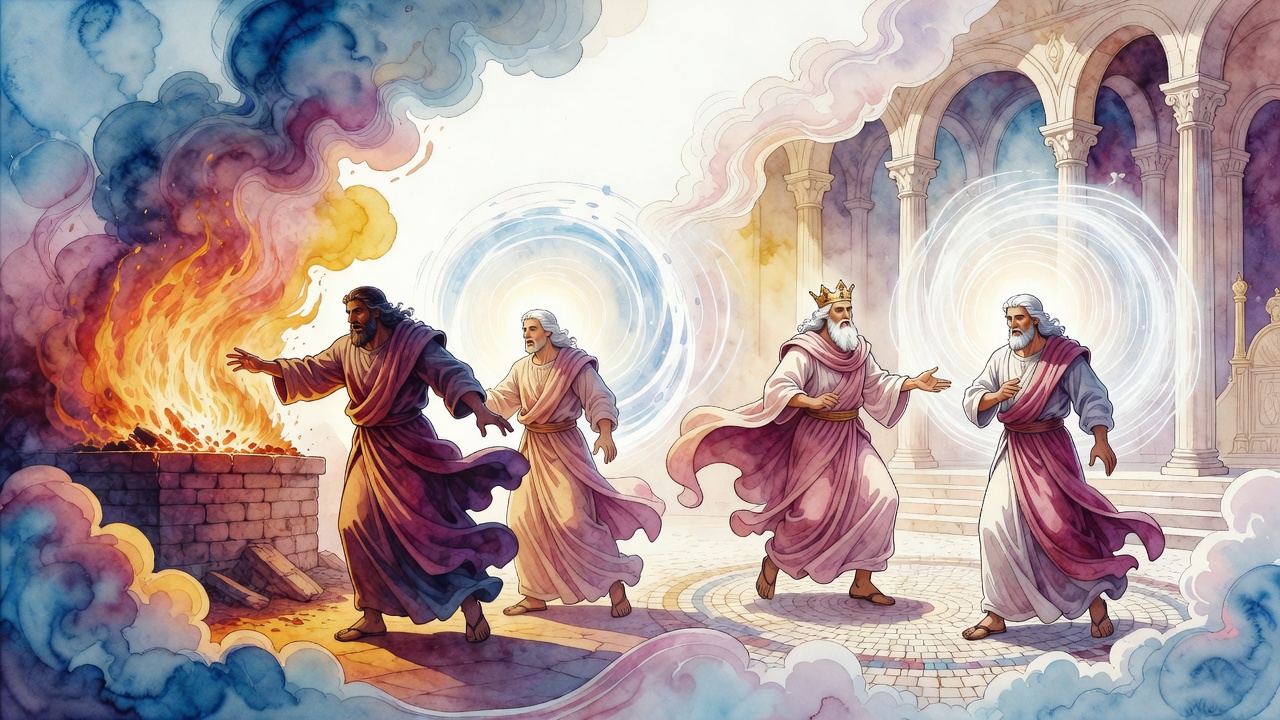
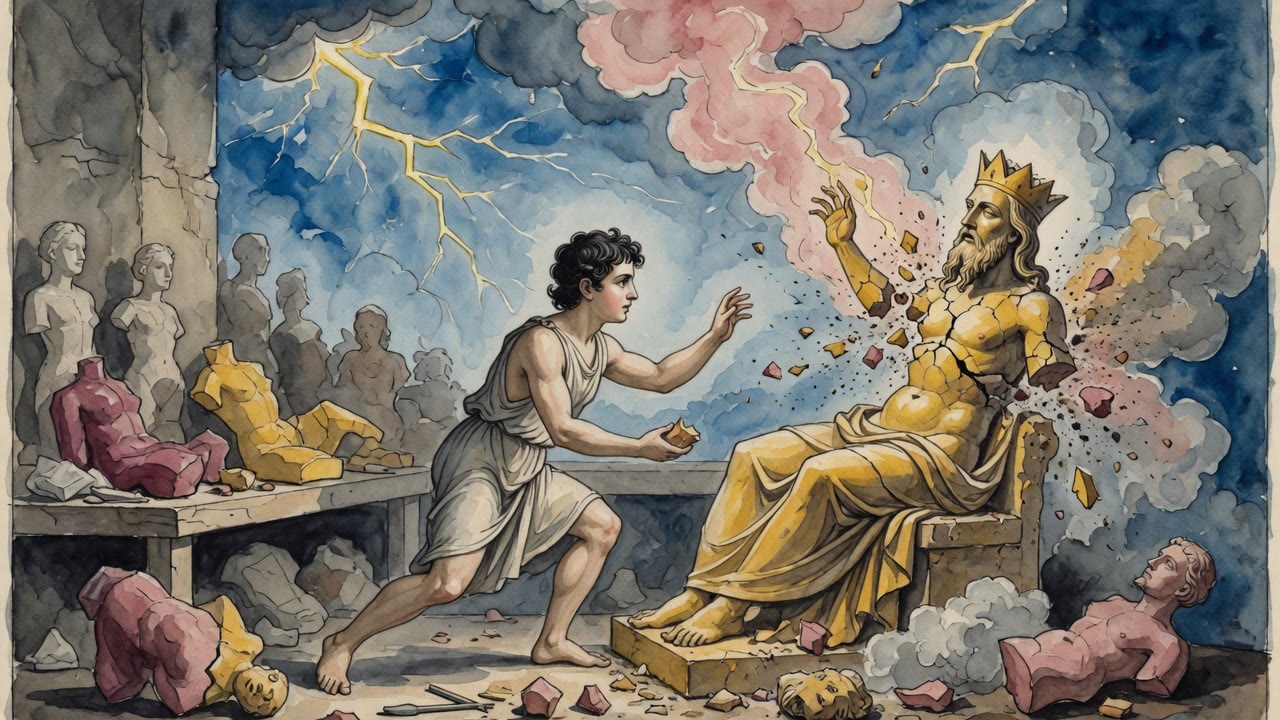
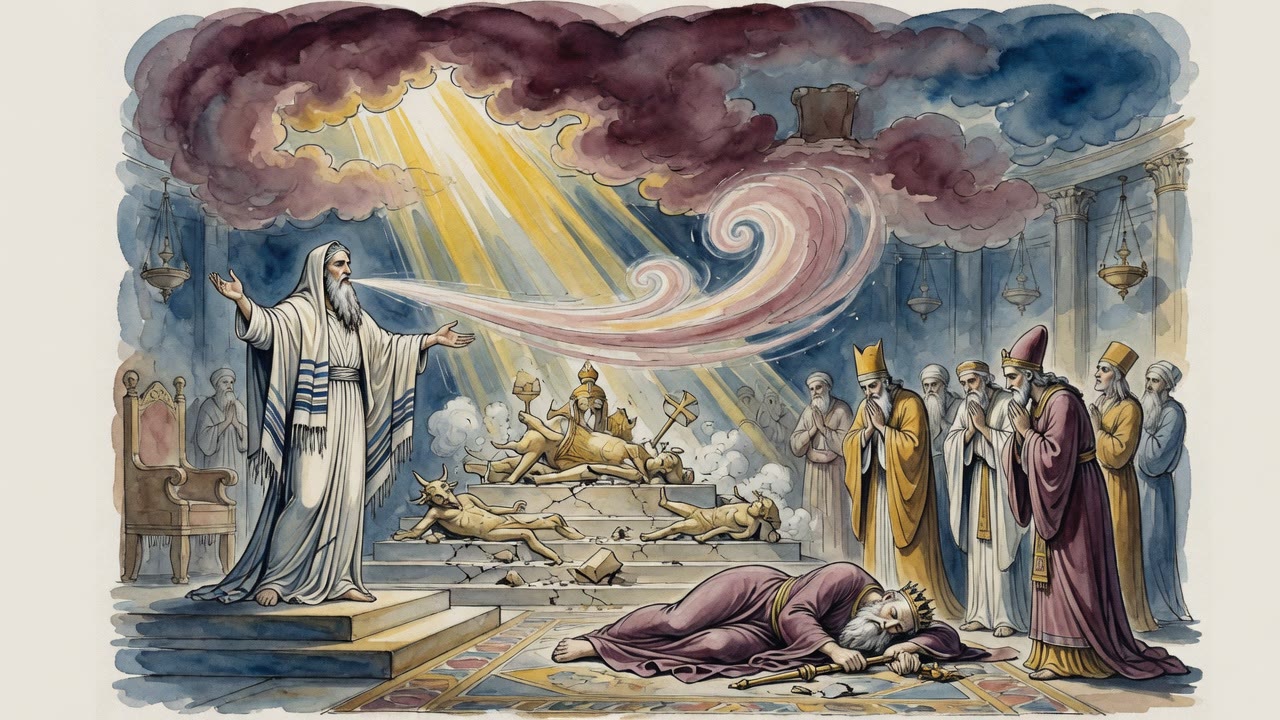
Abraham had entered the court of the man who had ordered his death at birth, who had thrown him into a furnace three days earlier and watched him walk out of it unburned. The confrontation between them had been building across decades. But the moment the tradition returns to most sharply is not the furnace. It is the morning Abraham spoke God's name in the hall where the idols stood, and the sound of his proclamation reached them, and they fell on their faces. Not one by one. All of them, at once.
And with them, Nimrod fell.
Two and a Half Hours
The king lay on the floor of his court for two and a half hours, without breath, without movement, his courtiers standing around him in silence, no one certain whether he was dead or sleeping or experiencing something that had no name in their world. When his soul returned to him and he spoke, his first words were a question: "is it your voice, Abraham, or the voice of your God?"
The question itself is a kind of concession. Nimrod was asking because he did not know. Whatever had leveled the hall and stopped his heart had not identified itself. He needed Abraham to clarify whether what had happened was a human miracle or a divine one, and the distinction mattered to him because he had spent his entire life constructing a theology in which there was room for powerful human beings at the top but not for something genuinely beyond the human.
The Voice of the Least of All Creatures
Abraham's answer is worth sitting with. He said: "this voice is the voice of the least of all creatures called into existence by God."
He was not claiming power. He was refusing the claim entirely. Nimrod had asked whether to fear Abraham or fear Abraham's God, and Abraham answered by making himself as small as possible and pointing elsewhere. The king who had assumed that what leveled the hall must be the voice of a great man, a rival power, something large enough to measure against his own greatness, received an answer that said: "no. What you heard was something small. The least. The one who is nothing by his own merit speaking on behalf of the One who is everything."
This was not modesty. It was a theological position. Nimrod's entire project had been to accumulate greatness in a single human figure, to make the human throne equivalent to the divine one. Abraham's answer said: "the human voice that shook your throne was the least. Consider, then, what the source of that voice is."
The Court That Watched and Said Nothing
For two and a half hours the court stood around their king's body and said nothing. This is the detail the tradition preserves without comment. Nobody screamed. Nobody ran. Nobody attempted to help Nimrod or revive him or call for physicians. They stood in the hall with the fallen idols around them and waited for the situation to resolve itself.
This is what an empire looks like when the center fails. The entire structure of Nimrod's theology, the throne that replicated heaven, the animals in prostration, the herald who announced the king's approach so that nations could fall on their faces, all of it had produced a court that knew how to prostrate themselves but did not know how to act. They stood for two and a half hours because no one had told them what to do when God answered.
← All myths