Abram Fell Into Darkness and Saw Four Empires Rise
The furnace smoked. The torch burned. God asked Abram to choose Gehinnom or the stranger's rule for every child after him.
Table of Contents
 Click for full size
The Pieces and the Birds
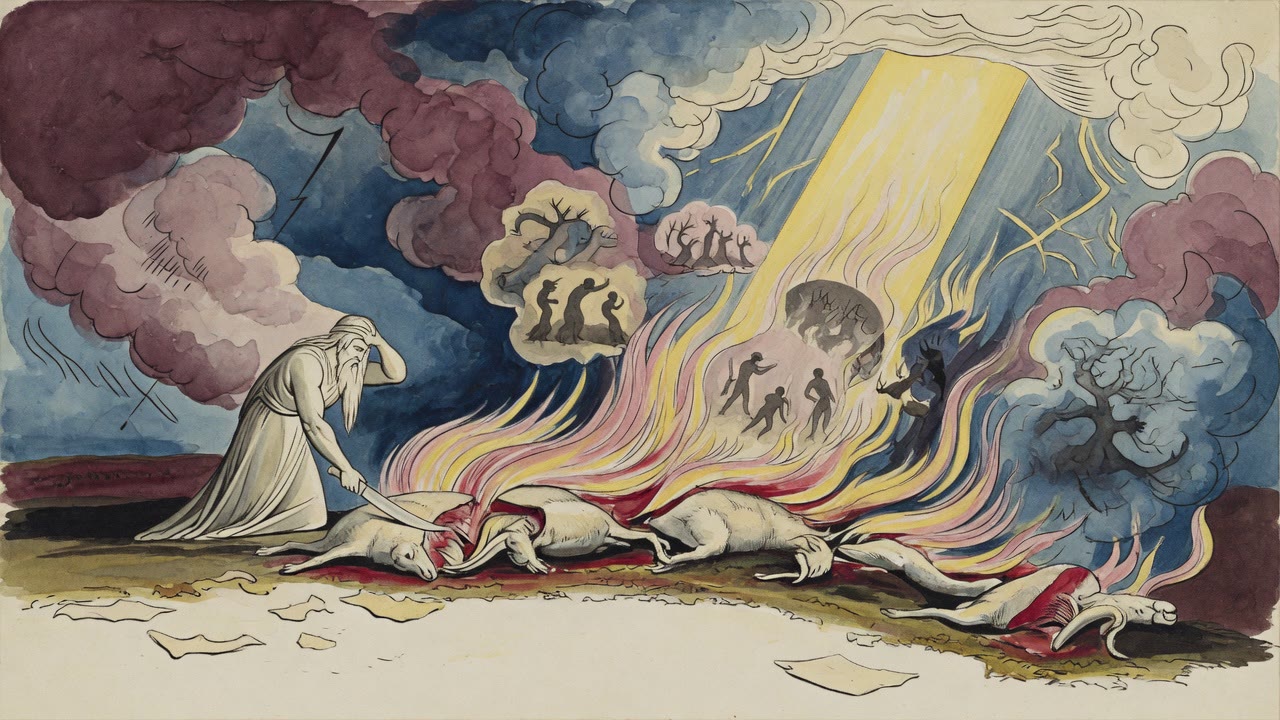
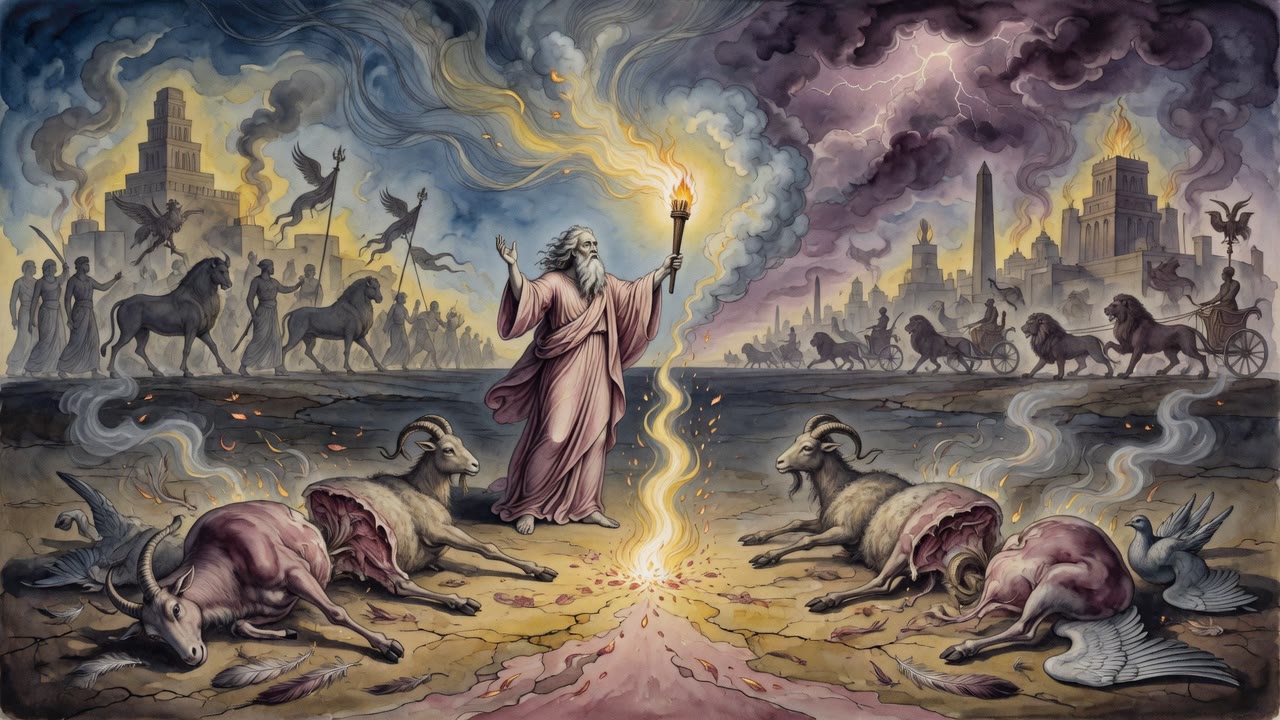
Abram cut the heifer, the she-goat, and the ram, each into two halves, and laid the halves facing each other on the ground. He set the turtledove and the young pigeon whole on the stones. He did not cut the birds. He stood between the rows of meat with a stick in his hand, because the vultures had already found the smell.
They dropped toward the open flesh. He drove them off. They came back. He drove them off again. Hour after hour, until the sun began to fall, he kept the covenant from being eaten before it was sealed. Then evening came, and something seized him from outside himself and would not let go.
A Sleep He Did Not Choose
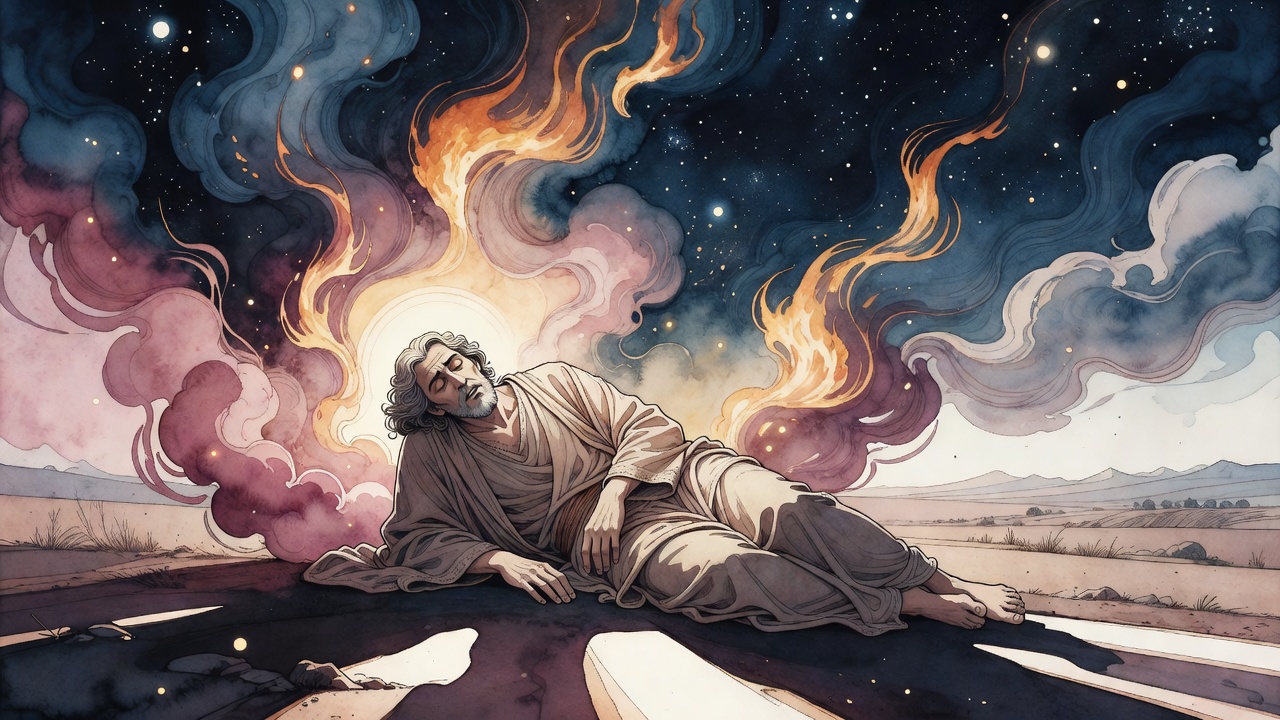
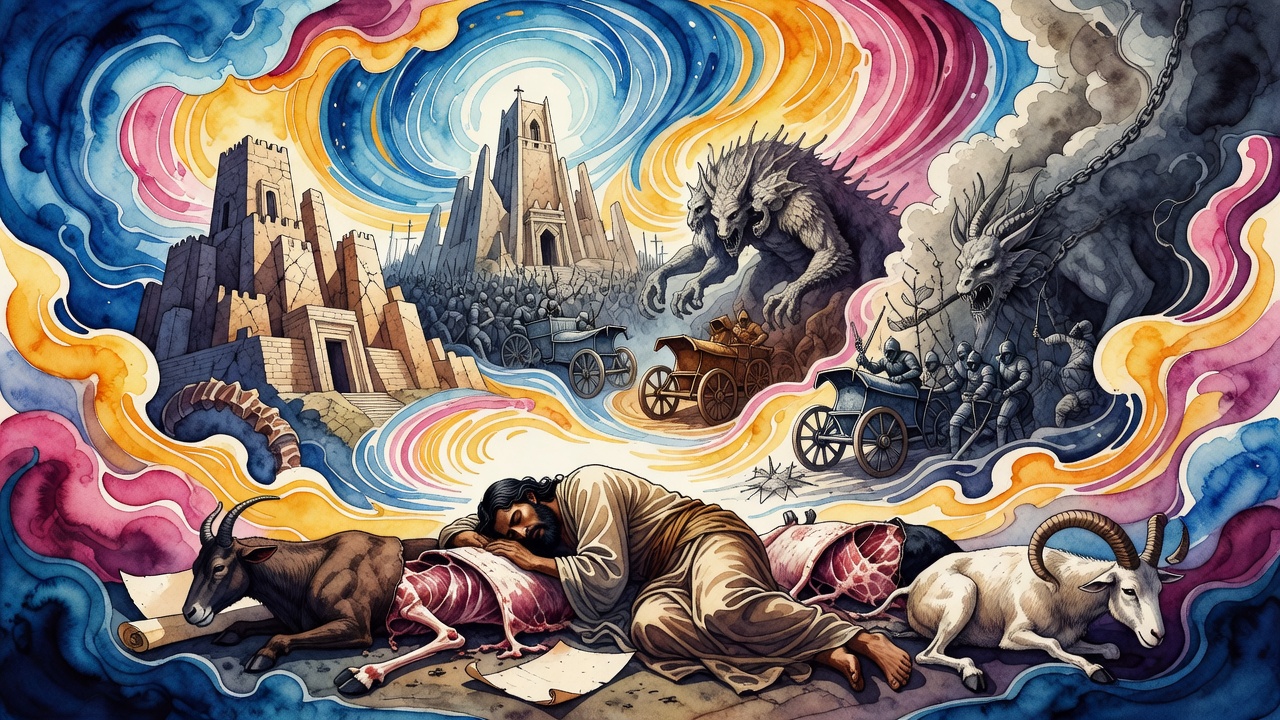
A tardemah (תרדמה) hit him, the kind of sleep that is dropped on a person from outside. It is the same sleep that put Adam under before Eve was taken from him. Abram did not lie down. He was knocked down. He fell between the halved animals, and what he landed in was darkness, a dread with weight, as if night had a body and had sat on his chest.
The birds were gone. The stick was gone. The sun was gone. He could not get up.
Furnace, Torch, Four Kingdoms
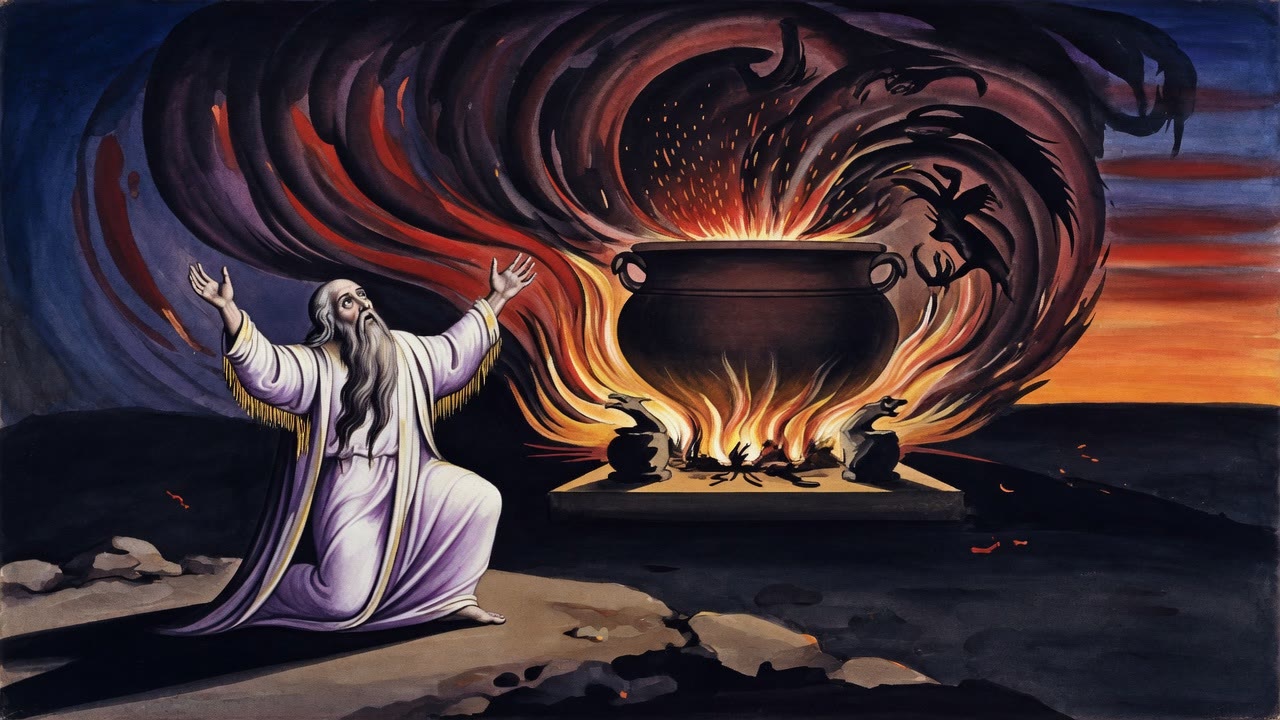
He saw a smoking furnace pass between the pieces. Gehinnom, the fire prepared for the sinner. He saw a lamp of fire follow it. Sinai, where a whole people would later watch torches burn on a mountain. He saw the offerings his children would bring. Then a horror of great darkness settled on him, and inside that darkness four empires rose, one after another, each grinding what the last had not finished.
Babylon. Persia. Greece. Edom, the long last boot. He would go to his fathers in peace. The kingdoms were for the people who would come out of him. He lay in the dark and took that knowledge the way a man takes a blow he cannot return.
Choose for Your Children
God spoke in the dark. "Abraham, as long as your children study the Torah and keep the service of the Temple, Gehinnom and the stranger's rule will be spared them. If they neglect those two, they will suffer the two. You may choose which punishment they take: the furnace, or the dominion of the stranger."
Abram lay between the halves of the animals and could not pick. The furnace would end a soul. The kingdoms would grind generations and leave them alive to be ground again. He opened his mouth. He shut it. The furnace threw light on the cut meat. The torch threw a different light. He thought of children he did not have yet, walking into smoke, or walking in chains. He could not bless either road. All day he wavered.
God called to him. "How long wilt thou halt between two opinions? Decide for one of the two, and let it be for the dominion of the stranger."
The choice was taken. Exile, not the pit. His children would live under boots rather than under that smoke.
Four Hundred Years Named
Into the darkness came the specific words. Know of a surety that your seed will be a stranger in a land not theirs, and shall serve them, and they shall afflict them four hundred years (Genesis 15:13). The nation they serve will be judged. They will come out with great substance. And you will go to your fathers in peace, and be buried at a good old age.
The four hundred years had a term. They were not a pit without a floor. God named the duration, named the judgment, named the leaving, while Abram still lay between the pieces and the furnace and the flame passed over him.
He woke. The sun had set. A flame was there, and a furnace smoking, and fire moving between the halves. That day God cut a covenant: to your seed this land, from the river of Egypt to the great river, the Euphrates. Abram rose. He built. That is what the dark left him able to do.
← All myths