Abraham Walked Egypt's Road Before His Children
The flocks nosed empty troughs in Canaan. Abraham packed for Egypt, and Sarah walked beside him with a face that would catch a king's eye.
Table of Contents
 Click for full size
Hunger Packed the Bags
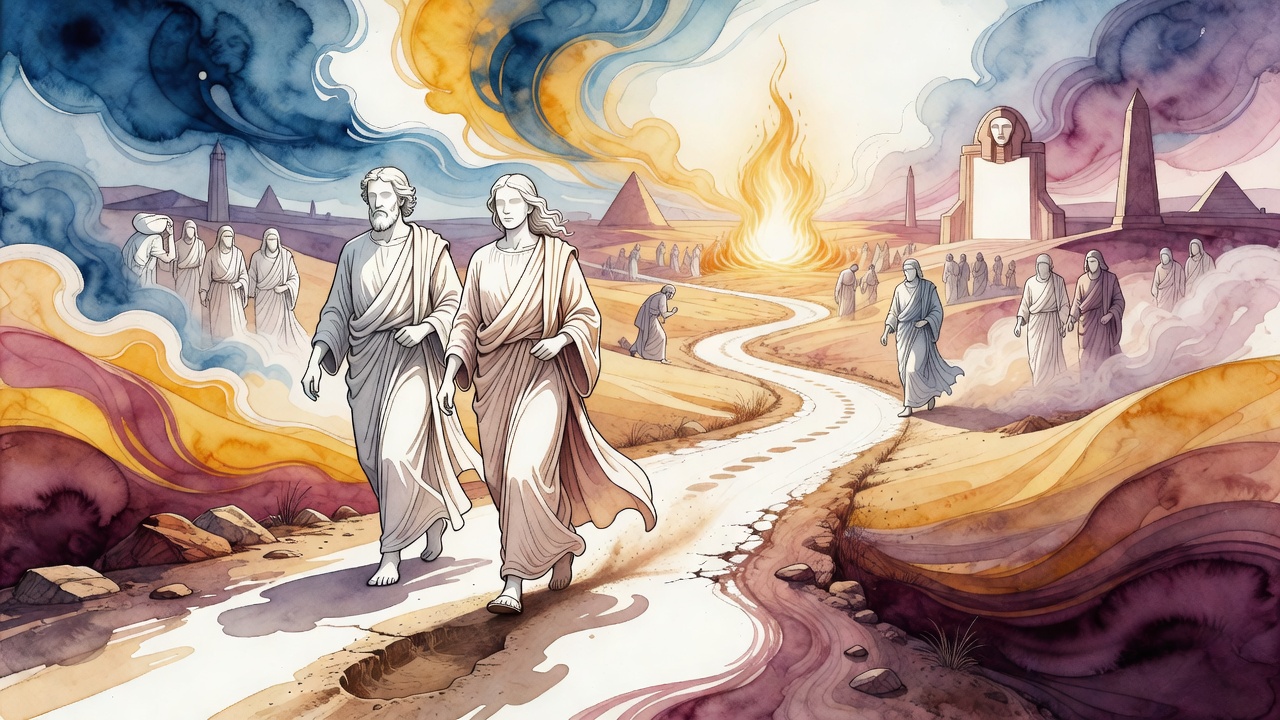
The last of the grain made a thin sound in the sack. Abraham tied it shut anyway and turned his face toward the river country. Canaan had stopped feeding them. Egypt still had green along the water.
Sarah walked the same dust. He watched the road more than he watched her, and that was a kind of fear. A king down there took wives the way he took horses. Abraham had smashed his father's idols. He had not yet learned what he would say when a palace looked at his wife.
"There was a famine in the land," the verse says, and Abraham "went down to Egypt to sojourn there" (Genesis 12:10). He did not go to conquer. He went to wait out hunger. The word sojourn sits light on the tongue. It would not stay light in the blood.
Sarah Went Into the House
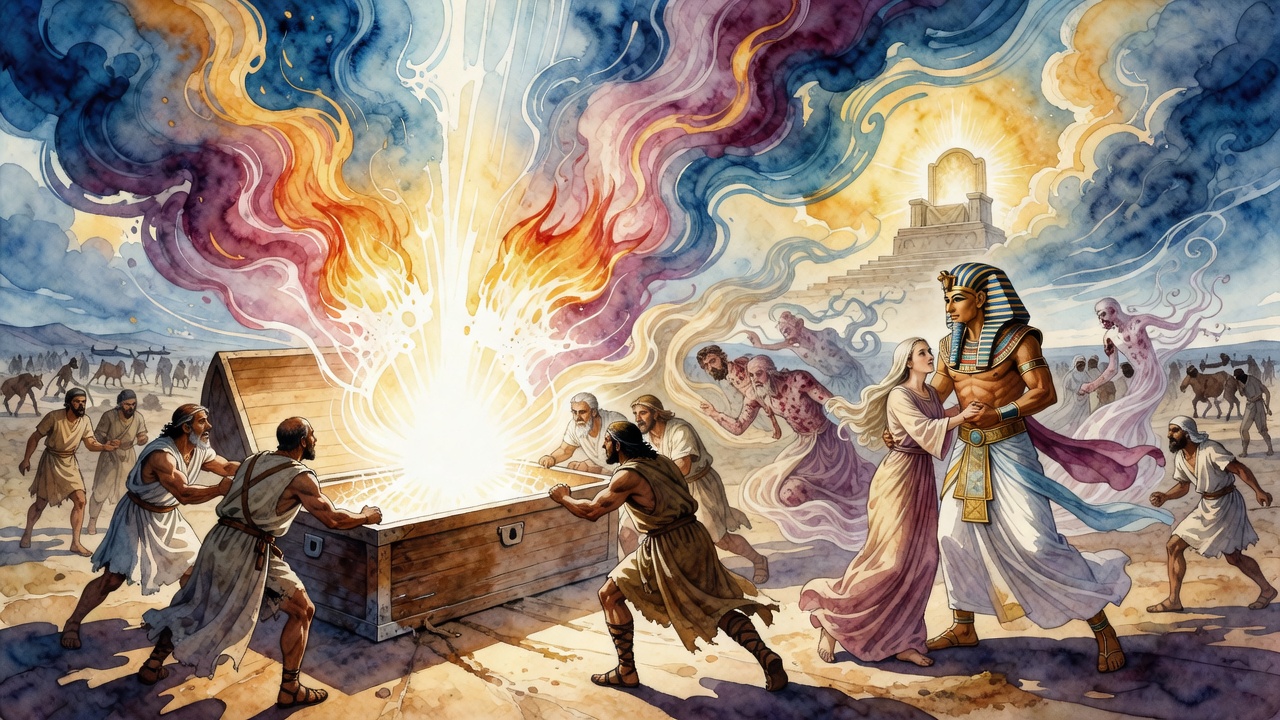
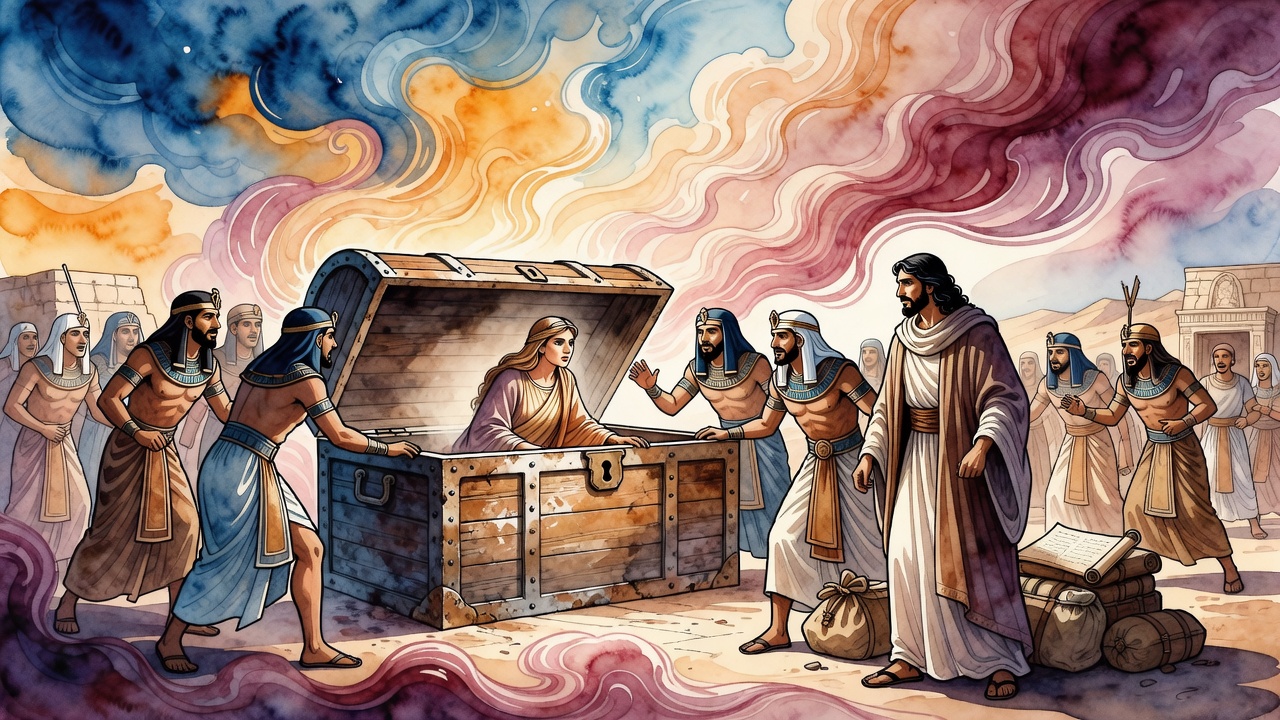
At the approach to Egypt he asked her to say she was his sister. Fear spoke. Survival spoke. Officials praised her to Pharaoh. She was taken into the house. Abraham received livestock and silver for the lie that kept him breathing (Genesis 12:16).
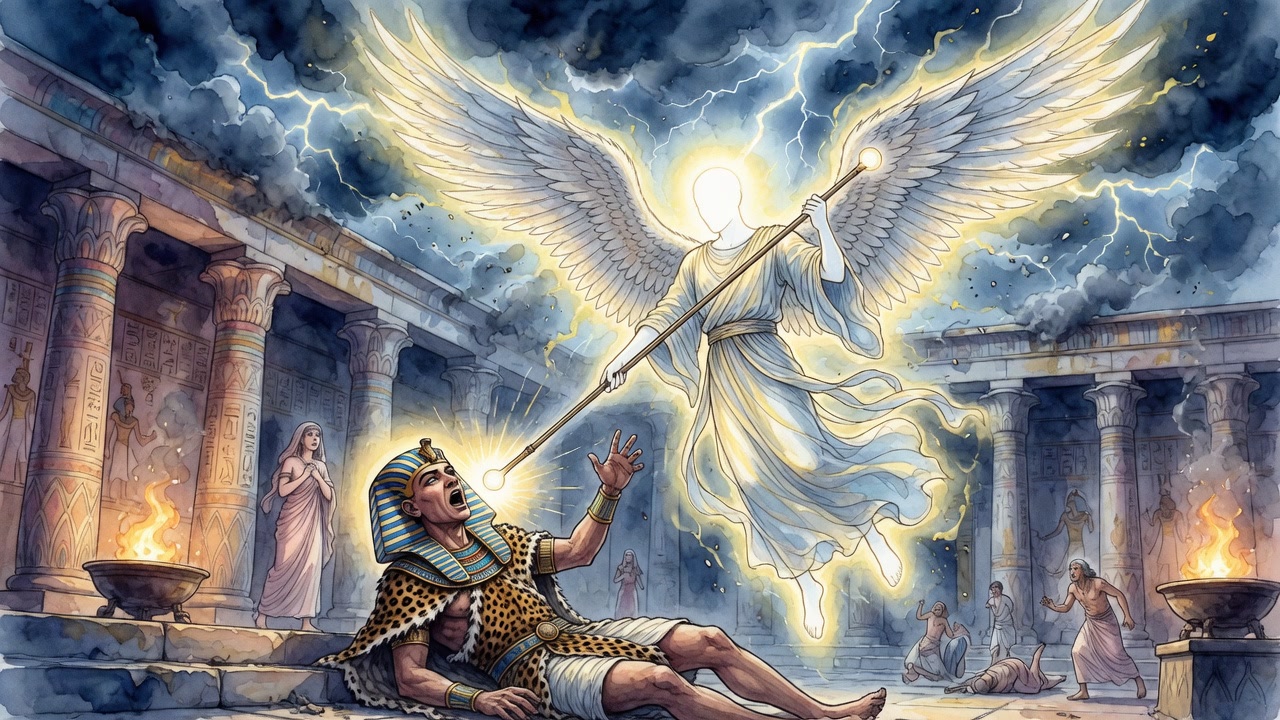
Then plagues struck the palace. Pharaoh sent them away with riches and a sharp edge of panic. The road south had fed them. The road north carried them out heavier than they entered.
Lot walked in Abraham's shadow and grew rich from the association, flocks and tents multiplying because he stood near the man God was training. Abraham did not yet know that Lot's children would one day forget that debt. He only knew the weight of animals he had not owned a month before, and Sarah's silence after the palace.
God Told Him to Pave the Road
God did not let the trip stay private. "Go and pave the way before your descendants," the Holy One said. Hunger, descent, sojourn, danger to the household, plagues on a foreign throne, exit with silver and gold. The sequence was a mold, still soft under Abraham's sandals, already hardening for a people not yet born.
Abraham could not see Goshen's brick pits from the road out of Pharaoh's court. He could not hear a later cry at another border, sons of Jacob saying they had come only to sojourn while hunger drove them (Genesis 47:4). He felt sand, and Sarah's quiet, and the new weight of silver.
On the way back he stopped at the inns. He had taken credit on the descent, bread and lodging on a name and a promise. He paid what he owed. A small honesty after a large fear. He built altars again in the places where his tent had first stood between Beit El and Ai (Genesis 13:3).
The Night Split North of Damascus
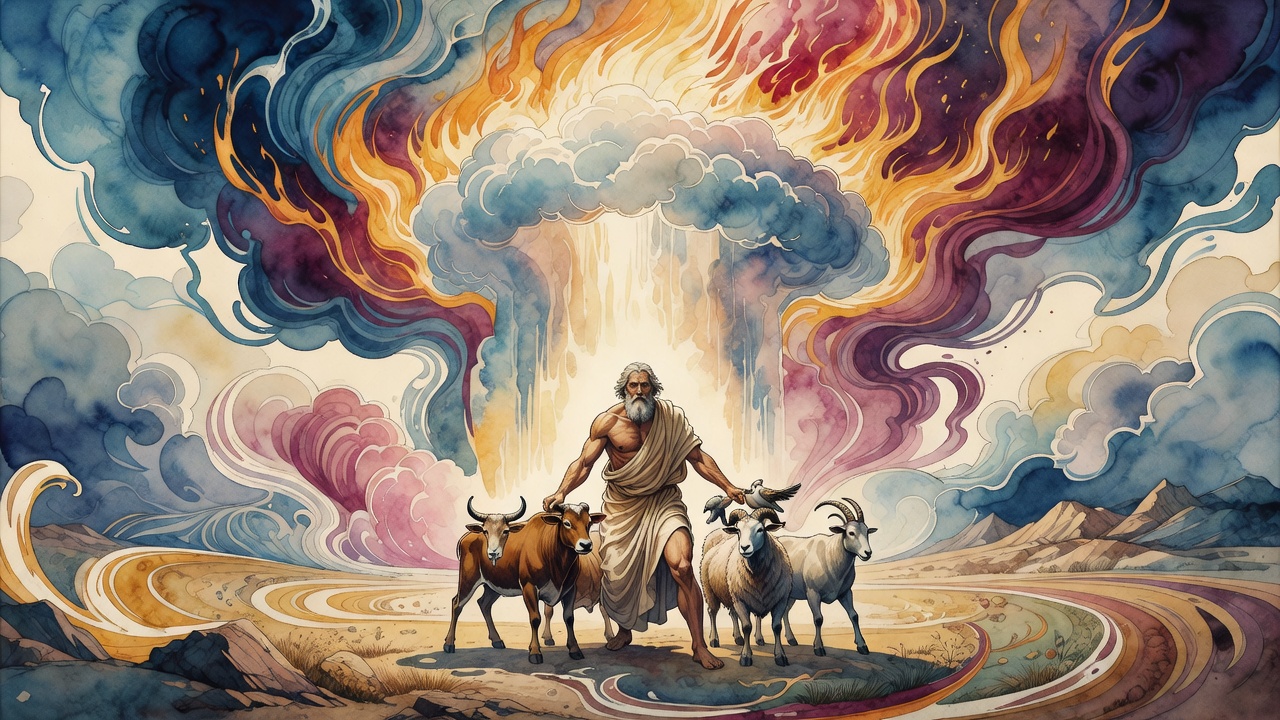
Years later Lot was taken in war. Abraham armed three hundred eighteen trained men of his house and rode into the dark after four kings (Genesis 14:15). He divided against them at night. The night divided itself. Its Maker cut the hours so the battle would end at midnight.
Dust from Abraham's hand became swords. Straw became arrows. He struck and kept striking until Hova, north of Damascus. The nephew came home. The kings did not. Each stride covered ground the way a man covers the walk from his house to the synagogue, feet clean, as if the road itself had been lifted out of the way.
"Their father took action for Me at midnight," the Holy One said. "I, too, will take action for his descendants at midnight." When Egypt's firstborn fell, the clock of that raid still ticked (Exodus 12:29). Moses would announce a going-out about midnight in Egypt's midst (Exodus 11:4). A private chase north of Damascus set a national hour.
The Mold Hardened Under His Feet
Abraham slept with one ear toward Sarah and one ear toward the dark. He could still taste the river wind of the south. He could still hear the palace panic. The silver on the animals rhymed with a wealth he would never see: a nation packing dough that had no time to rise, gold heavy in their hands, Egypt urging them out the way Pharaoh had once urged him (Genesis 13:2; Psalm 105:37).
Egypt was no longer a rumor to the covenant. It was a place the family had entered under hunger, left under plague, and would enter again under hunger until a harder plague forced a harder exit. Abraham had walked the road while it was still soft. His children would walk it when it had turned to iron.
At night, when the camp fires sank, the two roads stayed in him. The road south, packed for hunger. The road north of Damascus, cut at midnight by a Maker who keeps a clock. Between those two roads the future of Israel learned its map before it learned its name.
← All myths